Atlas of Monferrato
Cause for Christopher Columbus's butler
Local stories and places
A closer look
Cause for Christopher Columbus's butler: at a glance
The process for the Christoph Columbus Mazarus It was a famous cause that transcended for about thirty years from 1578 to 1608, with remarkable legal complications (originated by the many suitors of inheritance later recognized illegitimates) and exceptional political importance (derived by the uncertain geographical origins of the great Navigator).
The antefact
In 1498, Colombo decided and signed the writing of Majorasco (a sort of testament), for the universal succession of his firstborn Diego .Explore this chapter
In 1498 Colombo decided and signed writing of madder (a sort of will), for the universal succession of his firstborn Diego.
The writing provided for the following order of agnatis: first the other son Fernando, then his brothers Bartholomew and Diego (zii di Ferdinando e Diego).
In this writing, Colombo renewed his love for Genoa (in his words, for from it departs and in it dwells) and reminded the Kings of Spain that the gold obtained from the Indies had to be used for the liberation of the Holy Sepulchre.
The writing of the madder
The Crusaders were for Columbus a fixed nail, as well as the evangelization of new people. From Santa Fe's agreements to the will, Colombo didn't think that he was reconquering...Explore this chapter
The Crusaders were for Columbus a fixed nail, as well as the evangelization of new people. From Santa Fe's agreements to the will, Colombo thought nothing but to the reconquest of holy places.
In the act by which he established the most-asked in favor of Don Diego, his firstborn, Christopher did not by chance mention the intention to spend the rent of the Indies "for the conquest of Jerusalem" and also impeded his son Diego, or his heir Commissary, "to go with the King Our Lord, if he will go to Jerusalem to conquer it, or even only, with the greatest possible power", using the Holy Fever 1492.
The great navigator, in his will, had also explicitly specified that the madder should be inherited only from a male Colombo, also collateral (in lack of direct descent), with exclusion of females (Of the benefizii, of the prebende, and of other offices such as do not benefit foemines).
A clause of the butler provided for the search for any relatives, who were only to be helped with substantial income, where they had not been able to live properly in a Colombo's rank.
In 1502, just before leaving for his fourth and last trip to the New World, Colombo expressed himself in another writing, where he confirmed the masculine butler, which was then expressly ratified with a clerk by Columbus himself on the day before his death, on 19 May 1506. It was from this document that the legal battles of future heirs began.
Diego's cause against the king of Spain for his father's legacy
Immediately after the death of Christopher Columbus, King Ferdinand told his son Diego that he no longer wanted to respect the economic agreements of Santa Fe taken in his time with his father....Explore this chapter
Immediately after the death of Christopher Columbus, King Ferdinand told his son Diego that he no longer wanted to respect the economic agreements of Santa Fe taken in his time with his father. The risk was that the wealth accumulated over the years by Admiral could not be the subject of any succession dismissed.
Le Chapters of Santa Fe (17 April 1492), in financing the undertaking of «buscar el Levante por el Poniente», sanctioned that in case of success Columbus would have the rank of Admiral of Ocean Sea and the title of viceroy of the lands discovered. The town of Palos de la Frontera, which had to repair the Spanish rulers, was forced to arm two caravelles for the expedition, Niña and Pinta, while the flagship Santa María belonged to the royal fleet. In the agreements signed between Colombo and the realms of Spain, before the famous journey, it was therefore stated that the Crown would grant him what he promised "for what he discovered".
Don Diego (1478 - 1526), son of Cristoforo and Filipa Moniz de Perestrello (son of Bartolomeo Perestrello, Portuguese navigator and governor of Porto Santo - Madera), had to recover the title of viceroy that was entitled to him by his father and the King of Spain. His father had been destituted (1500) and the King was not too willing to grant what he had revoked.
Diego's marriage to Doña Maria de Toledo, the nephew of King Ferdinand the Catholic and belonging to one of Spain's most important noble families, offered him a good opportunity to recover what Christopher had lost.
In addition, Santa Fe's agreements were official documents, written and signed, so Diego passed to the legal routes, but in the middle of the judicial battle, on 24 February 1526 Diego Colombo died in Montalbàn, a small village in Toledo, where he had stopped before going to Seville to attend Charles V's wedding with Isabella of Portugal.
She remained widowed, Maria de Toledo thought only of raising the seven children she had with Diego, all still minors, and carrying out the trials against the Crown. Only after ten years, in 1536 the legal question was resolved by an arbitral judgment accepted by both parties: the Spanish Court recognized Luigi Colombo as heir of Diego's majeure, including the Admiralty of the Indies, some important properties in America (including the island of Jamaica and the State of Veragua, as well as the titles of Marquises and Duke, and finally any substantial annual money imposed by it). The family heritage was saved. Luigi Colombo will die in 1572 at Orano at the age of 54.
The Castilian Court of Madrid
The Court of Indies or Council of Indies (Consejo Real y Supremo de las Indias, 1524-1834), this administrative body was established to assist the king of...Explore this chapter
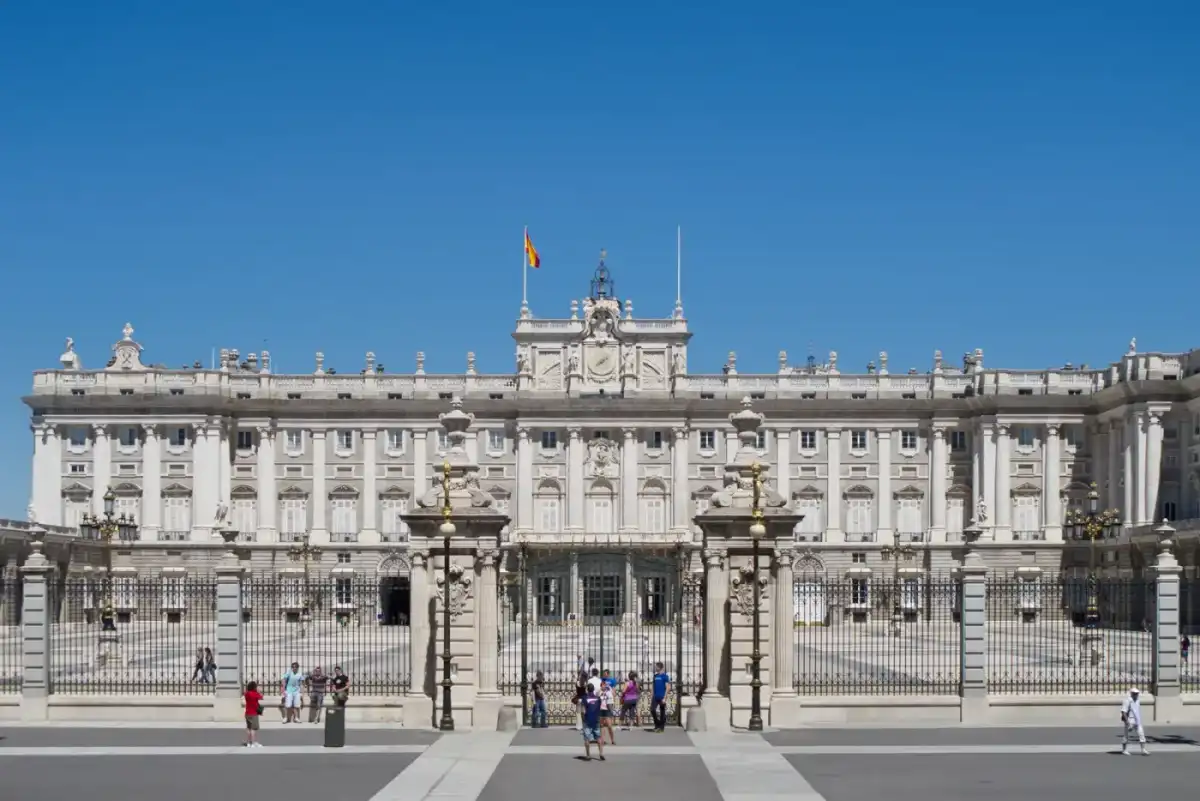
Also known Court of Indies or Council of the Indies (Consejo Real y Supremo de las Indias, 1524-1834), this administrative body was established to assist the King of Spain (who presided over it) in the governance of overseas possessions. Being the Catholic Church in Spain under the regime of patronage (that is, subject to the crown in temporal management), the Court of the Indies appointed not only viceroys and governors, but also bishops and priests, and controlled the finances of the parishes. It also had legislative powers and acted as an appellate judge.
In 1604, following the unification of the crowns of Spain and Portugal, a similar body was established in Lisbon which, after separation (1640), assumed the name of Council of Overseas. Its jurisdiction was restricted under the Bourbons: in 1714, Philip V reorganized the government according to the French model with various Secretaries that absorbed its powers. With the Napoleonic invasion he ceased to work, but was formally suppressed only in 1834.
Preliminary investigations
The so-called Court of Indies was called to establish whether the blood line descended directly from Christopher, although feminine, or that...Explore this chapter
The so-called Court of Indies was called to establish whether the blood line descended directly from Christopher, although feminine, or sideline, not descending of Admiral but other relatives.
The first act of the Tribunal was to ascertain what were the relatives of Christopher Columbus: the research was carried out rigorously and officially, and it was quite complex and long.
Since about seventy years had passed since the death of the First Admiral Cristoforo, an institute of the Mazarus, precedent sentences were written out from direct testimony, no longer available for the death of witnesses.
What came out with certainty from the investigation of the process, was that the Admiral was of Italian and non-Portuguese or Spanish origin, and that it was not of Jewish origin, much less Moorish, nor of plebea race.
After having examined all the documents at the time still existing and available, and after having collected hundreds of direct testimonies, some illustrious (Conte di Nemours, Conte di Percivalle, Marchesa Margarita and Duchessa di Monferrato, the Lords of Manta Marchesi di Saluzzo, etc.), the Requisitory of the Supreme Royal Council, warned without any reasonable doubt that the Colombo family was born from concession of Otto I in the year domains 960, and that some of the claimants to the manger were certainly belonging to the family, whose branches were of Cogoleto, of Cuccaro Monferrato, etc.
The heirs
The Italian "official" suitors were two, both recognized by the Colombo family:Explore this chapter
The Italian "official" suitors were two, both recognized by the Colombo family:
- Don Bernardo Colombo, with credentials of the Republic of Genoa
- Don Baldassarre Colombo, from Monferrina and Piacenza.
There were also "genovesi" suitors, some of whom "residenti in Lisbon", who were immediately expelled from the trial, or worse arrested for obvious lie and falsehood. As expected that the process took place in Madrid, it was established by King Philip of Spain (who had also become Duke of Milan) an international commission, with direct collaboration of the Duke of Mantua and many illustrious and noble characters of the time, in order to prepare international rogatories on the actual lineage of non- Iberian suitors.
The witnesses
The witnesses called to lay, under oath, typically belonged to the monferrin nobility: in the society of time it was widespread opinion that the testimonies of the nobles...Explore this chapter
The witnesses called to lay, under oath, belonged generally to the monferrin nobility: in the society of time it was widespread opinion that the testimonies of the nobles had greater value than those of the people, since their wealth was cause of greater sincerity[1]. The testimonies, heard by the Senate of Casale, answered precise and detailed questions. Among the witnesses, the noble Pietro Rossi of Vignale, the noble Giovan Pietro Tibaldeschi, the noble Gaio Antonio Maimone of Lu; the latter testified: I have practiced for the world, that is in Spain, France, in Alemagna, in Flanders, Poland, in Transylvania, Sicily and Sardinia et almost all Christianity et I always oldute publicly say when it was reasoned of these Indies nine that the saying Don Christoforo inventor of said Indie was dexus of Monferrato et from the lords of the Casa dei Colombi[2]. Reading the testimonies, the names also emerge of some of Christopher Columbus' traveling companions who were apparently natives of Monferrato: Michele Balestrero and Secondo Cornacchia, respectively originally from Fubine and of Vignale Monferrato[2].
The judgment
Later, Baldassarre also brought other statements (sixteen witnesses), but the cause went for long. Baldassarre's son, Mario, continued the legal litigation...Explore this chapter
Later, Baldassarre also brought other depositions (sedic witnesses[3]), but the case dragged on. Baldassarre's son, Mario, continued the legal dispute in Spain but by now the finances of Cuccaro's Colombo family were compromised and in the end Baldassarre and Mario gave up the case. Mario returned to Italy and in 1606 was invested with the old family fiefdom[4]. Just two years later, the Council of the Indies ruled in favor of the Colon de Portugal, as they were descendants of the female line. For the sake of truth and debt of justice, the Council nevertheless recognized Baldassarre's family and Mario Colombo as the one from which Christoph Columbus of Cuccaro was born.[5].
Notes
Explore this chapter
Bibliography
Explore this chapter
- Giorgio Enrico Cavallo, Christopher Columbus the noble. The transoceanic epoeia of the last medieval knight, Crotone, D'Ettoris Editori, 2021, ISBN 978-88-93281-08-9.
Continue your journey