Atlas of Monferrato
persecution of Christians in the Roman Empire
Local stories and places
A closer look
persecution of Christians in the Roman Empire: at a glance
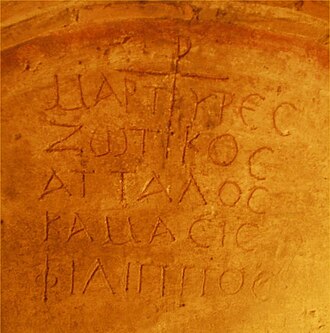
Le persecution of Christians from the Roman Empire They were based on behaviors characterized by aggressiveness because Christian religion was considered a crime against the state. Many proclaimed their faith by accepting captivity, tortures, deportations and even death so much that the martyrs were thousands, although the real number is difficult to calculate.[1]
Initially, however, local authorities did not actively seek Christians; their communities continued to grow, in fact finding new vigor in the cult of martyrs; emperors Decio, Valerian and Diocletian, also driven by political considerations, ordered more active and severe persecutions, which nevertheless did not come to eradicate the new cult.
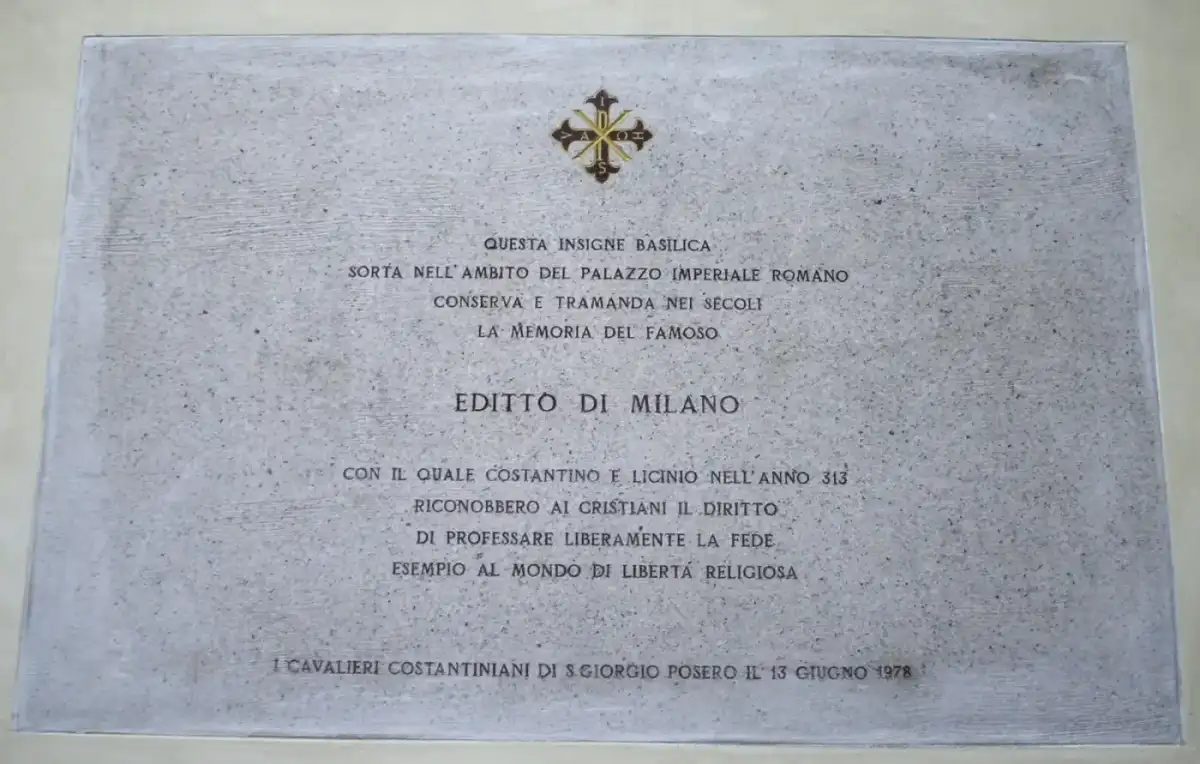
In 311 the emperor Galerius issued the Edict of Serdica which granted Christians forgiveness, then confirmed by Constantine I and Licinius, who granted Christianity the status of Relic Licita with the Edict of Milan in 313. The last straws of persecution overlapped with the first struggles against heretics; after a few decades the persecution of pagans would begin.
Historical sources
Latin sourcesExplore this chapter
The analysis of contemporary findings and documents and the comparison between the accounts of ancient historians has allowed a certain consensus on the general history of persecution. The most detailed investigation of the events and individual characters involved is more problematic as it can be based almost exclusively on Christian sources.
The main Christian authors useful for the history of persecution are Justinian[2] and Cyprian of which there are some important writings.
- Several news can be desunted by the numerous works of Tertullian (about 155-230), although it was not a historian but an untransigent apologeta.
- At Lattanzio (about 250-327) is generally attributed De mortibus persecutorum, which aims to instruct Christians on the fate of God's enemies, starting with the persecutors. Other useful information is provided by his work Divinæ instituciones.
- The most important sources are probably the works of Eusebius (265-342), bishop of Caesarea, in particular the Ecclesiastical History, the Chronicon and the De martyribus Palestine. In them Eusebius reports both past events and others contemporary to him.
Latin sources
A document of exceptional importance is the correspondence between Pliny the young and Emperor Trajan on the conduct to be held against Christians.
Tacitus represents a very important historical source, but only for the persecution under Nero. Fragmentary news has left Svetonio, Dione Cassio, Porfirio, Zosimo and others.
The motivations
The public cult of the traditional Roman religion was closely linked to the state: making sacrifices to gods and respecting rites meant establishing a pact with...Explore this chapter
The public worship of traditional Roman religion was closely linked to the state: making sacrifices to gods and respecting rituals meant establishing a pact with deities, in exchange for their protection. It was easy to integrate the gods, rites and beliefs of other populations in this system. Even Judaism, as an ancient religion of a people, was tolerated by the authorities, although with difficulty, since the times of Julius Caesar: Jews could observe their precepts and were exempt from official rites (but with Vespasian they were subjected to the fiscus iudaicus[3]). In the incipit of the XVI chapter of his work, in fact, Gibbon acutely identifies the reasons on the basis of which the nascent Christian religion should have aroused, in public opinion and in civil and political institutions, feelings if not exactly of admiration, then at least of tolerance, rather than persecutory attitudes. These hostile attitudes towards Christians were partly due to a sort of confusion that was initially made between Christians and Jews, so much so that Suetonius and Dio Cassius report that the emperor Claudius (41-54) would have expelled from Rome the "Jews" who were creating disturbances in the name of "a certain Kriste"[4][5].
The tolerance reserved to the Hebrews, despite affirming God's exclusive knowledge, believing empionate any other cult, and almost refused the human community enclosing in a sect that disdained contacts with the outside, however came to fail at the time when the Jews themselves, unique in the empire, refused to pay the contribution to Rome: it was illegal, maintained, pay taxes to an emperor (and to an invading people). The Jews had never concealed the insufficiency, often vented into bloody revolts, against Rome, whose legions were equally often due to intervene with severe reprisals and repression. But after the first Jewish war, the destruction of the Temple of Jerusalem, the reduction in slavery and the diaspora, the Jewish people softened the untransigent positions and in different ways they interwoven into the population of the Roman Empire, while maintaining their own individuality as a people, enshrined also by derogues and particular laws.[6].
The substantial difference between Jews and Christians, which allowed the first to freely profess their faith while dealing with severity, hatred and disregard that of the second, was that those were a “nation”, while others were a “cult”; respect for religious institutions of their fathers was a duty, and the antiquity of the sacred Jewish laws, adopted for centuries by an entire people gave the Jews the right to undergo those obligations and those obligations. Christians, on the other hand, ignored the sacred institutions of their fathers by evangelical law, despising what they had for centuries considered sacred. Moreover, this displacement from the “natural” faith instead of bringing them closer to the official one of the State, led them to a more marked contempt of the gods and institutions of Rome, which manifested itself in rites, secret meetings and a general rejection of the human race that was not mitigated by the unducking righteousness and morality of believers[7]. Christians prayed for the emperor and the empire during their religious services and regularly paid tribute to Rome. The refusal to worship the emperor as God and to perform divine worship among the pagans earned them defamatory accusations of practicing magical rites, witchcraft, of being lovers of darkness and unproductive workers.
In time then, the Romans identified in Christianity what they considered "atheism". For them Christians were Jews and pagans who had betrayed their gods and therefore their people, gathered in secret to practice seemingly magical rituals, inciting others to do the same and electing to their own divinity a spiritual and non-representable entity, for whose worship were not foreseen temples, altars, sacrifices, and that was therefore far from the rooted pagan mentality. This betrayal not only threatened the pax deorum and the authority of the emperor as a maximum pontiff, but could “be seen as proof of subversive political intentions”[8][9]. Pliny the Younger will define Christianity survivors, a term that indicated "any religion involving an excessive fear of the gods"[Note 1] and therefore probable cause of popular disorders. As such were repressed also magic and astrology, and had previously been the Bacchanals, druidism and cult of Isis[10][11].
The very figure of Christ was suspicious; not so much because of his human nature, since even Bacchus, Hercules and Esculapius had been, for pagan beliefs, divinized human figures (not to mention the same emperors). But in those cases it was ancient heroes who had deserved the divinization, while in the case of Jesus it was, incomprehensibly, a dark "master", recent, born in conditions of misery to a submissive people, without fame and success, died with dishonour[12].
Although the first bishops invited to recognize the state[Note 2], abstaining from official rites (considered idolatry) practically forced Christians into contemptuous isolation, and this further ignited popular intolerance. The Romans were also disconcerted by the abolition in these groups of any distinction between men and women, rich and poor, slaves and free, locals and foreigners[Note 3]. Furthermore, conversions caused irreconcilable family conflicts[Note 4]. Their rules of life were also disapproved of by the authorities[Note 5], and it is possible that sometimes riots broke out within the Christian communities themselves to justify their intervention[13].
With these premises, it is not surprising that Christians are annoyed by public opinion and the prohibition of secret aduncies (although for any other community). But they were dedicated to worship, and were therefore irrelevant: from this disobedience to the state in the name of a superior authority, which could not obviously be tolerated and thus legally authorized the administration of punishments and even severe penalties that proved impotent and ineffective to eradicate the alleged danger, since the community of Christians continually increased.
If at first the adunces were kept hidden for reasons of prudence and necessity, soon secrecy became a free choice, but it turned out to be a very dangerous weapon against the same community of faithful[Note 6]. Furthermore, it was certain that they worshiped a donkey-headed god[14][15]. In most cases, Christians managed to shake off the burden of slander and insults, but apologists soon used this equally falsely defamatory weapon against schismatic Christians, unleashing a war of slander that overlapped with the theological disputes between them and the Orthodox, which in fact produced the sole effect of making the Christian community even more disliked by pagan society.[16].
The opposition could also arise, with the growing of communities, from economic damage caused to various categories involved in official cults[Note 7][Note 8].
Attack against Christianity of the first emperors
Some epistles apocryph of dubious attribution speak of a message sent by the prefect of Judea Ponzio Pilate in Tiberius in 35, concerning the crucifixion of Jesus of...Explore this chapter
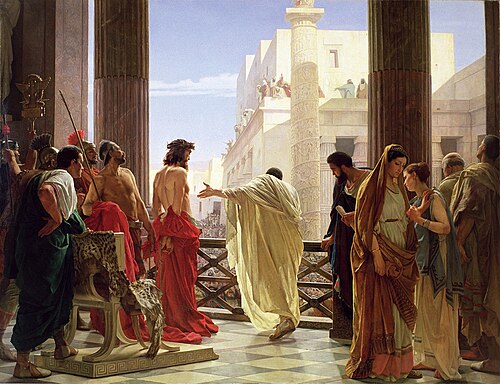
Some epistles of doubtful attribution speak of a message sent by the prefect of Judea Ponzio Pilate in Tiberius in 35, concerning the crucifixion of Jesus of Nazareth. The Emperor would later present to the Senate the proposal for recognition of Christianity as Relic Licita but, having received a refusal, he would only place the veto to accusations and persecutions against the followers of Jesus[17]. The debate on the existence or otherwise of this senate consultation is still ongoing[18]. However, it is almost impossible to think that already in 35, shortly after the condemnation of Christ, Christianity was considered such an important religion to be discussed in the Senate.
We do not know anything about the Emperor's attitude towards early Christians: in this regard we do not know any official measure, but it is certain that Jesus' followers were never persecuted under the Tiberius empire.[17].
Persecution of Nero
The first 50 years after the death of Jesus were basically quiet, except for the black-and-white bracket. Christians, who came directly from the Jews, both from a point of view...Explore this chapter
The first 50 years after the death of Jesus were basically quiet, except for the black-and-white bracket. Christians, who came directly from the Hebrews, both from a territorial point of view and as a foundation of faith, had the first clashes with the Jews, who badly endured the bulky and growing presence of this new religion, considered a sect of unbelievers. But the Roman magistrates, to which they turned in an attempt to remove those annoying rivals, were not interested in theological disputes of which they did not understand either the essence or subtleties, and therefore considered it appropriate to limit themselves to checking that those disputes did not result in disturbances of the public order. In this situation, although in semiclandiness, Christians began to expand for the civil world[19].
The first persecution, during the reign of Nero, in 64, is described by the Latin historian Tacitus and was due to the search for a scapegoat for the great fire of Rome: this in fact provoked "a brief but strong persecution by Nerone, who counted, first of all, to serve Christians as whims and then to suppress this 'pernicious superstition' (...)».[20]
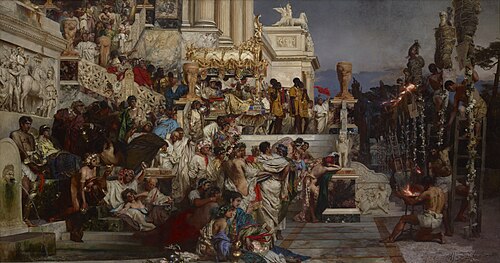
The emperor tried, it seems, with every means of alleviating the sufferings of the victims of catastrophe and homeless, offering hospitality in the imperial gardens, building temporary shelters, distributing grain and living and engaging in immediate reconstruction, but in the eyes of the Neron people was still the murderer of his brother, wife and mother, a despicable being who prostituted himself and his dignity. The common people believed that such an individual could be capable of any crime, including the destruction of Rome. The people suspected him; Nero had yet to find guilty[21]. According to Tacitus, first those who confessed would have been arrested and then, upon reporting them, many would have been condemned, but not so much because of the crime of the fire, but because of their hatred towards the human race.[Note 9].
Numerous Christian sources[22] They testify that the apostles Peter and Paul suffered martyrdom in Rome precisely in that persecution. In particular, according to these sources[Note 10], Peter was crucified, while Paul was beheaded. Tacitus describes the tortures to which the Christians were subjected by Nero who, however, despite their presumed guilt, aroused pity as they were punished not for the public good but for the cruelty of a single person ("et pereuntibus addita ludibria, ut ferarum tergis contecti laniatu canum interirent aut crucibus adfixi atque flammati, ubi defecisset dies, in usum nocturni luminis urerentur». in the Annales, XV, 44, 4: "And those who died were also mocked: covered with animal skins to die torn by dogs or burned at the crosses and given on fire because, fallen on the day, they burned like night torchs."[Note 11]. Suetonius also confirms that Nero had sent the Christians to execution and defines them as "a new and evil superstition", without, however, linking this measure to the fire. Nero's persecution was, however, limited to the walls of Rome.
Persecutions before 250
Persecutions under the reign of Domiziano · Persecutions under the reign of Trajan · From Antonino Pio (138) to Commodo (192)Explore this chapter
Persecutions under the reign of Domiziano
During the reign of Emperor Domitian (81-96 AD) were accused of atheism and "adoption of Jewish customs" some senators and consuls Acilio Gabrione and Flavio Clemente with his wife Flavia Domitilla. They were all executed except Flavia Domitilla who was exiled and of whom Eusebius says he was Christian. However, it is very probable that the alleged affiliation of Clement to Christianity was a news created by art to engulf the public image of man and dampen the reaction of the Roman people, who was supporting his conjoinment with the help of some generals to discard Domiziano. In fact some contemporary texts speak of a recrudescence of persecution under his reign, but the subject is still debated.[23].
Persecutions under the reign of Trajan
There are some very important documents left of the persecutions at the time of Trajan. The first is a letter sent to the emperor by Pliny the Young when, around 110, he was linked in the province of Bitinia. Pliny describes the line followed until then with Christians and their accusations, but asks for further clarification on how to behave with them. In the letter is found negative judgment against Christian religion widely diffused in the imperial and intellectual circle of the time, and shared by Pliny himself: "nihil aliud quam survivoronem" ("the other that superstition"). The second document is the rescript, i.e. the official response, in which the emperor said mode to treat the Christian question that would have remained valid for almost 140 years: no active research of Christians, but, in case of complaint, they had to be condemned if they refused to sacrifice to gods; anonymous complaints were rejected[24]. The correspondence provides some interesting information: apart from sharing common opinion, Pliny knew almost nothing about the Christians, much less about their alleged crime, the penalties to be inflicted and the rules and procedures to be applied towards them; from this it can be deduced that at the time there were no anti-Christian laws or decrees, that even the emperors had never officially taken a stand against them and that no trial held against Christians had been so important as to be able to constitute a useful precedent for a magistrate of Rome. Trajan's response, on the other hand, which shows the difficulty of establishing a rule, seems more attentive to the protection of the innocent than to the persecution of the guilty: hitting the guilty, but refraining from searching for them by proceeding automatically on the basis of complaints, especially if anonymous, rather than requesting proof of sacrifice to the gods[25]. With Trajan the persecution of Christians began to be managed by the central state.
In fact, the judges of the courts of the Roman Empire were rarely those executioners who the contemporary apologetic and the following centuries, too careful to bring out the virtues of martyrs, tried to present; the possible condemnation of Christians for whom the prosecution had been proven, was not so much due to the guilt of being Christians, but rather to their resistance that they could put in place in the sacrifice of gods (as far as they were guilty). Moreover, the humanity of certain judges (and Tertullian cites several examples), led them to exclude, for the crime of Christianity, the death penalty, rather preferring a detention penalty, exile or slavery in the mine (which could however allow a possibility of “recovery”); the maximum punishment was usually reserved to clergy representatives, so that their punishment served with example and whose sufferings were limited[26].
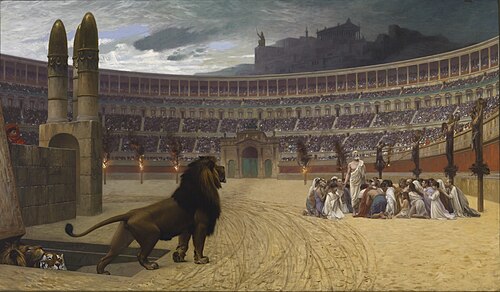
Claude Lepelley[27] considers the seven letters written in those years by Ignatius of Antioch as he was transferred to Rome to be fed to the Belgians. In the Letter to the Romans expresses joy as “greased by the teeth of the fairs” will become “pure bread of Christ”. It is a document on the spirituality of martyrdom and that Christians, in certain cases, were punished as dangerous criminals. Some of them would have, especially in the early days, welcomed with enthusiasm the possibility of obtaining martyrdom: the writers of the Christian church of the beginning dealt a lot with the conditions under which acceptance of martyrdom could be considered an acceptable destiny, or vice versa, to be considered almost as a suicide. The martyrs were considered examples to follow of the Christian faith and few of the first saints were not even martyrs. At the same time suicide was considered a grave sin and was associated with betrayal of his faith, the exact opposite of the "witness" of it in martyrdom: in the manner of Judas the traitor, not of Jesus the savior. The Martyrdom of Policarpo, from the 2nd century, records the history of Quintus, a Christian who handed himself over to the Roman authorities, but in an act of cowardice ended up sacrificing to the gods when he saw the wild beasts in the Colosseum: "For this reason then, brothers, let us not praise those who hand themselves over, because the gospel does not teach this." John the Evangelist never accused Jesus of suicide or self-destruction, but rather says that Jesus chose not to resist arrest and crucifixion.
From Antonino Pio (138) to Commodo (192)
Adriano and his successor Antonino Pio confirmed Trajan's rescript, establishing severe penalties for those who had advanced a false charge of Christianity.[28]. Around 155, under Antoninus Pius, the bishop of Smyrna Polycarp died as a martyr, as narrated in Acts deemed reliable[29].
Many disorders also occurred under the reign of Marcus Aurelius, marked by epidemics, famines and invasions. Several times the crowds hunted Christians, believed to be responsible for the anger of gods, and martyrs were numerous.[30]. An invective by Marcus Cornelius Fronto also dates back to this period. To incite the population against the followers of the new religion, he accused them of infanticide, provoking violent anti-Christian reactions in Asia and Gaul.[31].
In 165, according to Eusebius of Caesarea, he fell martyr Justinian, sentenced to death by the consul Quintus Rustic.
In 167, according to the Historia Augusta, Marcus Aurelius issued an edict, with which he ordered public sacrifices and purifying rites to obtain the protection of the gods against a barbarian invasion that reached Aquileia; the imperial decision provoked protests from some bishops and Christian apologists, such as Miltiades and Melito of Sardis. In those years the Christian philosopher Athenagoras sent numerous letters to the emperor, defending Christians from accusations of cannibalism and incest. The Christian demands caused the opposite effect, triggering a violent popular reaction against the Christians, for which, however, the emperor cannot be blamed.[32]
In the fifth book of his Historia Ecclesiae Eusebius of Caesarea contains the main pieces of "Letter of the churches of Vienne and Lyon to the churches of Asia and Frigia": in it are documented vexations against about fifty Christians, mostly foreigners, and their executions capital occurred in Lyon in the year 177. Of these Christians, tortured and thrown into prison, many died by suffocation. The crowd, already pervaded by xenophobia[8] and aized by false accusations (cannibalism and incestuous relationships) spread on the behalf of Christians, he infierated on them no more concerning the age or sex of the condemned: the ultra-novating bishop Potino, lincited by the crowd, flew into prison; the fifteenth Pontic and slave Blandina, after being forced for days to assist in the execution of others, were tortured themselves.
Around 178-180 the platonic philosopher Celso wrote against Christian religion and in defense of traditional religion Logos alethes ("Discourse of truth"), which we know only from the polemical refutation made by the Christian theologian Origen, with his work of 248, entitled, precisely, Contrast Celsum ("Against Celsus"). There is a passage from the same work in which the author drastically reduces the number of martyrs, increased inappropriately by Christian apologetics.[33]
Marcia, the daughter of a freedom and lover of Emperor Commodus was instead of Christian sympathies; in fact she seems to have intercede for the liberation of Pope Callisto I from condemnation to mines (Damnatio a metalla) in Sardinia.
It dates back to 180, under the reign of Commodus, the episode of the twelve schillitan martyrs, remembered in the oldest of the Acts of Martyrs[34].
W.H.C. Frend argues that in the first two centuries the authorities acted as “passive recipients of people’s demands for the destruction of Christians”[35]. In accordance with Trajan's rescript, Christians were not wanted and their communities, although constantly threatened, were able to continue to grow. As previously, the heroism of the martyrs led many to admiration and conversion, including Tertullian, who became an apologist and wrote that "the blood of the martyrs was the seed of the Christians"[36]. Tertullian later became close to the Montanists, an extremist group disapproved of by orthodoxy which glorified martyrdom, pushing for self-denunciation and provocation of the authorities[Note 12].
From Settimio Severo (193) to Filippo l'Arabo (249)
The 3rd century, marked by a severe crisis of the Empire, will see a profound transformation of Roman religiosity. Eastern Mysteries in great expansion, such as mythraism, the cults of Cibele and Isis, Syrian cults and solar worship practiced at Emesa[37][38], will be integrated into the official religion, while this will not be the case for Judaism and Christianity.
Precisely to a family of priests of Emesa belonged the wife of Settimio Severo[39], emperor of Libyan origin close to oriental cults. No systematic persecutions were demonstrated under his reign, but rather his rescript of 202 which prohibited proselytism to Jews and Christians is considered the first case of direct initiative by the emperor in this area.[40].
However, it is a fact that individual officials felt authorized by the law to proceed with strictness towards Christians. Of course, the emperor did not hinder local measures, which occurred in Egypt, Tebaide and the proconsolate of Africa and the East. Christian martyrs were numerous to Alessandria of Egypt[41].
There were no less harsh persecutions in West Africa, which appeared to begin in 197 or 198 (cf. Tertullian To martires), whose victims are referred to in Christian martyrology as the martyrs of Madaura. Probably in 202 or 203 Perpetua and Felicita fell, as narrated in documents considered reliable[42]. Persecution raged again, briefly, under the proconsul Scapula in 211, especially in Numidia and Mauritania.
The following decades will be characterized by a relative tolerance, in which the Church can grow further up to the highest classes. The communities were no longer to hide, but indeed they were very active in charitable areas, managing increasing wealth thanks also to the heritage collected[43].
According to some Christian sources, Emperor Philip the Arab would have even been Christian himself[44][45].
The Persecution of Decio
In 249 Philip the Arab died in a battle against his General Decio, already proclaimed Augustus by his troops. The empire, attacked on all borders and in crisis...Explore this chapter
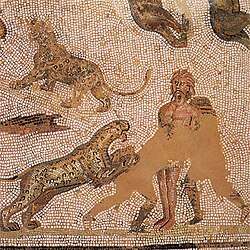
In 249 Philip the Arab died in a battle against his General Decio, already proclaimed Augustus by his troops. The empire, attacked on all borders and in political and economic crisis, was in grave difficulty and Decio set himself up in Rome determined to restore its greatness and values, not last the religion of the fathers. Immediately after the coronation, Decio arrested some members of the Christian clergy and, in January 250, killed Pope Fabiano.[46]
In March-April 250 Decio issued an edict that ordered all the citizens of the empire to offer a public sacrifice to the gods and emperor (formality equivalent to a testimony of loyalty to the Emperor and to the established order). Decio authorized itinerant commissions to visit cities and villages to oversee the execution of sacrifices and for the delivery of certificates written to all citizens who had performed them (many of these libels were found in Egypt[47]). Those who refused to obey the edict were accused of impiety, which was punished by arrest, torture and death. This edict constitutes the first systematic persecution against Christians. The Christians were divided between Lapsi who bowed to the orders of the emperor, Libellàtici who obtained false certificates relating to the execution of sacrifices in honor of the gods and the emperor, martyrs and confessors who sometimes managed to save themselves by fleeing.
Some events can be reconstructed by comparing the many Christian sources available (Cipriano, Eusebio, Acts of Martyrs). Cyprian explains that the authorities did not aim to make martyrs as well as obtaining apostasy with prisons and torture; the edict had a remarkable success: most of the faithful abiurò (and thus being defined) lapsis), in some regions en masse. The bishops tolerated such defections, wanting to save the lives of the faithful.
In Egypt, Africa and Anatolia many faithful fled mass out of the cities, sheltering in deserts and mountains. Among this was the bishop Dionisio of Alessandria and Cipriano of Carthage.[1] Usually, after the danger of persecution, everyone turned out to be penitents to obtain forgiveness and return to Christian society, which could not always be granted[48].
But the devout fervour of martyrs did not belong to all Christians; love for life and fear of punishment could not always be overtaken by mystic ardor who in some cases had prompted some to voluntarily throw themselves into the arms of the executioners in the name of faith. Among other things, some bishops also had to stop ardor that too many times had abandoned these aspirant martyrs at the supreme time. There were at least three ways to avoid persecution: escape, purchase of libel, the recantation.
Among other things, several Fathers of the Church (including Bishop Cipriano of Carthage) were resorted to this expedient that could allow them to continue the sacred office, once again normality. The second case was particularly welcome to those governors who presented the greed to respect for imperial edicts, and on the other hand the purchase of a Salvadoran put Christians (at least those wealthy) in a position of security: the gesture was reprove, and apart from the numerous discussions that arise about it, a penance was necessary to take advantage of the prophaned gesture. The third hypothesis could concern both some who were back at the first danger, both those who were overcome by prolonged fear or exhaustion for torture suffered. Usually, after the danger of persecution, everyone turned out to be penitents to obtain forgiveness and return to Christian society, which could not always be granted[48].
Fortunately for Christians, this persecution ended up resuming the war with the Goths that the following year victimized the same Decio. In North Africa, however, the consequence was a serious division between Christian communities in the area, some of which turned their backs on members who had temporarily mired their faith because of the hardships suffered. Several councils held in Carthage debated until the community had to accept these Christians who had given up to the demands of the Romans, and the question is widely dealt with in the works of Cyprian, bishop of Carthage. Probably the lapsis they were mostly Christians of recent conversion, but among them there were also some bishops; in this regard it is interesting that Cyprian blames some bishops attached more to money than to faith[49]. The hostility continued even in the short reign of Decius' successor, Trebonianus Gallus[49][50][51], who ordered all his subjects to perform sacrifices in honor of Apollo following a severe plague that ravaged the empire.
Fortunately for Christians and other persecuted cults, Decio died 18 months later in battle against the Goths and his edict decadde. However, the victims were hundreds[1][52], although Dionysius of Alessandria reports only 17 Christians in his immense city, thus confirming Origen's downsizing[53]: Pope Fabiano, Babila of Antioch and Alexander of Jerusalem were among the first to be arrested and undergoing martyrdom.
The tensions between empire and Christians continued with the subsequent Emperor Treboniano Gallo: in 252 Pope Cornelius was arrested and led to Centumcella (today's Civitavecchia), where he died in June 253. Cyprian repeatedly states that Cornelius was martyred; the Liberian catalogue report «ibi cum glory dormcionem accepit», and this may mean that he died because of the rigours to which he was subjected during his deportation, although later documents claim that he was beheaded.[54]
The persecution of Valerian
After an initial period of extreme clemency, Valerian resumed, as already Decio, the persecutions at a difficult time for his kingdom; of such events we remain...Explore this chapter
After an initial period of extreme clemency, Valerian resumed, as already Decio, persecutions at a difficult time for his reign; of such events there remain Christian testimonies, mainly Cyprian and Eusebius. He began in 257 with a first edict that imposed bishops, priests and deacons to sacrifice to the gods, punishment for exile, and also prohibited Christians from cult assemblies by seizing churches and cemeteries. The decree punished by death who had visited the cemeteries or attended religious adunities. A second edict of 258 sanctioned the death penalty for those who refused sacrifice and added the confiscation of goods for senators, knights and cesarians. Those who had persisted in faith after the decadence of public office and confiscation of property, were sentenced to death; the matrons were condemned to exile, while the officials of the imperial demanius were sent to forced labor under slavery. The death of the bishop of Rome Sisto is reported in a letter from Cyprian; he himself, initially exiled, according to the Acts was beheaded a few weeks later[55]. Violent persecutions occurred in Africa, while numerous cases of martyrdom occurred in Palestine, Lycia and Cappadocia.[32]
When in 260 Valerian was taken prisoner by the Sasanians, his son Gallieno granted everyone to return from exile and returned their goods to churches, inaugurating forty years of peace for Christians, only disturbed by some passing threat. In 274, in fact, Aureliano anteposed to all pagan deities the Sol Invictus, establishing a sort of official monotheism[Note 13]. The Christians therefore still professed an illicit religion, but they were not actively persecuted and were able to return to welcoming new believers, increasingly spreading even among the aristocracy and the countryside[56].
However, Aureliano's position went beyond that of a simple tolerance towards Christian religion, which was recognized as a fact and an important presence in society. In fact, in his reign the episode concerning the Bishop of Antioch Paul of Samosata, who considered his ministry as a lucrous profession and exercised it with more consonant methods to an imperial magistrate than to a bishop, without neglecting a libertine conduct. The scandal deferred by the management of his office did not shake so much the official Church as its heretic convictions about the Trinity.
He was destituted by two councils but managed to remain in his place until, fearing that the matter would arise in disorders, the same emperor had to intervene. Far from entering into theological questions and in judgments on orthodoxy, he delegated the judgement to the Italian bishops, judged the most impartial and respectable, and immediately executed their judgment of condemnation of Paul, forcing him to abandon his seat and placing a successor in his place. The event is of great importance, as it demonstrates how much the emperor could no longer recognize the presence and influence of Christian institutions.[57].
Diocletian and Galerius: the “great persecution”
As he ascended to the throne in 284 after complex struggles of power, Diocletian wanted to establish with the tetrarch a more stable system of government founded on two Augustes (called a Iovius...Explore this chapter
As he ascended to the throne in 284 after complex struggles of power, Diocletian wanted to establish with the tetrarch a more stable system of government founded on two Augustes (called one Iovius – he himself – and the other Herculius) and two Caesars with the same names destined to become Augusti after ten years. Dividing the empire between four sovereigns entailed a strong risk of disintegration, which Diocletian tried to balance with a decisive centralizing absolutism: after having unified the language (Latin), the currency (the madness) and the price system, he also wanted to standardize religion in the cult of Sol invictus, associated with Mithras. The references to Jupiter and Hercules also underline the desire to base the absolute power of the tetrarchy on the traditional religious system[13][58][Note 14].
Nevertheless, for eighteen years Christians lived in a situation of peace and tolerance, which allowed them to enter court, as well as important palace officials, Prisca and Valeria, wife and daughter of the emperor. But this freedom and tranquility had as an effect of loosening discipline within the clergy and leading to corruption of religious customs and principles among the faithful. In addition, the indifference and disinterest of pagans for a minority sect were alarmed by the progress and spread of Christianity, which had now been infiltrated everywhere and who claimed to be the only depository of truth, condemning a faith in the gods consolidated for centuries. There were violent disputes that betrayed the irritation of state religion against the alleged awareness of Christians to constitute a growing reality. The situation was critical, especially that the two Maximian and Galerius theorists did not hide their adversity against Christianity and indeed, in their jurisdictions, they did not fail to implement more or less hidden forms of persecution. Galerius, in particular, disgraced or justified as deserters a large number of Christian soldiers and officers, fueling the opinion that Christians were a danger to public security and the same empire.[59].
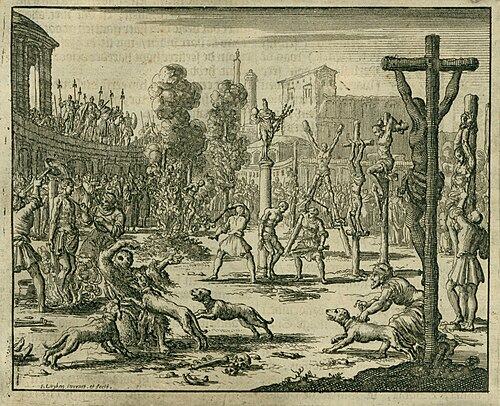
Persecution was anticipated in 297 by the proscription of masonism (with arguments valid also to Christians). Christian sources – Eusebius, Lactation and others – have limited recontrials, but are numerous and circumstantial[60].
Diocletian's reluctance to act against Christians was overcome by Galerio's insistence, who persuaded him to gather advice on the subject. As precise evidence of those meetings were missing, the arguments that bent the doubts of the emperor were certainly those dear to Galerius: Christians had created a state in the State, which was already governed by their own laws and magistrates, possessed a treasure and maintained cohesion thanks to frequent meetings held by bishops, whose decrees the communities blindly obeyed; there was fear that they could give life to rebellion.[61].
On 24 February 303 the first edited was posted in Nicomedia[Note 15], which ordered: a) the burning of sacred books, the confiscation of church assets and their destruction; b) the ban on Christians from gathering and attempting any type of defense in legal actions; c) the loss of office and privileges for high-ranking Christians, the impossibility of achieving honors and jobs for those born free, and of being able to obtain freedom for slaves; d) the arrest of some state officials.
This new form of persecution, based on precise laws, on the one hand exasperated the souls of Christians, on the other was subject to abuse and acts of violence by non-Christians.
Within a few days, for two times the palace and rooms of Diocletian underwent a fire. The strange coincidence was considered proof of the painfulness of the two events, and the suspect obviously falls on Christians. Diocletian, feeling threatened in the first person, abandoned all residual prudence and stiffened persecution. Despite the many arrests, torture and executions, both in the palace and in the city, no confession of responsibility could be extorted. But some people suspected Galerio's frantic departure from the city, justifying it with fear of being victim to hatred of Christians.[62].
Perhaps due to the initial lack of animosity towards the persecution by Diocletian, who wanted perhaps to verify its outcomes personally before having to intervene on a large scale, strangely the edict took almost two months to arrive in Syria and four to be made public in Africa. In the various parts of the empire, the magistrates and governors applied with varying severity (and sometimes with mildness) the decree, but the victims and destruction of churches were numerous, as many were the rogues of sacred books[63].
Following some disorders whose responsibility was abducted to the bishops, anger or fear gave up Diocletian's residual moderation, and a few months after the first, a second edict ordered the arrest of all clergy, with the intention of definitively erasing the structure of the Church. A third edict led to emptying the prisons that in this way were overcrowded: prisoners had to be forced to sacrifice with every means to the pagan gods, and then freed. The last edict, at the beginning of 304, imposed on all citizens of the empire (but it was obviously addressed above all to Christians) to sacrifice to gods; severe punishment were also provided for those who protected Christians.[64]
Eusebius will call a real war the years that followed: many were lapsis, but also the martyrs[52]. The greatest number of victims occurred in the area controlled by Diocletian (Asia Minor, Syria, Egypt), where Christians were very numerous; in the less Christianized Balkans, Caesar Galerius, often cited as the inspirer of the persecution, was equally harsh. Even in Italy and West Africa, governed by the august Maximian, the violence was harsh and there were many martyrs, even if the fourth edict was applied in a limited way; instead in Britain and Gaul the Caesar Constantius Chlorus, father of Constantine I, only applied the first edict[Note 16]. Regarding the martyrs of this period, there are epigraphic testimonies and hagiographies considered authentic[65].
Following the abdication of Diocletian and Maximilian in 305 and the death of Constantine Cloro in 306, the struggles of power were unleashed in the West which gradually removed energy from persecution until they ceased. Conversely in the East with Galerio, who became Augustus, and his nephew Massimino Daia, continued hard[Note 17]. Rather than executed, Christians were now imprisoned, tortured and sent to forced labor in the mines in Egypt, a perpetual punishment that quickly led to death[66].
The last stages
On April 30, 311 Galerio issued the Tolerance Edith ordering the cessation of persecution. In the text transcribed by Eusebio (book IX, cap. 1), Galerio explains the...Explore this chapter
On 30 April 311, Galerius issued the Tolerance Edict ordering the cessation of persecution. In the text transcribed by Eusebio (book IX, cap. 1), Galerius explains the reasons for persecution by admitting that they did not lead to the hoped results, since Christians no longer turn to pagan gods or their gods.[67]:
And since the edicts we have published to maintain in force the worship of gods, they have exposed many Christians to dangers and calamities, because many have suffered death and many others, who still persist in their unequivocal folly, have remained devoid of every public exercise of worship, we are willing to extend to those unhappy the effects of our ordinary clemency. We therefore allow them to freely profess their private opinions and to make their small meetings without fear or harassment, provided however they always retain due respect to the laws and this government. Through another rescript we will indicate our intentions to judges and magistrates and hope that our indulgence will lead Christians to offer their prayers to the god they worship, for our health and prosperity, of the Empire and proper.[68]»
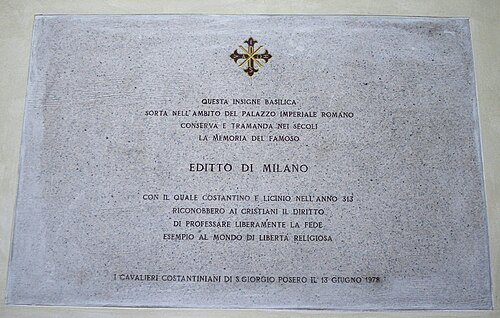
In fact, persecutions had already been flooded, and in the struggles for power Christians could not have played an important role.[69]. On the other hand, Galerius' edict was not sufficient to calm the anti-Christian violence. Above all, his successor Maximinus Daia, a convinced anti-Christian, tolerated for a few months the renewed freedom granted to Christians by his predecessor, then in November 311 he resumed the persecution, attempting by every means to re-establish the practices of the pagan religion. He also went so far as to establish a government system copied from that of the Church: he created a "pagan hierarchy" on the model of the ecclesiastical hierarchy.
These further persecutions certainly caused considerable suffering to Christians but the Romans avoided bloodshed, not going beyond the confiscations and requisitions of their goods.[70] In 313 Massimino Daia was defeated by General Licinio.[71]
After the victory over Massenzio[Note 18] at the Milvio bridge, obtained on 28 October 312, the confirmation of Galerio's edict (in 313) allowed the definitive freedom of worship to Christians throughout the western part of the empire ("Editto di Milano"). One of Constantine's first decisions in the West, after the Edict, was to take a position against donatists.[72], which were dividing the Church of Africa.
According to Eusebio, Licinius, who had also shared in Milan the tolerant line of Constantine, would then be protagonist of a new phase of hostility, in which however martyrs would not have been many[73][74]. Flavius Claudius Julianus (who the Christians would have called Julian the Apostate), the last pagan emperor of Rome, removed Christians from public office, deprived them of the right to teach classical literature, and showed tolerance towards the massacres of Christians carried out by pagans[75]. The attitude of the Christians towards the ancient religion must also have resulted in violence if one element of the disagreement between them and the emperor Julian was the sentence to pay for the reconstruction of a pagan temple set on fire by the Christians[76][77].
According to WHC. Frend the persecutions left in inheritance the struggle against heresies and separation between Church and State[78]. With the Edict of Thessalonica in 380, which declared Christianity the official religion of the empire, the situation was reversed, and persecutions against pagans began.
Controversity
Based on phrases from the Tertullian apologist, starting with Enlightenment and Edward Gibbon, several historians have attempted to resize the real scope of the...Explore this chapter
Based on phrases from the Tertullian apologist, beginning with Enlightenment and Edward Gibbon, several historians have attempted to resize the real scope of persecution even if this opinion is not shared by other historians.[1] Some stories of martyrs are now considered legendary, such as the alleged "martyrs of Giuliano" (361-363), which would be hinded to the edict of tolerance, or some saints from uncertain existence as Caesarius of Terracina. Finally, for example, the historian of early Christianity and biblical Candida Moss in the book Ancient Christian Martyrdom , published in 2012, proposed the thesis according to which Christian martyrdom developed over the centuries in different ways depending on the historical context, thus distancing itself from the prevailing view among scholars who considered martyrdom as a common phenomenon in all regions of the Roman Empire. In the book The Myth of Persecution: How Early Christians Invented a Story of Martyrdom ("The Persecution Myth: How the Early Christians Invented the Story of Martyrdom") claimed that the biographies of the early Christian martyrs had been altered, modified, and shaped by successive generations of Christians, meaning that not a single one of them was "entirely historically accurate."[79] He added that in the first three centuries of Christian history Roman emperors would in his opinion persecute the faithful of Jesus for a twelve-year span at most[80], denying the majority of persecutions in this period as local, isolated, exaggerated or even invented for apologetic purposes, to replace pagan figures and out of interest in fueling the cult of relics from the fifth century onwards. The first real, and only, official persecution would have been that of Diocletian, although Moss believes that it too should be scaled down at least in numbers.
Notes
ReferencesExplore this chapter
- ^ W. Liebeschütz Roman religion in AA.VV. History of Rome - vol. 2 The Mediterranean Empire, volume III Culture and the Empire, 1992 Einaudi, p. 265; on p. 267 expresses skepticism about Christians' fear of conspiracies.
- ^ Lepelley cit. a p. 230 recalls the invitation of Clement of Rome to pray, according to the Pauline tradition, for the depositories of authority.
- ^ "Since the time of Jesus, Christianity was in conflict with external society. Fundamentally this fracture originated from the new conception of man as a spiritually free individual [...]" in C.G. Starr, "History of the Ancient World", Editori Riuniti, 1977. On overcoming traditional gender distinctions or civil states, see Letter to the Galatians of Paul of Tarsus, "There is no longer either Jew or pagan, neither slave nor free man, neither man nor woman".
- ^ Meeks cit. p. 299. A p. 300 the author adds: “In any case, conversion of the great majority of Christians was undoubtedly less radical than their leaders would have desired,” explaining that most Christians were inserted into society in almost every class. Tertullian also confirms it, v. Frend, 2006 cit. p. 512.
- ^ Galerio, in a passage of the Edict of tolerance translated into Marcone cit. p.230-1 would later write: “this was the sense that Christian had taken over, that they did not observe those institutes of the ancients, which perhaps were created by their fathers, but to their own arbitrary, as well as they held, they gave themselves the laws to be observed and gathered various peoples in the most diverse places.”
- ^ explicit quotation inOttavio by Minucio Felice, recalled in "Storia dell'Italia Religiosa", edited by Gabriele De Rosa, Tullio Gregory, André Vauchez, Laterza, 1993.
- ^ Meeks cit. p. 299 reports that already with Pliny the Young in Bitinia, densely Christianized, butchers who sold meat of sacrificed animals were damaged by the desertion of cults.
- ^ Marcone cit. p. 239 places among the reasons for Massimino Daia's persecution the defense of official religion and incomes produced by pilgrimages and religious parties.
- ^ I hate humani generas convicti could also be translated as "hate of the human race towards Christians", but generally the opposite version is accepted. See also Gibbon, op. c., p. 232, note (32).
- ^ Origen is cited in Ecclesiastical History by Eusebius of Caesarea to book III, I, 1-3, and specifies that he was crucified at head down
- ^ Gibbon (op. c., p. 233), he remarked acutely that the theatres of these massacres were mainly the gardens and the Circus of Nero, both on the Vatican Hill, which would later become the center of Christianity.
- ^ C. Lepelley cit. p. 250, argues that mountaineering ideas on martyrdom were probably among the causes of repressions under Marcus Aurelius.
- ^ For Liebeschütz (cit. p. 249) this initiative was consonant with tradition and should not be overestimated.
- ^ According to the Latin historian Sesto Aurelio Vittore reported in Chastagnol cit. p. 200 “First among all, Diocletian will tolerate that he was worshipped and turned to him as a god” (The Caesars, 39.4); Marcone, cit., on p. 229 instead believes that in this he did not differ much from his predecessors.
- ^ According to the witness Lattanzio (reported to L. Pietri, cit., p. 174 and Gibbon, cit., pp. 266-267), already the day before, feast of Terminal, the church of Nicomedia located in front of Diocletian's palace was attacked. The doors were opened, the scriptures burned, the sanctuary destroyed.
- ^ Marcone, city, p. 235; p. 236 reports as at the end of the persecution lapsis of the areas ruled by Costanzo Cloro were only rebuked to have given the sacred books, a sign of a milder conduct.
- ^ Marcone, city, p. 239 mentions an inscription found in Colbasa in Panfilia which attests tax relief for the regions that collaborated against Christians.
- ^ Marcone, city, p. 237 argues that Massenzio adopted a tolerant policy with Christians. Gibbon, city, on page. 274 adds that this tolerance was due to the interest of earning a large and rich population to its cause.
References
- ^ to b c d Alessandro Barbero: persecution against Christians, time and history. Retrieved 23 March 2021.
- ^ Philippe Bobichon, Persécutions, calomnies, 'birkat ha-Minim', et émissaires juifs de propagande antichrétienne dans le Dialogue avec Tryphon de Justin Martyr, in Revue des Études Juives, vol. 162, n. 3-4/2003, pp. 403-419.
- ^ W.H.C. Frend Persecutions: genesis and legacy in AA.VV., The Cambridge History of Christianity - Vol. 1: Origins to Constantine, 2006, New York, Cambridge University Press, p. 506
- ^ Claude Lepelley, Christians and the Roman Empire, p. 227.
- ^ W.A. Meek Christianity in AA.VV. History of Rome - vol. 2 The Mediterranean Empire, volume III Culture and the Empire, 1992 Einaudi, p. 284
- ^ E. Gibbon, Decadence and fall of the Roman Empire, Avanzini and Torraca Ed., Rome, 1968, vol. II, pp. 220-222.
- ^ Gibbon, op. cit., pp. 222-223.
- ^ to b Meeks cit. p. 301.
- ^ Frend, 2006 cit. p. 504.
- ^ Lepelley cit. p. 232-233.
- ^ Liebeschütz cit. p. 260 ss.
- ^ Gibbon, op. cit., pp. 224-225.
- ^ to b A. Marcone cit. a p. 223 reports W's thesis. Portmann, Zu den tun der diokletianischen Christenverfolgung in the History, XXIX (1990), pp. 212-248 "for which the Diocletian persecution (and, to a certain extent, the previous ones of the third century) would have been motivated by the threat against public discipline represented by the disputes "between" Christians".
- ^ Lepelley op. Cit. p. 242.
- ^ Frend, 2006 cit. p. 507-9.
- ^ Gibbon, op. cit., pp. 226-228.
- ^ to b Antonio Spinosa, Tiberius, p. 209.
- ^ M. Sordi-I. Coppers, Senatoconsulto of 35 in a porphyrian fragment, p. 59.
- ^ Gibbon, op. cit., pp. 230-231.
- ^ C.G.Starr, History of the Ancient World, Editori Riuniti, 1977. See also Tacitus, Annali, 15.44; Suetonius, Nero, 38; Cassius Dio, LXII, 16.
- ^ Gibbon, op. Cit. p. 231.
- ^ Tertullian, Scorpion, 15, 2-5; Lactantius, De mortibus persecutorum, 2, 4-6; Orosius, Historiarum, VII, 7-10; Sulpicius Severus, Chronicorum, 3, 29.
- ^ Lepelley cit. p. 229. - Frend, 2006 cit. p. 505-506. - Meeks cit. p. 297. – Gibbon, cit., pp. 237-238
- ^ Lepelley cit. p. 235-6. - Frend, 2006 cit. p. 506-8
- ^ Gibbon, op. C., p.g. 239-240.
- ^ Gibbon, op. C., p.g. 241-244.
- ^ Lepelley cit. p. 244.
- ^ Gibbon, op. C., p.g. 240-241 - Lepelley cit. p. 237 - Frend, 2006 cit. p. 508.
- ^ Lepelley cit. p. 245.
- ^ Frend, 2006 cit. p. 509.
- ^ Marta Sordi, Christians and the Roman Empire, Christians and the Roman Empire - Marta Sordi - Google Books, Jaca Book, 2004, and Karl Bihlmeyer - Hermann Tuechle, The persecution of Christians from Nero in the middle of the 3rd century Archived on 15 May 2011 at the Wayback Machine, 1960, in "History of the Church", vol. I, Morcelliana.
- ^ to b alessandro barbero Christian persecution - Bing video, up bing.com. Retrieved 23 March 2021.
- ^ Gibbon, op. c., p. 244.
- ^ Lepelley cit. p. 246-248.
- ^ Frend, 2006 cit. p. 511.
- ^ As reported in Lepelley cit. p. 225.
- ^ L. Pietri and J. Flamant The crisis of the Roman Empire and the affirmation of a new religiosity in AA.VV., edited by C. and L. Pieces History of Christianity – Vol. 2 The Birth of a Christianity (250 - 430) p. 36-38.
- ^ Liebeschütz cit. p. 250.
- ^ Feet and Flamant cit. p. 43.
- ^ Lepelley cit. p. 251 - Frend, 2006 cit. p. 511.
- ^ Clement of Alessandria, Bullshit., ii. 20; Eusebius, History of the Church, V., XXVI, VI, I
- ^ Lepelley cit. p. 251.
- ^ Frend, 2006 cit. p. 512.
- ^ Lepelley cit. p. 253-254
- ^ M. Silvestrini Imperial power from Severo Alexander to Aureliano in AA.VV. History of Rome - vol. 3 Late ancient age, volume I Crisis and transformations, 1993 Einaudi, Turin, p. 169
- ^ Marta Sordi, Christians and the Roman Empire, Editorial Jaca Book, 2004, ISBN 978-88-16-40671-1. Retrieved 24 March 2021.
- ^ Frend, 2006 cit. p. 514.
- ^ to b Gibbon, op. cit., pp. 251-253.
- ^ to b G. Let's go. Looking for a Christian identity in AA.VV., edited by G. We're going to have to go and D. Less History of Christianity – Antiquity, 1997, Laterza Editors, Bari p. 248.
- ^ L. Pieces Resistances: from pagan polemic to Diocletian persecution in AA.VV., History of Christianity – Vol. 2 The Birth of a Christianity (250 – 430), p. 157-161.
- ^ Frend, 2006 cit. pp. 513-514.
- ^ to b The estimated total number of victims is extremely difficult: C. Lepelley (Christians and the Roman Empire in AA.VV., History of Christianity – Vol. 1 edited by L. Pieces The new people: from the beginning to 250, 2003, Borla / Città Nuova, Rome, p. 248) claims that until before the persecution of Decius the martyrs would have been many thousands. The figures must not have changed much thereafter: according to W.H.C. Frend (Martyrdom and Persecution in the Early Church, 1965, Basil Blackwell, Oxford, p. 413) were probably hundreds under Decius; for the "great persecution", A. Marcone (Religious politics in AA.VV. History of Rome - vol. 3 Late ancient age, volume I Crisis and transformations, 1993 Einaudi, Turin, p. 239) considers the figure of 91 victims provided by Eusebius for the province of Syria Palestine alone to be quite reliable. Solidoro Maruotti reports an overall estimate of 18,000 martyrs or fewer (in Laura Solidoro Maruotti, On the legal basis of Christian persecution Archived on 11 July 2021 at the Wayback Machine., Lesson held at the Napoleonic See of AST on 17 February 2009).
- ^ Gibbon, op. C., p.g. 244-245.
- ^ Eusebius, vii.1; Liber Pontificalis, 22.
- ^ Let's make a call. p. 253.
- ^ Frend, 2006 cit. p. 513-516 - L. Pietri cit. p. 168-171.
- ^ Gibbon, op.cit., pp. 259-261.
- ^ A. Chastagnol The focus of the system: the tetrarch and Constantine in AA.VV. History of Rome - vol. 3 Late ancient age, volume I Crisis and transformations, 1993 Einaudi, Turin, p. 199-200.
- ^ Gibbon, op. cit., pp. 261-265.
- ^ Marcone cit. p. 230.
- ^ Gibbon, op. cit., pp. 265-266.
- ^ Gibbon, op. cit., pp. 268-269.
- ^ Gibbon, op.cit., pp. 269-271.
- ^ Gibbon, op. cit., pp. 271-272.
- ^ L. Pietri, cit., p. 172 ss. - Frend, 2006 cit. p. 519-520.
- ^ B. Santalucia Criminal Justice in AA.VV. History of Rome - vol. 2 The Mediterranean Empire, volume III Culture and the Empire, 1992 Einaudi, p. 230.
- ^ Marcone, city, p. 240
- ^ So in Gibbon, op. cit., pp. 276-277.
- ^ L. Pietri, cit., p. 180.
- ^ Gibbon, op. cit., pp. 277-279.
- ^ L. Pietri, cit., p. 181.
- ^ C. Pieces The failure of the “imperial” unit in Africa – Donatist resistance in AA.VV., History of Christianity – Vol. 2 The Birth of a Christianity (250 – 430) p. 224-225.
- ^ C. Pieces Conversion: propaganda and reality of the law and of all kinds in AA.VV., History of Christianity – Vol. 2 The Birth of a Christianity (250 – 430) p. 198-200.
- ^ Chastagnol, City, p. 217.
- ^ Cf. R. Stark, The triumph of Christianity, Turin, 2012, pp. 247-249.
- ^ J. Flamant and C. Pieces Dissolution of the Constantinian system: Giuliano l'Apostata in AA.VV., History of Christianity – Vol. 2 The Birth of a Christianity (250 – 430) p. 334-339.
- ^ G.W. Bowersock The paths of politics in AA.VV. History of Rome - vol. 3 Late ancient age, volume I Crisis and transformations, 1993 Einaudi, Turin, pp. 534-535.
- ^ Frend, 2006 cit. p. 521-523.
- ^ (EN) Candida Moss, The Myth of Persecution. How Early Christians Invented a Story of Martyrdom, HarperOne, HarperCollins, 2013, p. 124, ISBN 978-0-06-210452-6.
- ^ Mos 2013, p. 159.
Bibliography
Explore this chapter
- AA.VV. edited by L. Feet, History of Christianity - Vol. 1: The new people: from the beginning to 250, Rome, Borla / Città nuova, 2003. ISBN 88-263-1446-2, ISBN 88-311-9273-6.
- AA.VV. edited by C. and L. Feet, History of Christianity - Vol. 2: The birth of a Christianity (250 – 430), Rome, Borla / Città nuova, 2003, ISBN 978-88-263-1333-7.
- AA.VV. edited by E. Gabba and A. Schiavone, History of Rome - vol. 2 The Mediterranean Empire, Tomo III Culture and the Empire, Turin, G. Einaudi, 1992, ISBN 88-06-12842-6.
- AA.VV. edited by A. Carandini, L.C. Ruggini and A. Giardina, History of Rome, vol. 3 The Late Antique Age, Tomo I Crisis and Transformations, Turin, G. Einaudi, 1993. ISBN 88-06-11744-0.
- AA.VV., The Cambridge History of Christianity - Vol. 1: Origins to Constantine, New York, Cambridge University Press, 2006, ISBN 0-521-81239-9.
- AA.VV., edited by G. We're going to have to go and D. Lessons, History of Christianity – Antiquity, Bari, Editori Laterza, 1997, ISBN 88-420-5230-2.
- Pierre Chuvin, Chronicle of the last pagans. The disappearance of paganism in the Roman Empire between Constantine and Justinian, Italian edition edited by Franco Cannas, Brescia, Paideia 2012, ISBN 978-88-394-0822-8.
- W.H.C. Frend, Martyrdom and Persecution in the Early Church, Oxford, Basil Blackwell, 1965.
- Edward Gibbon, Decadence and fall of the Roman Empire, Rome, Avanzini and Torraca, 1968.
- Claude Lepelley, Christians and the Roman Empire, in Angelo Di Berardino, Prosper Grech, Luce Pietri (ed.), History of Christianity, Vol. 1, The new people: from the beginning to 250, Rome, Città Nuova, 2003
- W. Liebeschütz, "The Roman Religion", in AA.VVV., History of Rome, vol. 2, The Mediterranean empire, volume III Culture and empire, Turin, Einaudi, 1992
- A. Marcone, "Religious Politics", in AA.VV., History of Rome, vol. 3, The late ancient age, volume I Crises and transformations, Turin, Einaudi, 1993
- W.A. Meeks, "Christianity", in AA.VV., History of Rome, vol. 2, The Mediterranean empire, volume III Culture and empire, Turin, Einaudi, 1992
- Paul Middleton (ed.), The Wiley Blackwell Companion to Christian Martyrdom, Hoboken, NJ, Wiley Blackwell, 2020.
- Raúl González Salinero, The persecution against Christians in the Roman Empire. Critical approach, preface by Mauro Pesce, Perugia, Graphe.it editions, 2009 ISBN 9788889840528.
- Jörg Rüpke, Between Jupiter and Christ. Religious transformations in the Roman Empire, edited by Roberto Alciati, Brescia, Morcelliana, 2013, ISBN 978-88-372-2636-7.
Continue your journey