A closer look
Wild man: at a glance
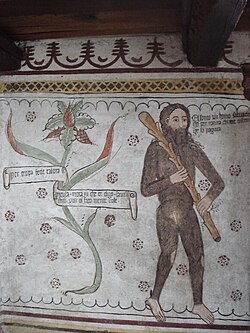
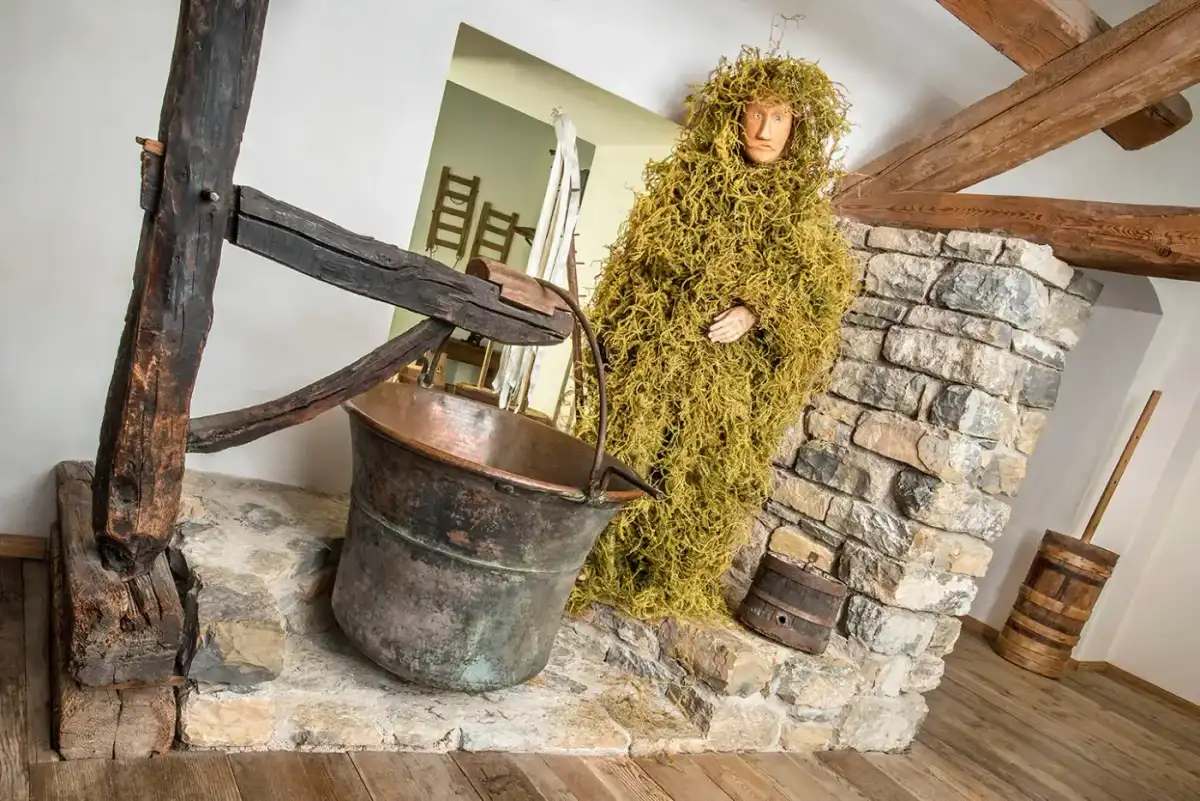
There.wild man It is an archetype present in the popular culture of many European areas, especially mountain regions; it is a wild human being, sometimes semi-divine, inhabitant of the woods and generally depicted as covered by lychenes or by a thick downpour.[1].
Origin and diffusion of character
The one of wild man, who lives outside civilization, is a very ancient archetype and which has been declined in countless ways in the various European cultures, including...Explore this chapter
The one of the wild man, who lives outside civilization, is a very ancient archetype and which has been declined in countless ways in the various European cultures, including a common thread; the figure is for example present in the traditions of the Italian, Swiss and Austrian Alps, Polish Sudes and Catalan Pyrenees; figures similar to the wild man are also present in other world cultures, e.g. (with Yowie)[1], although it should be noted that characters such as the Sasquatch and the Yeti are presented more as incompletely evolved primates than as humans who have regressed to a wild state, such as wild man[2].
At least for Western culture, the wild man has precursors in the figure of Enkidu ("wild" and "haired") and in Roman Fauni, figures related to the rural environment, but also in the Biblical Esaù ("red and covered all of a coat of fur", described as rough, irrous and adventurous)[1][3]. Less similar is the Greek figure of the satyr, who is more of a hybrid between man and animal[1]. In spite of these precedents, the character of the wild man in Europe developed mainly during the Middle Ages, acquiring, especially in the Alps, a series of fixed characteristics which also remained in subsequent traditions[1].
In the early medieval attestations, in line with the classical figures of the Fauni and other stories of Ovid and Virgil, it has the role of guardian and protector, essentially matching with the figure of the good savage[4]. Later, due to the change in the cultural and social context, the different interpretation of the various authors and artists who took him up and the oral transmission of many stories concerning him, the wild man took on other characteristics, often taken from other folklore figures or created ex-novo by some narrator[5][6]. The figure of the wild man has thus diversified, acquiring, in the traditions in which he appears, different faces and various stereotypical traits[6]:
In Italy
NamesExplore this chapter
(Giuseppe Šebesta)
In Italy, the tradition of wild man has developed throughout the Alps and prealpine, and on the northern Apennines, while it is almost absent in the South[2]; the legends that concern him generally describe him as a man who lives outside civilized society, inside the woods, where he creates his house in a cave, in an abandoned hut or similar places. Emerged from the wood, he would have taught men the dairy art (or, in other versions, the apiculture or mineral techniques; however, derided, snobbed, deceived or frightened, would return to the wild, depriving man of the possibility of knowing other secrets (for example, that to turn milk into oil or wax)[2]. According to some versions, he laughs when it rains and cries when the weather is good, an attitude that is explained by believing that the weather conditions of the present are the opposite of those that will follow[8].
In a small number of legends it takes on typical characteristics ofCheater, but it is very rare that it is clearly "bad"[2].
Names
In the various Italian traditions, wild man has different names[1][3]:
- Badich (Sesia)
- Basadonne (Turin)
- Beatrich, Beatrico (Bellunese, Vicentino, Trentino)
- Bilmon, Billmon (Trentino)
- Bragiola (Valcavargna)
- Bregostèna (Val di Fassa)
- Dar Sambinelo (Asiago)
- Dujak (Val Resia)
- Gana (Dolomiti, Val Badia)
- Gabilt Mann (Trentino)
- Ghèro (Piemonte)
- Gigant (Piemonte)
- Graumsteina (Val Fersina)
- Guriut (Friuli)
- Homo salvadego (Valtellina)[9]
- Irsat (Valli di Lanzo)
- Krivopeta (Friuli)
- Luu ravas (Val Pesio)
- Massarol (Trentino)
- Om furs (ladins of the Dolomites)
- Omm salvädag (Piacentino)[10]
- Om salvàig (Biellese)
- Om salvac, om salvach, om salvagh, om osalvarek (Bellunese, Veneto, ladin of the Dolomites, Agordino)[11][12]
- Om sarvaj (Valle d'Aosta)
- Om selvadeg (Trentino)
- Om selvatec (Val Brembana)
- Òmm Selvadech (Canzo)
- Om servitig (Alpi Apuane)
- Omeon del bosk (Bormio)
- Om dî bosch (Appennino tosco-emiliano)
- Ommo sarvadzo, ommo selvadzo (Valle d'Aosta)[13]
- Salvatorian homo (Garfagnana e alta Versilia)[8]
- Ospel (Val Fersina)
- Pagà (Valcamonica)
- Pàntogan
- Patau (Molina di Fiemme)
- Pelùs (Valcavargna)
- Salvan, save (Val Badia, Dolomites)
- Salvanèl (Trentino)
- Sarvage (Valli valdesi)
- Sërvan, Sarvanòt (Piemonte)
- Schratl (Val Fersina)
- Selvagiu (Valli di Lanzo)
- Teatric (Trentino)
- Ums selvadigs (Canton Graubünden)
- Urcat (Canavesane Prelates)
- Urciat (Valchiusella)[14]
- Wilder Mann (South Tyrol)
In literature
Figures inspired or assimilated to wild man are present in numerous works. In the Anglophone field, an example is the Caliban of Shakespeare's Storm; it also appears...Explore this chapter
Figures inspired or assimilated to wild man are present in numerous works. In Anglophone, an example is the Calibano de The storm by Shakespeare[3]; also appears in the pages of theOrlando Innamoto, chivalric poem by Matteo Maria Boiardo. In the seventh octave of canto XXII (book one) the poet describes it thus:
With long beard and large hairstyle,
Everything hairy from the head to the plants:
He was never seen more sozza figura.
For shielding a large davating beam,
And a weighty and hard bat;
He had no voice of homo or intellect:
Salvatius was all the sick."
(Orlando Innamoto, I, XXII,7)
In the next song, at the 6th octave, Boiardo tells of his bizarre habits and character:
Lives of fruits and drinks at the full river;
And I said that he has cotal nature,
Who always cries, when he is the serene cel,
Because he has a bad time,
It is that the heat of the sol will be less;
But when rain and wind the shovel,
Alor is pleased, that 'the good weather waits.'
(Orlando Innamoto, I, XXIII,6)
A similar character also appears in Italian Fairytales by Italo Calvino. The fairy tale is no. 51, "The Tabagnino hump" (of Bolognese origin). In this particular case, the character has the same role as the Orc.
The wild man appears in the fairy tales of the Brothers Grimm The wild man (De wilde Mann) e John of iron (Der Eisenhan); in the latter, John of iron, has a Helper or Donor function.
Art representations
For example: in a cycle of frescoes in Sacco di Cosio Valtellino in Valgerola da 1464, where the house that houses the frescoes was transformed into a museum; other...Explore this chapter
For example: in a cycle of frescoes in Sacco di Cosio Valtellino in Valgerola da 1464, where the house that houses the frescoes was transformed into a museum; other depictions were located on the poschiavine door of the walls of Tirano (now almost completely erased from time); on the symbol of the League of Ten Judges; on the spires of the Duomo of Milan; as a character in the celebration of Giubiana da Canz, which takes place in January.
In addition to being a legendary character and an iconographic symbol spread throughout the Alps, wild man is also a carnival mask. Its function is almost always that of scapegoat and personifies the dark and uncontrollable side of the alpine nature.
Notes
Explore this chapter
- ^ to b c d And f Annali di San Michele, pp. 88-91.
- ^ to b c d Centini, pp. 15-22.
- ^ to b c Centini, pp. 23-27.
- ^ Annali di San Michele, pp. 91-94.
- ^ Annali di San Michele
- ^ to b Centini, pp. 9-11.
- ^ Istituto di Dialettologia e di Etnografia Valtellinese e Valchiavennasca[interrupted link], up associations.provincia.so.it. Retrieved 15 January 2011.
- ^ to b Oscar Guidi, The Witches, the Witches... Ancient beliefs in the popular stories of Garfagnana, Lucca, Maria Pacini Fazzi Editore, March 2000, pp. 24-26, ISBN 88-7246-408-0.
- ^ Homo Salvadego, up cmmorbegno.it. Retrieved 30 April 2008.
- ^ Carmen Artocchini, Popular Traditions Piacenza, vol. 4 (Faith, mystery, occult), Piacenza, Tep, 2006.
- ^ Daniela Perco, Carlo Zoldan (edited by), Legends and oral beliefs of the Belluno mountain, Belluno, Editions of the Province of Belluno, 2001, pp. 61-76.
- ^ Gianluigi Secco, Mata: the popular tradition and the extraordinary characters of the archaic carnivals of the Veneto mountains, Belluno, Belumat Editore, 2001, pp. 122-129.
- ^ Guide to dragons and monsters in Italy, up cordier.it. Retrieved 30 April 2008.
- ^ Giancarlo Plazio, Wax, milk, man of the woods, Turin, Giappichelli, 1978.
Bibliography
Explore this chapter
- Museum of customs and customs of the people of Trentino, Annali di San Michele, vol. 1, Trento, 1988.
- Massimo Centini, The Wisdom of the Forest, Xenia Edizioni, 1989.
- Claudio Risé, The wild male (2). The vital force of the male instinct, Edizioni San Paolo, 2015, ISBN 978-88-215-9435-9.
- Alessio Strambini, The Homo Salvadego: a folk figure of the Alpine Rezia, in Luca Giarelli (ed.), Carnevals and folklore of the Alps. Popular rituals, sounds and traditions of European valleys, 2012, p. 51, ISBN 978-88-6618-948-0.
- Marco Conti, Wild man: between mountains and villages, in The witch's flight. Legends and popular fairy tales of the Biellese tradition. Translation into Piedmontese and with some original texts by Gustavo Buratti, Libreria Vittorio Giovannacci Editore, 2004.
- Marco Conti, The wild man, in A procession illuminated by the mignoli. Traditions, myths and legends Piemonte, AEMMEPI EDITORE, 2000.
- Massimo Centini, The wild man. From the "silvestre creation" of mountain myths to the Nepalese yeti, Mondadori, 1992.
Continue your journey