A closer look
Barbacas: at a glance
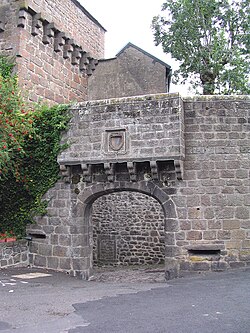
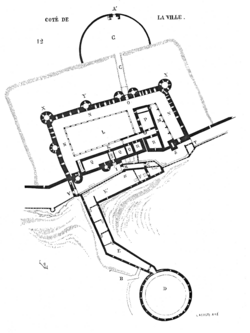
The beardcane (or beard) is a medieval defensive structure, an antemural, which served as a support or additional protection structure compared to the surrounding wall or the actual fortress.
This fortification was often only a stone wall near the most vulnerable areas of a castle or a fort. This defensive system has already spread throughout Europe in the Middle Ages, even for its relative simplicity of construction.
Although it is reported as a defence of a military structure, there are exceptions where the beard was built to defend civil structures and as a main defensive structure and not supportive. The explanation should be sought in the fact that, given the poverty of small villages, a similar terrapino represented a simple, fast and unexpensive solution.
Etymology
Barbacane is a French term that has the same root of beardcana (Spanish), barbacã (Portuguese) barbican (modern English) and barge-kenning (anglosassone), composed by...Explore this chapter
Barbacane is a French term that has the same root of beard (Spanish), beetle (Portuguese) barbican (Modern English) e barge-kenning (Anglo-Saxon), composed of the term Beaver (cover, secure) e kenning (to glimpse, to see). In fact, a very archaic form of barbican was also the vertical slits on the walls of castles to be able to hit the enemy while remaining sheltered. In reality the term has also been used in the past to indicate other types of fortification. Although difficult to prove, it has been hypothesized that the origin of the name could come from Arabic "bāb al-barrana" that is, external door, or again from "bābal-báqara"door of the cows, hence the word Hispanic Muslim"Albaniacar".[1]
In toponomastica
Due to the very nature of the pavement today some areas, often very small or streets of inhabited centers, have taken the name of barbacane. These microtoponyms are usually...Explore this chapter
Due to the very nature of the pavement today some areas, often very small or streets of inhabited centers, have taken the name of barbacane. Usually these microtoponyms are located there where a beard was once raised in its forms or meanings before exposed.
For example:
- via Barbacane we find it in: Florence, Eboli, Villanova d'Albenga, Spilimbergo, Vieste, Pavignano di Biella, Città della Pieve, Torre del Greco;
- Via dei Barbacani, in the plain of Asciano (PI), road that intercepts the Medici aqueduct;
- via or locality Barbacana are present at: Monopoli, Bra, Pavarolo, Cantarana;
- Barbacan square in Trieste; Barbacana Square is also in Calizzano (SV);
- Rio or torrent Barbacana in Leinì and Settimo Torinese;
- Piazza Barbacana in Rivara;
- Passo Barbacan (2.550 m asl) between the Masino valley and the Codera valley.
- Piazza Barbacani in Vasto (CH) opposite the castle Caldoresco.
Hydraulic engineering
The barbacane represents the drainage tube, placed at full width of the wall, which allows the correct flow of water that could pour close, i.e....Explore this chapter
The barbacane represents the drainage tube, placed at full width of the wall, which allows the proper flow of water that could pour near, or upstream, of the supporting walls. Its functionality is correctly complemented if connected upstream of the wall with medium-larged stone or pebblestone, which constitutes the drain. It represents a fundamental element in hydraulic engineering as the proper conveying of water for them by lowering the hydrostatic pressure agent on the walls of support to terrapieni.
Barbacani in Venice
In Venice, the beard designates a beam, originally made of wood and later in Istrian stone, with the architectural function of optimizing the spaces.Explore this chapter
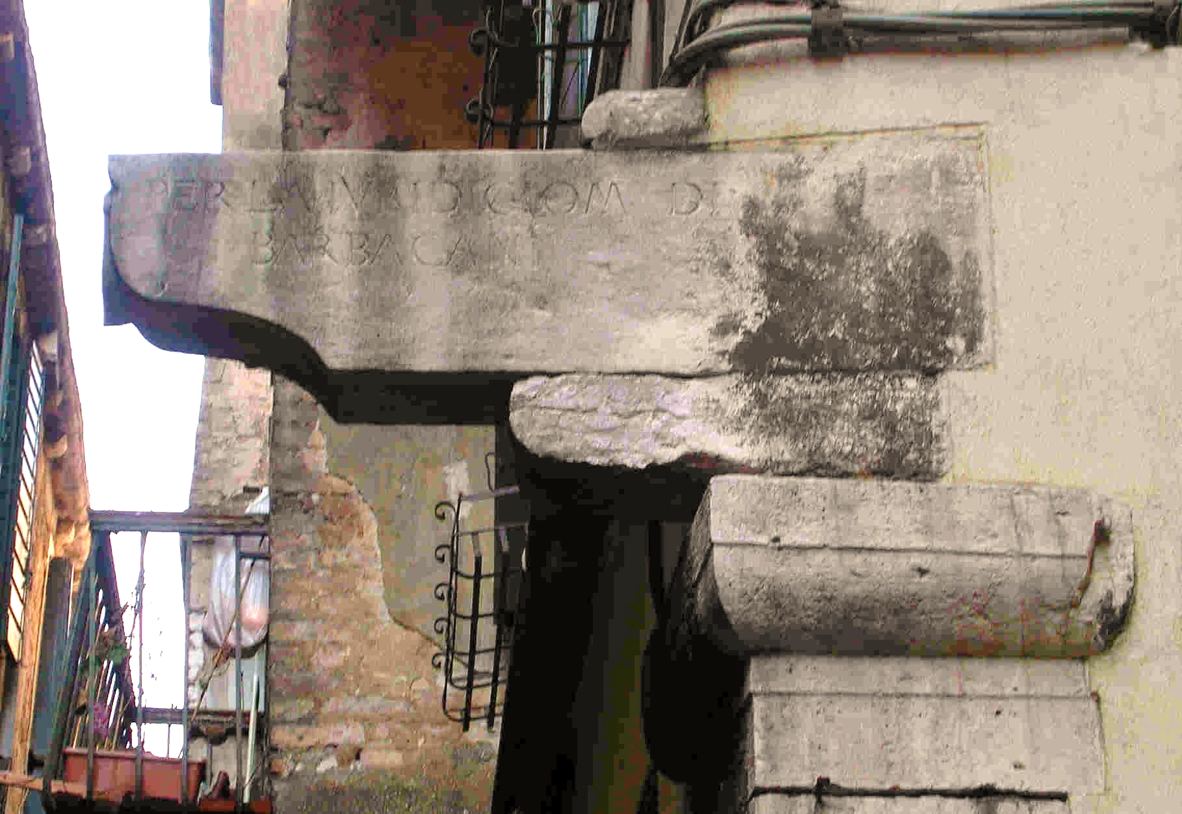
In Venice beardcane designates a beam, originally made of wood and later in Istrian stone, with the architectural function to optimize the spaces.
In many streets of the city, houses expand from the first floor by expanding the living area of all floors above the ground floor, without reducing the width of calluses, which in many cases are already narrow enough, avoiding blocking the arrival of sunlight and favoring air circulation.
To this end it was built in the area of Rialto, precisely in Calle della Madonna, a "barbacane champion" made of Istrian stone, still visible, which engraved the inscription "PER LA IVRIDICIOM DI BARBACANI". This sample beard defined the maximum protruding size allowed for this type of structure.
Image gallery
Explore this chapter
-
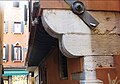 Barbacane di marmo
-
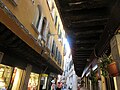 Rughetta del Ravano
-
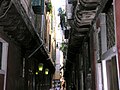 Calle de la Madonna
-
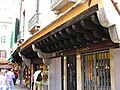 Champion of the Meloni
-
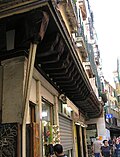 Old Rugae San Giovanni
-
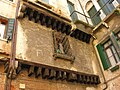 Double beard
-
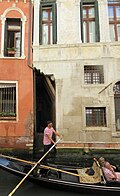 Palazzo Guzzoni
Notes
Explore this chapter
- ^ (EN) Jean Mesqui, The beard-cane du Crac des Chevaliers (Syrie) et la signification du terme dans le bassin méditerranéen/ The 'Barbacane' of the Crac des chevaliers (Syria), in Bulletin Monumental. Retrieved 5 June 2020.
Bibliography
Explore this chapter
- Marek Żukow-Karczewski, The Barbican (Barbacan), "Kraków" Magazyn Kulturalny, Special Edition, 1991, p. 58-59.
- Gerd Wolfgang Sievers, 111 places in Venice that you really have to discover, Germany, Emons Verlag, 2015, p. 188-189, ISBN 978-3-95451-624-7.
Continue your journey