- Elevation
- 176 m above sea level
- Area
- 9.72 km2
- Demonym
- cantaranese
- Patron saint
- San Giovanni Battista - San Rocco
A closer look
Discovering Cantarana
Cantarana (Cantaran-a in Piedmont) is an Italian municipality of 970 inhabitants[1] from the province of Asti in the Piemonte.
Landscape and area
RegionExplore this chapter
Cantarana is a municipality ofAstesana[4] and is located in the northwest of the Province of Asti. It consists of two distinct hilly areas divided by the Maggiore valley or Cantarana Valley, from the name of the stream that crosses it. In the west we find the hilly area of Bricco Grosso, bordered by a summit (275 m asl) called Piantà and a hill called Chiriè (anciently Cugliero 250 m s.l.m.); it is a compact hilly area that tends to the municipalities of Dusino San Michele And Valfenera and where the most populous fractions of Cantarana arise: Palazzazzo and Bricco Grosso. To the east we find the steepest and wildest hilly area, as well as that inhabited more anciently, already perhaps in Roman times. The hill system is composed from the south-west of Torrazzo (280 m asl), Bricco Morra (275 m asl), Serramezzana (305 m s.l.m.) and Bricco Barrano (260 m asl.)
Region
Cantarana is located inAstesana Western. In ancient times the area was the bottom of an old sea and still it is possible, walking through the hills, to find numerous shells. Thanks to some Cantarana quarries, it was a privileged place to observe different geological stratifications.
Origins of the name
The Cantarana toponym is of probable Celtic origin and refers to the presence of water courses. The water is present in large quantities in Bonoma, important field...Explore this chapter
The Cantarana toponym is of probable Celtic origin and refers to the presence of water courses. The water is present in large quantities in Bonoma, an important source field that feeds different aqueducts.
History of Cantarana
SymbolsExplore this chapter
Cantarana was born as a municipality in 1500 with regular municipal council. In fact, the name of Cantarana began to be used since 1300 as a center for a vast land owned by the noble family of Malabayla. From the moment of his joint erection, he joined as Podesteria del "Districtus Civitatis Astensis", the District of Asti, including twenty municipalities subjected to direct control of the city, who appointed you the podestà.[5] In the 16th century he underwent a radical transformation due to an impaludation that prejudged habitability throughout the valley. The anthropic activity moved into a fraction called the Torrazzo; however, in the following century, with the construction of the parish church dedicated then to Santa Dorotea, slowly became a small centre in the valley.
In the 19th century Baron Medici of Asti laid the foundations to build a large aqueduct in Cantarana in the hamlet of Bonoma, which will serve the whole city of Asti (Legambiente in 2003 called it the best drinking water in Italy). During the 20-year-old fascist Cantarana lost its municipal autonomy, being shortened in 1928 to Villafranca d'Asti; he recovered it in 1947.
In 1995, the remains of an ancient and disappeared medieval castle were found by Marco Ferrero and Angelo Benotto.
Since 2000 it has been part of the union of the common hill communities Valtriversa.
Symbols

Originally the coat of arms was that of the Malabayla family, ancient feudal lords of the place. It was truncated four pieces of red and silver.
The coat of arms represents three hills varied on a blue background of the sky, because the first post-fascism mayor Cesare Novara interpreted the dentellation as of the hills.[without source]
What to see in Cantarana
The PalazzassoExplore this chapter
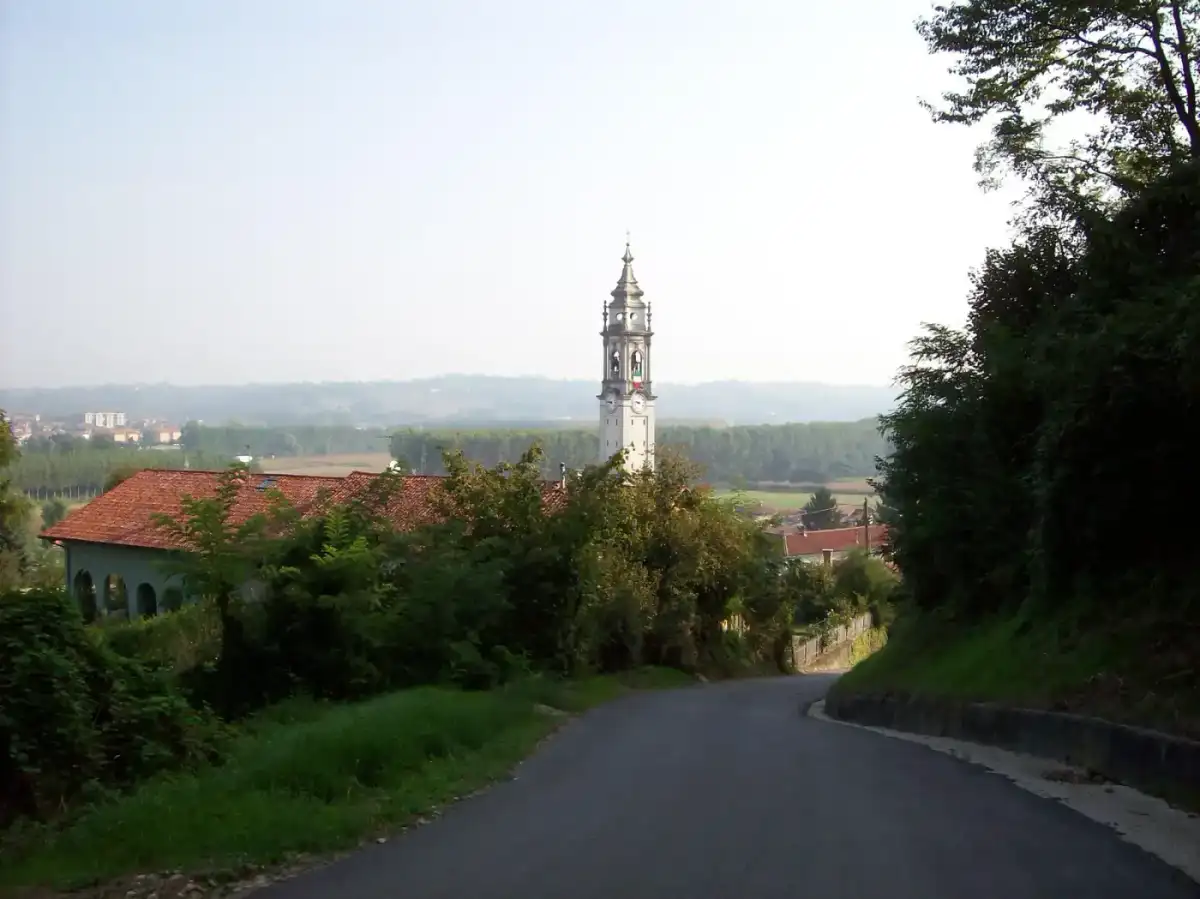
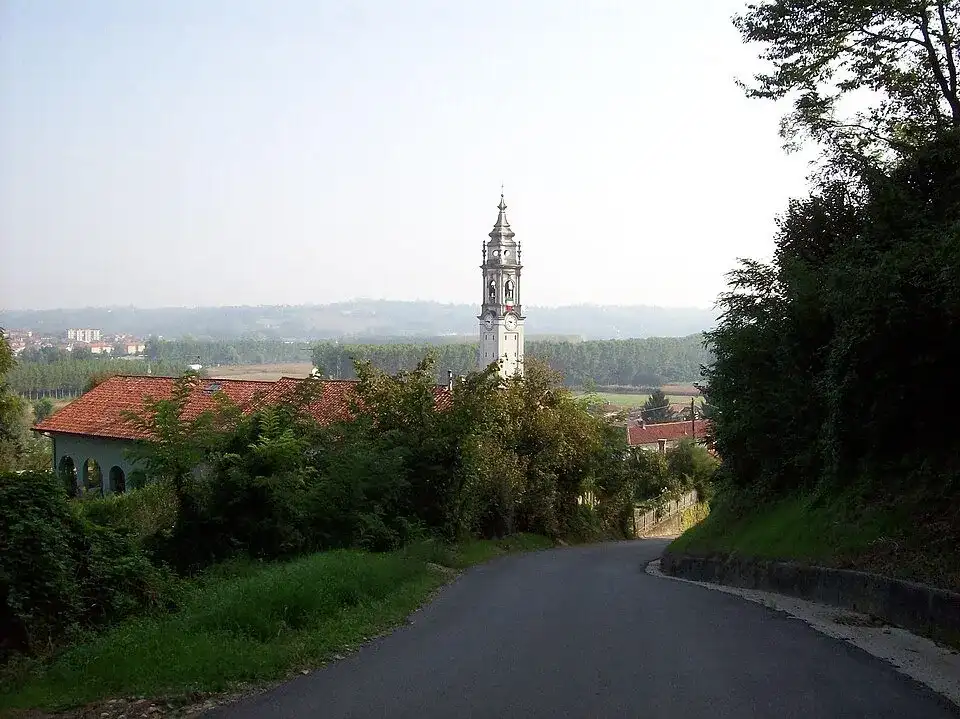
The center is small and articulated around the main square where, adjacent to the parish church, dedicated to San Giovanni Battista, of 1695, stands the bell tower, of the Juvarrian school[without source] (by the famous architect Filippo Juvara), rebuilt in 1914 by the architect Gallo of Turin and hosting 5 bells in E3. Very imposing (44.21 m), it is among the highest in the province of Asti, as well as rich in architectural details. In the hamlet of Bricco Barrano there is a medieval well over 55 m deep. In a quarry, subsequently abandoned and left into oblivion by the owners, which in the 1970s was one of the privileged geological sites for observing the stratification of the Villafranchiano, fossil bones of a dolphin and mastodon were found in the 1930s and in the 1960s.
The Palazzasso
The Palazzasso is the ancient residence of the Counts of Cantarana. In ancient times this residence was on the side of the current mill and it was like the latter of medieval origin. But because of the Small Ice Age, it was gradually impaled and abandoned in 1500 for the present building. The structure in the preserved part, while having undergone some important changes over the centuries, still remembers the original structure. He was born as a rural residence and in addition to the central residential body he had in endowment cascine and stables. At the extreme left stands, even if it was restored in the first half of the eighteenth century, the private chapel dedicated to St. Joseph. The Malabayla, owners of the castle, were a powerful family of bankers and operated as well as for the city of Asti (to which they gave two bishops and many notables) also in different places of France and the most important was Bourg-en-Bresse.

The Palazzasso was the scene of an episode of the life of the writer Vittorio Alfieri in which, boy, playing in the courtyard, suffered a fall that severely wounded him to the head.[without source]
Tied to the history of the palace is the chapel of St. Joseph, which preserves inside it a fine painting of the Holy place over the masonry altar that is the original one. The only bench of the chapel is at the end of the seventeenth century and the initials engraved are Countess Ninfa Rosa Marianna Malabayla, who died in mysterious circumstances in 1702 only 29 years old.
Society
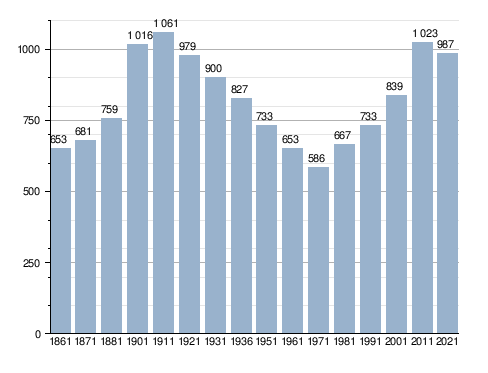
Demographic evolutionExplore this chapter
Demographic evolution
Inhabitants registered[7]
Administration
TwinningExplore this chapter
Below is a table relating to the administrations that have succeeded one another in this municipality.
| Period | First citizen | Match | Load | Notes | |
|---|---|---|---|---|---|
| June 3, 1985 | May 26, 1990 | Giovanni Vigna | - | Mayor | [8] |
| May 26, 1990 | April 24, 1995 | Giovanni Vigna | Christian Democracy | Mayor | [8] |
| April 24, 1995 | June 14, 1999 | Luigi Bussolino | civic list | Mayor | [8] |
| June 14, 1999 | June 14, 2004 | Vincenzo Gerbi | civic list | Mayor | [8] |
| June 14, 2004 | June 8, 2009 | Vincenzo Andrea Gerbi | civic list | Mayor | [8] |
| June 8, 2009 | May 26, 2014 | Roberta Franco | civic list | Mayor | [8] |
| May 26, 2014 | May 26, 2019 | Roberta Franco | civic list Grappolo d'uva and bell tower | Mayor | [8] |
| May 26, 2019 | in office | Roberta Franco | civic list Grappolo and bell tower | Mayor | [8] |
Twinning
 Chantraine, from 19 May 2007
Sport
The small country has a sports company born with the intent to guarantee an increase for the small team under 15 that militated in the provincial championship Astigiano and...Explore this chapter
The small country has a sports company born with the intention to guarantee an increase for the small team under 15 that played in the provincial championship of Asti and to extend itself entering the live of other sports. The section "Cantarana Calcio a 5" in recent years has expanded its youth sector and founded its first team in 2024 which militates in Serie C2, while the section "Arcieri della Quercia" started with more or less short courses of archery and then came to compete in different categories their archers. The last sector joined the company is the "Bike" which, with its location not far from football and archery fields, called "Bike Park Cantarana", takes mountain bike courses thanks to the technical track and the numerous slopes in the wood next realized entirely by the volunteers of the association. They also achieved a national title: Sara Vinci multititled in Judo and Marco Ferrero, Volleyball coach, Italian Champion C.S.I. in 2004 and winner of the UISP Italian Cup in 2017, Giulia Pantone Italian female volleyball champion UISP.
Legends
Explore this chapter
- Tied to the history of Palazzasso is a legend with a ghost as protagonist. At the beginning of the twentieth century, in this hamlet there was a festival, a particular carnival ritual, called "tacchino", which brought all the inhabitants to pass into all the houses of the village for "to party to the turkey": arrived at the Palazzasso, that was the last house, the turkey was pulled neck, putting an end to the festivities.
In one of these celebrations, during the final festivities, all present would have heard a scream and, turning towards the palace, they would have seen from a window a figure that stabbed a woman dressed in baroque clothes that swept on the ground. The hosts (the Gambini lords, ancestors of the current residents) would run upstairs to see, but when they arrived in the room they wouldn't find anything. This episode seems to have been repeated several times in the following days, so much so as to leave memory in old local philanthropists. - A legend handed down orally from generation to generation by descendants of the Malabayla family tells that the King of England himself, not being able to cope immediately with a loan of these, had to pawn the crown of England, which therefore, according to legend, was guarded for a certain period in Cantarana.
Image gallery
Explore this chapter
-
 I fresco in a votive pylon at the Bricco Morra resort I want
-
 The bell tower of the parish church of Cantarana
-
 Bricco Morra: exceptional snowfall of 27 January 2006
-
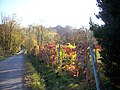 Sunset on the vineyards in Cantarana
-
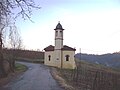 Church of the Holy Trinity
Notes
Explore this chapter
- ^ to b Monthly demographic balance for the year 2026 (provisional data), up demo.istat.it, ISTAT.
- ^ Seismic classification (XLS), up risks.protezionecivile.gov.it.
- ^ Table of degrees/day of Italian Municipalities grouped by Region and Province (PDF), in Law 26 August 1993, n. 412, annex A, National Agency for New Technologies, Energy and Sustainable Economic Development, 1 March 2011, p. 151. URL consulted on 25 April 2012 (archived fromoriginal url on 1 January 2017).
- ^ Giovanni Francesco Balduini di Santa Margherita: "General Report of the Intendente d'Asti" 1750-1753, edited by Renato Bordone and Ezio Claudio Pia, Volpiano 2010, p.97
- ^ Asti provincial capital and the legacy of a medieval "state" in "Society and History", 12 (1989), 44, pp. 283-302.
- ^ Piedmontese civic coat of arms, vol. I, A-L, Regional Council of Piemonte, 2016, p. 99, ISBN 978-88-96074-98-5.
- ^ Data taken from:
- Resident population of the municipalities. Censuses from 1861 to 1991 (PDF), up ebiblio.istat.it, ISTAT.
- Resident population - Time series, up exploredati.istat.it.
Please note: 2021 data refers to permanent census data as of December 31 of that year.
- ^ to b c d And f g h https://amministratori.interno.it/
Bibliography
Explore this chapter
- Marco Ferrero, Il Palazzasso, l'ultimo castello di Cantarana, Edizioni BEP, 2025 ISBN 979-12 2109 550 0
- Marco Ferrero, Cantarana le Origini, Edizioni BEP, 2017 ISBN 979 12 2107 013 2
- Marco Ferrero, Cantarana la rinascita, Edizioni BEP 2018
- AAVV, Hermitage of San Nazario, BEP Editions, 2021
- Marco Ferrero, San Donato 900 years of History, BEP Editions 2022
- Giuseppe Bonhelp, News about Cantarana, self-published, 1932
- Ezio Pavia, The community and the religious landscape, Triversa Editions, 1991
Where to stay · Cantarana
Find stays on Booking.comStories, places and people
More about Cantarana and the surrounding area
Follow a thread of history and see where it leads.
 Marco Ferrero · CC BY-SA 3.0
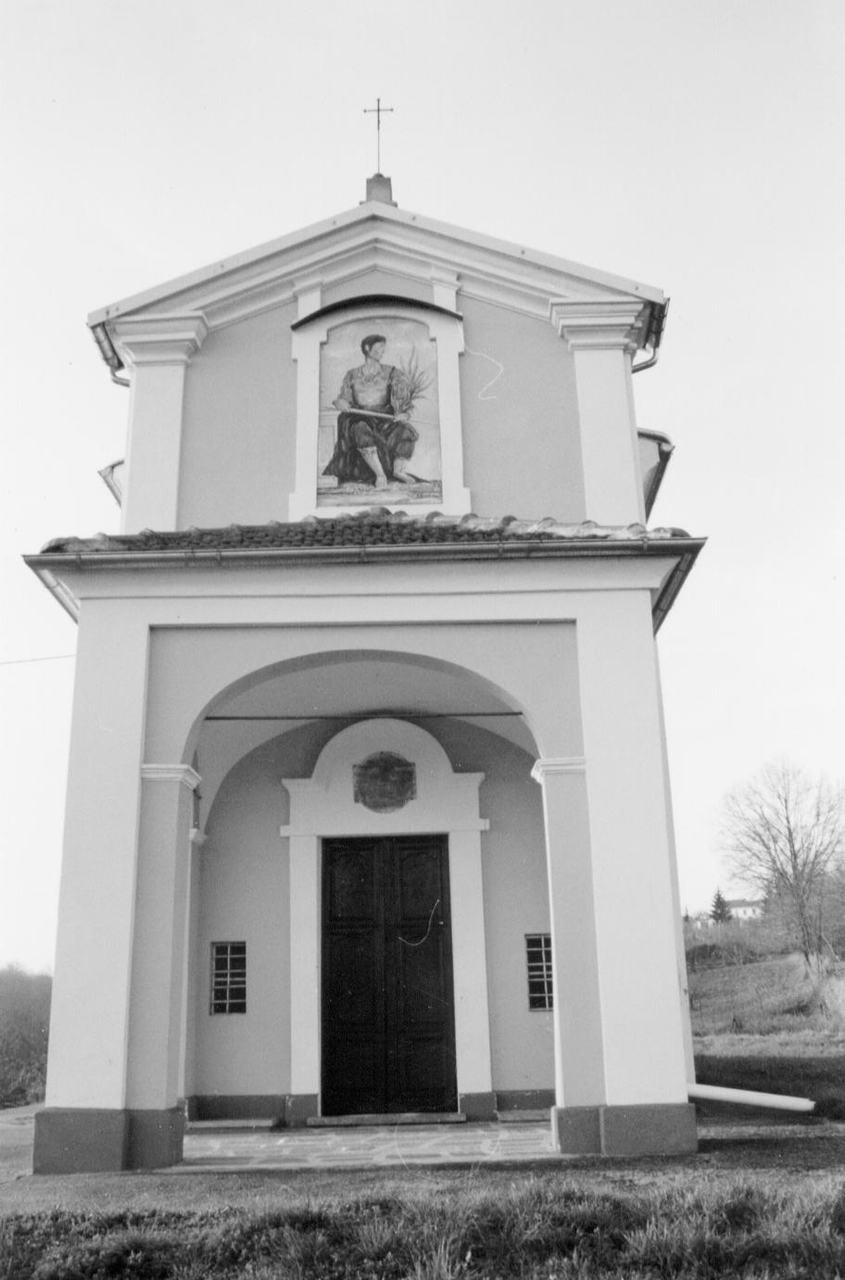
Church of San Nazario (Cantarana)
The church of San Nazario di Cantarana was born for popular devotion between the fourteenth and fifteenth centuries, is located on a hill that gives on the valley Maggiore on the hill called Bricco Grosso.
Read the storyContad of Serralunga
Serralunga is a fraction of the municipality of Cantarana (AT), consisting of a vast flat and semi-hilling area, located south of the Triversa stream and the SS Padana Inferiore , near the town of "Case Bruciate" (common of Villafranca d'Asti).
Read the story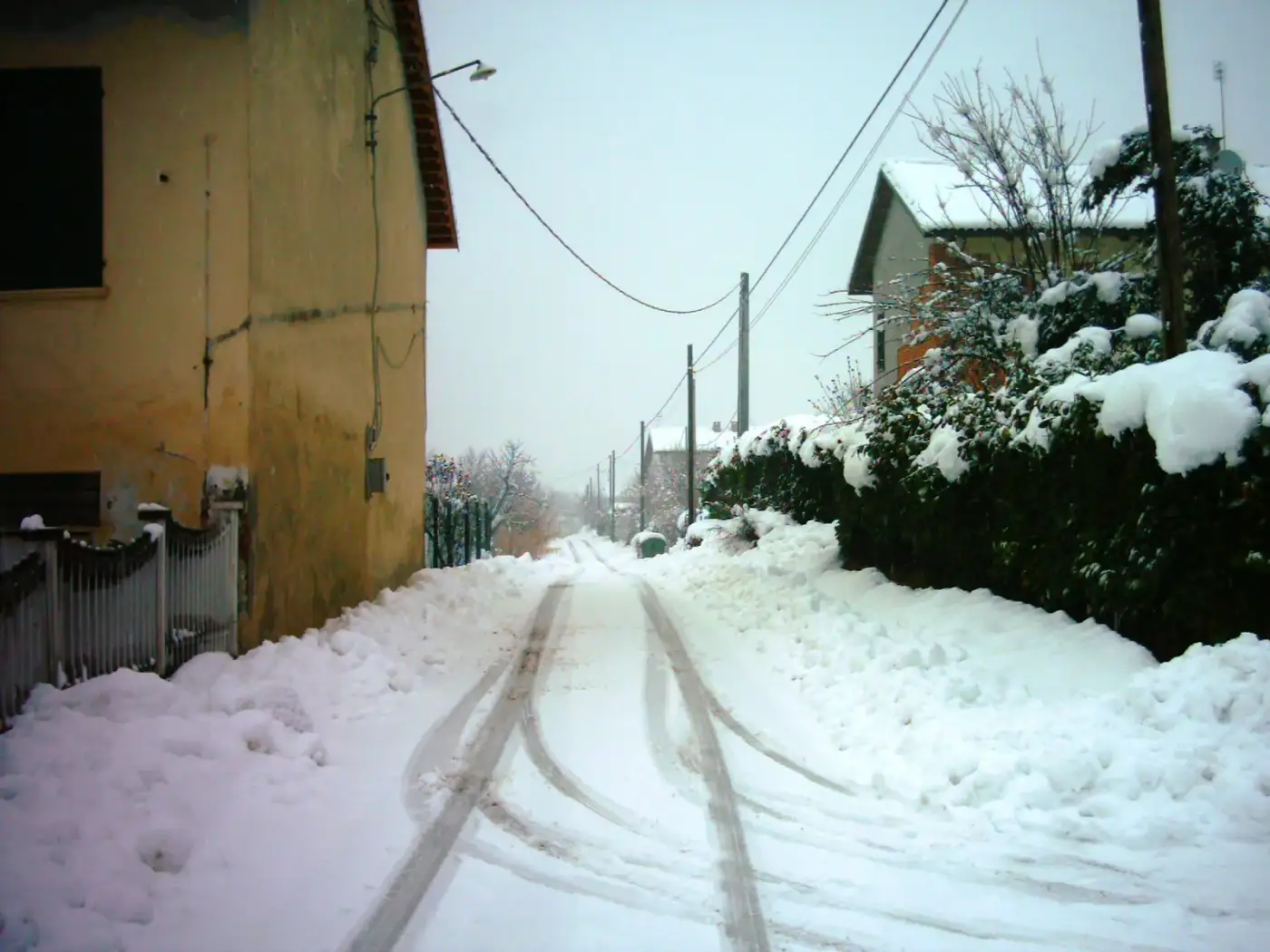 Marco Ferrero · CC BY-SA 3.0
I want
Preglio (or Prelio ) is a popular place throughout the northern Italian center, referring to morphologically also very different locations.
Read the story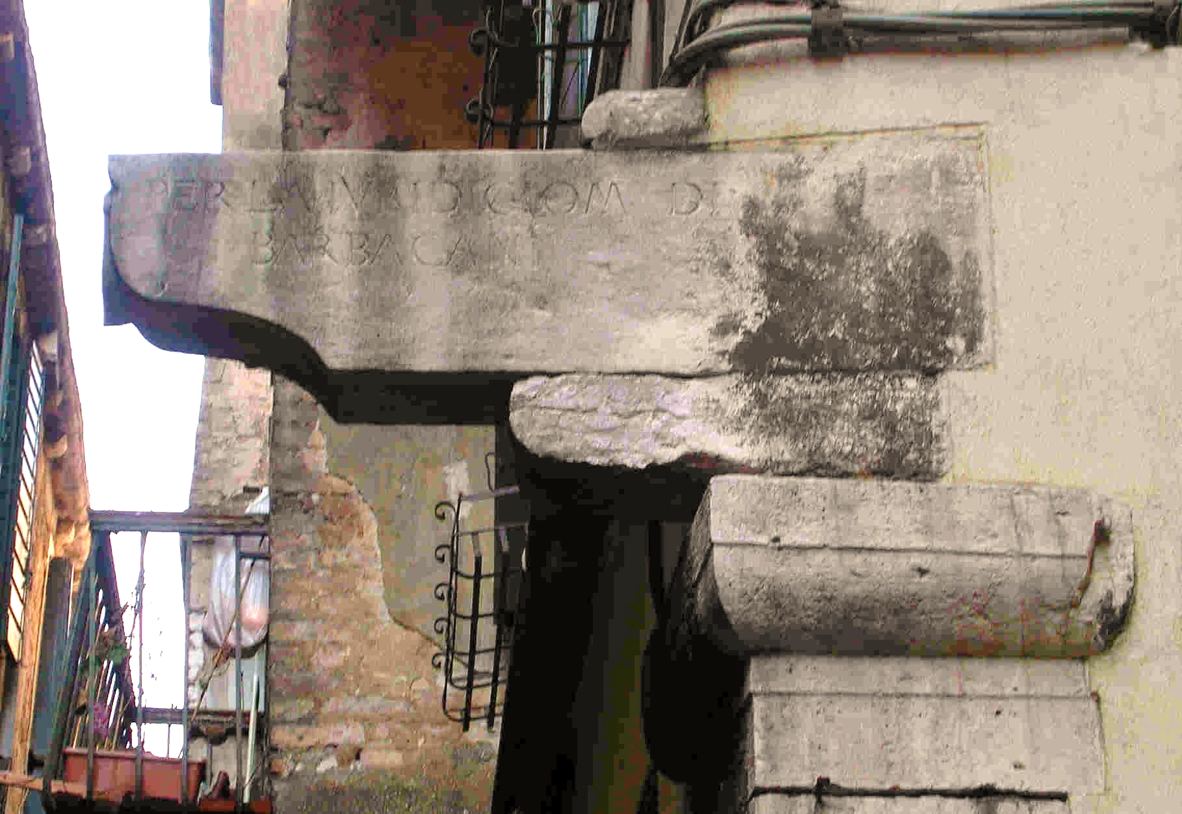 Maspez · CC0
Barbacas
The beard-cane (or barbacana) is a medieval defensive structure, an ancestor, which served as an additional support or protection work compared to the wall of the cinta or the fortress.
Read the storyThe area, step by step
Trails and routes in Cantarana
 WalkingAround the starting point
Asti, Alessandria and surroundings