A closer look
Church of San Nazario (Cantarana): at a glance
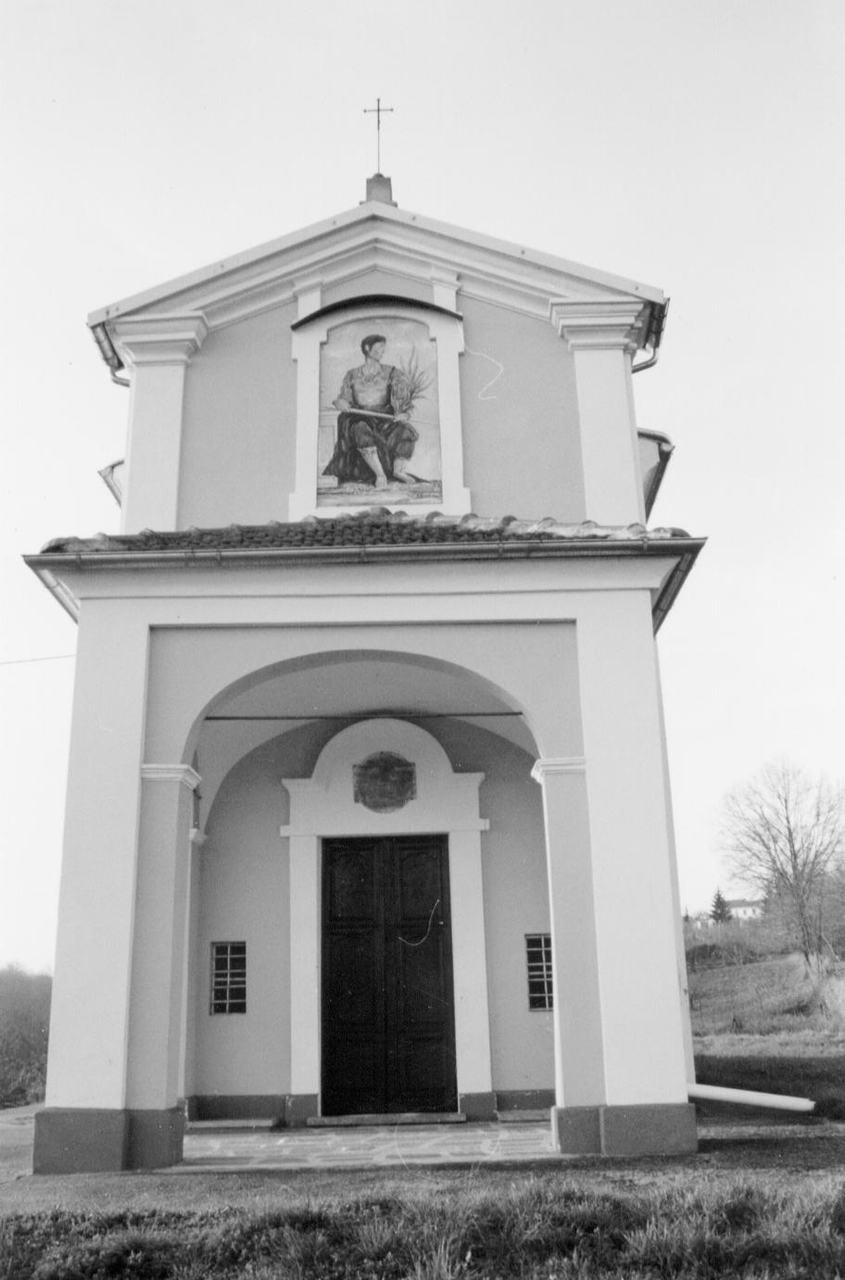
The church of San Nazario Cantarana was born for popular devotion between the 14th and 15th century, it is located on a hill that gives on the valley Maggiore on the hill called Bricco Grosso.
History
There are no documents that bear its origin, the first document that speaks of it is a disaster but it seems to have been built for devotion to San Nazario, who in...Explore this chapter
There are no documents that bear its origin, the first document that speaks of it is a disaster.[1] but it seems to have been built for devotion towards San Nazario, that in this place, for centuries, has been invoked as protector of children sick of Ruffe or milk crust. Being built in a secluded place from the inhabited center became home to an hermit until the early decades of the 20th century. Until the 19th century, the “pilgrimage” to this chapel and are still witnessing today the many ex-voices still present in the church despite being largely destroyed.[2].
Towards the end of the seventeenth century, the population unable to keep the church decorative also seen the growing number of devotees, yields it to the Count of Cantarana Baldwin V Malabaila[3], with the obligation on the part of the count to maintain it in order to appoint a new hermit. Serious renovation works took place in 1786 by the count of Cantarana Ercole Cacherano d'Osasco (mayor of Turin 1792 – 1793)[4] that reconstructs the church giving it the current Baroque structure. It remains owned by the family until the end of the 19th century. Then the population is still taking charge until today. Although it is curious to note that the Cacherano family has never formally sold it and therefore there is no selling act in any archive.
Architecture and Art
The church is decorated with a nave in Baroque style. It is without doubt the example of church campestre in this better preserved style of the whole province of...Explore this chapter
The church has a Baroque-style nave. It is without doubt the example of church campestre in this style better preserved than all the province of Asti. Located on a hill now surrounded by crops, but once in a forest, it has a small belfry and a sacristy which when the hermit was there had a mezzanine and also served as a home. Currently you can still see the shape of the hermitage. Inside we find a painting from the end of the 18th century depicting San Nazario and inside there is a valuable votive offering attributable to the Asti painter Michelangelo Pittatore.
Legends
It is said that near the church were buried the deceased of the noble family Malabaila (then Cacherano ) owners of the church. More likely, there were some...Explore this chapter
It is said that near the church were buried the deceased of the noble family Malabaila (then Cacherano) owners of the church. More likely, there were graves found by the peasants during the work in the fields, but they can refer to those of the hermits.
Notes
Explore this chapter
- ^ New measure of the territory of Cantarana Astegiana, 1676, Municipal Archives of Cantarana
- ^ Parish Archives of Cantarana, Chapel Accounting of San Nazario 1890 – 1930
- ^ Archive Cacherano to Osasco, Family Dictionary 1759, C.G.B. Cacherano-Malabaila, manuscript
- ^ Public Telematics Service - City of Turin, up common.torino.it.
Continue your journey