A closer look
Ion compound: at a glance
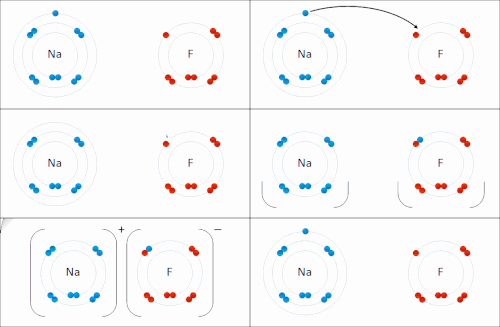
A ion compound can be defined as a chemical compound formed by ions (monoatomic or polyatomic) having a total charge nothing. A Sale is an ionic compound consisting of anions and cations, electrically neutral and generally crystalline.
| Some simple cations | |||
| +1 | +2 | +3 | +4 |
| Li'+ | ♪2+ | Al3+ | S4+ |
| Nana+ | Mg2+ | - Yes.3+ | Mnh4+ |
| KEY+ | Ca2+ | Y3+ | U4+ |
| R+ | ♪2+ | Ga3+ | ♪4+ |
| C+ | Ba2+ | In3+ | ♪4+ |
| ♪+ | Mnh2+ | T3+ | |
| Agreed+ | Fe2+ | ♪3+ | |
| T+ | Co.2+ | Bi3+ | |
| Nina2+ | V3+ | ||
| ♪2+ | C3+ | ||
| Zinc2+ | Fe3+ | ||
| C2+ | Co.3+ | ||
| H2+ | |||
| S2+ | |||
| PB2+ | |||
In an ion compound binary binary track there are generally a metal and a non-metal, where the metal usually gives one or more electrons to the non-metallic, charging positively.
There are then ternary ionic compounds, which are the salts of the idiocydes, such as 
The force that unites ions is electrostatic and is defined as an ionic bond unlike molecular compounds where the electrons are partially shared between atomic groups in a covalent bond.
| Some simple ancestors | |||
| -3 | -2 | -1 | |
| N3- | O2- | F- | |
| P3- | S2- | C- | |
| If you'd like2- | Br- | ||
| THE- | |||
An example is the common kitchen hall 


Typical properties of ionic compounds are:
- high melting temperature;
- good electrical conductivity (only in liquid state).
- Fragmentation[1]
In addition, all ionic compounds (such as salts and hydroxides) are strong electrolytes because, in a liquid solution, they are present completely dissociated (regardless of solubility), with the amount possibly exceeding to form a bottom body in a heterogeneous balance. Therefore, for these types of compounds the Van't Hoff coefficient coincides exactly with the number of ions obtained from dissociation.
Notes
Explore this chapter
- ^ Chemistry - A Molecular Approach Nivaldo Tro
Continue your journey