A closer look
Of the Plans (family): at a glance
The family Of the Plans is an ancient and noble Genoese house, known since 1121[1] in Polcevera and distinguished over the last ten centuries for men of government, ecclesiastics, diplomats, men of arms and patrons.[2]
The members of the house were part of the Genovese Patriziato and the executive classes of Genoa and its Dominion in the various institutional changes that have occurred over the centuries.
First they entered the civic nobility protagonist of the fortunes of the Municipality of Genoa and the realization of a "colonial empire" constituted by monopolies and commercial bases spread throughout the Mediterranean and in the Black Sea. Already adherent to the Ghibelline faction[3], the Delle Piane family held the government positions reserved for their political party, dedicating themselves to international mercantile and financial enterprises in the Mediterranean and Europe.
Then, with the constitutional reform that in 1528 gave rise to the Aristocratic Republic of Genoa and declared abolished the ancient factions, the Delle Piane were enrolled to Liber Nobilitatis, thus placing itself until the fall of the Republic, from generation to generation, in a sovereign patriciate placed at the top of economic and political power.
The most illustrious branch of the family, that of Polcevera, is still flourishing and continues to express important business figures, active both in the socio-economic context Genovese and in the more international one. In 2022, the Delle Piane family sold Remorchiatori Riuniti to MSC for €1 billion.[4][5][6]
Medieval Origins
The Delle Piane take their surname from the locality Planum, in the territory of Ceranesi, attested in the Episcopal Curia of Morego, then called in the vulgar language...Explore this chapter
I Delle Piane take their surname from the locality Planum, in the territory of Ceranesi, attested in the Episcopal Curia of Morego[7], later called Chianne in the medieval vernacular[8] and then Piani di Polcevera, and from the locality Campum Planum, to Levant of the city of Genoa.[1][9]
cited in medieval documents as de Plano, de Campo Plano, de Planis, the members of the family are holders of allodial and emphyteutic assets in the three Podesterias outside the city walls: the Podesteria of Voltri, that of Polcevera and that of Bisagno.[10] Several members have consular charges since 1197.[11]
Already in the 12th century, the Delle Piane appear as part of the rural vasalage of the Archbishop of Genoa, to which they pay land, and around which they gravitate, as attested by the presence of Oberto and Fulco de Planis de Pulcifera, which appears in 1254 in official documents of the curia or in 1255 alongside Archbishop Gualtiero[12]. In the same period they received lands in Polcevera in emphyteusis from the Jerusalem Order.[13]
Family genealogies recognize the head of the Polcevera line in Oberto. The first to take charge in the government of Res Publica is Matteo, son of Oberto, cited in official acts about the foundation of the church of San Nicolosio in Genoa (1305).
From various historical documents between the 12th and 13th centuries it emerges that many members of the family engaged in public offices, ecclesiastical career and military art, while continuing to carry out for a long time merchant activities. There are therefore many figures cited overseas in the 13th-XIV centuries: Ottolino[14][15] (1277) in Laiazzo, an important port city of the Armenian Kingdom of Cilicia; Matteo (1298) Officer of Gazaria, a Genoese colony in the Crimea and in Bonifacio on the Corsican Island, etc. etc.
The Age of the Perpetual Dogs (1339-1528)
From 1339, when Simone Boccanegra took power and was proclaimed the first doge to life of Genoa and its Dominion, the emerging faction of populares acquired a role...Explore this chapter
From 1339, when Simone Boccanegra took power and was proclaimed the first doge to life of Genoa and its Dominion, the emerging faction of the populares He acquired a predominant public role, occupying most of the places of government and reserving only to its representatives the customs office. For this reason, many of the Delle Piane that sat in the Magnificent Council the Elders, the maximum judiciary of government that flanked the Doges or, during foreign dominations, the rulers of the Royal or Duchy.
From Oberto I[16] Said Obertaccio[17], descends from Oberto II[18][19][20], who served on the Council of Elders for three consecutive terms (1374-1404). He was then elected Knight of the Doge together with Giuliano di Savignone[21][22][23]; therefore, commander of the army in defence of the ducal palace, where this resided permanently[24][25] through his 30-year term.
During military operations against Bernabò and Galeazzo Visconti[27], Obertaccio was taken prisoner near Rossiglione and was then redeemed by his brother, through a loan from Gabriele Pallavicino and Adamo Spinola.[17][28]
The members of the family, between the 14th and 16th centuries, not only engaged with important offices in the government of Res Publica and in the highest military ranks, but continued to carry out commercial and entrepreneurial activities, both within the Dominion and overseas. Oberto, closely linked to the Doge Antoniotto Adorno, entertained on behalf of Genoa diplomatic relations with the Duke of Orleans in 1394 regarding the Convention of Savona. Later on, it will allow the sale of some Genoese territories near Constantinople to the Turks, who had already taken control of them.[29]. Other members of the house, such as Giacobo and Raimondo, formed ties with the Spain of John II of Aragon at the dawn of the fifteenth century. Antonio, during the French governorship of Marshal Jean II Le Meingre, was elected Abbot of the People of the Podesteria of Voltri (1404)[30][31][32], a position of notable importance which was responsible, among other things, for the representation of the Podesteria to the central government, the security and loyalty of the territory[33]. He was summoned by Adorno regarding the refusal of the Duke of Milan to negotiate on the sovereignty of Genoa[34]. Shortly afterwards, in front of his brothers Battista, Pantaleo, Giacomo, Andrea, Pietro and Leonardo, he swore loyalty to the heir of the aforementioned Milanese Lord, Gian Galeazzo Sforza.[22][35]
The use of the Genoese noble families is known to consort in Hotels of the Nobles, family aggregations of a private nature but recognized by laws; a kind of clan clans, whose members were united by common political and economic interests and through cohesion aimed to count more on the public stage and in the main commercial bases. During the 15th century, in a Genoa troubled by increasingly bitter factional struggles, the family joined together with other noble and ancient Genoese families to establish the Albergo degli Honesti in the person of Antonio (1378).
In the Aristocratic Republic of Genoa (1528-1797)
With the constitutional reform carried out by Andrea Doria in 1528 that gave life to the Aristocratic Republic of Genoa, twenty-eight new hotels were born...Explore this chapter
With the constitutional reform carried out by Andrea Doria in 1528 that gave life to the Aristocratic Republic of Genoa, twenty-eight new hotels (groups of families inspired by the medieval ones already mentioned, but in this case decided by the government) were founded in which members of the Genoese patriziate enrolled to Liber Nobilitatis, the only ones with the right to hold government positions up to that of Doge Serenissimo.[36]
Several of the Plans obtained the ascription to the patriziato, partly aggregated to the Hotel De Franchi[37][38][39] and part of that Cybo.[40][41][42] In the church of Santa Caterina di Luccoli in Genoa, it is placed on the gentle tomb of Paolo the coat of arms Cybo, as from ancient custom. The many gentle tombs of the family that stand out in various churches Liguri date back to the 16th and 17th centuries.
With the last legislative reform of the Republic of Genoa issued in 1576, the Leges Novae, and the consequent abolition of the “artificial” hotels of 1528, the Delle Piane family maintained a prominent position and its members continued the long military, diplomatic, ecclesiastical and commercial traditions of the family.[17]
There are many important figures in these areas that meet between the seventeenth and eighteenth centuries, often engaged in alliances with other houses of the Genoese patriziate, but sometimes also at the service of European monarchs. Jacopo was proconsul at the Republic of Livorno (1632); while Oberto orbited Naples and, with Amerigo, are documented in various acts (1672-1677) along with Pallavicino and Durazzo; Gio. Andrea orbited Lisbon with Pallavicino (1727), while Gio. We beat him by the side of the Sauls (1731). Gio. Mary first orbited the court of the Farnese, Duchi di Parma, then to the Spanish court of Philip V and finally at the court of Charles, king of Naples.[43]
From the Kingdom of Sardinia, to the Kingdom of Italy
The social structure of the Republic of Genoa, definitively established by Leges Novae of 1576, emanated following the civil war between nobles “old” and “new” of...Explore this chapter
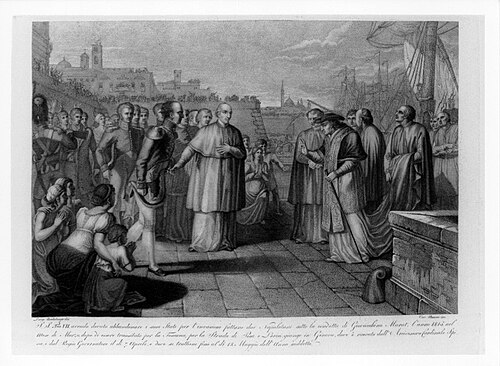
The social structure of the Republic of Genoa, definitively established by Leges Novae of 1576, emanated following the civil war between nobles “old” and “new” of 1575 – the last regurgitation of the centuries-old divisions between factions, that in the city and even more in the Riviere and inland were long survived to the reform of 1528 –, protracted until 1797, when theancien regime also fell to Genoa under the revolutionary motions from republican France. The period that followed the short revolutionary phase and saw a start on Genoa and Liguria in a short time span of several governments, the Ligurian Republic (1797-1804), the French Empire (1805-1814), reconstituted the Genovese Republic (1814) and annexed to the Kingdom of Sardinia (1815), offered families like the Outlines great opportunities for further affirmation.
There are many prominent characters in this troubled historical period, as there are numerous palaces and villas in the hands of the Delle Piane at this time.[44] Antonio who received Vittorio Emanuele I, king of Sardinia (1814) and later Pope Pius VII (1815), both directed to Genoa, owned the monumental complex, abbey, monastery and adjacent lands of San Nicolò del Boschetto in Rivarolo and the neighboring Palazzo Cattaneo Delle Piane, built by the Doria in the sixteenth century, with the many annexed lands, as well as the Palazzo Veneroso in Genoa.[45]
The most illustrious branch of the Delle Piane, which has been resident in San Cipriano for centuries, had already established itself at the time of the fall of the ancient government. Novi Ligure, for centuries the "capital" of the Genoese Oltregiogo, seat of the Governorate and economic and social hub of great vitality.[17]
When Liguria was annexed to the Kingdom of Sardinia, members of the family were ready to grasp all the opportunities that had a modern and expanding state offered to the ancient families of the patriziato, they continued to live in part in Novi, where the family owned some of the most prestigious palaces among those still presently characterize the historical center of Ninese (as well as Palazzo Delle Piane and Villa Delle Piane, already Brignole-Sale
Ten centuries between civic nobility, patriziato and landed notabilato
AraldicaExplore this chapter
For centuries the Delle Piane belonged to the ceti of the medieval civic nobility, to the typical landed notabilate of ecclesiastical vasalage and subsequently to the sovereign patriziato of Genoa.
Extinct the Patrizia line[46]. The Delle Piane family, as members of the Genoese patriciate, were entitled to the treatment of Magnifico, the only title permitted by law within the Genoese Republic. Although outside the Dominion or at foreign courts the Genoese patricians were equated with the rank of marquis, they continued to proudly prefer the nickname of Magnificent Genoese Patrician.[47]
To honour particular prominent personalities, the Republic raised to some family members the so-called honorary privilege I'm sorry., a treatment similar to that reserved for the Genoese patricians registered in the Book of Nobility, including the title of magnificent, without the right and duty to hold public offices and the inheritance of such rights: a nobility per personm rather rare.[22]
The coronation of Gian Francesco I Brignole in Doge di Genova and the first King of Corsica was the transformation of the rank of all Genoese patrizis: being these potential successors of an absolute ruler, each Genoese patrizio assumed the same rank as a Crown Prince or Prince of Blood at the European courts.[48]
The transition of the Aristocratic Republic to the Ligurian Republic following the Napoleonic Campaigns marked the end of the sovereign patriziate (1797).[49] With the annexation to the Sabaudo Government, it was suppressed the use of the title of Magnificent while tolerated the use of a courtesy title of Marchese, if nothing else for custom.[50] After a heated debate which lasted from 1888 to 1890, the Araldic Consultation of the Kingdom decreed that recognition of the trade mark was no longer granted ex officio to all the patrizies, but it had to be granted by the King ad personam.[51][52] Since the family is never concerned with this bureaucratic iter, the family is now enrolled in the Golden Book of Italian Nobility under the title of Noble applicable to all members (m/f) of the house.[53]
Araldica
-
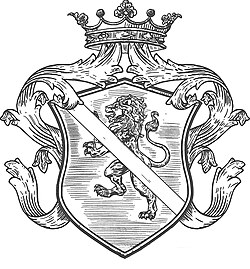 Polcevera Line
-
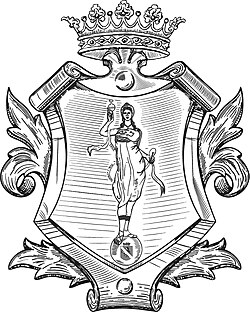 Patrizia line
-
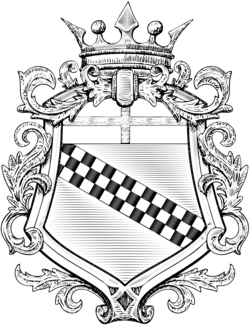 Cybo - Planets
Historical buildings
Explore this chapter
- Castello di Corvara, XI century (La Spezia)[22][54][55]
- Castello di Pornassio e della Valle Arroscia, 13th century (Imperia)[56]
- Palazzo Delle Piane, 17th century (Piazza Delle Piane, Novi Ligure)[57]
- Palazzotto Delle Piane, 18th century (Genua)
- Palazzo Balbi Delle Piane, XVI century (Val Polcevera, Genova)
- Villa Cattaneo Delle Piane dell'Olmo, XVII century (Val Polcevera, Genoa)
- Villa Delle Piane al Boschetto, 17th century (Val Polcevera, Genoa)[58]
- Villa Delle Piane, already Brignole-Sale, XVIII century (Novi Ligure)
- Palazzo Delle Piane, 20th century (Savona)[59]
Some of the known Plans
Explore this chapter
- Fulco (sec. XII), Consul of the Municipality of Genoa (1197, 1217)[11]
- Lanfranco (sec. XII), Consul of the Municipality of Genoa (1198)[60]
- Baldwin (sec. XIII), Consul of the Municipality of Genoa (1203)[61]
- Obertaccio (sec. XIV), Elder of the Municipality of Genoa (1374-1394). Commander of the armies of Doge Nicolo Guarco in 1380[18][19][20]
- John (sec. XIII) Elder of the Municipality of Genoa (1362), participated in together with the Grimaldi to the fact of weapons against the galleys of Luciano Imperiale[22][62][63]
- Nicolò (sec. XIV), castellano di Pornassio in 1343 together with his son Antonio, contestable of a flag of Balestrieri Genovesi[22]
- Jacobo (sec. XIV), Elder of the Municipality of Genoa (1382)[64]
- Antonio (sec. XV), Senior of the Municipality of Genoa (1401), Abbot del Popolo di Sestri, Pegli, Arenzano e di Voltri (1404)[30][31][32]
- Gio. Maria (1756-1836), official of Duke Ferdinand I of Parma, fought and forced the soldiers of Louis XIX of France to surrender[17]
- John the Baptist (1889-1961), Archbishop and Apostolic Nuncio of Austria[65]
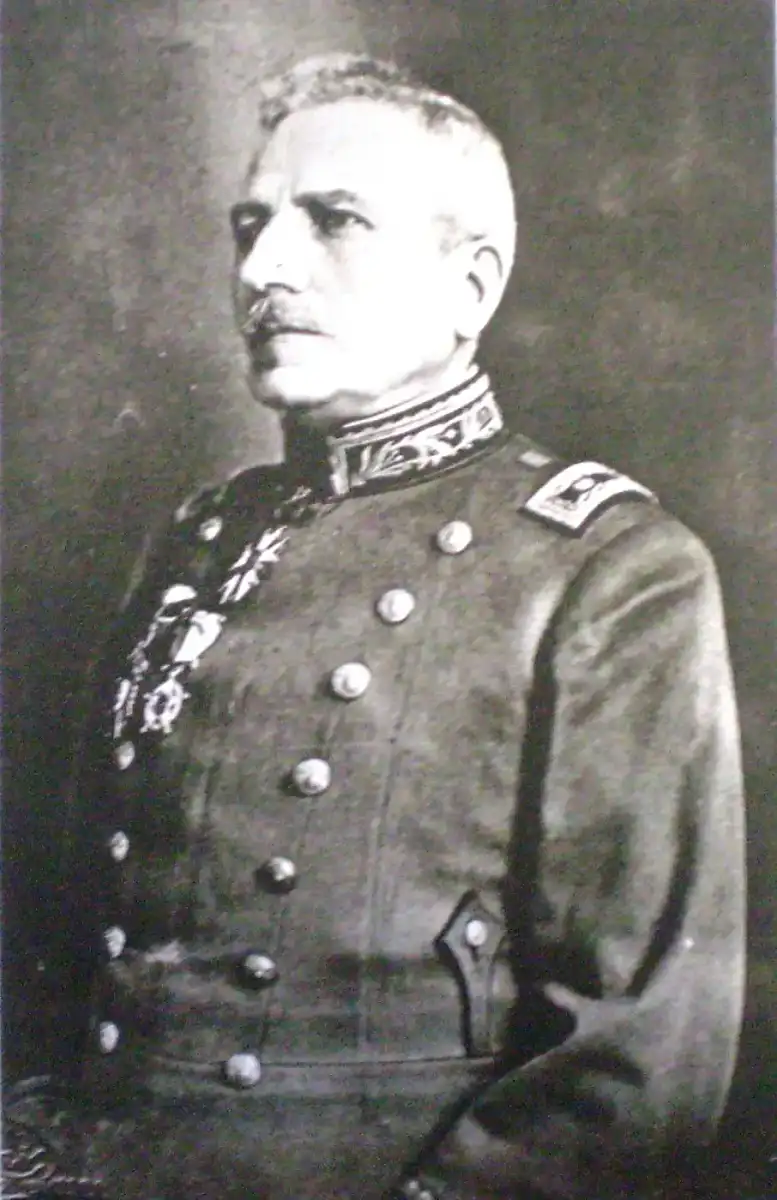
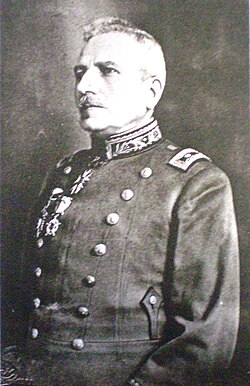
- Luigi Giuseppe (1865-1941), Minister of War and General[66]
- Mariano (1844-1916), industrial and philanthropist, son of Francis (1881-1953), Member of Parliament of the Kingdom of Italy in 1913
- Giovanni (1937-), industrial and shipowner[67]
- Gian Marino (1939-), lawyer, historian, Cav. of Grand Cross of Justice, Delegate for Liguria and Piemonte of the Constantinian Order.
Antique Polcevera Line
Explore this chapter
 Obertaccio | |||||||||||||
| Oberto | Giannino | Jacobo | Nicolo | ||||||||||
| Francis | Ugolino | Antonio | |||||||||||
| Benedict XVI | Bartolomeo | Carlotto | Adam | ||||||||||
| Gio. Baptism | Nicola | Carlo Carlo | James | ||||||||||
| Pantaleon | Baptistery | Augustine | Agabito | ||||||||||
| Carlotto | Benedict XVI | Niccol | |||||||||||
| Stefano | |||||||||||||
| Antonio | |||||||||||||
| Gio. Baptism | Gio. Antonio | Gio. Ambrose | |||||||||||
| Francis | Augustine | Oberto | |||||||||||
| Francis | Stefano | Cyprian | Gio. Baptism | ||||||||||
| Gio. Baptism | Antonio | ||||||||||||
| Antonio | Augustine | ||||||||||||
| Giuseppe Maria |  Augustine | ||||||||||||
| Francis | Luigi Antonio | ||||||||||||
| Mariano | Augustine | ||||||||||||
| Francis Primogenital line  | Gio. Baptism Copper of Novi | Joseph Ramo di Genova | |||||||||||
| Gustavo | Mariano | ||||||||||||
| Joseph | Francis | ||||||||||||
| Mariano | |||||||||||||
| Mark | |||||||||||||
| Edward | |||||||||||||
Notes
Explore this chapter
- ^ to b M. BERALDO, Ligurian House: Dellepiane, in "La Voce della Collegiata di N.S. of the Rimedio", Genoa 1991, a. XLII, no. 2, p. 8.
- ^ G. PALLAVICINO, Related by the Genoese families, placed together by Giulio di Agostino Pallavicino who brought them according to years to avoid confusion and mormorationi, Genoa 1634, B.C.B.G., m., vol. III, p. 464, ad vocem "Piano", ID., another copy in A.S.G.
- ^ G. ASCHERI, Historical news about the meeting of families in Hotels, Genoa 1846, p. 17; A AUGUST, Noble and popular, cit., p. 112.
- ^ Carlo Festa, The MSc of Aponte conquers Mediterranean Trailers, up The Sun 24 HOUR, 22 October 2022. Retrieved 28 January 2025.
- ^ Porto di Genova, Mediterranean Trailers sold to the group Msc of Aponte, up the Republic, 23 October 2022. Retrieved 28 January 2025.
- ^ Msc buy Mediterranean Trailers for 1 billion, up The 19th Century, 23 October 2022. Retrieved 28 January 2025.
- ^ L.T. Belgrano, Registrum Curiae, in Acts S.L.S.P., Genoa 1862, vol. I, p. 28.
- ^ L. Tacchella, The Knights of Malta in Liguria, Genoa 1977, p. 115.
- ^ L.T. Belgrano, cit., vol. II, pp. 272, 275, 681. From the oldest ecclesiastical documents and notary acts it is for some subjects, owners of goods in Polcevera and Bisagno, the indistinct use of the surnames de Plano and de Campo Plano (the latter destined to fall into disuse during the 13th century), so it is not to exclude a common consortium origin linked to undivided property
- ^ L.T. Belgrano, cit., vol. II, pp.125, 264-265; ID., second register of the archbishopric curia, in Acts S.L.S.P., Genoa 1887, vol. Eighteenth, p.22.
- ^ to b A.S.G., ms. 102, c. 95; G. Cipollina, Regesti di val Polcevera, Genova 1912, vol. I, p. 219.
- ^ L.T. BELGRANO, The second register, cit., pp. 407, 409, 411, 413.
- ^ A.S.G., Notaio Corrado de Compagnono, c. 40v.; G. CIPOLLINA, c., vol. Il-ILI, p. 272.
- ^ F. FEDERICI, ibidem; G. PARODI, historical Annals of Sestri Ponente and his families, in Acts S.L.S.P., vol. XXXIV, Genova 1932, pp. 158-159, 163;
- ^ L. BALLETTO, Genoese notaries in Oltremare, in "Historical Necklace of Sources and Studies" directed by G. PISTARINO, University of Genoa, Genoa 1989, passim.
- ^ G. GISCARDI, Origin and splendor of the noble families of Genoa 1774, ms. vol. IV, p. 1642, B.U.G.;
- ^ to b c d And A.M.G SCORZA, Genealogy of the family Delle Piane di Novi Ligure from Polcevera, Genoa 1953, ms., tav. I, pp. 1-2 (Doc.) Chiavari Library of the Economic Society, Scorza Fund.
- ^ to b G. CIPOLLINA, c., vol. I, pp. 258-259.
- ^ to b GB. DI CROLLALANZA, Blasonic historical dictionary of noble and notable Italian families, Pisa 1886, vol. III, p. 277;
- ^ to b B. D'ANJOU DURAZZO, List of all the existing and extinct patrizie families of Genoa, in "Rivista Araldica", Rome 1932, p. 49.
- ^ A.S.G., Diversorum Registri, reg. I, act 240.
- ^ to b c d And f F. FEDERICI, Families that were in Genoa and Genovesato before the year 1528 with many other of the Two Riviere, ms. first half 17th century, vol. II, p. 541, Fondo Graberg, Biblioteca Nazionale Centrale, Florence;
- ^ C. CATTANEO, Politicians, cit., p. 179.
- ^ G.L. BARNI, The division, cit., pp. 129, 132, 135;
- ^ G. PETTI BALBI, Simone Boccanegra, cit., pp. 78-93.
- ^ A.S.G., Diversorum Registri, reg. I, act 240;
- ^ G. CIPOLLINA, c., vol. I, p. 204; A.S.G., Cartularium salarum, n. 277;
- ^ A.S.G., notary Gregorio Labaino, f. 7, Act 13;
- ^ Acta Italica, collection of documents on public administration in Italy, Foundation for administrative history directed by G.F. MIGLIO, Genova - Comune (sec. XI-1528), pp. 292-293.
- ^ to b A.S.G., Massaria Communis Ianuae, L.C., pp. 44, 46.
- ^ to b G. PARODI, historical Annals of Sestri Ponente and its families, in Acts S.L.SP., Genoa 1904, vol. XXXIV, p. 279.
- ^ to b G.B. CABELLA, Pages voltresi, contribution for medieval and modern history, Genoa 1908, p. 29.
- ^ A.M. SALONE, Cogoleto. Nine centuries of history, Cogoleto 1991, p. 29;
- ^ A.S.G., notary Christopher Revellino, a. 1384, f. 2, no. 414;
- ^ G. CIPOLLINA, ct, vol. I, p. 305, vol. II, pp. 47, 68, 74.
- ^ E. GRENDI, I Balbi, a Genoese family between France and the Empire, Turin 1997, pp. 4-5.
- ^ A. OF CELLA, The families of Genoa and the Riviere, B.U.G., ms. 18th century, ad vocem 'Delle Piane".
- ^ L. TETTONI - L. SALADINI, Teatro araldico or general collection of weapons and signs of kindness to the most illustrious and noble houses that once existed and still flourish in Italy, Lodi 1844, pref. IV Hotel Cibo, IX Albergo De Franchi.
- ^ G. ASCHERI, cit., p. 43;
- ^ F. CASONI, Annali of the Republic of Genoa of the tenth century, Genoa 1799, vol. I, pp. 48-49.
- ^ G. CASALIS, S.M. State Commercial Statistical Historical Geographic Dictionary the king of Sardinia, Turin 1840, vol. II, pp. 364, 368.
- ^ G.F. DE FERRARI, cit., vol. IV, n. 2, pp. 57-58.
- ^ L. MAGNANI, Delle Piane Giovanni Maria, in Dizionario biografico degli italiani, vol. 38, Rome, Istituto dell'Enciclopedia Italiana, 1998.
- ^ M. LAMPONI, cit, pp. 175, 244-245; ID., Countries of Polcevera, Genoa 1980, pp. 110-111, 270, 274.
- ^ P. STRINGA, La Valpolcevera, Genova 1980, p. 195, ill no. 249.
- ^ A. FRANCEONE, Aristo, B.C.B.G, ms. first half of the 17th century, rare n. 28, passim.
- ^ PIERO GUELFI CAMAJANI, Araldic Dictionary, Hoepli Manuals, 1940, p.207
- ^ Encyclopedia Treccani - Patriziato e Giurisdizioni Private by Sergio Zamperetti, up treccani.it.
- ^ F.B. Sopranis, The magnificent Genoese nobles, the late seventeenth century ascriptions, Marconi Art Editions
- ^ Caesar Cattaneo-Mallone, The Title of Marquis, 1985.
- ^ The civic nobility in Genoa and Liguria from the common consular to the aristocratic republic., up archive.benicultural.it. Retrieved 19 February 2022 (archived fromoriginal url on 16 April 2021).
- ^ ASSOCIAZIONE NOBILIARE LIGURIA - Title of Marchese a Genova di Cesare Cattaneo-Mallone, up associationnobiliareligure.it.
- ^ The Golden Book of the Italian Nobility of Genoa (Edition 1990-94, volume II, part II), edited by the Araldic College of Rome..
- ^ A.S.G. Diversorum Cancellariae, a. 1380, no. 1/496, c. 17c., c. 129; notary Christopher Revellino, a. 1384. c. 110;
- ^ V. POLONIO, cit., p. 159;
- ^ News of Genoese families from the XI century to the XVI century, Historical Archive of the Municipality of Genoa (A.S.C.G.), ms. 17th century, no. 254, under the heading "of the Plans"
- ^ Fondo Ambiente Italiano - Palazzo delle Piane, already Brignole Sale and Negrotto Cambiaso, up fundambiente.it.
- ^ Ministry of Cultural Heritage - Villa delle Piane al Boschetto, up catalogue.beniculturali.it.
- ^ Fondo Ambiente Italiano - Palazzo delle Piane, up fundambiente.it.
- ^ A.S.G., ms. 103, cc 123 r.-V.; M. MACCANI, I Colombo di Sori in 1200, in "Viaggio in Liguria", Regional Foundation Cristoforo Colombo, Genoa 2005, a. III, n. 2, p. 91.
- ^ W.C. KRUEGER -R.L. REYNOLDS, Ligurian notes of the XII-XIII, Lanfranco, S.L.SP., Genoa 1951, vol. I, p. 17.
- ^ A.S.G., Ancient notes, cart. 135, c. 119 v., notary Guirardo Parissola n. 407, c. 49;
- ^ G. STELLA, Genoese Annals, edited by G. MONLEONE, Genoa 1972, p. II, p. 50.
- ^ A.M.G CURRENCY, CIT., TEN. I, p. 12 (Doc.
- ^ G. DOMENICHI PARODI, Mons. Giovanni Delle Piane, a distinguished Genoese in papal diplomacy, Genoa, De Ferrari Editore, 2001.
- ^ S. PETRIELLA-SOSA MIATELLO, Delle Piane Jose Maria, 1999, vol.5
- ^ Quirinale - The Honors of the Italian Republic, up quirinale.it.
Bibliography
Explore this chapter
- Annuary of the Italian Nobility, (Yearbook of Nobility), (edition 28, 2 volumes) and (edition 30, Volume 3), edited by Giovan Battista Crollalanza, presented at Palazzo Lascaris with Prince Amedeo of Savoy.
- The Golden Book of the Italian Nobility of Genoa (1990-94 Edition, volume II, part II), edited by the Heraldic College of Rome.
- Guelph Guelph Camaiani, The Liber Nobilitatis Genuensis and the Government of the Republic of Genoa until 1797, Florence, 1965, page. 405.
- The Herald in Genoa, Origins and Meanings of a historical and social reality, Liguria, Sabatelli edition 1983, edited by Gian Francesco Bernabò di Negro.
- Historical-blasonic dictionary of noble and notable families, Vol.3, 1886-1890, G.B. of Crollalanza.
- Hotel dei Nobili
- Mons. Giovanni Delle Piane (A distinguished Genovese in papal diplomacy), edited by Giuseppe Parodi Domenichi di Parodi
- Novese: The Liberty gallery of Palazzo Delle Piane di Novi Ligure, edited by Beppe Merlano.
- Casa America Foundation, Biographical historical dictionary of Ligurians in Latin America from Colombo to the entire twentieth century, Volume 1, page. 189, 190, 191.
- History of Art Criticism, up fosca.unige.it (archived fromoriginal url on 22 July 2011).
- Raphael Soprani, Of the lives of painters, sculptors, and Genoese architects; Tomo secundo written by Carlo Giuseppe Ratti, edited by Carlo Giuseppe Ratti, Stamperia Casamara in Genoa, from Cinque Lampadi, with license from Superiori; Digitized by Googlebooks from Oxford University copy on Feb. 2, 2007, 1769, pages 146.
Continue your journey