Atlas of Monferrato
Novi Ligure: sights, history and trails
Alessandria
- Elevation
- 197 m above sea level
- Area
- 55.2 km2
- Demonym
- Nose
- Patron saint
- Madonna of the snow
A closer look
Discovering Novi Ligure
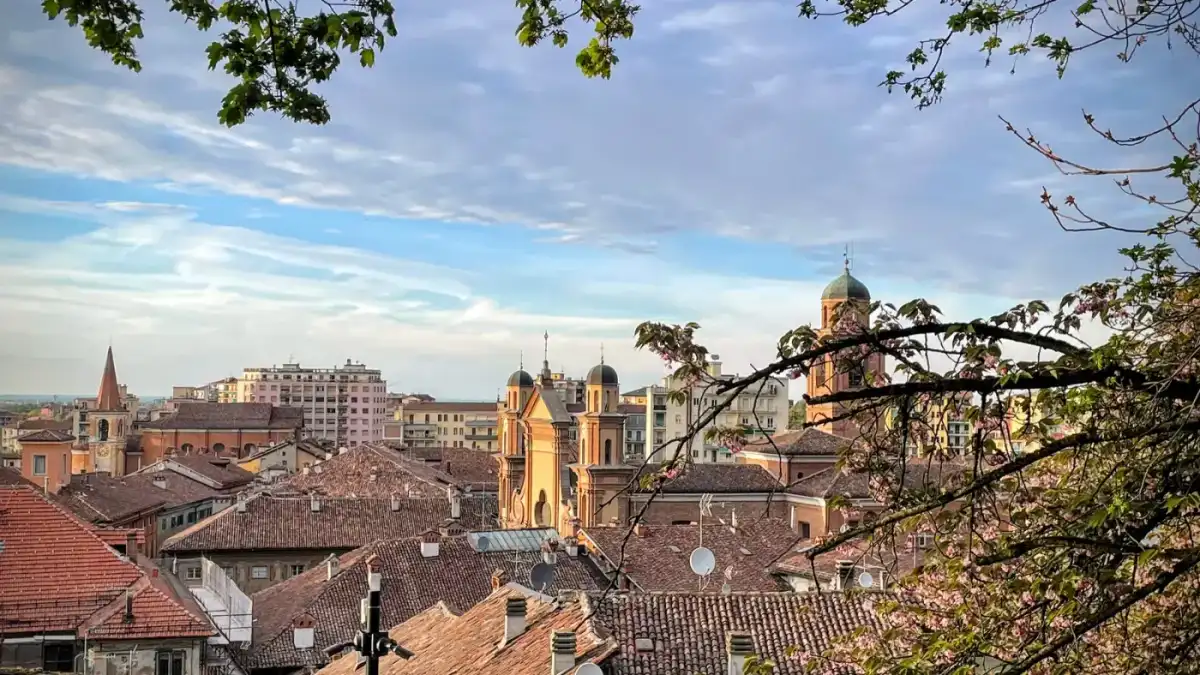
Novi Ligure (IPA: /ˈnɔvi ˈliɡure/[5]) is an Italian commune 27 572 inhabitants[2] from the province of Alessandria in the Piemonte. Main municipality of the region Ninety-six, to which it gives its name, and more generally to the Genoese Oltregiogo, Novi is one of the area centers of thealessandrino as the seat of the hospital, the upper school centre and other services for citizens.
Already important city of the Republic of Genoa, was capital of the homonymous province of Novi during the Kingdom of Sardinia. The suffix "Ligure", was added with the royal decree of 11 January 1863, following the passage in Piemonte four years earlier because of the Law Rattazzi. The decision was taken to mark the ancient territorial belonging to the Regio IX Liguria.[6]
In the course of its history, due to the strategic geographical location, it became first object of dispute by ancient medieval Italian states and later major center of the Republic of Genoa in the historical region of the Oltregiogo, as a crossroads of commercial and monetary traffic between the Genovesato and the Po Valley.
Today it is an active commercial and industrial reality based on its own economy on wine production, in particular the Cortese di Gavi DOCG, on the steel industry and on a sweet polo that boasts important brands like Novi-Elah Dufour, Pernigotti, Campari and Saiwa.[7]
Landscape and area
Region · ClimateExplore this chapter
Region
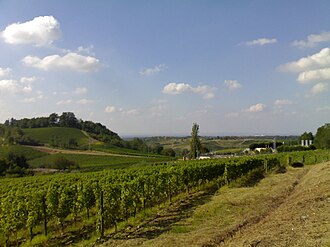
Novi Ligure is located in the south-eastern part of the Upper Monferrato, historically defined territory also as Oltregiogo. This term was and is used by the Genoese to define the areas immediately north of the Apennines that dominates the Ligurian capital. Most generally, the city is located in Lower Piemonte, not far from the border with Liguria.
The village is located on the extreme northern slopes of the Ligurian Apennines, which here softens in rolling hills, mostly cultivated with vine and for the remaining woodland. In fact, the municipal territory is characterized by the presence of hilly reliefs, immediately behind the old town and the neighborhoods to this adjacent, and from the flood plain that slopes towards the river Scrivia.
Novi is far away, measuring from the borders of citizens:
- 13 km from the border with Liguria to the south;
- 24 km from the Alessandria, to the north west;
- 45 km from Genoa, to the south;
- 130 km from Turin, to the north.
Climate
The presence of the plain in front and the proximity of the Ligurian Apennines determine a temperate climate in warm summer, with frequent wind days and occasional snowfall during the stiffest months. The coldest month of the month is average (January) +1.7 °C, while that of the hottest month (July) is +23.8 °C.
The table below shows the average temperature values that are recorded in the city during the year:
| Novi Ligure | Months | Seasons | Year | ||||||||||||||
|---|---|---|---|---|---|---|---|---|---|---|---|---|---|---|---|---|---|
| Gen. | Feb | Mar | Apr | May | ♪ | Jul | Ago | Set | Oct. | No. | Dec. | Inv | Pride | East | Aut | ||
| T. max. average (°C) | 4,5 | 7,1 | 12,2 | 17,0 | 22,3 | 26,1 | 29,1 | 27,9 | 23,5 | 16,2 | 10,2 | 6,3 | 6,0 | 17,2 | 27,7 | 16,6 | 16,9 |
| T. min. average (°C) | −1,1 | 0,1 | 4,2 | 8,3 | 12,3 | 16,2 | 18,4 | 17,9 | 14,7 | 9,2 | 5,0 | 1,0 | 0,0 | 8,3 | 17,5 | 9,6 | 8,9 |
History of Novi Ligure
The origins and the first centuries · Among the Marchesi del Monferrato and the Lords of Milan · Genoese period (1447-1797)Explore this chapter
(Charles de Brosses, Le président de Brosses en Italie. Lettres familières écrites d'Italie en 1739 et 1740 - 1739)
The origins and the first centuries
Note as Curtis, probably made up of a rural community not united in a village, gathering part of the population of the nearby Roman city of Libarna, after the abandonment of the latter shortly before the collapse of the Western Roman Empire.
Initially part of the Brand Obertenga, it was donated in 969 by Otto I to the monastery of San Salvatore di Pavia and became a castle on horseback of the year 1000.
Free common in the first decades of the 12th century, it remained in precarious balance between the cities of Tortona and Pavia, in struggle with each other, and Genoa, ally of the peacocks. Entered the Tortonese orbit, he remained subject to this city even after the peace of Constance (1183).
Among the Marchesi del Monferrato and the Lords of Milan
Ceduta to the Marquis of Monferrato for a short period (1223-1232), he returned to Tortona until 1264 and then passed under the rule of William VII Lungaspada. The object of dispute between Monferrato and the lords of Milan, was besieged by Visconti forces in 1320[8] and conquered by Giovanni Visconti in 1353, who had also assumed the lordship of Genoa. Part of Marchesato del Monferrato in periods 1164-1192, 1223-1232, 1264-1281, 1283-1347, 1355, 1358-1380[9], which governed its fate overall for just under a century and a half of history. Donated to Genoa in 1392, it was occupied by Facino Cane in 1409 who held it until his death (1412). Returning to the Milanese orbit, it was enfeoffed to the Genoese Fregoso family.
Genoese period (1447-1797)
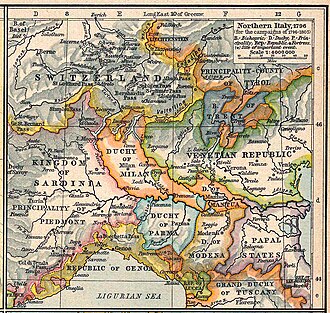
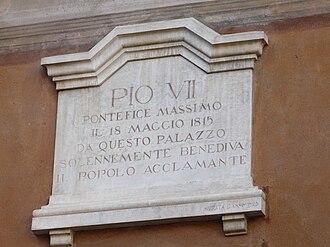
In 1447 the community of Novi decided to escape the Milanese sphere, after the death of Duke Filippo Maria Visconti and gave itself to Genoa with the signing of a convention, which was never fully operational, following the advent of the Sforza. After the defeat of Ludovico il Moro, he remained under the feudal rule of Fregoso, until the advent of Genoa by Andrea Doria. The Republic of Genoa, in fact, abandoned the French ally and directed its attention to Emperor Charles V, in exchange for independence, tried to expand its hinterland by conquering it in 1529. From that moment, Novi passed under the direct domination of Genoa (becoming the most important city in the territory called Oltregiogo) and remained there until the end of the Republic of Genoa (started in 1797 and, after a short restoration the year before, in 1815) before and of the Ligurian Republic (in the year 1805) then, if it excludes the Austro-Piedmontese occupation during the war of succession Austrian (1745-49),[10]. It was therefore part of the Republic of Genoa in the years from 1392 to 1412, from 1447 to 1745, from 1749 to 1797 and from May 1814 to January 1815.
The battles of Novi and the entry into the Kingdom of Sardinia
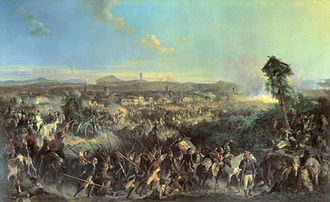
In 1799, at the time of the Ligurian Republic of which it was started from 1797 to 1805, Novi was the scene of an intense battle, supported between the Lemme and Scrivia courses and fought among the Austro-Russians led by General Melas and Suvorov and the French commanded by General Joubert (who found death in the early stages of the fight, leaving command in the hands of Moreau). Following the defeat, the French were forced to fold over Genoa. In the following months, after an offensive designed by General Championnet, Novi was resumed by the French forces and again hosted clashes between the two armies on 24 October and 6 November of that year.
He then entered the First French Empire, including in the territory of the Department of Genoa, of which it was part from 1805 to 1815, year in which, consequently to the agreements of the Congress of Vienna, the department was abolished and the city annexed to the Kingdom of Sardinia and included in the new Division of Genoa. Province of Cape Town since 1818, after the promulgation of the Decree Rattazzi in 1859 assumed the name "Novi Ligurian", both to underline an important historical period of the city, and to highlight the contrary opinion created following the administrative reform desired by Prime Minister Rattazzi, who abolished the province in 1859, incorporating it into the one to be established Alessandria and therefore consequently to the future Piemonte[11].
From Italy's unity to World War II
The second half of the nineteenth century proved to be a period of strong expansion for the city, thanks to the arrival of the Turin-Genova railway (1850). The strategic geographical position, combined with the availability of large spaces, manovalanza (guaranteed by the inurbation of the inhabitants of the countryside and the surrounding valleys) and to the new infrastructures (which guaranteed the rapid transfer of the produced goods) favoured the emergence of new industries. Among these noteworthy was the "Carbonifera" of the nineteenth century Edilio Raggio, which at the end of the 19th century produced coal briquettes for locomotive traction[12]. It was precisely the increase in reciprocal traffic between Novi and the port of Genoa that was one of the reasons for the creation, in 1889, of the "second Apennine pass" (also known as the 'Giovi branch line'). The now strong industrial vocation was further increased by the establishment, which took place in 1900, of the "Ferriera di Novi Ligure", a large steel mill located on the outskirts of the town, near the San Bovo railway park. The period from the First World War to the Second World War was characterized by a slowdown in development; in particular, it was the Second World War that left the city with the heaviest wounds. Already at the beginning of the war, on 13 June 1940, France had sent its Lioré-et-Olivier LeO 451 bombers to the city due to its strategic railway infrastructure. But the real tragedy occurred 4 years later. The terrible bombing of 8 July 1944 caused over one hundred victims and several hundred injuries, reducing many buildings to rubble.[13]. A plaque commemorates the terrible event. The period following the armistice was characterized by the action of partisan groups (such as the Pinan Cichero Division) opposed to the Nazi-fascist ones. As regards the war fate of Novi, the battle of Pertuso and the previous Benedicta massacre should also be remembered.
At the institutional referendum in 1946, the ninety voted overwhelmingly for the Republic with 69.7% and only 30.2% voted to maintain the monarchy.[14].
Symbols
Municipal expenditure
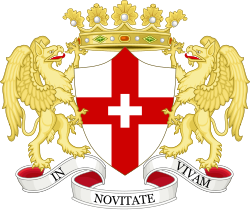
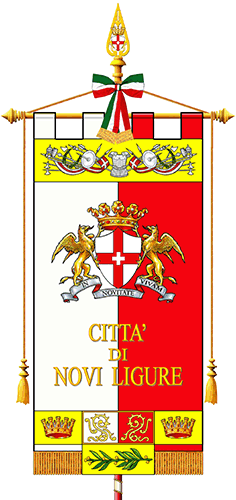
Heraldic description of the coat of arms:
(Taken from the municipal statute)
The municipal coat of arms takes its cue from the coat of arms of Genoa.
Banner
Flag

The flag of the city is constituted by a red cross on white field (on the model of the cross of St. George, flag of Genoa), at whose center insists a Greek cross of white color. It is possible to observe this banner in Piazza Repubblica, together with those of Italy, the European Union and the Region Piemonte.
Honors
Title of City, conferred in 1746[10] by Carlo Emanuele III of Savoy, during the short period of occupation sabauda occurred in the unstable historical moment of the war of Austrian succession. After the peace of Aquisgrana (18 October 1748), re-established membership in the Republic of Genoa, Doge Cesare Cattaneo Della Volta confirmed to the community of Novi this honorific title.
What to see in Novi Ligure
Civil architecture · Historical centre · VillasExplore this chapter
Civil architecture
Historical centre
(Joseph-Jérôme Lefrançais de Lalande, "Voyage d'un Français en Italie, fait dans les années 1765 et 1766" - 1765)
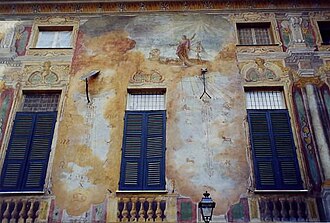
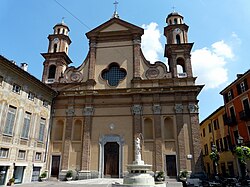
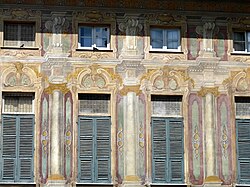
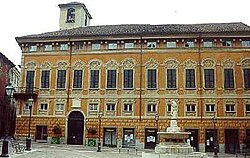
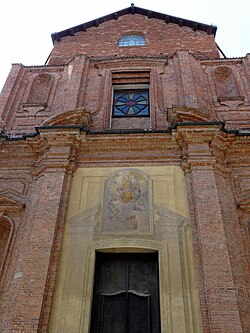
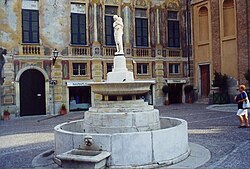
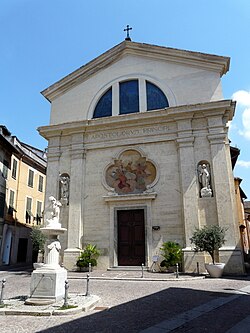
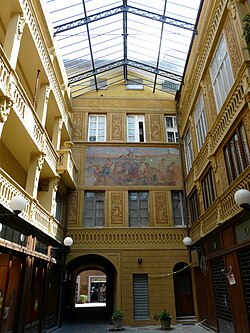
The town centre is characterized by the presence of numerous noble buildings, many of which have a painted façade. It is also worth mentioning Palazzo Negroni, rich in decorations of the same century and equipped with two meridians, one of which is based on the French revolutionary calendar. Stores on the side of the courtyard remarkable traces of the original 17th century decoration. The most important square in the historic center is called Of the Plans, from the name of historical family noble Genoese, which they overlook, in addition to the namesake Palazzo Delle Piane, the Collegiate church and Palazzo Negroni.
Villas
The Villa della Marchesa is a villa of the second half of the eighteenth century declared a national monument[without source],
The Marchesa, the name with which from 1700 the estate is mentioned in pastoral visits and testaments.
Religious architecture
Collegiate Church of Santa Maria Assunta
The collegiate of Santa Maria Assunta, also known as the title Santa Maria Maggiore, was rebuilt in the Baroque era, but its origins perhaps date back to the early Christian era.
Church of Santa Maria Maddalena
In the oratory of Santa Maria Maddalena there is an imposing Calvary composed of 21 wooden statues and two horses with natural dimensions, work of unknown carving and a Plant on Christ made up of 8 terracotta figures, both dating back to the second half of the sixteenth century.
Municipal cemetery
In the city cemetery there are two valuable works by the Genoese sculptor Lorenzo Orengo, tomb Daglio and tomb Denegri.
Parish of Santa Maria
The parish church of Santa Maria is the oldest religious building in the city (XII century). Situated in a decentralized position along the road to Cassano (he was once a rural church), it has three aisles and original apses. Inside, a fresco dated 1474, painted by Manfredino Boxilio, depicts the then lady of Novi, Oriana di Campofregoso and some saints (Sant'Anna, San Giovanni e Santa Margherita).
Military architecture
The barracks Giorgi
In Novi there is also the former barracks Giorgi, headquarters of the Municipal Police, Guardia Di Finanza, the local section of Civil Protection and various associations for musical, cultural, meeting and beneficial purposes. The barracks consists of four buildings arranged to form a square. Inside you can still see the fuel pumps, used by 157th Regiment Infantry Motorized "Cremona" during its stay in the barracks.
Castle and walls
Novi still retains a short stretch of the city walls, erected in 1447, demolished in 1825 and the 30 meters high tower (visitable) of the castle, dismantled already in the eighteenth century. In summer you can also visit the underground. This pole is also part of the "Open Castles".
Society
Demographic evolution · Foreign ethnic groups and minorities · ReligionExplore this chapter
Demographic evolution
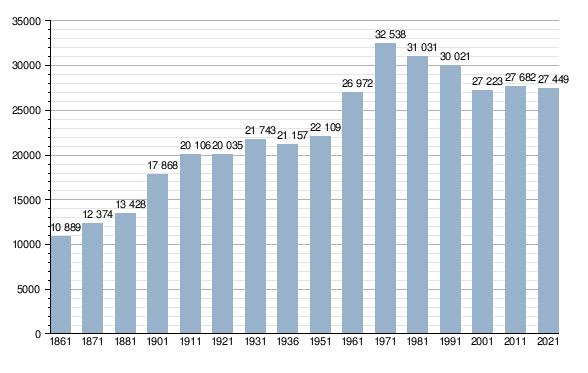
Foreign ethnic groups and minorities
As at 31 December 2023 foreigners living there are 3 874, equal to 13,98% of the population[19]. The most represented nationalities are:
- Romania, 896
- Albania, 651
- Morocco, 562
- Ecuador, 354
- China, 192
- Ukraine, 113
- Nigeria, 97
- Pakistan, 62
- India, 59
- Philippines, 53
- Moldova, 53
Religion
Novi is part of the ancient diocese of Tortona, in turn included in the ecclesiastical region of Liguria. A committee was created with the aim of raising awareness among public opinion and civil and religious institutions to open a debate on a possible future erection of the diocese of Novi Ligure[20].
Culture
Education · Libraries · SchoolsExplore this chapter
Education
Libraries
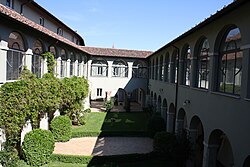
The Civic Library of Novi Ligure[21], established in 1833, has a substantial book heritage, estimated at around ninety thousand volumes, which also include various periodicals and newspapers. The library also has a considerable number of ancient volumes and reprints of ancient texts, which can only be consulted on site. The current library headquarters, inaugurated in 1999, was created from the conversion of a former seventeenth-century convent of the Poor Clares, in the historic center. The structure has a reception room, a loan room, a consultation and study room, a children's room, a children's room, a newspaper library and an ancient collection with a sixteenth-century room. There are also some computers for internet connection and a computer station reserved for the visually impaired. Located on the ground floor there is a conference room and an auditorium in which various events take place throughout the year, such as presentations of new volumes, exhibitions, cultural meetings, conferences, weddings and civil funerals, concerts and theatrical performances. The library also houses the "G. Capurro" municipal culture center and the city headquarters of "Il punto Giovani".
In December 2003 it was recognized by the Region Piemonte which "Biblioteca Centro Rete" of the library and archive system novese[22].
Schools
Novi Ligure is home to the following state schools, which are part of the secondary school cycle of the second degree:
- "E. Amaldi, which offers traditional courses: scientific (diploma) Scientific Lycée properly said or traditional, diploma Liceum of Applied Sciences and diploma Sports Scientific Lycée) and linguistic (diploma Linguistic Lyceum).
- Classical Lyceum "A. Doria", detached seat of the Liceo Amaldi, which offers what training offer traditional courses: classic (diploma) Classical Lyceum) and humanistic (diploma Liceum of Human Sciences).
- Technical Institute Ciampini-Boccardo, which offers what training offer the courses: Agraria, Chemistry, Electronics, Mechanics, Administration, Finance and Marketing, Tourism, Commercial Services and Food & Wine.
Museums
- Museum of the highest champions: it was inaugurated in 2003 and owes its name to the nickname with which were called the two great cyclists of origin ninety, Costante Girardengo and Fausto Coppi (the latter actually born in Castellania). It is a wide exposure of 3000 m2 dedicated to the history of cycling, agonistic cycling and to the figures of the two champions in ninety, where you can often listen to conferences and concerts. In the exhibition center alongside the structure there are also important periodic events (in particular Sweet lands of Novi, annual food and wine review and promotion of local products in the month of December) and temporary exhibitions, as well as musical events.
- Beekeeping Museum: was inaugurated on 20 April 2016 at the T-shirt, in Merella hamlet, following the donation of apistic equipment to the municipality of Novi Ligure by Amelia and Giacomo Bisio, local beekeepers.
Theatre
In the city there are two theatres: the nineteenth-century "Teatro Romualdo Marenco", inaugurated in 1839 as "Teatro Carlo Alberto", and the modern "Teatro Paolo Giacometti" (former Ilva theater), dedicated respectively to the composer and the playwright of common origin of Ninese. At the "Romualdo Marenco", finished architectural-functional recovery[23] in the summer of 2019, and at "Paolo Giacometti" theatrical performances are staged throughout the year[24].
Cinema
The city, starting from 1 February 2018, is again equipped with a cinema, the "Multisala Moderno", which includes three rooms of about 140 places each and has been reopened after ten years of inactivity[25].
Media
Print and publishing
In the municipal territory there are two drafts of the local printed paper, that is the weekly The Nine And Panorama of Novi, as well as three online newspapers, namely Novionline, edited by the journalists of The Nine, The Moscone And The fresh ink (previously distributed monthly in paper edition).
Gastronomy and local traditions
Kitchen · Typical products · WinesExplore this chapter
Kitchen
The local cuisine is mainly characterized by being very influenced by the Ligurian one but also affected by typically Piedmontese contaminations and especially muferrine.
Genovese root is the flourish and focaccia, while sabauda are the agnolotti and meat-based products: Novi Ligure can be identified in full title as a crossroads of these two gastronomic cultures.
Typical products
- Canestrelli novesi
- Ceci di Merella
- Corsetti
- Farinated
- Focaccia novese
Wines
- Cortese of the Gavi DOCG
- Nibiò
Events
- Feast of St. Catherine. Turned out from 1607, the event is celebrated on 25 November with a three-day fair that involves the city's central streets and offers the possibility to buy, among other things, the typical products of the area, like the turkey.
- Dolci Terre di Novi, established in 1995[26], an annual event focused on the food and wine production of Novi Ligure and the Ninety-six, and more generally in the Lower Piemonte, takes place in the first weekend of December, in the "Dolci Terre" exhibition centre, a structure created from the redevelopment of an ancient industrial building, adjacent to the Museo dei Campionissimi. Each edition revolves around a particular product of the area.
- Novi Choco Days. Events that consist of exposure and sale of chocolate products on the second weekend of October.
- Artisan master. Exhibition-market of Piedmontese handicrafts of excellence held in the exhibition center "Dolci terre" on the third weekend of October (starting from 2017).
- Novinfiore. Show-market of plants and flowers that takes place from 2014 in the historic center of the city on the last weekend of April.
- International Composition Competition for Banda Romualdo Marenco, established by the Municipality in 2002[27] and dedicated to the composer novese. It takes place in early September but the award ceremony is held in June of the following year, with which a season of concerts will be inaugurated that lasts until mid-September.
Anthropic geography
Urbanism · Hamlets · LocationExplore this chapter
Urbanism
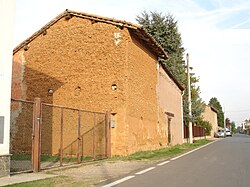
In the image: a house of land, or "trunera", in San Giuliano Nuovo.
A typical presence of the rural landscape of Novi Ligure is represented by the traditional "land houses" (or "trunere" as they are called locally), which are still found above all in the plain before the city. These are ancient buildings for residential or agricultural use, built according to the traditional use of raw land sometimes added with straw. For some years now, they have been considered a heritage of local tradition to be safeguarded and recovered. Although this custom is also present in some surrounding realities, Novi Ligure is the only Piedmontese municipality, as well as northern Italy, to be part of the "National Association of Municipalities of the Crude Land"[28].
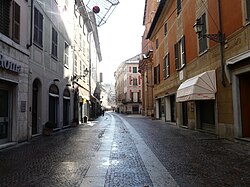
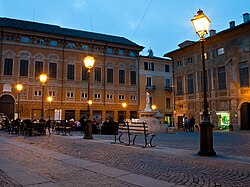
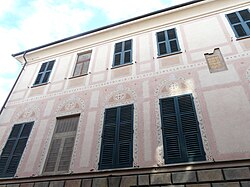
Novi consists of a urban plan that reflects its various historical events and economic-social development.
The old town, dominated by the hill on which rises the tower of the castle - heart of the city, develops around the central Piazza Delle Piane through an intricate system of streets and alleys that reflects the medieval origin of the ancient village closed by the walls. Just the irregular layout of the medieval system makes the historic centre almost unseen from the urbanistic point of view from the most recent eight-nineteenth century districts adjacent to it.
The city partially preserves the image of the original fortified inhabited, despite the demolition of much of the ancient walls (which occurred in the 19th century to allow the expansion of the inhabited area) survived the southern part of the same and some towers. Before the partial demolition there were only four doors placed in correspondence of the main directors, who guaranteed the entrance to the city: port Genoa (in direction of the Ligurian capital, to the south), door Pozzolo (in direction Alessandria and Milan), door of the Zerbo (in the direction of Serravalle Scrivia, to the east) and gate of the Valley (in the direction of Ovada, to the west).
At the end of the 19th century, under the work of large local entrepreneurs and industrialists such as Edilio Raggio and Ambrogio Dellachà, Novi sees the dramatic expansion of its importance with the arrival of the steel and railway, becoming one of the poles of the nascent Italian industry. During this period and during the next decades of the twentieth century, the first districts are born outside the ramparts, characterized by broad and straight roads, parallel and perpendicular to each other. The building development is stopped only in the moments of the two world wars, and then resume vigorously during the period of the so-called "economic miracle", with the creations of new districts, built to accommodate the families of the numerous migrants who arrived in town to work in industries, which include in fact the ancient country buildings such as the parish church of Santa Maria in the urban fabric.
The last years of the 20th century saw the start of important projects aimed at redeveloping old abandoned industrial areas and urban areas badly used to return them to citizenship in a new functional capacity. The major interventions that are still being carried out include the redevelopment and renovation of the historic center and the construction of the new district (Euronovi) in the large area occupied once by the old ferrier.
Hamlets
The two hamlets of the municipality are Barbellotta and Merella, both born in ancient times as agricultural realities detached from the city center.
Location
There is a rural area, not reunited in fraction, commonly called Basso Pieve located along the provincial road to Cassano Spinola, made up of a large number of houses and farms scattered across the alluvial plain.
Quartier
- Historic center: located in the southern part of the city, its main arteries, center of Ninese life, are Piazza Dellepiane, Via Girardengo and Via Roma;
- Euronovi: district originated from the ashes of the old Ilva, to the west, is still being completed. Headquarters of the exhibition centre, the Museum of the Campionissimi and shopping centres;
- G1: located north west of the city, houses the stadium Coastal Girardengo, several schools and clubs and a public housing complex;
- G3: residential district located in the upper part of the city;
- Lodolino: another residential district, south east of the city. Here the delitto di Novi Ligure on 21 February 2001;
- Pieve: ancient nineteenth-century village, located east of the city, owes its name to the church of Novi; the area is affected by the path of the church. Terzo ;
- "Mutua": area located to the north of the city, so called by the Novesi due to the presence of the ASL offices, an expanding residential district, home to the Corrado Romanengo Hippodrome.
Economy
Agriculture · Industry · FoodstuffsExplore this chapter
Agriculture
Extensive agriculture was until the first half of the 19th century the predominant economic activity of the nineteenth-century territory. The most intensely cultivated area is the flat portion of the municipal territory, where the fields are mainly dedicated to cereal production, in particular wheat and corn. Smaller in size is the typical production of the Merella chickpea, in the homonymous fraction. The hilly territory is instead an area mainly dedicated to wildlife and viticulture, Novi Ligure is in fact a wine region, where the Gavi or Cortese di Gavi DOCG is produced, as well as a partner of the National Association of Wine Cities. Historically relevant was the bachiculture and contextual cultivation of mulberry, a tree still diffused between the plots of land of the countryside, said in the local dialect "Morone", due to the big berries similar precisely to more.
Industry
Novi Ligure is an important industrial center, where many companies and plants are located. The secondary sector, traditionally crucial for the city economy, is characterized by the presence of agri-food and sweetener industry, pharmaceutical and heavy. Strong is also the presence, along with the large plants, of the small and medium enterprise. To the east (I am going to Ovada And Bosco Marengo) and to the west (along the routes to Alessandria And Serravalle Scrivia) large industrial areas have developed, full of companies and warehouses. Furthermore, in the surroundings of the city, there are other industrial areas of considerable importance, such as those of Basaluzzo, Pozzolo Formigaro, Cassano Spinola, Stazzano And Serravalle Scrivia.
Foodstuffs
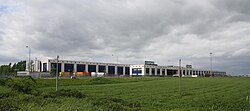
The food industry has a large number of companies, mainly devoted to sweet production. Among those food that operate in other areas is the Cinzano-Campari group, which in Novi owns its main establishment, inaugurated in spring 2004 at the gates of the city.
Nineteenth-century sweet polo
In 1996 a real sweet polo was established.[29], which groups together the confectionery industries of Ninety-six. The main confectionery companies present in the municipal area are:
- the Novi, constituted in 1903, important producer of chocolate at national level and part of the group Elah Dufour;
- the group Elah Dufour, which produces different types of candies including Big Fruit and various products for home preparation of sweets (budini, crème caramel, baked creams);
- the Pernigotti, born in 1860, producer of chocolate, specialized in preparations for ice cream and pastry;
- Gambarotta, a sweet industry specializing in chocolate and cake production;
- the Bodrato, moved to the city in 2015 by the nearby municipality of Capriata d'Orba, chocolate producer;
- la Serra Industria Dolciaria, producer of hard candies, stuffed, toffee and chewing gum.
Complete the panorama of the confectionary industries Mangini, producer of candies and bonbons located in Bosco Marengo, but important at the level of the Novese territory.
Heavy industry
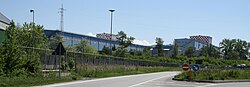
In the industrial area located north west of the city there are iron and steel, metallurgical and mechanical industries. The biggest are:
Pharmaceutical industry
The following nine companies are active in the pharmaceutical sector:
- Bioindustry;
- Euritalia.
Services
Trade is another important component of the city economy, characterized by the presence of many commercial activities (concentrated mainly in the historical center), various discount and supermarkets and a hypermarket of the Bennet group. In the city there are 19 bank branches, approximately one every 1 500 inhabitants[32]. Among the services there is also the "San Giacomo" hospital.
Infrastructure and transport
Roads · Railways · Urban mobilityExplore this chapter
Roads
The city is an important road junction, as it leads to Genoa and Liguria of the whole Piemonte Oriental. It is also the starting point of the former Highway 211 of Lomellina, which connects it to Novara; the highway 35 bis of the Giovi, which constitutes the ring road on the east side of the urban fabric, instead joins it to Alessandria and the neighbor Serravalle Scrivia, in the direction of Genoa.
The Provincial Road "35 Ter", recently built, connects the south east part of Novi with the highway tollgate Serravalle Scrivia: the new road was designed as a 35 Bis variant between Novi and Serravalle.
There are many connections with the municipalities of the Ninety-six, through provincial roads that head towards Gavi and Val Lemme; the SP 155 unites the city with Ovada And Acqui Terme, with the SP 160 (which starts from the nearby Basaluzzo) is connected to the municipality of Voltaggio and at the Bocchetta pass.
Two European roads, E25 and E62 pass in the municipal territory.
Novi is connected to the motorway network through the homonymous toll on the A26-A7 rail; it is also served by the tollgate. Serravalle Scrivia on the A7, located a few kilometers south of the city, especially for those who head or arrive from Genoa Center.
Railways
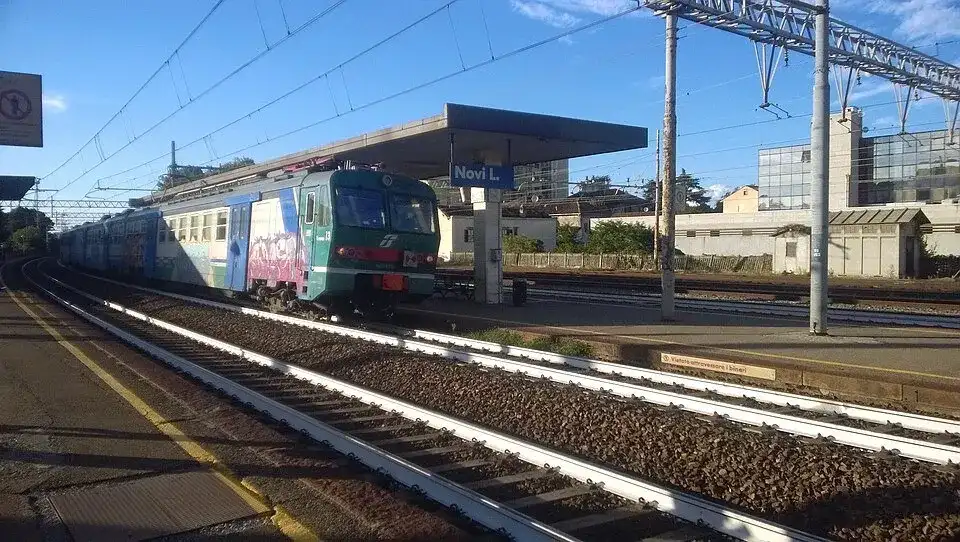
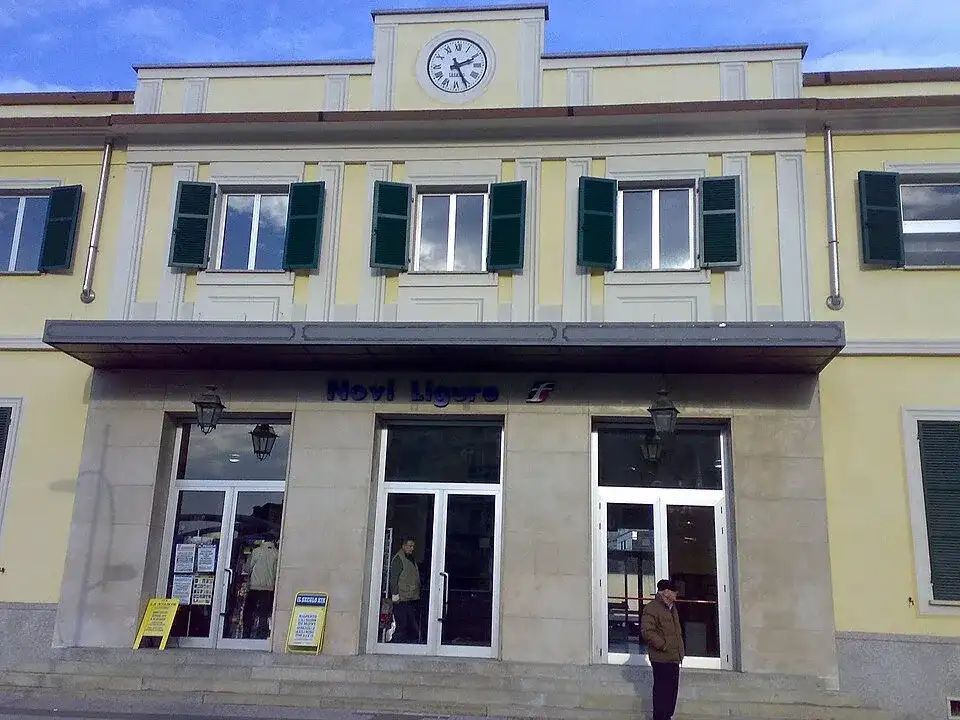
The city is served by a railway station, located in the heart of the city center at the service of the Turin-Genua railway and Tortona-Novi Ligure line, which until the opening of the most direct route from Tortona constituted part of the itinerary Milan-Genova.
In San Bovo there is a railway logistics platform including dedicated train station, built in 1885 (at the time called "the wagon park"). The park was capable of hosting 500 wagons and had an adjoining shed for 18 locomotives with turntables. It was the first in the world to be illuminated to be able to operate even at night, in 1891, handling 2,400 freight wagons daily.
Novi Ligure is interested in the project of the so-called "Third Pass of the Youth", a new line mainly in tunnel destined to connect the city of Genoa with the Po Valley, of which are under way construction works.
Urban mobility
The local public transport company is the Bus Company of Saluzzo (CN) and Autolinee Val Borbera, which deals with the connections with the municipalities of the province of Alessandria and Val Borbera respectively.
From 2 October 1881 to 5 May 1953 Novi Ligure was also served by the tramway to Ovada, with railway branch Basaluzzo-Frugarolo, operated by the Ferrovia della Val d'Orba company.
Administration
TwinningExplore this chapter
Below is a table relating to the administrations that have succeeded one another in this municipality.
| Period | First citizen | Match | Load | Notes | |
|---|---|---|---|---|---|
| 8 August 1985 | June 22, 1990 | Mario Angels | Italian Socialist Party | Mayor | [33] |
| June 22, 1990 | April 24, 1995 | Mario Angels | Italian Socialist Party | Mayor | [33] |
| April 28, 1995 | June 14, 1999 | Mario Lovelli | Democratic Left Party Left Democrats |
Mayor | [33] |
| June 15, 1999 | June 14, 2004 | Mario Lovelli | Left Democrats | Mayor | [33] |
| June 14, 2004 | June 23, 2009 | Lorenzo Enrico Robbiano | Democratic Party | Mayor | [33] |
| June 23, 2009 | June 11, 2014 | Lorenzo Enrico Robbiano | Democratic Party | Mayor | [33] |
| June 10, 2014 | June 11, 2019 | Rocchino Muliere | Democratic Party | Mayor | [33] |
| June 11, 2019 | July 4, 2022 | Gian Paolo Cabella | Centre-right[34] | Mayor | [33] |
| July 4, 2022 | May 29, 2023 | Paolo Giuseppe Alfredo Ponta | - | Prefectious Commissioner | [33] |
| May 29, 2023 | in office | Rocchino Muliere | Democratic Party | Mayor | [33] |
Twinning


Sport
Athletics · Soccer · CyclingExplore this chapter
Athletics
The athletics company, the Athletics Novese, has been active since 1972, since then it has always been a point of appease for all ninety who want to practice healthy sports or even just approach the athletic world. Novi also enjoyed great champions such as the famous marathon Renato Martini who, at the XX Olimpiade Games, held in Munich, won the 24th position. He also won and Italian titles.
Soccer
The main football team is the Novese, founded in 1919, whose greatest success consists of the victory of the championship in the 1921-1922 season.
Among other local football companies are the Aquanera Comollo Novi (failed in 2012 and never went beyond the D Series), the G3 Real Novi and Tiger Novi (also historically militant in regional and provincial amateur divisions).
The largest football infrastructure in town is the Costante Girardengo Stadium.
In women's football, the city's team is the Nineteen Women's Football that currently plays in Serie B.
Cycling
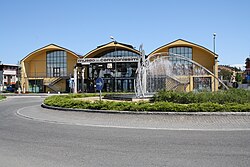
The resort has always been linked to cycling. In 2007, Novi hosted the Italian cycling championship on the road. In 2003 the museum of champions was inaugurated, dedicated to this sport.
As for the races in stages, the municipality has often been interested both from the historical Giro dell'Appennino and from the Giro d'Italia, of which are to be remembered the editions:
- 1965, the 14th stage ends in Novi, from which the 15th starts, with the victory of Danilo Grassi.
- 1978, the 1st stage ends in Novi, from which the 2nd starts, with the victory of the Belgian Rik Van Linden.
- 2004, the 2nd stage starts on May 10th in front of the Museo dei Campionissimi, and ends in Pontremoli with the victory of Damiano Cunego.
- 2010, the 5th stage ends in Novi in Viale della Rimembranza, on May 13th, with the victory of the Frenchman Jérôme Pineau.
- 2019, the 11th stage ends in Novi with the victory of the Australian Caleb Ewan.
- 2026, the 12th stage ends in Novi with the victory of the Belgian Alec Segaert.
Artistic gymnastics
The company of gymnastics Forza and Virtù in 2011 has conquered the promotion in series A1; it collects gymnasts of national interest like Arianna Rocca. In 2012, to celebrate the 120 years of life of the company was awarded the award Golden Tower 2012, and a philatelic postmark was created[38].
Other sports
Badminton is very popular in the city. The sports association Boccardo Badminton Novi participates in the Serie A and is the second company in Italy regarding the results obtained and representation to federal votes.[without source]
Other companies present in the municipality are: Mangini Novi in the series B1 of male volleyball and the female homologue Aedes Novi who participated in the Serie B1 tournament; as well as the company Novi Hockey of hockey in-line which for a few years has been playing this part in Serie C. There is also a basketball team Basket Novi 1980, which militates in series D.
Present since 2004 Aquarium manages the indoor swimming pool from 25 meters and the summer Olympic pool, where you train the competitive team with successes at regional level.[without source]
At Novi Ligure Airport, the A.s.d. Sailing Sports Association is located. They're flying.
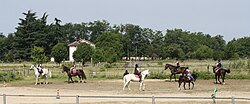
In Novi Ligure there is the Hippodrome Corrado Romanengo, where competitions took place until 2004; also Scuderia La Bellaria, which carries out equestrian activities.
In 2011 the "Rugby Novi ASD" was refounded, the first team played in the C2 series in Piedmont.
Notes
Explore this chapter
- ^ Ligurian Novi - Encyclopedia - Treccani, up www.treccani.it. Retrieved 9 August 2026.
- ^ to b Monthly demographic balance for the year 2026 (provisional data), up demo.istat.it, ISTAT.
- ^ Seismic classification (XLS), up risks.protezionecivile.gov.it.
- ^ Table of degrees/day of Italian Municipalities grouped by Region and Province (PDF), in Law 26 August 1993, n. 412, annex A, National Agency for New Technologies, Energy and Sustainable Economic Development, 1 March 2011, p. 151. URL consulted on 25 April 2012 (archived fromoriginal url on 1 January 2017).
- ^ Bruno Migliorini et al., Lemma sheet "Novi"[interrupted link], in Dictionary of spelling and pronunciation, Rai Eri, 2010, ISBN 978-88-397-1478-7.
- ^ Royal decree 11 January 1863, n. 1126, regarding "Decree authorizing various municipalities in the provinces of Milan, Alessandria, Brescia, Cremona, Turin, Ascoli, Macerata, Cuneo, Piacenza, Porto-Maurizio, Ravenna and Sassari to take on a new name."
- ^ Osservatorio del turismo | Servizionline, up services.regione.piemonte.it. Retrieved 16 January 2022.
- ^ (EN) Fabio Romanoni, The military organization in Tortona through the “Register of Municipal revenue and exits” (1320-1321), in "Bollettino Storico-Bibliografico Subalpino", 114 (2016).. Retrieved 29 May 2019.
- ^ Source: marsimonferrato.com.
- ^ to b Source: francbampi.it.
- ^ The Italian regions became operational only since 1970. Source: storyin.net (archived fromoriginal url on 3 December 2008).
- ^ Source: site "High Voracity".
- ^ From the website ofISRAL (archived fromoriginal url on 23 August 2007)., Institute for the History of the Resistance and contemporary society in the province of Alessandria
- ^ The results of the '46 referendum in Novi Ligure, up electionstore. interno.gov.it.
- ^ Novi Ligure, Decree 1952-01-11 DPR, concession of gonfalone, up Central State Archive.
- ^ Bozzetto del gonfalone del Comune di Novi Ligure, up ACS, Collection of drawings from the coat of arms of municipalities and cities. Retrieved 5 October 2024.
- ^ Data taken from:
- Resident population of the municipalities. Censuses from 1861 to 1991 (PDF), up ebiblio.istat.it, ISTAT.
- Resident population - Time series, up exploredati.istat.it.
Please note: 2021 data refers to permanent census data as of December 31 of that year.
- ^ Source: SecoloXI.[interrupted link] of 30 January 2009, Lower edition Piemonte
- ^ demo.istat.it, https://demo.istat.it/app/?i=P03&l=it Missing title for url
url(help). - ^ Source: site of the eigenda diocese (archived fromoriginal url on 12 May 2008).
- ^ Library of the city of Novi Ligure, up communenoviligure.gov.it. Retrieved 3 May 2012 (archived fromoriginal url on 11 February 2015).
- ^ Source: institutional site of Novi Ligure (archived fromoriginal url on 26 December 2008).
- ^ “Marenco”, by the year away to work. Retrieved 28 February 2011 (archived fromoriginal url on 26 March 2015).
- ^ Teatro Paolo Giacometti (archived fromoriginal url on 31 May 2010). from the site of the municipality of Novi Ligure
- ^ Cinema Modern, opens Thursday with Tom Hanks and Meryl Streep.
- ^ Source: official website Dolci Terre di Novi.
- ^ Golden Albo of the festival.[interrupted link]
- ^ Source: http://www.terracruda.org/comuni-della-terra Archived on 7 May 2018 at the Wayback Machine. official website of the Association of Municipalities of the Crude Land Copy filed, up terracruda.netsoul.net. Retrieved 18 December 2008 (archived fromoriginal url on 3 August 2008).
- ^ Institutional site of Novi Ligure, March 2018.
- ^ Baglietto S.a.s..
- ^ Valdiderra (archived fromoriginal url on 3 February 2011).
- ^ Source: Comuni-italiani.it.
- ^ to b c d And f g h the j http://amministratori.interno.it/
- ^ League-FI; in league
- ^ By the year, Novi and Sorbiers twinning (PDF), up common.noviligure.al.it.
- ^ Source:giornal.it (archived fromoriginal url on 4 March 2016).
- ^ Source (archived fromoriginal url on 8 March 2016).
- ^ A city in gymnastics party, up alessandrianews.it. Retrieved 16 October 2012 (archived fromoriginal url on 19 December 2013).
Bibliography
Explore this chapter
- Cecilia Bergaglio, Armando Pagella, first notes for a book about Novi Ligure and its Mayor, Editrice Sic, Novi Ligure, 2007.
- The recovery of the estate in Alexandria: acts of the international conference of Novi Ligure, 18 and 19 April 1997, Novi Ligure, 2004;
- Dimitri Brunetti, The historical archive of the municipality of Novi Ligure. Sources and materials for the history of the city, Edizioni dell'Orso, Alessandria, 2008, ISBN 88-7694-971-2.
- Gino Redoano Coppedè, Liguria and the railways, in Roberto Lorenzetti (ed.), The railway question in the history of Italy. Political and urban economic problems, Rome, Editori Riuniti, 1989, ISBN 88-359-3291-2.
- The Permanent Transformation, Sic Publishing, Novi Ligure.
- (FR) Charles de Brosses, President de Brosses in Italy. Family letters written by Italy in 1739 and 1740, posthumous work edited by R. Colomb, Paris, Didier, 1836.
- Roberto Allegri, Novi Ligure. His story, Alessandria, Lito-Tipografia Viscardi, 1987.
- Joseph-Jérôme Lefrançais de Lalande, Voyage d'un Français en Italie, fait dans les années 1765 et 1766, 1786.
- archivistorico.gazzetta.it 1997 january off enthusiast Giorgio Jegher
- Luca Federico Garavaglia, Romualdo Marenco: the rediscovery of a pioneer, Excelsior 1881, 2008.
Where to stay · Novi Ligure
Find stays on Booking.comStories, places and people
More about Novi Ligure and the surrounding area
Follow a thread of history and see where it leads.
Edilio Raggio
Edilio Raggio (Genoa, 15 July 1840 – Novi Ligure , 22 October 1906 ) was an Italian entrepreneur and politician, Member of the Kingdom of Italy .
Read the storyGiorgio Jegher
Giorgio Jegher (born 28 August 1937 – 20 January 1997) was an Italian marathonian.
Read the story Sconosciuto Unknown author · Public domain
Of the Plans (family)
The Delle Piane family is an ancient and noble Genoese house, known since 1121 in Polcevera and distinguished over the last ten centuries for men of government, ecclesiastics, diplomats, men of arms and patrons.
Read the story · Public domain
Viazzi
The Viazzi are an ancient family of monferrin origin, indicated with the name of nobleman in different documents of epoch, and a meaningfully expressive nucleus of the intellectual bourgeoisie.
Read the storyG-Stack
Since 1952, a series of international flights were held in Italy for the study of elementary particles, which culminated in 1954 with the launch of a large package of nuclear emulsion, the G-Stack ("giant"-stack). The emulsion plates, exhibited at altitudes of about 30,000 meters, were able to record complete traces of the decay products of K (or kaoni ), allowing a systematic study, following the emergence of pressing questions within the scientific community. The flight, organized by the universities of Bristol, Milan and Padua, took place on 12 October 1954 from Novi Ligure and produced important results, mainly exhibited during the conference in Pisa in June 1955 .
Read the story Amiller zcu · CC BY-SA 4.0
Delitto di Novi Ligure
The crime of Novi Ligure is a case of double murder occurred on 21 February 2001 in Novi Ligure, province of Alessandria . Erika De Nardo, sixteen years old, and then his fiancé Mauro Favaro, called "Omar", seventeen years old, killed the accountant forty-year-old Susanna Cassini in De Nardo, called "Susy", and the eleven-year-old Gianluca De Nardo, respectively mother and brother of Erika .
Read the story Davide Papalini · CC BY-SA 3.0
Ninety-six
The Novese (Novèis in Piedmont, Noveise in Liguria) is the geographical area that gravitates around the city of Novi Ligure . Although it does not correspond to any administrative structure, the historical-cultural, economic and logistic link of the municipalities that are part of it, make the Ninese a homogeneous zone from the well defined borders, which occupies the south eastern portion of the Province of Alessandria, on the border with Liguria .
Read the storyProvince of Novi
The province of Novi was a local body of the Kingdom of Sardinia . According to the pre-unitarian administrative structure, it corresponded to the level called in France as Arrondissement . With the Decreto Rattazzi of 1859, he assumed the new name Circumdario di Novi , and in this capacity existed until 1927.
Read the story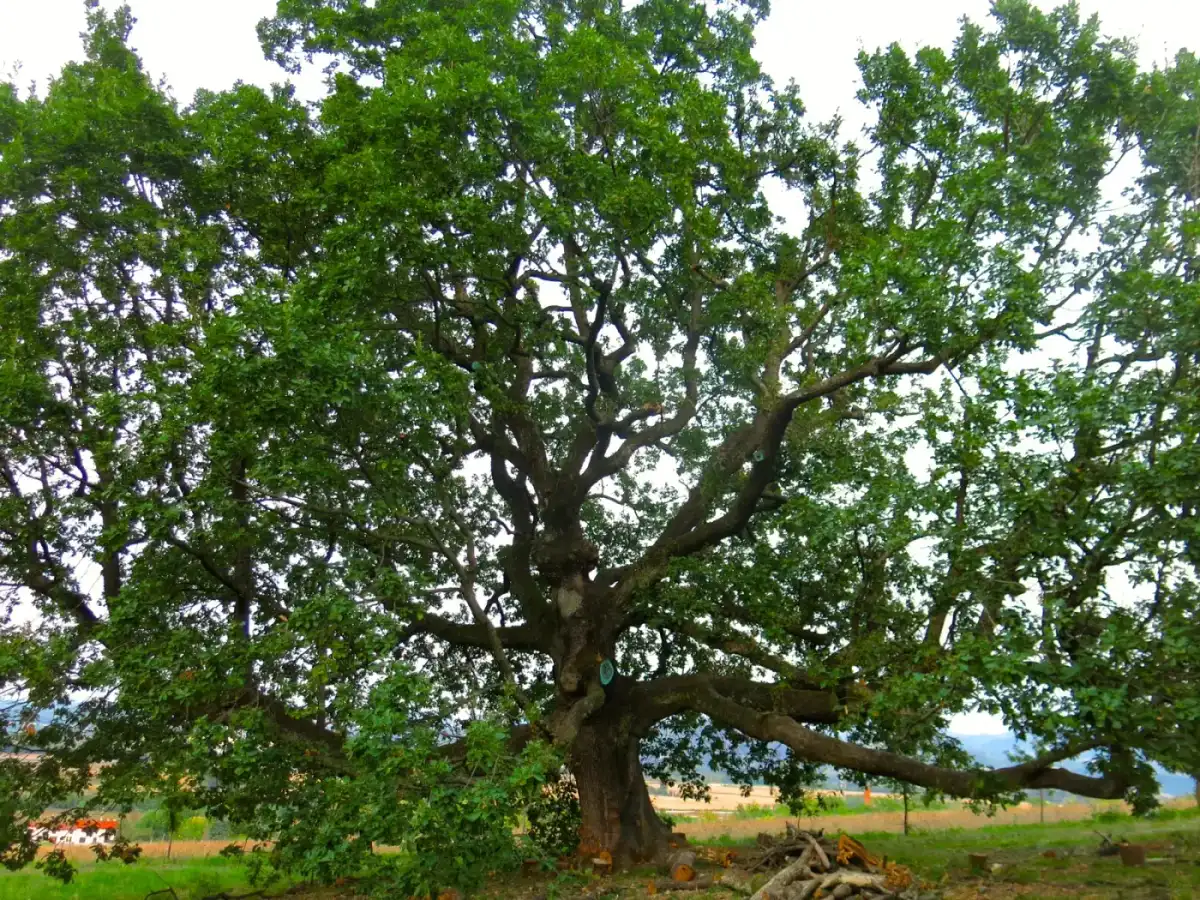 Matteo Vignoli · CC BY-SA 4.0
Novi Ligure chestnut oak
The chestnut oak of Novi Ligure is a monumental tree located in the locality Castellone in Novi Ligure .
Read the storyThe wine landscape
This village in wine country
Follow the link between the country, the vineyards and the neighboring territories.
The area, step by step
Trails and routes in Novi Ligure
 CyclingPlaces and landscapes along the route
Asti, Alessandria and surroundings
The Streets of Coppi · Gavi–Gavi
 CyclingAround the starting point
Asti, Alessandria and surroundings
Le Strade della Libertà dell’Alto Monferrato
 CyclingAround the starting point
Asti, Alessandria and surroundings
Ciclo Cavalcata Aleramica del Monferrato
 CyclingAround the starting point
Asti, Alessandria and surroundings
La Mitica del centenario HC
Mountain bikeAround the starting pointAsti, Alessandria and surroundings
Le colline del Gavi DOCG
 CyclingAround the starting point
Asti, Alessandria and surroundings
Le dolci terre di Novi
 CyclingAround the starting point
Asti, Alessandria and surroundings
Granfondo Dolci Terre di Novi
 CyclingAround the starting point
Asti, Alessandria and surroundings
Mediofondo Dolci Terre di Novi

Asti, Alessandria and surroundings
Sentiero strette di pertuso - m.te barillaro

Asti, Alessandria and surroundings
Sentiero dovanelli - san fermo

Asti, Alessandria and surroundings
Anello borbera - spinti tappa 05 (capanne di cosola - monte giarolo)

Asti, Alessandria and surroundings
Sentiero pertuso - roccaforte ligure
 WalkingAround the starting point
Asti, Alessandria and surroundings
Sentiero grondona - lemmi - costa dei gatti

Asti, Alessandria and surroundings
Sentiero grondona - persi
 WalkingAround the starting point
Asti, Alessandria and surroundings
Sentiero e1 (tratto arquata s. - colla del prete)

Asti, Alessandria and surroundings
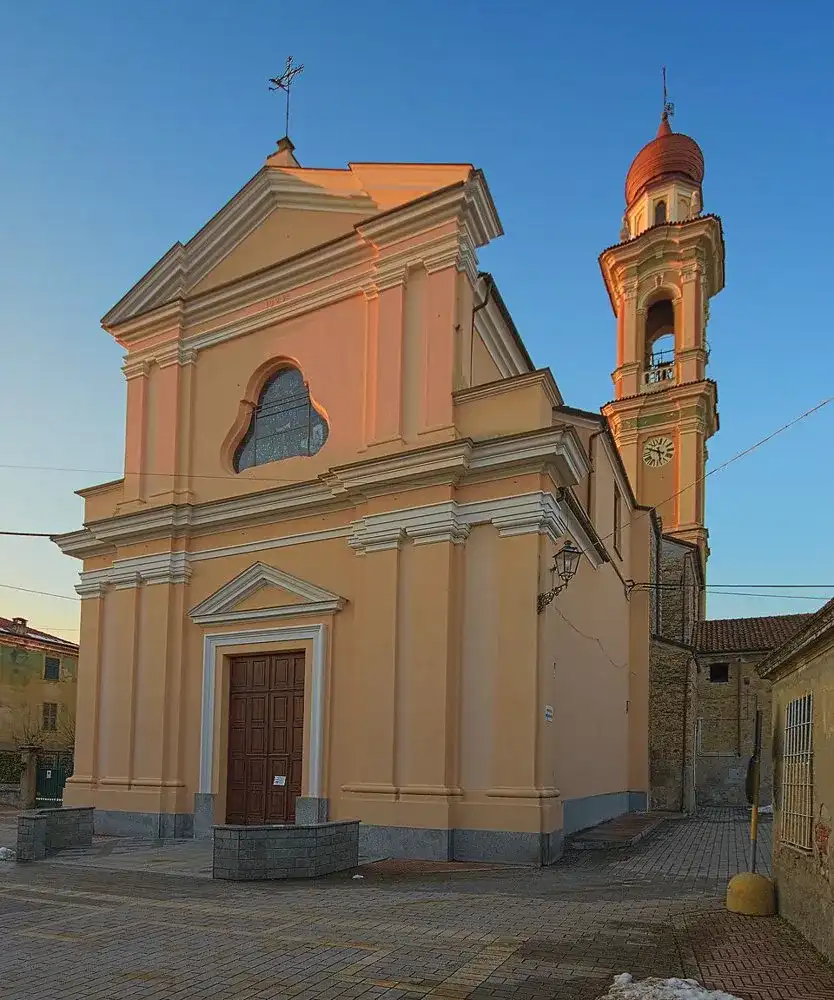
Sentiero cosola - daglio
 WalkingAround the starting point
Asti, Alessandria and surroundings
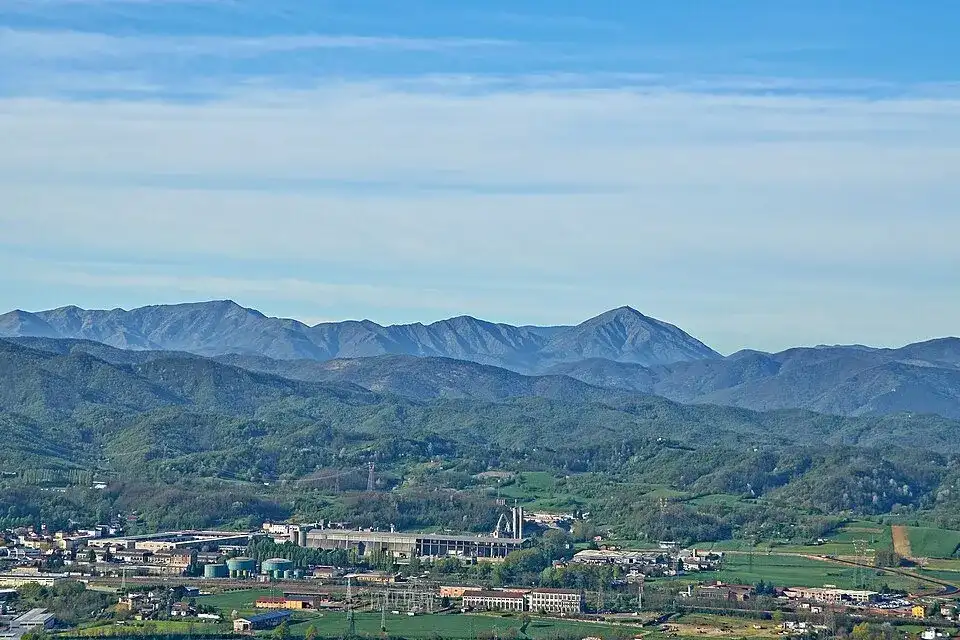
Sentiero borghetto borbera - santuario ca' del bello
 WalkingAround the starting point
Asti, Alessandria and surroundings
Sentiero vignole borbera - bocca del lupo

Asti, Alessandria and surroundings
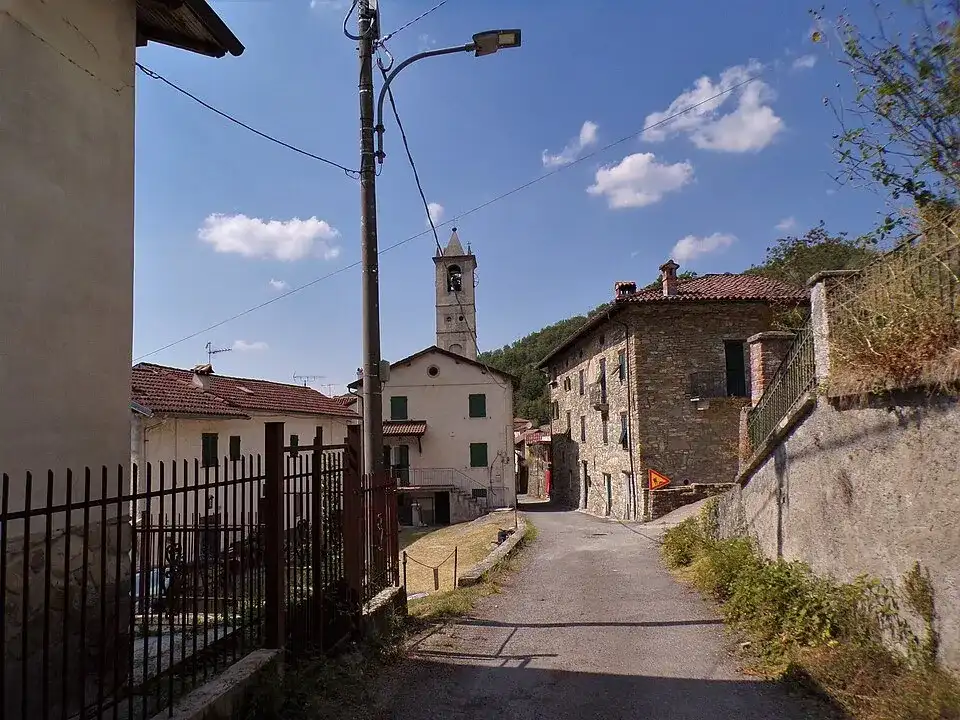
Sentiero grondona - pian dei poggi
 WalkingAround the starting point
Asti, Alessandria and surroundings
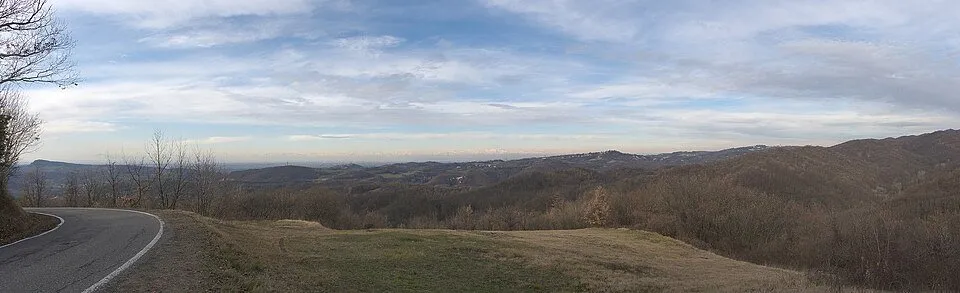
Sentiero bivio campomagro - pian dei poggi
 WalkingAround the starting point
Asti, Alessandria and surroundings
Sentiero vargo - santuario ca' del bello
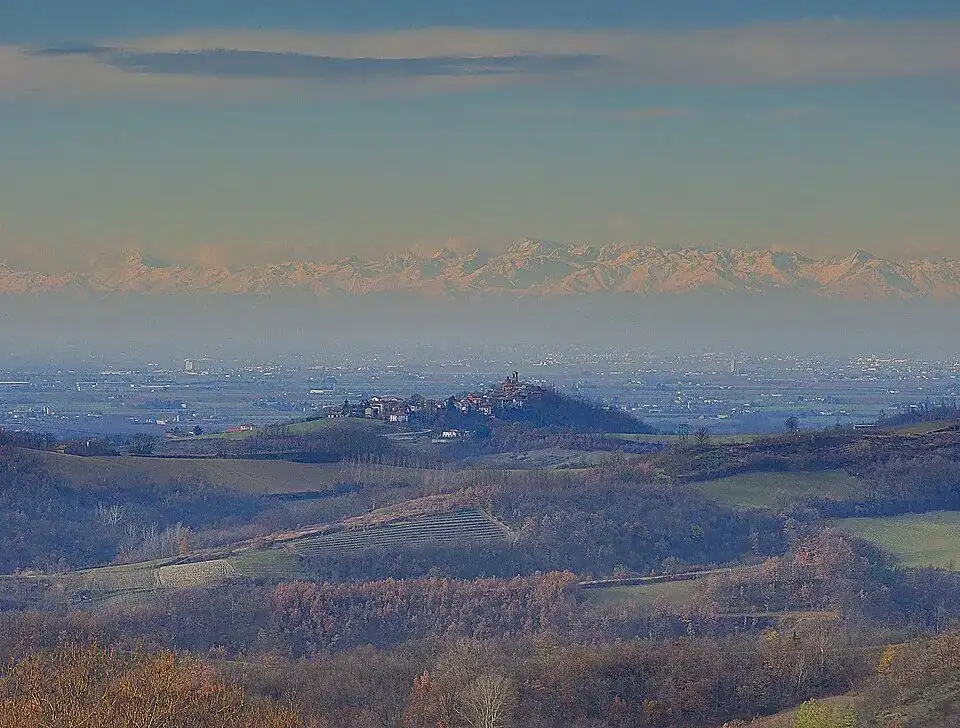 WalkingAround the starting point
Asti, Alessandria and surroundings
Sentiero bivio rio vargo - bivio campolungo

Asti, Alessandria and surroundings
Sentiero bivio campomagro - bivio rio gavassana
Asti, Alessandria and surroundings
Sentiero bivio mulino di sopra - cascina baro
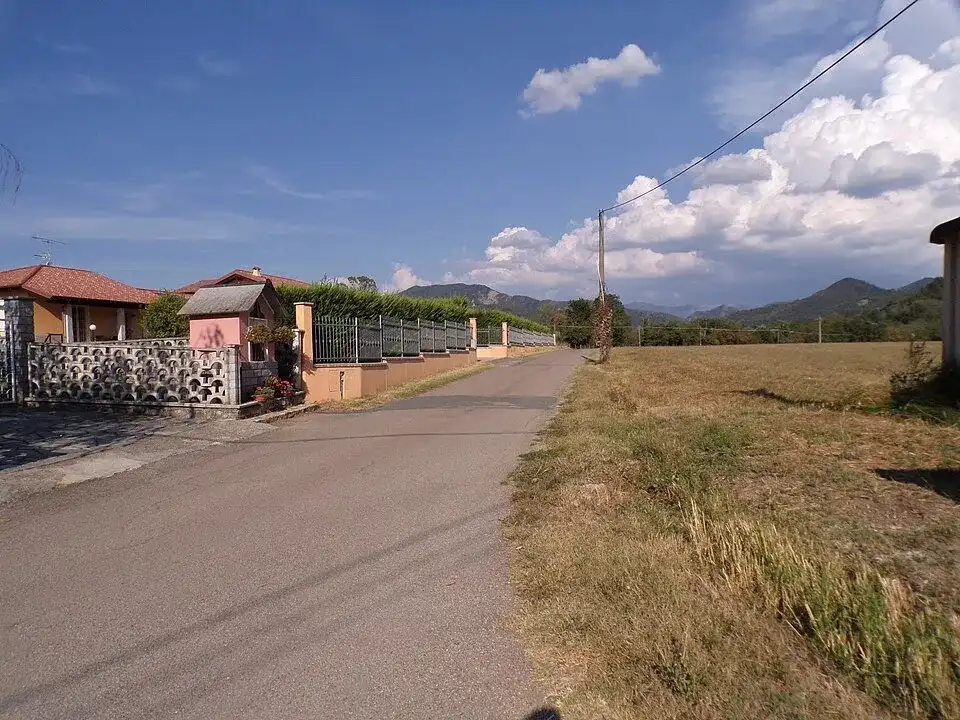 WalkingAround the starting point
Asti, Alessandria and surroundings
Sentiero castel ratti - bivio di costa muta

Asti, Alessandria and surroundings
Sentiero bivio bambino di praga - castel ratti
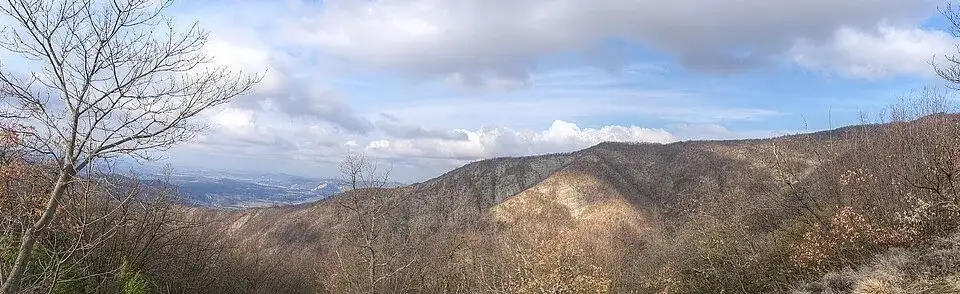 WalkingAround the starting point
Asti, Alessandria and surroundings
Sentiero pertuso - bivio rivarossa
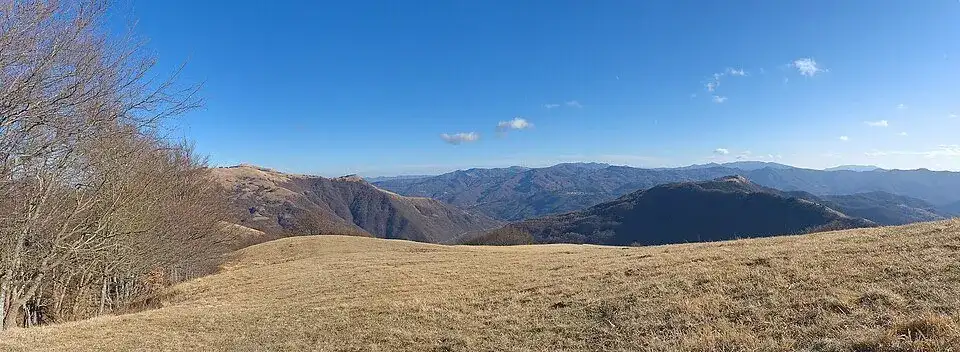 WalkingAround the starting point
Asti, Alessandria and surroundings
Anello borbera - spinti tappa 07 (capanne di carrega - monte antola)
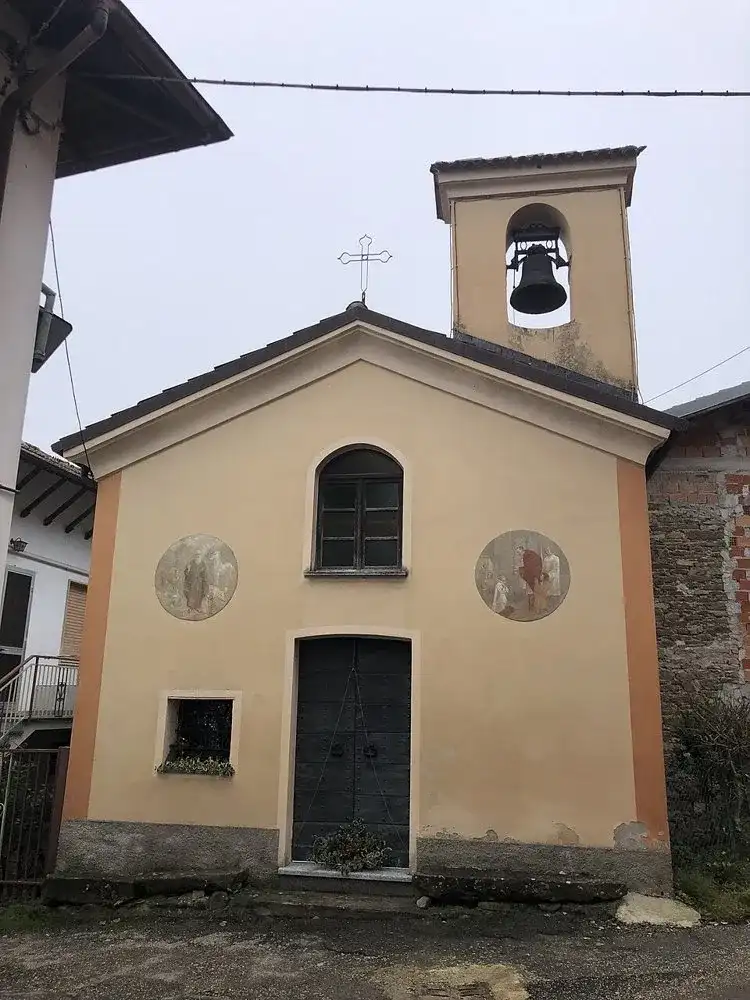 WalkingAround the starting point
Asti, Alessandria and surroundings
Sentiero cerreto ratti - bivio sentiero 275
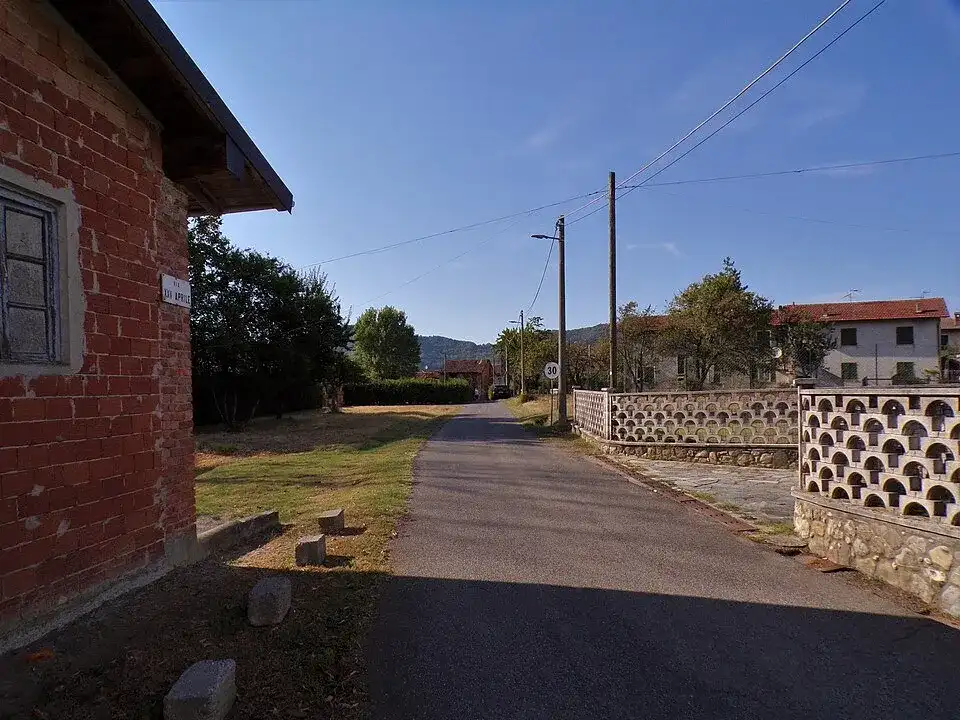 WalkingAround the starting point
Asti, Alessandria and surroundings
Sentiero liveto - madonna della mercede

Asti, Alessandria and surroundings
Sentiero i villaggi di pietra (vegni - croso)

Asti, Alessandria and surroundings
Sentiero pagliaro inferiore - selletta m. cravasana

Asti, Alessandria and surroundings
Sentiero selletta m. cravasana - sella di avi
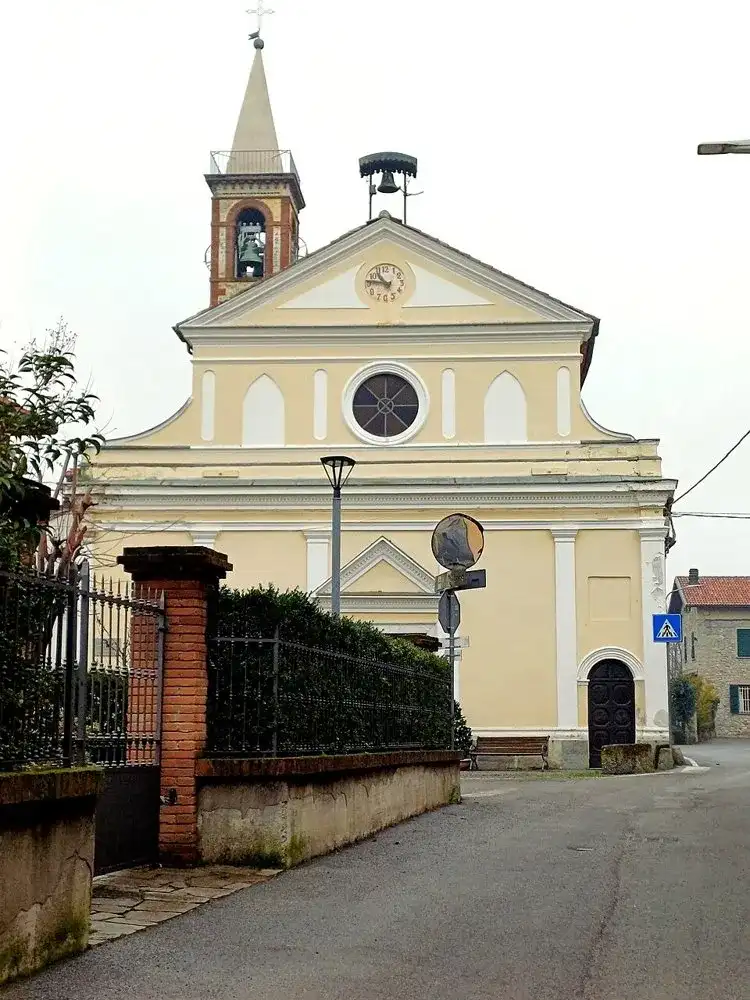 WalkingAround the starting point
Asti, Alessandria and surroundings
Sentiero varinella - bivio costa jamue
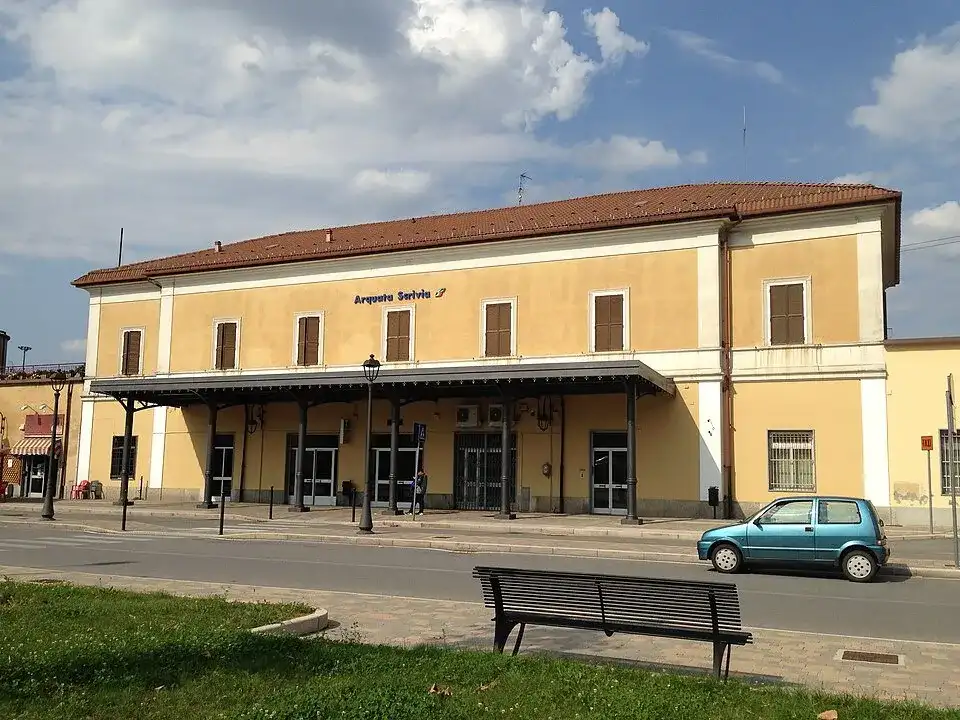 WalkingAround the starting point
Asti, Alessandria and surroundings
Sentiero vignole borbera - roccaforte ligure
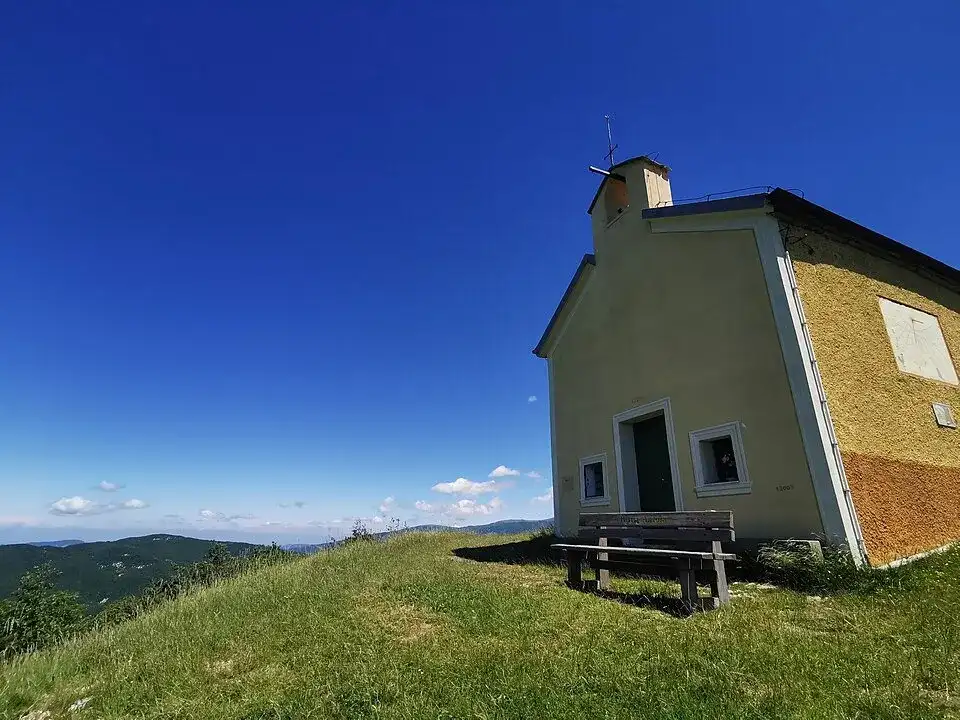 WalkingAround the starting point
Asti, Alessandria and surroundings
Sentiero berga - sella banchiera

Asti, Alessandria and surroundings
Sentiero sella banchiera - capanna di tonno
Asti, Alessandria and surroundings
Sentiero vegni - passo tre croci
Asti, Alessandria and surroundings
Sentiero reneuzzi - sella banchiera
Asti, Alessandria and surroundings
Sentiero vegni - sella est monte antola
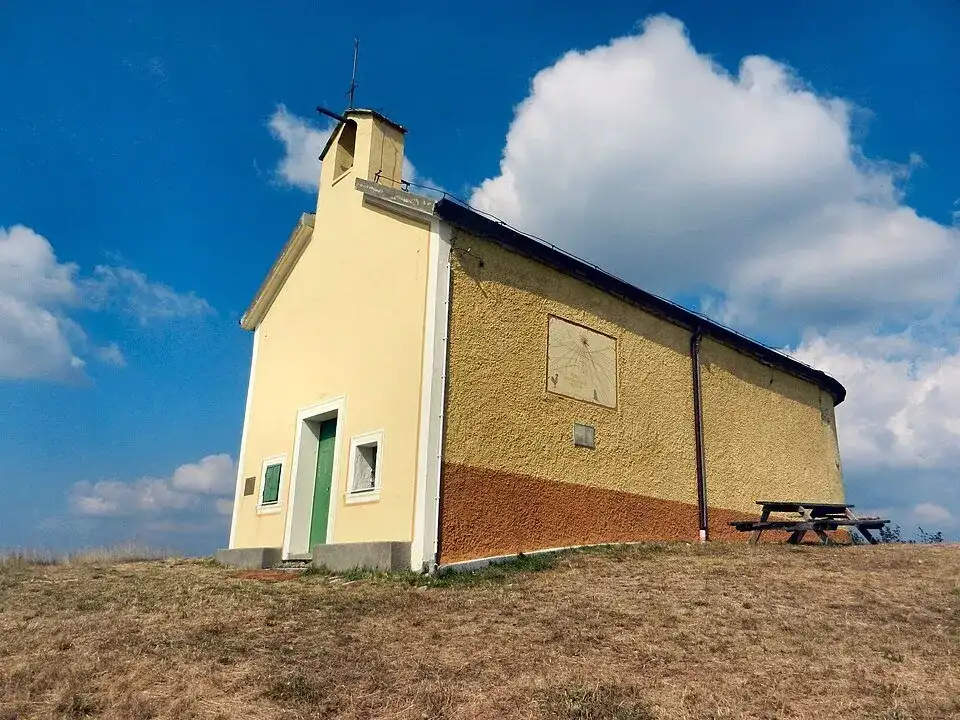 WalkingAround the starting point
Asti, Alessandria and surroundings
Anello borbera - spinti tappa 08 (san fermo - monte antola)

Asti, Alessandria and surroundings
Anello borbera - spinti tappa 01 (stazzano - ca' del bello)

Asti, Alessandria and surroundings
Anello borbera - spinti tappa 02 (ca' del bello - molo borbera)


Asti, Alessandria and surroundings
Sentiero pratolungo - innesto sentiero e1
Asti, Alessandria and surroundings
Sentiero campassi - casoni di berga

Asti, Alessandria and surroundings
Sentiero rocchetta ligure - costone la ripa
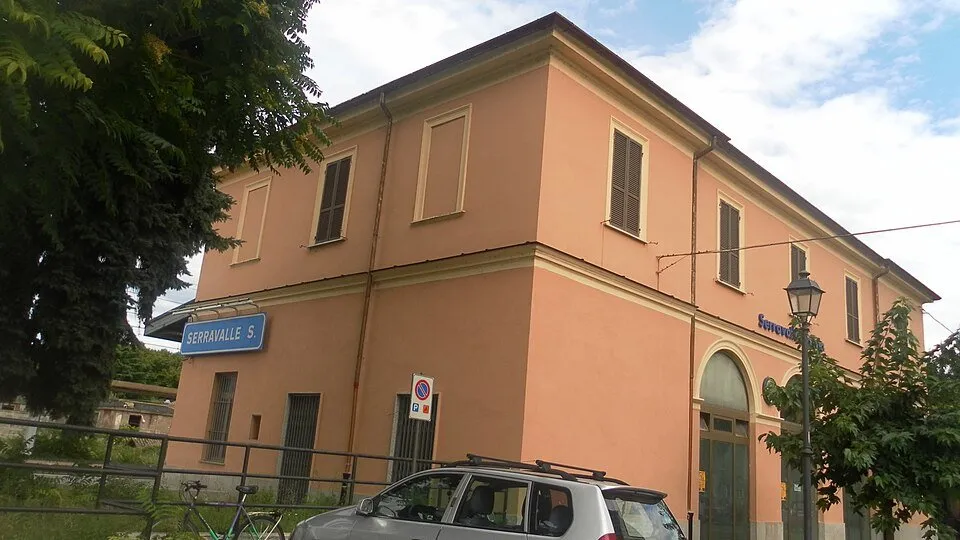 WalkingAround the starting point
Asti, Alessandria and surroundings
Sentiero serravalle - colle ratto
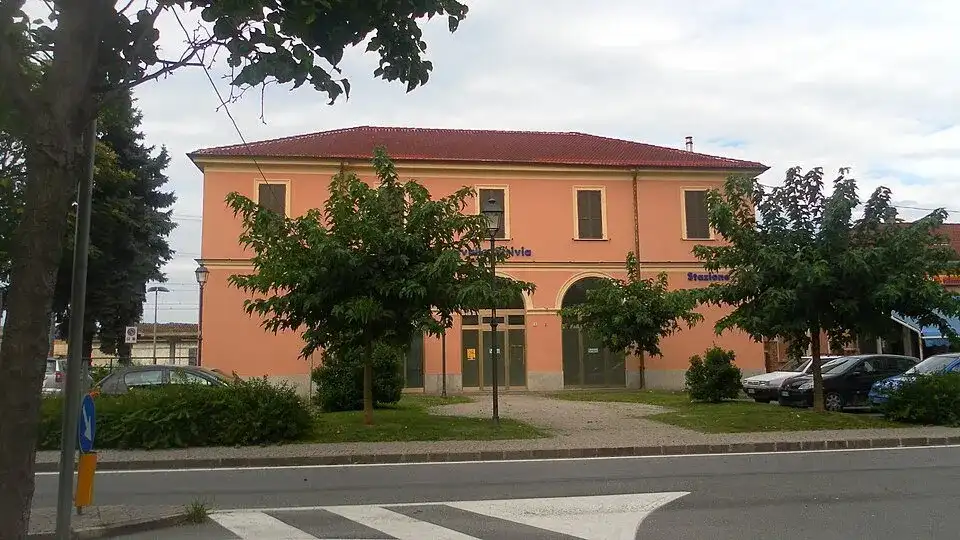 WalkingAround the starting point
Asti, Alessandria and surroundings
Sentiero chiesetta montei - serravalle scrivia

Asti, Alessandria and surroundings
Sentiero colle ratto - chiesetta di montei

Asti, Alessandria and surroundings
Sentiero cantalupo ligure - monte giarolo

Asti, Alessandria and surroundings
Sentiero albera ligure – bivio figino

Asti, Alessandria and surroundings
Sentiero roccaforte ligure - mulino serventino

Asti, Alessandria and surroundings
Sentiero albera ligure - costa vendersi
 WalkingAround the starting point
Asti, Alessandria and surroundings
Sentiero albera ligure - bivio sentiero 200


 WalkingAround the starting point
Asti, Alessandria and surroundings
Anello borbera - spinti tappa 09 (costa salata mongiardino - san fermo)
WalkingAround the starting pointAsti, Alessandria and surroundings
Anello borbera - spinti tappa 10 (costa salata mongiardino - borassi)

Asti, Alessandria and surroundings
Anello borbera - spinti tappa 11 (borassi - arquata scrivia)

Asti, Alessandria and surroundings
Sentiero sisola - bivio sentiero 200
 WalkingAround the starting point
Asti, Alessandria and surroundings
Sentiero dova superiore - bivio sentiero 200
 WalkingAround the starting point
Asti, Alessandria and surroundings
Sentiero dova inferiore - pian degli orsi

Asti, Alessandria and surroundings
Sentiero pian degli orsi - bivio sentiero 258

Asti, Alessandria and surroundings
Sentiero dova superiore - bivio sentiero 258
 WalkingAround the starting point
Asti, Alessandria and surroundings
Sentiero persi – bivio sentiero 209
 WalkingAround the starting point
Asti, Alessandria and surroundings
Sentiero bosco piano – bivio sentiero 207
 WalkingAround the starting point
Asti, Alessandria and surroundings
Sentiero 225 (bivio piuzzo - cosola)

Asti, Alessandria and surroundings
Sentiero cabella ligure - piuzzo

Asti, Alessandria and surroundings
Sentiero teo – bivio sentiero 220
Asti, Alessandria and surroundings
Sentiero montaldo di cosola – capanne di cosola
WalkingAround the starting pointAsti, Alessandria and surroundings
Sentiero daglio – carrega ligure

Asti, Alessandria and surroundings