A closer look
Marchesato del Monferrato: at a glance
The Marquisate of Monferrato It was an ancient Italian pre-unitarian state, built in the 11th century when the Brand Aleramica, managed until then consortilmente between all descendants of Aleramo, was divided between the Marquis of Monferrato and the Marquises of Savona. He was ruled by the Aleramic dynasties of Monferrato, Paleologi and Gonzaga. It ended in 1574 when, incorporated into the Gonzagheschi domains, it was elevated to duchy.
Its territorial geography, completely irregular, and the lack of both a large urban capital and a corresponding ecclesiastical constituency that corroborated its identity, testify how this state originated from the feudal logic of the Middle Ages, while surviving throughout the communal age and coming to live with the famous Italian Renaissance lords.
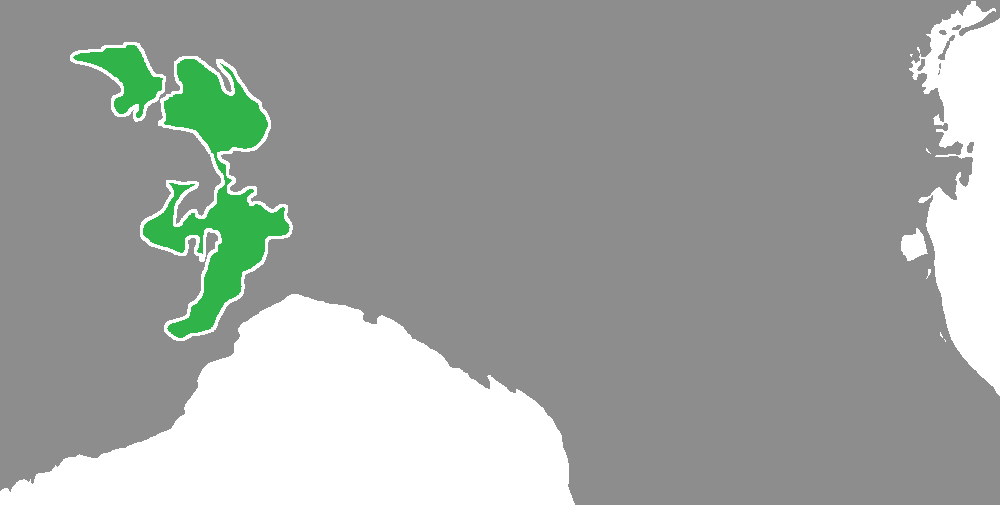
For most of its existence, the marquisate was divided into two large separate areas: the northern one, between the current provinces of Vercelli, Alessandria, Turin e Pavia, and the southern one, included between those of Alessandria, Savona, Asti and Cuneo.
Origin of the name
The name Monteferrato is mentioned for the first time in an act of 909 Berengario del Friuli, but its meaning is unknown: according to various hypotheses could...Explore this chapter
The name Monteferrato is mentioned for the first time in an act of 909 of Berengario del Friuli, but its meaning is unknown: according to various hypotheses it could mean "Territory of the spelt", "Aril territory" or "Frath territory"; in front of the improbability of these possibilities, Professor Geo Pistarino presents two opposing assumptions: Monferrato could be indicate a degraded and uncultivated territory (iting the existence of the mediotin feratus, deriving from feralis), is a previously uncultivated territory, but brought back to fruition (considering Ferranti as a participle ferre, meaning to produce)[3].
History
The origins · The Aleramics · The PaleologistsExplore this chapter
The origins
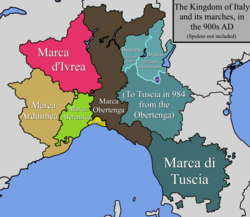
The Marquisate of Monferrato originated from the dissolution of the Aleramic Brand, granted in 958 by the King of Italy Berengario II to the knight Aleramo, whose mysterious origins are perhaps to be found in the House of Troyes[4]. The March was managed in a consortium manner until the end of the 11th century, when the Aleramics Bonifacio and Ranieri established a precise division of the territory, with the former becoming Marquis of Vasto, the southern territory including Savona, and the latter Marquis of Monferrato[5], the northern territory.
The Aleramics
The Marquis William V, son of Ranieri, ruled during the communal age and tried to increase the prestige of his homeland in favour of the Holy Roman Empire. Following the destruction of Milan by Federico Barbarossa, the municipalities of northern Italy formed the Lombard League and declared war on the Emperor usurping his exclusive power to establish new cities: the Monferrino village of Rovereto was transformed into a Alessandria. After some military failures, such as that of Mombello Monferrato of 1172, William V accompanied the Barbarossa inSiege of Alessandria, but a further defeat pushed him to turn his ambitions towards overseas, and in this regard he worked hard to ensure that his sons became important exponents, but the four met with adverse fate.
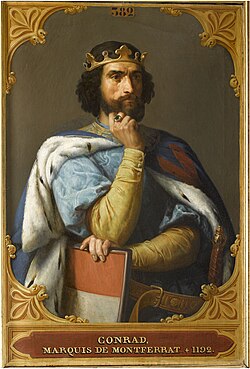
William married Sibilla, heir to the throne of Jerusalem, but probably died of disease a few months after marriage, before the birth of his son Baldwin. Ranieri, married the Byzantine princess Maria Comnena, daughter of the basileus Manuel I, and became governor of Thessalonica, but was imprisoned, and subsequently poisoned, by Andronico I Comneno during the massacre of Latins. Corrado became Marquis of Monferrato in 1186, after his father William V left Monferrato to assist Baldwin's nephew, who had become King of Jerusalem. The following year, following the defeat of the crusaders in Hattin's battle and the fall of Jerusalem, the Marquis responded to Pope Clement III's appeal and took part in the third Crusade, landing at Tyre; Corrado defended the city from the siege of Saladin, and was appointed lord after the reconquest of Acre. The company gave Corrado great value, so much that after the death of Queen Sibilla, Balian of Ibelin chose him as husband of Isabella, the legitimate heir of the crusader state. A few days after the election to King, however, Corrado was murdered.
Boniface I was appointed Marquis after the departure of Corrado, but in 1201 he was called to lead the fourth crusade, which resulted in the Latin siege of Constantinople; he was named as the Latin Emperor of Constantinople, Bonifacio obtained the reign of Thessalonica, but a few years later he was killed in an ambush stretched by the Bulgarians of Tsar Kalojan. His sons William VI and Demetrius planned an expedition to regain control of the reign of Thessalonica, but shortly after the landing in Greece their army was annihilated by an epidemic of dysentery.
Following these unfortunate events, Boniface's descendants were forced to abandon the dreams of glory in the East. The Italian political scenario of the 13th century was characterized by the conflict between Guelphs and Ghibelline, and the Marquises of Monferrato They distinguished themselves for an opportunistic policy, characterized by short alliances with both sides. Boniface I, William VI and Bonifacio II concentrated mainly on containing the municipalities of Asti and Alessandria, which continually increased their power to the detriment of the marquisate, but had little success. In 1253, a few days before his death, Bonifacio II was awarded by Corrado IV of Swabia of the dominion over the powerful municipality of Svevia Casale Monferrato. It was his son William VII who regained a central role in Italian geopolitics for Monferrato: he began his government allied with the Guelph side, quickly conquered Nizza Monferrato and turned his expansionist myres towards Ivrea and Canavese; however, the enormous power that was converging in the hands of Count Charles I of Anjou, who in a few years submitted numerous municipalities of the Piemonte southern and conquered the Kingdom of Sicily, he persuaded William to ally with the Ghibellines, marrying Beatrice, daughter of Alfonso X, king of Castile and pretender to the imperial throne. When Ivrea, in 1271, made an acknowledgement of dedication to Charles I of Anjou, the Marquis persuaded himself to war and, ally of the municipalities of Asti, Genoa and Pavia, obtained a decisive victory at Roccavione, extruding the Angioini from Piemonte and obtaining control of Trino and Turin[6].
In the following years, William VII was appointed lord and captain of several municipalities, including Vercelli, Alessandria, Asti, Genoa, Pavia, Milan, Brescia, Cremona and Lodi, becoming the main Italian exponent of the Ghibelline party. His military hegemony, however, was not destined to last: the nobles of Asti were the first to rebel, followed by Thomas III of Savoy, who, considering himself the legitimate sovereign of Turin, reappropriated it by imprisoning William while he was crossing the Alps to go to his father-in-law Alfonso of Castile; then it was the turn of the Viscontis, who ousted him from the lordship of Milan. The hasty downfall of his power seemed to slow with the conquest of Alba and the marriage of his daughter Violante to the Byzantine emperor Andronicus II Palaeologus, but Alessandria, bribed by the people of Asti with the enormous sum of 85,000 gold florins, also revolted. In 1290 William reached the city in arms, obtaining the capitulation of the Alexandrians, but they dishonorably imprisoned him during the surrender negotiations and left him to die of starvation locked in an iron cage. The sudden death of northern Italy's main military commander left a large number of municipalities defenseless; some of these turned to the Savoys (represented in Italy by the cadet branch of the Acaja), but most were subjugated by Matteo I Visconti.
John I of the Monferrato, son of William VII, holding an alliance with Manfred IV of Saluzzo and Charles II of Anjou, continued the war of his father against Alessandria, contributed to the extromission from Milan of the Visconti in favor of the Della Torre and, above all, conquered Asti, where he settled. In 1305, only two years after submission of AstiJohn was seriously ill and died, without heirs. The extinction of the Ottoman line of the aleramic dynasty left the succession of the marquisate in uncertainty: Manfred IV of Saluzzo, justified by the agreements made by his ancestor Manfredo III of Saluzzo with Bonifacio II, and Charles II of Anjou signed a pact of division of monferrine lands, establishing citizens' parliaments to ensure the fidelity of new subjects.
The Paleologists
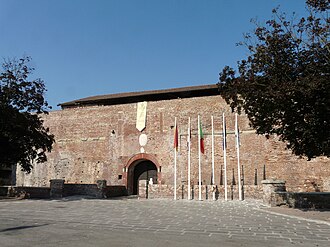
John I, however, in his will had resorted to the Semi-Salica law, through which he designated his heir the Byzantine prince Theodore Paleologos, son of his sister Violante. Theodor Paleologos landed in Genoa in 1306 and secured the alliance of Superb marrying Argentina, the daughter of Opizzino Spinola. Obtained the official investigation of Marquis by Emperor Henry VII of Luxembourg, within 1316 Theodore filmed Chivasso and Casale, while the Alto Monferrato continued to be part of the Angioin County Piemonte For the rest of his life, Theodore preferred to devote his attention to Greece rather than to Monferrato. His son John II, who had just become Marquis, began a series of wars to reconquer the lost territories: accompanied by his cousin Otto of Brunswick, conquered Asti in the 1339, Ivrea in 1344, and it gets a definitive victory against the Angioine troops in 1345, in the Battle of Gamenario. The coming less of the Angevin power allowed him, in subsequent years, to take over many municipalities, including Alba, Cuneo, Mondovì, Cherasco, Acqui Terme, Novara, Valenza and Pavia. In 1352, John II ordered the construction of an imposing castle, in Casale.
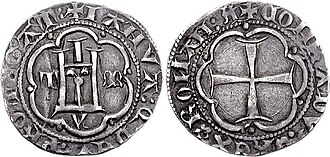
In the following decades, the expansionist myres of the Marquises of Monferrato collided with those of the Savoy and, above all, of the increasingly powerful Visconti, which by 1370 took over much of the conquests of John II and also of Casale. The clash with the Visconti continued in the 15th century: ally of the leader Facino Cane, in 1404 the Marquis Teodoro II resumed Casale and subsequently occupied Milan and Genoa. In 1427 Giovanni Giacomo del Monferrato joined forces with Venice against Filippo Maria Visconti, in the wars of Lombardy, but the situation soon turned into his misfavour: in a short time Casale was occupied by the company of Francesco Sforza; refugee in Chivasso, the Marquis received the declaration of war also from Amedeo VIII of Savoia. Attacked on every front, John James was forced to surrender to his claims: Chivasso would be annexed to the Duchy of Savoy, while the rest of Monferrato would enter under his protection, becoming a kind of vassal. In 1434 the Marquis established Casale as the official capital of Monferrato.
In 1447, the death without heir of Philip Maria Visconti and the subsequent proclamation of the Ambrosian Republic by Milanese citizens marked the revival of hostilities, as on the duchy boasted rights both Charles of Valois-Orléans and Ludovico of Savoy. The Marquis John IV, in exchange for Alessandria, he founded himself in defense of the independence of the Milanese commune, which he had also acquitted Francesco Sforza. The Alexandrians made an acknowledgement of dedication to John IV in 1449, but the following year the Sforza, who in the meantime had been appointed Duke of Milan, captured the Marquis; after about a year John resigned to Alessandria, and was then released. In 1453, the fall of Constantinople forced Venice to stop the clashes in Italy to concentrate on defending its possessions in the Mediterranean; the consequent peace of Lodi, however, was unfavorable towards Monferrato, acting only on the return of small villages Felizzano And Cassine, with respect to the request of Alessandria. Furthermore, the disastrous economic and political situation of the marquisate left the Monferrato court almost indifferent to the deposition of the Palaiologi of Constantinople.
In the following decades, the Marquis were forced to follow a strenuous survival policy; in 1464, Emperor Frederick III of Habsburg decreed the independence of the marquisate, interrupting the vasalization relationship towards the duchy of Savoy, but the sabauda influence on monferrin politics remained important. In 1513, during the War of the League of Cambrai, the approach of the Marquis William IX to France prompted Duke Charles II of Savoy to plot to bring on the throne of Monferrato the Aler friend Oddone d'Incisa; discovered the intrigue William IX marched on the small Marquisate of Incisa, annexing it and condemning Odo to death; accused of treason, Guglielmo was exonerated by the Monferrato orator Urbano da Serralunga. In 1533, as the French influence on Monferrato grew more and more, the male line of the Palaiologi became extinct, with the death of John George Palaiologos. The dynastic crisis was resolved in 1536 by Emperor Charles V of Habsburg, who granted the marquisate to the Duke of Mantua Federico II Gonzaga, who had married Margherita, daughter of William IX, precisely to secure the Monferrato.
The Gonzaga
The first years of government on Monferrato by the Gonzaga were not simple, because of the continuous wars on Italian soil between the kingdom of France and Habsburg: in 1555, during the last phase of these wars, Casale was occupied by French troops, but the Treaty of Cateau-Cambrésis returned it to Guglielmo Gonzaga. One of the first acts of the new Marquis was the abolition of the citizens' parliaments established by Manfred IV of Saluzzo and maintained by the Paleologists, but this created great discontent, especially in Casale. William first tried to get rid of the problem by proposing Monferrato to Philip II of Spain in exchange for Cremona, receiving a dry refusal. Then he appointed governor of the Monferrato Flaminio Paleologo, illegitimate son of Giovanni Giorgio Paleologo, hoping that his connection with the previous dynasty could flatter the discontent, but this turned decisively in his misfortune when the same Flaminio was involved by the main families of Casale in a conjura which should lead to the assassination of the Marquis during the settlement of Bishop Ambrogio Aldegati. The plot was invented for a long time and Flaminius was arrested and poisoned, while all the riots were hunted by Casale. The exiles found refuge at Emanuele Filiberto di Savoia, whose expansionist myriad had been attracted by the very tense situation. In 1573, to limit the ambitions of the Duke of Savoy on the Marquisate, William asked Maximilian II of Habsburg that his domains were transformed into Grand Duchy of Mantua and Monferrato, but the emperor, not wanting to grant him too much power, only agreed to raise his marquis rank: thus the duchy of Monferrato was born. This proved very useless, considering that the Savoys invaded the new duchy for the first time in 1613, subsequently in 1628 and conquered it definitively during the War of the Spanish Succession.
-
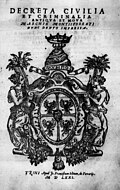 Civil and criminal decrees of the Marquisate of Monferrato (Civilian Decree and antiquated criminal et nova markse Montisferrati nuc denuo impresses), 1571
Policy
List of Marquis · Marchesi del Monferrato - Aleramici (up to 1305) · Marchesi del Monferrato - Paleologi (1306-1540)Explore this chapter
List of Marquis
Marchesi del Monferrato - Aleramici (up to 1305)
| Name | Period | Notes |
| Ranieri I | 1100 - 1137 | |
| William V The Old | 1137 - 1186 | |
| Corrado | 1186 - 1187 | King of Jerusalem jure uxoris from 1190, he was murdered before the coronation |
| Bonifacio I | 1187 - 1201 | Son of William V; King of Thessalonica from 1204 |
| William VI | 1201 - 1225 | |
| Boniface II The Giant | 1225 - 1253 | Re titular of Thessalonica |
| William VII the Grand Marques | 1253 - 1291 | King of Thessalonica; he died prisoner of Alessandria |
| John I | 1291 - 1305 | Without heirs, his nephew Teodoro Paleologo succeeded him, son of his sister Violante |
Marchesi del Monferrato - Paleologi (1306-1540)
| Name | Period | Notes |
| Theodore | 1306 - 1338 | Son of Violante del Monferrato, sister of John I, and Byzantine emperor Androniko II Paleologos |
| John II | 1338 - 1372 | |
| Eighth III | 1372 - 1378 | |
| John III | 1378 - 1381 | Son of John II |
| Theodor II | 1381 - 1418 | Son of John II |
| Gian Giacomo | 1418 - 1445 | |
| John IV | 1445 - 1464 | |
| William VIII | 1464 - 1483 | Son of Gian Giacomo |
| Boniface III | 1483 - 1494 | Son of Gian Giacomo |
| William IX | 1494 - 1518 | |
| Boniface IV | 1518 - 1530 | |
| Gian Giorgio | 1530 - 1533 | Son of Boniface III |
| Margarita | 1533 - 1540 | Daughter of William IX. From 1536 he ruled together with his wife Frederick II Gonzaga, Duke of Mantua. |
Marchesi del Monferrato - Gonzaga (1536-1574)
| Name | Period | Notes |
| Frederick II | 1536 - 1540 | Duke of Mantua; he ruled with his wife Margherita Paleologa |
| Francis III | 1540 - 1550 | Duke of Mantua |
| William | 1550 - 1574 | Duke of Mantua; son of Frederick II; ruled from 1574 to 1587 as duke of Monferrato |
Geography
Strada Franca · Main citiesExplore this chapter
The Marquisate of the Monferrato was located between Piemonte south-eastern and Ligurian Riviera. This area, which took the name of Monferrato, extends southwards starting from the hydrographic right of the Po, moving southwards into the Ligurian Apennines until reaching the watershed between the Adriatic and Tyrrhenian sides upstream from the Ligurian coast of Genoa and Savona. The independence obtained by the cities of Asti And Alessandria during the communal age divided the territory into two zones, a southern one, called High Monferrato, and a northern one, called Low Monferrato. The borders of the marquisate changed continuously during its history: under the marquis William VII it came to include the territory located between Turin and Brescia, but various military defeats reduced it to the point of losing the city of Chivasso, one of the most important.
Strada Franca
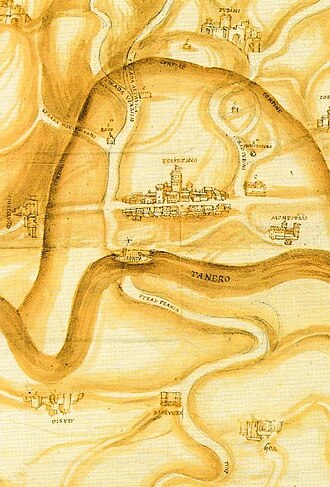
In the early 15th century, when the territory of the marquisate was divided into two separate and distinct areas, the connection between them was obtained by establishing, through the duchy of Milan, a so-called "free road", that is to say, a road on which people and goods could pass without being subjected to duties or gabelle. The road layout, still nowadays indicated by signaling panels, departed from the municipality of Bergamasco, crossed the municipality of Masio and the river Tanaro, then that of Felizzano, finally reached the territory of the marquisate again Fubine[7].
Main cities
- Casale Monferrato (capital since 1434), Monferrato since 1253
- Chivasso (signal seat before 1434), monferrin from the 10th century to the 1432
- Moncalvo (marquis seat before 1434), Monferrato since the 10th century
- Pontestura (marquis seat before 1434), Monferrato since the 10th century
- Trino (markal seat before 1434), monferrina since the 10th century
- Acqui Terme, Monferrato since 1345
- Alba, monferrina from 1345
- Nizza Monferrato, Monferrina since 1264
Notes
Explore this chapter
- ^ Duchy of Savoy (vasalage 1432 - 1464)
- ^ Ravegnani Morosini, p. 33
- ^ Geo Pistarino, Monferrato: toponym and territory, in Monferrato: political, economic and cultural crossroads between the Mediterranean and Europe, 2000
- ^ marsimonferrato.it, http://www.marchesimonferrato.it/2017/01/31/guglielmo-i/ Missing title for url
url(help). - ^ As witnessed by a 1140 Lateran bubble of Pope Innocent II.
- ^ Carlo Merkel, A quarter of a century of communal life and the origins of domination. angioine in Piemonte, Turin, 1890
- ^ marsimonferrato.it, http://www.marchesimonferrato.it/archivio/cartografia/ Missing title for url
url(help).
Bibliography
Explore this chapter
- Roberto Maestri, The Marquisate of Monferrato, in Brand Aleramica. History of a missing region, edited by Raoul Molinari, Umberto Soletti Editore, Baldissero d'Alba, 2008.
- Gigliola Soldi Rondinini, Monferrato: political, economic and cultural crossroads between the Mediterranean and Europe: Acts of the International Convention of Ponzone, 9-12 June 1998
- Carlo Ferraris - Roberto Maestri, History of Monferrato. The origins, the Marquisate, the Duchy, Publisher Cultural circle The Marchesi del Monferrato, Alessandria 2016, ISBN 978-88-97103-01-1
- Beatrice Del Bo, Men and structures of a feudal state. The Marquisate of Monferrato (1418-1483), LED Edizioni Universitarie, Milan, 2009, ISBN 978-88-7916-440-5
- Mario Gallina, Between the West and the East: the aleramic crusade for Thessalonica, in Conflicts and coexistence in the medieval Mediterranean, 2003
- Mario Ravegnani Morosini, Ladies and gentlemen, III, Maggioli, Dogana (RSM) 1984.
- G. Aldo di Ricaldone, Monferrato between Po and Tanaro, Gribaudo-Lorenzo Fornaca editor Asti 1999
- G. Aldo di Ricaldone, Annali del Monferrato, Vol I and II L.Fornaca publisher, Asti
- D. Head, History of Monferrato, Gribaudo-Lorenzo Fornaca editor Asti 1996
- Further reading
- (THE) Civilian Decree and antiquated criminal et nova markse Montisferrati nuc denuo impresses, Trino, Giovanni Francesco Giolito de Ferrari, 1571.
Continue your journey