Atlas of Monferrato
Alessandria: sights, history and trails
Alessandria
- Elevation
- 95 m s.l.m.
- Area
- 203.57 km²
- Demonym
- alexandrians
- Patron saint
- Madonna della Salve San Baudolino
A closer look
Discovering Alessandria
Alessandria (AFI: /alesˈsandrja/[6] Listenⓘ; in Piedmontese Lisandria, AFI: /liˈsaŋdrja/[7]; local pronunciation, AFI: [liˈsɒŋdɾjɐ][8]; in Ligurian Lusciandria[9], AFI: /lyˈʃaŋdrja/) is an Italian commune 93 823 inhabitants[3], capital ofprovince of the same name in the Piemonte.
Known for the famous Borsalino hat manufacturing company and of historical importance for the battle of Marengo led by Napoleon Bonaparte, the city represents an important agricultural, industrial and logistic pole in the regional context. With a territory that makes it the largest municipality of Piemonte[10] and a population that places it third in the region,[11] Alessandria is located in the center of the so-called Turin-Milano-Genova industrial triangle, configuring itself as a strategic node for trade and transport. The city houses one of the offices of the University of Studies Piemonte Oriental "Amedeo Avogadro", academic institution with triple structure shared with Vercelli and Novara.
Landscape and area
Region · ClimateExplore this chapter
Region
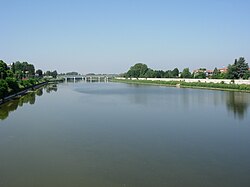
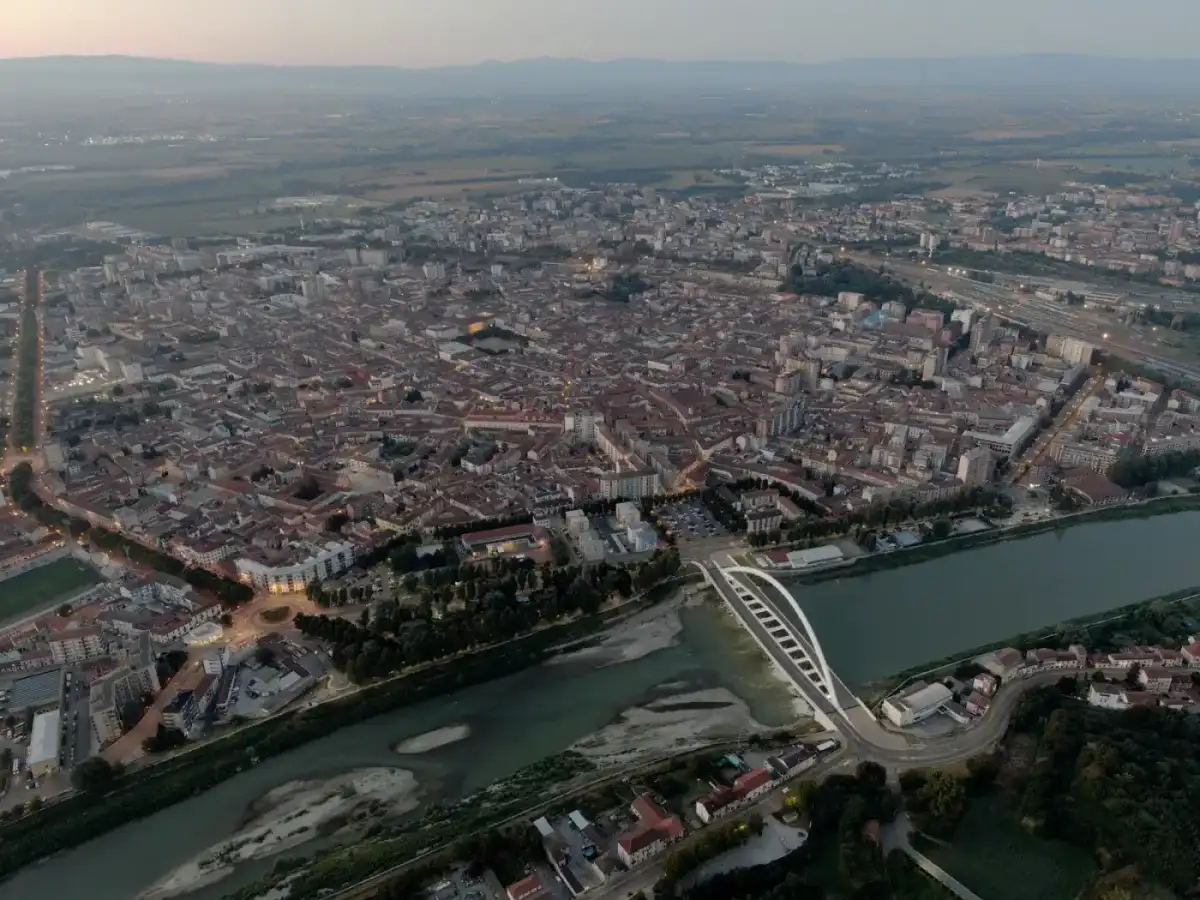
It rises about 100 meters above sea level in the floodplain formed by the rivers Tanaro And Bormida, near their point of confluence.
Thanks to its location in the centre of the Turin-Genoa-Milan triangle, the city constitutes an important commercial, motorway and railway hub with a head sorting station, located in the south-west of the passenger station.
It is served by the highway A21 and the highway A26, with three motorway exits (Alessandria West, Alessandria East, Alessandria South). It also has a ring road that runs from north to south, with various city exits connecting it to the various centers-zone of its province (Valenza, Tortona, Novi Ligure, Casale Monferrato, Ovada And Acqui Terme).
It is a city characterized by long and wide avenues with several lanes, which make circulation easy, and large and airy squares.
Climate
Alessandria is characterized by a typically Paduan climate with cold and misty winters and hot summers and sultry. The rains are not very abundant (about 600 mm), and fall mainly in autumn and spring. Alessandria has a more continental climate than the rest of the Piemonte. Winters, due to the greater number of foggy days, tend and be more rigid (average of +0,4 degrees in January) and with frequent snowfall, while summers are aphobic but much more sunny and dry: the warmest month, July, has an average temperature +24 degrees and is also the most droughty, with 32 mm of rain often concentrated in one or two storms (at the height of summer atlantic disturbances tend to flow much further north). Temperatures in summer, in case of subtropical anticyclone, can reach peaks 38/39 °C, while in winter you can touch minimum of several degrees below zero.
History of Alessandria
Ancient age. · Medieval Age · Foundation of the CompanyExplore this chapter
Ancient age.
Before the Roman conquest, the territory was inhabited by the Statielli, a people who belonged to the Ligurian group. Towards the end of the third century BC the Roman conquest of Cisalpine Gaul and the consequent Romanisation of the Ligurian population took place; in 42 BC the province of Cisalpine Gaul was abolished and integrated into Roman Italy. The origins of the villages of Rovereto and Bergoglio. Following the fall of the Roman Empire and the subsequent Ostrogothic Kingdom, during the Lombard age the territory was reorganized into courts, including that of Marengo; in this place, in the eighth century, the Tower of Teodolinda was built.
Medieval Age
Foundation of the Company
(Umberto Eco da ...The citadel to be recycled, in AA.VV., Alessandria is a comfortable armchair: sit and fall asleep?!, page 9)
Italy's control in 774 passed from the Lombards to the French kingdom. At this time, the court of Rovereto is probably born, which will have a central role for the birth of Alessandria. In 962 the King of Germany Otto I of Saxony conquered the kingdom of Italy and established the Holy Roman Empire. The Italian cities, however, maintained great autonomy and were forced to pay taxes to the emperor only when they traveled in Italy. Federico Barbarossa decided that the situation had to change, so he established Roncaglia's diet and in 1162 destroyed Milan, the most important municipality of the time. The other municipalities then decided to join in fighting against the emperor to maintain their autonomy, forming the Lombard League. To attract Barbarossa in Italy the League decided to create a new civitas, an act which was an exclusively imperial privilege. The city, known simply as Civitas Nova, was established in the territory of Rovereto, both because it was close to the lands of the marquis of Monferrato, a faithful ally of the empire, and because, positioned between the Tanaro and the Bormida, it enjoyed an easily defensible position. The city was populated with the contribution of nearby villages and fortified with funds from the municipality of Genoa. On 3 May 1168 the three consuls of Civitas Nova signed the adhesion to the Lombard League near Lodi and two years later the city was offered to Pope Alexander III, who agreed to make it his fiefdom and thus legitimized the struggle of the municipalities against the empire. The name of the city was then changed to Alessandria, to make clear its belonging to the State of the Church.[12]
The provocation of the municipalities had the hoped effect: the emperor arrived in Italy in 1174 and 29 October, after destroying Susa and obtained the surrender of Asti, laid siege to Alessandria. Beyond all expectations, the Alexandrians resisted attacks throughout the winter; on April 12 the emperor gave up the siege, as the League army was moving to defend Alessandria.[13] The armies met at Montebello, but instead of fighting they suspended hostilities to negotiate peace. The failure of the negotiations resulted in the well-known battle of Legnano, which constituted a clear defeat for Federico Barbarossa. Nevertheless, during the peace of Constance the control of Alessandria passed directly to the emperor and the city was renamed Caesarea (Kaiserstadt).[14]
The common free
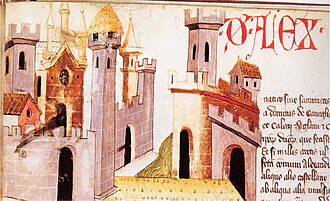
The city was granted in fief at Bonifacio I del Monferrato in 1193. A few years later, however, the citizens of the city rebelled against imperial authority, abandoning its name Caesarea and tightening alliance with the neighbors Asti and Vercelli; the dispute was resolved by the arbitration of the municipalities of Milan and Piacenza. For Alessandria and the Marquisate of Monferrato Thus began a period of truce, characterized by countless diplomatic disputes and sporadic alliances. Allies of Vercelli, the Alexandrians participated in the battle of Casei Gerola in 1213 and the destruction of Casale Monferrato in 1215: On this occasion the Alexandrian soldiers took away from duomo di Casale the bodies of Saints Evasio, Christmas and Projecto, and two brass statues depicting a galletto and an angel, which placed on the pinnacles of their cathedral. The galletto is still visible today on the roof of the Palazzo del Municipio in Alessandria. The fights with Monferrato rekindled in 1228, when Bonifacio II joined Asti and moved war in Alexandria. The intervention of the second Lombard League, who besieged Mombaruzzo, convinced the marquis to surrender.
looking up, is Guiglielmo Marquis,
for which and Alessandria and his war
he cries Monferrato and Canavese."
(Dante Alighieri, VII Canto, vv. 133-136, Purgatory, Divine Comedy)
In the second half of the 13th century, the political balance of Piemonte changed due to the expansionist myres of the House of Anjou. Alessandria, along with many other municipalities, decided to appoint captain of the city William VII of the Monferrato. In 1291, however, the Astigian citizens, also subjected to William VII, promised the Alexandrians 85.000 golden florins in exchange for the capture of the Marquis. Drawn with a pretext in the city, William VII was imprisoned and starved a few months later. His son John moves war against Asti and subdued it, but died without heirs in 1303. Charles II of Anjou took advantage of it to occupy all the cities south of Tanaro, establishing the county of Piemonte.
In 1345, following the Battle of Gamenario, the Army of Monferrato and that of the city of Milan they divided the angioine lands; Alessandria, therefore, passed under the protection of Luchino Visconti. The victory in the battle of Alessandria He allowed Gian Galeazzo Visconti to unify his territories in the duchy of Milan.[15] The centralization of power in the Duke's hands prompted citizens to Alessandria in 1403. The revolt was dominated by the family leader Facino Cane, who took advantage of it to return to Casale the bodies of the saints who were taken two centuries earlier. The leader, who dreamed of creating his own state, made himself appointed lord of Alessandria, but with his death in 1412, the city regains full possession of the Visconti. In 1417 Philip Maria Visconti, to put an end to the struggles between the factions of the Guelphs and the Ghibellines established the party of Casa Ducale, welcoming noble families from both factions and granting them a common coat of arms and a square in which to meet.
In 1447 the Visconti dynasty and citizens of Milan proclaimed the Ambrosian republic. Charles of Valois, Duke of Orléans and Lord of Asti boasted a right on the duchy and therefore began the invasion of Milanese lands, plundering and destroying the castles of Annone and Felizzano. The Alexandrians, led by Bartolomeo Colleoni, broke the siege of Bosco Marengo and defeated the Astians, ending the Orléans' claim.
Modern age
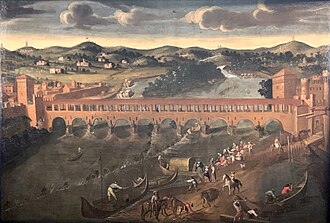
The Count of Alexandria remained stable in the Milanese lands and followed its fortunes: first the Sforza restored the duchy, which was then occupied several times by the French, guilty of the plundering of the city in September 1527, and finally became a Spanish province. With the submission first in Milan and then to Spain, Alessandria lost that autonomy which had marked it since its foundation, but the stability gained allowed it to develop and become an important trading knot between Genoa and Lombardy. The bridge over the Tanaro, whose construction began in 1455 by Francesco Sforza, was equipped with a new pavement and cover during the 17th century.
The city was also affected by the Franco-Spanish War: Armando di Borbone-Conti and Francesco I d'Este, under the leadership of the Franco-Saabado army, tried to conquer Alessandria, defended by the Hispano-Lombardo army in 1657. The siege failed and the city remained under Milan's dependence.
In 1707, during the Spanish Succession War, Alessandria was occupied by the imperial army, commanded by Prince Eugene. At the end of the conflict, the Treaty of Utrecht sanctioned the annexation to the Duchy of Savoy. The strategic position of the city, bordering the Lombard provinces in the hands of Austria, prompted Vittorio Amedeo II to fortify it militarily, building there an imposing star-plant citadel, who replaced Bergoglio. The defeat in the battle of Bassignana and the subsequent French siege of the new citadel seemed to seal the Savoy fortunes in the War of the Austrian Succession, but the situation was reversed by the subsequent battle of Piacenza.
Contemporary age
The Napoleonic period
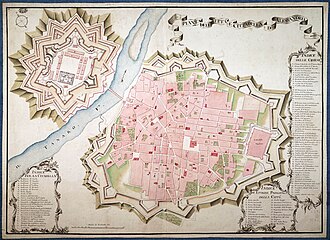
The first Italian campaign, due to the expansionist myriads of revolutionary France, caused the French occupation of the citadel. The Russian army, a member of the second coalition and commanded by Aleksandr Vasil'evič Suvorov, killed the French in 1799. With the French victory in Italy's second campaign, ended by battle of Marengo, fought in the Alexandrian territory, the entire duchy of Savoy came under French occupation. The official annexation to France occurred two years later, in 1802, and Alessandria became the capital of the department of Marengo. Napoleon decided on major architectural renovations for the city: the citadel was enlarged and fortified and the ancient Gothic cathedral was demolished in favor of a new one, in neoclassical style. The brass cockerel stolen from the Casalesi was moved to the town hall building, while the angel disappeared. Subsequently, in 1814, the city was conquered by the Austrians and on 30 May of that same year, after the Treaty of Paris, it became part of the Duchy of Savoy.
The Risorgimento
those who in Sfacteria sleeps and Alessandria
first the tricolor, Santorre
by Santarosa»
(Giosuè Carducci, Piemonte (Rhymes and rhythms))
The Piedmontese insurrection of March 1821, included in the context of the motions of 1820-1821, started from Alessandria: the insurgents, led by Santorre di Santarosa, took control of the citadel and proclaimed the constitution, placing a tricolor flag for the first time in the history of resurrection (it is not clear if green, white and red or other colors[16]). In 2021, the President of the Republic, Sergio Mattarella, wrote a letter to the then mayor of the city to commemorate the bicentenary of the historic event.[17] The revolt, which did not succeed, prompted Carlo Felice of Savoy to yield to the pressures of the Austrian Empire, who had previously proposed to the king of Sardinia a preventive occupation of the citadel to fight an eventual insurrection, aiming to move the western border of the empire to Alessandria. The citadel underwent foreign occupation for two years. Andrea Vochieri and five soldiers who had participated in the insurrection were later shot.
The Austrian victory in the first Italian War of Independence led to the armistice of Vignale, with which Austria obtained, for the second time, permission to occupy the citadel. This time, however, for a few months, thanks to the pressures of France and England, which considered the conditions imposed too severe. During the war, moreover, the Sardinian government, which feared an Austrian advance, decided to remove the cover of the bridge, so as to facilitate its possible demolition.
In October 1859 it was chosen as one of the first four Piedmontese provinces. The city played a very important role from the logistical point of view and the movement of troops in the Second Italian War of Independence, due to its proximity to the Lombard border: a good part of the French army gathered to Alessandria before moving east to the attack of Austria along with the Sardinian army. Following the Franco-Saabada victory in the war and the expedition of the Thousands, in 1861 the kingdom of Italy was born.
Alessandria Italian
The birth of railways and the increase in trade in North Italy, at the end of the nineteenth century transformed Alessandria into one of the nerve points for the Italian market. Due to its position, between Turin, Milan and Genoa, the city experienced a great demographic increase, which led to an expansion of the city's territory, and an important industrial development, witnessed by the success of companies such as cosmetics Paglieri, the perfumes Gandini and, above all, the Borsalino, whose production of characteristic felt hats became famous all over the world. In 1891 the new bridge was inaugurated on the Tanaro, brick and stone.
Urban Rattazzi, one of the leading representatives of the historical Left, was of Alessandria. He served many ministerial positions, first in the Kingdom of Sardinia and later in the Kingdom of Italy, and was appointed twice as President of the Council, in 1862 and in 1867. His only two short left governments in Italy in the early years after unity, as the politics of the young nation was dominated from 1861 to 1876 by the historical Right. A statue of Urbano Rattazzi is today placed in the middle of the central Piazza della Liberta, the political center of the city. On 25 July 1899 he became the first Italian provincial capital city to be governed by a socialist majority.
During the fascist dictatorship Alessandria In the 1930s important buildings were built, such as the post office of Piazza Vittorio Emanuele II (now Liberty Square), designed by architect Franco Petrucci and decorated with mosaics by Gino Severini.
During World War II, in December 1943, the synagogue of Alessandria was plundered and partially destroyed by the fascists. Due to its station and bridges on the Tanaro and on the Bormida, which were a crucial infrastructure of connection from Liguria to Turin, Alessandria It represented a strategic military target during the war and suffered heavy air bombing by the Allies (especially during Operation Strangle). On April 30, 1944 the bombs fell on the Christ district, south of the city, causing 239 victims and hundreds of wounded and also destruction of the Municipal Theatre. In June the bridges on Tanaro and Bormida were attacked and severely damaged. Another bombing, on 5 April 1945, on the kindergarten "Maria Ausiliatrice" in via Gagliaudo, next to the cathedral, made 160 victims (including 40 children). The latter is still today remembered by the city community as particularly cruel, as it struck a convent, therefore a civil site, and it took place only 20 days before the liberation of Italy from fascism, when the war was practically over, thus resulting in irrelevant for the evolution of events. In the end, 559 were the Alexandrian victims because of the air bombings of World War II.[18][19][20] On 29 April 1945, the city was liberated from Nazi occupation (1943-1945) and fascism by partisan resistance and Força Expedicionária Brazilira.
In post-war period Alessandria He followed the fortunes of northern Italy, initially knowing that development and that form of well-being that spread in the north with the economic boom. This growth was also made possible by the fervent immigration that in those years pushed many Italians of the south to seek better conditions of life to the north, contributing to the demographic growth of many northern cities, among which Alessandria, that in the seventies exceeded 100000 inhabitants. The city was also shocked by the fact of chronicle in a political background that bloodshed Italy in the 1970s: on May 9, and 10, 1974, an internal revolt in prison resolved tragically, with 7 dead people and 14 wounds: this episode was remembered as the "Strage di Alessandria". Moreover, it was in a farmhouse near the Piedmontese city that held the first meetings of the group of Red Brigades and took place the kidnapping Gancia.
6 November 1994 Alessandria was heavily hit by a serious flood, which affected large residential areas (especially the Orti, Rovereto, Bgruppo, Borgo Cittadella, Astuti and San Michele districts) and various hamlets, causing the death of eleven people, as well as serious damage to homes and economic activities in the area. On 26 November 2024, the President of the Republic, Sergio Mattarella, visited the city to commemorate the thirtieth anniversary of the tragic event and inaugurated a monument in memory of the victims of the flood in front of the Meier bridge.[21]
In 1998 the city became home, along with Novara and Vercelli, of the University of Studies of Piemonte Oriental "Amedeo Avogadro", which became the third public university of the region, after the University of Turin and the Polytechnic of Turin.
In 2001 a new bridge was inaugurated on the Tanaro, the Titian Bridge. Fifteen years later, in 2016, a new single-country bridge was inaugurated, the Meier Bridge, which totally replaced the Citadel Bridge, demolished due to the many camps of which it was composed that allowed the accumulation of debris in case of abundant rainfall, thus increasing the risk of flooding.
March 8, 2020 Alessandria was among the first provinces (only in Piemonte together with that of Asti) to be declared a "red zone", therefore subjected to quarantine measures, due to the high rate of spread of COVID-19. Shortly afterwards, the entire national territory was declared a red zone.[22]
Jewish history
The first Jew documented to Alessandria His name was Abraham (son of Joseph Vitale de Sacerdoti Cohen) and opened a bank for loans around 1490. In 1590, the Jews were expelled from the Duchy of Milan and one of Abraham's descendants went to Madrid, which ruled on the Duchy, in which he was allowed to remain thanks to an engraving sum of money due to him by the government. Of the 230 Jews living in the city in 1684, 170 were members of the Vitale family. The Jewish ghetto was opened in 1724. Between 1796 and 1814, under French influence and with the rest of Italian Jews, the Jewish community was emancipated. According to the Benito Mussolini census, in 1938, 101 Jews lived. On 13 December 1943, the synagogue of Via Milano was attacked by repubblichini: books and manuscripts were taken from the synagogue and were given fire in Piazza Rattazzi. In all, 48 Jews were deported from province of Alessandria, most of whom were interned and murdered in Auschwitz.[23]
Symbols
- Coat of arms

The coat of arms Alessandria is practically coevo at the foundation of his city. It was established in 1175 to commemorate the end of the Barbarossa siege.
Recognized by decree of the head of government no. 3059-6 of 6 March 1941[24][25] the coat of arms Alessandria is blasoned in this way:
The Latin motto, translated into "Alessandria humiliates the superb and raises the humble", is attributed to Pope Alexander III. The griphons are natural, that is fulvi in the lower part, trunk and legs, of the lion and brown in the upper part, wings and legs, of the eagle. Originally the supports were two angels, but in 1814 they were replaced with the griphons.[27]
Some believe that the red cross is traceable to the coat of arms of Milan, adopted by many municipalities belonging to the Lombard League. Others argue thesis for which the red cross, instead, is attributable to the gift that Pope Alexander III offered to the city on the occasion of the bestowal of Episcopal ius: the Vexillum Beati Petri[28], precisely, of white, to the cross of red.
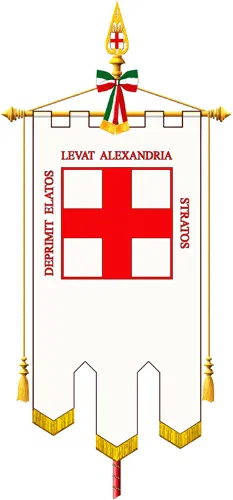
- Banner
In the Napoleonic era, a completely different coat of arms was designed, approved with license letters of 13 June 1811 and still today preserved in the museum of Via Tripoli, which remained in use until 1814. It was. inquarified: at the first and fourth, of blue, at the castle toped by a three-piece, silver-plated tower loaded with a black M; at the second and third, of gold, to the black grifone, armed and flashed red; on all silver, to the shortened cross of red; at the head of the Bonnes Villes of the Empire [which is red, drawing].[29]
Honors

— List of rewards awarded to the benemerits on the occasion of the disaster earthquake 28 December 1908 with RR. - You're right. 7 and 21 July, 9 August, 23 September 1910; 23 February, 16 March, 27 May 1911, in the Official Journal of the Kingdom of Italy n. 130 of the 30 June 1911

In 2016 he received the special mention for: "... the constant commitment to accessibility in difficult times, for his commitment to make the urban environment accessible to all citizens regardless of their capacity or age" within the European Award for accessible cities, known as Access City Award.[31]
What to see in Alessandria
Civil architecture · Religious architecture · Military architectureExplore this chapter
The center of the city is characterized by the vastness of Piazza della Libertà, anciently Platea Maior. The parade ground desired by Napoleon was obtained through the demolition, which took place in 1803, of the ancient 12th century cathedral of St. Peter with 13th century expansion works by the architect Ruffino Bottino of Casale Monferrato. At the beginning of the 2000s, part of the remains of the foundations were brought to light for in-depth studies and then covered over. At the center of it stands the statue of Urbano Rattazzi, the work of Ferruccio Pozzato, which replaces the older casting by Giulio Monteverde, demolished to obtain metal in 1943, during the Second World War.
Civil architecture
- XII-XIII century
- Palatium Vetus. The palace, in the central Piazza della Libertà, was built around 1170. It served as a Broletto in the 13th and 14th centuries, therefore the center of the political, administrative and judicial life of the medieval municipality. After many vicissitudes in 1856 the Municipality of Alessandria ceded it to the State which set up the guardhouse of the Division Command there. Until 1995, the building hosted the Garrison and the Military District and, since 2012, it has been home to the Alessandria Savings Bank Foundation which completely financed its restoration.
- 17th century
- Palazzo Guasco. Located in the homonymous Via Guasco, its history dates back to the first centuries after the foundation of the city. The current layout dates back to the 18th century. The right wing of the building is home to some sections of the provincial administration: the Economic and Development Directorate of the Province of Alessandria (which includes the Department of Culture and the Department of Tourism), the Provincial Library of Local Publishing, the Institute for the History of the Resistance and Contemporary Society and the Gallery of Modern Art. Awaiting restoration of some halls of the palace which preserve the eighteenth-century architectural structure. The left wing of the building, however, is private property. Worthy of note is the small theatre, not open to the public, located inside the private wing.
- 18th century
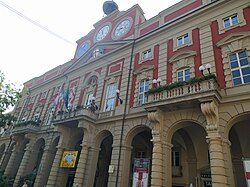
- Palace of the City Hall or Palazzo Rosso. Defined Palazzo Rosso from the color of the facade, was built in the eighteenth century, is equipped with a particular three-square clock (to be noticed on top the cock subtracted from the Alexandrians to the Casale Monferrato in 1225); destroyed by the bombings of war in 1944 the building that occurs is the result of a subsequent reconstruction intervention.
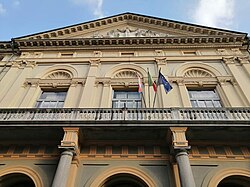
- Palazzo Ghilini. Erected by Tommaso Ottaviano Antonio Ghilini Marquis of the homonymous family, is home to the Provincial Administration and Prefecture. Designed by Benedetto Alfieri in 1733, of valuable Baroque forms, considered the most beautiful and monumental of the city.
- Cuttica Palace of Cassine. Future home of the Civic Museum and former home of the "Antonio Vivaldi" State Conservatory of Music and previously of the musical high school.
- Palazzo dal Pozzo. Located in Piazzetta Santa Lucia, dating back to the 18th century in a purely Baroque style. It was the seat of the Casino Society from 1862 to 1868, for a few decades of the Notarial Archive and from 1962 to 1982 again of the Casino Society.
- Arch of triumph. Located at the end of Via Dante, it was built in 1768 in memory of the visit of Vittorio Amedeo III and Maria Antonia of Spain. It is a rare example of an eighteenth-century arch.
- Palazzo Prati di Rovagnasco. Built in the mid-eighteenth century by the will of the Marquis Carlo Giacinto Prati, the building was renovated and partly altered after the Second World War and is distributed over three floors which unfold with a U-shaped plan around a central courtyard: a main body overlooking Via XXIV Maggio and two lateral wings along Via Giuseppe Verdi and Via San Giacomo della Vittoria. The typical decorative elements of the Baroque style are reduced according to a taste now oriented, as in contemporary buildings, towards forms of classical austerity, so much so that the palace can be considered the most severe of the noble residences of the eighteenth century in Alexandria.[32]
- 19th century
- Villa Guerci.
- Gallery Guerci. it is a "passage" with a glass roof that connects via San Giacomo della Vittoria to via San Lorenzo and owes its name to Giovanni Guerci (1834-1908), an entrepreneur and builder from Alessandria who had it built in 1895.
It was restored in 1948 after the damage suffered by air bombings in 1945. - Garibaldi Square. Built between 1885 and 1900 based on a design by the engineer Ludovico Straneo, it is one of the largest porticoed squares in the Piemonte.
- 20th century
- Monferrato Palace. Located in via San Lorenzo, it was built in 1932-1933 based on a design by the Turin architect Giovanni Chevalley as the headquarters of the Chamber of Commerce until 2001 and is currently home to artistic and pictorial exhibitions.
- House of the Fascist. Work by Vittorio Tornielli originally used during fascism as the home of the Fascio and today home to the civil engineering offices.
- House of the Mutilato. Built by the engineer Venanzio Guerci at the end of the 1930s as the headquarters for the Alessandria section of the National Association of War Mutilated and Invalids.
- Anti-tubercular bollard and Provincial Laboratory of Hygiene and Prophylaxis. Works by Ignazio Gardella, built between 1934 and 1939, they are considered masterpieces of Italian Rationalist architecture.
- Palace of the Posts. Built between (1939 and 1941) in a purely rationalist style, it is decorated with a beautiful 38 meter long mosaic by Gino Severini on the facade.
- Cases for employees of Borsalino. Work by architect Ignazio Gardella designed between 1949 and 1951 and built in 1952.
- House of Via Trotti. Work of the architect Ignazio Gardella designed and built between 1953 and 1954.
- Pediatric Pavilion of the children's hospital Cesare Arrigo. Work by Ignazio Gardella, designed and built between 1954 and 1957.
- Agorà complex. Multifunctional complex designed by Ignazio and Jacopo Gardella during the 1980s.
- Residential complex Borsalino. Residential complex designed by Paolo Portoghesi and built between 1987 and 1991.
- Haircuts. Department of the Borsalino hat factory designed by Ignazio Gardella and built between 1949 and 1956.
- Institute of Divine Providence. Complex of welfare buildings designed by Arnaldo Gardella and built between 1926 and 1927 commissioned by Teresio Borsalino for the charitable work of Teresa Michel.
- State industrial technical institute Alessandro Volta. School building designed by Ignazio Gardella and built between 1963 and 1966.
- Palace of Justice.
- 21st century
- Borgo Città Nuova. Urban redevelopment project by Léon Krier and Gabriele Tagliaventi in neo-urbanist style, completed in 2002.
- Bridge of Citadel. The bridge called "Cittadella" is, due to its history and its strategic importance, the main bridge of Alessandria that unites the two city banks of the river Tanaro. In August 2009, the third bridge in the city's history since its foundation, inaugurated in 1891, was demolished.[33] The bridge of 1891 replaced a more ancient covered stone bridge, inaugurated in 1455 which in turn replaced an original wooden bridge. In 1996, the Municipality of Alessandria commissioned architect Richard Meier to design a new single-country bridge. The current was inaugurated on 23 October 2016.
-
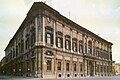 Palazzo Ghilini
-
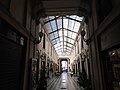 View Gallery Guerci
-
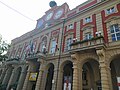 View facade Palazzo Rosso
-
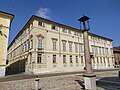 Cuttica Palace of Cassine
-
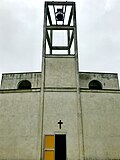 Façade and bell tower of the church of Ignazio Gardella at the rehabilitative Presidium "Borsalino"
-
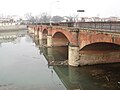 The Citadel Bridge as it was before the demolition of 2009
-
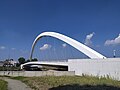 View new Meier Bridge on Tanaro
-
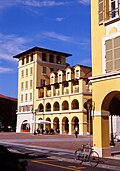 Il Borgo Città Nuova
Religious architecture
- XII-XIII century
- St. Peter's Cathedral, demolished. Ancient cathedral of Alessandria, built at the same time as the foundation of the city. For over six hundred years, with demolitions, renovations, embellishments and readaptations, it was the main cornerstone of the Alexandrian urban, religious and civil fabric. The cathedral was demolished in 1803 on the orders of Napoleon Bonaparte[34].
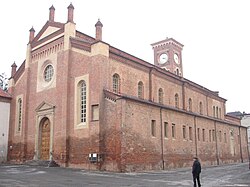
- Church of St. Mary of Castle. Following the demolition of the cathedral, it turns out to be the oldest in the city, dating back to the 12th century but two even older sediments were found, from the 8th and 9th centuries. Located in the heart of Borgo Rovereto, it blends a stratification of styles from different eras; in the basement you can observe the remains of the two previous churches.
- Conventual complex of San Francesco, deconsecrated. It was, in the Middle Ages, one of the main religious buildings of the city of Alessandria. It extended over a large part of the block between today's Via XXIV Maggio, onto which the main access opened, Via Cavour, Corso Cento Cannoni, Via Lanza, Vicolo dal Verme and Via San Giacomo della Vittoria.[35] In 1802 the church was abandoned by the Franciscans with the suppression of religious orders imposed by Napoleon; the whole complex was then used as a cavalry barracks, first, and military hospital.
- XIV-XV century
- Church of San Giacomo della Vittoria. The church was built as a form of thanksgiving for the victory achieved by the city of Alessandria and by the Visconti troops, under the orders of the Veronese leader Jacopo Dal Verme, against the French, led by John III of Armagnac. The victory, which also cost the life of the Count of Armagnac, occurred on 25 July 1391, St. James's Day.
- Church of St. Mary of the Carmine. It is among the oldest churches in the city of Alessandria, founded by the Order of the Blessed Virgin of Mount Carmel in the 14th century.
- San Bernardino Convention Complex, demolished. It was founded by the Order of Friars Minor of the Regular Observance around 1430. Suppressed by the Napoleonic regime in 1802, it was completely demolished in 1841 to make way for the building of a new penitentiary built between 1841 and 1845.
- 17th century
- Church of the Blessed Virgin Mary of the Monserrato. The only surviving building in the city from the period of Spanish domination, and located in the square of the same name, it is located in the heart of the historic center of Borgo Rovereto, a few steps from the church of Santa Maria di Castello.
- 18th century
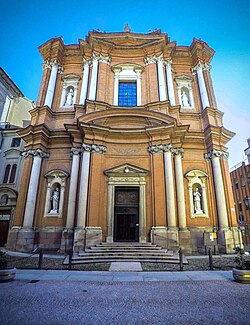
- Church of Sant'Alessandro. An example of baroque architecture in the historic city centre, it was built in the mid-18th century by the Order of Barnabites. Used from 1803 to 1810 as an interim Cathedral following the demolition of the old Cathedral of St. Peter by Napoleon's French troops, in 1805 it was visited by Pope Pius VII returning from Paris. The remains of the 18th century Alexandrian scholar Giulio Cesare Cordara reside in the crypt of the church[36][37].
- Church of St. Stephen. Inserted in the urban fabric of Borgo Rovereto, it was built in the second half of the 18th century due to the demolition of a previous church of Santo Stefano, existing in Bergoglio, and demolished together with the entire village starting from 1728, to make room for the new construction of the Military citadel.
- Church of San Lorenzo.
- Church of San Rocco.
- Church of Saint John. The church is the headquarters of the Veneranda Confraternita del Santissimo Crocifisso of Alessandria.
- Church of Saint Lucia.
- Church of Saints Sebastian and Dalmazzo.
- Church of the Blessed Virgin Mary Assumption.
- Church of Santa Varena.
- Church of the Blessed Virgin of the Rosary.
- Church of the Most Holy Name of Mary.
- 19th century
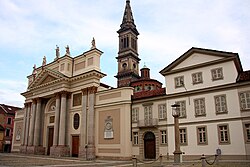
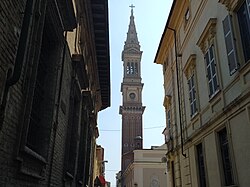
- Cathedral of Saints Peter and Mark. Almost adjacent to Piazza della Libertà, home to the ancient cathedral, is the small and elegant Piazza del Duomo, with the new neoclassical cathedral (built between 1807 and 1810, then remodeled between 1874 and 1879; inside it preserves the wooden statue of the Madonna della Salve. On the left side of the facade stands out Gagliaudo holding a lodigian object, Romanesque sculpture depicting the Alexandrian hero who, according to legend, distinguished himself during Barbarossa's siege. Note on the right side of the Cathedral the very high and imposing bell tower of eclectic style, built on several occasions between the last decade of the nineteenth century and 1922; with its 106 meters of height it is the third highest in Italy after the Campanile of Mortegliano and the Torrazzo of Cremona. The bell tower contains a concert of 5 bells in C3 major.
- Church of Saints Antonio and Biagio.
- Sanctuary Beata Maria Vergine di Loreto.
- Church of the Blessed Virgin Mary of Grace.
- Church of the Urban Cemetery.
- Church of the Immaculate Heart of Mary.
- Church of Mary Most Holy of Mercy.
- Synagogue Alessandria. Built in 1871, designed by the architect Giovanni Roveda, it is a monumental example of a nineteenth-century Italian synagogue. It is located in the historic center, in the old ghetto area.
- 20th century
- Church of San Baudolino.
- Church of Saint John the Evangelist.
- Church of Saint Pius V.
- Our Lady of Lourdes Sanctuary.
- Church of Saint Joseph.
- Sanctuary of the Sacred Heart.
- Sanctuary of San Giacomo.
- Church of Saint Gaudenzio martyr, Catholic church of the Greek-Byzantine rite built in 1994 for the Romanian, Moldavian, Serbian, Montenegrin, Greek, Bulgarian communities and for the Serbian minority of Croatia.
Military architecture
- 18th century
- Military Citadel. It stands on the left bank of the river Tanaro. It is an imposing military construction built to a design by Ignazio Bertola, one of the most important in the world. The construction, commissioned by Vittorio Amedeo II of Savoy in the 18th century, entailed the evacuation and demolition of the entire Bassociazione district. Owned by the State Property Agency, it can be visited thanks to the guides prepared by the FAI: it has a star plan, with six bastions surrounded by moats. The military quarters with their eighteenth and nineteenth century buildings are of notable architectural-military interest
- 19th century
- Caserma Valfré di Bonzo.
- Fort Bormida.
- Forte Ferrovia.
- Forte Acquire.
Monumental trees
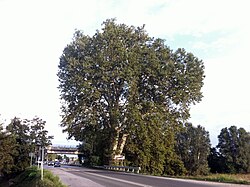
- Napoleon's Platano. Along the former state road n. 10 which connects Alessandria to Spinetta Marengo the so-called Napoleon's Platano, one of the largest monumental trees in Italy. Legend has it that it was planted in 1800 following the victory over the Austrians at battle of Marengo. The Plane Tree, of the species Platanus Occidentals, is 48 meters high and has a circumference at the base of the trunk of over 8 metres. It seems that until the beginning of the 20th century there were still five surviving examples of a complete avenue that from the gates of Alessandria reached as far as Marengo.[38] The platanus coordinates can be found on the descriptive page of the image.
Society
Demographic evolution · Foreign ethnic groups and minorities · ReligionExplore this chapter
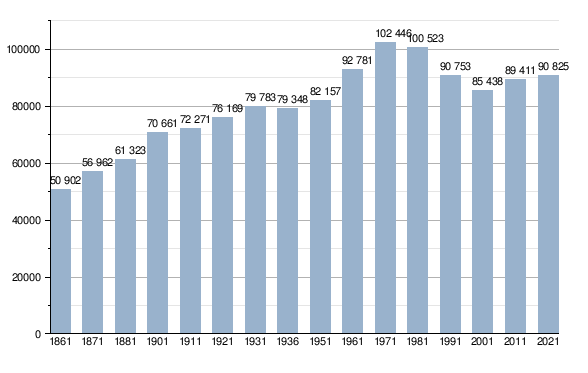
Demographic evolution
Inhabitants registered[39]
Foreign ethnic groups and minorities
At 31 December 2023 foreigners living in the municipality were 14 938, or 16.26% of the population. The following are the largest groups:[40]
- Romania 3 256
- Albania 3 181
- Morocco 2 137
- China 703
- Nigeria 701
- Ukraine 551
- Egypt 307
- Ecuador 289
- Pakistan 264
- Bangladesh 221
Religion
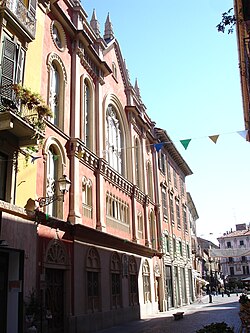
The most widespread religion among the inhabitants of Alessandria is Christianity; in particular, the great majority of them are Catholic confessions. The city is home to diocese of Alessandria, suffragan of the archdiocese of Vercelli and belonging to the ecclesiastical region Piemonte, whose current bishop is Guido Gallese; in 2022 it counts 140 500 baptised on 153 500 inhabitants.
However, there are many minorities of both ancient origin, such as the Jewish one, and as a direct consequence of immigration. The most widespread minorities in the territory are:
- the Jewish Community of Alessandria with his Synagogue.[41] Although it is of small size, it has had an important part in the history of the city and in general of the low Monferrato;[42]
- the Orthodox community is present in the city mainly with Russian Orthodox and the Russian Orthodox Church of St. Nicholas inaugurated in 2008.[43] There are also Moldavi and Rumeni Orthodox with the Moldovan-Human Orthodox Church of Saint Gerarca Barlaamo of Moldavia;[44]
- the valdo-methodist community;[45]
- the community of the Adventist Christian Church on the seventh day. The attempt to found the Adventist Church of Alessandria dates back to 1935 when Giovanni Emilio Fischer was hired. In the same year Daniele Cupertino is sent to take care of that church in exchange for Elia Bertalot;[46]
- the community of the Adventist Church of Sabatic Rest is also present in the city. Between 1994-1995 the knowledge of the church not only spread between the relatives of italo-German but also among some Alexandrians;[47]
- the community of the Church of Jesus Christ of Saints of the last days (Missionaries Mormon) has been present in the city since the early years '70;[48]
- the Alexandrian community of Pentecostal Assemblies of God in Italy;[49]
- the community of Jehovah's Witnesses[50]
- the community of the evangelical Christian Church of the brothers;[51]
- the community of the Church of Christ;[52]
- the Islamic community of Alessandria has its own mosque in the historic center of the city;[53]
- the community of Buddhist religion inaugurated on January 27, 2008 with the participation of the Ven. Lama Gangchen Rinpoche, Lama Michel Rinpoche and Maestro Zen Rev. Daido Strumia;[54]
- the Bahá'í community of Alessandria where the magazine is written Opinions bahá'í[55] and the city also boasts the historical figure of Arturo Figini, an important artist of this faith.[56]
- the anthropogenic community of Alessandria Born in 2000 he wanted to dedicate himself to the dissemination of the thought of Rudolf Steiner, an Austrian philosopher and pedagogist, for the knowledge of the human being through the pedagogical group Steineriano.[57]
Institutions, bodies and associations
Culture
Education · Libraries · SchoolsExplore this chapter
Education
Libraries
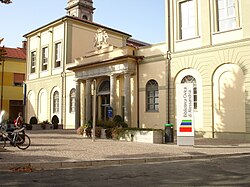
- Biblioteca Civica Francesca Calvo, founded in 1806
- State Archives Library Alessandria, founded in 1940
- Diocesan Library of the Episcopal Seminary, established by the Bishop of Alessandria Giuseppe Tommaso de Rossi between 1774 and 1776 opened to both seminarians and literals of the period, thus becoming a public library.
- Library of the State Conservatory of Music Antonio Vivaldi, founded in 1941
- Library of the Institute for the History of Resistance and Contemporary Society in the province of Alessandria, founded in 1978, located inside Palazzo Guasco
- Library of the Lower Archaeological Group Piemonte, founded in 1990
- Library of the Department of Science and Technology Innovation and Department of Legal and Economic Sciences of the University of Studies Piemonte East A. Avogadro, founded in 1993
- Library of the Alexandrian Theatre Company, founded in 1986
- Biblioteca dell'Ospedale civile Santi Antonio e Biagio founded in 1902,[60] located within the civil hospital
- Biblioteca Popolare Serafino Bruna, founded in 1914
Schools
In addition to the historic classic Umberto Eco high school, a scientific high school and an educational institution comprising high schools and technical institutes are located in Alessandria.
University
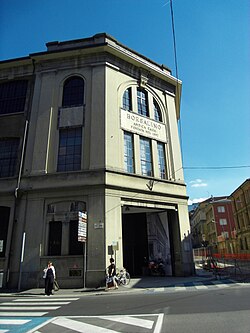
Together with Novara and Vercelli, Alessandria is home to the University of Piemonte Oriental. Here in fact are located three of the seven Departments that make up the University (of which three are shared with other offices): the Department of Science and Technology Innovation, the Department of Law and Political Science, Economics and Social, the Department of Studies for Economy and Enterprise and the Department of Humanities Studies. Advertisement Alessandria there is also a seat of the Polytechnic of Turin.
Museums [ 61]
- Civic Museum: reopened in the new headquarters of Palazzo Cuttica di Cassine, among other things, two Flemish tapestries of fine work, dating back to the seventeenth century; an interesting polyptych of Coronation of the Virgin of Gandolfino da Roreto; the sacred vestments of Pope Pius V and the corals destined for the convent of Santa Croce di Bosco Marengo he himself ordered; an archaeological collection of pre-Roman and Roman age and works dedicated to Napoleon Bonaparte and the battle that took place in Marengo;
- Ethnographic museum of Gambarina;
- Theatre of sciences composed by two sections: the Museum of Natural Sciences and the Planetarium;[62]
- Marengo Museum, dedicated to battle of Marengo;
- Iron Museum;
- Museo del Cappello Borsalino, located in Palazzo Borsalino, inside the Campioni room houses all the samples of headdress produced by the company from 1857 to today;
- Museum Alessandria City of Bicycles (Acd), inaugurated in 2016 at Palazzo Monferrato, dedicated to the history of cycling in the city and to the champions who started racing here.
- Antiquarium[61]
- Art Collection of the Fondazione Cassa di Risparmio di Alessandria[63]
- Museum of the River[64]
- Museo Uniformi Storiche 1848 -1946
- Pinacoteca[65]
- Botanical garden[66]
- Museo Grigio, dedicated to the history of Alessandria Calcio[67].
- Modern and contemporary art gallery[68]
Art
The city of Alessandria is cited in Divine Comedy by Dante:
looking up, is Guiglielmo, Marquis,
for which and Alessandria and his war
makes Monferrato and Canavese cry»
(Dante Alighieri, Divine Comedy, Purgatory, canto 7 - lines 133-136)
Theatre
The Alexandrian theatre tradition has been very flourishing over the centuries.
Teatro di Palazzo Guasco
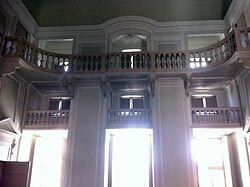
In the new political climate created after the Treaty of Utrecht, the city of Alessandria He found new ideas and new stimuli for the social life of the city. In this context, the Marquis Don Filippo Guasco Gallarati di Solerio decided to incorporate a small public theatre into his Palazzo Guasco. This was how the first city theatre was born. On 27 March 1729, the king of Sardinia Vittorio Amedeo II handed over to the Marquis Guasco the right direction for the opening and management of his theatre.
In September of the same year, in the presence of Crown Prince Carlo Emanuele, the theatre was officially inaugurated with a prominent opera representation. The only testimony of that period is the so-called "Cronaca Bolla" which thus comments on the musical event of the inauguration of the theatre: "How much less he would have contributed to the public good of the city, if he had employed his cash (!!) and the beautiful talent, ond'Ã ̈ supplied, in some more profitable find!".
In 1766 the deaf aversion of the bourgeoisie and the clergy against the theatre ended to tire the Marquis of Solerio. In that year the last recitation of the Semiramide by Pietro Metastasio took place, so the theater was finally closed and the Marquis handed over their licensed reins to the decurions to be reused for the Municipal Theatre of future new construction.
Municipal Theatre
The Municipal Theatre was built inside the city palace or red palace (the Town Hall Palace). You can still notice the foyer of the theatre that hosts the Office for Relations with the public.
The licenses and privileges of the Guasco theatre were transferred to the Municipal Theatre. The laying of the first stone took place on 6 September 1772, and three years later the architect Giuseppe Caselli handed over to the city the keys to the new theatre. On the evening of 17 October 1775, for the first time the municipal curtain was raised. From the stage you could admire the perfect hemicycle of the horse iron room with four orders of poles and above them a small log. The theatre had about 1500 seats. The work chosen for the opening evening was the serious opera "Antigona" on booklet of G. Fortress and music by Giuseppe Ferdinando Bertoni.
Interestingly, the stakes were purchased by the most important Alexandrian families in census, social and political position. On June 28, 1775 the 88 available stages were extracted by lot and assigned by the governor of the city to 60 buyers. There is a list, dated after the battle of Marengo during the Napoleonic period, of the owners of the poles of the Municipal Theatre, preserved at the State Archives of Alessandria.
One of the most famous conductors of the 19th century who honored the podium of the municipality of Alessandria, was M° Antonino Palminteri. For the first de The Friend Fritz, Amphion, journalist of Official Journal of Turin, in May 1896 he expressed himself thus: "The supporting actors and the choirs are good; the attentive, disciplined orchestra renders all the colours, all the flourishes, and for this special credit must be given to maestro Antonio Palminteri, scrupulous concertmaster, energetic and confident conductor".[69]
The city's life ended in 1944 when, during the bombing of May 1, the theater and its wing of the Town Hall were irreparably compromised by a fire.
-
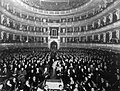 The interior of the Municipal Theatre as it was in 1942
-
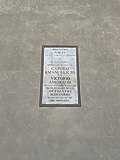 Memorial tombstone of the Municipal Theatre Alessandria placed inside the courtyard of Palazzo del Municipio in Alessandria
Municipal Theatre
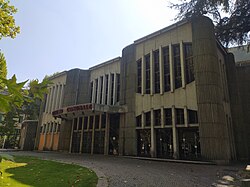
Today, the structure of major theoretical interest is the Municipal Theatre in Viale Liberties which was built between 1969 and 1978 on the site of the old theatre "Virginia Marini", damaged by the bombings of the Second World War and demolished in 1965, which has approximately 1200 seats in the main hall. There are also two secondary rooms: the Ferrero room and the Zandrino room.
The Municipal Theatre was closed in precautionary fashion on October 2, 2010 due to the pollution from asbestos dust. It was present in the heating system, in the coverings of the armchairs and in large quantities in the same air as the Theatre.
The reclamation works were suspended after a few months and resumed only in 2013 thanks to the contribution of Fondazione Cassa di Risparmio di Alessandria.
The theatre should partially reopen in the fall of 2026.[70]
Other city theatres
Below is the list of other theaters that have been followed over the centuries:
- Arena Bellana, 1856-1879. Public theater discovered that hosted equestrian shows, presentations of ferocious animals, acrobats and funamboli, clowns. Then also opera and prose shows. The arena was very loved by the public. The fifteen-year-old Virginia Vasino met her future husband, the Florentine actor Giovan Battista Marini in this public theatre. The Bellana Arena was destroyed by a fire.
- Politeama Gra, 1882-1902. On the ashes of the Arena Bellana, Mr. Gra, a relative of Bellana, built the modest popular theatre covered. The theatre hosted performances of prose, opera and operetta. The aforementioned M° Antonino Palminteri at Politeama Gra in 1898 arrives with La Traviata And The Bohème; 1899 leads Cavalleria Rusticana di Pietro Mascagni, Manon by Jules Massenet and Andrea Chénier by Umberto Giordano. In particular, for the staging of the opera Andrea Chénier in November 1899, the Press thus expressed itself: "[Antonino Palminteri] has been able to instill in the interpretation of the score of the Jordan, all the exuberant his southern phago. [...] Not a particular, not a "nuance" of the music he neglects, seconded well by his brave orchestra"[71]. The Politeama Gra also suffered the same fate as the Arena Bellana and was destroyed by fire.
- Arena Garibaldi, then Arena-Teatro Verdi, 1881-1916. Active temporary structures, in Piazza Garibaldi, during the summer months from June 1 to August 3. The Arena Garibaldi offered mainly puppet shows organized by the Venetian puppet maker Zane. Since 1903 the Arena dedicated to Verdi and renovated in a modest wooden theatre with an annexed beer shop. Seasonal activities in this area ended because of the city's urban development.
- Circus Pollarolo, 1890-1892. Structure in iron, fabric and timber with shows of prose, varied art and equestrians.
- Teatro Finzi, then Teatro Verdi, then Teatro del Popolo, 1906-1922. The theatre hosted opera performances, prose and in the years after World War I a school of culture was organized. After the inauguration, the theatre was closed for a long time, reopening later with the new name dedicated to Verdi. From 1920 he changed his name to the Teatro del Popolo. This theatre was destroyed partly by a fire in 1922. In April 1944, a bombing ended the fireworks of a few decades earlier.
- Virginia Marini Theatre, 1917-1965. The theatre dedicated to the Alexandrian actress hosted many drama companies, opera shows and symphonic music. It was demolished in 1965 to leave room for the construction of the current Municipal Theatre. It is remembered a great symphonic concert of the Teatro alla Scala orchestra in 1956 directed by Guido Cantelli.
- Teatro San Francesco. About 1920. In business.
- Arnoldi Theatre. Closed.
- Cinema Teatro Alessandrino, 1966. In business.
- Cinema Teatro Ambra. In business.
- Parvum Theatre. In business.
- Teatro Laboratorio Sociale, 2008. In business. Restored in some premises of the fire station.
Music
Conservatory
Alessandria is home to the State Conservatory of Music "Antonio Vivaldi". He was born as a free music school on December 30, 1858, thanks to the support of the municipal administration of that time. Around 1880 the school was enlarged and on November 16, 1892 the city council set a regulation in 58 articles, the name was changed to School of Music and Choral Song, by royal decree moral institution. On April 4, 1928 he became a Civic Liceo Musicale and in 1955 moved to a wing of the Cuttica Palace of Cassine. From the school year 1969/1970, it became State Conservatory with - moreover - the media school annexed.
Kitchen
The representative dishes of the city of Alessandria, in addition to the courses of typical Piedmontese matrix, are:
- the rabaton (rolls of spinach, ricotta and herbs boiled in hot water and then baked au gratin with cheese, butter and sage);
- the chicken to Marengo (pollo seasoned with shrimps of river and eggs, whose name comes from the famous battle of Marengo);
- the flour (also called bela caud, is a chickpea cake of ancient Genoese origin, developed here thanks to the intense relationship between the plain and the sea).
Among the typical desserts, which received the name of the town of origin, there is Lacabòn, based on honey and egg whites, sold during the feast of Saint Lucia and St Anthony; cannons and bigns, truffles and black cherry trees, sweet polenta of Marengo, meardini, and roosters with rum, mandrugnén, nugatelli, Albanian cake and stuff.[72]
Events
- Festival Adelio Ferrero Cinema and Critics
- International Competition of Classical Guitar "Michele Pittaluga"
- International Music Festival "Echos. The Places and Music"
- PianoEchos music festival. International Piano Weeks in Monferrato"
- Biennial of Poetry Alessandria. La Biennale di Poesia di Alessandria since 1981 he has gathered the most important Italian poets, from 1996 also international ones. The final event, which also sees a section dedicated to young authors, is held at different times during the autumn; in the intermezzo there are activities of editorial production and various cultural proposal in the fields of literature. As sources, you can consult: the official website and blog of the Biennale di Poesia;[73] the catalogues of Joker, "historical" editor of the Biennale; the journalistic literature formed over the years.
- Historical re-enactment of the Battle of Marengo. Re-enactment of battle of Marengo won by Napoleon to Spinetta on June 14, 1800. Austrian, French and Italian battalions from all over Europe are back to face. Events, meetings and exhibitions find space in the city and at the Castle Marengo. Period: first half of June.
- Palio di Asti: the city of Alessandria has reported 2 victories to the Palio di Asti, the first, on 14 April 1763 (Madonna delle Salve di Alessandria), with Giuseppe Botasso, on a barbarian horse and the second, on 1 May 1797 (Madonna delle Salve di Alessandria), with Francesco Cortese said "Jesus Christ!" or "Paggio dell'Inferno".
Food and wine
- Biscotto exhibition. The Salone del Biscotto Piemontese is the main regional event in the sector. The third edition of the exhibition took place, as in 2006, at the former "Caserma Leopoldo Valfrè di Bonzo" Alessandria. The event is dedicated to the discovery of flavors of Piemonte through the work of great and small artisans in the sector. Over fifty exhibitors have distributed and offered tastes to visitors at the exhibition stands. In the third sweet festival, talk shows dedicated to sweet piemontesis have been followed. Among the guests were Iginio Massari, pastry chef and Paolo Massobrio, wine journalist. The Salone is organized by Province of Alessandria in collaboration with the Region Piemonte, the Provinces of Cuneo, Novara, Turin, Vercelli and the Municipality of Alessandria. The first edition took place in 2005 in Novara.
- Alè Chocolate. Annual event organized by the Municipality of Alessandria (Assessorato al Commercio) in collaboration with different bodies and associations, to promote and relaunch chocolate from the sweet industry and local crafts. The aim of the festival is to interest visitors and develop the secular sector for this province. Side events of considerable interest were the exhibition of chocolate sculptures at Palazzo Asperia (now Palazzo Monferrato) and chocolate massages, performed for demonstration purposes by experienced staff. Period: October.
- Salone del Dolce e Salato. The Salone del Dolce e Salato is a provincial event in the food sector. The first edition took place at the former barracks Leopoldo Valfrè di Bonzo on 17 - 18 and 19 November 2008. The event is dedicated to the discovery of the flavors of province of Alessandria and the Province of Genoa, together promoters, through the work of great and small artisans in the field. At the exhibition stand, exhibitors offered tastes of their specialties to visitors. The Salone is organized by Province of Alessandria in collaboration with the Province of Genoa.
Engines
- International Madonnine Motor of Centauri. Historical motoraduno organized by the Moto Club Madonnina of the International Centauri of Alessandria since 1946 without interruption. Every year, on the second Sunday of July, converge to Alessandria thousands of motorcyclists from all over Italy and Europe with the intention to pay tribute to the protector of bikers, the Madonnina dei Centauri in the Sanctuary of Castellazzo Bormida. Unique feature of this event is the entrance of "First Centauri" with their motorcycles, motored, inside the Sanctuary during the religious function of Sunday, officiated by the bishop of Alessandria, called "Vescovo dei Centauri International".
Literature
The history of the foundation of Alessandria and the challenges that involved the city during the domain of Federico Barbarossa in Northern Italy are filmed by Umberto Eco inside the picaresco novel Baudolino.[74]
Media
Television
The regional television broadcaster Telecity Piemonte has a headquarters in the city, in Via Piacenza, which welcomes the journalistic editorial staff, and one in the province of Castelletto d'Orba, a production center in which he was born in 1976 and which was also the administrative headquarters of the national syndication 7 Gold until the end of 2023. Telecity, which over the years has broadcast the programs of the aforementioned 7 Gold and before that of Italia 7, is also admissible in Lombardy, Liguria and Valle d'Aosta.
Radio
The main radio stations based in the city are Radio Gold, Radio Alex, Radio Voce Spazio and Radio B.B.S.I., while they are located in the province of Radiocity - Only great successes and Radiocity - Solo musica italiana (in Castelletto d'Orba) and Radio San Paolo della Croce (a Castellazzo Bormida).
Prints
The weekly magazine Il Piccolo, founded in 1925, is located in Via Parnisetti.
Anthropic geography
Historical divides · From the 12th century to annexation to Piemonte (1707) · Sabaudo period (1707-1859)Explore this chapter
Historical divides
From the 12th century to annexation to Piemonte (1707)
Alessandria was historically divided into 4 districts: Gamondio, Marengo, Bergoglio and Rovereto.[75] Gamondio, Marengo and Rovereto were located on the right bank of Tanaro, while Bergoglio on the left bank. The latter was razed to the ground in 1728 to leave room for the construction of the new Citadel Military.
Sabaudo period (1707-1859)
After the destruction of Bergoglio in 1728, the center of Alessandria passed from three to four districts with the subdivision in two quarters of the ancient Gamondio.
The Unification of Italy
From 1859 to 1926 Alessandria was divided into two terms. The first commission included the city within the old walls, as well as the localities of Orti, Valle San Bartolomeo, Valmadonna and San Michele. The second mandate included all the remaining part of the municipality outside the walls, that is, the places of Christ, Casalbagliano, Villa del Foro, Cantaloupe, Spinetta, Castelceriolo, Lobbi, Cascinagrossa, Mandrogne, old San Giuliano, new San Giuliano, Portanova, Retorto, Castelferro.
Second post-war period
Alessandria in the second half of the 20th century it was divided into 5 Circumscriptions in turn divided into 23 Quartieri.
Administrative divisions
Subdivisions Alessandria are divided into five constituencies, divided into nine districts and fourteen hamlets[76][77][78]:
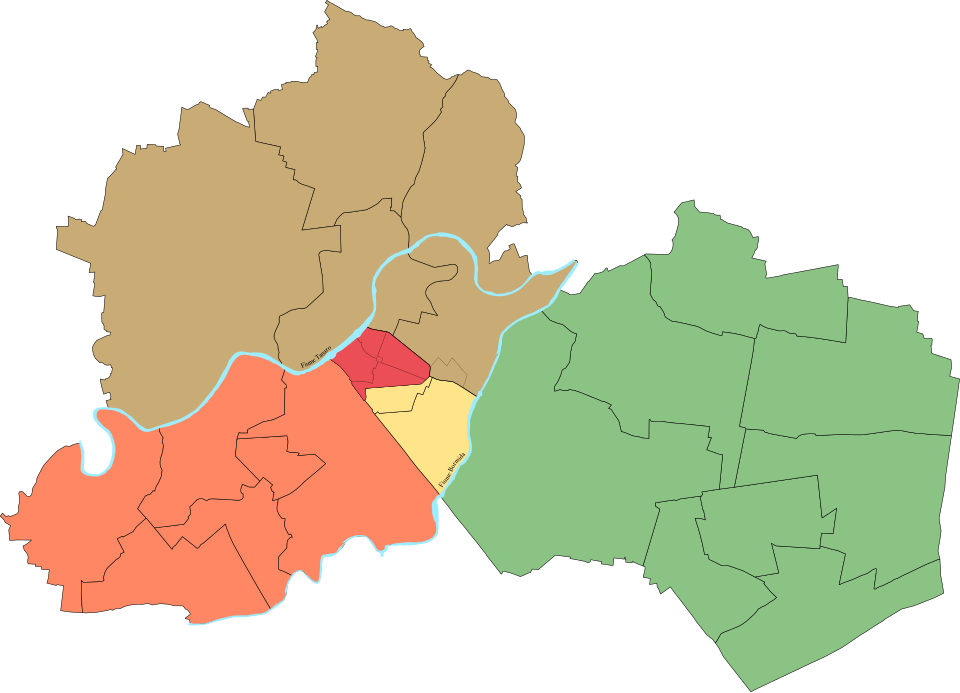
Alessandria North
- fractions
- 1. Saint Michael
- Astute
- Gerlotti
- 2. Valmadonna
- 3. San Bartolomeo Valley
- 1. Saint Michael
- neighborhoods
- 4. Borgo Cittadella
- 5. Vegetables
- 6. Galimber
- e. Bag (de facto)
Center
Euro-Plath
- neighborhoods
- 8. Pistachio
- 9. Europe
Alessandria South
- neighborhoods
- 10. Christ
- 11. Norberto Rosa[80]
- 12. Cabanette
- fractions
- 13. Casalbagliano
- 14. Cantaloupe
- 15. Villa del Foro
Fraschetta
- fractions
- 16. Spinetta Marengo
- 17. Castelceriolo
- 18. Lobbies
- 19. San Giuliano Nuovo
- 20. San Giuliano Vecchio
- 21. Mandrogne
- 22. Litta Parodi
- 23. Cascinagrossa
Economy
Agriculture · Industry · CraftsmanshipExplore this chapter
Agriculture
Alessandria and its surroundings are known for various crops, including wheat, corn, wheat, sunflower seeds. In the countryside around the city and in the hamlets there are numerous farms and farms.
Industry
There are many industries in the territory, mainly in manufacturing. Among the most important companies in the city, are Michelin, Solvay, Paglieri and Guala Closures.[81]
The city has many industrial areas: D3 (near the Alessandria Sud toll), D4 (Christ zone), D5, D6, D7 and D8 (Spinetta Marengo). Other important industrial areas nearby are located Pozzolo Formigaro (D1), Valenza (D2), Castellazzo Bormida, Solero, Quattordio, Bosco Marengo and Rivalta Scrivia.
Craftsmanship
As for crafts, renowned is the creation of hats, especially cylinders made still by hand, as well as the processing of silver for artistic purposes. Borsalino is the most famous Alexandrian company in the international fashion field.[82]
Infrastructure and transport
Roads · Railways · AirportsExplore this chapter
Roads
Alessandria is served by the A21 and A26 motorways, with its named caselli Alessandria East, Alessandria West And Alessandria South, as well as from the state road 10 Padana Inferiore, from the state road 35 bis dei Giovi, from the state road 494 Vigevanese and from the provincial road 30 of Val Bormida.
The city is also equipped with a ring road that circumnavigates it from south to north, with various city exits (Quartiere Cristo, Zona industriale D3, Quartiere Pista-Europa, Spinetta Marengo, Centro-Via Marengo, Quartiere Orti, Cittadella-Via Pavia, San Michele), which also direct to all the areas of its province (Valenza, Casale Monferrato, Tortona, Novi Ligure, Ovada And Acqui Terme). [83]
Railways
The station of Alessandria is an important node on the Turin-Genova railway and line terminal for Piacenza, Novara, Pavia, Cavallermaggiore, Ovada and San Giuseppe di Cairo.
The system is served by regional trains carried out by Trenitalia under the contract of service stipulated with the regions Liguria and Piemonte and long-distance trains also organized by Trenitalia.
There are also smaller plants that serve the fractions of Cantalupo, San Giuliano, Spinetta and Valmadonna.
In the past, the iron net was completed by the Alexandria-Altavilla tranvies, operating between 1883 and 1935, Alessandria-Casale Monferrato (1880-1935) and Alessandria-Sale (1880-1933).
Airports
The airport of Alessandria[84] is located north of the city, it is named after the memory of commander Massimo Bovone and has a 640 m long grass track. It does not carry out passenger services of line. In the past, he was also prepared to be dirigible.
Urban mobility
The city is served by a network of autolines managed by the company AMAG Mobility.
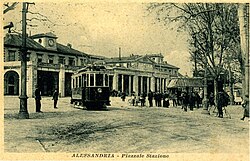
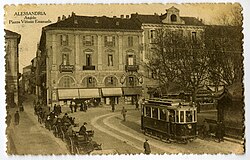
Between 1913 and 1952, an urban tram network was active, managed by the Anonymous Electricity Company Alessandrina (SAEA), then replaced by a philviary network, in turn suppressed in 1974.
Administration
Twinning · Other administrative informationExplore this chapter
Twinning
Alessandria is twinned with:
 Argenteuil, since 1960
 Jericho, since 2004
 Hradec Králové, since 1961
 Karlovac, since 1963
 Rosary since 1988
 Alba Iulia, since 2008
 Syracuse, since 2016[85]
Other administrative information
From 1859 to 1927 Alessandria was the capital of the district, as well as two commissions (schemely one intra mural and the other extra wall).
Sport
Soccer · Cycling · American FootballExplore this chapter
Soccer
Alessandria was one of the first cities to see the birth of football teams already in the late 19th century. The biggest football team in the city isU.S. Alessandria, born in 1912. She plays her home matches at the Giuseppe Moccagatta Stadium, in Spalto Rovereto. The team is in Excellence,[86] but it has an honorable past: among other things, he took the victory of the champion in 1927-1928 and participated, in 1929-1930, to the first Serie A championship, reaching sixth.
The other football club in town is theA.S.D. Alessandria Lions 2014 which militates in Third Category.
Alessandria is also home to a female football company, the A.C.F. Alessandria, which has mixed numerous seasons in Serie A2 and Serie B, both, at different times, second level of the Italian championship. In the city in 1933, a female team was formed, but the players were joined by only one man for the role of goalkeeper.[87]
From that group of footballers, to which it was prevented from continuing the football activity in November 1933, Amelia Piccinini went out, who became one of the first Italian athletes primatiste of pentathlon.[88]
Cycling
The city has a great cycling tradition: the first speedped was brought to Italy just to Alessandria by the brewer Carlo Michel, coming from the Paris International Exhibition of 1867. In 1876 the number of fans to the new means of locomotion had so grown to recommend the establishment of a Velocipedistic Society then C.V.A. (Alessandrino Velocipeditious Circle). The Grand Prix City of Venice was organized Alessandria and numerous races on track.
The new track with raised curves was built in 1890 at Porta Savona. Following the regulating plan of the early twentieth century, the track was eliminated. However, he remained in the entire neighborhood, the name "Pista".
Advertisement Alessandria great champions such as Costante Girardengo, Fausto Coppi, Giancarlo Martini and Giorgio Zancanaro. For six times Alessandria was the seat of arrival of the Giro d'Italia: the first in 1929, the last in 1984. In 1956 and 1967 the first stage of the "pink race" arrived. In three other editions, in 1979, in 2006 and 2026, Alessandria hosted the Giro as a starting place of stage.
In 2024, the city and the area of Battle of Marengo were first crossed by the Tour de France, in the Piacenza-Turin stage.
Carpet of the Giro d'Italia with arrival in Alessandria
- 1929 13th stage Parma-Alessandria, won by Mario Bianchi
- 1956 1st stage Milan-Alessandria, won by Pierino Baffi
- 1964 18th stage Santa Margherita Ligure-Alessandria, won by Bruno Mealli
- 1967 1st stage Treviglio-Alessandria, won by Giorgio Zancanaro
- 1968 6th stage Sanremo-Alessandria, won by José Antonio Momeñe
- 1984 14th stage Lerici-Alessandria, won by Sergio Santimaria
American Football
The first training in 1983 was that of the Saint George Knights. The name was later changed to Knights; and finally since 2001 the name is that of Centurions Alessandria. The team played in Serie B and the CIF9 championship, reaching the playoffs in 2012. In 2013, with the ceased activity of Centurions, American football remains in the city of Alessandria with the name of Bears. The team trains in the municipal field of Castelceriolo.
Basketball
Delta Basket 92, a women's basketball team, participated in the Eurocoppa in 2002, thus becoming the first team of Alexandria to play a high-level European competition. The history of the company ended in 2004, with failure. In the late 1970s, male basketball had also experienced some important experiences with the A2 Series of Superga Alessandria (1978) coached by Massimo Mangano. At the time there was a proper palasport in Alexandria, and the team should have "played away" at least 3 or more seasons (waiting approval and then construction of the sports hall). The new Taliercio sports centre in Mestre was also visited, as well as the team and the very strong youth sector, the numerous audience to follow and the other advantages of that training mestrine, which instead had just been relegated to B after a shootout, therefore the Alexandrian company opted for fusion with this company, transferring the team and the rights to participation in the Serie A2 championship at Basket Mestre. The major alessandrina cestistic reality plays in the DNB championship, the fourth level of national basketball.
Volleyball
Alexandria also has its own volleyball tradition; it hosted the first internal race of the Men's National, on July 16, 1948 and the absolute debut of the Women's National, on April 7, 1951. For several years the city was the headquarters of the National Volleyball League Serie B. In the early 1950s, the Volleyball Stock Exchange has repeatedly led to the conquest of the male championship. The women's team, Saves, too, missed the shield in the early 1960s. It is from Alessandria Matteo Martino, volleyball player of the Italian national team.
Rugby
Alessandria is the seat of APD Rugby Alessandria,[89] Italian rugby club at 15. Founded in 1946 as Audace-Mino and renamed in 1971 Afterwork Railroad Rugby Alessandria, had its period of greatest prominence in the 1950s when it reached Serie A. After various vicissitudes in the lower divisions, it played in the Piedmont group of Serie C. It played its internal matches in the Dopolavoro Ferroviario field, and its social color was grey.
Automobilee
At the beginning of the 20th century, at the dawns of automobilism, the city of Alessandria was among the first to host a speed race for cars: the so-called "Circuito di Alessandria" was disputed continuously between 1924 and 1930, when the track winded along a road path of about 32 kilometers, and sporadicly between 1931 and 1950, on different and decidedly shorter routes, of total length from 3 to 8 kilometers. In 1928, during qualifying tests at the race, following a road exit behind the wheel of his Bugatti lost his life, along with mechanic and co-pilot Gianni Lasagne, Turinese champion Pietro Bordino, one of the strongest drivers of the time, known to the public as "Diavolo Rosso". In his memory, the race assumed the name "Circuito Pietro Bordino" starting from the next edition. In 1983 the then newborn age car enthusiasts club was dedicated to the memory of the unfortunate driver.
Advertisement Alessandria The Scuderia Forti Corse, founded by Guido Forti and Paolo Guerci in the 1977. Long operating in minor formulas, with good results especially between half years 80 and the first 90, Forti Corse is known above all for the participation, with little luck, at two editions of the World Formula Championship 1, in 1995 and in 1996.
Notes
Explore this chapter
- ^ Giorgio Abonante is the mayor of Alessandria, up dialessandria.it, Union Pubbli 3, 27 June 2022.
- ^ Municipality of Alessandria : Municipal Administration and Mayor - City of Alessandria and city, Alessandria, Piemonte, up www.comune-italia.it. URL consulted on 4 August 2026.
- ^ to b Monthly demographic balance for the year 2026 (provisional data), up demo.istat.it, ISTAT.
- ^ Seismic classification (XLS), up risks.protezionecivile.gov.it.
- ^ Table of degrees/day of Italian Municipalities grouped by Region and Province (PDF), in Law 26 August 1993, n. 412, annex A, National Agency for New Technologies, Energy and Sustainable Economic Development, 1 March 2011, p. 151. URL consulted on 25 April 2012 (archived fromoriginal url on 1 January 2017).
- ^ Luciano Canepari, Alessandria, in Il DiPI: dictionary of Italian pronunciation, Bologna, Zanichelli, 1999, ISBN 88-08-09344-1.
- ^ Alessandria in Piemontese - Italian-Piemontese Dictionary | Glosbe, up it.glosbe.com. Retrieved 3 March 2021.
- ^ Sergio Garuzzo, Poets in Piedmont of the Province of Alessandria, Turin, Ca dë Studi Piemontèis, 2011.
- ^ Alessandria in Genoese | DEIZE: dictionary English-Japanese, up Ligurian linguistic patrimònio. Retrieved 30 July 2025.
- ^ Common piemontesis per surface, up all'italia.it.
- ^ all'italia.it, https://www.tuttitalia.it/piemonte/46-comuni/popolazione/ Missing title for url
url(help). - ^ Renzo Penna and Giancarlo Patrucco, Alessandria: 850 years of History, "Città Futura" Association.
- ^ "This is how the Alexandrians defeated Barbarossa" - La Stampa.
- ^ Giovanni Maconi, History of the Hospital dei Santi Antonio e Biagio di Alessandria, Le Mani, 2003, p. 18.
- ^ Fabio Romanoni, "And the people of France untouched, treated with art where the net is tense". The Battle of the Alessandria of 1391: the triumph of Iacopo from the Verme., in Historical and Bibliographic Bulletin Subalpino, vol. 120, 2022, pp. 243-264. Retrieved 2 February 2023 (archived fromoriginal url on 5 April 2023).
- ^ Tarozzi, p. 147.
- ^ {https://www.fondazionecralessandria.it/il-messaggio-del-presidente-della-repubblica-apre-le-celebrazioni-del-bicentenario-dei-moti-del-1821/}
- ^ Memorial of the victims of World War II Allies bombing, up victimsbombardamento.alessandria.it.
- ^ I remember the useless massacre from heaven: a memorial with the names of the 559 victims of bombing, up lastampa.it.
- ^ Alessandria recalls the 559 Victims of World War II Allied bombing, up todaycronaca.it.
- ^ radiogold.it, https://radiogold.it/news-alessandria/392508-mattarella-alessandria-diretta-radio-gold-video-interviste/ Missing title for url
url(help). - ^ dailypiemontese.it, https://www.quotidianopiemontese.it/2020/03/07/la-bozza-del-decreto-che-dall8-marzo-al-3-aprile-2020-rende-zona-rossa-per-il-coronavirus-le-province-di-asti-e-alessandria-e-la-lombardia/ Missing title for url
url(help). - ^ https://www.jewishvirtuallibrary.org/alessandria
- ^ Alessandria, decree 1941-03-06 DCG, recognition of coat of arms and gonfalone, up Heraldic office - Municipal files, Central State Archives.
- ^ Draft of the coat of arms of the Municipality of Alessandria, up Collection of drawings from the coat of arms of municipalities and cities, Central State Archives. Retrieved 16 October 2024.
- ^ Piedmontese civic coat of arms, vol. I, Regional Council of Piemonte, 2016, p. 9, ISBN 978-88-96074-98-5.
- ^ The history of the crest Alessandria, up alessandrialisondria.altervista.org, 27 October 2014. Retrieved 3 July 2026.
- ^ Roberto Livraghi, p. 11.
- ^ Umberto de Ferrari di Brignano, Napoleon gives a coat of arms Alessandria, in Magazine of History, Art and Archaeology for the Province of Alessandria, year XLIII, Alessandria, 1934, pp. 334–351.
- ^ without source
- ^ Special mention for Alessandria all'Acces City Award 2017, up ma.corriereal.info, 30 November 2016. Retrieved 3 December 2020.
- ^ Historical buildings and houses - page 2, up common.alessandria.it, Municipality of Alessandria. Retrieved 4 January 2013.
- ^ The demolition has been finalized with the signing of a protocol of understanding between the Presidency of the Council of Ministers - Department of Civil Protection, the District Authority of the Po River, the Region Piemonte, the Province of Alessandria, the Municipality of Alessandria, the Interregional Agency for the Po River - The agreement protocol on the Civil Protection website (PDF) (archived fromoriginal url on 15 December 2013)..
- ^ Giulio Ieni, II.
- ^ Assessorato Cultura Alessandria, p. 17.
- ^ Claudio Zarri, The church of Saints Alexander and Charles. 1742-1992, Alessandria, Viscardi, 1992. The crypt, now inaccessible, opens under the main altar. With a curvilinear profile, it is stripped of ancient inscriptions and the remains of the Barnabite Fathers who were once buried there, due to the desecrations and tampering suffered in the past.
- ^ Parish website Bacheca
- ^
 Meeting under the platano of Napoleon, 7 Gold, up YouTube, Google LLC. Retrieved 22 August 2013.
- ^ Data taken from:
- Resident population of the municipalities. Censuses from 1861 to 1991 (PDF), up ebiblio.istat.it, ISTAT.
- Resident population - Time series, up exploredati.istat.it.
Please note: 2021 data refers to permanent census data as of December 31 of that year.
- ^ Population resident by nationality or country of birth, up demo.istat.it. Retrieved 13 July 2025.
- ^ Synagogue Committee of Alexandria & ISRAL - Via dei Guasco 49 - 15100 Alessandria, The Synagogue Alessandria, up isral.it. Retrieved 14 October 2014 (archived fromoriginal url on 16 May 2015).
- ^ Jewish Community of Turin- - Piazzetta Primo Levi, 12, ALESSANDRIA, up torinoebraica.it. Retrieved 14 October 2014.
- ^ Orthodox Parish of St. Nicholas in Alessandria, Our parish, up alessandria-Orthodox.prihod.ru, ORTHODOX PARISHES OF THE MOSCOW PATRIARCHATE in ITALY, Alessandria, via Volturno 18, 2008. Retrieved 14 October 2014.
- ^ Parohia Sfântul Ierarh Varlaam al Moldovei / Parish of Santo Gerarca Barlaamo di Moldavia Alessandria, Biserica: Piazzeta A.Bini nr.5, 15100, Alessandria PROTOPOPIATUL PIEMONTE II, SUD, up episcopy-italiei.it, Preot Mihai Oancea, 30 August 2014. Retrieved 14 October 2014.
- ^ Work for the Evangelical Churches Metodiste in Italy- Alessandria, Church of Corso Borsalino 24 - Alessandria, up Methodists.it. Retrieved 14 October 2014 (archived fromoriginal url on 4 March 2014).
- ^ Giuseppe De Meo, Salt granel. A century of history of the Christian Church Adventist of the 7th Day in Italy (1864-1964). Claudiana, Turin. 1980
- ^ Adventist Church of Sabatic Rest, Italy: Aristodemo Amazio, up srac.de. Retrieved 14 October 2014 (archived fromoriginal url on 18 October 2014).
- ^ Church of Jesus Christ of Saints of the Last Days (Missionaries Mormon), History of the Palo di Alessandria, up palodialessandria.org. Retrieved 14 October 2014 (archived fromoriginal url on 21 October 2014).
- ^ Assemblies of God in Italy, Where we are: Alessandria, up assemblies.org. Retrieved 14 October 2014 (archived fromoriginal url on 7 April 2014).
- ^ Christian Congregation of Jehovah's Witnesses, Adunances in Alessandria, up jw.org, 2014. Retrieved 14 October 2014 (archived fromoriginal url on 16 August 2014).
- ^ Evangelici.net, Evangelical Christian Church of the Brothers Alessandria, up evangelici.net. Retrieved 14 October 2014 (archived fromoriginal url on 22 March 2015).
- ^ Church of Christ Alessandria, To the Christianity of Origins, up church-di-cristo.wix.com. Retrieved 14 October 2014.
- ^ Sufi.it, _, up sufi.it. Retrieved 14 October 2014.
- ^ Buddhadharma - Alessandria, Presentation, up buddhadharmacenter.org, Buddha Dharma Center Alessandria – Spiritual Center, 2014. Retrieved 08:13, 10 Dec 2013.
- ^ Coordination Italian Magazines of Culture, Opinions Bahá'í, up cric-rivisteculturali.it, 13 December 2013. Retrieved 13 December 2013 (archived fromoriginal url on 18 October 2014).
- ^ Artists Bahá'í of Italy, Arturo Figini, in http://www.artistibahaiditalia.it/tipo2.php?id=32&cat=ArteFigurativa, 14 October 2014.
- ^ Anthroposophy: Pedagogical Group Steineriano Alessandria, The Pedagogical Group Steineriano of Alessandria is founded and proposed, up steineralessandria.it. Retrieved 20 October 2014 (archived fromoriginal url on 4 March 2016).
- ^ Giovanni Maconi, History of the Hospital dei Santi Antonio e Biagio di Alessandria (PDF), series ISRAL. Necklace of Contemporary History, Recco - Genoa, Le Mani, 2012, p. 78. Retrieved 28 October 2019 (archived fromoriginal url on 31 August 2021).
- ^ tg24.sky.it, https://tg24.sky.it/salute-e-benessere/2025/07/15/ospedali-poli-eccellenza-sanita-dove-quali-sono Missing title for url
url(help). - ^ Giovanni Maconi, History of the Hospital dei Santi Antonio e Biagio di Alessandria (PDF), Recco - Genoa, Le Mani, 2012, p. 204. Retrieved 28 October 2019 (archived fromoriginal url on 31 August 2021).
- ^ to b Antiquarium Forum Fulvii, up museumsonline.info.
- ^ Teatro delle Scienze - Regional Museum of Natural Sciences, up mrsntorino.it. URL consulted on 6 April 2017.
- ^ Art Collection of the Fondazione Cassa di Risparmio di Alessandria, up museumsonline.info.
- ^ Museum of the River, up museumsonline.info.
- ^ Sale of Municipal Art, up museumsonline.info.
- ^ Municipal Botanical Garden “Dina Bellotti”, up common.alessandria.it.
- ^ the legend of the bear, up museumgrigio.it.
- ^ THE GALLER, up soavearte.it.
- ^ [Angela Balistreri, "Antonino Palminteri a gentleman artist in the 800's opera landscape", Partanna, Edivideo Productions, 2010, p. 98]
- ^ radiogold.it, https://radiogold.it/news-alessandria/417194-teatro-comunale-alessandria-avvio-stagione-autunno-2026/ Missing title for url
url(help). - ^ [Angela Balistreri, "Antonino Palminteri a gentleman artist in the 800's opera landscape", Partanna, Edivideo Productions, 2010, p. 91]
- ^ Data sheet of products in the municipal denomination of Alessandria (archived fromoriginal url on 27 May 2009).
- ^ Copy filed, up biennpoesia.it. Retrieved 2 March 2013 (archived fromoriginal url on 28 March 2013).
- ^ Umberto Eco, Baudolino, Bompiani editore, 2000.
- ^ These denominations derive from the names of the first places which, in a demic union, founded the City: Castellazzo Bormida (Gamondio), Marenghum (Marengo) e Bergolium (Bergoglio). Roboretum (Rovereto) was later added to the three places mentioned, as well as Solero (Solero), Forum (Villa del Foro), Oviglio (Oviglio) e Quargnento (Quargnento)
- ^ Territorial dividend Municipality of Alessandria (PDF), up common.alessandria.it. Retrieved 16 June 2019.
- ^ Residential population divided by constituency (PDF), up common.alessandria.it. Retrieved 16 June 2019.
- ^ Residential population divided into suburbs and city districts (PDF), up common.alessandria.it. Retrieved 16 June 2019.
- ^ The subdivision is that historical identity and is still reported. However, it does not have administrative value.
- ^ Neighborhood also known as Casemette.
- ^ Alessandrin economy in recovery, but only 20% of companies will hire, up The Press, 1 June 2021. Retrieved 13 April 2024 (filed on 26 February 2024).
- ^ Cartographic atlas of craftsmanship, vol. 1, Rome, A.C.I., 1985, p. 6.
- ^ Traced of the ancient Roman centuration. See Centurial reticle
- ^ (EN) ECCAIRS 4.2.8 Data Definition Standard (PDF), up www2.icao.int, International Civil Aviation Organization, 17 September 2010 (archived fromoriginal url on 17 October 2013).
- ^ Alessandria Syracuse "will lie", up LaStampa.it. Retrieved 7 September 2017.
- ^ Card Alessandria, up allcampo.it.
- ^ The Little, up newspaperdelpiemonte.it, 19 September 1953, p. 5.
- ^ From the Journal of sport on Saturday-Sunday 28-29 August 1937 in the article Women's sports - athlete of the Year XV - Amelia Piccinini - From footballer to Italian champion of pentathlon. Microfilmed sports newspaper consulted at the central municipal library of Milan.
- ^ Associazione Polisporntistica Rugby Alessandria
Bibliography
Explore this chapter
- AA. VV., Alessandria is a comfortable armchair: sit and fall asleep?!, Ugo Boccassi - Cesarino Fissore partner publishers, Alessandria, 1997
- Piero Angiolini, Compendium of municipal history from the origins to our times, Tipografia Ferrari Ocella & C. Alessandria, 1956.
- Alberto Ballerino, edited by, 80 years of Alexandrian history - 1925-2005, Il Piccolo, Alessandria, 2005
- Alberto Ballerino, Eighty years of "Little" - A newspaper and its city, Economic Review of the Province of Alessandria, Alessandria, 2/2005
- Nicola Basile, My city, Ferrari-Occella & C., II edition, Alessandria, 1959
- Lucio Bassi, Ghilini. The palace and its history, Alessandria, Province of Alessandria, 1989.
- Fausto Bima, History of Alessandrini, Ferrari typography - Occella, Alessandria, 1965
- Ugo Boccassi, Fantastic trip to a Alessandria that was, WR Editorial and Commercial, Alessandria, 1979
- Ugo Boccassi, The Giro d'Italia e Alessandria, New Alexandria, Alessandria, 2006
- Goffredo Casalis Geographical, historical, statistical, commercial dictionary of the states of S. M. the King of Sardinia, Volume 1, 1833
- Tiziano Fratus, Terre di Grandi Alberi. Trees in North-West, Edizioni Nerosubianco, Cuneo, 2012
- Francesco Gasparolo, Monument to Alexandrina. Alessandrine Cards of the State Archives of Milan edited at the expense of the Municipality of Alessandria, Cromo-Tipografico-Librario Establishment, G. M. Piccone company. Alessandria, 1903.
- Girolamo Ghilini, Annals of Alessandria, Milan, Gioseffo Marelli, 1666.
- Carlo Gilardenghi, Canton of rus and surroundings, Le Mani - Isral, Recco, 2004
- Giulio Ieni, The demolition of the ancient cathedral, up diocesealessandria.it, Diocese of Alessandria, 1988. Retrieved 1 March 2015 (archived fromoriginal url on 9 February 2015).
- Aldino Leoni, The child of the Citadel, Joker, Novi Ligure, 2013 (with attached cd Citizen)
- Roberto Livraghi (edited by), The beginnings of the Alexandrian church, Alessandria, Diocese of Alessandria, 2011.
- Roberto Livraghi, Alessandria, Electa, Milan, 1997
- Sandro Locardi, La Sghiarola, Maxmi Editions - Dieffe, Castelnuovo Scrivia, 1989
- Antonella Perin, Carla Solarino, Churches, convents and pious places of the city of Alessandria/chede for the knowledge of buildings censused in Catasto sabaudo, (for the Civic Library Series of Alessandria - Studies and research), Edizioni dell'Orso, 2007
- Aldo Perosino, The Jews of Alessandria - a 500-year history, Le Mani - Isral, Recco, 2002
- (THE) Georg Heinrich Pertz (ed.), Reconciliatio Cæsareæ, in Germaniæ Historica Monument, II, Hannover, 1837. Retrieved 16 June 2016 (archived fromoriginal url on 12 August 2016).
- Geo Pistarino, The double foundation of Alessandria (1168, 1183) (PDF), in History magazine Art Archaeology for the provinces of Alessandria and Asti, single volume, Alessandria, Society of History Art Archeology - Accademia degli Immobili, 1997, pp. 5-36. Retrieved 11 June 2016.
- Manrico Punzo, Minimum history of the foundation Alessandria, in "Nuova Alexandria" Year III N°10, Ugo Boccassi Editore, Alessandria, 1997
- Giovanni Sisto, Alessandria - A different province, Sagep Editrice, Genoa, 1990
- Gustavo Strafforello, La Patria - Geography of Italy - Province of Alessandria, Unione Tipografico-Editrice, Turin, 1890
- Rino Tacchella, Alexandrian artists between the 19th and 20th centuries. Bio Dictionary - bibliographical, Edizioni dell'Orso, Alessandria, 1992
- Andrea Tafuri, The musical life of Alessandria. Ferrari-Ocella & C. In Alessandria, 1968
- Francesco Trisoglio, Extraordinary in the Ordinary, in "The Province of Alessandria", pp. 43–44, Publisher Province of Alessandria, Alessandria, January 1993
- Nicola Vassallo, The territory between Tanaro and Bormida in the archive documents, State Archives of Alessandria, Ugo Boccassi Editore, 1997.
- Claudio Zarri, Alessandria to discover, WR Editorial and Commercial, Alessandria, 1986
- Paolo Zoccola, edited by, Alexandrian encyclopedia Vol. I, The Characters, Soged - The Little One, Alessandria, 1990
- Piercarlo Fabbio, Piero Teseo Sassi. The incubator the deposit and purgatory. Daily life at the time of foundation and Barbarossa. M F Studios Publisher. October 2018
- Piercarlo Fabbio, Piero Teseo Sassi. Alessandria di Marengo. Daily life at the time of Napoleon Bonaparte.
Where to stay · Alessandria
Find stays on Booking.comStories, places and people
More about Alessandria and the surrounding area
Follow a thread of history and see where it leads.
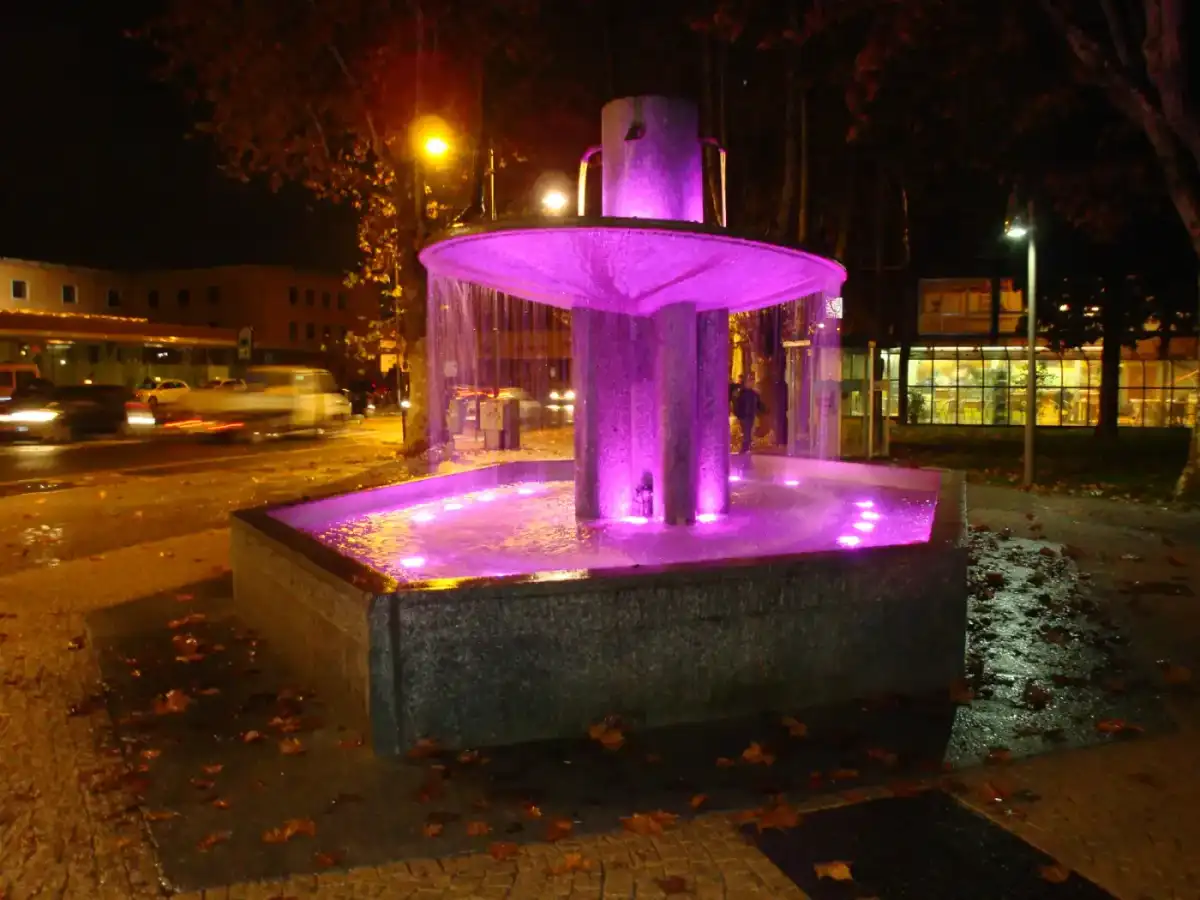 Tony Frisina di Wikipedia in italiano · Public domain
History of Alessandria
The oldest traces found in the province bear witness to sporadic but very ancient human presences. The first settlements are mainly marked in the eastern centre area: at Castel Ceriolo there were several quaetical instruments of paleolithic tradition. With the Neolithic ancestors of the Alexandrians pass to agriculture and breeding, produce ceramics, tease and spin the fabrics and smooth the stone. The settlements develop on the roads of communication (fiumi and streets) and near the areas of supplying raw materials, wild and above all green Apennines that is exported throughout Europe. The Alexandrian territory is one of the first to be colonized: Casalnoceto, Brignano Frascata , Monperone in the province and above all in the area where today the Christ district is located in which at the end of the 21st century a burial and numerous liturgical instruments were found. In recent Neolithic, the area of Alessandria (Cascina Chiappona), is affected by a profound change affecting the entire western cisalpine area and the transalpine area, highlighting a common cultural identity (the "Chasseano") in the areas occupied today by Piemonte , Valle d'Aosta , South-East of France and Switzerland .
Read the story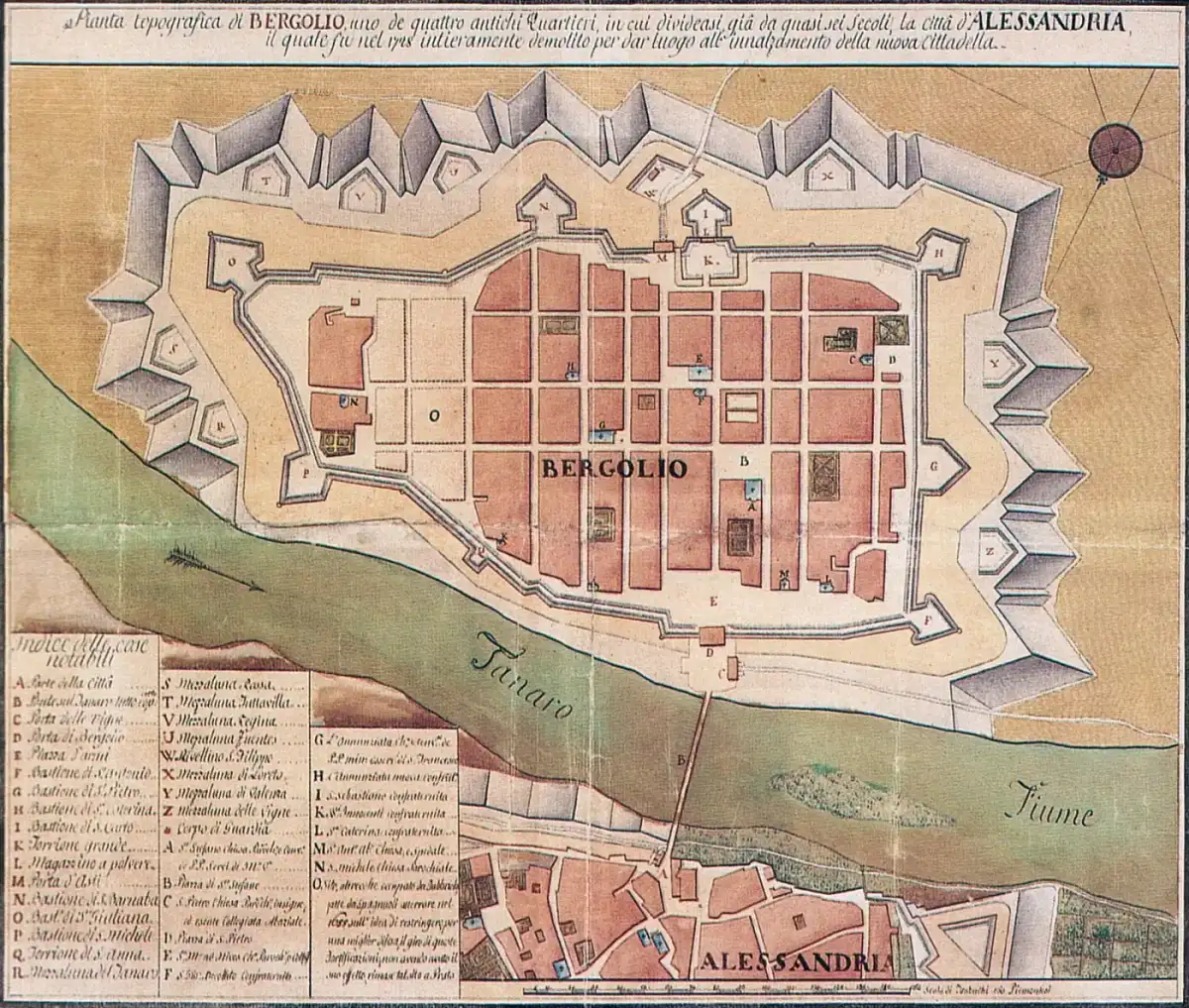 brigante mandrogno · Public domain
Bergoglio (Alessandria)
Bergoglio (also Bargolium , Bergolio or B Pride , Bergolium , Bergul , Burgulium ) was an urban settlement built on the left bank of Tanaro , located in front of Rovereto and the city of Alessandria all. Demolished during the 18th century, starting from 1728, to make camping the walls of the citadel, protected by walls and moats, defended by a small detached fortress called “la Pozzolana”, originally belonged to the Archdiocese of Milan. Bergoglio was one of the eight settlements that contributed to the foundation of the city of Alexandria in the second half of the 12th century.
Read the story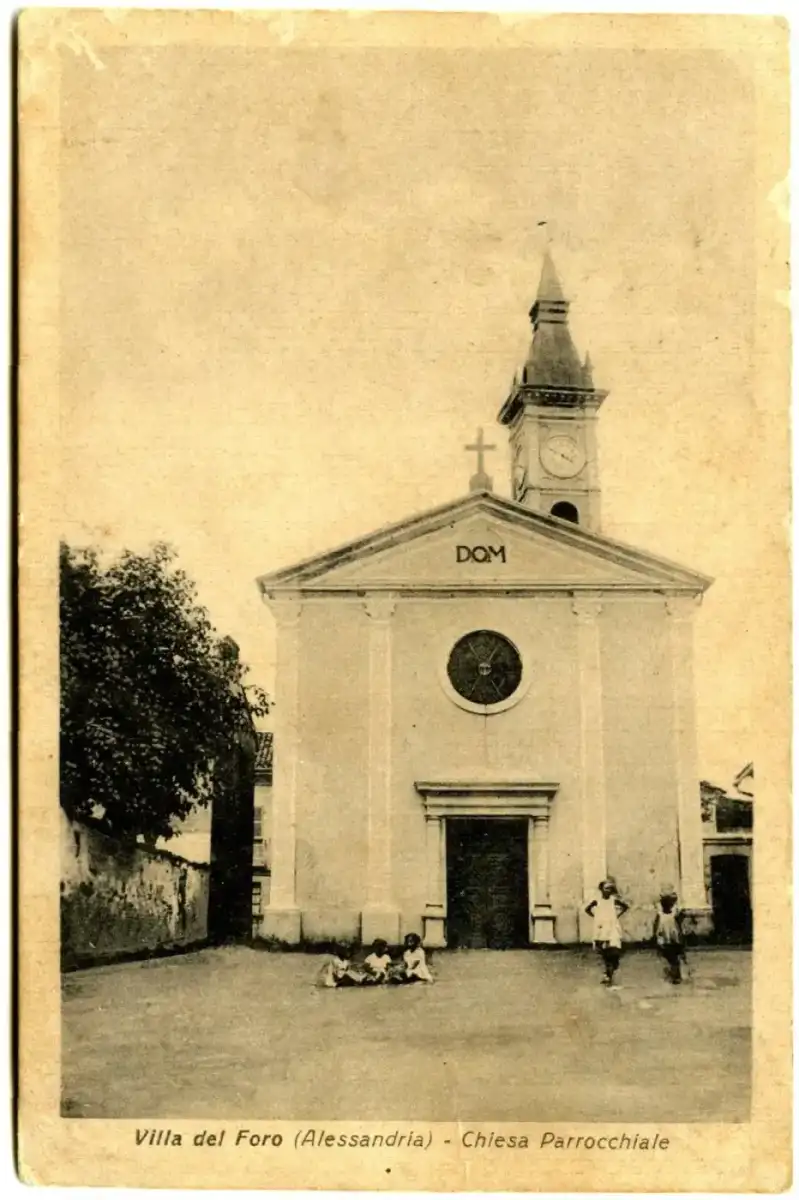 Ignoto. Caricato da Tony Frisina · Public domain
Villa del Foro
(Pliny the Elder thus recalls one of the main centers of the IX Regio Augustea)
Read the story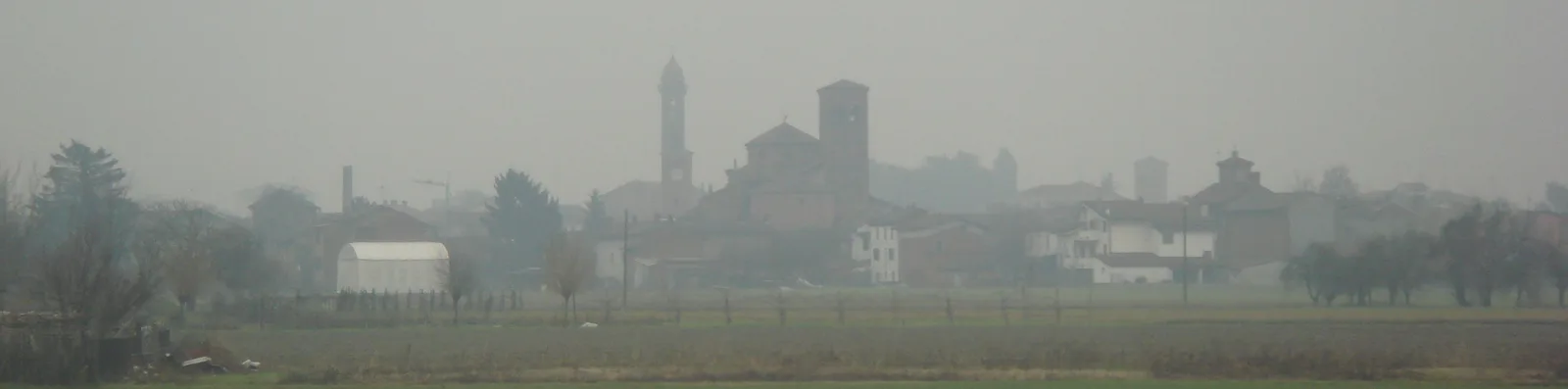 Pinello · CC0
Castellazzo Bormida
Castellazzo Bormida ( Ël Castlass an Bormia in Piedmont), formerly called Gamondio, is an Italian municipality of 4 505 inhabitants in the province of Alessandria , in Piemonte .
Read the story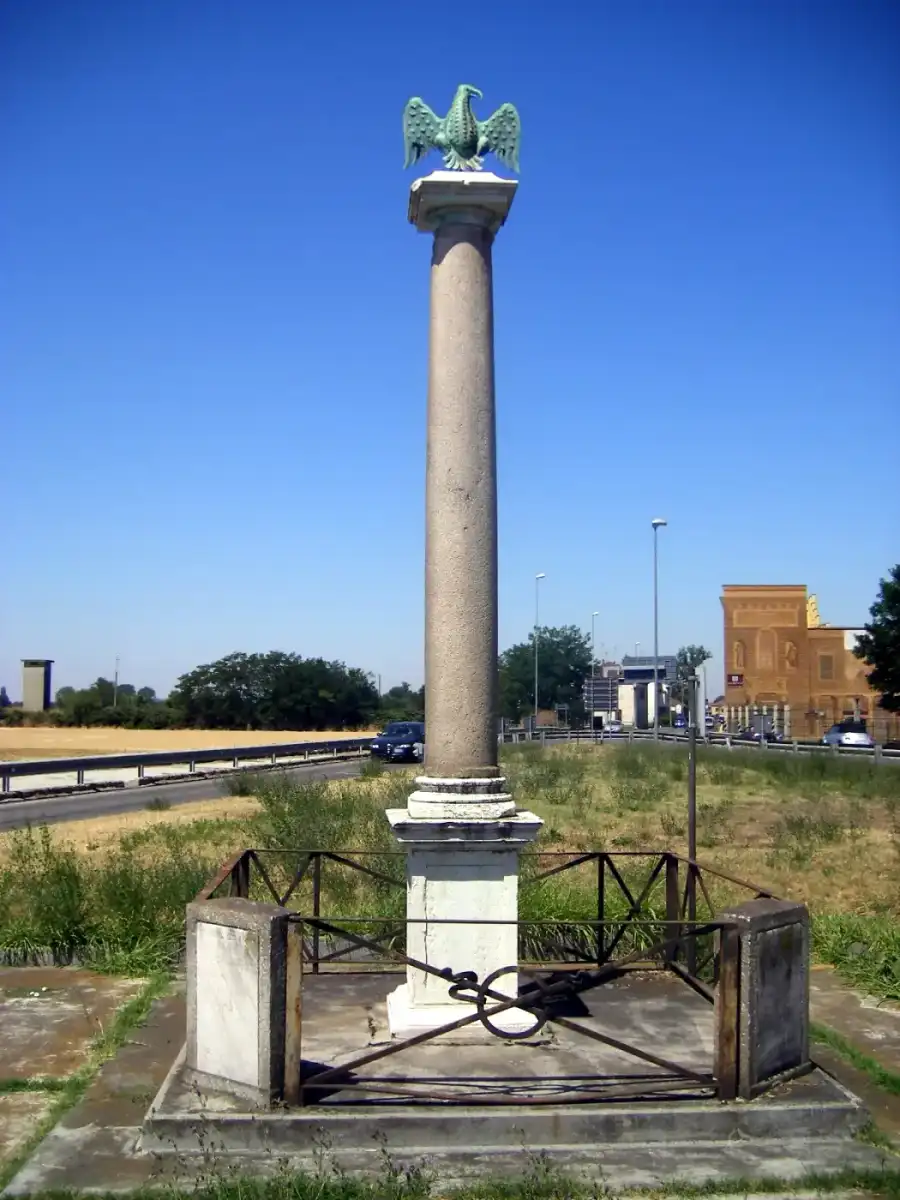 Szeder László · CC BY-SA 4.0
Spinetta Marengo
Spinetta Marengo (La Spinëta in Piedmont and Ra Spineuta in Alexandria) is a hamlet of 7 337 inhabitants of the town of Alessandria.
Read the story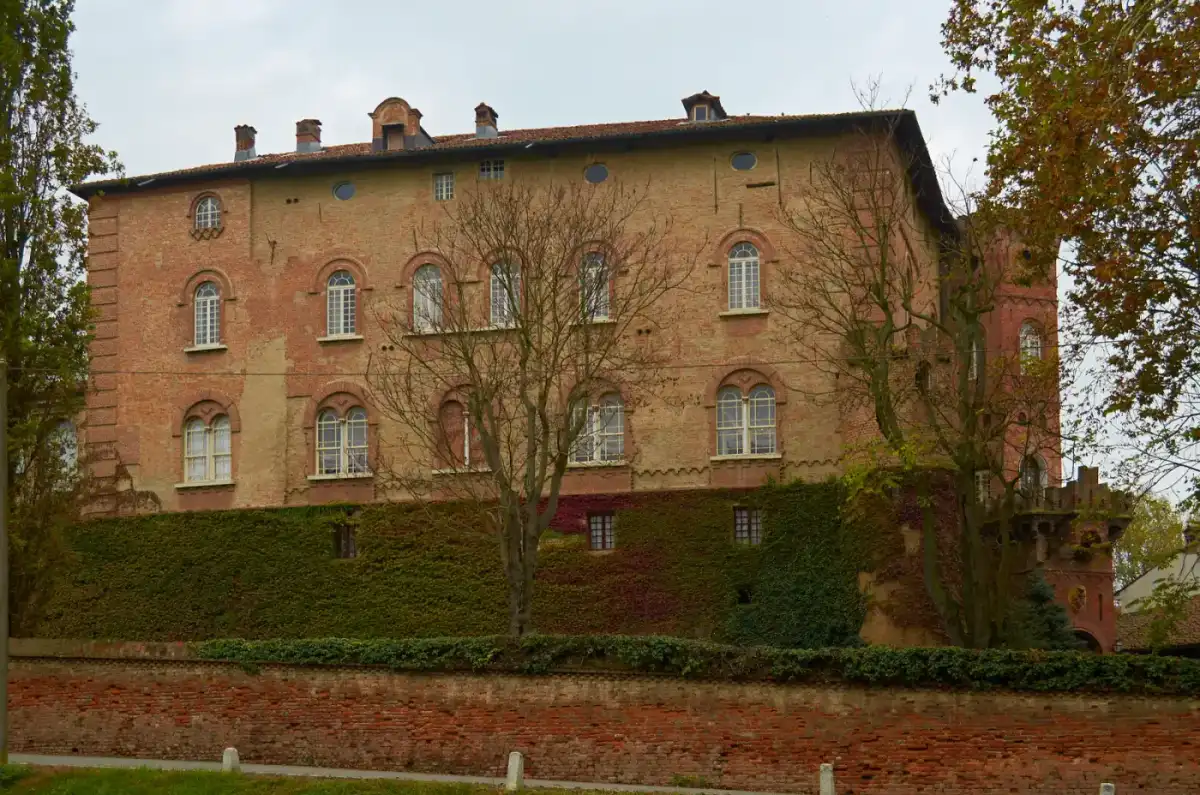 Terensky · CC BY 3.0
Oviglio
Oviglio (J'Ovij or J'Oij in Piedmont) is an Italian town of 1 232 inhabitants of the province of Alessandria in Piemonte .
Read the story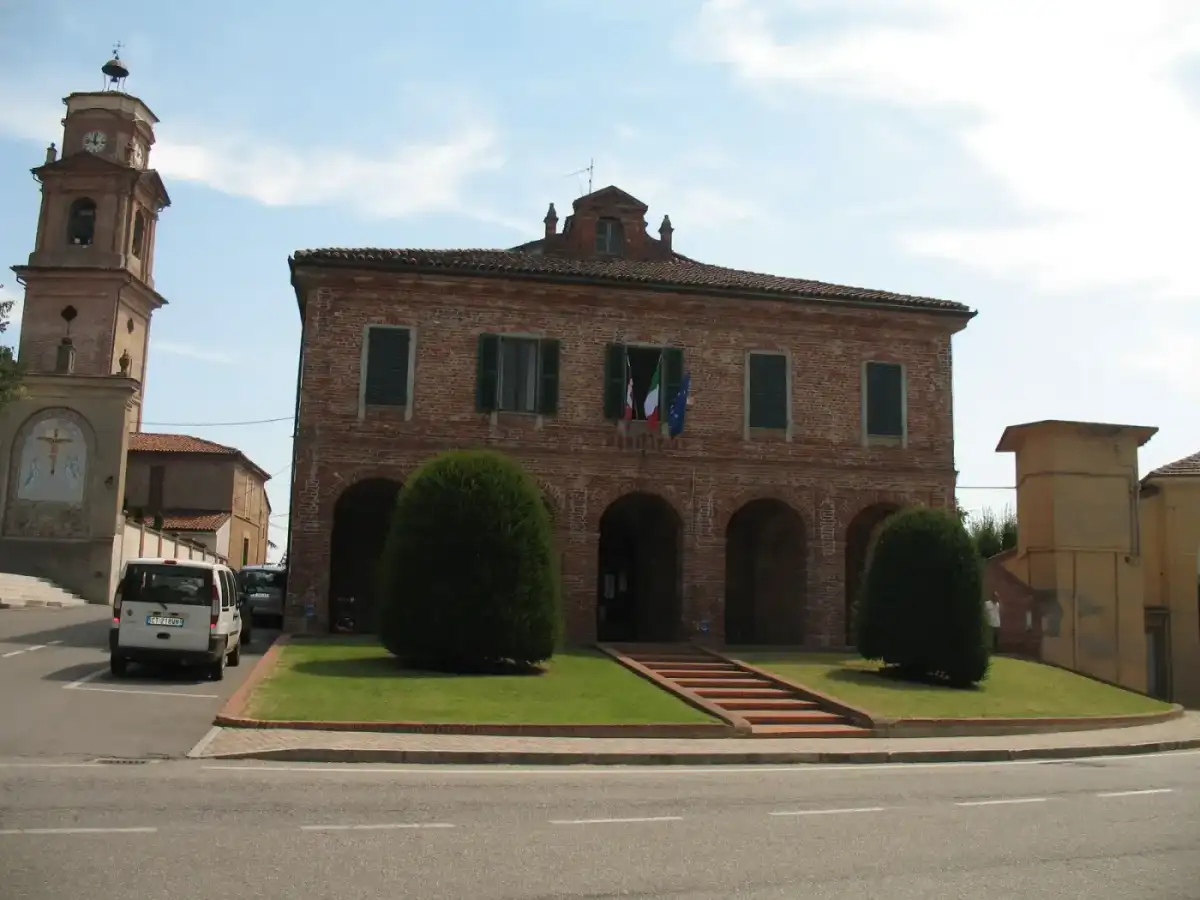 Twice25 · CC BY 3.0
Quargnento
Quargnento (Quar gnent in Piedmont) is an Italian municipality of 1 390 inhabitants of the province Alessandria , in Piemonte , located in the plain of Alessandria , on the edge of the hills of Lower Monferrato Casalese.
Read the story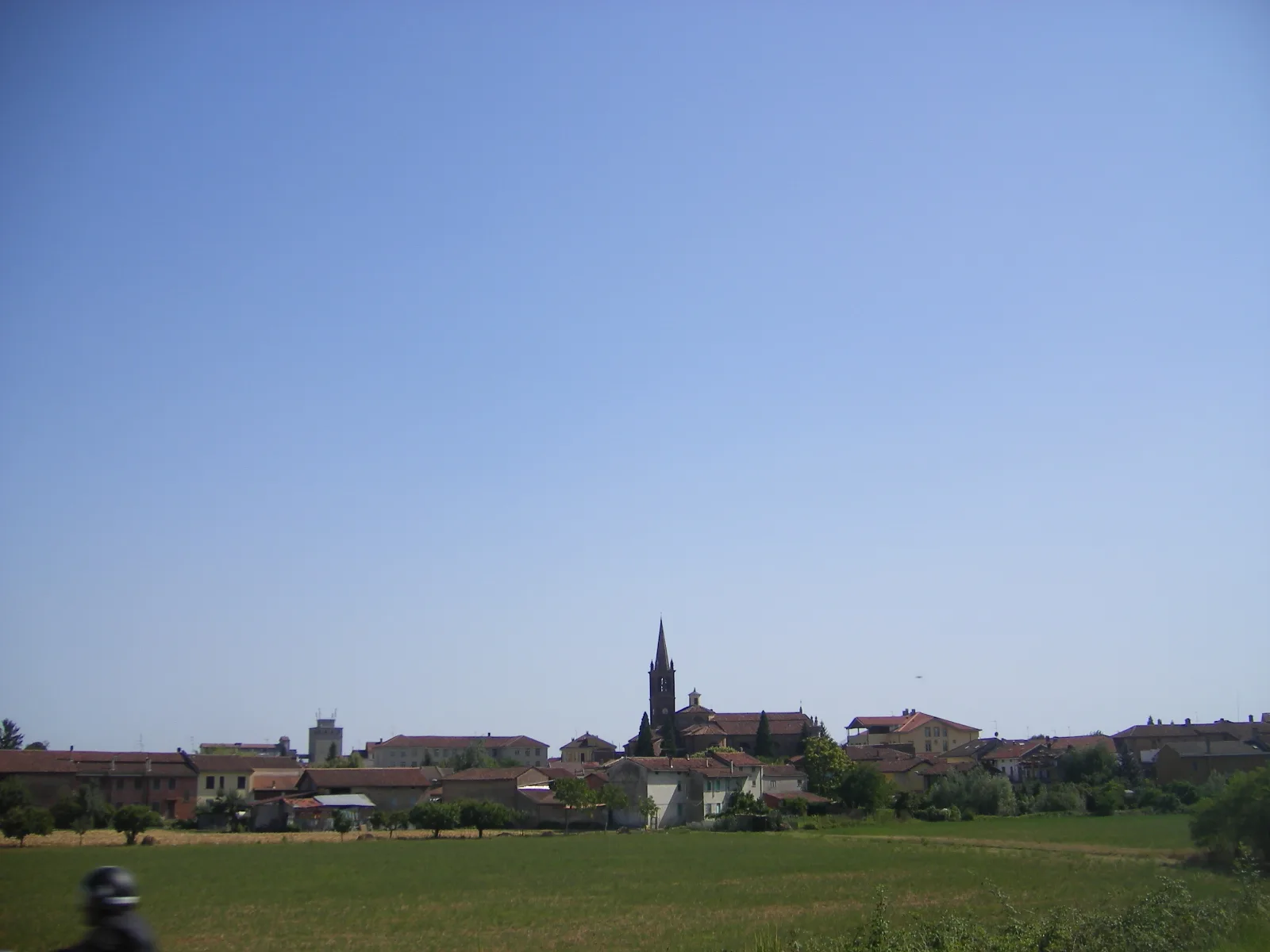 Szeder László · CC BY-SA 4.0
Solero (Italy)
Solero ( Soleri in Piedmont (Pronuncia Suleri ), Sulìare in local dialect) is an Italian municipality of 1 577 inhabitants of the province of Alessandria in Piemonte, located on the left bank of Tanaro . Its historical foundation dates back to the time of Roman domination.
Read the story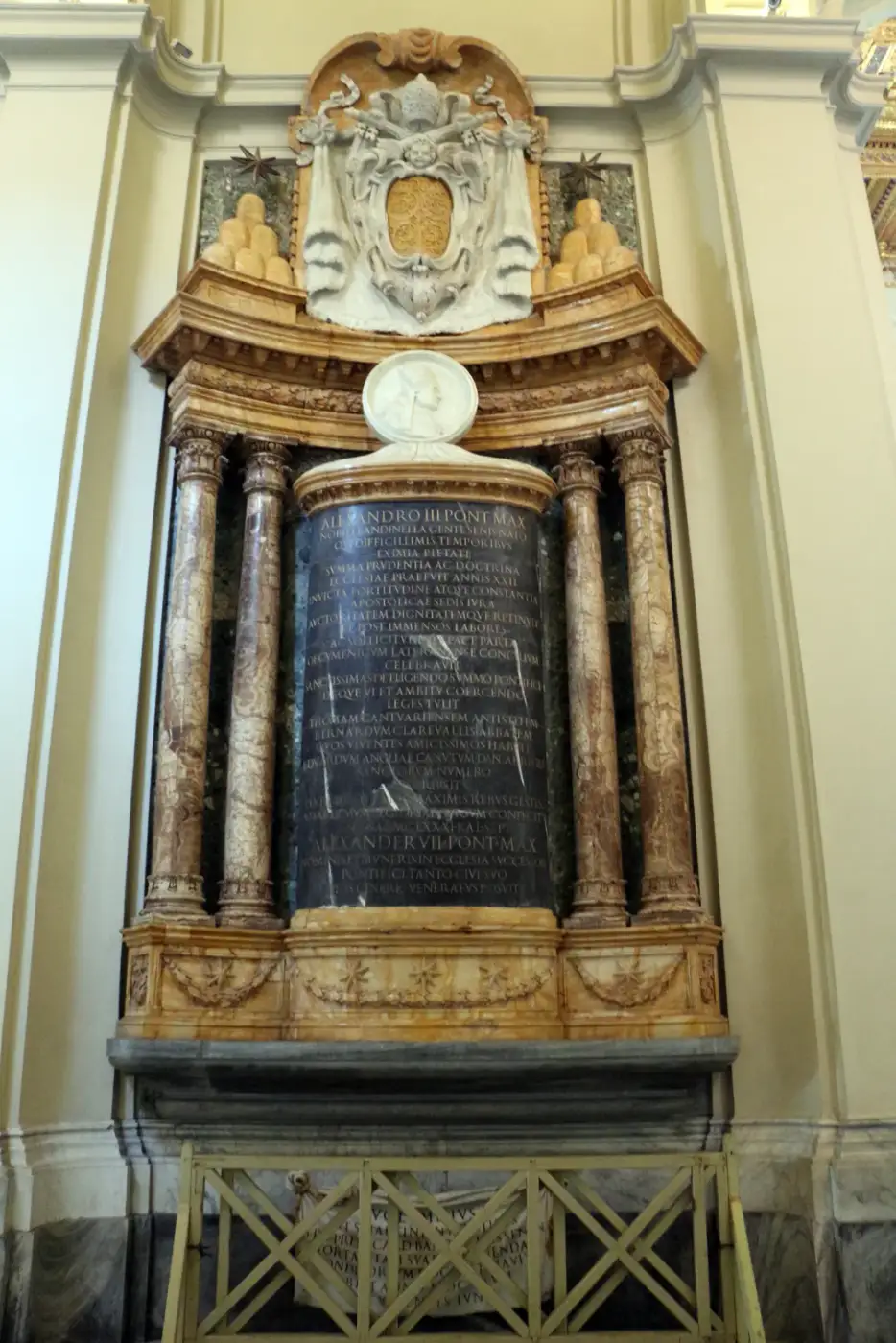 Domenico Guidi · CC BY 3.0
Pope Alexander III
Alessandro III, born Rolando Bandinelli (Sienna, about 1100 – Civita Castellana, 30 August 1181), was the 170th pope of the Catholic Church from 1159 to his death.
Read the story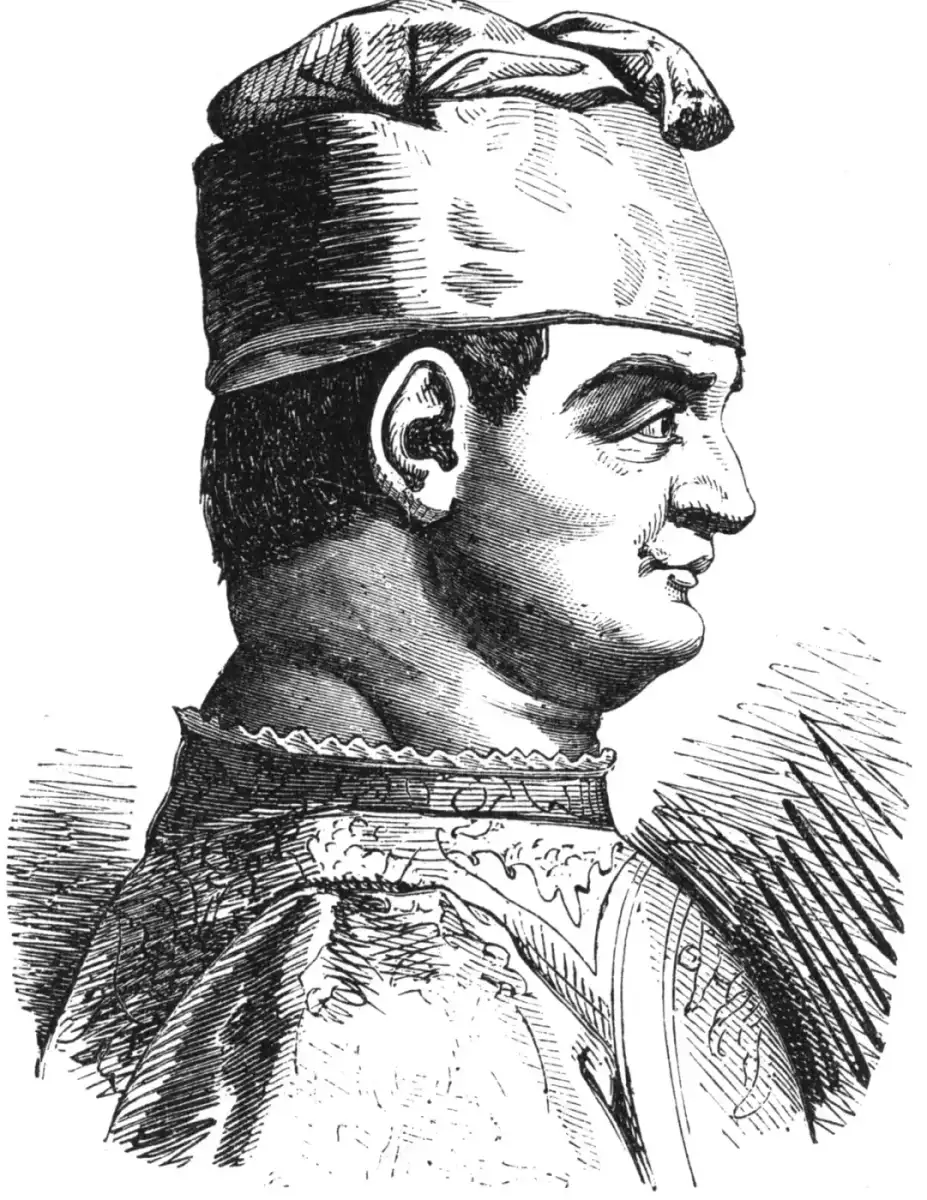 · Public domain
Alexandrian nobility
The Alexandrian nobility was a privileged social class of the city of Alessandria and its suburbs from medieval and communal times to Restoration . The nobility, composed of both families of the civic patriziato and feudal families, was for centuries linked to the Duchy of Milan and was gradually integrated into that Piedmont during the eighteenth century, after the passage of Alexandria to the Savoy in 1713. As part of the subalpine nobility, it was confluent since 1861 in the Italian nobility, since the proclamation of the Kingdom of Italy .
Read the story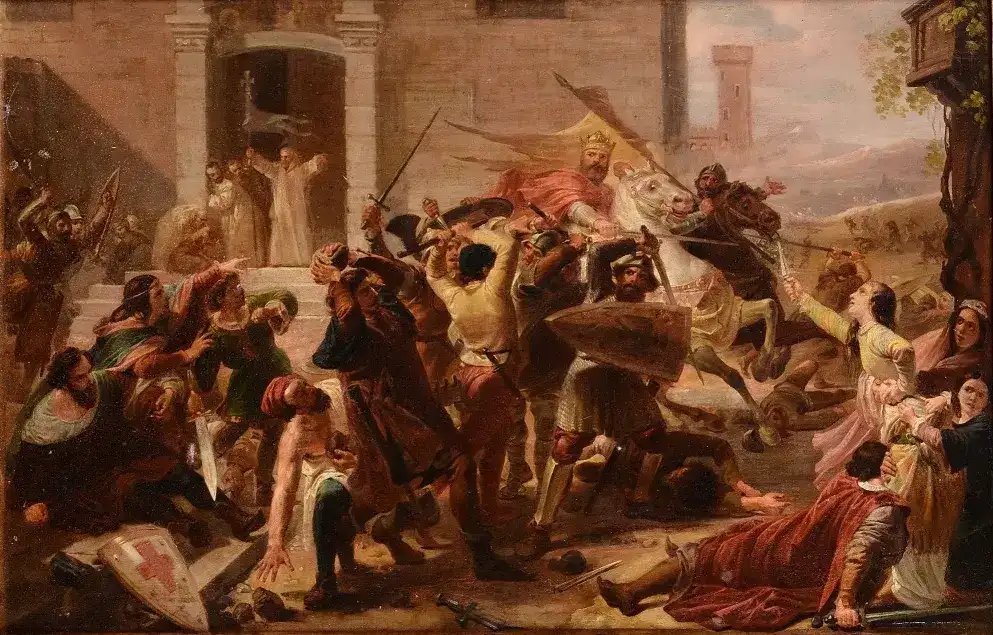 Carlo Arienti · Public domain
Siege of Alessandria (1175)
The Siege of Alessandria It began in 1174 as part of the Italian wars by Federico Barbarossa, who was stubborn to subdue the Italian municipalities to imperial authority. The failed siege was an important defeat for the Emperor's army, which then decided to negotiate peace with the municipalities of the Lombard League .
Read the story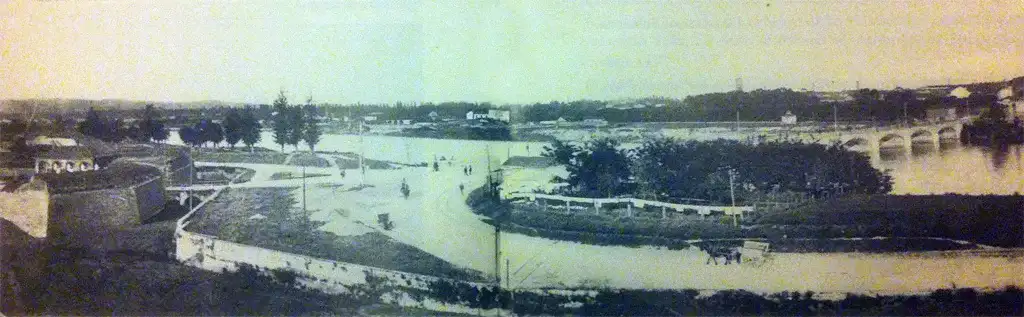 brigante mandrogno · Public domain
Citadel of Alessandria
The Citadel Alessandria is one of the largest European monuments in the 18th century permanent fortification, one of the few still existing and certainly one of the best preserved in Europe . It is the only plain fortress built by the Savoy in the 18th century and it is the only European fortress still today inserted in its original environmental context: there is no screen of houses that closes the view of the ramparts, or a high road to surround the moats.
Read the story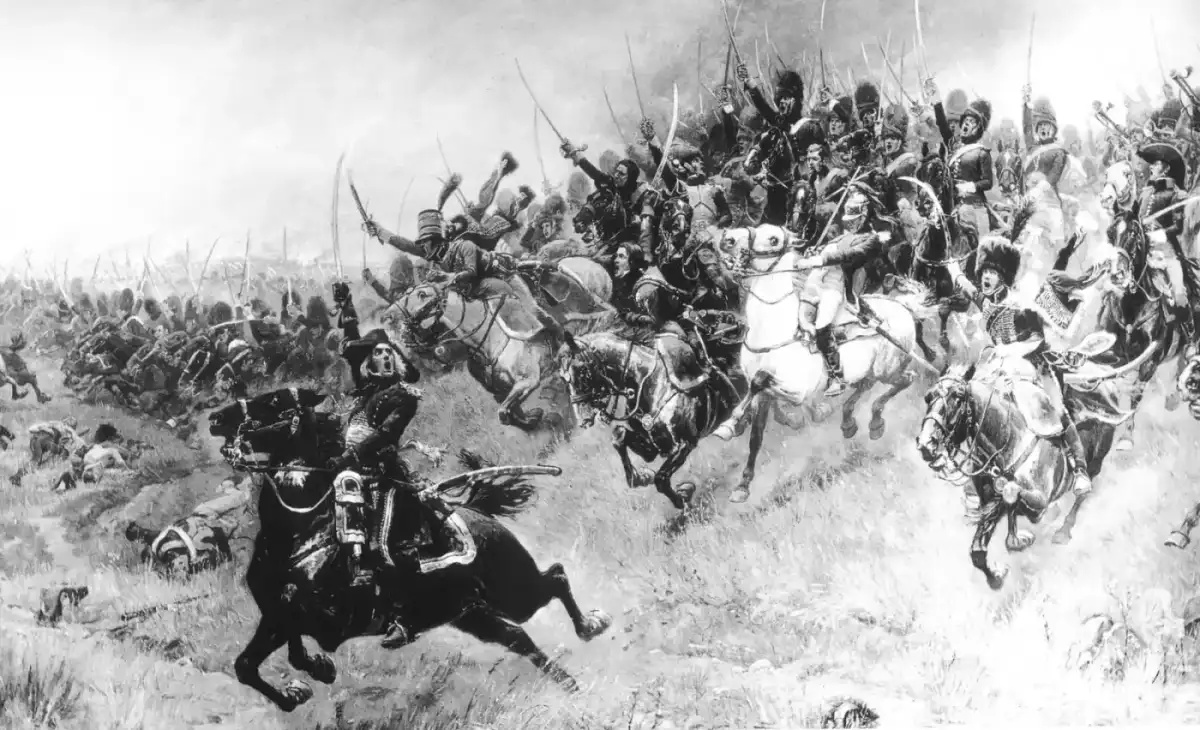 Alphonse Lalauze · Public domain
Battle of Marengo
The Battle of Marengo was fought on June 14, 1800 between the Republican forces of the French general and First Consul Napoleon Bonaparte and the imperial forces of the Austrian General Michael von Melas . The clash represented the last act of the Second Campaign in Italy and its outcome was decisive in affecting the course of war .
Read the story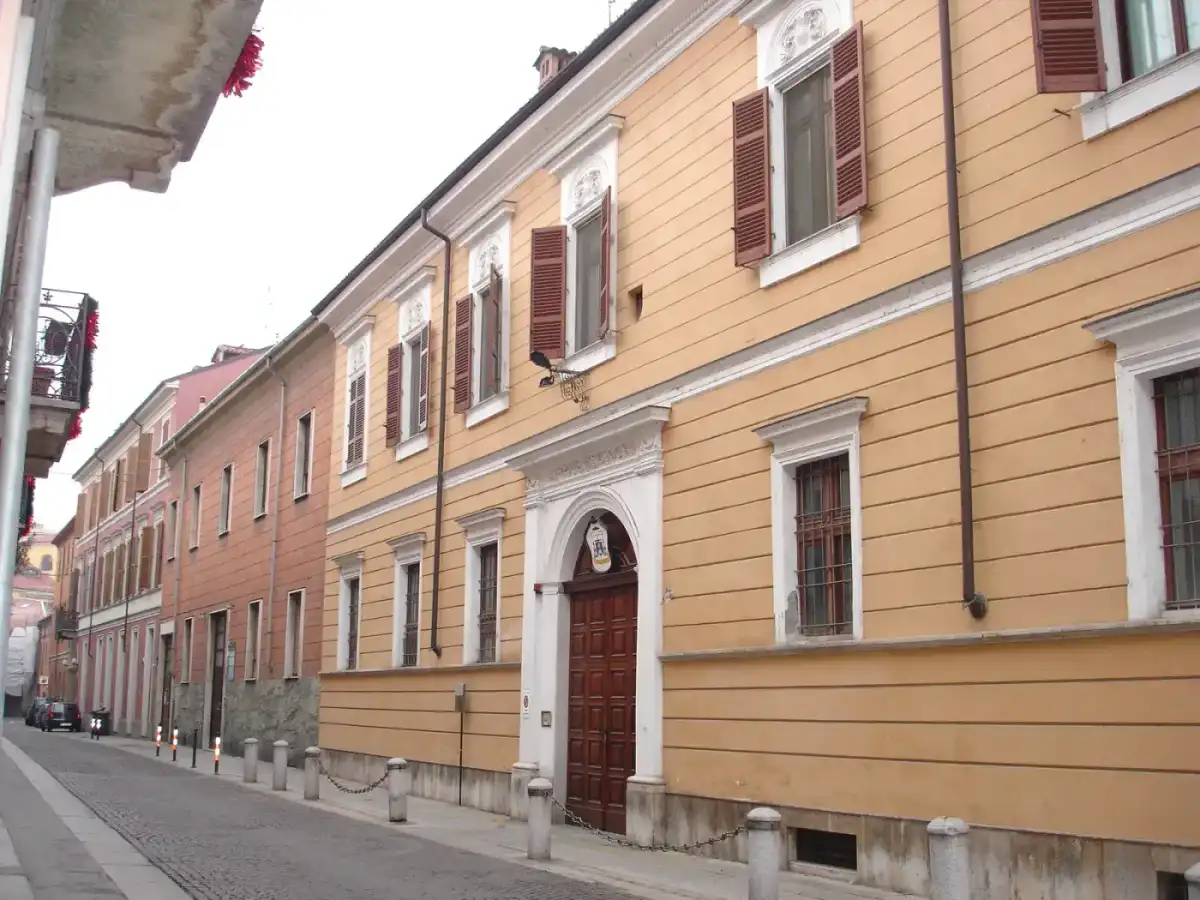 Tony Frisina di Wikipedia in italiano · Public domain
Diocese of Alessandria
The diocese of Alessandria (Latin Dioecesis Alexandrina Statiellorum) is a seat of the Catholic Church in Italy suffragan of the archdiocese of Vercelli and belonging to the ecclesiastical region Piemonte . In 2023, 140.000 were baptized on 152.900 inhabitants. The seat is vacant.
Read the story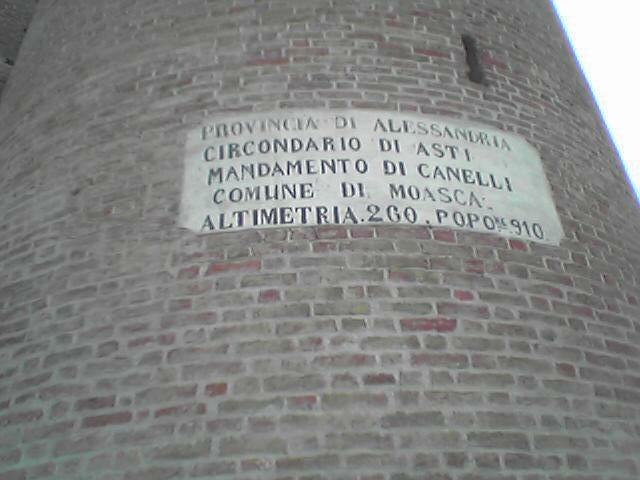 Andrea Marchisio · CC BY 3.0
Province of Alessandria
The province of Alessandria is an Italian province of Piemonte of the 408 765 inhabitants. It has as its capital the city Alessandria . In addition to the capital, in the province there are six centers-zone, where the main services are located, which correspond to the most important and populous cities, i.e. Novi Ligure , Tortona , Casale Monferrato , Acqui Terme , Valenza and Ovada .
Read the storyWeather station in Alessandria
The weather station of Alessandria is the reference meteorological station for the city of Alexandria .
Read the story1994 Tanaro flood
On 5 and 6 November 1994, the provinces of Cuneo , Turin , Asti and Alessandria were heavily affected by a violent flood event that caused the flooding of the Po Rivers, Tanaro and many of their tributaries (especially the Belbo stream, an important right-wing tributary of Tanaro), causing 69 victims and 2,226 displaced.
Read the storyThe area, step by step
Trails and routes in Alessandria

Asti, Alessandria and surroundings
Borgoratto Alessandrino - Chiesa della Madonna della neve - Alessandria

 CyclingAround the starting point
Asti, Alessandria and surroundings
Le Strade del giovane Umberto Eco
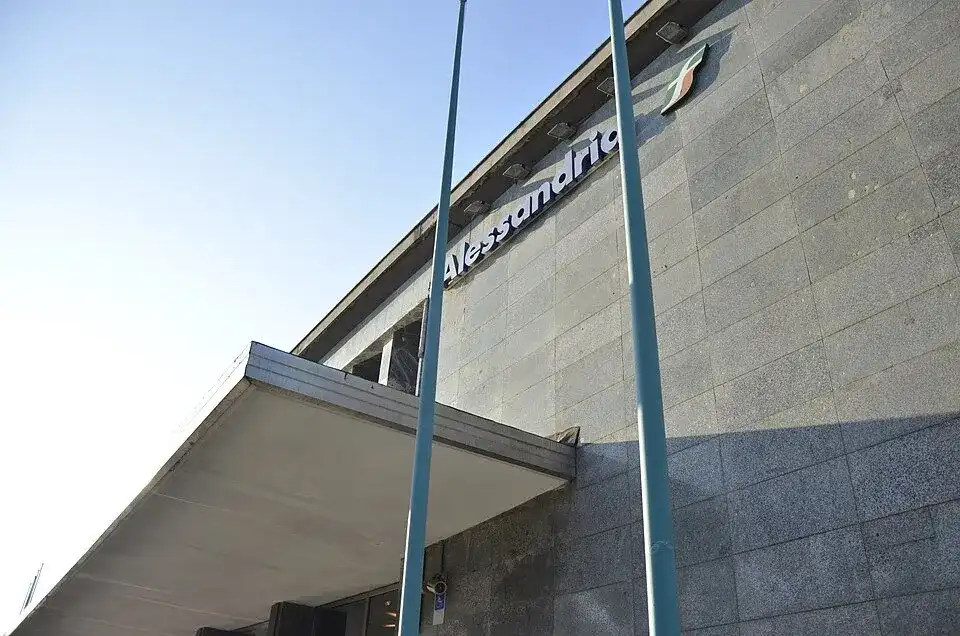 CyclingAround the starting point
Asti, Alessandria and surroundings
Alessandria Asti risalendo il Tanaro

Asti, Alessandria and surroundings
Greenway delle 2 Cittadelle
 Mountain bikeAround the starting point
Asti, Alessandria and surroundings
La Via Francigena verso il mare

Asti, Alessandria and surroundings
Sentiero dal tanaro alle colline
Asti, Alessandria and surroundings
Anello di valle s. bartolomeo

Asti, Alessandria and surroundings
Sentiero le vecchie fonti
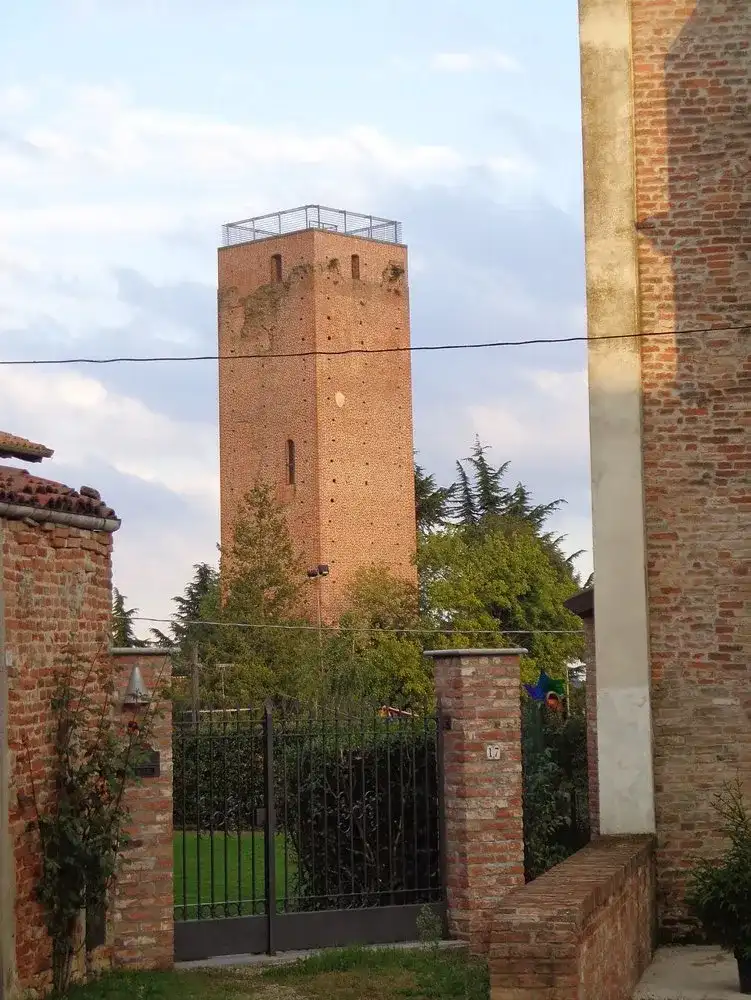 WalkingAround the starting point
Asti, Alessandria and surroundings
Sentiero anello abazia di masio
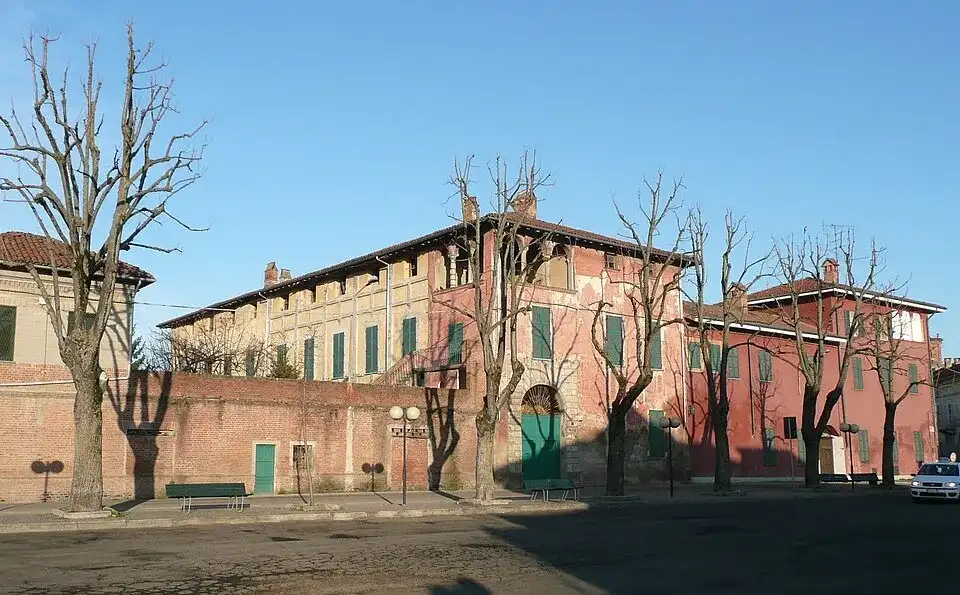 WalkingAround the starting point
Asti, Alessandria and surroundings
Sentiero quattordio e le sue frazioni


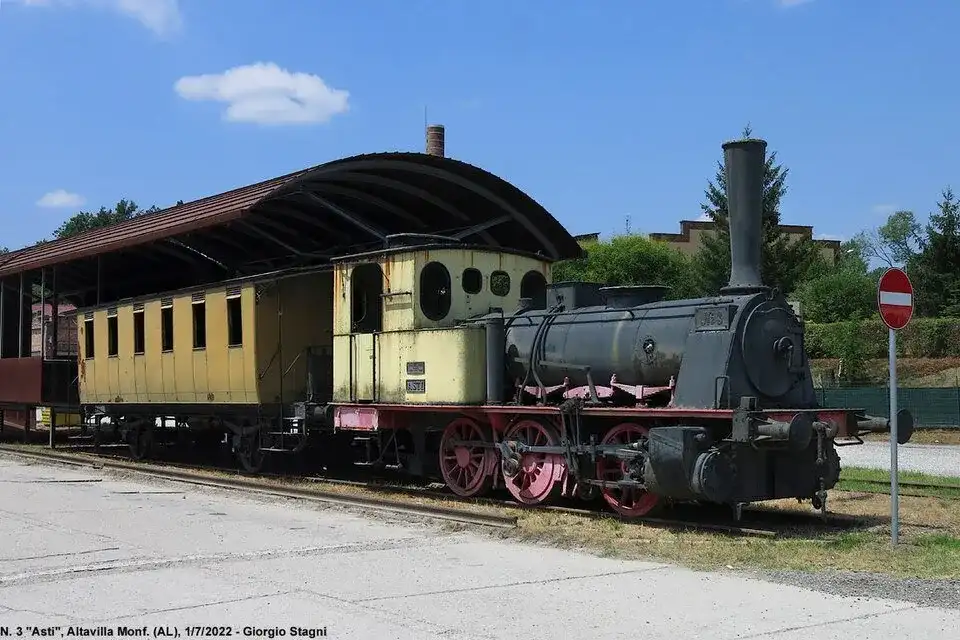 WalkingAround the starting point
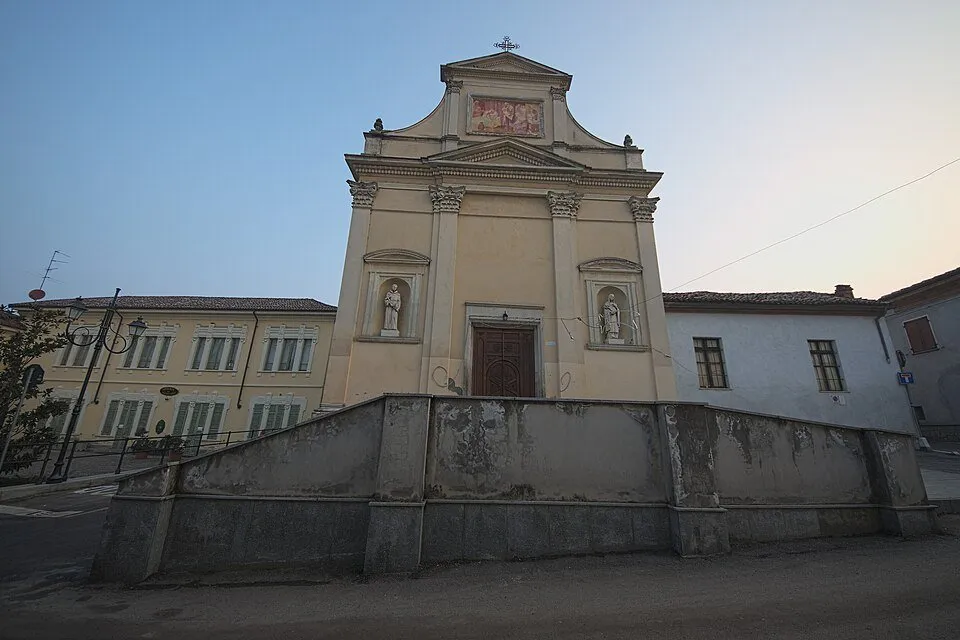 WalkingAround the starting point
Asti, Alessandria and surroundings
Sentiero la strada di napoleone
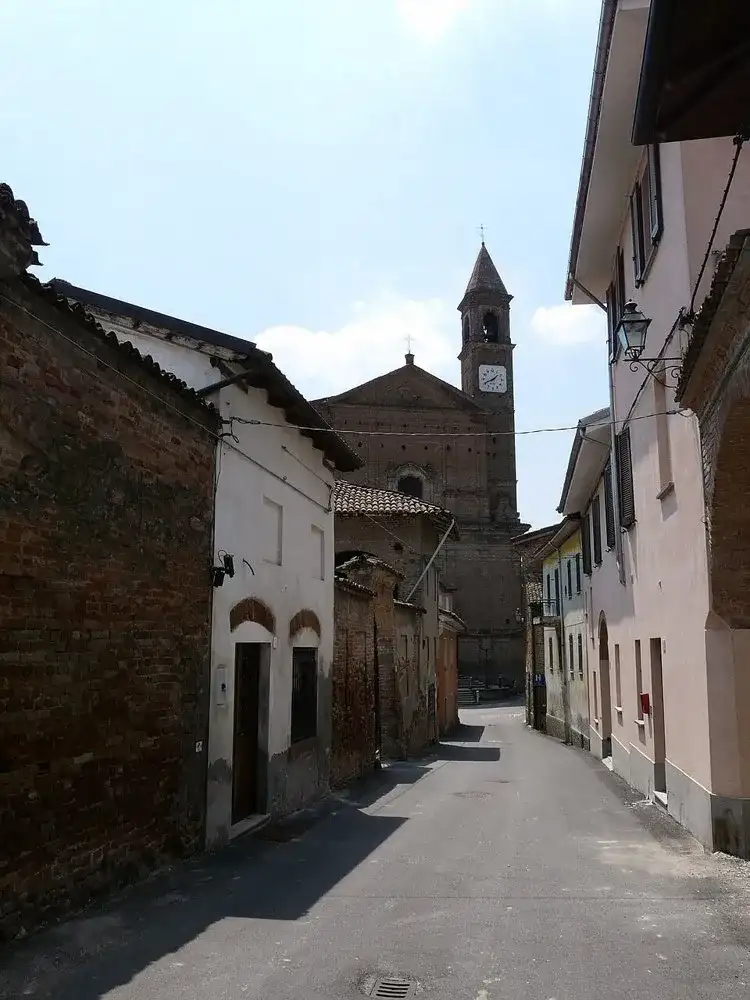 WalkingAround the starting point
Asti, Alessandria and surroundings
Sentiero pecetto - bric montalbano

Asti, Alessandria and surroundings
Sentiero santuario madonna del pozzo - pieve di san giovanni
Asti, Alessandria and surroundings
Sentiero anello di castelletto m.to
Asti, Alessandria and surroundings
Sentiero anello di giardinetto
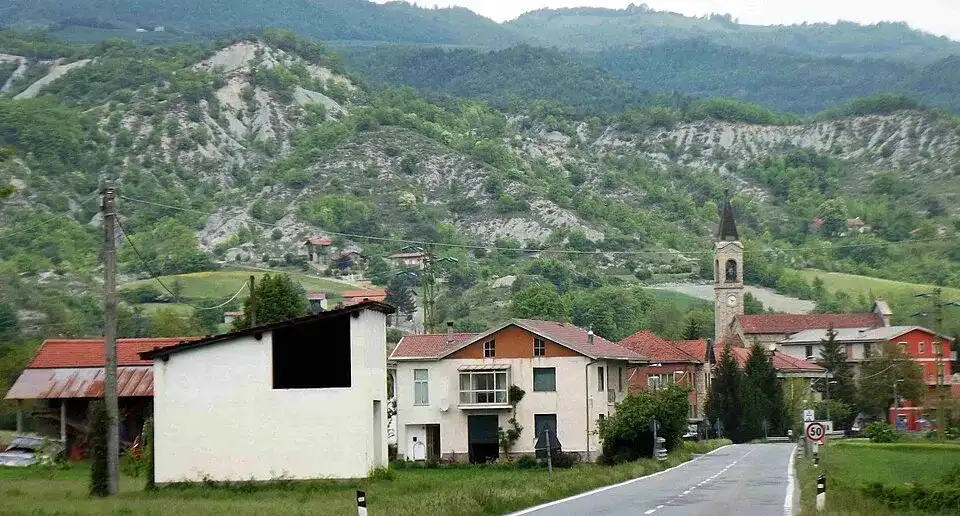 WalkingAround the starting point

Asti, Alessandria and surroundings
Sentiero e1 (tratto passo della bocchetta - monte delle figne)

Asti, Alessandria and surroundings
Anello borbera - spinti tappa 05 (capanne di cosola - monte giarolo)
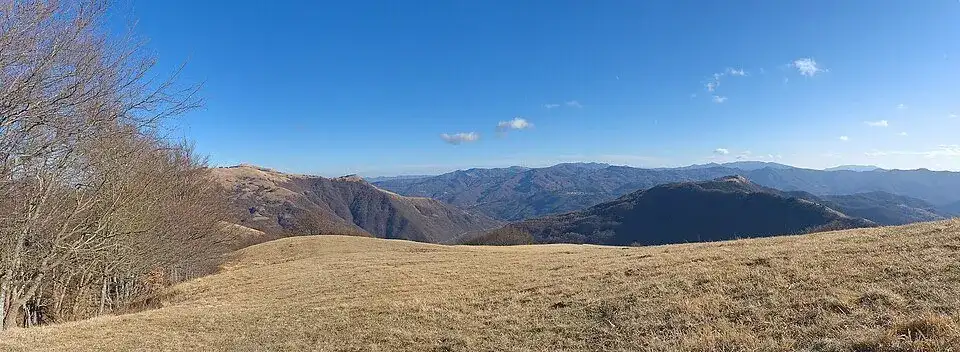 WalkingAround the starting point
Asti, Alessandria and surroundings
Anello borbera - spinti tappa 07 (capanne di carrega - monte antola)

Asti, Alessandria and surroundings
Sentiero sella banchiera - capanna di tonno
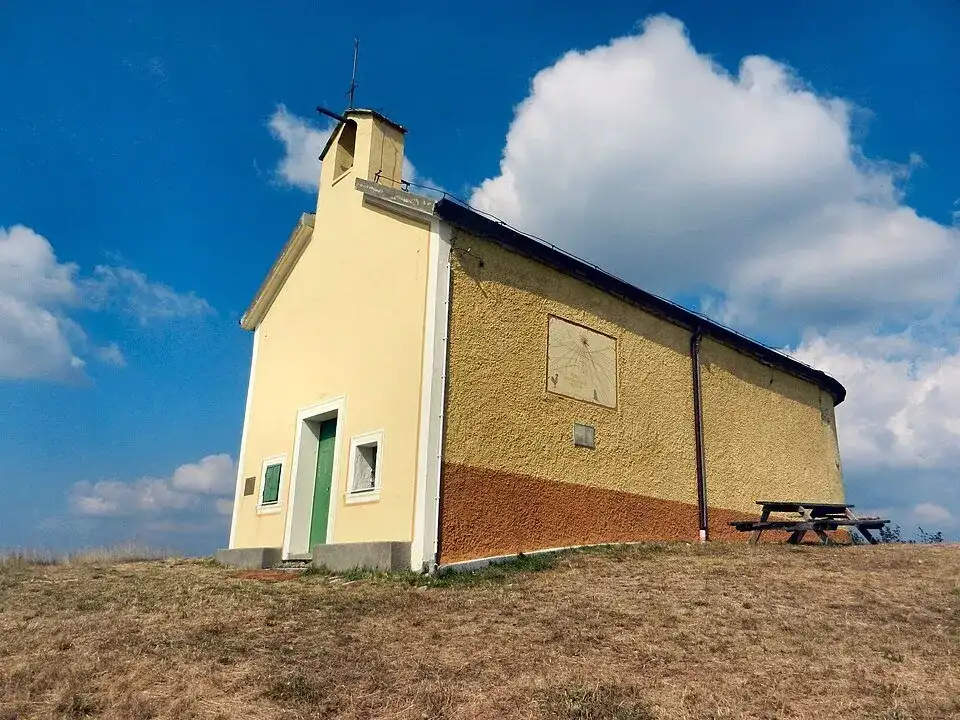 WalkingAround the starting point
Asti, Alessandria and surroundings
Anello borbera - spinti tappa 08 (san fermo - monte antola)

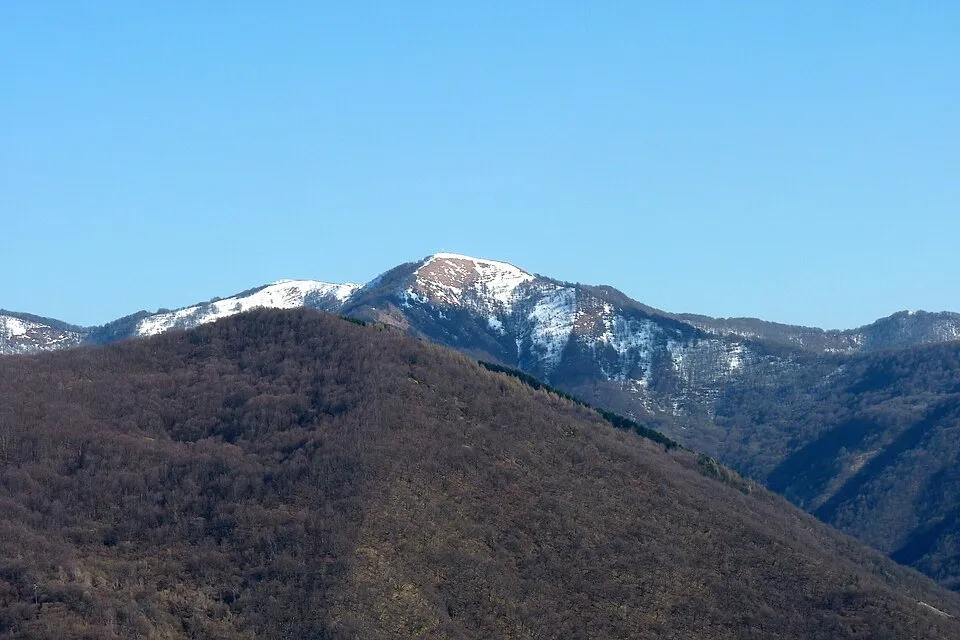 WalkingAround the starting point
Asti, Alessandria and surroundings
Sentiero dova superiore - bivio sentiero 200

Asti, Alessandria and surroundings
Sentiero carrega ligure - vegni

Asti, Alessandria and surroundings
Sentiero serra del monte - fabbrica curone

Asti, Alessandria and surroundings
Sentiero selvapiana - capanne di cosola

Asti, Alessandria and surroundings
Sentiero percorso archeologico del guardamonte
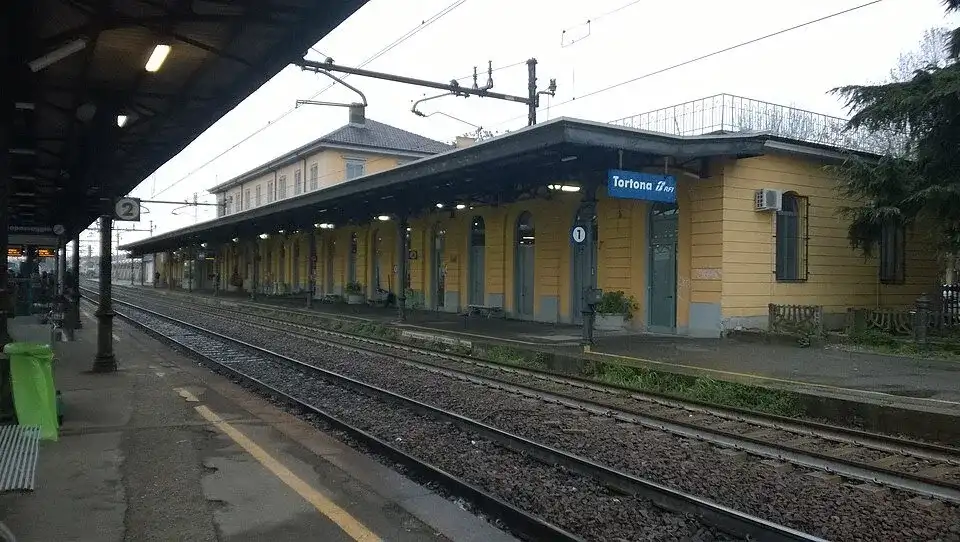 WalkingAround the starting point
Asti, Alessandria and surroundings
Sentiero tortona - rivalta scrivia
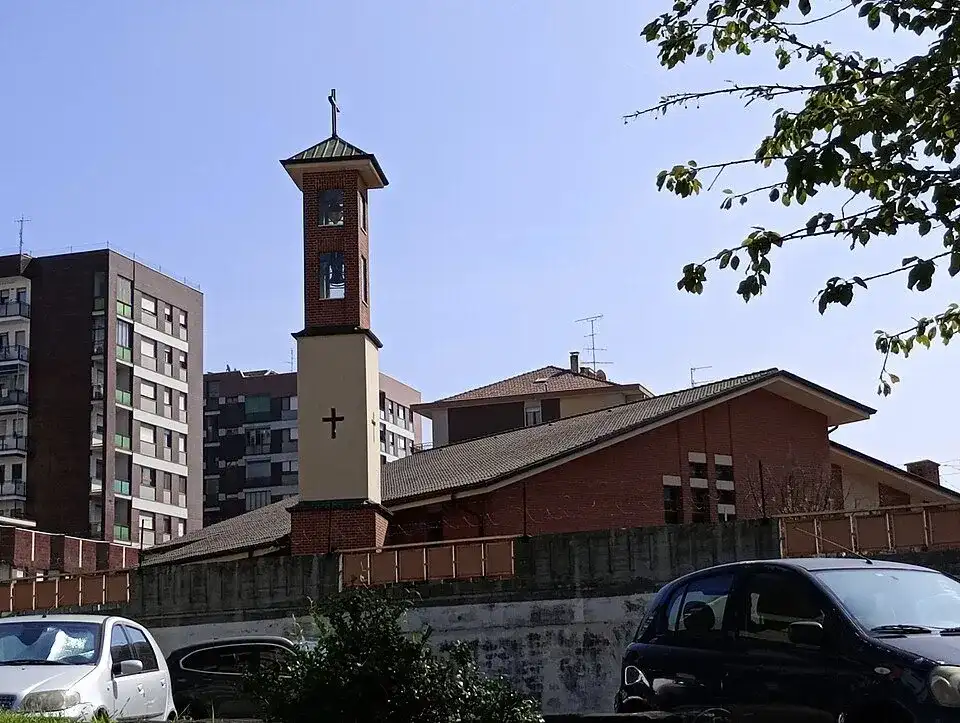 WalkingAround the starting point
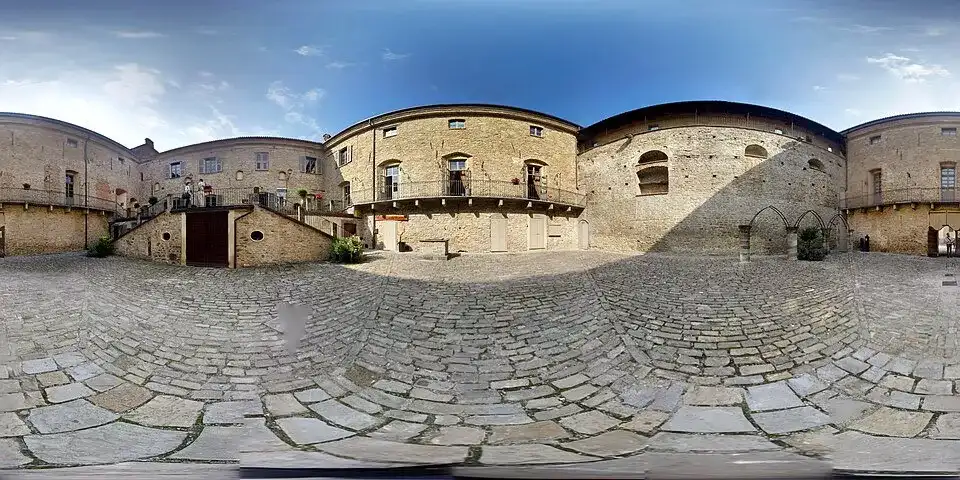 WalkingAround the starting point


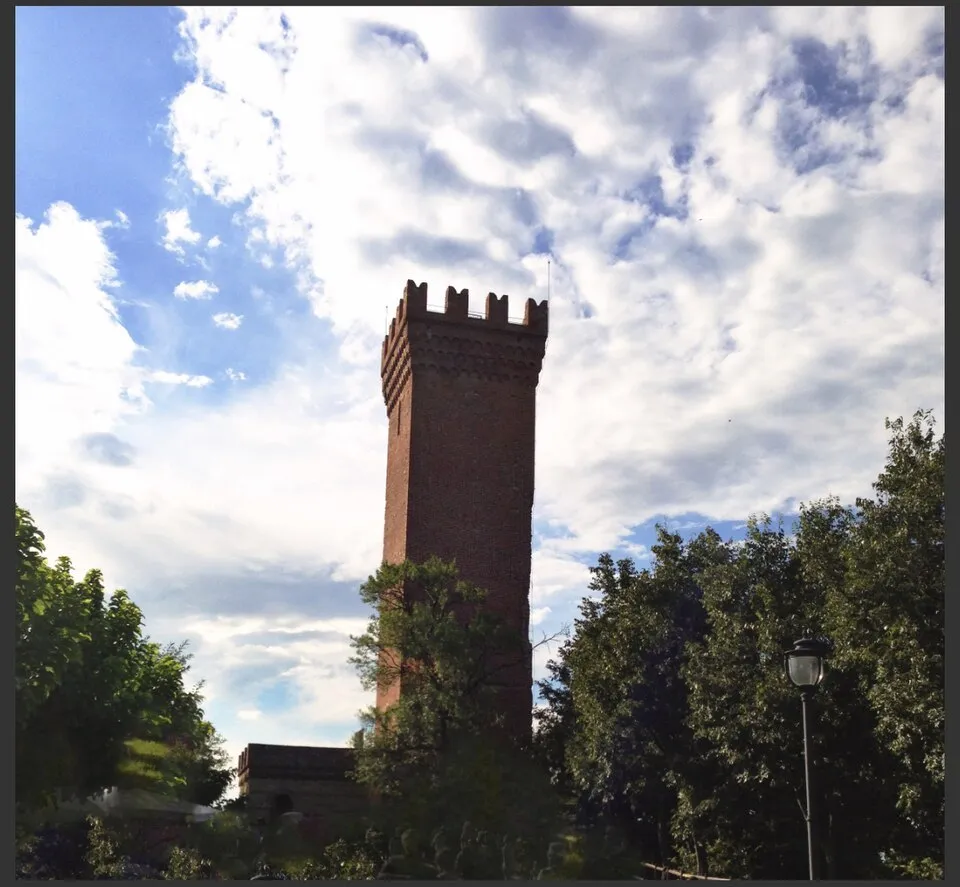 Mountain bikeAround the starting point
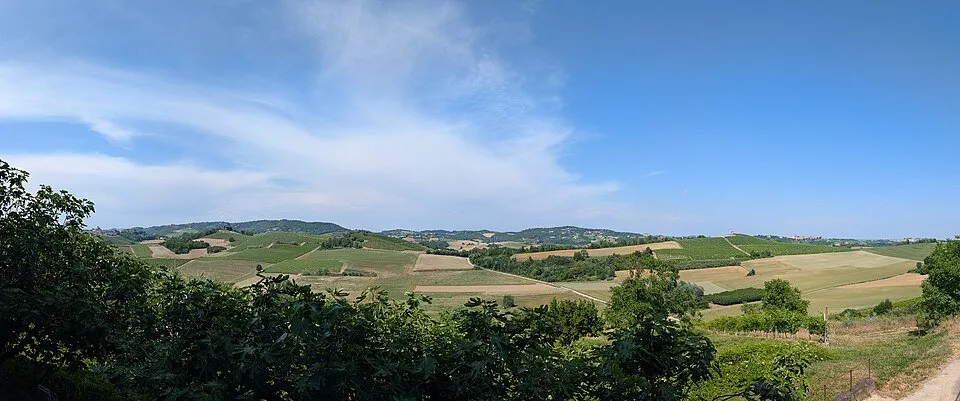 Mountain bikeAround the starting point


