Atlas of Monferrato
Quargnento: sights, history and trails
Alessandria
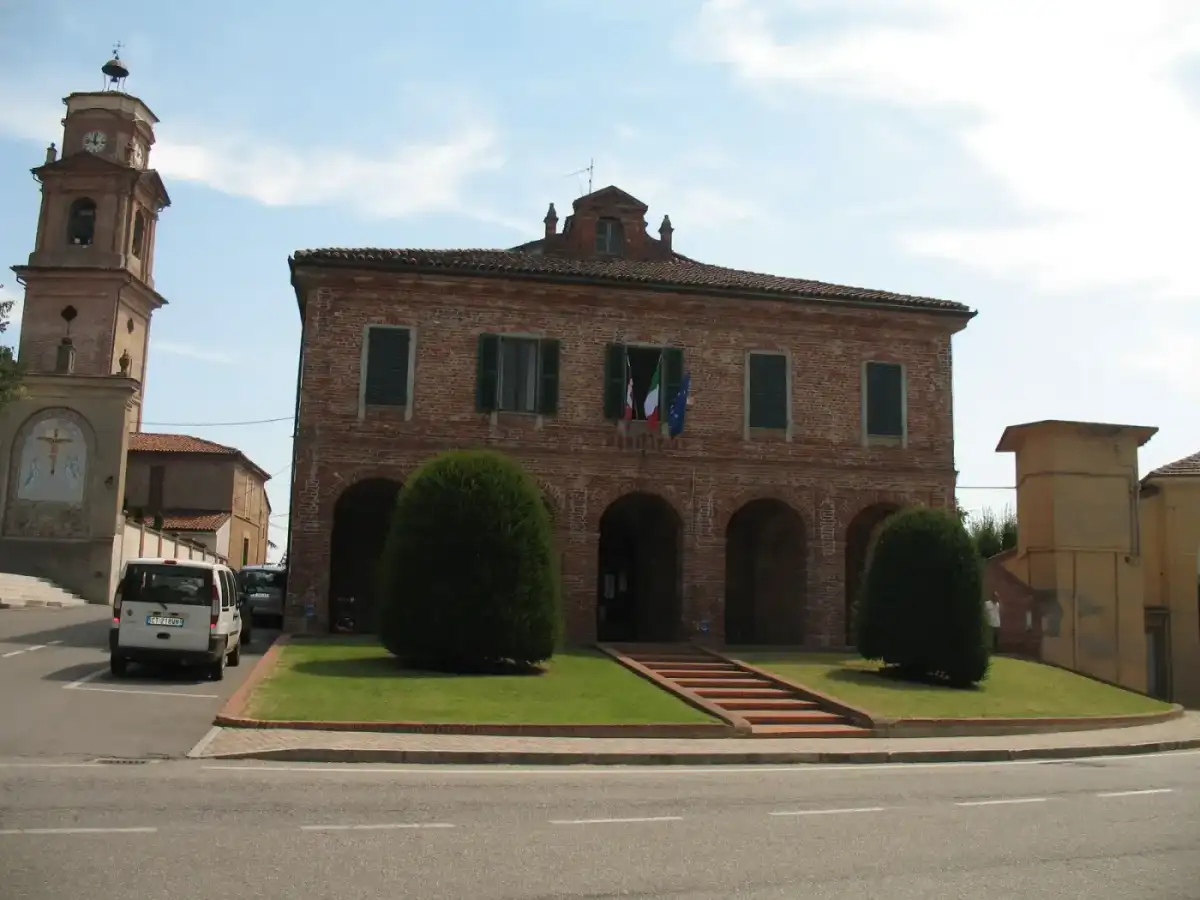
- Elevation
- 121 m above sea level
- Area
- 36.17 km²
- Demonym
- quargnentini
- Patron saint
- San Dalmazio
A closer look
Discovering Quargnento
Quargnento (Quargnant in Piedmont) is an Italian municipality of 1 390 inhabitants[1] from the province of Alessandria, in Piemonte, located in the plain of Alessandria, on the edge of the hills of Lower Monferrato Casalese.[4][5][6][7]
In addition to the town there are many sheds on the municipal territory, built for agricultural exploitation of land.
History of Quargnento
Origins · X century · XI centuryExplore this chapter
Origins
The Roman origin of Quargnento is witnessed, as well as by historical quotations also from some archaeological finds, among which a tombstone of the Roman period that mentions the gens Posilla, Roman families permanently settled in the nearby area Tortona around 200 B.C. I was supposedly born as a Roman military garrison in strategic position to control the tribe of the States, which occupied large areas of the Apennines and the Monferrato, Quargnento was preserved as a stable settlement of the Romans even after the end of the Gallic war and was gradually transformed into a large agricultural village, which the nearby Roman cities of Hasta Pompeia, Derthona, Augusta Taurinorum certainly resorted to for their needs.
X century
With the fall of the Western Roman Empire, Quargnento became a patronage of the bishop-conte of Asti, which represented the closest established center of power. Towards the end of this historical period, in 907 an important episode occurred, the translation of the relics of the Christian martyr Dalmatius to Quargnento, ordered by the Bishop of Asti, Audace, being Pedona subject to raids by the Saracens. Even in this case, although the fact is certain (the relics are still kept and venerated in Quargnento), there are disagreements about the date of the event, which some believe dates back to an earlier period.
XI century
Quargnento was the subject of important royal and imperial privileges: Berengario and Adalberto, both King of Italy to Longobards, with act of 25 May 935[not clear] they established a market at the Calends of each month; Emperor Henry III, with act of 19 January 1041[not clear] , later confirmed by Pope Eugene III II 16 May 1158[not clear] , identified among the lands in possession of the Bishop of Asti, Quargnento with castle, church and appurtenances.
Fondazione di Alessandria
Quargnento was one of the eight settlements, called Static[8], who contributed to the foundation of the city of Alessandria in the second half of the 12th century[Biblio 1]. Forty families, by order of the Bishop of Asti, settled in the civitas nova.
The city of Alessandria was born[10], it was initially founded by the demic union of Castellazzo Bormida (Gamondio), Marenghum (Marengo) e Bergolium (Bergoglio). This can be seen in the text of Emperor Frederick's complaints against Cremona in 1184 where he indicates the promoters and authors of the foundation of the new city: de tribus locis, Gamunde vicelicet et Meringin et Burgul. The name of the meeting place is not described, although it seems already indicated with a certain precision in the specification of the site on Tanaro where the transfer was shorter: Bergoglio[bibliography 2]. The three places mentioned were added later Roboretum (Rovereto), Solero (Solero), Forum (Villa del Foro), Oviglio (Oviglio) e Quarries. In this the populations were supported, economically, by the "Superba" and by the municipalities of the Lombard League in contrast with the Marquisate of Monferrato, main ally of Frederick Barbarossa.
The official foundation date of Alexandria is 3 May 1168, although at that time it has already reached a topographic, urban and administrative configuration defined. The name "Alessandria", confirmed later, will be assumed in honor of Pope Alexander III, a broad supporter of the Lombard League's actions against the Holy Roman Empire and who had excommunicated Frederick Barbarossa.
13th century
In the 13th century, there was a definitive conclusion of the disputes between the bishops' jurisdictions of Asti and Alessandria on the "Bishopric Mass" of Quargnento, with the intake of the quargnentino territory in Alexandria.
From this moment on the history of Quargnento follows that of the nearby capital: Municipality against Federico Barbarossa, which seems to have established just to Quargnento his headquarters, suffered the retaliation of the Emperor who, angry for failure in the siege of Alessandria, destroyed and burned the castle Quargnento to the point that of such construction there was no trace, except for the dialectal saying "a chaste" (to the castle) to indicate the area where it stood.
15th century
Quargnento later passed under the domination of the Visconti-Sforza of Milan, to whose Duchy was given in fief in 1467.
XVI-XVII century
In the sixteenth and seventeenth centuries he followed the alternating events of Franco-Hispanic wars; a miraculous circumstance (now remembered every year with a religious ceremony called "Allegrezze" in honor of Our Lady of the Rosary) made Quargnento immune to the plague of 1630.
18th century
In 1723 Quargnento, who became part of the Kingdom of Sardinia, was assigned to the Marchesa Vittoria Ghilini Cuttica di Cassine, whose last descendant, Giulia, was related in the early 20th century with the noble house of Barons Guidobono Cavalchini Garofoli of Tortona, still owner of land and the 18th century villa built in 1763.
Recent times
On November 5, 2019 the country was the scene of a serious crime of black chronicle that saw as victims three firefighters, an event called "Quargnento massacre".
Symbols
The coat of arms and gonfalone of the municipality of Quargnento were granted by decree of the President of the Republic of 22 October 1987.[11]
In the coat of arms are symbolized the most important periods in the history of the Municipality: under the episcopal jurisdiction of Asti (the silver cross and the bishop's miter in the red field) and under that of Alessandria (silver, with the red cross) and later under the Visconti-Sforza family of Milan (the biscione).[13]
The banner is a blue cloth.
What to see in Quargnento
Explore this chapter
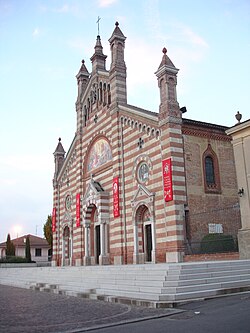
- Minor Basilica of San Dalmazio. Unique basilica of the Diocese of Alessandria, dedicated to Saint Dalmazio, where his body is preserved. It is one of the most important ecclesiastical examples in province, with its majesty and excellent maintenance. In February 1992 Pope John Paul II elevated it to the dignity of a minor basilica.[14]
- Birthplace of the painter Carlo Carrà, there are ten reproductions of his famous paintings in the streets and squares of the town, including two near his birthplace.
Society
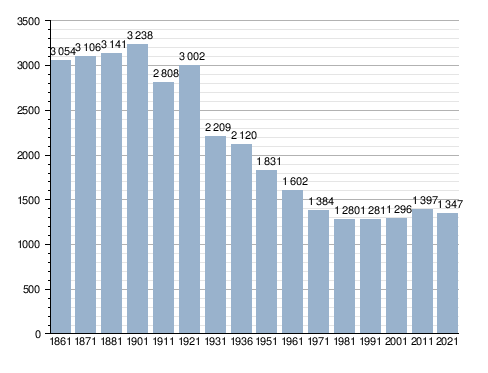
Demographic evolutionExplore this chapter
Demographic evolution
Inhabitants registered[15]
Culture
Events · Sagre and partiesExplore this chapter
Events
- Cinemacorto in Quargnento, annual short film festival started in 1999 and suspended in 2006 for economic difficulties. The First Prize was titled to sociologist Maria Teresa Torti.
- Award of narrative and poetry "Gian Stefano Primo Raiteri", in memory of the homonymous poet quargnentino. Annual competition started in 1998, biennial since 2004, 2006, 2008, 2010 (10th edition with publication of the book "The Muses sing..." Florilegio of the G.S.P. Literary Competition Raiteri) and 2012.
- Estemporanea of painting The street of the house dedicated to the famous quargnentino painter Carlo Carrà. Editions 2005, 2008, 2010, 2012, 2014, 2015, 2016 and 2017.
- Symposium of Sculpture in tufa del Monferrato, editions 2007, 2009, 2011 and 2013.
Sagre and parties
- Patronal/aubergine festival (first edition in 2005), curated by Pro loco and the Municipality. Last weekend of August
- Gold Spiga Festival. Curated by the Pro loco and the Municipality. The 1st weekend of June
Infrastructure and transport
Between 1883 and 1935 Quargnento was served by the tramway Alessandria-Altavilla.Explore this chapter
Between 1883 and 1935 Quargnento was served by the tramway Alessandria-Altavilla.
Administration
TwinningExplore this chapter
Below is a table relating to the administrations that have succeeded one another in this municipality.
| Period | First citizen | Match | Load | Notes | |
|---|---|---|---|---|---|
| June 19, 1985 | May 28, 1990 | Giovanni Picchio | Italian Socialist Party | Mayor | [16] |
| May 28, 1990 | April 24, 1995 | Domenico Pietro Dorato | Christian Democracy | Mayor | [16] |
| April 24, 1995 | June 14, 1999 | Giancarlo Luigi Ceriana | centre-left | Mayor | [16] |
| June 14, 1999 | June 14, 2004 | Giancarlo Luigi Ceriana | civic list | Mayor | [16] |
| June 14, 2004 | June 8, 2009 | Luigi Benzi | civic list: together for Quargnento | Mayor | [16] |
| June 8, 2009 | May 26, 2014 | Luigi Benzi | civic list: together for Quargnento | Mayor | [16] |
| May 26, 2014 | May 26, 2019 | Luigi Benzi | civic list: together for Quargnento | Mayor | [16] |
| May 26, 2019 | June 9, 2024 | Paola Porzio | civic list: together for Quargnento | Mayor | [16] |
| June 9, 2024 | in office | Luigi Benzi | civic list: together for Quargnento | Mayor | [16] |
Twinning
 Coubon.
Image gallery
Explore this chapter
-
 Villa Cuttica di Cassine in Quargnento. Celebrations in honor of the painter Giulio Benzi in the Centenary of Birth
-
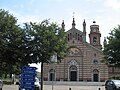 Basilica of San Dalmazio. Main probe
-
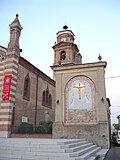 Basilica of San Dalmazio. The mosaic of the Crucifix and a glimpse of the bell tower
-
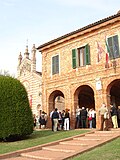 Celebrations in honor of the painter Giulio Benzi in the Centenary of Birth - Guests in front of the Town Hall
Notes
Explanatory statement · BibliographicExplore this chapter
Explanatory statement
- ^ to b Monthly demographic balance for the year 2026 (provisional data), up demo.istat.it, ISTAT.
- ^ Seismic classification (XLS), up risks.protezionecivile.gov.it.
- ^ Table of degrees/day of Italian Municipalities grouped by Region and Province (PDF), in Law 26 August 1993, n. 412, annex A, National Agency for New Technologies, Energy and Sustainable Economic Development, 1 March 2011, p. 151. URL consulted on 25 April 2012 (archived fromoriginal url on 1 January 2017).
- ^ Country and Territory: tourist info, up Municipality of Quargnento, Municipality of Quargnento. Retrieved 3 September 2026.
- ^ Special Carlo Carrà from Quargnento, up Municipality of Quargnento, Municipality of Quargnento, 2016. Retrieved 3 September 2026.
- ^ ♪, up Sapere.it, De Agostini. Retrieved 3 September 2026.
- ^ Regional landscape plan. Pages of landscape areas, up Region Piemonte, Region Piemonte, pp. 92. Retrieved 3 September 2026.
- ^ From here the name assigned to the diocese of Alessandria: Dioecesis Alexandrina Statiellorum. Annals of Alessandria, p. 2-1168/1
- ^ The Ghilini in his Annals of Alessandria, p. 2-1168/1 He mistakenly wants that the birth of the city took place on 22 April 1168, that is the same day as the foundation of Rome: «[...] пеl which day Romulus gave rise to the fabrica of the City of Rome [...]». The Ghilini commits more than one mistake: the foundation of Rome is officially set on 21 April, and in reality the name Caesarea was imposed by the emperor in Reconciliatio Cæsareæ of 1183 (Germaniæ Historica Monument, pp. 181-182), which was soon abandoned by the inhabitants themselves as an element foreign to their collective conscience and individuality. Geo Pistarino, p. 15.
- ^ In the first twenty years of its history, the city presents four different names in sources: Alessandria Caesarea[9], Palea, Rovereto, in addition to the quite frequent generic designation of civitas nova or nova civitas, and to the rarer designation of urbs nova. (Geo Pistarino, p. 15).
- ^ Quargnento, up Heraldic office - Municipal files, Central State Archives.
- ^ Piedmontese civic coat of arms, vol. II, Regional Council of Piemonte, 2016, p. 422, ISBN 978-88-96074-98-5.
- ^ Municipality of Quargnento – (AL), up araldicacivica.it. Retrieved 31 October 2021.
- ^ (EN) Catholic.org Basilicas in Italy, up gcatholic.org.
- ^ Data taken from:
- Resident population of the municipalities. Censuses from 1861 to 1991 (PDF), up ebiblio.istat.it, ISTAT.
- Resident population - Time series, up exploredati.istat.it.
Please note: 2021 data refers to permanent census data as of December 31 of that year.
- ^ to b c d And f g h the https://amministratori.interno.it/
Bibliographic
- ^ Codex Statuterum, p. 439.
- ^ Geo Pistarino, p. 14.
Bibliography
Explore this chapter
- Francesco Moscheni & F.lli, Codex Statuterum magnifice communitatis atque diœcæsis Alexandrinæ, Alessandria, 1547. Retrieved 9 June 2016.
- Girolamo Ghilini, Annals of Alessandria, Milan, Gioseffo Marelli, 1666.
- (THE) Georg Heinrich Pertz (ed.), Reconciliatio Cæsareæ, in Germaniæ Historica Monument, II, Hannover, 1837. Retrieved 16 June 2016 (archived fromoriginal url on 12 August 2016).
- AA.VV. Tribute to Carrà, Alessandria, Tip. The little one, 1969
- AA.VV., The Angel of Quargnento (distinguished Collegiate and Parish Church of San Dalmazio, 1270-1970, centenary of the foundation), Alessandria, Viscardi typography, 1970
- Gian Piero Gosio, Quargnento and its church, Alessandria, Viscardi lithography, 1995
- Geo Pistarino, The double foundation of Alessandria (1168, 1183) (PDF), in History magazine Art Archaeology for the provinces of Alessandria and Asti, single volume, Alessandria, Society of History Art Archeology - Accademia degli Immobili, 1997, pp. 5-36. Retrieved 11 June 2016.
- Maria Teresa Gavazza, The bark leaves, but the chicks remain... (Quargnento, a small town tells its story, the twentieth century in its oral sources, from stories to history), Trauben, Turin, 2001
- Mattia Ferraris, Domenico Dorato, The dialect of Quargnento, Alessandria, iGrafismiBoccassi, 2005
- AA.VV., Giulio Benzi, 1907-2007: one hundred years of nostalgia for Quargnento (Catalogue of the exhibition held in Quargnento in 2007), Creatio, Quargnento, 2007.
Where to stay · Quargnento
Find stays on Booking.comStories, places and people
More about Quargnento and the surrounding area
Follow a thread of history and see where it leads.
 Tony Frisina di Wikipedia in italiano · Public domain
History of Alessandria
The oldest traces found in the province bear witness to sporadic but very ancient human presences. The first settlements are mainly marked in the eastern centre area: at Castel Ceriolo there were several quaetical instruments of paleolithic tradition. With the Neolithic ancestors of the Alexandrians pass to agriculture and breeding, produce ceramics, tease and spin the fabrics and smooth the stone. The settlements develop on the roads of communication (fiumi and streets) and near the areas of supplying raw materials, wild and above all green Apennines that is exported throughout Europe. The Alexandrian territory is one of the first to be colonized: Casalnoceto, Brignano Frascata , Monperone in the province and above all in the area where today the Christ district is located in which at the end of the 21st century a burial and numerous liturgical instruments were found. In recent Neolithic, the area of Alessandria (Cascina Chiappona), is affected by a profound change affecting the entire western cisalpine area and the transalpine area, highlighting a common cultural identity (the "Chasseano") in the areas occupied today by Piemonte , Valle d'Aosta , South-East of France and Switzerland .
Read the story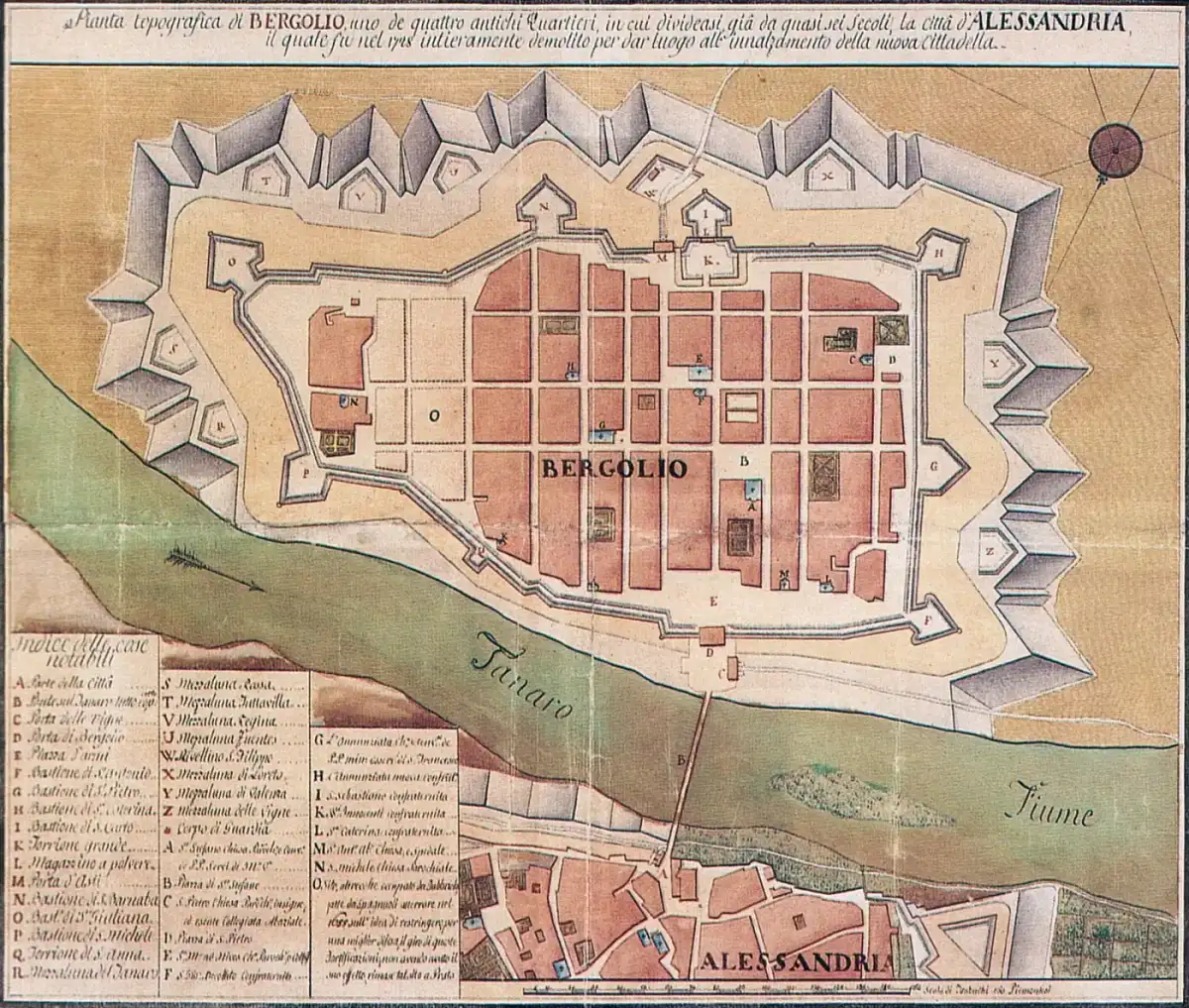 brigante mandrogno · Public domain
Bergoglio (Alessandria)
Bergoglio (also Bargolium , Bergolio or B Pride , Bergolium , Bergul , Burgulium ) was an urban settlement built on the left bank of Tanaro , located in front of Rovereto and the city of Alessandria all. Demolished during the 18th century, starting from 1728, to make camping the walls of the citadel, protected by walls and moats, defended by a small detached fortress called “la Pozzolana”, originally belonged to the Archdiocese of Milan. Bergoglio was one of the eight settlements that contributed to the foundation of the city of Alexandria in the second half of the 12th century.
Read the story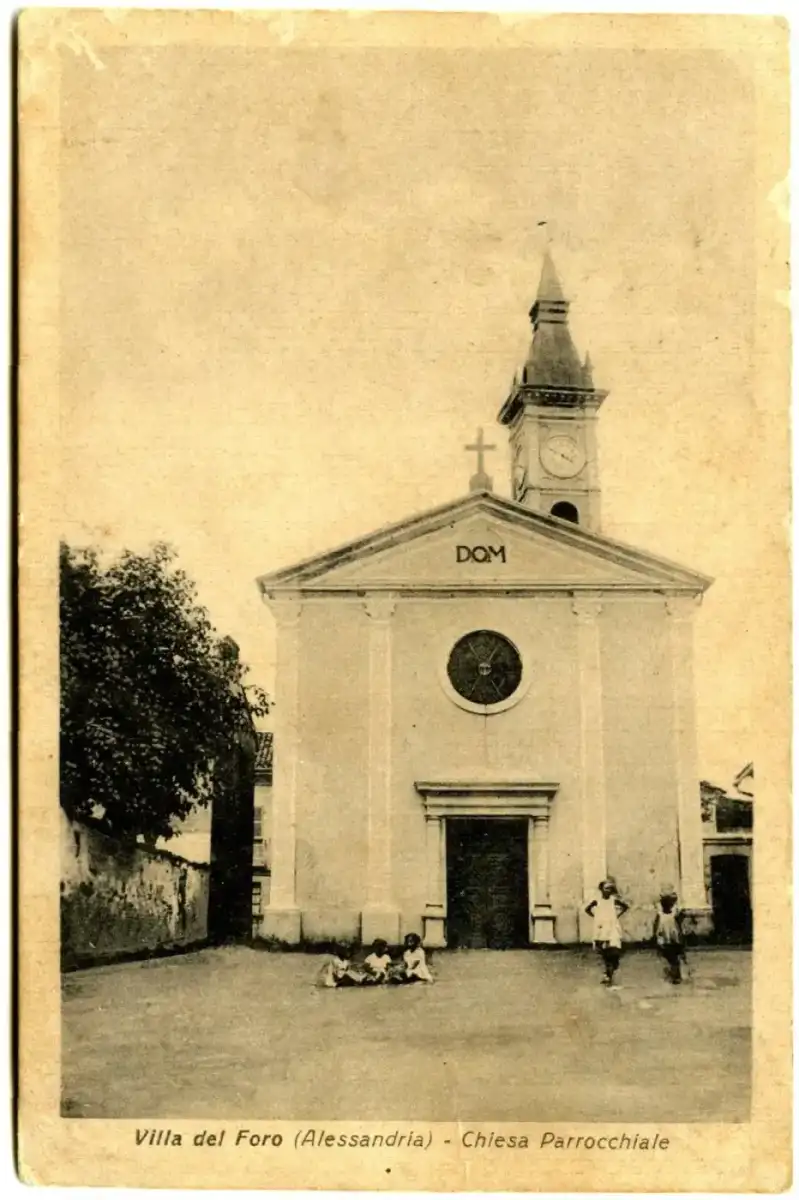 Ignoto. Caricato da Tony Frisina · Public domain
Villa del Foro
(Pliny the Elder thus recalls one of the main centers of the IX Regio Augustea)
Read the story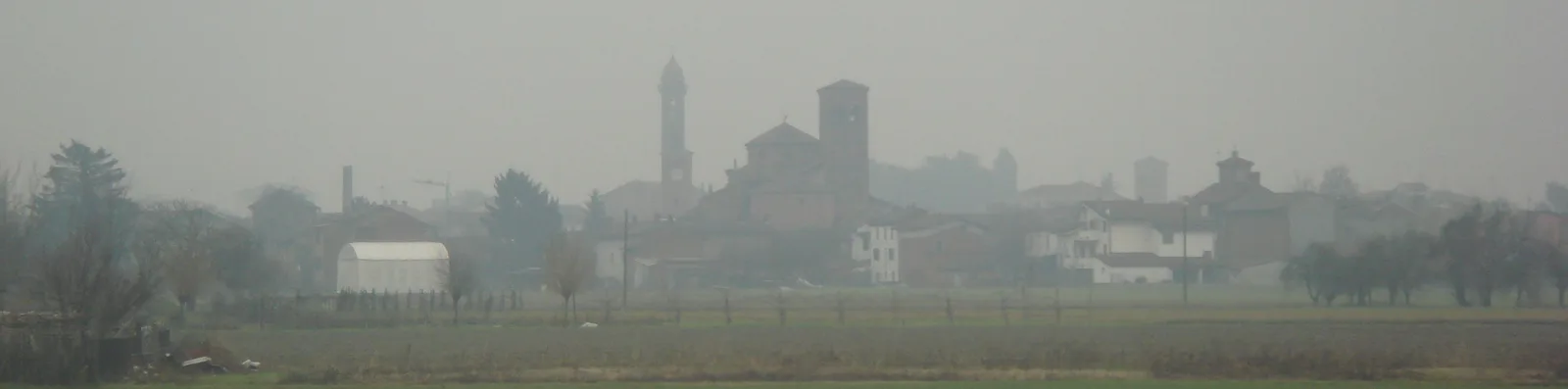 Pinello · CC0
Castellazzo Bormida
Castellazzo Bormida ( Ël Castlass an Bormia in Piedmont), formerly called Gamondio, is an Italian municipality of 4 505 inhabitants in the province of Alessandria , in Piemonte .
Read the story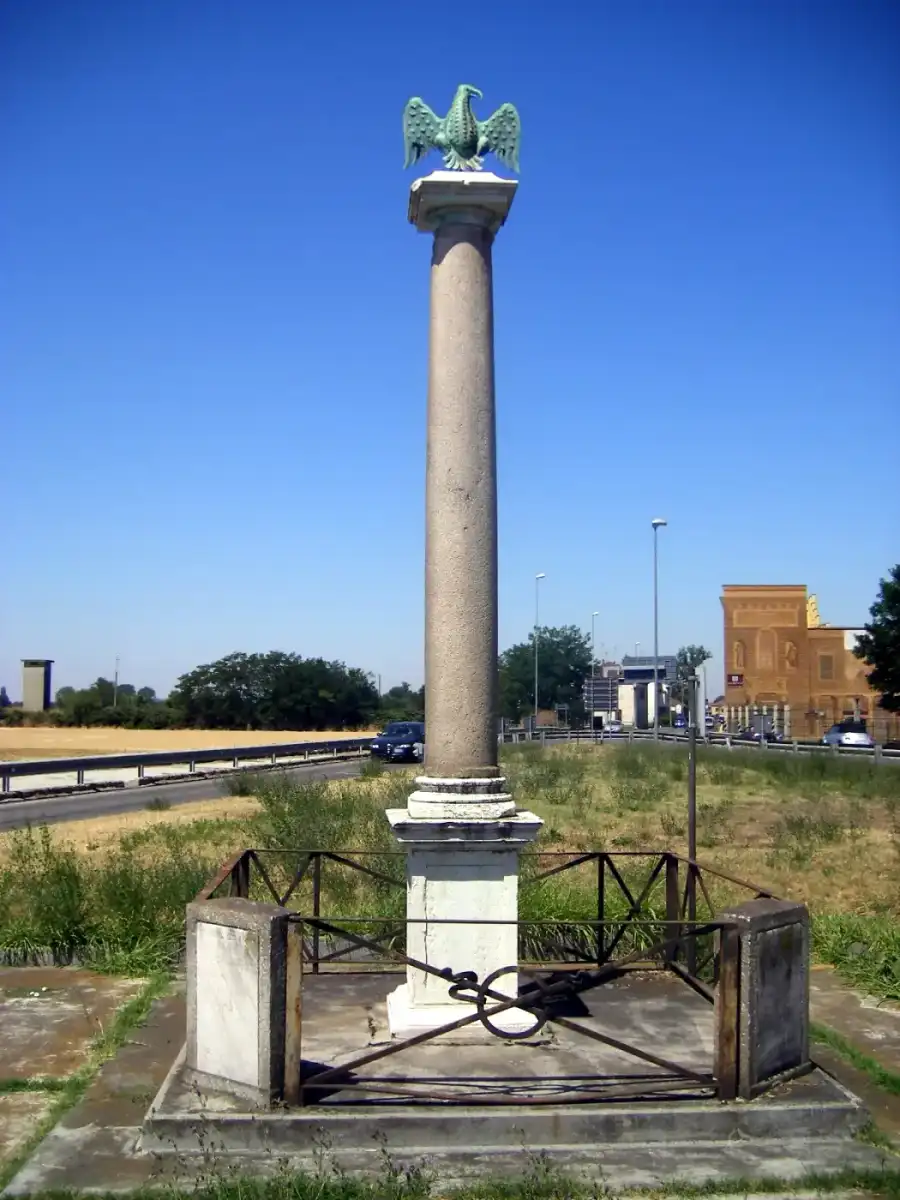 Szeder László · CC BY-SA 4.0
Spinetta Marengo
Spinetta Marengo (La Spinëta in Piedmont and Ra Spineuta in Alexandria) is a hamlet of 7 337 inhabitants of the town of Alessandria.
Read the story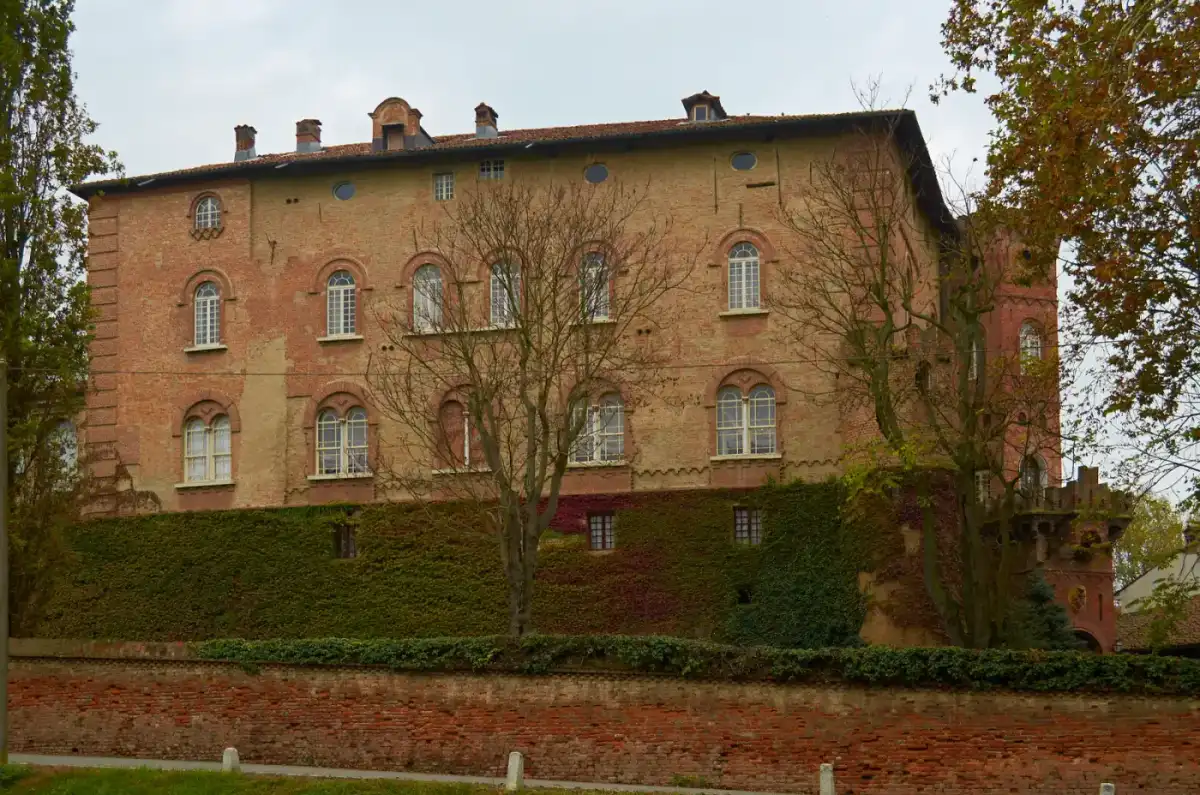 Terensky · CC BY 3.0
Oviglio
Oviglio (J'Ovij or J'Oij in Piedmont) is an Italian town of 1 232 inhabitants of the province of Alessandria in Piemonte .
Read the story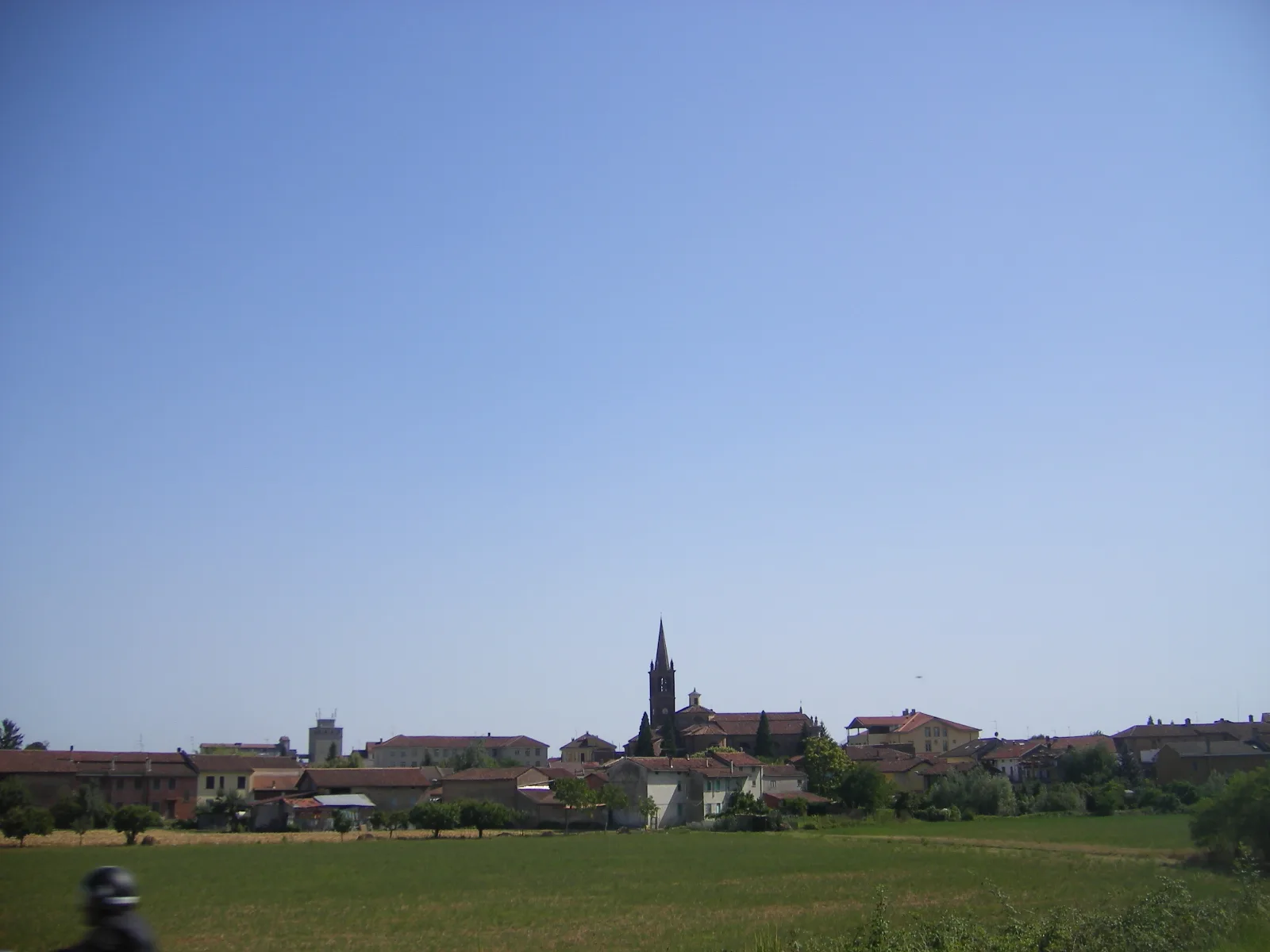 Szeder László · CC BY-SA 4.0
Solero (Italy)
Solero ( Soleri in Piedmont (Pronuncia Suleri ), Sulìare in local dialect) is an Italian municipality of 1 577 inhabitants of the province of Alessandria in Piemonte, located on the left bank of Tanaro . Its historical foundation dates back to the time of Roman domination.
Read the story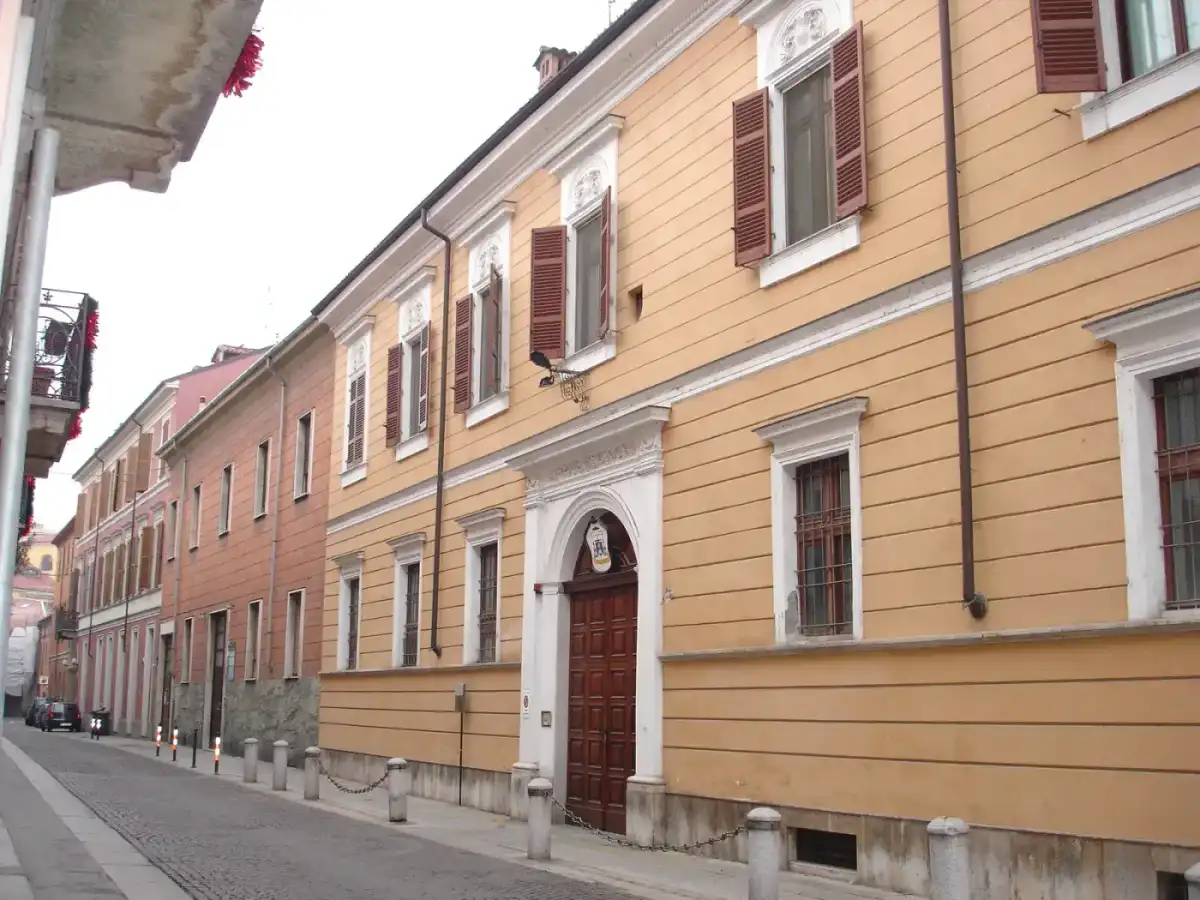 Tony Frisina di Wikipedia in italiano · Public domain
Diocese of Alessandria
The diocese of Alessandria (Latin Dioecesis Alexandrina Statiellorum) is a seat of the Catholic Church in Italy suffragan of the archdiocese of Vercelli and belonging to the ecclesiastical region Piemonte . In 2023, 140.000 were baptized on 152.900 inhabitants. The seat is vacant.
Read the story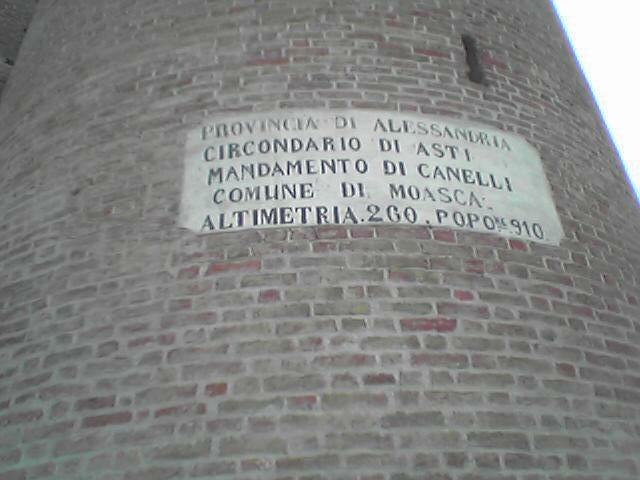 Andrea Marchisio · CC BY 3.0
Province of Alessandria
The province of Alessandria is an Italian province of Piemonte of the 408 765 inhabitants. It has as its capital the city Alessandria . In addition to the capital, in the province there are six centers-zone, where the main services are located, which correspond to the most important and populous cities, i.e. Novi Ligure , Tortona , Casale Monferrato , Acqui Terme , Valenza and Ovada .
Read the story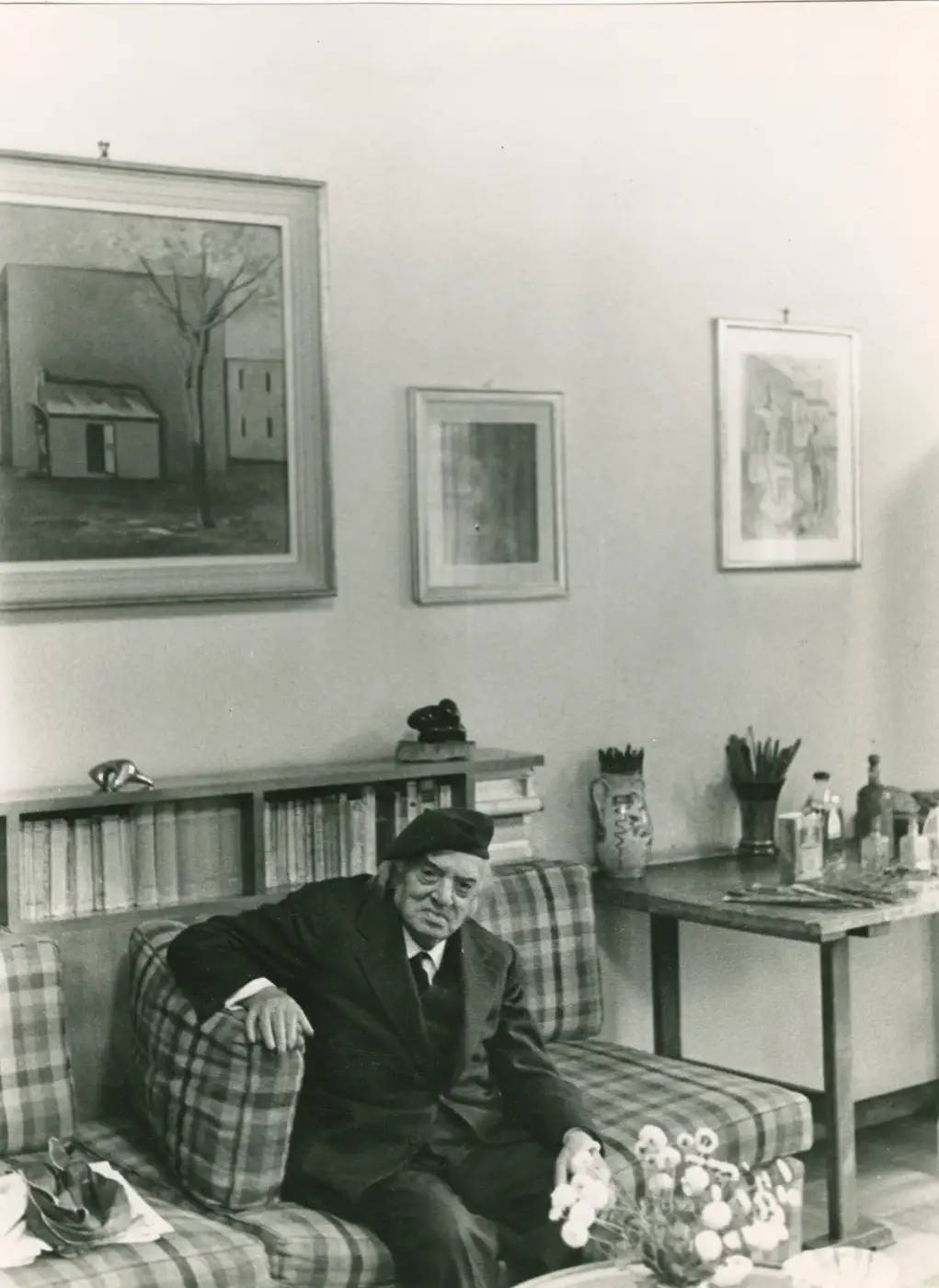 Sconosciuto Unknown author · CC BY-SA 4.0
Carlo Carrà
Carlo Dalmazzo Carrà ( Quargnento , 11 February 1881 – 13 April 1966 in Milan) was an Italian painter, professor at the Accademia di Brera from 1939 to 1951.
Read the storyThe area, step by step
Trails and routes in Quargnento

Asti, Alessandria and surroundings
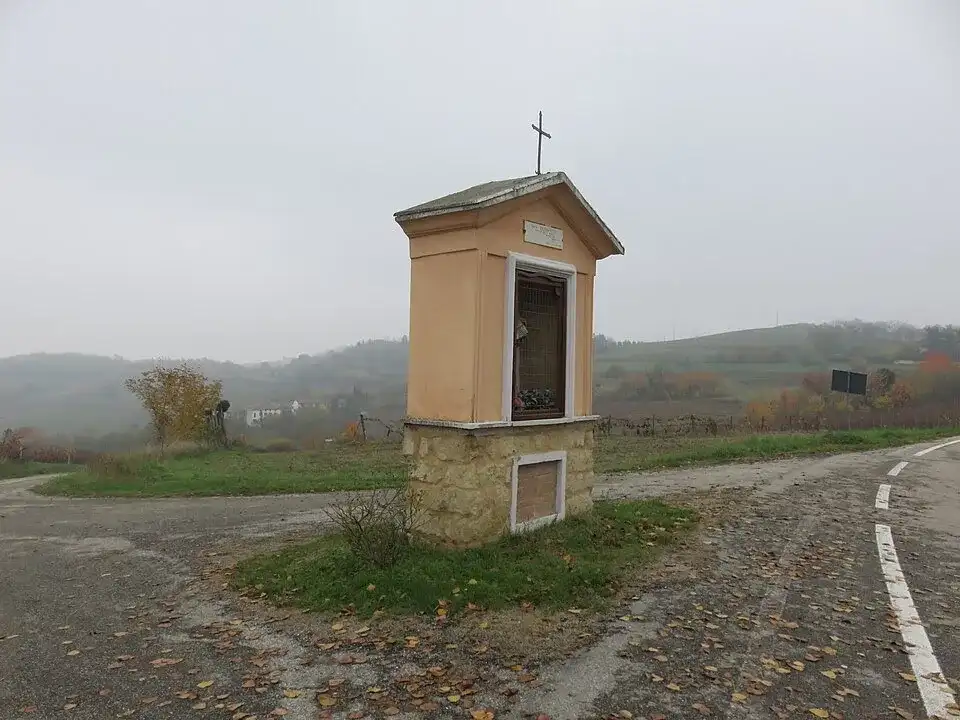
Anello Solero - Quargnento
 Mountain bikeAround the starting point
Asti, Alessandria and surroundings
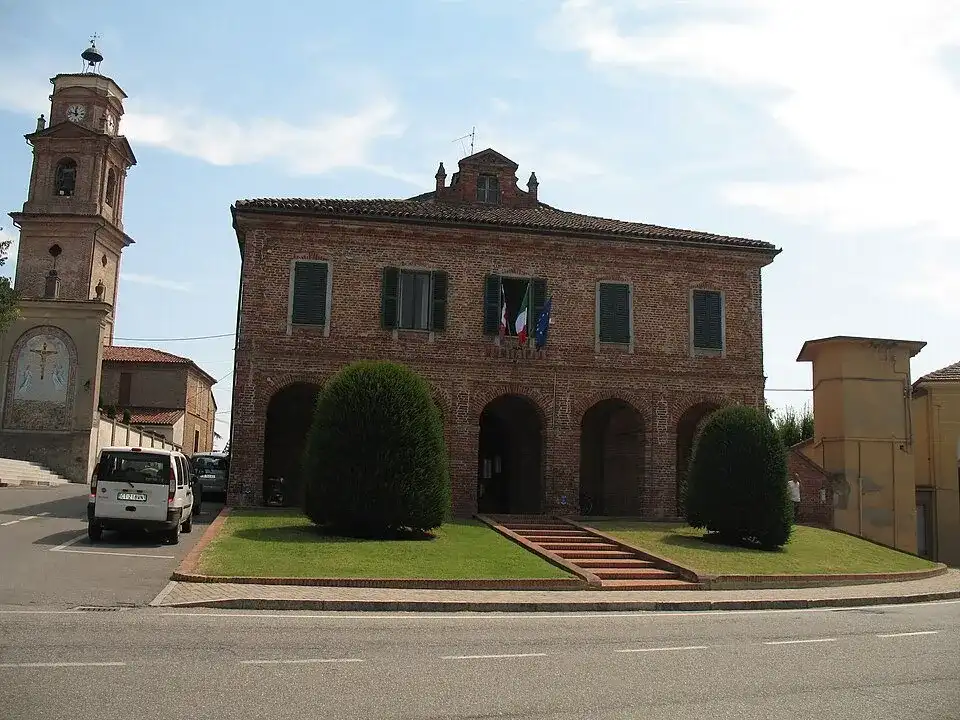
Monsterrato Strade Bianche
 CyclingAround the starting point
Asti, Alessandria and surroundings
Le strade bianche di Quargnento
Asti, Alessandria and surroundings