A closer look
History of Alessandria: at a glance
Alexandrian chronology
Prehistoric epoch: Paleolithic and Neolithic · Copper and iron age · Epoca preromanaExplore this chapter
Prehistoric epoch: Paleolithic and Neolithic
The oldest traces found in the province bear witness to sporadic but very ancient human presences. The first settlements are mainly marked in the eastern centre area: at Castel Ceriolo there were several quaetical instruments of paleolithic tradition. With the Neolithic ancestors of the Alexandrians pass to agriculture and breeding, produce ceramics, tease and spin the fabrics and smooth the stone. The settlements develop on the roads of communication (fiumi and streets) and near the areas of supplying raw materials, wild and above all green Apennines that is exported throughout Europe. The Alexandrian territory is one of the first to be colonized: Casalnoceto, Brignano-Frascata, Momperone in the province and above all in the area where today is the Christ district where at the end of the 21st century a burial and numerous lithic tools were found. In the recent Neolithic, the area of Alessandria (Cascina Chiappona), is affected by a profound change affecting the entire western cisalpine area and the transalpine area, highlighting a common cultural identity (the "Chasseano") in the occupied areas today from Piemonte, Valle d'Aosta, Southeast of France and Switzerland.
Copper and iron age
With the average and recent Bronze Age (1700 - 1200 BC) there is a progressive occupation of river terraces (Castelceriolo, Castellazzo Bormida) and hills with visibility over the territory (Montecastello). In this period, the transition from burial to cremation occurs according to the rite of the Urnfield Culture. The very important Tomb of the Alessandria (Cascina Chiappona) represents one of the oldest attestations (1450-1350 BC). In this period, well-characterized cultural groups were formed: Canegrate culture and Facies Alba-Solero of Tanaro, the link with the transalpine areas also indicates from a linguistic point of view the participation of these populations in the formation of the family of Celtic languages to which Ligurian also belongs. The end of the Bronze Age is characterized by the consolidation of control of the river and land communication routes between the Ligurian coast, the Po Valley and the transalpine areas in whose center the center of Villa del Foro.
Epoca preromana
The contacts with the Etruscans foster the growth of local Celtic-Ligurian populations with a commercial system between the Po Valley Etruria and Golasecca proto-urban centres and northern Europe. The most important settlements in the area, as well as those of Tortona And Frascaro continue to be those of Villa del Foro and of Montecastello. However, the foundation of Etruscan colonies in Genoa and Savona on the coast hindered the local populations from forming real urban centers. With the arrival of transalpine Celtic populations who mixed with local ones, the short period of influence of the Etruscan commercial system in this area ended. For the Romans these were still mysterious lands covered by forests and populated by Gauls, so it is very difficult to distinguish between native and transalpine populations. In some cases the new arrivals drove out the local tribes into the nearby mountains, in other cases the groups merged completely.
Roman epoca
It is not known the exact moment in which the Roman province was deduced, between the end of the 3rd century BC. and the beginning of the second century BC. the Roman conquest of Gallia Cisalpina, which remained in its own territory until 42 BC. year in which the province was finally abolished, making Gallia Cisalpina an integral part of Roman Italy. Contact with the Latin world created opportunities for civil, economic and cultural growth, and mixing with other ethnic groups. The implementation of the Roman rule on these lands was however a long and difficult path and no massacres were lacking. In 173 BC. the console Marco Popilio Lenate slaughtered 10 000 stains that inhabited the southern part of province, took hundreds prisoner and razed their capital to the ground Carystum, today identified with Acqui Terme. This mass extermination was not accepted by the Senate who imposed the consul to give back their homes and property to the Ligurians. A contrast was born that led to the revolt of many other local tribes who did not settle and provoked the massacre of at least others. 6 000 Nozzles. It seems that the name of the Christ district Alessandria derives from the name that the survivors gave to the lands in which they settled once liberated, in memory of their main center now destroyed. The trades developed around the Roman roads and along the two main rivers of the territory: Tanaro and Bormida. The Roman presence greatly changed over the centuries the socio-economic system of the territory. The creation, for example, of the servants of the gleba - wanted by Diocletian - gave propulsion to the development of those territories of Piemonte Southern which remained long more isolated. In Roman times saw an important development the inhabited centre of Villa del Foro (Forum Fulvii) which became an important castrum and that together with Tortona and in Libarna were the main centers of the area. The Roman colonial regime overlapped with a local situation in which the Celtic-Ligurian tribes took possession of the Alexandrian plain sporadic and disorderly. The centurial lattice, today very difficult to read, was based essentially on a north south axis of about 17 kilometers absolutely straight that went roughly from Sale to Basaluzzo. In the 3rd century AD. After the economic and demographic crisis, the face of cities and countryside has changed: at war events and natural disasters there is now an effective response from central authorities. Only the centers of Acqui and Tortona managed to maintain a sufficient economic structure and in them Christian communities were concentrated, Forum Fulvii falls in decay and the other small centers did not turn again.
Decline of the Roman Empire
During the last century of the Roman Empire, the Piedmontese territory is run several times by foreign armies. In 402 AD. the visigoto Alarico is defeated by Stilicone near Bra, but the situation goes away worsening throughout Piemonte, the unmaintained viary network is disappearing and campaigns, never entirely Romanized, suffer very serious famines. At this stage the center of Christianization are cities (Acqui and Tortona), only rarely, as in the case of Sarezzano, episodes of evangelization are recorded. There were a few years of relative tranquility with Theodoric controlling the situation but limiting himself to fortifying the large centers such as Turin and Tortona. Upon his death the territory falls back into chaos.
The Middle Ages and the arrival of the Lombards
In 568, with the invasion of the Longobards who took the place of the Goths and the creation of the first duchies and their vassals, the administrative order of Rome was definitively less. Many centres lost their urban character and assisted in a reorganization of rural territory with the formation of Curtains, large agricultural companies, created at the time. In the area we remember that of Marengo where the rulers of the Lombard and Carolingian era resided several times. Today, one of the oldest architectural testimonies in the municipality of Alessandria remains from this era: the tower Teodolinda which bears the name of the homonymous queen probably built in the early years of 600. At this time we witness the religious organization and a new attempt to evangelize based on pieves. These small churches assumed a specific reference function for large populated areas spread through the Eucharistic and baptismal liturgy. The Carolingian period probably dates back to the presence of curtis Rovereto, today the district of the city, in whose center was founded the church known as Santa Maria di Castello. In this period the territories of Piemonte and Provence were characterized by a strong insecurity due to the raids and looting of Saracens.
VIII-XI century
Towards the foundation of the city
Between 700 and 1000 the territory that saw the birth of the city Alessandria it was still poorly inhabited, with the exception of some curtes regiæ that recalculated the oldest settlements: Villa del Foro, as already written, Rovereto (Castrum Roboreti), Bergoglio (or Bergolium, or Blessing), Marengo e Castellazzo Bormida. To these were added autonomous centers such as Solero, Quargnento And Felizzano. The administrative and political structure of the time did not allow significant cultural and social development of the inhabitants, who however maintained trade with the nearby inhabited centers, increasing experience and wealth. The inhabited centers mentioned were formed and grew further until they created what would be founded and called Alessandria.
It is important to emphasize that, in fact, Alessandria it existed before its formal foundation. The various towns of the agro had already started numerous relations with the neighboring territories: purchase of land, alliances and agreements such as the military and commercial pact that the municipality of Gamondio fought with the Republic of Genoa in 1146. In the same period, and perhaps even before, some churches were also built including - the most important - that of Santa Maria di Castello in the heart of the village Rovereto. Already at the dawn of his birth, Alessandria he benefited from the strategic position at the confluence between Tanaro and Bormida.
12th century
Foundation of the Company
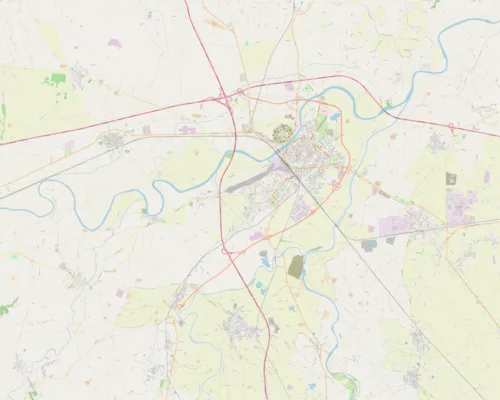

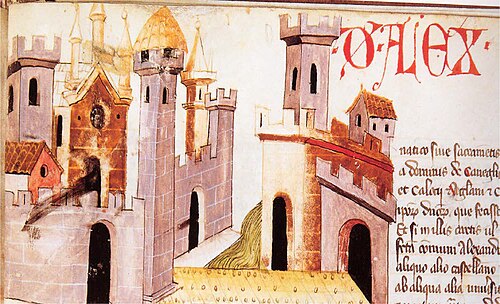
The city of Alessandria[2] was formed at first by the demic union of Castellazzo Bormida (Gamondio), Marenghum (Marengo) e Bergolium (Bergoglio). This can be seen in the text of Emperor Frederick's complaints against Cremona in 1184, which indicates the promoters and authors of the foundation of the new city: "de tribus locis, Gamunde vicelicet et Meringin et Burgul". The name of the meeting place is not described, although it seems already indicated with a certain precision in the specification of the site on Tanaro, where the transfer was shorter: Bergoglio[3]. The three places mentioned were added later Roboretum (Rovereto), Solero (Solero), Forum (Villa del Foro), Oviglio (Oviglio) e Quargnento (Quargnento). In this the populations were supported, economically, by the "Superba" and by the municipalities of the Lombard League in contrast with the Marquisate of Monferrato, main ally of Frederick Barbarossa.
The official foundation date of Alexandria is 3 May 1168, although at that time it has already reached a topographic, urban and administrative configuration defined. The name "Alessandria", confirmed later, will be assumed in honor of Pope Alexander III, a broad supporter of the Lombard League's actions against the Holy Roman Empire and who had excommunicated Frederick Barbarossa.
The Siege of Federico Barbarossa
29 October 1174 Alessandria suffered an attack by the imperial forces: this began a long siege which ended on 12 April 1175, with the surrender of Barbarossa's men, attacked and captured unprepared by the Alexandrians.
In 1183 after the peace of Constance and on order of the Empire, the city assumed the name of Caesarea but keeping it for a short time. In 1198 he became free common.
13th century
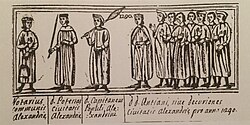
For over two centuries Alessandria maintained the condition of free commune entering conflict with neighbors Casale Monferrato, which was still part of the marquisate of Monferrato, with Asti and with Pavia, who feared its possible expansion.
Alessandria was excellently fortified: for its roofs and for its robust walls, built with simple straw and mud, it was long known in northern Italy as Alessandria of the Paglia. This statement is, in fact, disputed. In fact, it seems that the denomination Alessandria of the Paglia comes simply from a graphical misunderstanding. In the writings of Barbarossa, Alessandria it was defined with a spree Alexandria de palea that is, Alessandria of the swamp. Hence the error of the term palea Italianized in strawberry. It then ended up allying itself with Vercelli and above all with Milan, to which it linked its fortunes in the following centuries. In 1213 the three cities participated in the battle of Casei Gerola and in 1215 they attacked and destroyed Casale Monferrato.
Also Alessandria, traditionally military city, met monasticism: the Movement of Humiliates was particularly important, an Order recognized by Pope Alexander III, who introduced new techniques to the city for the processing of fabrics, and in particular wool.
La lupa di San Francesco
It was around 1220 that Francesco d'Assisi, directed in France, stopped near Alessandria where he killed a wolve who terrorized the population: a bas-relief portraying this episode is still preserved today within the Cathedral.
The Jewish community of Alessandria
The Jews obtained faculties from the dukes of Milan to settle in the city of Alessandria on the beginning of the 13th century: they founded a synagogue with the going of time directed by an independent rabbi and head of the University established in this city. So a vague tradition traces back to this time their coming as absent historical documents that can prove it with certainty.
14th century
In 1316 Guelph and Ghibelline families, worried by the continuous battles against Monferrato and Asti, chose to place the city under the protection of the Viscontis who, in 1348 incorporated it into their own territories.
Later. Alessandria He supported the Visconti in the war against France and joined the Duchy of Milan under the dominion of Gian Galeazzo.
On the death of the latter in 1402, the Duchy was attacked by the Casalesi di Facino Cane, who then conquered Alessandria in 1404. The city and the Duchy, however, returned to the Viscounts when the widow of the latter, Beatrice di Tenda, married Philip Maria.
XV-XVII century
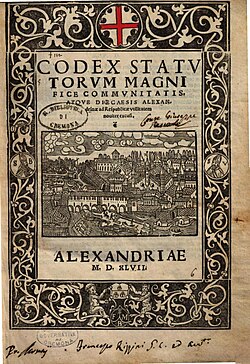
Alessandria under the Duchy of Milan
Afterwards the city followed the fate of the Duchy of Milan, passing to the Sforza in the middle of the fifteenth century; at first fell victim several times to the invasions of the French and from 1535 fell under Spanish rule and remained there for the whole seventeenth century, becoming an important commercial knot between Genoa and Lombardy.
18th century
Alessandria pass to the Savoy
In 1707 he was conquered by Prince Eugenio, finishing so after the treatises of Utrecht in 1713, in the hands of Savoy, under the Piemonte: Vittorio Amedeo II, considered the strategic position of the city, reorganized its political life, establishing the role of the Governor, and military structures, to update them to the latest developments in modern fortification, building a huge Citadel that caused the abandonment and complete destruction of Bergoglio. In this period the number of citizens rose to about 15 000 unit.
On the death of Vittorio Amedeo II in 1732, Charles Emmanuel III succeeded him who raised the league with England and Austria. He attacked the Bourbons of Spain, France and Naples but without luck. In fact, they arrive in the plain of the Fraschetta and Alessandria, they took care of Serravalle Scrivia, Libarna and di Tortona and they took the Piedmontese to Bassignana by sustening them up to San Salvatore Monferrato and to Valenza And they kept them in Crescentino.
In the 1746After heroic efforts made by the troops of Carlo Emanuele, the enemies were denied and dismissed and Piemonte, except Valenza and Tortona They returned to the Savoy.
19th century
At the end of the century the whole Piemonte was struck by the battles resulting from Napoleon Bonaparte's expansionist myres and if already after Cherasco's armistice the influence of the emperor course was tangible, in 1802, after the battle of Marengo (won by the transalpine troops), Alessandria was officially annexed to France together with the entire region, becoming the capital of the Department of Marengo. Subsequently, in 1814, the city was conquered by the Austrians and on 30 May of that same year, after the Treaty of Paris, it became part of the Kingdom of Sardinia as it was returned to the Savoy family. All subsequent dominations took particular care of the Citadel, enlarging the external works.
Risorgimento and Unification of Italy
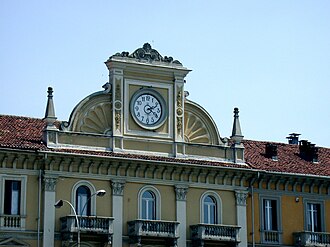
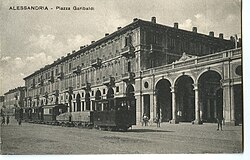
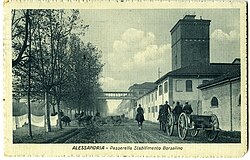
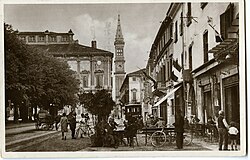
During the Risorgimento, Alessandria was an important liberal centre and it was precisely from the Piedmontese city that left the moths of March 1821 with Santorre di Santa Rosa, a stationary officer in the citadel of Alexandria; for this reason, several citizens who had joined Giovine Italia were subjected to trials and sentenced by conspiracy: the patriot lawyer Andrea Vochieri remained victim in 1833.
In October 1859 it was chosen as the capital of One of the first four Piedmontese provinces, for a slice of territory that also included theAstigiano. On 25 July 1899 it became the first Italian provincial capital city to be governed by a council with a socialist majority: that day the watchmaker Paolo Sacco was elected mayor of the city.
The birth of the Railways and the increase in trade in Northern Italy, at the end of the nineteenth century transformed Alessandria into one of the nerve points for the Italian market. Due to its position, in the centre of Turin, Milan and Genoa, during this period the city experienced a great demographic increase, which led to the re-urbanization and expansion of the city territory, and an important development in industry, witnessed by the success of companies such as the Paglieri cosmetics industry, the Gandini perfumes, the silverware (Goretta, L.I.M.A. founded in S. Maria di Castello in 1935 after the move of the Caretti shoe factory), Cicli Maino, especially Borsalino, whose production of characteristic felt hats became famous all over the world.
20th century
The fascist period and the Second World War
Under Fascism Alessandria it maintained its importance; in the 1930s important public buildings were erected architectural works, such as the anti-turbercular dispensary, designed by Ignazio Gardella and the Palazzo delle Poste, decorated with mosaics of Gino Severini.
During the Second World War, the city suffered repeated and heavy air bombings: on April 30, 1944 the bombs struck the popular district Christ, making 239 dead and hundreds of wounded, destroying the Municipal Theatre; on summer nights, then, the myth of "Pippo", a plane used for reconnaissance, whose assurgent noise terrorized Northern Italy. In June the bridges were severely attacked and damaged on Tanaro and on Bormida which represented the main road from Liguria to Turin, in fact the repeated bombings suffered by Alessandria were due to the attempts to stop this connection. Another bombing, on 5 April 1945, made 160 deaths, including 40 children of the kindergarten "Maria Ausiliatrice" in via Gagliaudo. Because of the air bombings, more than 500 citizens died, about one percent of the population: the Germans surrendered on 29 April; between 1943 and 1944, 27 Alexandrian Jews were arrested by the Italian Social Republic and transferred to Fossoli concentration camp. The synagogue of Alessandria was plundered and partially destroyed by the fascists in December 1943.
The post-war period
In post-war period Alessandria He followed the fortunes of northern Italy, initially knowing that development and that form of well-being which spread throughout the 1960s with the economic boom, also knowing the immigration of people from southern Italy and reaching over 100 000 inhabitants in 1970.
Subsequently, when the effects of economic boom came back, Alessandria He had a demographic drop. The city was also shocked by the fact of chronicle in a political background that bloodshed Italy in the 1970s: on May 9, and 10, 1974, an internal revolt in prison resolved tragically, with 7 dead people and 14 wounds: this episode was remembered as the "strage di Alessandria". Moreover, it was in a farmhouse near the Piedmontese city that held the first meetings of the group of Red Brigades and took place the kidnapping Gancia.
Alessandria and the flood
The 6 November 1994 the city drew attention to the national chronicles following a large flood that invested it for good part by submerged large residential areas (especially the neighborhoods Orti, Rovereto, B Pride, Borgo Cittadella, Astuti and San Michele) and various fractions. The flood, which was caused by the overflow of the river Tanaro, also caused the death of eleven people as well as enormous damage to both private homes and the city's economic structure.
1998 Alessandria became the seat, along with Novara and Vercelli, of the University of Studies Piemonte Oriental "Amedeo Avogadro".
Notes
Explore this chapter
- ^ The Ghilini in his Annals of Alessandria, p. 2-1168/1 erroneously wants that the birth of the city took place on 22 April 1168, that is the same day as the foundation of Rome: "[...] пеl what day Romulus gave rise to the fabrica of the City of Rome [...]". Ghilini makes more than one mistake: the foundation of Rome is officially set on April 21st, and - in reality - the name Caesarea was imposed by the emperor in Reconciliatio Cæsareæ of 1183 (Germaniæ Historica Monument, pp. 181-182), which was soon abandoned by the inhabitants themselves as an element foreign to their collective conscience and individuality. Geo Pistarino, p. 15
- ^ In the first twenty years of its history, the city presents four different names in sources: Alessandria Caesarea[1], Palea, Rovereto, in addition to the quite frequent generic designation of civitas nova or nova civitas, and to the rarer designation of urbs nova. (Geo Pistarino, p. 15).
- ^ Geo Pistarino, p. 14.
- ^ In Italian: "Code of statutes of Alessandria and his diocese."
Bibliography
Explore this chapter
- Claudia Bocca, Massimo Centini, Brief history of Piemonte, C. Bocca, M. Centini, Tascabili Economici Newton, December 1995.
- Marica Venturino Gambari, Archaeology in the province of Alessandria, De Ferrari & De Verga, March 2006.
- Francesco Moscheni & F.lli, Codex Statuterum magnifice communitatis atque diœcæsis Alexandrinæ, Alessandria, 1547. Retrieved 9 June 2016.
- Girolamo Ghilini, Annals of Alessandria, Milan, Gioseffo Marelli, 1666.
- Giovanni Battista Moriondo, Monument to Aquensia, Turin, Royal Typography, 1790. Retrieved 10 June 2016.
- (THE) Georg Heinrich Pertz (ed.), Reconciliatio Cæsareæ, in Germaniæ Historica Monument, II, Hannover, 1837. Retrieved 16 June 2016 (archived fromoriginal url on 12 August 2016).
- Geo Pistarino, The double foundation of Alessandria (1168, 1183) (PDF), in History magazine Art Archaeology for the provinces of Alessandria and Asti, single volume, Alessandria, Society of History Art Archeology - Accademia degli Immobili, 1997, pp. 5-36. Retrieved 11 June 2016.
- Gianfranco Calorio, Bergolium: the Territory and the Abitato, first volume, Castelnuovo Scrivia (AL), Favolarevia Publishing House, 2000.
- Statutes
- (THE) Codex Statuterum magnifice communitatis atque dioecaesis Alexandrinae, Alessandria, Francesco Moscheni & brothers, 1547.
Continue your journey