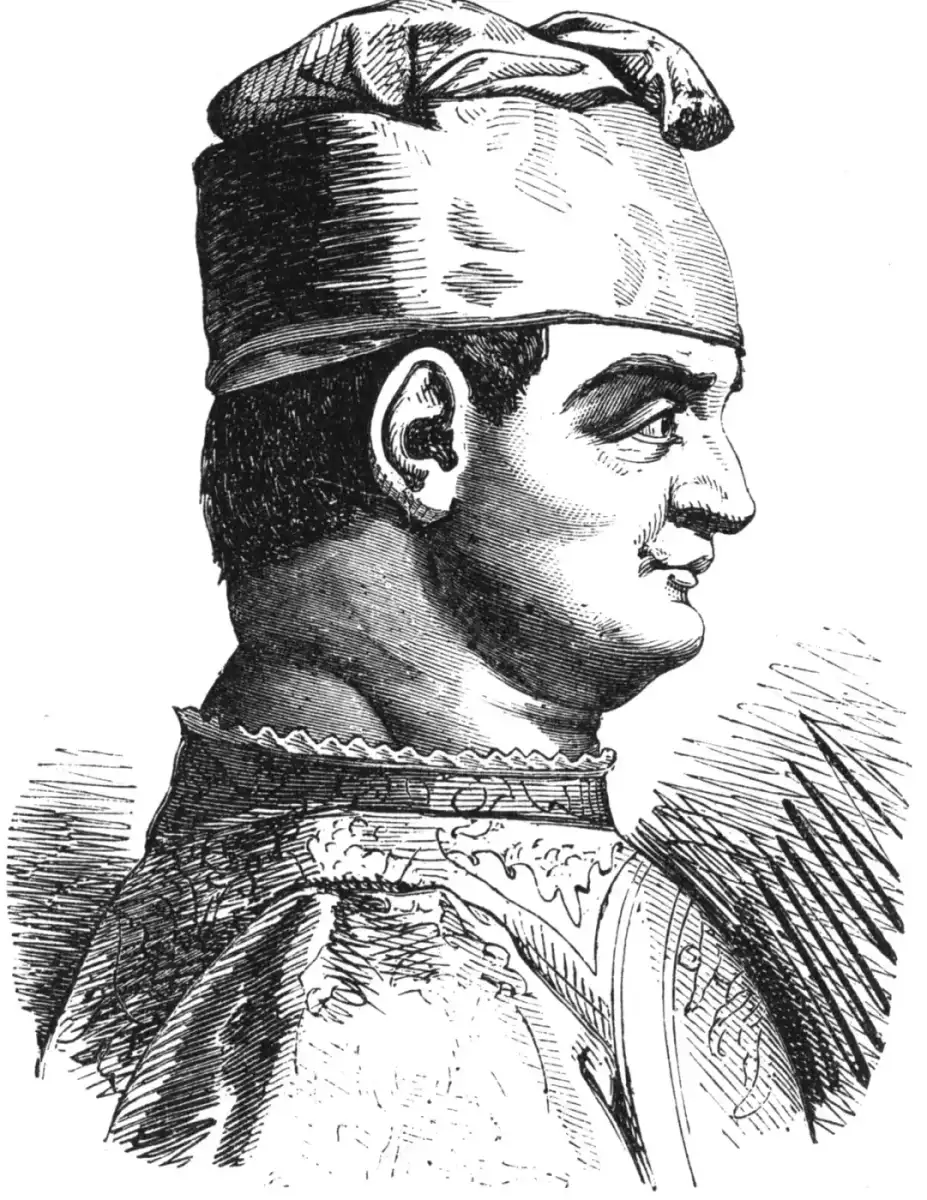
A closer look
Alexandrian nobility: at a glance
The alessandrin nobility was a privileged social class of the city Alessandria and its suburbs from the medieval and communal era to Restoration. The nobility, composed of both families of the civic patriziato and feudal families, was for centuries linked to the Duchy of Milan and was gradually integrated into that Piedmont during the eighteenth century, after the passage of Alessandria to the Savoy in 1713. As part of the subalpine nobility, it became part of the Italian nobility since 1861, since the proclamation of the Kingdom of Italy.
History
Origins · Duchy of Milan · Under the Visconti: the Ducal HouseExplore this chapter
Origins
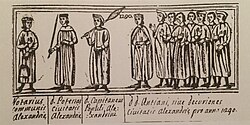
The city of Alessandria was founded around 1168, which is fixed as a conventional date, by the union of the four villages of Blessing, Castellazzo Bormida, Marengo and Rovereto, from which most of the citizens of the new municipality came; Noble families from other cities, such as Genoa or Milan, or feudal lords from nearby villages also contributed to the foundation. The first municipal regulations, with the establishment of the governing bodies of the General Council and the Elderly, date back to 1228: on this date the city patriciate was established, made up of 128 families with exclusive access to the government of the city. The families were divided into two lists of Nobles of the People and Nobles of the Municipality: the first were the families of the original population, coming from the four founding villages, the second were those who arrived from other cities after the foundation. The Nobles of the People had the right to half the seats in the Council, composed of 208 members, and the exclusive right of access to the Eldership, or Decurionate, from which the Nobles of the Municipality who only had access to the Council were excluded. The families were also divided by neighborhood of origin, so that each neighborhood was represented in the Council for a quarter of the seats, divided between nobles from the People and from the Municipality[1].
Duchy of Milan
Alessandria he remained free until 1348, when he joined the territories of the Duchy of Milan; already from 1316 the city, by decision of his patrician, had been placed under the protection of the Visconti.
Under the Visconti: the Ducal House
Since the time of the foundation, the Alexandrian nobility was dilain internally by the struggles between the two factions of the Guelphs and Ghibellines, whose composition is evidenced by the lists of 1225, three years before the municipal ordinations. In 1417 Philip Maria Visconti, to put an end to these struggles, decided to establish the Ducal House of Alessandria, a third faction under its direct protection with control functions on preceding. A good number of families of the city nobility entered into part, choosing to swear allegiance to the Duke and obtaining in return a concession of common weapon and a reserved place in the city to gather. Many of the families of a ducal part, however, do not appear in the lists of the original patriziate, a sign that the Visconti wanted with this act to establish an "new nobility" Alexandrian to them faithful.
The Spanish period: the Provision
The government of the municipality remained firmly in the hands of the original patriziato until the end of the 16th century, passing through the strong and French phases. In 1559, the year of the passage of the duchy of Milan under Spanish domination, in a reform desired by the Governor of Milan, Gonzalo II Fernandez de Cordoba, was reconfirmed the hereditary right of access to the Council establishing "that neither one is elected nor admitted for councilman, which is not of the ancient and original families and that it does not have the merits in accordance with the orders of the city heist."[2]. The city chronicles, in reality, recall the names of some Councilors and Elders not belonging to the original patriciate: it is probable that these were people aggregated to one of the patrician houses (which functioned as "hotels", see further the case of the Cantonos) or that they were exceptional admissions per personm in favour of citizens in sight.
In 1589 a new reform adopted Alessandria to the Milan municipal ordinations, establishing the magistrate of the Twelve of Providence in replacement of the Anzianate. From this moment on, and increasingly with further reforms of 1609 and 1651, the Provision became the governing body of exclusive nobleman, then finally changing its name in Decurionate around the mid-18th century. Access to the Council instead ceased to be reserved for the patrician citizen and was allowed to all citizens of the municipality who met certain census requirements and whose family had been living in the city for at least seventy years.[3]. Despite this, Baron Antonio Manno inserted in his Patriziato Subalpino even some Alexandrian families who had access to the Council only after 1589, thus deeming membership of it, if repeated for generations, ingenious nobility even after reform[4].
Kingdom of Sardinia
The passage of Alessandria under the rule of Savoy, in 1713, it did not change the functioning of the Municipality, and the organs of the Council and the Decurionate survived until 1840. In the Sabaudo period, the interference of the rulers sometimes led to tensions with the Alexandrian patriziate, as in the case of the araldist Cesare Nicola Canefri, seen with benevolence from the sovereign and admitted to the Decurionate and then fall two times into disgrace for his documentary falsifications[5]. The Alexandrian patriciate was, together with those of Novara and Tortona, among the only three recognized as "noble patriciates" among the provinces newly purchased by the Savoy, with Letters Patent of 1775[6]. In accordance with this criterion, the Heraldic Council of the Kingdom of Italy officially included the families descending from the Decurioni of 1771 in the Noble Lists of the Kingdom, with the right to the title of Noble.
Composition
Of the Alexandrian nobility were the families of the patriziate and those who had other types of nobility, deriving from the possession of fiefs, from noble diplomas or...Explore this chapter
Of the Alexandrian nobility were the families of the patriziate and those who had other types of nobility, deriving from the possession of fiefs, nobility diplomas or belonging to noble knights; of course in many cases these titles were added to a pre-existing patriziate, or vice versa the aggregation to it derived from a pre-existent status Noble.
The patriziato, more particularly, can be gathered in three groups of houses: those of the original patriziato, present in Council since 1228, those native to Alessandria and aggregated in later times and those that, already of clear nobility in other places, were admitted to the patriziato after their transfer to the city. The municipality never received an official Gold Book; the only official list of patrician families is therefore that of 1228, reported in whole in the year of Ghilini, while for the period following the reform of 1589, the list of patrizie families of Alessandria from those who had Lords of Providence and Decurions.
Among the main Alexandrian families are the Guasco, Trotti and the Ghilini, while among the feudal families not originally from the city we remember the Faà of Bruno, the Moscheni and the Scati. In ancient times, some families also played a leading role in the city's political events and, despite falling within the category of feudal families, derived their power above all from municipal offices: among these the Lanzavecchia family stands out, among the main members of the Ghibelline faction.
List of the main noble families Alexandrian
A · B · CExplore this chapter
List in alphabetical order of the noble families Alexandrian from 1228 to 1840, derived from the works cited in bibliography. For the dates of fief investing, reference is made mainly to the Feudale Dictionary of Guasco, the information in note and the dates of aggregation to the decurionate are often obtained from the Subalpino Patriziato del Manno. The families who, in addition to the titles indicated, belonged to the Doge's House are underlined.
A
| A | Patrizia | Title | Notes | Coat of arms |
|---|---|---|---|---|
| Accarini | Admitted to the patriziato | Receipts in the Order of Malta | Lucca Accarini – noble citizen of Alessandria, he was admitted into the Order of Jerusalem Knights (now known as the Order of Malta) on 12 October of that year. From the text it is implicit that the event occurred in the year 1381, the same in which Lodovico, son of Barnabò Visconti, married Violante.
The mention is found in the volume of Annals of Alessandria, on lines L17521–L17527. |
|
| Acorners | Appropriations of the Municipality | |||
| Agosti | Decisions (1771) | Accounts (1842) | Giorgio Francesco and Andrea Cristoforo, children of the doctor and lawyer of the poor Antonio Domenico, admitted to Decurionato in 1771. Giuseppe Angelo, Senator Prefect of Alessandria, was created Earl in 1842. | 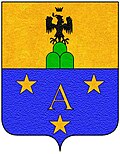 |
| Alarcone | Decisions (1739) | Decurional family of Spanish origin. | 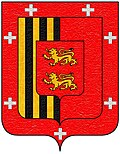 | |
| So then. | Decisions (1589) | James then one of the first twelve Provisions in 1589. | ||
| Alnerio | Consignori di Castelgrana (1594) | |||
| Alvergna | Ghibellini del Popolo di B Pride | For the Ghilini Nobili del Comune | ||
| Angels | Ghibellini and Nobili del Comune di Gamondio | Cited as both the People's and the Municipality of Ghilini under the name "Engelleri". It is probably two branches of the same family, perhaps the same strain as the Angeleri di Casale. | ||
| Anolph | Guelphs and Nobles of the People of B Pride | Ladies and gentlemen Borgoratto Alessandrino (1652)
Received in the Order of Malta as the fourth Viscounts |
Biagio Anolfi, notary, was one of the first 12 Provisions in 1589. | 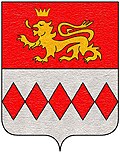 |
| Ardizzoni | Ghibelline and Nobili del Popolo di Gamondio | For the Ghilini are Ghibellini of the Municipality of Gamondio in 1225, but nobles of the People in the lists of 1228 | ||
| Areas | Appropriations of the Municipality | |||
| Arnuzzi de' Medici | Guelfi and Nobili del Popolo di Rovereto | Court of Justice accounts (1718) | John Luchino, apostolic protonotarian and referendary of Marking, had by Pope Leo X in 1517 the privilege of aggregation to his house with the right to bring its surname and weapons.[7] | 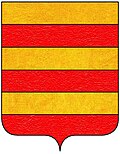 |
| Arobba | Guelphs and Nobles of the People of B Pride | |||
| Arribald | Decisions (1716) | Then Arribaldi Ghilini | 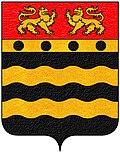 | |
| Auctions | Ghibelline and Nobili del Popolo di Gamondio | Alias Ollari. For Ghilini are Ghibellini of the Municipality of Gamondio in 1225, but nobles of the People in the lists of 1228. They have the legendary origin of Gagliaudo Aulari. Camillo, bishop of Bobbio, belonged to them. Giovanni Francesco was one of the founders of the Accademia degli Immobili. | 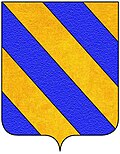 |
B
| B | Patrizia | Title | Notes | Coat of arms |
|---|---|---|---|---|
| Kisses | Barons of Celli and Montalè (1774) | Originaries of Corsica | 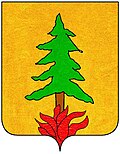 | |
| Bagliani | Ghibellini and Nobili del Comune di Gamondio | Marchesi del S.R.I.
Palatine accounts (1469, 1536) Gentlemen of Casalbagliani (1280) Consignors of Odalengo Piccolo |
Transfers to Casale Monferrato, where they flourished and had numerous imperial titles | 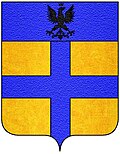 |
| Kisses | Guelfi and Nobili del Popolo di Rovereto | |||
| Balbi | Accounts of Cantalupo and Villa del Foro (1733)
Robecco accounts (1772) |
Oriundi di Oviglio | 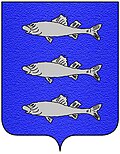 | |
| Balloon | Guelphs of the Municipality of B Pride. They had a canon in San Pietro in B Pride at least from 1350[8]. Lorenzo Balocco was among the "noble citizens" gathered to discuss the electoral reform of 1559. | |||
| Balosti | Guelphs and Nobles of the People of B Pride | alias Balosto | Silver, six flowers of red, gambuti and leaflets of green, 3, 2, 1 | |
| Baratta | Guelphs and Nobles of the Municipality of Gamondio | Consignors of Quattordio (1673)
Receipts in the Order of Malta |
They are descended from the ancient lords of Villa del Foro. Ottavio was one of the first Twelve of Provisione in 1589. | 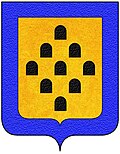 |
| Barberi | Ghibellines and Nobles of the People of B Pride | This family belonged to Perotto Barberi, a doctor of the fifteenth century. His son Cristoforo was a well-known collegiate, as many other members of the family at least from 1301 (Manfredino di Giacobino) to 1663 (Christ of Peter Augustine) | Silver, the red cross, anchored and divided into four pieces | |
| Baru | People's Nobles | |||
| Baschiazzi | Guelphs and Nobles of the People of Gamondio | Alias Basgiazza. Matteo Giureconsulto in 1466. | ||
| Baudi | Accounts of Selve (1722)
Accounts Vesime (1766) Accounts of Calvignano (1774) Barons of Belriparo (1750) Nobles of Alessandria (recognition of 1775) |
They originate from the ancient lords of Lanerio. The family flourished in Vigone and Turin and had in 1775 a certificate of the Municipality of Alessandria that declared it descendant from the ancient Alexandrian Baudi, who had Elders and were enrolled at the Doge's House | Of blue to the open gold compass, with red head, sewn, load of three golden shells ordered in band | |
| Beccari | People's Nobles | Gentlemen (1598), then Counts of Grognardo (1604)
Gentlemen of Camo (1722) |
Also known as Beccaria, perhaps a branch of the famous Pakistani family with which they also shared the weapon. The Grattarola (v.), later became Beccaria Incisa Grattarola, also acquiring the fief of Santo Stefano Belbo (Incisa) | 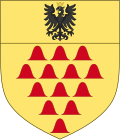 |
| Bellingers | Consignors of Rivarone (1441) | Oriundi di Milano, resident in Alessandria | Of red to three gold leopards, one on the other | |
| Bellisani | Guelphs and Nobles of the People of B Pride | |||
| Berneri | Ghibelline and Nobili del Popolo di Marengo | |||
| White | Guelfi and Nobili of the Municipality of Rovereto | Nobles of Alessandria (recognition of 1750) | Transferred to Naples, are called Bianchi d'Espinosa | Charmed with red and silver, of four pieces |
| Bio- | Decisions (1619) | |||
| Bodies | Guelphs and Nobles of the Municipality of Gamondio | Two branches: Boidi Ardizzoni and Boidi Trotti | 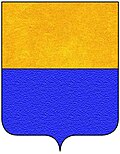 | |
| Bull. | Ghibellini and Nobili del Popolo di Rovereto | The Manno tells them about Chieri's oriundi. Giacomo Filippo Bolla was decurione in 1649, Ippolito Bolla, captain, distinguished himself in arms at Portolongone in 1650. | Of red, on the right flight, of silver, with the head of gold, loaded with an eagle, of black | |
| Bonelli | Aggregation (1566) | Principles of Salci
Duchy Accounts Bosco Marengo (1597) Receipts in the Order of Malta |
Origins of Bosco Marengo, aggregated in 1566 with the accession to the cardinalate of Michele Bonelli, nephew of Pope Pius V | 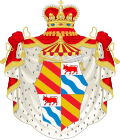 |
| Borghi | Guelphs and Nobles of the People of Gamondio | |||
| Burgundy | People's Nobles | |||
| Bottazzi | Guelphs and Nobles of the People of Marengo | Of the blue, to the golden box, circled and black, with the head of gold, loaded with a crowned eagle, of black | ||
| Bovine | Accounts Conzano (1766) | Known as Bovio della Torre, they have origin from the Torriani of Milan. The Bertarello Boviani was probably ascribed to the Doge's House. | Of blue, to the tower of two impalcates, supported by two counter-rampant leoncini, all gold, with the head of gold loaded with a crowned eagle, black | |
| Brachester | Dukes of Nemi
Accounts Patrizi di Cesena (1607) |
Guelphs of the People of Marengo transferred with Giacomo around 1471 to Cesena, where they flourished and gave birth to Pope Pius VI[9][10] |  | |
| Busy! | Guelphs and Nobles of the People of Gamondio | Nicolao di Eustachio notaio collected in 1492 |
C
| C | Patrizia | Title | Notes | Coat of arms |
|---|---|---|---|---|
| Hunting | Decisions | Ramo of the famous family Caccia Novarese, admitted to the decurionate in times back to the reform of 1589[11][12] | 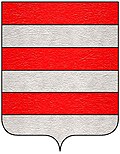 | |
| Cacciaguer | Guelphs and Nobles of the People of Gamondio | |||
| Calcamuzzi Firuffini | Ghibellini and Nobili del Comune di Marengo | Accounts of Cascinagrossa (1734) and Montalero (1894)
Ladies and gentlemen Castelspina (1449), Mandrogne (1734) e Monleale (1753) Consignors of Cisterna d'Asti (1422) |
They originate from the ancient lords of Pozzolo Formigaro, Sezzè and Marengo. Some sources want Calcamuggi and Firuffini two distinct but joint families, but for the majority of scholars it is the same family, which takes the second name from the Ruffino (head of the Ruffino)Wire Roffini, sons of Ruffino). The Firuffini had the lordships of Castelspina and Cisterna d'Asti. | 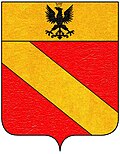 |
| Calcavators | People's Nobles | |||
| Calvins | Guelphs and Nobles of the People of Marengo | |||
| Chancellor | Decisions (1738) | |||
| Cane Bisnati | Admitted to the patriziato (1571) | Ladies and gentlemen Pietra Marazzi (1558) | Of blue, to the green tree, nourished on the plain of the same, drawn by a golden snake, the head turned, left by a silver mastinee, in order to take advantage against the mustard, with the gold garment, loaded with an eagle of black, crowned with silver | |
| Canaefri | Guelphs and Nobles of the Municipality of Gamondio
Decisions (1738) |
Accounts (1747)
Ladies and gentlemen Fresonara Receipts in the Order of Malta |
Powerful Alexandrian family from Gamondio. The false Caesar Nicola Canefri, who succeeded with numerous impostures to be admitted to the Decurionate in 1738 and later obtained the title of Conte.[13] | Of red, to the hulled band of three rows, of blue and silver
Alias: Of red, to the hulled band of three rows, silver and blue, accompanied by a silver star |
| Canton | Decisions (1595) | Alias Cantono. Coming from another city, probably Andorno. They exercised noble prerogative already in 1593 aggregating to themselves the brothers Gianfrancesco, Gian Bartolomeo and Paolo Giorgio Cantono from Andorno, perhaps their relatives[14]. Admitted to the Decurionate in 1595[15]. The most illustrious member was Giovanni Battista (1589-1655), a jurist who was appointed Senator of Milan by Philip IV and then Regent for the Duchy of Milan in the Supreme Council of Italy. His son Hortensio was named Knight of Santiago by the king himself. | Of [...], to the eagle of black, carrying in the chest a shield of blue, to the mountain triangle, of silver | |
| Capriata | Marchesi di San Giuliano (1743) | They originate from the ancient lords of Capriata d'Orba. Originally from Valenza, where they sat in the Council (1650). They became extinct in the Prati di Rovagnasco (see) with Cristina, daughter of Camillo, first marquis of San Giuliano. | Intersected in band, at the 1st of gold, to the crowned eagle, of black; at the 2nd of blue, to the cross shortened by two stars (6), all golden; at the 3rd of red to the crowned leopard, supported by two human bones, decussate, all of gold
Alias: Of red, to the passing lion, of gold, accompanied in tip by two human bones, natural, decussed, with the head of gold, loaded with a crowned eagle, of black | |
| Cars | Decisions (1643) | |||
| De Carli | Aggregation (1574) | Accounts (1730)
Nobles (1436) Patrizi di Novara |
Noble family of Novara. Il Giureconsulto Giovanni Francesco De Carli, a resident with an official assignment Alessandria, was aggregated on 1 February 1574 to the patriziate. | Red, silver crowned lion
With the aggregation, the use of the coat of arms of the Municipality of Alessandria is granted: Silver, to the red cross |
| Cassagni | Ghibellini and Nobili del Comune di Buda | |||
| Castellani Merlani | Ghibellini and Nobili del Comune di Gamondio | Arache accounts (1895)
Receipts in the Order of Malta |
Among the most important families of non feudal nobility, they were for a period leading the Ghibelline faction of Alessandria. They are remembered as Castellani Merlani at least from the fourteenth century, probably by the union of two families of the same consortium[16], to which the Prasca family also belonged[17]. Another line was that of the Castellani Merlani Varzi. Counts of Arache by Bertalazzone succession. | 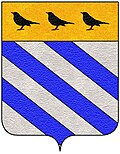 |
| Castles | Decisions (1771) | Admitted to the Decurionato with Federico and Isidoro, lawyer, in 1771 | Party, three-ball red, silver, and blue, to the sewn tower, of red | |
| Cavallero | Decisions (1640) | |||
| Riders Reischio | Decisions (1620) | Accounts Cuccaro Monferrato (1781) | Admitted to the decurionate in 1620 with Giulio Reischio (adopted in 1618 by the son Giulio Cavasanti; the family is then called Cavasanti Reischio), perhaps descended from those Reschii Nobili del Comune (v.). Cristoforo Cavasanti bride Eleonora Roberti of Castelvero, who in 1781 bought the fiefdom of Cuccaro Monferrato and is invested: his son Lorenzo will be the first count of the family. | Of blue, to the band accompanied by six worlds ordered in the cinta, all gold, with the head of gold, to the crowned eagle, of black |
| Cellerino | Guelphs and Nobles of the People of B Pride | Present in Council since 1236 with Ruffino, remembered in Liber Crucis from 1218. Alexander was Elder in 1300, Perpetual in 1394. Antonio Cellerino, Councillor in 1293 and Rector of Justice in 1301, was at the top of the town militia. Gaspare was one of the first 12 Lords of Providence in 1589. Giacomo Cellerino was the canon of Santa Maria della Neve from 1660 to 1701. | Of gold, the two lions faced with red[18] | |
| Cranks | Ghibelline and Nobili del Popolo di Gamondio | I gave the name to Casal Cermelli | Of red, at the band formed by crowded fuses, of silver, with the gold head, loaded with a crowned eagle, of black | |
| Invited firefighters | Decisions (1746) | Accounts (recognition of 1903)
Lords of Masio (1675), Quattordio (1586) and Roccasparviera Nobili di Casale |
Oriundi of Casale, where they were nobles of canopy and possessed fiefs. Admitted to the decurionate with Pietro Francesco, who moved to Alessandria maintaining his patronage. In them the Inviziati, the Mantelli and the Sappa de' Milanesi were extinguished. | Inquarified, on the 1st and 4th of blue, at the dove of silver flying in band, to the 2nd and 3rd palate of red and gold; all with the head of gold, loaded with an eagle, of black |
| Clari | Ghibelline and Nobili del Popolo di Marengo | They have legendary descent from Eurizio Claro, Roman consul under Marco Aurelio. They had a reserved square in the city to gather and the gentle chapel in the church of San Bernardino. The jureconsultes Luigi Clari, Senator (m. 1537), and Camillo, father and son. Hannibal was one of the first 12 Provisions in 1589. | Of silver, six balls of red, placed in the cinta, 1, 2, 2, 1 | |
| Hills | Ghibellini and Nobili del Comune di Buda | Marchesi di Felizzano (1753) | Then Colli Ricci, were heirs through the Canalis of the Alfieri of Cortemilia, descending from Giulia, sister of Vittorio Alfieri. To them belonged General Luigi Leonardo Colli Ricci. | Of gold, at thirteen black coins, isolated and narrow, 3, 4, 3, 2, 1, with the head of gold, sewn, loaded with a crowned eagle, of black |
| Count | Decisions (1589) | Ghibellini del Popolo di Marengo, admitted to the decurionate with Giovanni Alberto Signore di Provvisione in 1589. | Of blue, silver and black eagle, crowned with the first | |
| Conzani | Ghibellini and Nobili del Popolo di Rovereto | Accounts of Revignano (1734) | Bandato di rosso e d'oro, con il capo d'oro, load of a black eagle, backed by blue | |
| Cup | Ghibelline and Nobili del Popolo di Marengo | |||
| Cornaglia | People's Nobles | |||
| Cova | Admitted to the patriziato | Recognition of "antiques of the family" of 1605 | Family of notaries and jureconsultes admitted to the patriziate. Guelphs of the People of B Pride in the list of 1225, although they do not appear among the Nobles of 1228, had decurions already in medieval times (Vincenzo Cova Anziano in 1466). They had many ecclesiastical benefits in the main churches of B Pride, including a canon in St. Peter's[19]. | Silver, red cross, set aside by four doves, natural |
| Cricules | People's Nobles | |||
| Curtains | Decisions (1642) | Domenico, son of the famous Astigiano jureconsulto Gian Giacomo, admitted to the decurionate in 1642 | Intertwined in band, at 1st of gold, at the eagle of black, at 2nd of blue, at the silver castle of three towers, combined with two crowns of green bay, to the 3rd bandage of blue and golden
And many more alias | |
| Cut | Admitted to the patriziato (XVI century) | Gentlemen (1578), then Marchesi di Cassine (1756)
Accounts of Quargnento (1723) S.R.I. Nobles |
Codega. The branch of the lords of Revigliasco (1868, by Scarrone succession) is a homonym from Cassine. Admitted to the patriziato with his brothers Stefano and Lorenzo in the second half of the sixteenth century. The precious palace in Alessandria is now home to the Conservatory and Civic Museum. | Charmed of four-piece black and silver, with the gold head loaded with a crowned eagle, of black |
D
| D | Patrizia | Title | Notes | Coat of arms |
|---|---|---|---|---|
| Doglioli | Decisions (1791) | 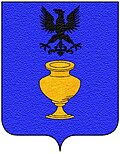 | ||
| Dulchi | People's Nobles | They appear both as Ghibellini di Marengo and as Guelfi di Gamondio |
F
| F | Patrizia | Title | Notes | Coat of arms |
|---|---|---|---|---|
| Fa | Decurions (XVIII century) | Marchesi di Bruno (1648), already lords from 1590 and then counts in 1598
Accounts Carentino (1681) Ladies and gentlemen Fontanile (1673) Nobles of Alessandria Receipts in the Order of Malta |
Illustrious house of the valley of Belbo, moved to Alessandria with Marquis Antonino (m. 1762), admitted to the decurionate. They had enmity with the Mosques (v.). Camilla, Marquis of Mombaruzzo, was a morganatic consort of the Duke of Mantua. In more recent times, the Emilio brothers, an officer of Marina, and Francis, venerated as Blessed by the Catholic Church. | 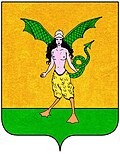 |
| Falamerica | People's Nobles | Already extinct in the 17th century (Armoriale Sardi) | ||
| It's gonna be fine. | Received in the Order of Malta as the fourth Trotti | Alias Farra. Family Castellazzo Bormida (see A-Valle), received with proofs of nobility in 1646 in the Order of Malta. This is probably the same family as the famous scholar and jurist Alessandro Farra (16th century), native of Castellazzo, ambassador of Alessandria to Rome and then governor of Ascoli and Casalmaggiore.[20] | ||
| Flour | Guelfi and Nobili del Popolo di Rovereto | Nobles (recognition of 1894) | Family who had numerous jurisprudences, extinct at the end of the eighteenth century. Corrado Farina, son of Senator Maurizio, of Rivarolo, obtained in 1894 the recognition of the title of Nobile; his family raised the same weapons as the Alexandrian Flour but the descent from them, according to the genealogy of Manno, is not proved. | 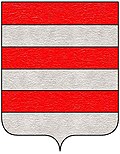 |
| Fact | People's Nobles | |||
| Felizzani | Guelphs and Nobles of the People of Gamondio | |||
| Ferries | People's Nobles | |||
| Ferrari | People of Rovereto | Two branches of the Ferraris in Rovereto appear divided in 1225: Guelfi i Ferrari e Ghibellini i Ferrari "di Strata". It is not clear whether they are the same family or if one of the two branches is the following, later ennobled with the Marengo committee. Original Ferrari patrizi belonged Giovanni Francesco, Captain of the Fair of Alessandria (XVII century). They became extinct in the Ferraris of Castelnuovo with Isabella Teresa who married Marquis Paolo Vincenzo | Charmed with red and gold
For Manno: Silver, natural leopard, illeonito, lieutenant a palm of green | |
| Ferrari | Decurions (1745) | Accounts Marengo (1747) | Charles Francis, son of Captain James Francesco, of the physical doctor collegiate Perpetuo, was admitted to the decurionate in 1745. Two years later he acquired the manor of Marengo, with Spinetta. | Of red, to the golden decusse, with the head of the second load of a black eagle, crowned with silver |
| Ferrari | Gentlemen (1623), then Marchesi di Castelnuovo Bormida (1738)
Counts of Orsara (1598) |
Orders Rivalta Bormida. Paolo Vincenzo settled in Alessandria in the eighteenth century after his marriage to Isabella Teresa Ferrari (see). His son Paolo was First President of the Senate and Grand Cross of Saints Maurice and Lazarus. | Topped, to the 1st of gold at the eagle, crowned, of black; to the 2nd of silver at the castle of red, founded on the green countryside | |
| Figarolo | Gropello accounts (1791) | Giovanni Andrea Giuseppe, lawyer of Valenza, was Vice Intendente of Alessandria and was invested in the fief of Gropello in 1791. The family resided in the city, in the building on the current Piazza Marconi. | Trimmed, on the 1st of blue, three natural mountains, motives from the partition, surmounted by three silver stars, ordered in band; to the 2nd of gold, two strips of red, upper of spinach | |
| Filibernate | Ghibelline and Nobili del Popolo di Gamondio | Paurello Filiberti ascribed with his children at the Doge's House. Elder lazarin in 1466. | ||
| Refusal | Ghibellini and Nobili del Comune di Marengo | v. Calcamu | ||
| Forks | Decisions[21] | |||
| Forward | Ghibelline and Nobili del Popolo di Gamondio | Gherardo Forti was ascribed to the Doge's House "for him only" | ||
| Franzini | Accounts (1838) | Originally from Mirabello Pavese. General of the army Antonio Maria, born to Alessandria, is created Earl in 1838. His brother Paul, Lieutenant General, Gold Medal to the Military Valor and Commander of the Italian Military Order[22], is the progenitor of the Franzini Tibaldeo branch, also awarded the count title in 1858. | Unquarified; At 1st and 4th of red three bands of sawdust silver; at 2nd and 3rd of gold, at the castle of red, brick, open and windowed black; all under a golden garment, loaded with a crowned eagle, of black | |
| Frascara | Guelphs and Nobles of the People of Gamondio |
G
| G | Patrizia | Title | Notes | Coat of arms |
|---|---|---|---|---|
| Gabba | Aggregation (1553) | Family of Pavia, admitted to the patriziato through the aggregation to the Cellerino (v.) of 20 December 1553. | V. Cellerino | |
| Gaius Boidi | Decisions[23] | Molare family. The Manno says it counts. | 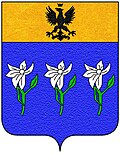 | |
| Gallarati | Decisions (ante 1651)[24] | Milanese Patrizis | Ramo of the famous Milanese family originated by Gianfrancesco di Luigi (XV century)[25]. They became extinct in a branch of the Guasco (see) which took on their surname (Guasco Gallarati). | Of the blue, to the silver column, crowded with a green vine; with the border composed of red and gold |
| Gaul | Admitted to the patriziato | They originate from the ancient lords of Solero. Lancillotto Gallia was famous jureconsulto, his son Antonio podestà di Cremona (1632) and senator of Milan; Ottaviano podestà di Trezzo (1646). They then became Gallia-Dal Pozzo, inquarifying the weapons of this family (v.). They had a patronage in the parish of Cascinagrossa (Casalis). | Bandato di rosso e d'oro | |
| Gambarini | Guelphs and Nobles of the Municipality of Marengo | Palatine accounts (1436)
Nobles of Lucca (1628) |
Pietro Ludovico, Podestà of Lucca, obtained the citizenship of Lucca in 1457; this branch was later written to the Roman Catholic Golden Book in 1628 and received further recognition in 1826. He then took the name of Elderly Gambarini. The Alexandrian branch became extinct in 1776.[26][27] | Gold, the eagle of black, with the lowered flight, crowned of the field, loaded in the chest of a truncated shield sewn of four pieces, of red and silver (alias: silver and red) |
| Gambaruti | Guelphs and Nobles of the People of Gamondio | A Luchino Gambaruti was a doctor in law at the end of the fifteenth century. The jureconsultus Ortensio was the first Provisional Prior in 1589. | ||
| Gamonds | Decurions (1652) | Consular family of Bosco Marengo | Of blue, with two golden lions, tongued and red nails, faced and supported a globe, pure gold, circled and silver crusader, supporting a black eagle, crowned with gold | |
| Gases | Guelfi and Nobili del Popolo di Rovereto | Receipts in the Order of Malta | 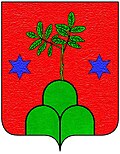 | |
| Gavigliani | Guelfi and Nobili del Popolo di Rovereto | Decurional family that had numerous ecclesiastics and doctors and jureconsultes collegiate. Even without ever obtaining a noble title, he strewed marriage alliances with all the main houses of Alessandria.[28] | 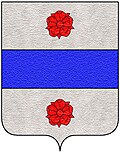 | |
| People | People's Nobles | |||
| G. | People's Nobles | It is remembered a Gerard notary collected in 1327 | ||
| Ghilini | Guelphs and Nobles of the People of Marengo | Marchesi di Gamalero (1726) e Maranzana (1670),
Accounts of Asuni (1749), Pavone (1681), Rivalta Bormida (1680), Sezzadio (1726) Ladies and gentlemen Borgoratto Alessandrino (1438) and Castelceriolo (1439) Receipts in the Order of Malta |
One of the main families of Alessandria, which includes among its members two cardinals, Andrea and Tommaso Maria, and numerous bishops, literary (including Girolamo Ghilini) and men of harp. The palace in the city was designed by Benedetto Alfieri. | 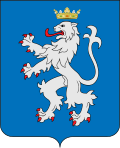 |
| Ghislieri | Aggregation (XVI century) | Original family of Bologna and moved to Bosco Marengo, aggregated to the city patriciate with the rise of Antonio Ghislieri, pope with the name of Pius V | 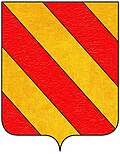 | |
| Granaries | Ghibelline and Nobili del Popolo di Gamondio | 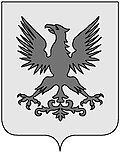 | ||
| Fats | People's Nobles | 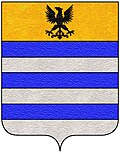 | ||
| Grattaro | Decurions (XVII century) | Marchesi di San Giorgio (1742) | Origins of Solero, come in Alessandria at the beginning of '600 with Matthew. They became extinct in the Beccaria | D'azzurro, with two crowned lions, of gold, faced and counter-rampanti, holding with the anterior branches a grater of silver, supported by three Italian mountains, of green, coming out from the tip |
| Healing | Decisions (1693) | Oriunda family of Genoa or Quargnento In the Council, he sat down. Resident in Alessandria from end '400, he had citizenship to the principles of the next century. Four members of father to son belonged to the College of Jureconsultes for over a century, starting from 1579, until admission to the decurionate of the brothers Gaspare and Peter at the end '600. | 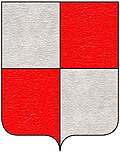 | |
| Earning | Guelphs and Nobles Bergoglio | Principles of S.R.I.
Marchesi di Castellazzo (1594), Serralunga di Crea (1595), Solero (1637), Castelletto d'Erro (1662), Francavilla (1779) Counts of Frascaro, Gavi, Pavone Gentlemen of Bisio (1450) and countless places Receipts in the Order of Malta |
One of the main families of Alessandria. It was divided into many branches, of which the three main were those of the Guasco di Bisio, Castelletto and Solero | Inquarified, at 1st and 4th of red, on two legs of lion, of gold, torn, faced, placed in band, holding a ring of gold, with the diamond, surmounted by a brief svelling written of the motto C’EST MON DESIR; to the 2nd and 3rd trinciate dense of gold and blue (ancient weapon); to the whole of red,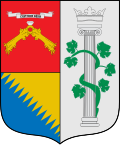 The Earnings of Solero they brought: Semi-thrown party, to 1(a) red, two-legged of lion, of gold, torn, faced, placed in band, holding a golden ring, with the diamond, surmounted by a brief svolazzante written of the Motto C’EST MON DESIR, b) chopped gold and blue, at 2Silver, green screw, wrapped in natural column, crowned |
| Earnings | Ghibellini and Nobili del Comune di Rovereto | |||
| Wars | Guelphs and Nobles of the People of B Pride | Fabio Guerzi Elder in 1471. Gherardo was one of the first 12 Provisions in 1589. |
THE
| THE | Patrizia | Title | Notes | Coat of arms |
|---|---|---|---|---|
| Winter | Ghibellini and Nobili del Comune di Marengo | Already extinct in the 17th century (Armoriale Sardi) | ||
| Invitation | Ghibellini and Nobili del Comune di Rovereto | Grands of first class Spain
Marches[30] Belvedere Accounts (1715) Ladies and gentlemen Calamandrana (1490) e Quattordio (1548) Receipts in the Order of Malta |
They were the head of the Ghibelline faction between the 13th and 14th centuries[31]. They became extinct in the Civalieri (see), who took their name | 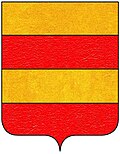 |
L
| L | Patrizia | Title | Notes | Coat of arms |
|---|---|---|---|---|
| Lamborizi | Admitted to the patriziato | They are already mentioned as nobles and Alexandrian patrizi at the end of '400. Guglielmo Lamborizi, doctor in ambe le leggi, was Podestà di Piacenza in 1499 and Milan in 1505. Other jurisprudences of the family were Giovanni Antonio, his contemporaries, and Alexander (XVII century) | ||
| Lanza ages | Ghibellini and Nobili del Comune di Gamondio | Saint George's Lords (1413)
Burio accounts (1780) |
In ancient times they were among the main families of the Ghibelline faction. The Alexandrian branch extinguished and survived that of Burio | D'azzurro, three lances, banderuolate, of gold, placed next to each other, with the head of the second load of a biceps eagle, of black |
| Lavezzeri | Nobles (1779) | Title of Nobile to lawyer Alessandro Lavezzeri | ||
| Lazari | Accounts (1838) | Senator and General Fabrizio was created Count by King Carlo Alberto. | Silver and red flag, with the gold head, loaded with a crowned eagle, of black | |
| Legs | People's Nobles | |||
| Lemuries | Ghibellines and Nobles of the People of B Pride | Among the members of this family are Giovan Marco Lemuggi, Elder in 1466, Gabriele, Chancellor of Alexandria in 1579, and a canonical Alfonso of the Cathedral of Alessandria in 1591 | ||
| Literature | People's Nobles | |||
| I do. | Ghibellines and Nobles of the People of B Pride | Perhaps descend from this family the noble Lodolo d'Oria of Alessandria. | ||
| Lombardy | Barons (1834) | The Belley family moved to Alessandria and then to Turin where it was ennobled. | Red, silver lion, with gold head, loaded with a crowned eagle, black | |
| Lum | Guelfi and Nobili del Popolo di Rovereto | A Raffaele Lumelli was a jureconsul and citizen storiograph |
MM
| MM | Patrizia | Title | Notes | Coat of arms | |
|---|---|---|---|---|---|
| Mayhob | feudal | no further information is available | An elephant on legs with a crown of laurel that sustains the world over his head | ||
| Pigs | Guelfi and Nobili del Popolo di Rovereto | ||||
| Malvicini | Guelphs and Nobles of the Municipality of Gamondio | ||||
| Mandrini | Lobbi accounts (1734)
Nobles of Tortona (1700) |
Teresa, of the family patrizia turtledove, bought the fief of Lobbi that then passed to her son Carlo Maria Stortiglione (v.) in 1752 | Gold and red truncated, to the brick tower of two poles, three pieces, natural, left by a green tree, bloomed white, all crossing | ||
| Mantle | Guelphs and Nobles of the People of B Pride | Gentlemen (1701), then Counts of Quattordio (1776)
Palatine accounts (1536) Patrizi di Alessandria (title used at least from 1573) Receipts in the Order of Malta |
Ancient family that distinguished itself by the large number of notaries and jurisprudences, including Ottaviano, Count Palatino as all his sons, Gerolamo and Sebastiano. They shared the lordship of Quattordio with the Civalieri and had a feud with them that ended with the killing of Abbot Bernabò Mantelli in 1691. The two families reappeared in 1776 with the marriage of Maria Antonia Gabriella, last of his family, with Count Annibale Civalieri. | 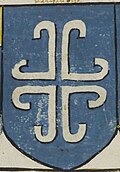 | |
| Marks | Guelfi and Nobili of the Municipality of Rovereto | They had rights, along with the Invites, to the third part of the Gabelles collected at the gates of the city. They had a square to gather in Rovereto, still known in the 17th century as Piazza de' Marchelli. Giovan Giacomo was one of the first twelve Lords of Providence in 1589. | Of red, to the golden lion, with the blue band, loaded with three silver roses, passing on all | ||
| Maroelli | Ghibellines and Nobles of the People of B Pride | Alias Maruelli. Oberto and Opizzone Counselors in 1236. For Manno they were consignors of Castellengo (1410) | Red, golden crowned lion, with the silver band, crossing | ||
| Martina | Ghibellini and Nobili del Comune di Gamondio | ||||
| Masio | Accounts of Calvignano (1785) | Original family of Alessandria, moved to Fossano where he bloomed. Chiara Margherita Baudi of Selve (v.), widow Masio, acquires the fief for the children. | Of blue, to the oak trained by a turned leoncino, with the crossing band, raised, all of gold | ||
| Mazzi | Guelphs and Nobles of the People of Gamondio | ||||
| Melazzi | Ghibellini and Nobili del Popolo di Rovereto | Counts of Valle San Bartolomeo (1747) | Alias Melazzo. Giovanni Mario was Lawyer of the Poor Alessandria and his son Pietro Guglielmo acquired the fief of Valle San Bartolomeo. | Of red, to melo, knotted in the grassy plain, natural, with golden head, loaded with a crowned eagle, of black | |
| Merlani | Ghibellini and Nobili del Comune di Gamondio | v. Castellani | |||
| Merli Miglietti | Accounts Castelletto Monferrato | Family San Salvatore Monferrato. Manno calls them "noble, due to the Alexandrian decurionate", perhaps due to their aggregation to the Ghislieri family (see)[32]. | Intersected in pole: at the 1st of gold, at the black band, accompanied by a crowned eagle, black, and at the tip of three spears, placed in pole, black, surmounted, each one, from a merlot to natural (Merli); at the 2nd of gold, to three bands of red (Ghislieri); at the 3rd of blue, to the grassy countryside | ||
| Milanese | People's Nobles | Ancient decurional family from which the Sappa (v.) | | ||
| Milanese | Nobles (1547)
Received in the Order of Malta as the fourth Gherardengo |
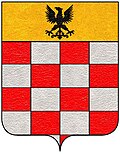 | |||
| Milani | Guelphs and Nobles of the People of Marengo | Of gold, with two trunks of green, noderous, decussed | |||
| Mosques | Decisions (1702) | Marchesi di Bergamasco (1662)
Ladies and gentlemen Castelnuovo Bormida (1574) Receiving in the Order of Malta as the fourth Castellani |
Oriundi of Bergamo, acquired Alexandrian citizenship in 1520. It probably belonged to this family the Francesco Moscheni typographer of the early sixteenth century. They bought Castelnuovo at the end of the sixteenth century, then switching it with Bergamasco. For decades, they were bitter enemies of Bruno's Faa' because of a conspiracy orditated by the latter in 1686 against Marquis John. The two houses reappeared with a marriage alliance in 1720. In 1702 Francis, son of John survived the conjure, was admitted to the decurionate | Of blue, at the top of three peaks, of green, sewn, surmounted by three flies, of gold | |
| Muzi | Ghibelline and Nobili del Popolo di Marengo | Alias Mussi, Mutii | Red, golden lion
Alias: Party of red and blue, to the silver lion crossing, with the gold head, loaded with a crowned eagle, of black |
N
| Family | Patrizia | Title | Notes | Coat of arms |
|---|---|---|---|---|
| Nani | Guelphs and Nobles of the Municipality of B Pride | Gherardo Nani ascribed to the Doge's House "for him and his children" | ||
| Negro | Decisions | Silver truncated with black eagle crowned with gold and silver three bands of black | ||
| Nizzia | Guelphs and Nobles of the Municipality of B Pride |
O
| O | Patrizia | Title | Notes | Coat of arms |
|---|---|---|---|---|
| Odd. | Nobles (1840) | Cassine's oriunda family. Charles, a lawyer, obtained Alexandrian citizenship in 1839; in 1840 he did not receive admission to the Decurionate but in return he was created noble and admitted to the Council. | 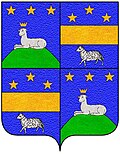 | |
| Olive oil | Decurions (XVIII century) | Lords of Quattordio (1652) and Masio (1675) | Family Alessandria Paolo Emilio, a doctor in law, from whom the branch of Milan which had the marquisate of Spineta (1713) and the Milanese patriziate descended.[33] From his brother Gian Antonio descends instead the branch remained in Alessandria of the lords of Masio and Quattordio, which was admitted to the decurionate with Paolo Antonio at the end of the eighteenth century. | 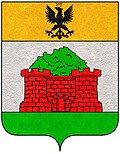 |
| Optics | Guelphs of the People of B pride in 1225, ascribed to the Doge's House; Ubertino and Battista Ottelli in 1559 were part of the group of "noble Alexandrians" that discussed the electoral reform of the Council and Anzianato. Baptist Ottelli, probably the same name of the first, was Chancellor of Alessandria at the beginning of the 17th century. | |||
| Eighth | Ghibellini and Nobili del Comune di Gamondio | The Ghilini indicates them Nobili del Comune, but Ghibellini del Popolo di Gamondio. | Of blue, to the double-mealed band, of gold, with the head of gold, loaded with a black eagle |
P
| P | Patrizia | Title | Notes | Coat of arms |
|---|---|---|---|---|
| Palearranges | Receipts in the Order of Malta | Alias Pagliari. Fra' Antonio Maria Pagliaro received in the Order of Jeroosolimitano in 1541. | ||
| Basketball | Accounts of Castellazzo (1653) | Ramo dei Pallavicino of Genoa; Ottavio acquires the county of Castellazzo in 1651 and invested two years later. | Five gold points equivalent to four of blue, with the golden head, to the double-mealed short band of three pieces, black | |
| Bread | Admitted to the patriziato (XIII century) | Ghibellini del Popolo di B Pride. Although they are not present on the lists of 1228, a Pietro Panizza is a councillor in 1236. | ||
| Panza | Ghibellines and Nobles of the People of B Pride | They have legendary origins from the console Gneo Genuzio Pansa. Gian Paolo Panza participated in the electoral reform of 1559. At the end of the sixteenth century, a Christopher Panza jureconsulto is remembered. Jerome Pansa was admitted to swearing in 1822 as a nobleman. | Red, crowned lion, gold | |
| Panizzoni | Gentlemen of Corticelle (1453)
Receipts in the Order of Malta |
The doctor Francesco was invested in Corticelle. Luchino was Secretary of the Marquis of Monferrato (XV century). His brother Biagio was an illustrious jurist and reformed the statutes of his college. William was at the service of various rulers. The family had the main chapel of Santa Maria di Castello and another gentle chapel in the church of Carmine. | Topped, at 1st of gold, to the eagle of black, to the 2nd of silver, to the rose of garden, of red, gambuta and leafy green, crowned with gold, to the ancient (for privilege of the kings of England), with the blue band, loaded with three tails of lion, of gold, passing on the partition
Alias: Inquarified, at 1st and 4th of blue, with three golden ears, tied, to the 2nd and 3rd of silver, to the steak surmounted by a crown, all gold, sewn | |
| Parma | Guelfi and Nobili del Popolo di Rovereto | The family fell into disgrace at the end of the sixteenth century: Cesare Parma in 1577 gave Giovan Francesco Arnuzzi one of the keys to the ark of the relics of Alessandria, that his family guards, in exchange for some economic help. | ||
| Pava | Admitted to the patriziato (1581) | Gentlemen (1594), then Baroni of Frassinello Monferrato And Olivola (1600)
S.R.I. Nobles (1541) Nobles of Alessandria (recognition of 1775) |
Oriundi di Fubine, of which they were podestà. Gian Antonio was Apostolic Protonotaro and Honorary Cameriere of Pope Paul III. His grandson William acquired the family's fiefs. A branch descended from John, obtained Alexandrian citizenship, was admitted to the patriziate in 1581 with Emilio. | |
| Peacocks | Ghibellini and Nobili del Popolo di Rovereto | |||
| Pecorelli | Receipts in the Order of Malta | A Brother Vincenzo Pio Pecorelli of Alessandria was received in the Order of Jeroosolimitano on 28 May 1588. | ||
| Pederane | Ghibellini and Nobili del Popolo di Rovereto | Receiving in the Order of Malta as the fourth Stortiglione | He remembers a Dalmazino Anziano in 1462. Camillo Pederana, a well-trained physical doctor, was one of the first 12 Provisions of 1589. Carlo Aurelio was decurione in the mid-sixteenth century. Manno says they're extinct. | Gold, three green studs, the first trunk and not converging at the top, to the cross red pole, with the head of gold, loaded with a crowned eagle, black |
| Peeled | Nobles (recognition of 1895) | noble family of Castellazzo Bormida, branch of the Prati (v.) of which they raised the weapon, transferred to Alessandria at the beginning of the 18th century. | V. Lunches | |
| Peragius | Ghibelline and Nobili del Popolo di Marengo | Alias Paraccioli | ||
| Perboni | Ghibelline and Nobili del Popolo di Marengo | Marchesi di Incisa Scapaccino (1516)
Accounts Belveglio (1736) Ladies and gentlemen Oviglio (1513) and Vinchio (1662) |
They have origin from Marchesi di Incisa. Manno records a Guglielmo Decurione in 1396. Simone Perboni enrolled in the Ducal House in 1417. Girolamo, collegiate jurist, was invested with Oviglio by the Emperor to repay him for a loan. They became extinct (1823) in the Solaro di Govone, giving rise to the Solaro Perboni. | Of blue, to the silver band, accompanied by two stars of the same; with the golden head, loaded with a crowned eagle, of black |
| Peri | Guelphs and Nobles of the People of Marengo | |||
| Pertusate | Admitted to the patriziato (XIII century) | Counts of Castelferro (1683, gentlemen since 1676)
Accounts of Comazzo (1747) Milanese Patrizis |
Family of Ghibelline del Popolo di Buda. They do not appear among the nobles of 1228, but a Pietro Pertusati is Councilor in 1293. The Manno recalls a jureconsulated Christopher (1498) and Matteo Pertusati who was elder in 1481. Ruffino and Melchiorre participated in the electoral reform of 1559. Transferred to Milan, the family was ascribed to the patriziato of that city and divided into the two lines of the Counts of Castelferro and Comazzo in the eighteenth century |  |
| Pettenri | Ghibelline and Nobili del Popolo di Gamondio | The Ghilini tells them bloodstained with the Vercellese Pettenati. They competed together with the Ghilini at the construction of the main chapel of the Cathedral Alessandria, where they had buried. | Red and silver truncated, two combs of the second, flanked in the first, with the gold head, loaded with a crowned eagle, black | |
| Stone stone | Ghibelline and Nobili del Popolo di Marengo | Guglielmo Pietra was the head of the Alexandrian outposts in 1275 | ||
| Piola Caselli | Accounts (1826) | Family Valenza, transferred to Alessandria in 1730. Antonio, created count, married Luisa Caselli, niece of Cardinal Carlo Francesco Maria. | Inquarified, on the 1st of blue, to the silver tower, at the 2nd of gold, to the crowned eagle, of black, to the 3rd of red to two bars of silver, to the 4th of silver, to the right arm armed, motive from the left side of the shield and holding an axe, all natural | |
| Pisani | Admitted to the patriziato | Nobles (recognition of 1771) | Then Pisani Dossi. Ghibellini del Popolo di B Pride. Martino Pisani, notary, was Elder in 1470; they had to be aggregated to the patriziate citizen within the 15th century. Recognized nobles from the heraldic court of Milan. | Of red, to the crowned lion of gold, lieutenant with the anterior branch right a silver sword, guernita of gold, in bars, with the head of blue, sewn, load of a flying dove and lieutenant in the beak a branch of olive tree, all natural, the dove surmounted by a brief of silver, flying in band, written with the motto PADI |
| From Pò | Guelphs and Nobles of the People of Marengo | Giacomo Da Pò Anziano in 1466. | ||
| Potato | Appropriations of the Municipality | |||
| Porche | Guelphs and Nobles of the People of Gamondio | |||
| Pork | Guelphs and Nobles of the Municipality of B Pride | Counts of Valle delle Grazie (1734) | Alias De Porzelli | Of blue, to the crowned lion, of gold, accompanied in tip by a pig, of black, passing, with the silver band, crossing |
| From the well | Guelfi and Nobili of the Municipality of Rovereto | Marchesi di Castello di Annone (1637, lords from 1633)
Receipts in the Order of Malta |
One of the main families for the most ancient times, they had a reserved place in the city to gather (Piazzetta de' Pozzi) and they happened together with the Guasco the Guelph faction. They probably descended from this house the Dal Pozzo di Biella.[34] They boasted legendary origins from a Lucio Scribonio Libone, known for having dedicated or restored a well, the Puteal Libonis, from which they took their name. They had a nice building in Piazzetta Santa Lucia. | 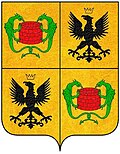 |
| Lunches | Marchesi di Rovagnasco (1738) | Oriunda family of Castellazzo. Gian Filippo was a jureconsulte collegiate (1635) as his nephew of the same name (1661). Carlo Giacinto acquired the fief of Rovagnasco; they had the palace in the current Via XXIV May and, for inheritance of the Capriata (v.) that in them were extinguished, Palazzo Prati Capriata. | Silver and blue, with the golden head, loaded with a crowned eagle, of black | |
| Prevignants | Guelfi and Nobili del Popolo di Rovereto | |||
| Pupini | Ghibelline and Nobili del Popolo di Gamondio | Girolamo Pupini notary and Chancellor of the Municipality in 1649 | Gold, red tower, brick and brick of black, four pieces in the guelfa, supporting a black eagle |
R
| R | Patrizia | Title | Notes | Coat of arms |
|---|---|---|---|---|
| Rana | Guelfi and Nobili del Popolo di Rovereto | |||
| The Week | Decisions (1732) | Family of Lake Maggiore, now in Alessandria at the beginning of the seventeenth century. Jureconsultes and notaries were admitted to the Decurionate with Giuseppe Maria. They belonged to the famous politician Urbano Rattazzi.[35] | Intersected in band, at 1st of gold, to the crowned biceps eagle, black; at 2nd of blue, three stars silver, ordered in band; at 3rd of silver, to the mouse of black, passing | |
| Reschii | Guelphs and Nobles of the Municipality of B Pride | Maybe they descended from this family the Reischio, then Cavasanti Reischio (v.) | ||
| Roberti | Ghibellines and Nobles of the People of B Pride | Nobles (recognition of 1771) | From this family perhaps descends Roberti of Castelvero, who carried their weapons quartered. They received formal recognition of nobility together with the Robutti in 1771 | Red, the crown of the ancient, golden, with two branches of palm, green, interwoven to the crown, the crown accompanied in tip by a gold pilgrim border, with the head of gold, loaded with a crowned eagle, of black.
Alias: without head of the empire. |
| Robuts | Ghibellini and Nobili del Popolo di Rovereto | Nobles (recognition of 1771) | Original patrizia family grown in importance during the 17th century. It belonged to Pompeo Robutti, famous military architect. They had a palace and chapel in Santa Maria di Castello.[36] They became extinct in 1743 and were replaced by another branch, which obtained formal recognition of nobility in 1771 | Of blue, to the green oak, with the golden head, loaded with a black eagle |
| Rogalla | Ghibelline and Nobili del Popolo di Gamondio | |||
| Rome | Receipts in the Order of Malta | Fra' Godofredo Roma received in the Order of Jeroosolimitano in 1445. | ||
| ♪ | Appropriations of the Municipality | Barons of Vandorno (1777)
Receipts in the Order of Malta |
The ancient patrizia family, which belonged to Fra' Ludovico Rossi, Knight of Malta in 1402, and the notary Vincenzo Rossi, Lord of Provvisione in 1589, is already extinct in the seventeenth century (Armoriale Sardi). John the Baptist, who acquired Vandorno's barony in 1777. | Of blue, crowned lion, of gold |
| Rovelli | Admitted to the patriziato (XV century) | For the Ghilini were Ghibellini of the People of B Pride, for the Manno oriundi of Como, aggregated to the decurionate probably with Giorgio Rovelli in 1491. It is remembered the physical doctor collegiate Augustine Rovelli, one of the first twelve Provvisions in 1589, and Baptist Lord of Providence in 1609. | Black, crowned lion, gold |
S
| S | Patrizia | Title | Notes | Coat of arms |
|---|---|---|---|---|
| Bags | Ghibellini and Nobili del Comune di Buda | Lords of Pavone and Pietra Marazzi (1530) | 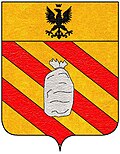 | |
| Bags | Accounts (1893) | Oriundi di Castelceriolo. Nobilitati with Senator Carlo Vittorio, created Count by Umberto I[37], claimed descent from the previous ones. | 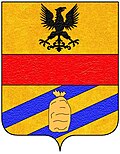 | |
| Saints | Ghibelline and Nobili del Popolo di Marengo | |||
| Run! | S.R.I. Nobles (1597)
Patrizi di Alessandria (title used in the 18th century) Receipts in the Order of Malta |
Perhaps a branch of Milanese (v.) whose name they took (Sappa de' Milanesi). Alexander, famous poet of the eighteenth century, belonged to them. | | |
| Sardi | Guelphs and Nobles of the Municipality of B Pride | Nobles (recognition of 1750) | They moved to Naples, asked and obtained from the municipality of Alessandria a certificate of nobility. | Topped, on the 1st of silver, to the crowned eagle, of black, seizing with the claws two branches of red coral, decussed, to the 2nd band of red and silver |
| Scaffolds | Ghibellini and Nobili del Comune di Buda | |||
| Sights | Marchesi (1750)
Gentlemen of Toleto and Piancastagna (1694) Ladies and gentlemen Castel Rocchero (1749) Patrizi of Acqui Terme |
Noble family of Acqui. Then Scati Grimaldi. The branch of the Marenco Scati had the titles of accounts of Ciglione (1695) and lords of Pareto (1716). They are indicated among the families "foreign citizens resident in the city" in the City of Italy of Orlandi. | Gold, black band | |
| Slate | Decisions (1781) | Accounts (1827) | Family Felizzano, perhaps descended from the Schiara lords of Burio (1581). They moved in Alessandria with Angelo Geronimo, a citizen in 1757, among the "foreign nobles" in 1770 (Orlandi), admitted to the Decurionate, with sovereign dispensation from the requirement of the centenary dwelling, on 13 February 1781[38]. | Golden, five saw leaves, black, band posts, with blue head, three-eyed load, natural, sorted in band |
| Squirrel | Consignors of Cellamonte (1635) | Family native to Casorzo, resident in Alessandria | ||
| Writers | Guelphs and Nobles of the Municipality of B Pride | Already extinct in the 17th century (armoriale Sardi) | ||
| Sibaldi | Decurions (XVII century) | Marchesi di Felizzano (1744) | Orders Nizza Monferrato, where they sat on the Council. Admitted to the Decurionate of Alessandria with the sons of Pietro, collegiate jurist and judge: Carlo Emanuele and Giovanni Battista (d. 1719). They bought Felizzano and sold it to the Hills (see) after eight years. | 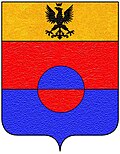 |
| Spandonary | Guelphs and Nobles of the Municipality of Gamondio | Of red, to the male of fortress, natural, torricellato of three pieces, accompanied by three steaks in head and three at tip, of gold, all ordered in band | ||
| Squarzafici | Guelphs and Nobles of the Municipality of B Pride | |||
| Prints | Accounts Montecastello (1694), already Lords from 1455, Barons from 1502
Lords of Pavone (1525) Ladies and gentlemen Quattordio (1533) |
Ramo of the famous Milanese family that had numerous feuds in Alexandria. Antonio Francesco Stampa was one of the first twelve Provvisions in 1589, Giovanni Battista was a infantry captain in 1602. | 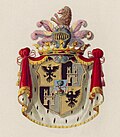 | |
| Fucking assholes. | Guelphs and Nobles of the People of Marengo | Lobbi accounts (1752)
Ladies and gentlemen Torre Marengo Receipts in the Order of Malta |
The Manno begins genealogy with Ruffino, Elder in 1292. They had many jurisprudences gathered from at least the 15th century, when they were lords of the Torre di Marengo. | Ducked blue and silver |
| Stracorns | People's Nobles | |||
| Strategies | Guelphs and Nobles of the People of B Pride | Noble | Formerly in Council. In 1833 Stefano Lodovico, Decurione of second class, was admitted to the first class, in recognition of the ancient patrizia nobility of his family. | Topped, on the 1st of red, to the silver eagle, crowned with gold (ancient weapon), to the 2nd of blue, to two vipers to the natural, faced and twisted in order to form an eight, in the lower circle of the eight a cross of red, in the field of silver (arm of the Doge's House) |
T
| T | Patrizia | Title | Notes | Coat of arms |
|---|---|---|---|---|
| Cheques | People's Nobles | 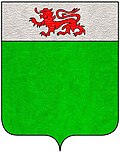 | ||
| Trousers | Guelphs and Nobles of the Municipality of Gamondio | Marchesi d'AIncisa Scapaccino (1669)
Accounts Ovada (1499, lords from 1479), Casal Cermelli (1623), Castelvairo (1635), Castelnuovo Calcea (1652), Coazze (1710) Ladies and gentlemen Montaldeo (1433), Val d'Orba (1438), Rocca Grimalda (1440), Fresonara (1498, again in 1659), Aimonetta (1596), Vinzaglio (1730) and countless other places Patrizi di Milano Receipts in the Order of Malta |
One of the main families of the city, awarded in Alessandria and Milan. It is divided into various branches, including that of the Bentivoglio Trotti. Among his members are Gian Galeazzo Trotti and his son Lorenzo, bishop of Pavia. | The Trotti Bentivoglio carried: Inquartato, at 1st and 4th of Trotti; to the 2nd and 3rd quarters full of gold and red (Bentivoglio), and on all red to the papal basilica perched on the pontifical keys, all golden |
V
| V | Patrizia | Title | Notes | Coat of arms |
|---|---|---|---|---|
| The Valley | Ghibelline and Nobili del Popolo di Marengo | |||
| Varsity | Ghibelline and Nobili del Popolo di Gamondio | Of red, silver lion (aliases: of gold) | ||
| Vespa | Guelphs and Nobles of the People of Gamondio | Gold, three wasps, natural, mountainous, with the head of silver, supported by black, loaded with a red cross (a likely concession of the Municipality of Alessandria) | ||
| Viberi | People's Nobles | |||
| Villavecchia | Ghibellini and Nobili del Popolo di Rovereto | |||
| Visconti Prasca | Decisions (1824) | The Oriundi of Cassine, at the end of the eighteenth century, were extinguished in them the Prasca, branch of the Merlani (v. Castellani). General Sebastian belonged to them. | Silver, at the green biscione, waving in pole and swallowing half a rotten putto, of complexion, placed in majesty and motive in band, with open arms |
Z
| Z | Patrizia | Title | Notes | Coat of arms |
|---|---|---|---|---|
| Coupling | Admitted to the patriziato | Marchesi (1730)
Accounts (1892)[39] Ladies and gentlemen Sezzadio (1304), Castelnuovo Bormida (1438), Cassine (1439) Patrizi di Alessandria |
Oriundi di Casale, admitted to the decurionate probably by Gambarutti succession (v.), which in them became extinct (XVI century). A branch originated by Francis gave birth to Gian Cristoforo, Grand Chancellor, who obtained the mark title. The branch remained in Alessandria he had the recognition of the title comitale per succession Porzelli (v.) in the person of Vittorio, senator. | 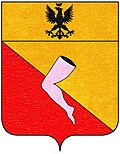 |
Casa Ducale
List of the families of the Doge's House of 1417. The names of the families of the Alexandrian nobility are boldly marked (v. previous list) that were also awarded...Explore this chapter
List of the families of the Doge's House of 1417. The names of the families of the Alexandrian nobility are boldly marked (v. previous list) which were also awarded the ducal nobility; many of the other families allowed to this privilege do not have any further news.
- Angels
- Anolph
- Antique
- Ardizzoni
- Arobba
- Balosti
- Baravalli
- Barberi
- Bazani
- Bellini
- Bellisani (Vallanzani)
- Boccacci
- Bonfari
- Borghi
- Bottazzi
- Cattle
- Brachester
- Cacciaguer
- Dogs
- Cellerino
- Courtesy
- Dogliani
- Flour
- Pharisees
- Ferrari
- Filibernate
- Forward
- Frascara
- Gambaruti
- G.
- Ghilini
- Giberti
- Fats
- Grills
- Wars
- Lemuries
- Loderi
- Man
- Mantle
- Mazzi
- Mazzoni
- Melazzi
- Muzi
- Optics
- Parma
- Pederane
- Pertusate
- Pettenri
- Stone stone
- Pisani
- From Pò
- China
- Pork
- Porche
- Pupini
- Rana
- Robin
- Robuts
- ♪
- Elderman
- Fucking assholes.
- Strategies
- Cheques
- Tori
- Torti
- Vallanzani
- The Valley
- Varsity
- Zavattarelli
Nobled families after 1840
List of families Alessandria which had a title after the abolition of the Alexandrian patritial organs, or granted ex novo or by succession of families of...Explore this chapter
List of families Alessandria that they had a title after the abolition of the Alexandrian patritial organs, or granted ex no. or by succession of families of the civic patriziato.
| Family | Title | Notes | Coat of arms |
|---|---|---|---|
| Tarino logo | Accounts | Family descended from the Figarolo Tarino (v.), of which they carry the weapon | Party of Figarolo (v.) and Tarino, which is: of blue, with three golden poles, with the head of gold, loaded with three frills (tarini) of green, the superiors faced |
| Busts | Accounts (1901) | Ramo dei Buschetti di Chieri moved to Alessandria in the mid-nineteenth century. Alessandro Carlo, Lieutenant General, created Earl in 1901. | Red and silver truncated, to the black band loaded with three golden stars, crossing |
| Buzzi Langhi | Marchesi (1892) | Cassine's family, moved to Alessandria at the beginning of the 19th century with Gaudenzio. Giovanni Maria Pio, whose mother is sister of the last Marquis Moscheni of Bergamasco (v.), obtained the renewal of the trade mark title, without preaching, in 1892. | Of red, to the portico frammezzato from a column, all of silver, the middle column supporting a plaque of the same, crusade of the field, with the head of blue, sewn, load of a silver eagle, crowned with gold |
| Figarolo Tarino | Accounts (1894) | Copper of the Figarolo di Gropello in which the Tarinos were extinguished, the Turin comitale family. | V. Tarino logo |
| Frascara | Accounts (1917) | Title of Count to Senator Joseph[40]. | Topped, on 1st of silver, to the green elder's ranch, in band, at 2nd of blue, to the silver oak beam, placed in bars |
| Levi de Veali | Barons (1892) | Moise Zacut Levi, Jew of Alessandria, ennobled after a charity act. Extension of the coat of arms in 1893[41]. | D'azzurro, at the dish of sacrifice, sustaining a firm sheep and an anaxed anphora faced, all silver (original weapon), with the head of the field, supported by gold, loaded with two covones of the same (extension). |
| Montel | Barons (1863) | Donato Solomon, Jew of Alessandria, created baron in 1863. | Intersected in reversed pergola, with the silver scaglione crossing the lower partition, at 1st of gold, at the red-turned lion, at 2nd of red, at the golden lion, at 3rd of blue, at the golden lily |
| Vallepiana ozones | Accounts (1883)
Preacher of Vallepiana (1889) |
Family of Acqui transferred to Alessandria. The only Jewish family in Piedmont to carry a higher title than the baronal one and a preached one. Title of Count granted to Meir (Emilio) in 1883 for a substantial donation to the Maurtian Hospital. Another branch, in Asti, he also had the title comitale in 1899. | Trimmed semi-partite, at 1st of blue, eight tongues of gold flame, 3, 2, 3, 3, to 2nd of silver, three bands of blue, to the 3rd palate of red and gold, four pieces |
Untitled arms families
List of Alexandrian families whose coats of arms are known. Some, such as the Moizi or Gamaleri, were part of the city's history and were noble houses of Alessandria de...Explore this chapter
List of Alexandrian families whose coats of arms are known. Some, such as the Moizi or Gamaleri, were part of the city's history and were noble houses of Alessandria de facto, while there is no information about others other than the coat of arms.
| Family | Notes | Coat of arms |
|---|---|---|
| Alessio | Family that had numerous notaries and ecclesiastics in the 16th-XVIII centuries[42]. Coat of arms in the Sardi Armory | Tried, at 1st of gold, to the eagle of black, to the 2nd of gold, to three bands of red |
| Bosca | Boiled, in the 1st of silver, with two fillets of red in decusse, surmounted by a red burellate, in the 2nd burellate of red and silver; with the bord composed of red and silver; with the head of gold, to the eagle of black, crowned of the same[43] | |
| Buzzone | Coat of arms in the Armor Sardi | Topped, on the 1st of silver, to the dragon of green, tongued of red, to the 2nd of silver, to two bands of black, alternating with three threads of the same |
| Gamaleri | Consular family of Bosco Marengo. Antonio Maria Gamaleri was a resident Orator in Milan from 1579. Giovanni was a captain in the first half of the seventeenth century. | Gold and blue cut |
| Come on. | Red to the golden band, loaded with three blue lilies placed in band, with the head of the Empire[44] | |
| Malaspina | Coat of arms in the Sardi Armor. | Of red, with a spin of green, silver flowered of five pieces, crossing, with the gold head, loaded with a crowned eagle, of black |
| Moizi | Guelphs of the People of B pride. Oberto Moizi console in 1191. In 1348 a Biagio Moizi was banned as a traitor from the city of Alessandria. Ascribed to the Doge's House in 1417. They had the right to the passive jusper on St. Jerome's canon of the Cathedral Alessandria. | Trimmed, on the 1st of blue, three stars (8) gold, placed in band (ancient weapon), at 2nd of red, at two vipers of gold, faced and twisted such as to form an 8 (arm of the Doge's House) |
| Bread | Coat of arms in the Armor Sardi | Topped, to the 1st of gold, to the black hem, passing on the partition, to the 2nd of blue, to three branches of green, placed in pole, one next to the other[45] |
| Scale | Coat of arms by Giovanni Angelo Scalea alessandrino (1745) in the Archiginnasio of Bologna[46]. | Charmed with red and gold, with the golden head, loaded with a black eagle |
| Via | Coat of arms in the Armor Sardi | Of red, at the bar of blue, sewn, approached by two beaten lilies, of gold, with the head of blue, to the golden phoenix between red flames, revolt and fixing a beam of silver rays, coming out from the left canton |
Notes
Explore this chapter
- ^ Pages 33-34 of Ghilini, up books.google.it.
- ^ Text of the reform, pages 155-157 of Ghilini (cit. a p. 156), up books.google.it.
- ^ Francesco Gasparolo, Historical news about the municipal regime of Alessandria from its origin, pp. 91-156.
- ^ Note to p. 51, up books.google.it.
- ^ Voice of the Italians' Biographic Dictionary, up treccani.it.
- ^ P. 49, up books.google.it.
- ^ Family Information, up data.san.beniculturali.it.
- ^ News about the canons of St. Peter, up books.google.it.
- ^ Voice of the Treccani, up treccani.it.
- ^ Voice in Italian Encyclopedia Treccani, up treccani.it.
- ^ Manno, up vivant.it.
- ^ News, up servizi.ct2.it. Retrieved 13 March 2021 (archived fromoriginal url 25 February 2021).
- ^ Voice over Caesar Nicola Canefri, up treccani.it.
- ^ News and coat of arms, up blasonariosubalpino.it.
- ^ Page datiloscritta by Manno containing information (PDF), up vivant.it.
- ^ From the Patriziato Subalpino, up vivant.it.
- ^ Information and coat of arms, up blasonariosubalpino.it.
- ^ Duilio Giacobone, Stemmario of Italian noble families, deposited in Archivio di Stato di Alessandria, IT document - ASAL - F120170191
- ^ News about ecclesiastical benefits, up books.google.it.
- ^ Voice over Alessandro Farra, up treccani.it.
- ^ News, up blasonariosubalpino.it.
- ^ News about his military career, up fightersliberazione.it.
- ^ Federico Bona, Honour Color Identity, Centro Studi Piemontesi, 2010, p. 134.
- ^ Tullio Maria Gallarati this year is among the Lords of Providence who approve the reform. Cf. A-Valle, History of Alessandria, p. 338
- ^ Manno, up vivant.it.
- ^ News on the website of Cultural Heritage, up siusa.archivi.beniculturali.it.
- ^ Family GAMBARINI (fasc. 5675), up archivedistatofirenze.cultura.gov.it.
- ^ From the Patriziato Subalpino, up vivant.it.
- ^ From the Subalpine Blasonary, up blasonariosubalpino.it.
- ^ Quote of the Marchese Carlo Inviziati, Grande di Spagna, in Gazzetta Piemontese, official newspaper of the Kingdom of Sardinia, up books.google.it.
- ^ Online Treccani Voice, up treccani.it.
- ^ Manno, up vivant.it.
- ^ Information about the Lombard branch, up lombardiabeniculturali.it.
- ^ Spree[interrupted link], up servizi.ct2.it.
- ^ News about the family, up treccani.it.
- ^ News about the family, up treccani.it.
- ^ About Vittorio, up notes9.senato.it.
- ^ Vittorio Angius, On the noble families of the monarchy of Savoy, I, Turin, Fontana and Isnardi, 1841, pp. 748-749.
- ^ Renewal of Senator Vittorio Zoppi, up notes9.senato.it.
- ^ News, up notes9.senato.it.
- ^ Steady., up blasonariosubalpino.it.
- ^ News from the Chenna, up books.google.it.
- ^ Armoriale Marco Cremosano, vol. II, p. 54, up portal. archivedistatomilano.beniculturali.it. Retrieved 14 May 2022 (archived fromoriginal url on 13 January 2022).
- ^ Armoriale Marco Cremosano, vol. II, p. 134, up portal. archivedistatomilano.beniculturali.it. Retrieved 14 May 2022 (archived fromoriginal url on 13 January 2022).
- ^ Coat of arms, up blasonariosubalpino.it.
- ^ From the website of Archiginnasio (JPG), up badigit.comune.bologna.it.

Bibliography
Explore this chapter
- Codex Statuterum magnifice communitatis atque dioecaesis alexandrinae, Alessandria, Francesco Moscheni and brothers, 1547.
- Girolamo Ghilini, Annals of Alessandria, Milan, Gioseffo Marelli Printing House, 1666.
- Reformatio prima antiquissimi rinis civitatis Alexandriae, Alessandria, Giuseppe Stramesi, 1676.
- Claude-François Ménestrier, Le blason de la noblesse, Paris, Robert J. B. de la Caille, 1683, pp. 297-303.
- Bartolomeo Dal Pozzo and Roberto Solaro di Govone, General role of the Gerosolimitani Knights of Veneranda Language of Italy, Turin, Mairesse and Radix, 1714.
- Giuseppe Lumaga, Theatre of the nobility of Europe, Naples, Giovan Francesco Paci, 1725, pp. 279-282.
- Jacinto Cacherano d'Osasco e Gaetano Valenti Gonzaga, General index of all noble families of the Holy Horitable Order, Turin, Gian Michele Briolo, 1790.
- Caesar Orlandi, Of the cities of Italy and its islands, chapter on Alessandria edited by the Marquis Carlo Guasco, vol. 1, Perugia, 1770, pp. 217-361.
- Carlo A-Valle, History of Alessandria, in 4 volumes, Turin, Fratelli Falletti, 1853-1855.
- William Schiavina, Annals of Alessandria, edited by Carlo A-Valle, Alessandria, Stamperia Barnabè e Borsalino, 1861.
- Francesco Guasco, feudal dictionary of the ancient Sardinian States and Lombardy, Pinerolo, Chiantore-Mascarelli typography, 1909.
- Francesco Guasco, The Araldica Alessandrina consultation in the 16th-XVII-XVIII-XIX centuries, in Magazine of History, Art and Archaeology for the province of Alessandria, issues XXI-XXI, series III, XXXI (1922), pp. 157-184.
- Francesco Guasco, Genealogic tables of noble families Alexandrian and monferrine, in 10 volumes, Casale, Tipografia Cooperativa Bellatore Bosco e C., 1927-1938.
- Francesco Gasparolo, Historical news about the municipal regime of Alessandria from its origin, in Magazine of History, Art and Archaeology for the province of Alessandria, issues I-II, series IV, XL (1931), pp. 63-156.
- Angelo Scordo, Heraldic nostalgies of a Jacobin: Alessandro Tonso Pernigotti and the Nobility of Alessandria, in Acts of the Italian Society of Araldic Studies, 17 - proceedings of the 26th convivium, 2008, pp. 141-176.
Continue your journey