Atlas of Monferrato
Conzano: sights, history and trails
Alessandria
- Elevation
- 262 m above sea level
- Area
- 11.61 km²
- Demonym
- conzantino
- Patron saint
- Saint Lucia
A closer look
Discovering Conzano
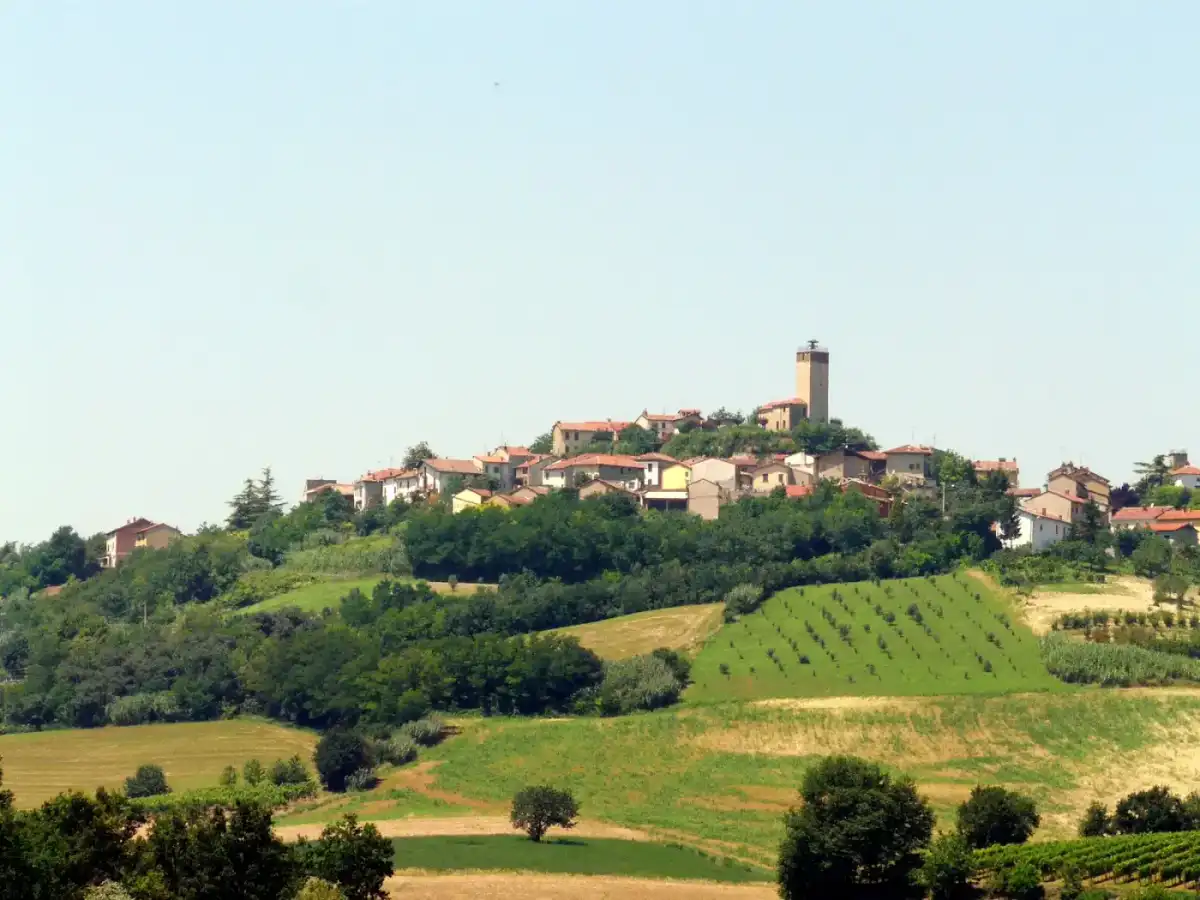
Conzano (Consan in Piedmont) is an Italian municipality of 904 inhabitants[1] from the province of Alessandria, in Piemonte.
The municipality is located about 14 kilometers south of Casale Monferrato.
In the early 20th century, the country underwent a massive emigration of the inhabitants in Australia, especially in northern Queensland, particularly in the area of Ingham, where a square is called "Conzano" and a "Roati" street, typical name of Conzanese, and in Mossman. In the early years of the twentieth century, when a census counts 6500 Italians, one every 50 turns out to be of Conzano.
Landscape and area
The village is nestled among the hills of Monferrato, between the Grana del Monferrato and Rotaldo brooks, at an altitude of 262 m asl, and includes two flat towns...Explore this chapter
The village is nestled in the hills of Monferrato, between the Grana torrents of the Monferrato and Rotaldo, at an altitude of 262 m above sea level, and includes two decentralized flat localities, approximately 4–5 km north of the town center and only approximately 10 km from Casale Monferrato: the first is Castel, the second hamlet of San Maurizio. To the north-east, the village borders with Occimiano, to the south with Lu and Cuccaro Monferrato, to the west with the countryside of Camagna Monferrato, to the north-west with Casale Monferrato.
History of Conzano
Low Middle Ages · Duchy of Savoy · Contemporary historyExplore this chapter
The site was already inhabited by prehistoric settlements, and traces of primitive Roman settlements were found, the work of the console Marco Fulvio Flacco (II century), along with small celto-ligurian presidi of tribes Idages, from Iactum, ancient name of the stream Grana[4]. Around the 3rd century AD. the presence of called patrician predials is attested Metili (Medilianus), and also gods ♪ or ♪, hence the origin of the toponym ♪ (Condiaganus, Conziacanus). A first urban agglomeration occurred around the 5th century, located downstream, in the locality Pozzo Piazza. Exposed to the various raids of the Early Middle Ages, in particular the Lombards, Goths and Saracens, this will be totally destroyed, and the village will begin to populate on the hill (locality bric Santa Lucia and An Casté, on the top of the hill) starting from around the 10th century, with a topographic structure of concentric circles. Emperor Otto I of Saxony then ceded it as a fief to the nearby Lords Cuccaro Monferrato, while the small decentralized village of San Maurizio will begin to populate approximately 4 km north of the town. About a century later, the Marquis Oberto donated goods to the Cluniac congregation for the construction of a Benedictine priory.
Low Middle Ages
From the 12th century, Conzano was subject to the Marchesato del Monferrato, a choice not appreciated by the people Ghilini of the Alessandria[5], who will in fact clash, shortly thereafter, with the Aleramici of the town. The primitive fortification of the village dates back to this period, with the construction of a tower on the eastern side, still existing today, which will then take the name of Clock Tower or Civic Tower. In front of the aforementioned Tower, the charming little church of San Biagio was built around the 15th century, still existing today but now deconsecrated and intended as a venue for concerts and cultural activities.
Slightly later, however, the church of the decentralized hamlet is found San Maurizio, in late Gothic style (around mid-15th century), where the remains of the basilissa Sophia, daughter of Theodore II of Monferrato and wife of the emperor John VIII Palaeologus, are apparently kept. On the same road (current provincial 67) for Casale Monferrato, a small fortress was built (today non-existent and replaced by a recent private villa), which gave life to the current Castello area. In the 16th century, the country came under the territory of the dukes Gonzaga, this until the beginning of the 18th century, when they were deposed.
Duchy of Savoy
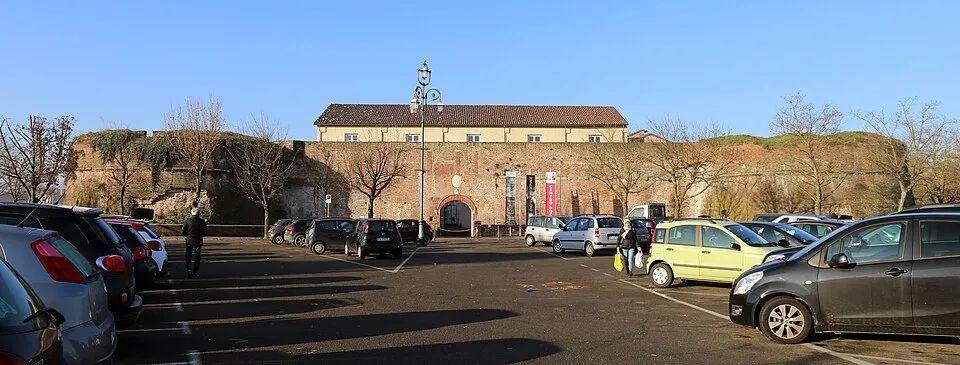
From 1709, Conzano was annexed to the Duchy of Savoy, under direct control of the district Casale Monferrato first, the department of the Tanaro and Marengo then, during the Napoleonic occupation. The ancient medieval building of the castle of the village, now in ruins, was first restored to Franciscan convent structure, then, at the end of the eighteenth century, rebuilt to a villa destined then to the Vidua. During the Kingdom of Sardinia, the town became famous thanks to the rich Count Carlo Vidua, a nobleman passionate about exploration and collecting at Italian and foreign historical sites, who managed to bring several finds from Ancient Egypt to Turin, later destined to the famous Egyptian Museum, between 1819 and 1823. In particular, he persuaded the Piedmontese of Barbania (in Canavese) Bernardino Drovetti, a diplomat at the service of France and Egypt, to give, despite the very important cost, his rich collection of Egyptian finds, sought after by France, the Kingdom of Sardinia, a fundamental act for the foundation of the Egyptian Museum, boasting Turin.
Contemporary history
The country saw an increase in the population, this at least until the call of the Second War of Independence in 1859 (discounts in the nearby area of Valenza) and the First World War afterwards.
Added to these events was the Great Depression of the late 19th century; while the large urban centers survived the economic fall, the inhabitants of the small rural towns, impoverished to the point of starvation, had to use up their last savings to abandon their lands, and seek their fortune even far away, for example in America, but above all in Australia.
Many peasants of the Monferrato they moved to the Australian north-Queensland, where there was strong demand for sugar cane cutting labor[6], an agricultural work very similar to the arrangement of the Monferrato vineyards. The poorest countries in the area were, at the time, Lu, Occimiano, Camagna Monferrato, Cuccaro Monferrato and, first, Conzano. At the end of the eighteenth century, the philos struck the vineyards, for which there was a massive emigration, especially from this country.
In 1992, there was a rediscovery of this interesting migration phenomenon. Conzano was established as the only country in the Province of Alessandria twinned with Australia (Ingham), then there was the initiation of Piazza Australia (already Piazza d'Armi), the opening of an exhibition space on emigration, along with the memory of the official spokesman for Congolese emigrants in Australia, Joseph, Joe Cantamessa (1892-1947)[7] and the affixing of a tombstone in their memory inaugurated by the Governor of Australia.
Symbols
The coat of arms of the municipality of Conzano was granted by decree of the President of the Republic 28 October 1982.[8]
The vine recalls the local wine tradition, very ancient and developed by the Benedictines after they had as a gift from the Marquis Oberto del Monferrato the lands for the foundation of a cluniac priory in the 11th century. The motto recalls the contribution of the inhabitants in the liberation war and is drawn from the 1st volume ofEnemaid by Virgil: "Vincet amor patriae laudumque immense cupido" ("Love for the country and the great desire for praise will win").[10]
The gonfalone is a truncated drape of yellow and white.
What to see in Conzano
Explore this chapter
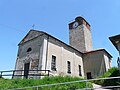
- Parish Church of Santa Lucia, built around the middle of the 15th century (the bell tower is in Romanesque style), on an already existing chapel dedicated to the bric of the same name, it was then completely remodeled and equipped with a large Baroque façade at the end of the 18th century. It contains a diptych attributed to the school of Giovanni Spanzotti, frescoes by Luigi Faini and an altarpiece dedicated to Saint Lucia from 1862, the work of Tommaso Lorenzone. The last restoration dates back to 1904, thanks to the parish priest Don Francesco Oddone.
- Church of San Biagio of the 15th century, on the eastern hill (via Don Oddone 20), with annex to the ancient panoramic sighting tower (called the Clock Tower, 12th-13th century).
- Villa Vidua, of Count Charles, erected in 1822 on the central and northern side of the village, on the remains of the previous 15th century castle and the subsequent Franciscan monastery of the 18th century, on probable project by Luigi Canina. The villa has been purchased in the years '90 from the Municipality, which restored it as historical-artistic good of the country[11]. Even today it maintains the structure with three orders of loggias, with internal frescoes and a so-called room Chinese. It currently hosts the Enrico Colombotto Rosso Foundation Cultural Center, included in the "Open Castles" system of the Lower Piemonte.
- Church of San Maurizio in the decentralized hamlet of the same name, in late Gothic style (about half the fifteenth century), where it seems that the remains of the Basil Sophia, daughter of Theodore II of Monferrato and second wife of Emperor John VIII Paleologos, already Marquis of Casale Monferrato about 1421.
- The viewpoint next to the church dedicated to parish priests
- The Promenade des Artistes, on the ancient spout, with artistic works "en plein air"
- The artistic structure "Come canne al vento" in the cemetery, which resumes the work of Grazia Deledda
- The large silhouette of kangaroo, above the ancient porticoes and next to the "preja dla crija", in synthetic material by the artist Ezio Gribaudo, which recalls the departures of the past
- Murales by Filippo Biagioli dedicated to biodiversity. Work strongly wanted by journalist Nadia Presotto (Il nuovo Giornale, la Vita Casalese, In Giardino) who lived for many years in the country.[12] It is located in the hamlet of San Maurizio in a private garden openable on request.
Society
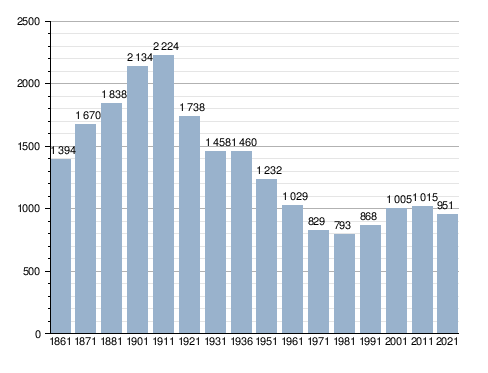
Demographic evolutionExplore this chapter
Demographic evolution
Inhabitants registered[13]
Administration
TwinningExplore this chapter
Below is a table relating to the administrations that have succeeded one another in this municipality.
| Period | First citizen | Match | Load | Notes | |
|---|---|---|---|---|---|
| June 27, 1985 | 6 July 1990 | Massimo Porta | Christian Democracy | Mayor | [14] |
| 6 July 1990 | April 24, 1995 | Claudio Roati | Italian Socialist Party | Mayor | [14] |
| April 24, 1995 | June 14, 1999 | Emanuele Demaria | center | Mayor | [14] |
| June 14, 1999 | June 14, 2004 | Emanuele Demaria | civic list | Mayor | [14] |
| June 14, 2004 | June 7, 2009 | Francesco Imarisio | civic list | Mayor | [14] |
| June 7, 2009 | May 25, 2014 | Emanuele Demaria | Civic list Torre civica | Mayor | [14] |
| May 25, 2014 | May 26, 2019 | Emanuele Demaria | civic list Hand rod with tower | Mayor | [14] |
| May 26, 2019 | June 9, 2024 | Emanuele Demaria | Civic list Tower and hands tightening | Mayor | [14] |
| June 9, 2024 | in office | Emanuele Demaria | List of Civic Towers | Mayor | [14] |
Twinning
 Ingham, since 1993[15]
Image gallery
Explore this chapter
-
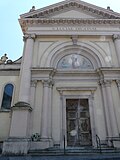 Façade of the Church of Saint Lucia
-
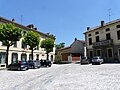 Australia Square
-
 Torre dell'Orologio and church of San Biagio
-
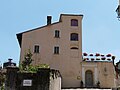 Villa Vidua
-
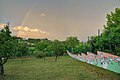 Murales by Filippo Biagioli
Notes
Explore this chapter
- ^ to b Monthly demographic balance for the year 2026 (provisional data), up demo.istat.it, ISTAT.
- ^ Seismic classification (XLS), up risks.protezionecivile.gov.it.
- ^ Table of degrees/day of Italian Municipalities grouped by Region and Province (PDF), in Law 26 August 1993, n. 412, annex A, National Agency for New Technologies, Energy and Sustainable Economic Development, 1 March 2011, p. 151. URL consulted on 25 April 2012 (archived fromoriginal url on 1 January 2017).
- ^ Copy filed, up ilmonferrato.info. Retrieved 16 February 2016 (archived fromoriginal url on 30 May 2013).
- ^ Copy filed, up common.conzano.al.it. Retrieved 12 February 2016 (archived fromoriginal url on 24 February 2016).
- ^ http://www.piemontesinelmondo.org/
- ^ adb.anu.edu.au, http://adb.anu.edu.au/biography/cantamessa-ettore-giuseppe-9686 Missing title for url
url(help). - ^ Conzano, decree 1982-10-28 DPR, concession of coat of arms and gonfalone, up Heraldic office - Municipal files, Central State Archives. Retrieved 27 October 2021.
- ^ Coat of arms, up Municipality of Conzano. Retrieved 27 October 2021.
- ^ Conzano, up araldicacivica.it. Retrieved 27 October 2021.
- ^ http://www.piemonteitalia.eu/gestoredati/dettaglio/445/bauwerke/625/villa-vidua-conzano.html[interrupted link]
- ^ Art in the garden. A mural made in a private garden of Monferrato Casalese, up ibs.it.
- ^ Data taken from:
- Resident population of the municipalities. Censuses from 1861 to 1991 (PDF), up ebiblio.istat.it, ISTAT.
- Resident population - Time series, up exploredati.istat.it.
Please note: 2021 data refers to permanent census data as of December 31 of that year.
- ^ to b c d And f g h the http://amministratori.interno.it/
- ^ Municipality of Conzano, Twinning, up common.conzano.al.it.
Where to stay · Conzano
Find stays on Booking.comThe area, step by step
Trails and routes in Conzano
 WalkingPlaces and landscapes along the route
 CyclingPlaces and landscapes along the route
 Mountain bikeAround the starting point
Asti, Alessandria and surroundings
Tour DOC della Barbera Monferrato Superiore

Asti, Alessandria and surroundings
4 Colli Monferrato Mtb

Asti, Alessandria and surroundings
Itinerario MPC in Mountain Bike

Asti, Alessandria and surroundings