Atlas of Monferrato
Casale Monferrato: sights, history and trails
Alessandria
- Elevation
- 116 m above sea level
- Area
- 86,21 km2
- Demonym
- Casalesi or casalaschi
- Patron saint
- sant'Evasio
A closer look
Discovering Casale Monferrato
Casale Monferrato (AFI: [kaˈsale mo]ferˈrato][4]; Casal Monfrà [Chuckles] in Piedmont; Case [kaˈz]] is a town in Italy of 32 481 inhabitants[1] from the province of Alessandria in the Piemonte.
Between Alessandria and Vercelli, Casale Monferrato is the second most populated municipality in the province, after the capital, as well as one of the provincial centres as home to the hospital, the upper school centre and other services for citizens.
Ever since he became municipium Roman, the city was the most important center of the surrounding area[5]; after a period of decay caused by the fall of the Roman Empire of the West and the invasions of the barbarian peoples, in fact, it became a free Commune and from the fifteenth to the sixteenth century was the capital of the Paleologists. Later it became the domain of Gonzaga, who built one of the largest and most prestigious European citadels. Contained during the 17th and 18th centuries between French and Spanish, during Risorgimento it was one of the defensive bastions against the Austrian Empire.
Landscape and area
Region · Orography · HydrographyExplore this chapter
Region
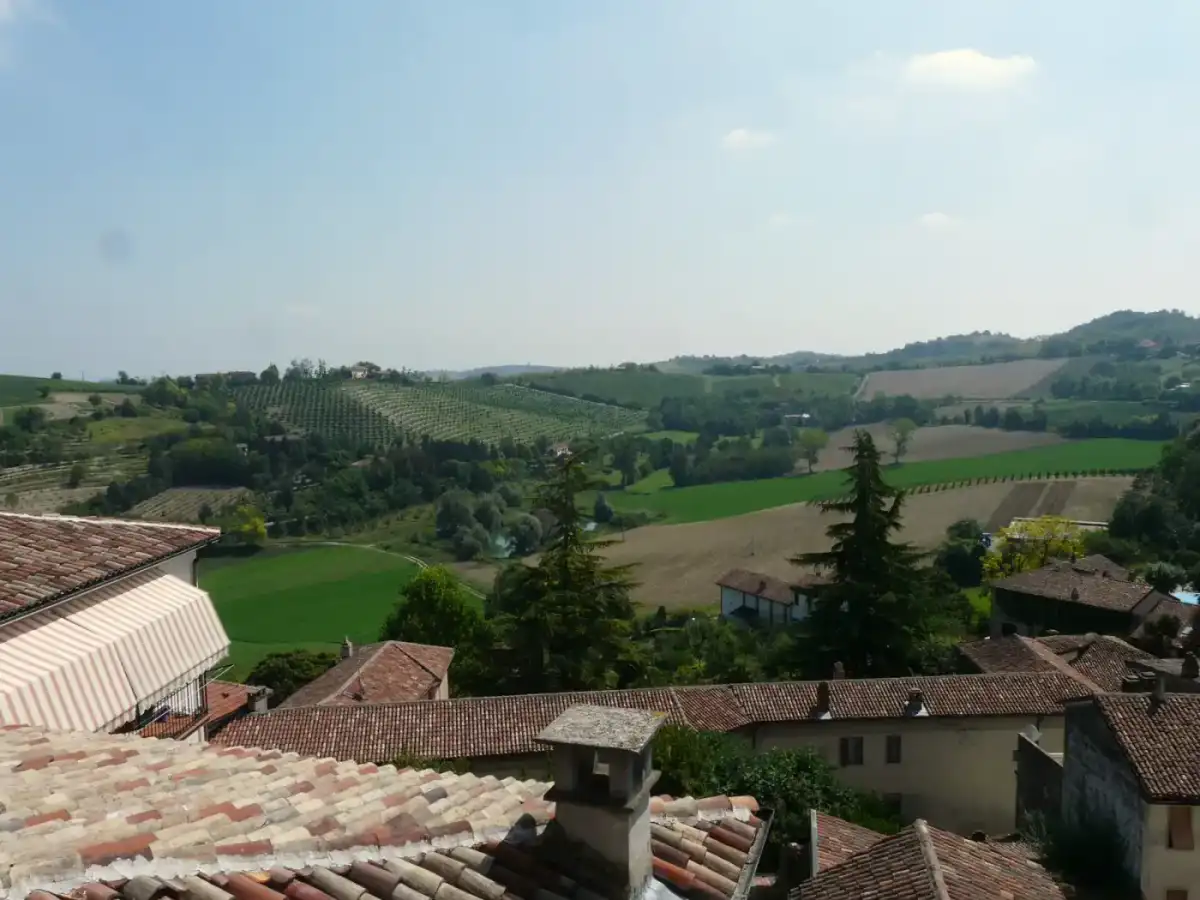
The municipality of Casale Monferrato is extended 86.32 km2[6] and extends over a flat area located at the foot of the hills of Monferrato, a famous wine-growing region of which it is considered the historical capital. The city also stands in a favorable position as it is located a short distance from the capitals of Vercelli, Alessandria, Asti and Novara and inside the industrial triangle.
According to the Geological Charter of Italy, drafted by the Geological Service of Italy,[7][8] the territory of Casale Monferrato is mainly formed by floods terraced gravel-sandle or lemon, recent and current,[7] of the major water courses (recent to recent Holocaust),[7] sandy-ghiaiose floods fixed by the abandoned alvei weakly suspended and exceptionally unfathomable (reaching to the average Holocaust),[7] residues of terraced sandy-ghiaiose floods considerably suspended on the water streams (reaching to the ancient Holocaust);[7] west-south west of the city is the "Training of Casale Monferrato" (above to the Middle-Lower Eocene),[8] composed of alternations of calcari more or less marnosis,[8] fine limestone sandstones and micaceous sandstones, fucoids limestones and plastic clays predominantly brown-dark. There are microfaunes at the marnosis levels (from one to six meters deep).[8]
- Seismic classification:[9] area 4 (very low condition).
Orography
Hydrography
The main water course that crosses the municipal territory is the Po river. There are also 2 other important water courses: the Lanza Canal and the Mellana channel that cross the city, of a considerably lower flow.
Climate
According to the classification of climates in Köppen Casale falls within the temperate climate in hot summer (Cfa). Based on the 30-year reference average 1961-1990average temperature of the coldest month, January is attested to +0,4 °C; the warmest month, July, is of +22,7 °C. Rainfalls are concentrated especially during spring and autumn. In winter, there may be snowfall, sometimes abundant, and frequent frosts. Conversely, in summer the afa caused by the high humidity rate can make the heat oppressively. Finally, in the coldest months of the year there are formations of persistent fog even more days.[10][11][12]
| Casale Monferrato | Months | Seasons | Year | ||||||||||||||
|---|---|---|---|---|---|---|---|---|---|---|---|---|---|---|---|---|---|
| Gen. | Feb | Mar | Apr | May | ♪ | Jul | Ago | Set | Oct. | No. | Dec. | Inv | Pride | East | Aut | ||
| T. max. average (°C) | 4,0 | 6,9 | 12,5 | 16,9 | 22,0 | 26,0 | 28,7 | 27,6 | 23,8 | 17,0 | 10,3 | 4,5 | 5,1 | 17,1 | 27,4 | 17,0 | 16,7 |
| T. min. average (°C) | −3,2 | −2,0 | 2,5 | 6,7 | 10,7 | 14,5 | 16,7 | 15,8 | 12,8 | 7,9 | 3,9 | −1,2 | −2,1 | 6,6 | 15,7 | 8,2 | 7,1 |
- Climate classification of Casale Monferrato:[13] zone E, 2815 degrees day.
History of Casale Monferrato
From origins to Romans · From the Middle Ages to the Renaissance · Modern ageExplore this chapter
From origins to Romans
The first inhabitants of the lands were the Ligurians, who settled on the banks of the Po. They were divided into tribes: the Staziels, Insubri, Libui, Dutunini, Jadatini and Gabieni. Later the Celto-Galli were resigned, leaving words still used in modern times in Piedmont.[14]
They were later conquered by the Romans who founded a municipium on the area of the settlement called Vardacate.[5]
Later, the bishop of Asti sant'Evasio converted to Christianity the village, and founded the church of San Lorenzo (published on the site of the current cathedral).[15]
From the Middle Ages to the Renaissance
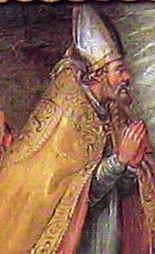
Following barbaric invasions and the end of the empire, they settled on the area of municipium, the Lombards around 568.
The name of Casale appears for the first time in a donation document by the deacon Andrea at the canon of Sant'Evasio, dated 15 August 988.[16] After the 1000 Casale returned to be populated and at the same time began to assume an institutional structure typical of a medieval town.[16] From the end of the 11th century, however, the contrasts began with the municipality of Vercelli, which culminated in 1215 with the destruction of Casale by the alliance between the municipalities of Milan, Vercelli, Asti And Alessandria.[16] Despite this, the village and the walls were rebuilt in a short time.[16] At the end of the 13th century, he became a fairly powerful commune, and served as Captain General before William VII of Monferrato and later to Matteo Visconti.[16]
At the beginning of the fourteenth century, due to disputes between the different communal families, it was decided to appoint Peacekeeper Theodore Paleologo, son of Byzantine emperor Androniko II Palaiologist and Violante of Monferrato, swearing him loyalty.[17] Later, around 1352, John II Palaeologist ordered the construction of a castle to strengthen the previous wall;[17] in 1370 the Visconti occupied Casale[18], returning it to Theodore II Palaeologus (together with Monferrato) in 1404.[17]. In 1434 Gian Giacomo Paleologo moved the capital of Marchesato del Monferrato to Casale.[17] During the reign of Gian Giacomo, the cantonal hospitals of Casale were all gathered in the Holy Spirit Hospital[17] and, during the reign of his successor William VIII Palaiologos the village knew its maximum flowering:[17] Casale became the center of the administration of the marquisate, numerous educational institutes and founded new churches were opened.[17] In 1474, through a bubble of Pope Sixtus IV, the church of Sant'Evasio was elevated to Cathedral, the Diocese of Casale was born and the village was elevated to City.[17]
Modern age
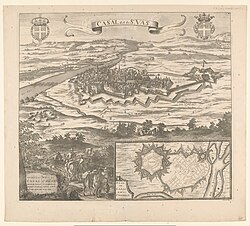
Following the Treaty of Cateau-Cambrésis of 1559 Casale passed under the rule of Gonzaga of Mantua,[19] who, at the end of the century, with Duke Vincent I, enlarged the defensive structure of the city and built one of the most powerful and prestigious European citadels,[19] by Bernardino and his son Girolamo Fatto.[20] During the Counter-Reformation period, the city underwent considerable transformations: some citizens, partly noble, but especially craftsmen who shared the ideas of Oliviero Capello, rebelled, but in vain, to the absolutist power that Guglielmo Gonzaga, Duke of Mantua and Monferrato, tried to establish in the city: the duke had the best and, after 1567, managed to achieve its objectives, changing the ancient customs.[19][21]
In the 17th century, during the War of succession in Mantua and Monferrato (1628-1631) he suffered numerous besieges of Spanish and French.[22] During this period, the citadel was constantly reinforced and updated with the latest defensive techniques of the time.[22]
In 1680 the citadel was ceded to the French by Duke Charles Ferdinando Gonzaga, who had embarked on a policy of strong alliance with France.
On the occasion of the Spanish Succession War, in 1708 Ferdinando Carlo di Gonzaga-Nevers was accused of fellonia against the Empire and lost all powers and possessions, which were assigned to Vittorio Amedeo II, Duke of Savoy.[23], as a reward for his participation in the war alongside the pro-imperial coalition.
The complete passage of Casale under the domains of Casa Savoia took place in 1713 with the Treaty of Utrecht, which put an end to the conflict, and having lost the function of capital, in the city also finished the innovative thrusts in artistic and military field.[23] The occupation of the gallo-ispani in 1745 caused serious damage to churches and convents. From 12 December 1798 to 17 May 1799 Casale, following the revolutionary ferments that at that time were getting started in Europe, established the republic, hiring the tree of freedom.[24] Subsequently the city was occupied by the Austrians and the French and remained in their possession until the battle of Marengo (14 June 1800), when he again returned to the French dominions.[24]
The contemporary age
Until after the middle of the 19th century, the city had remained in defensive walls and without any connection to the other bank of the Po (except a bridge of boats).[25] On the project of Matre di Chartres, on 22 August 1840 a 228-metre-long suspension bridge was inaugurated, divided by a central column to which the skirts were supported.[24] Intitled to Carlo Alberto, king of Sardinia, the bridge lasted forty years, then to be demolished; in its place a new iron bridge was erected, more resistant.[24] In the city, in the meantime, after the suppression of convents during the early nineteenth century wanted by Napoleon, numerous urban interventions were started which, among other things, gave many civil and sacred buildings a neoclassical architecture.[24]
In 1849, during the First War of Independence, the Austrians besieged Casale and tried to make it a leader in their defensive line.[24] After the mid-19th century, some of the military works built in previous centuries were demolished to create new urban enlargement spaces[26]; this work of demolition went on until 1930, when the head of Bridge.[27] During this period, many urban plants and structures were built, such as sewerages, irrigation canal, road arrangement and gas and lighting systems, cemetery enlargement, circumvallation, overpass on the railway line, public gardens accommodation and tram connection with nearby suburbs.[27]
The area of Casale Monferrato in the 19th century. he developed the production of lime, spread since the Middle Ages thanks to the presence of large limestone deposits in the surrounding hills.[28]
Between the end of the 19th century and the beginning of the 20th century in Casale there were numerous industrial plants, especially cementitious[29]. At the same time, illegal construction also increased and, for this reason, in 1911 the master plan for Agro Callori, one of the municipal urban areas, was approved.[30] In the same year, the heavy artillery barracks were also installed in the municipality.[30]
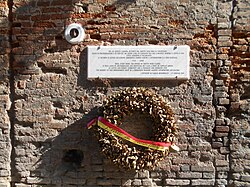
In the early years of World War II, between 1941 and 1943, Casale Monferrato was with Acqui Terme one of the two municipalities of Alexandria designated as a place of free internship for foreign Jews. There were 7 people in everything, Croatian or German, who had found refuge in Italy in the previous years, establishing themselves in Genoa or Trieste.[31] After September 8, 1943, with the German occupation, the group of refugees immediately left the country and dispersed; they will almost all escape capture and deportation.[32] They were arrested in Casale Monferrato and deported 19 members of the local Jewish community (the number increases considerably if they also consider the housekeepers arrested in other locations).[33] A memorial, by Antonio Recalcati, recalls in the atrium of the local synagogue the 59 Jews of Casale and the 4 of Moncalvo deported and dead in the extermination camps.[34]
The events of World War II interrupted the growth of the city, which resumed only after the end of hostilities especially in the district Oltreponte (placed on the other side of the Po); during this period the bridge over the Po was rebuilt, bombed during the war; the city continued to expand and new industrial plants were installed.[30]
Note is the presence of the Eternit plant for asbestos processing, before the discovery of its toxicity, which has caused more than 1,600 deaths between workers and the population since the 1950s due to a serious disease, curable but not healable: pleural mesothelioma, due to the inhalation of unworked fiber. It is estimated that the incidence of asbestosis (other asbestos disease) continued to increase until 2015-2020, due to the long time it spends before the onset of related asbestos diseases.[35][36]
On 15-16 October 2000, the Oltreponte district, located in the northern part of the city, was completely submerged by a flood, along with the hamlets of Casale Popolo and Terranova; also the neighboring municipalities of Casale Popolo and Terranova. Balzola, Morano sul Po Trino and Trino were overwhelmed by an exceptional Po, suffering considerable damage.[37]
Symbols
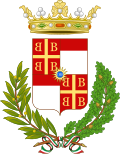
- Coat of arms
The golden cross in the red field set aside by the "B greche" (beta) in the first and fourth is the sign of emperors of Constantinople and are the weapons of the Paleologists. In the second and third those of the Aleramics, Marquis of Monferrato since the 10th century, region of which Casale was one of the main cities, and that later became emblem of the Monferrato. The IHS Christogram represents the name of Jesus and recalls the ancient Christian traditions of Casale, which has been located since 1474 also in the diocese of Casalense. The crown of the Marchesato, which then passed to the Gonzaga in Mantua in 1559, then to the Savoy in 1713. This coat of arms was recognized by decree of 17 December 1936[40] and transcribed in the registers of the heraldic consultation on 19 December 1936.[39]
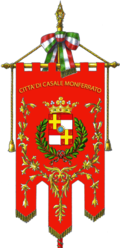
- Banner
The gonfalone is a red drape richly adorned with golden embroidery granted by royal decree of 10 May 1937.[40]
Honors
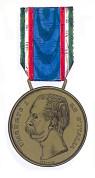
The city of Casale Monferrato is the thirteenth among the 27 gold medal-decorated cities as "benemerite del Risorgimento Nazionale" (9 March 1899) for highly patriotic actions carried out by the city during the Resurrection period, defined by the House Savoy, including between the insurrectional motions of 1848 and the end of the First World War in 1918. To remember the company, Casale Monferrato has named Cesare Cobianchi a street of the city.

— 9 March 1899[41]
What to see in Casale Monferrato
Religious architecture · Civil architecture · Military architectureExplore this chapter
Religious architecture
- Cathedral of Sant'Evasio
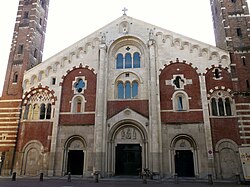
- The Cathedral is the oldest monument in the city Casale Monferrato and one of the most important cathedrals in Lombard Romanesque style Piemonte. According to the Pass, a work that describes the events and martyrdom of Saint Evasio, the foundation of the church dates back to the 8th century AD. by the Lombard king Liutprand.[42] The first certain news of the existence of the church is documented in an act of donation of 974 and in later acts dating back to the 11th century.[42]
He was consecrated in 1108 by Pope Pasquale II.[42] In 1215, following the war between the Casalesi and the Alessandrini, the Vercellesi, the Pavesis and Milanesi, it was severely damaged and in several rebuilt points.[42] Although it has been the subject of numerous interventions and restorations during the 18th and 11th centuries, it maintains much of the characteristics acquired in medieval times.[42]
The monumental hut façade is asymmetrical and framed by two side bells. On the sides of the main gate there are two columns on which are placed nineteenth-century copies of two statues representing respectively the Lombard king Liutprando and Queen Teodolinda.
The interior consists of a rectangular nartece, a tiburium, five aisles divided by large pillars and, continuing the central nave, from the area composed of the presbytery (which presents in turn and in the apse catino the mural paintings executed by Costantino Sereno in 1860-61 in neo-Byzantine style)[43], from the choir and the apse.[44] The perimeter walls of the church are filled with lateral altars, which have undergone many changes over time.[43] Finally, surrounded by the bell tower there are sacristy and the chapel of Saint Evasio.[44] - Church of San Domenico
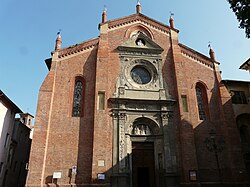
- The Church of San Domenico is the most important town church after the Duomo;[45] founded by William VIII in 1472, it was finished in 1506 by Bonifacio V and entrusted to the care of the Dominican Fathers.[46] The convent was built in the same years.[46] Both the convent and the church remained united until 1822, when, following Napoleon's suppression, a part of the convent was divided into three batches and granted to individuals.
- Church of San Paolo
- Started in 1586 by design of the Milanese architect Lorenzo Binago, barnabite father, the Greek cross church, was consecrated on November 12, 1595.[47] The church was officiated with the annexed college, now elementary school of state, until 1802, year of Napoleonic suppression by the fathers Barnabiti.[47] On the facade statues of the Madonna di Loreto, San Pietro, San Paolo, San Carlo Borromeo and Sant'Alessandro Sauli. There are numerous works of the seventeenth century, including paintings by Guglielmo Caccia called the Moncalvo: Decollation of St. Paul, Assunta, San Matteo and the Angel and Vocazione di Matteo.[48] Also inside the church, on the right side, there is the House of Loreto, opened in 1645.[47]
- Church of Santa Caterina
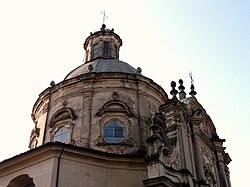
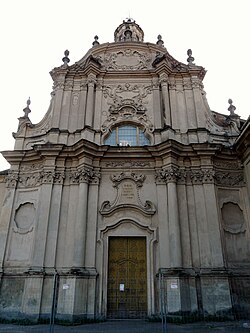
- Built at the beginning of the 18th century on a project by Giovanni Battista Scapitta, together with the convent, the church was consecrated on August 24, 1720.[49] The church, considered one of the baroque masterpieces of the city, kept its original structure unchanged. while the convent underwent many transformations (also becoming school and hospital).[49]
- Church of San Michele
- The octagonal church surmounted by a dome, was completely frescoed by Giorgio Alberini, while the decorations of the dome are hand-made by Giovanni Antonio Cassano and dated from 1597.
- Sanctuary of the Sacred Heart of Jesus
- Located in the town centre, it was opened in 1922 and is a neo-Gothic church with five aisles officiated by the Salesians. In December 1969, Pope Paul VI elevated it to the dignity of a minor basilica.[50] Attached to the sanctuary there are aspiring for late vocations, a school and an oratory[51]
- Synagogue
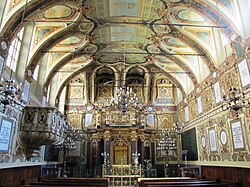
Present in the city since the 14th century,[52] From 1570 Guglielmo Gonzaga allowed the Jews of Casale and other centers of Monferrato to freely profess their religion.[52]
The synagogue, built in 1595 (as evidenced by a plaque), was absorbed during the 17th and 18th centuries by the Jewish ghetto.[52] Even in periods of less freedom for Jews, such as the Napoleonic era, the synagogue was constantly embellished with new artistic works. In 1866 the new synagogue, completely transformed, was consecrated.[53]
The exterior is very sober, camoufled with the surrounding environment, while the interior is characterized by the massive presence of gold stucco.[53] The permanent exhibition of the documents and artistic works of art was staged in the matroneo. community; the library and the historical archive are located on the second floor.[53]
The synagogue is not used regularly because the Jewish community of the house has been very reduced; the cults are therefore limited to functions of particular solemnity, which recall practitioners even from outside the city.[54]
A plaque that signals the backbone of the ghetto gate, because it recognizes the tolerance of the city and admonishes against all forms of anti-Semitism and racial hatred.
Civil architecture
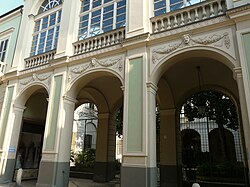
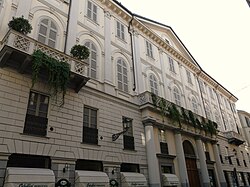
- Anna d'Alençon Palace
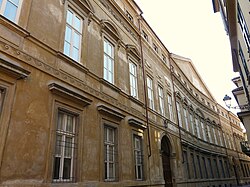
Resaling to the late fifteenth century,[55] It is an ancient building characterized by a typical Renaissance courtyard, surrounded by circular columns of laterizio with cubic capitals, a portico with arches squared acute and all-sixth, typically renaissance and decorations with coats of arms and painted tablets representing characters of the paleologa family and Anna d'Alençon; inside the spacious rooms stand out ceilings with drawers.[55] Originally inhabited by the Marquis Anna d'Alençon, from the 17th century belonged to the family Fassi di Balzola.[56]
- Treville Palace
The most famous work of Giovanni Battista Scapitta, is one of the most important palaces in the city.[57] Built between 1710 and 1714 it is in the Piedmontese Baroque style and overlooks Via Mameli creating a remarkable visual impact with its imposing curvilinear façade. Of particular interest are the lobby and courtyard, rich in light and color.[57] The facade, dated 1780, follows the neoclassical style.[57]
- Palazzo Sannazzaro
Of late medieval origin, it was deeply restored during the eighteenth century, when it assumed the current Baroque aspect.[58] The signs of the original structure (the monofores) are still visible on the facade and right side of the palace. The author of the palace is unknown, while the client is known, Giovanni Battista Sannazzaro (who was also mayor of Casale).[58] The exterior is decorated in a sober and elegant way; after the entrance door you can access the courtyard, with great scenic effect.[58]
- Palazzo San Giorgio
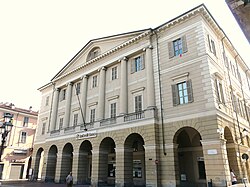
Built on the remains of a previous palace, it was built in 1778; stylistically it is a transition between Rococo and Neoclassical.[59] It has a façade divided into three orders with windows surrounded by stucco. The portal, formed by two-tone columns, is surmounted by a balcony with stone balustrade adorned by four marble putti, representing the four seasons.[60] The interior rooms are remarkably decorated with frescoes and stucco. Much of the furniture is from the time.[60] In the courtyard it is possible to observe part of the pre-existing building, with room frescoed by Guala.[61] The building is the seat of the municipal administration.[60]
- Palazzo Magnocavalli
Attributed by stylistic affinity to Benedetto Alfieri, it is characterized by the elegant atrium and for the staircase that starts around two columns that creates a certain monumental effect, despite being obtained in a narrow space.[62]
- Palazzo Langosco
The building, now the seat of the civic library, is combined with the different constructions forming the large complex of Santa Croce, former convent of the Agostiniani. Acquiring the building, a fifteenth-century foundation, Langosco's accounts made important changes to the preexisting situation. The most valuable part (honoury box with two ramps and entrance hall) was built in 1776 by Giovanni Battista Borra, with the artistic contribution of the Veronese painter Francesco Lorenzi. In the palace, at the time of the Gonzaga, the Senate Casalese had its seat and as a Senate Hall is still indicated the large entrance hall, restored in the 1960s.
- Palazzo Sacchi-Nemours
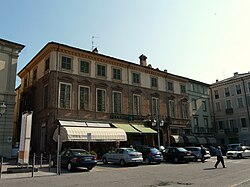
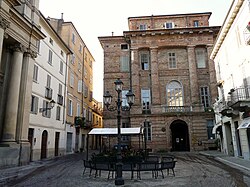
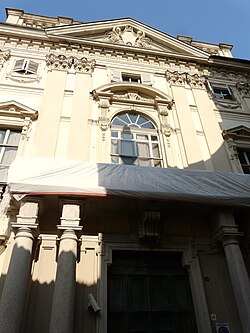
Next to the Municipal Theatre and near the IAT Information kiosk, is Palazzo Sacchi Nemours, built between 1750 and 1752 by architect Francesco Ottavio Magnocavalli, author of several other buildings present in the city and on the territory. The façade features typical characters of the 18th century local style with exposed bricks and windows of the noble floor surmounted by arched timpani and alternating triangular. The entrance portal is flanked by two slender ionic columns on which stands an elegant wrought iron balcony. The ground floor of the building, which had already been originally designed to arrange workshops of artisans, still houses several shops and a cafeteria.
The Sacchi family, of Pavese origin, had added to its name the surname of Nemours relatives Frassinello Monferrato in 1838 for hereditary reasons.
- Casa Tornielli e di Sandro
Built in the second half of the fifteenth century[63] (as demonstrated by the stylistic elements), was restored in 1907 by the Tornielli family, assuming its current shape.[63]
The first restoration of the building began between 1510 and 1520, when some elements of the palace were updated to Renaissance taste.[63] During the seventeenth and eighteenth centuries, he underwent other interventions, which altered the original structure.[63] The most important Gothic architecture remains: the façade is characterized by four ogival monophs. After the 16th century gate (attributed to Michele Sammicheli)[64], you enter a portico with low typical Renaissance columns which leads to the courtyard.[65]
- Municipal Theatre
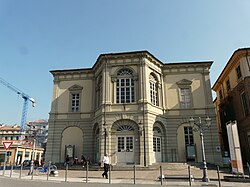
Casale already had a theatre, built in the same place as the present one, at the beginning of the 17th century, called Trincotto;[66] This first building was transformed in 1673, when the stands were added.[66] In 1697, however, the theatre was closed for management difficulties, to be rebuilt entirely in wood in 1703.[67] However, between 1785 and 1786 a new theatre was built (on project by Agostino Vitoli),[66] bigger, inaugurated in 1791 and arrived until today.[68] From the contemporaries it was considered the best theater of the Kingdom of Sardinia after that of Turin.[69] During the 19th century he underwent numerous restoration work, aimed at protecting decorations and safeguarding the structure from fire.[68] The building has a precious interior with four orders of brick and logs decorated with stucco, gilding and velvet. The real stage is characterized by the presence of victories and caryatids, these last works of Abbondio Sangiorgio.[70]
- Civic tower
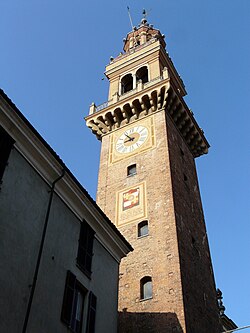
A square, brick plant, dominates with its 60 meters high[71] all the city and is one of its symbols; it was probably elevated in the 11th century,[72] together with the church of Santo Stefano and two other towers (Coin, towards the east, e Luxenta, towards the south) for defensive purposes.[72] In the 16th century it was restored and the part above the clock was built, in Renaissance style (except the dome, added in Sabauda era)[73].[72] In 1731 and 1780 other restorations were conducted (the last made necessary by lightning that had damaged the dome and the clock, which was replaced);[72] in 1920, finally, another restoration eliminated the plaster and brought it to the present aspect.[72]
On top there is a banderuola depicting the coat of arms of the Gonzaga family: cross surrounded by 4 eagles. On the tower two frescoes depict the coat of arms of Casale Monferrato.
Military architecture
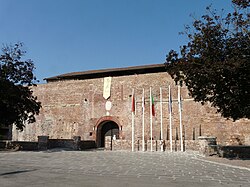
- Palaiologi Castle
The castle of the Paleologists was built in Casale Monferrato in 1352 by Giovanni II Paleologo, to strengthen existing fortifications.
The entire castle is partly visitable and progressively refurbished and recovered and has become a cultural container of the city.
Cittadella di Casale Monferrato
The Citadel of Casale Monferrato is a military stronghold built between 1590 and 1595 by the will of the Duke Vincenzo I Gonzaga and destroyed after the Assumption of Casale of 1695. It is partly rebuilt between 1850 and 1859 in view of the Second War of Independence.[74]
Industrial architecture
- Paraboloid
The Paraboloid is the last testimony of the ancient Robatti Stabilimento, a production complex built in 1873-74 by Società Anonima Fabbrica Calci e Cementi di Casale in which it was initially made hydraulic lime. In 1876 substantial changes were made to promote the industrial manufacture of natural Portland cement.[75] In this plant the first industrial production at national level (500 q.li).[76][77] The marin came from the mines located in the surrounding hills by a narrow gauge railway.
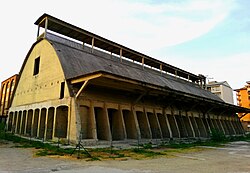
The plant followed the fortunes of the Anonymous Society, incorporated in 1917 into the Italian company Cementi di Bergamo (Italcementi). At the beginning of the following decade, the plants were renovated with a rotating oven, mills, buildings and deposits. Among these, the Paraboloid, built in 1922-23 on project of Ing. Luigi Radici,[78][79] was the only horizontal silo for storage of clinker. The parabolic shape, due to an aesthetic idea of the designer, reproduces the profile assumed by the clinker heap. The Manufa, built in reinforced concrete, is constituted by the tyration of parabolic arches arranged in parallel connected by transverses. In the 1948 cement production was stopped after the start in 1947 of a new factory Italcementi in Borgo San Dalmazzo. Vertical furnaces remained inactive for some years and demolished over the years’50. Later the area was used as a wood warehouse and in 1995 was detected by the Municipality of Casale.[80]
The artifact is bound by the Ministry of Culture with DDR measure n. 163 14.06.2011.[81] The building is considered a reference point of the national industrial architecture, for architectural conformation, for construction techniques used[82][83] and for operation. The shape is a recurring element in the farmhouse and a canonical form of industrial architecture in concrete not only Italian. The type of paraboloid has important examples throughout Italy, but the recognized archetype is the Paraboloid of Casale Monferrato[79] that “represents an icon of Italian production geography in full”.[84]
In 2021 a project for regeneration of the building was developed, aimed at reuse of interior spaces and urban redevelopment,[85][86] within the framework of the contributions of the PNRR, so the Municipality of Casale is awarded the required contribution.[87]
- Furnasetta
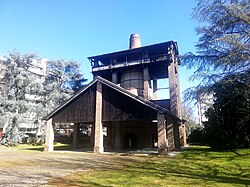
It is a brick-built vertical furnace built in 1872 by geom. Luigi Marchino for the cooking of lime. In 1912 it was adapted to the production of natural Portland cement on design by engineer Giovanni Sisto Eccettuato. It is the last remaining testimony of the ancient port of Viale Priocco founded in 1872 by Brand and C. for the production of lime and for the manufacture of bricks. In 1878, cement manufacturing was started: the factory was transformed into a large plant.[88]
Inside the factory there was the company headquarters, which was also maintained in the following decades: on 1 January 1933 the industrial activities of the Italian Union Cementi, a company controlled by I.F.I. of the Agnelli family;[89] In 1969, the social name of the Union Cementi Marchino was changed to Unicem (Union Cementerie Marchino and Emiliane and Augusta SpA).[90] In the years60 production was stopped, the plants were dismantled except for Furnasetta and the office building: the area was urbanized. Between the 1997 and the 1999 The Unicem incorporation process was initiated and concluded in the Buzzi Cementi:[91] Buzzi Spa is the current owner of the area.[92]
- Lanza Canal Lifting Centre
It was built in 1882 in the Ronzone district on a project by engineer Giovanni Sacheri[93] and the director of the works Geometra Paolo Gaudio, responsible for the Consorzio Irriguo Valentino and San Germano, for the irrigation of about 800 hectares of land south of the town of Casale. It is a singular construction, especially for the channel bridge placed in the back. The water, taken from the Lanza Canal and placed in the basement, operated two turbines that moved two pumps: the first lifted 200 litres of water per second to a prevalence of 9,75 meters, the second imprinted 80 liters per second in the municipal sewerage for cleaning. Excess water was sent to the Po by a 300-metre long tunnel. In 1953 a new centrifugal pump was installed, coupled with a horizontal Francis turbine. The plant remained active until 1976 and the Consortium was active until 31 December 1981.[94][95] In the back of the building there are the remains of the industrial track of 1899-1901 that came from Coniolo and Rolasco cement mines and that allowed the supply of the cement mills of Casale.[96]
The artifact is bound by the Ministry of Culture with D.D.R. 13/6/2008.[97] It was purchased by the Municipality of Casale Monferrato with the intention to carry out a conservative restoration and subsequent reuse, realized in 2017 on initiative from the College of Geometri di Casale Monferrato that uses the intermediate floor as a representative seat.[98] Inside there was a museum dedicated to water resources and environmental sustainability, a center of interpretation of industrial memory composed of an interactive path and scientific contributions.[99][100]
Other
- Piazza Mazzini
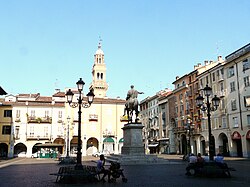
It is one of the oldest places in the city, perhaps dating back to Roman times, since it is the crossroads point of Via Saffi, via Duomo, via Roma and Via Lanza.[101] During the Middle Ages this square, called at the time Piazza del Comune, was the center of the political and commercial life of the village.[101] Over the centuries, in addition to changing different names (from Piazza del Comune became, during the Napoleonic domination, place de la Reunion, then Piazza Carlo Alberto, and finally Piazza Mazzini)[102] has undergone numerous modifications that altered its original appearance, especially after the works carried out in the nineteenth century.[101][102] The square is characterized by the presence, in the center, of the equestrian monument to Carlo Alberto (Abbondio Sangiorgio, 1843), from the arcades that surround it almost entirely, and from the homonymous Renaissance door.[102]
Archaeological sites
Casale does not have archaeological sites on its territory; however, in various areas of the city and agro, over the years, numerous archaeological finds such as coins, vases, necropolises, funerary inscriptions, the so-called Bronze table (which reports the ancient name of the city, Varde), remains of fortifications, dating from the Roman age to the Middle Ages.[5][103]
In 1994 in the territory of the neighboring municipality Morano sul Po a Necropolis of the Bronze Age was located. From 1995 to 1998 the site was subject to archaeological investigations funded by the Ministry for Cultural and Environmental Heritage. The excavation campaigns were accompanied by multidisciplinary studies and the realization of an exhibition at the Civic Museum of Casale Monferrato and the edition of its acts.[104][105][106]
Natural areas
- Public gardens
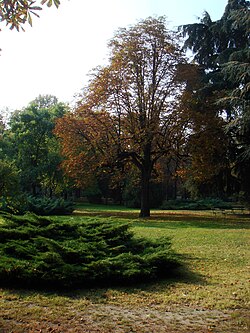
Important green area within the city are public gardens, located between Viale Montebello and the railway station, extended on an area of about 90.000 square meters.[107][108] Since the 18th century this area has been reforested, on the initiative of the Marquis Alessandro Vincenzo d'Ormea,[107] governor of the time, who, after obtaining approval from Charles Emmanuel III, ordered to plant a thousand tall trees.[107] in the 19th century, the municipality acquired other surrounding areas, widening and renovating the gardens.[108] The gardens were equipped with extensive grassy mantles, 600 tall trees, 500 bushes and 800 woodland (including pyree, ligustrum, envoymus, pyracantha).[108]
During the 20th century, some sculptures were also found inside the park, such as the monument to the Falls (1929), characterized by bronze sculptures depicting the Spring in Italy and of Fact, work by Leonardo Bistolfi.[108] The park contains many species of trees and plants: the most numerous trees are the hippocastani, but there are also specimens of Albizzia, Olmo, Maclura pomifera, Tiglio, Liriodendron, Magnolia, Platano, Betulla, Quercia, Faggio, Ginkgo biloba and Davidia enveloped.[108]
- Area Equipped Float Brides of Casale Monferrato
Born in 1911, this natural area extends over 119 hectares. Among the fish species that occupy the area are marble trout, sturgeon and fear.[109] Following the flood of 2000, a work of settlement of the banks is underway.
- Eternot Park
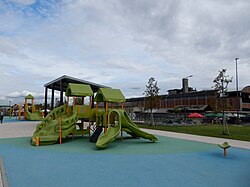
In the Ronzone district, on the area of the former Eternit plant, now demolished, develops the park Eternal. The green area, with playground, arena, nursery, cycle and running path, commemorates the victims of asbestos in the town of Casale and was inaugurated on 10 September 2016.[110]
Society
Demographic evolution · Foreign ethnic groups and minorities · Languages and dialectsExplore this chapter
Demographic evolution
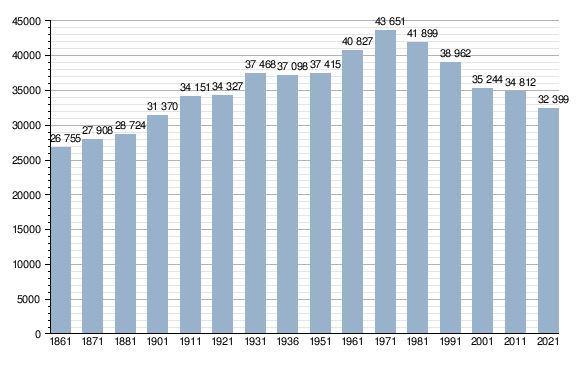
Inhabitants registered[111]
Foreign ethnic groups and minorities
Languages and dialects
The dialect spoken in Casale is part of the Piedmont language. In the cathedral, on the sarcophagus containing the relics of Saint Evasio, is engraved one of the oldest certifications of Piedmont and in general to vulgar in Italy: QUALARCADESANVAX, to read Here is the ark of San Vax, is the ark of Saint Evasio. However, like all the dialects of the Monferrato area, it receives numerous Ligurian, Lombard and even foreign influences.[114]
Religion
The most widespread religion among the inhabitants of Casale is Christianity, especially with its Catholic confession. The city has been the seat of bishops since 1474, when, with a bubble, Pope Sixtus IV erected the diocese; this extends over 970 square kilometers and is divided into 115 parishes.[115] The communal territory, on the other hand, is divided into 16 parishes (the largest of which is the parish of the Sacred Heart of Jesus, with 6 080 inhabitants).[116]
However, there are many minorities, both of ancient origin and of Jewish origin, and direct consequences of recent immigration such as the Islamic one that has its own Islamic center in Piazza d'Armi 8[117] or the Orthodox with his Moldovan Orthodox Church[118].
The Jewish Community of Casale Monferrato[119] Although it is small, it has had an important part in the history of the city and in general of Basso Monferrato, where another community I'll be right back Moncalvo. Jehovah's Witnesses are also present in the city[120] and the Pentecostals of the Assemblies of God in Italy that also have their own place of worship[121]. There is also an office of the Archeosophical Association in the city where archeosophy is studied and conferences, study groups and in-depth studies are held.[122] and is permanent the laboratory of iconographic painting in which you can learn to paint an icon and study its traditional symbolism.
Institutions, bodies and associations
Health
Casale is part of the ASL district Alessandria, which has seven hospitals on its territory.[123]
One of these is the hospital. Holy Spirit, located in Viale Giolitti at number 2, with 231 beds[124] and formed by the following departments: Pathological anatomy, Anesthesia and Reanimation, Cardiology, Surgery, Dermatology, Diabetes, Clinical therapy, Hospital pharmacy, Immunohematology and Transfusional, Laboratory analysis, Infectious diseases, Internal medicine, Medicine and Surgery of Accession and Emergency DEA - First Aid, Nephrology and Dialysis, Neurology, Infant neuropsychiatry, Ophthalmology, Odontostomatology, Oncology, Orthopedics and Traumatology, Obstetrics and Gynaecology, Otolaryngology, Pediatrics, Pneumology, SPDC Psychiatry, Radiology, Functional Rehabilitation, Physiatrics, Senology, Pain therapy, Urology.[125]
Culture
Education · Schools · LibrariesExplore this chapter
Education
Schools
- Raffaele Jaffe: Professional School for Commercial Services.
- Istituto Artusi (Privato): Istituto Professionale dei Servizi per l'enogastronomia e l'hospice. Legally recognized D.D.M.M.M. 30.05.85 - 02.04.87 - 29.08.94 02.08.02 - 19.09.14. Completely closed in 2023
- V. Luparia: Agrarian Technical School.
- Cesare Balbo: Classical Lyceum, Linguistic Lyceum, Human Science Liceum (with Economic and Social Option), Artistic Lyceum
- Technical Institute Leardi: Geometra, Public Graphics, Reason, Tourist Enterprise; the school is known for being the cradle of the football team of Casale Monferrato: on 18 December 1909 in Hall 1 thanks to Raffaele Jaffe the team was founded that in the season 1913-1914 would win the championship
- Christmas Palli: Scientific Lyceum.
- Ascanio Sobrero: Liceum of applied sciences, Scientific Lyceum at sports address, Perito: Chimico, Meccanico, Elettronico, Informatico, Logistico
- Alba Nuova: Liceo Artistico, Tecnico Aeronautico (privato).
- Galileo Study Centre: Technical School in Energy, Cold and Condition (private).
Libraries
The most important city library is the Giovanni Canna Civic Library:[126] due to abundant donations over the years, it was opened to the public on 1 December 1927. Since 1970 the library has been located within Palazzo Langosco, and offers many services to users.[127]
In the city there are also Library of Girls and Boys "Emanuele Luttazzi",[128] The Library of the Episcopal Seminary[126] founded in 1738, that of the Capitol Archive[126] and finally the Library of the Experimental Institute for Pioppiculture.[126]
Museums
- Civic Museum Pinacoteca: The visit to the Pinacoteca is divided along eighteen rooms on the first floor of the former Augustinian monastery of Santa Croce. The collection, born thanks to the will and legacy of Countess Clara Leardi, was formed through donations, acquisitions and deposits from the second half of the nineteenth century. Representation of the figurative culture of farmhouse, testifies to the historical-artistic richness of the territory and demonstrates the central role long occupied by the city of Casale in the national and international panorama. They are part of the collection paintings on canvas, on board, on glass and on mirror; ceramics, wooden sculptures and stone, some silverware, the collection of honors by Giovanni Lanza, two silk stakes and a Flemish tapestry: very different types of art, covering a temporal arc from the end of the fourteenth century to the end of the nineteenth century.
- The Gipsoteca (from ancient Greek) Gypsos, plaster) by Leonardo Bistolfi (Casale Monferrato, 1859 - La Loggia, Turin 1933), houses, on the ground floor of the Civic Museum, over one hundred and seventy works including terracottas, drawings, plasticine, sketches and plaster models, some marbles and bronzes donated largely by the Casalese banker Camillo Venesio (1958) and integrated, later, with donations and works in storage. These materials allow us to understand the different phases of the artistic process of Bistolfi, one of the major international interpreters of Symbolism: from the terracotta sketch in which the sculptor immediately fixed the first intuition, to the subsequent plaster sketch, to the definitive model which concretized the final idea and constituted the actual realization of the work, before its transposition into marble and bronze. The works on display document Bistolfi's complex artistic journey: from the beginnings that link him to the contemporary Lombard experiences of Scapigliatura - Lovers (1883) - interspersed with small groups of realistic taste - The Boaro (1885) - until the development of his own language, in which figure and symbol will give life to a very personal poetics which will find confirmation in numerous private and public commissions, many of these linked to funerary and celebratory sculpture. It will be The sphinx (1890) for the Pansa funerary monument in Cuneo to consecrate him as a symbolist sculptor, who was followed by memorable works such as The pain comforted by memories (1898) o The funeral of a virgin (1899) or again Resurrection (1902) e The Cross (1899). But Bistolfi's celebratory monuments are equally well known, created for Giovanni Segantini (1899), Giuseppe Zanardelli (1908), Cesare Lombroso (1921), Giosuè Carducci (1908-1928) and those for Giuseppe Garibaldi (1908 and 1928), to which are added numerous portraits and commemorative plaques.
- Jewish Museum: set up within the synagogue's matroneo, and in some adjacent rooms, it contains numerous silverware, fabrics and objects belonging to the Jewish community of Casalese.[129]
- MU.DI Museo Dinamico Geometrie dell'Acqua: it is set up inside the Sollevamento Hydraulic Plant of the former Consorzio Irriguo Valentino – San Germano, designed and built between 1880 and 1885 in the industrial district of Borgo Ronzone. This is an interactive cultural journey dedicated to industrial history and environmental sustainability, which guides visitors on a journey through time and science proposing moments of reflection on the environmental impact and climate change.[99][130]
Casale is also part of theWater lands ecomuseum.[131]
Media
Prints
- Casale News, online newspaper from Casale and the Monferrato.
- The Monferrato, the city's biweekly information magazine.
- La Vita Casalese, weekly information and opinion magazine of the diocese of Casale Monferrato.
Radio
- Radio World, Radio VanD'A
Publisher
- Piemme editions (1982-2003)
- Issues Round (2002-2018)
Gastronomy and local traditions
Typical products · Wine · EventsExplore this chapter
Typical products
The Monferrato Casalese is a land rich in food and wine products, as well as wine and distillates, many of which are recognized as DeCo (community denominations) and which represent the strong dishes in the festivals and celebrations that take place throughout the year.
At the farms of the territory you can taste and taste the genuine products of the territory, such as rice, Muletta (typical salami), cheese, honey, sweets, hazelnuts, jams, fruit juices and much more.
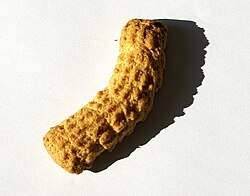
Among the typical dishes to be tasted at lunch or dinner at local farms and restaurants, are truffles, agnolotti, mixed fried, Bagna Cauda (a sauce based on anchovies and garlic to accompany vegetables), boiled with tris of bagnetti. Among the sweets the famous krumiri and bunet.
The DE.CO. is the Municipal brand that certifies the origin of a certain product (of the food and wine sector or craft) from a given territory. Among the products that have obtained this recognition: the red krumiri and agnolotti of the tower, of Casale M.to; the tirà to Mirabé and the ragù di sumache chiocciole of Mirabello M.to; the agnolotti of Pontestura; the gardener and friciulin cun al surcli and the bull of Vignale M.to.
Wine
In the municipal territory of Casale and in the surrounding hills are produced wines DOC and DOCG. Among the main and typical names are:
- Barbera Del Monferrato
- Barbera Del Monferrato Superiore
- Grignolino Del Monferrato Casalese
- Monferrato Casalese Cortese
- Monferrato Freisa
- Monferrato Dolcetto
- Piemonte Bonarda
Events
Among the most significant events taking place in Casale, there are:
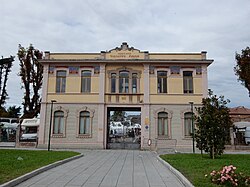
- Fair of St. Joseph (around mid-March)
- Golosaria (around mid-April)[132]
- Rise & Rice (fourth weekend around May)[133]
- Wine and wine festival Monferrato (for two weekends around mid-September)[134]. Once known as the Grape Festival
- Antiques Market (second Sunday of each month and Saturday preceding it)
- Casale Città Aperta (second Sunday of each month and the Saturday preceding it, open monuments and free guided tour)[135]
- The Paniere (3rd Saturday of the month, organic products and gastronomy market)[136]
- Casale Comics&Games (third weekend of June, fair of the game and comics that takes place at the Castle of the Paleologists).
- MonJF _ Monfrà Jazz Fest (Festival Jazz that involves the whole territory of Monferrato and involves the city in June and September).
Anthropic geography
Urbanism · HamletsExplore this chapter
Urbanism
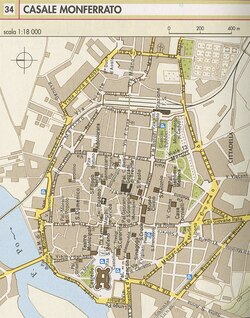
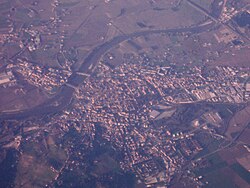
The various stages of the urban development of Casale can be distinguished by observing the density of construction.[137] In the oldest part of the city, in fact, the buildings assume a thick and irregular shape, while in the area of the canton Brignano (more recent) there is a more geometrically defined urbanism.[137] The castle in principle is isolated from the rest of the town, because of historical events that over the centuries have marked the city,[138] connected to the rest of the urban fabric from the streets Garibaldi, Turin and Trevigi, on which there are some of the most important buildings and monuments citizens.[139]
Hamlets
Economy
Agriculture · Industry · CraftsmanshipExplore this chapter
Agriculture
Casale is situated in a flat area where rice cultivation prevails, but also includes a hilly area where many wine producing companies such as Barbera, the typical Grignolino del Monferrato Casalese, Dolcetto, Freisa, etc.
Industry
The area of Casale Monferrato in the 19th century. has developed the production activity of lime, diffused since the Middle Ages thanks to the presence of substantial deposits of limestone in the surrounding hills. In 1836 a municipal regulation on the production and sale of building materials was approved.[28]. Around 1850 the city had four factories. Other production centers were present in the surrounding area: four Pontestura and two to Ozzano Monferrato. In 1860, eight companies operated in Casale, four of which produced only lime and four produced lime and bricks.[149]
Industrial development began in 1867 when local bakers joined a company in fact.[29], formalized in 1873 as “Società Anonima Fabbrica Calci e Cementi di Casale”[150], and following 1876 when Giuseppe Cerrano from Pontesture, after years of studies and experiments, discovered in his laboratory in Borgo Ronzone (Via XX Settembre) that the marl from the Casale hills could be used for the production of cement.[75][151][152][153]
The discovery greatly changed the economy of Monferrato casalese. For these reasons and for the richness and quality of Casale Monferrato was the first Italian city to have developed the industrial production of cement.[77][154]
In this context, the work initiated by the Casalese Geom was relevant. Luigi Marchino, founder of the company and manufacturer in 1872 of the lime furnace “La Furnasetta”[88][155], modified in 1912 into a cement kiln.[156]
During the course of the twentieth century Casale Monferrato was one of the major Italian centers specialized in cement production. The multinational Buzzi Spa is currently based.
The city had a remarkable presence of small and medium-sized enterprises, but also of large industrial groups such as Bistefani, one of the most important Italian confectionery industries,[157], Cerutti, specialized in rotary machines[158], and the decommissioned Eternit.
In the last twenty years, the logistics sector has been consolidated with the company BCUBE of the Bonzano family, the food sector with the company Zerbinati, which has started a modern plant equipped with cutting technology, selection, drying and packaging of all kinds of fresh vegetables[159], and the refrigeration sector, making Casale Monferrato one of the leaders of the industrial refrigerator district together with Ticineto And Quattordio. Over 10 companies remain in Casale.[160].
The project Casale Capitale del Freddo aims to bring training, a laboratory and a research center in the city.[161].
Craftsmanship
The production of musical instruments, such as organelles, was well known in the past. Important is also the local processing of wrought iron, mainly aimed at the production of furniture.[162]
Infrastructure and transport
Roads · Railways and tramways · AirportsExplore this chapter
Roads
Casale Monferrato is served by the motorway network via the A26 (Genova Voltri - Gravellona Toce), with toll booths Casale Nord (located in the hamlet of Terranova) e Countryside (located in the Industrial Area). Furthermore, state roads (SS457, SS31, SS596 dir), regional (SR31) and provincial roads (SP7, SP29, SP42, SP43, SP44, SP50, SP54, SP55, SP 56, SP67) connect it with the neighboring towns.
Railways and tramways
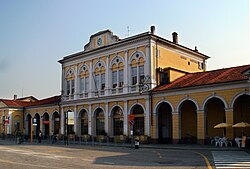
Casale Monferrato station is located at the crossroads of the Chivasso-Alessandria and Mortara-Asti lines, on which it also insisted the Terranova Monferrato station at the service of the homonymous fraction. The Casale station is also a locality of origin of the Vercelli-Casale Monferrato railway, suspended from traffic since 2012.
Casale Popolo station, disabled by passenger traffic, is also located along the Chivasso-Alessandria.
In the past, the city represented the headline of the Casale-Vercelli, Altavilla-Casale and Alessandria-Casale.
Airports
To the south of the city is the airport Francesco Cappa, located along the provincial road 31 of Monferrato (SP 31). The structure is equipped with a 1.150 m long grass track (TORA 880 m) with 18/36 orientation. The airport was entrusted by ENAC - National Agency for Civil Aviation in management at S.A.M. - Società Aeroporto del Monferrato S.R.L. and carry out activities according to the rules and timetables VFR.
Urban mobility
Administration
TwinningExplore this chapter
Below is a table relating to the administrations that have succeeded one another in this municipality.
| Period | First citizen | Match | Load | Notes | |
|---|---|---|---|---|---|
| January 12, 1988 | June 27, 1990 | Ettore Coppo | Italian Communist Party | Mayor | [165] |
| June 27, 1990 | April 24, 1995 | Riccardo Coppo | Christian Democracy | Mayor | [165] |
| 9 May 1995 | June 28, 1999 | Riccardo Coppo | People's Party | Mayor | [165] |
| June 29, 1999 | June 28, 2004 | Paolo Mascarino | Left Democrats | Mayor | [165] |
| June 28, 2004 | June 22, 2009 | Paolo Mascarino | Left Democrats | Mayor | [165] |
| June 22, 2009 | June 10, 2014 | Giorgio Demezzi | The People of Freedom | Mayor | [165] |
| June 10, 2014 | May 27, 2019 | Concept Palazzetti | Democratic Party | Mayor | [165] |
| May 27, 2019 | June 9, 2024 | Federico Riboldi | Brothers of Italy | Mayor | [165] |
| June 9, 2024 | in office | Emanuele Capra | League | Mayor | [166] |
Twinning


Sport
Soccer · Basketball · SchemeExplore this chapter
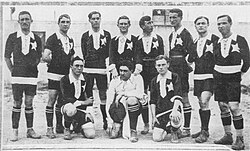
Soccer
In the football field, Casale is represented by Casale founded in 1909. In 1913–14, this team won the championship; in the following years it was first relegated to Serie B and then again to the 3rd, 4th and 5th national series. After several failures and reconstitutions, the Casale departed from the regional championships and played the 2025-26 season in the Promotion Championship.
In Casale there was a second football team Junior Calcio[172] that, after mergers, became the U.S.D. Junior Football Bridge Stura[173] whose sports facility is located in Oltreponte. The Junior Football has played the last championship in 2023 in Promotion.
In 2014 a third sports club was added to the two well-known city realities. Named Stay or Party, the new club played in a regional championship for the first time, in the 2016-17 season by enrolling in the Second Category championship. The team uses the city coat of arms, yellow and red, in its club colours, and uses the sports facility in the hamlet of Casale Popolo, canton Chiesa, for its home matches[174].
In 2023, Casale FBC went to a new failure. From the merger of three clubs, ASD Junior Football Pontestura, Stay O Party And Turkish Terruggia, birth the ASD Citta di Casale, with the intention to continue the tradition of the historical society founded in 1909, recovering its social colors, symbol (white five-pointed black star) and year of foundation in his own logo, without however being recognized by FIGC.
Basketball
The historic company of the city is the Junior Casale Monferrato,[175] basketball team, which at the end of the exciting 2010/2011 season of Legadue was promoted in Serie A. After a year, the team relegated to the category and continued to participate without pause until the 2019/2020 season.
In summer 2020 the JB Monferrato was born, which took over the sports title of Junior Casale Monferrato to take part in the 2020/2021 season at the Serie A2 Old Wild West - Girone Verde championship.
Scheme
The Club Scherma Casale was founded in 1972 by young fans of fencing under the guidance of Maestro Pasquale Ippolito who holds its fortunes for about twenty years. The Club debuted in Rome in 1974 at the national stage of the Youth Games and won the silver medal, also recaptured the following year with Gianni Ippolito. In 1975 he won his first regional title. Both the female team and the male militate in the A2 series of national swords. In 2011 Lorenzo Buzzi conquered the world of men's sword cadets and Sara Carpegna the world military with female sword.
Cycling
In 1962 Casale Monferrato was the arrival of the 17th stage of the Giro d'Italia won by Armando Pellegrini.
Motorcycling
In the year 1922 was born the Auto Motoclub Casale, now Moto Club Italo Palli; in 1966 was built the field from cross Belvedere and on it were held several international events; in the year 1975 test of the World Championship of cross class 500, in 1976 a test of European championship of sidecarcross and in 1981 a test of the Cup of Nations with the participation, for the first time in history, of Chinese riders on Italian motorcycles the bike Italo Palli[176]
The Motoclub Monferrato was born in 2008.[177]
In the 1980s it was also created Moto Club Ronzonese, later became Cross Casale.
In 2010 was born Motoclub Monferrato, originated by many people who left the Italo Palli motorcycle club, but which follows the activity it carried out in the thirty years 1970/2000, i.e. regularity races, enduro, cross, promotion of young people, conviviality and competitiveness at all levels and for everyone. In 2012 he organized an Italian mini-enduro championship race.
Tennis
Activities in the Clubs: Canottieri Casale And New farmhouse. There are other sports clubs like it Sporting.
Rugby
Sports equipment
- PalaEnergica Paolo Ferraris
- Christmas Stadium Palli
- Motocross field Belvedere (Rolasco)
- Airport Francesco Cappa (bactro parachute school)
Notes
Explore this chapter
- ^ to b Monthly demographic balance for the year 2026 (provisional data), up demo.istat.it, ISTAT.
- ^ Seismic classification (XLS), up risks.protezionecivile.gov.it.
- ^ Table of degrees/day of Italian Municipalities grouped by Region and Province (PDF), in Law 26 August 1993, n. 412, annex A, National Agency for New Technologies, Energy and Sustainable Economic Development, 1 March 2011, p. 151. URL consulted on 25 April 2012 (archived fromoriginal url on 1 January 2017).
- ^ DiPI Online - Dictionary of Italian pronunciation, up dipionline.it. Retrieved 19 May 2013 (archived fromoriginal url on 9 October 2018).
- ^ to b c Castles, Rocker, p. 10.
- ^ to b c d Casale Monferrato:giographic data - Comuni italiani.it, up common-italiani.it. Retrieved 31 August 2010.
- ^ to b c d And Geological Service of Italy - Geological Charter of Italy, sheet n° 58[interrupted link], up apat.gov.it. Retrieved 31 August 2010.
- ^ to b c d Geological Service of Italy - Geological Charter of Italy, sheet n° 57[interrupted link], up apat.gov.it. Retrieved 31 August 2010.
- ^ Seismic classification of Italian municipalities (edited by Civil Protection) (PDF), up protectioncivile.it. Retrieved 1 September 2010 (archived fromoriginal url on 18 April 2009).
- ^ Piemonte - The regions of Italy, up docushare.it. Retrieved 1 September 2010 (archived fromoriginal url on 10 June 2010).
- ^ Piemonte - The beauties of Italy on the web, up lebellezzeditalia.it. Retrieved 1 September 2010.
- ^ Arpa Piemonte official website, up arpa.piemonte.it. Retrieved 1 September 2010 (archived fromoriginal url on 9 September 2010).
- ^ Climate classification of Italian municipalities (D.P.R. 26 August 1993, n°412) (PDF), up energy efficiencyenergetic.acs.enea.it. Retrieved 1 September 2010 (archived fromoriginal url on 19 September 2010).
- ^ History of Casale Monferrato, up 100enonpiu100.info. Retrieved 31 August 2010 (archived fromoriginal url on 20 November 2008).
- ^ Castles, Rocker, p. 17.
- ^ to b c d And Castles, Rocker, p. 21.
- ^ to b c d And f g h Castles, Rocker, p. 29.
- ^ (EN) fabio romanoni, "Intrare vel exire non porantant nisi aves". The siege of Casale in 1370 - in "Monferrato Art and History", XXVI (2014).. Retrieved 25 November 2017.
- ^ to b c Castles, Rocker, p. 36.
- ^ Claudia Bonora Previdi, Church of the city and its saints. The preposition of Sant'Erasmo in Castel Goffredo, Calcinato, 2006.
- ^ Universal Chronicle of Mantua. Volume III., up digilib.bibliotecateresiana.it.
- ^ to b Castles, Rocker, p. 40.
- ^ to b Castles, Rocker, p. 47.
- ^ to b c d And f Castles, Rocker, p. 50.
- ^ Castles, Rocker, p. 55.
- ^ Castles, Rocker, p. 61.
- ^ to b Castles, Rocker, p. 63.
- ^ to b Mario Pronzato, The origins of the football and cement industry in Casale Monferrato. Images, testimonies, documents, Casale Monferrato, Edizioni Studio R.S.Pubblicità, 1973, pp. 120 and 131.
- ^ to b Mario Pronzato, The origins of the football and cement industry in Casale Monferrato. Images, testimonies, documents, Casale Monferrato, Edizioni Studio R.S.Pubblicità, 1973, pp. 149 and 150.
- ^ to b c Castles, Rocker, p. 68.
- ^ Foreign Jews interned in Piemonte.
- ^ Samuele Litter, arrested in the Genoa area, is the only one of them to appear in the lists of deported and victims of Auschwitz. CDEC Digital Library.
- ^ CDEC Digital Library.
- ^ Shoah Atrium and Memory.
- ^ Process Eternit: Casale Monferrato and 2,000 dead of whom no one speaks, up logicokaos.blogspot.com. Retrieved 31 August 2010.
- ^ In Casale the curse of asbestos: he killed many for eighty years, up ilnostrotempo.it. Retrieved 31 August 2010.
- ^ Safe placing of the territory of the home from the Hydrogeological Risk, up casaleonline.it. Retrieved 7 November 2022 (archived fromoriginal url on 22 July 2012).
- ^ Antonio Manno, Casale Monferrato, in Historical Bibliography of the States of the monarchy of Savoy, vol. 4, Turin, Fratelli Bocca Editori, 1892, p. 87.
- ^ to b Stemma Comune di Casale Monferrato, up Comuni-Italiani.it.
- ^ to b Casale Monferrato, up Central State Archive. Retrieved 8 August 2025.
- ^ Casale Monferrato , Medal of the Benemerit Cities of the National Risorgimento, up quirinale.it. Retrieved 22 March 2024.
- ^ to b c d And Castles, Rocker, p. 128.
- ^ to b Cathedral of Casale Monferrato, up cathedralcasale.org. Retrieved 2 September 2010 (archived fromoriginal url on 16 May 2009).
- ^ to b Castles, Rocker, p. 133.
- ^ Castles, Rocker, p. 221.
- ^ to b Castles, Rocker, p. 229.
- ^ to b c Castles, Rocker, p. 150.
- ^ Church of San Paolo - Casaleonline.it, up casaleonline.it. Retrieved 2 September 2010 (archived fromoriginal url on 6 September 2010).
- ^ to b Castles, Rocker, p. 106.
- ^ (EN) Catholic.org Basilicas in Italy, up gcatholic.org.
- ^ Sanctuaries Alessandria, up piemontesacro.it.
- ^ to b c Castles, Rocker, p. 162.
- ^ to b c Castles, Rocker, p. 163.
- ^ Site of the Synagogue of Casale Monferrato, up Casalebraica.org. Retrieved 2 September 2010 (archived fromoriginal url on 11 November 2009).
- ^ to b Castles, Rocker, p. 113.
- ^ Palazzo Anna D'Alençon in Casale Monferrato - Castles Open, up castlesaperti.it. Retrieved 1 September 2010 (archived fromoriginal url on 21 April 2010).
- ^ to b c Castles, Rocker, p. 144.
- ^ to b c Castles, Rocker, p. 142.
- ^ Castles, Rocker, p. 153.
- ^ to b c Palazzo San Giorgio, up maribe.com. Retrieved 3 September 2010 (archived fromoriginal url on 25 February 2010).
- ^ Palazzo San Giorgio - Casaleoline.it, up casaleonline.it. Retrieved 3 September 2010 (archived fromoriginal url on 6 September 2010).
- ^ Castles, Rocker, p. 148.
- ^ to b c d Castles, Rocker, p. 158.
- ^ Casale Monferrato, up localdautore.it. Retrieved 2 September 2010.
- ^ Casa Tornielli - Casaonline.it, up casaleonline.it. Retrieved 2 September 2010 (archived fromoriginal url on 6 September 2010).
- ^ to b c Castles, Rocker, p. 100.
- ^ Castles, Rocker, p. 101.
- ^ to b Castles, Rocker, p. 103.
- ^ Castles, Rocker, p. 102.
- ^ Historic center of Casale Monferrato - Casaleonline.it, up casaleonline.it. Retrieved 4 September 2010 (archived fromoriginal url on 6 September 2010).
- ^ Civic Tower of Casale Monferrato, up castlesaperti.it. Retrieved 3 September 2010 (archived fromoriginal url on 21 April 2010).
- ^ to b c d And Castles, Rocker, p. 118.
- ^ Torre civica - Comune di Casale Monferrato, up common.casale-monferrato.al.it. Retrieved 3 September 2010 (archived fromoriginal url on 14 October 2009).
- ^ MONFERRATO CASAL CITY, up fundambiente.it. Retrieved 13 February 2025.
- ^ to b Giovanni Deregibus, Casale Monferrato national cradle of cement, Alessandria, Unione Tipografica Editrice O. Ferrari-Occella e C., 1937, pp. 9, 13, 16.
- ^ Peppino Pensabene Cimino, Historical dinners on the farmhouse concrete, Casale Monferrato, Società Tipografica, 1937, pp. 25.26.
- ^ to b Clara Bertolini Cestari, Manuel Fernando Ramello and Gian Mario Rossino, Methods and tools for knowledge of an industrial heritage: the case of Morano Sul Po (PDF), Terni, Rome, Ticcih Congress 2006, 2006. Retrieved 16 December 2021.
- ^ Luigi Santarella, Third party. Monographs of some of the most recent Italian constructions in reinforced concrete, in Concrete reinforced in civil and industrial constructions, Milan, Hoepli, 1926.
- ^ to b Marcello Modica and Francesca Santarella, Paraboloids a forgotten heritage of modern architecture, Florence, Edifir, 2015. Retrieved 10 April 2022.
- ^ Gian Mario Rossino, Annex 1: news of the Anonymous Society's home factories, in Beyond industrial archaeology: innovation incubator at Casale Monferrato, Turin, Polytechnic of Turin, Degree Thesis, 2005, p. A-9.
- ^ management of monumental constraints, paraboloid, up sabap-to.beniculturali.it. Retrieved 10 April 2022.
- ^ Clara Bertolini Cestari, Paraboloid. A shape-resistant architecture: the thin vault of Casale, in Acts and Technical Review of the Society of Engineers and Architects in Turin, Year LXV, n. 2, Turin, 2011, pp. 19-23.
- ^ Lida Kitsaki, From an industrial memory to a concrete presence: the case of the Paraboloide in Casale Monferrato, Leuven, Katolieke Universiteit Leuven, Thesis of Master of Conservation of Monuments and Sites, 2011.
- ^ Cristiana Chiorino and Federica Stella, Il Padiglione a volta parabolica di Casale, in Manuel Fernando Ramello (ed.), The conversion of industrial assets: the case of the country in Italy and Europe, Florence, Alitralinea Edizioni, 2013, pp. 138-147.
- ^ Pier Luigi Buscaiolo, The future of Paraboloid between events, sports and sociality, in The Monferrato, no. 56, 20 July 2021, p. 1.
- ^ The Paraboloid of the Future, in La Vita Casalese, no. 35, 22 July 2021, p. 1.
- ^ Paraboloide, popular houses and track: 5 million for the city, in The Monferrato, no. 1, 7 January 2022, p. 10.
- ^ to b Mario Pronzato, The origins of the football and cement industry in Casale Monferrato. Images, testimonies, documents, Casale Monferrato, Edizioni Studio R.S.Pubblicità, 1973, p. 228.
- ^ UNICE, Milan, Fratelli Fabbri Editori, 1979.
- ^ Buzzi Unicem. Who are we? Unicem (1872-1998), up buzzi.com. Retrieved 12 April 2022.
- ^ Salvatore Tropea, Unicem - 20% passes to Buzzi brothers, in The Republic, 14 May 1997.
- ^ The Furnace, up buzzi.com. Retrieved 21 March 2025.
- ^ Giovanni Sacheri, up areasweb.polito.it. Retrieved 12 April 2022.
- ^ Authors Vari V-B Mechanical, The pumping plant of the Consorzio Irriguo Valentino and San Germano in Casale Monferrato, Casale Monferrato, ITIS Sobrero, Maturity Examination 1992/93, 1993.
- ^ Alice Roggero, Laboratory-Museum of water and district services. Recovery and integration of the Lifting Centre along the canal Lanza di Casale Monferrato, University of Pavia, Degree thesis in Building Engineering – Architecture, 2009.
- ^ Marta Cabanillas Cabanillas, Valorization of Industrial Heritage: the case of Casale Monferrato's Lifting Centre, Turin, Barcelona, Polytechnic of Turin and Universitat Politecnica de Catalunya, Degree Thesis, 2012.
- ^ Ex consortium Valentino water lifting station - San Germano, up sabap-al.beniculturali.it. Retrieved 13 April 2022 (archived fromoriginal url on 12 April 2023).
- ^ Geometers bring to light a piece of history of Casale, up lastampa.it. Retrieved 13 April 2022.
- ^ to b In Casale Monferrato opens the Geometrie Museum of Water, up ilmonferrato.it, Publishing Monferrato S.r.l., 15 November 2024. Retrieved 15 December 2024.
- ^ MU.DI. DINAMIC MUSEUM “Water GAMETRIES”, up ilcemento.it. Retrieved 15 December 2024.
- ^ to b c Castles, Rocker, p. 119.
- ^ to b c Castles, Rocker, p. 120.
- ^ Castles, Rocker, p. 25.
- ^ Morano sul Po (AL) : Necropolis of the Bronze Age, up Archaeocarta archaeological map of Piemonte, May 2014. Retrieved 8 December 2023.
- ^ Sobrero Higher Institute Class 4 Technological Science Lyceum, The Civilization of Pobietto (PDF), up Archeocarta, 2006/2007 school year. Retrieved 8 December 2023.
- ^ Rosaria Avella and Marco Pacciarelli, The Necropolis of the Final Bronze of Morano sul Po: new analyses and reflections. Archaeology notebooks Piemonte (PDF), up ambito.arti.beniculturali.it, Ministry of Cultural Heritage and Activities and Tourism, Superintendency of Archaeology, Fine Arts and Landscape, 2017. Retrieved 8 December 2023 (archived fromoriginal url on 30 October 2023).
- ^ to b c Castles, Rocker, p. 190.
- ^ to b c d And Public gardens - Municipality of Casale Monferrato, up common.casale-monferrato.al.it. Retrieved 6 September 2010 (archived fromoriginal url on 8 August 2004).
- ^ The parks of Piedmont - Site of the Piemonte Region, up region.piemonte.it. Retrieved 7 September 2010 (archived fromoriginal url on 18 September 2010).
- ^ Parco Eternot: ribbon cutting on September 10, 2016- City of Casale Monferrato, up common.casale-monferrato.al.it.
- ^ Data taken from:
- Resident population of the municipalities. Censuses from 1861 to 1991 (PDF), up ebiblio.istat.it, ISTAT.
- Resident population - Time series, up exploredati.istat.it.
Please note: 2021 data refers to permanent census data as of December 31 of that year.
- ^ Population balance and foreign resident population at 31 December 2024 for sex and citizenship, up demo.istat.it, ISTAT. Retrieved 2 July 2025.
- ^ foreign nationals all'italia.it
- ^ Folklore Monferrino - Traditions of Monferrato, up casenelverde.eu. Retrieved 1 September 2010 (archived fromoriginal url on 10 December 2010).
- ^ Site of the Diocese of Casale Monferrato, up webdiocesi.chiesacattolica.it. Retrieved 8 September 2010 (archived fromoriginal url on 11 August 2014).
- ^ CCI - Data Institute Sustentamento per il clero 2006, up churchcattolica.it. Retrieved 8 September 2010.
- ^ Sufi.it, Islamic Centres in Piemonte: Casale Monferrato, up sufi.it. Retrieved 14 October 2014.
- ^ Parohia Sfântul Ioan Valahul / Parish of San Giovanni di Valacchia in Casale Monferrato, Biserica: Del Santissimo Nome di Gesù,Via Piccaroli n.8,15033 Casale Monferrato PROTOPOPIATUL Piemonte I, CENTRU – NORD Preot Mihai Mogoșescu, up episcopy-italiei.it. Retrieved 17 October 2014.
- ^ Casalebraica, Jewish Community of Casale Monferrato, up Casalebraica.info. Retrieved 14 October 2014.
- ^ Jehovah's Witnesses and Holocaust - Triangle of Life, up triangoloviola.it. Retrieved 8 September 2010.
- ^ Evangelical Christian Churches in Piemonte, up source ofvita.it. Retrieved 8 September 2010.
- ^ Archaeosofica section of Casale Monferrato, Archeosofia in Casale Monferrato, up archeosofiacasalemonferrato.wordpress.com. Retrieved 14 October 2014.
- ^ District of Alessandira - ASL Piemonte, up aslal.it. Retrieved 11 February 2011.
- ^ Description of the Holy Spirit Hospital - Corriere della Sera, up courier.it. Retrieved 11 February 2011.
- ^ Holy Spirit Hospital - ASL AL, up aslal.it. Retrieved 11 February 2011.
- ^ to b c d List of libraries in the Municipality of Casale Monferrato, up piemonteweb.it. Retrieved 19 September 2010.
- ^ Information about the Civic Library, up common.casale-monferrato.al.it. Retrieved 19 September 2010.
- ^ Information about the Library of Boys[interrupted link], up common.casale-monferrato.al.it. Retrieved 19 September 2010.
- ^ Jewish Museum of Casale Monferrato, up Casalebraica.org. Retrieved 12 September 2010 (archived fromoriginal url on 11 November 2009).
- ^ MU.DI. Museum of Dynamic Water Geometry, up Collegegeometri-casalemonferrato.it. Retrieved 15 December 2024.
- ^ Site of the ecomuseum of water lands, up ecomuseo.schole.it. Retrieved 2 November 2010 (archived fromoriginal url on 17 September 2010).
- ^ About Golosaria, up golosaria.it. Retrieved 30 March 2016.
- ^ Events information throughout Monferrato, up monferrato.org. Retrieved 19 December 2010 (archived fromoriginal url on 4 September 2010).
- ^ Information about the Wine and Monferrato Festival, up alessandria.mondodelgusto.it. Retrieved 3 April 2021 (archived fromoriginal url on 1 July 2012).
- ^ Casale Città Aperta: 2010 edition, up alessandria.mondodelgusto.it. Retrieved 3 April 2021 (archived fromoriginal url on 7 July 2012).
- ^ Information about the basket - Association "Il Paniere", up ilpaniere.it. Retrieved 24 December 2010.
- ^ to b Castles, Rocker, p. 87.
- ^ Castles, Rocker, p. 88.
- ^ Castles, Rocker, p. 90.
- ^ The village of Cerreto in the municipality of Casale Monferrato (AL) Piemonte, up italia.indettaglio.it. Retrieved 11 April 2023.
- ^ The hamlet of Popolo in the municipality of Casale Monferrato (AL) Piemonte, up italia.indettaglio.it. Retrieved 11 April 2023.
- ^ italia.indettaglio.it, https://italia.indettaglio.it/ita/piemonte/alessandria_casalemonferrato_rolasco.html Missing title for url
url(help). - ^ italia.indettaglio.it, https://italia.indettaglio.it/ita/piemonte/alessandria_casalemonferrato_roncaglia.html Missing title for url
url(help). - ^ italia.indettaglio.it, https://italia.indettaglio.it/ita/piemonte/alessandria_casalemonferrato_sangermano.html Missing title for url
url(help). - ^ The hamlet of Santa Maria del Tempio in the municipality of Casale Monferrato (AL) Piemonte (indettaglio.it), up italia.indettaglio.it.
- ^ italia.indettaglio.it, https://italia.indettaglio.it/ita/piemonte/alessandria_casalemonferrato_terranova.html Missing title for url
url(help). - ^ The village of Torcello in the municipality of Casale Monferrato (AL) Piemonte, up italia.indettaglio.it. Retrieved 11 April 2023.
- ^ italia.indettaglio.it, https://italia.indettaglio.it/ita/piemonte/alessandria_casalemonferrato_vialarda.html Missing title for url
url(help). - ^ Mario Pronzato, The origins of the football and cement industry in Casale Monferrato. Images, testimonies, documents, Casale Monferrato, Edizioni Studio R.S.Pubblicità, 1973, p. 141.
- ^ Giovanni Cerrano, Origin of cement industry in Italy, Genoa, Ed. L'Italica, pp. 4 and 5.
- ^ Peppino Pensabene Cimino, Historical dinners on the farmhouse concrete, Casale Monferrato, Società Tipografica, 1937, p. 23.
- ^ Tullia Iori and Alessandro Marzo Magno, 150 years of history of cement in Italy: the works, the men, the companies, edited by AITEC, Rome, Gangemi Editore, 2011, p. 38.
- ^ Roberto Livraghi and Gian Carlo Subbrero, For a history of the industrial cement system: the origins 1873 - 1940, in The conversion of industrial assets: the case of the country in Italy and Europe, by Manuel Fernando Ramello, Florence, Altralinea Edizioni, 2013.
- ^ Peppino Pansabene Cimino, Historical dinners on the farmhouse concrete, Casale Monferrato, Società Tipografica, 1937, p. 16 and footnote: "see conference held in 1930 at the R. University of Pisa by the Hon. Antonio Pesenti President of the Italcementi company of Bergamo...".
- ^ Peppino Pensabene Cimino, Historical dinners on the farmhouse concrete, Casale Monferrato, Società Tipografica, 1937, p. 39.
- ^ Bruno Rossi and Gian Mario Rossino, History notes of the ligaments industry in Monferrato (PDF), Casale Monferrato, Associazione Il Cemento in the identity of Monferrato Casalese, 2010, pp. 7 and 8. Retrieved 16 December 2021.
- ^ History of Bistefani, up bistefani.it. Retrieved 5 October 2010 (archived fromoriginal url on 9 February 2010).
- ^ Cerutti Group S.p.a, up cerutti.it. Retrieved 10 May 2010 (archived fromoriginal url on 11 March 2009).
- ^ Zerbinati, up zerbinati.com.
- ^ District of the industrial refrigerators in Casale Monferrato - Ticineto - Quattordio, up observatorydistretti.org. Retrieved 22 June 2011 (archived fromoriginal url on 23 February 2011).
- ^ Undersecretary of the Environment and European Parliament launch the program Casale Capitale del Freddo, up casalenews.it. Retrieved 29 August 2013.
- ^ Cartographic atlas of craftsmanship, vol. 1, Rome, A.C.I., 1985, p. 8.
- ^ Site of A.M.C., up amcasale.it. Retrieved 2 September 2010.
- ^ Site with lines of the Autoticino, up autoticino.com. Retrieved 6 October 2010.
- ^ to b c d And f g h https://amministratori.interno.it/
- ^ Mayor, up common.casale-monferrato.al.it. Retrieved 20 June 2024.
- ^ The twinning, 40 years ago (PDF), in La Vita Casalese. Retrieved 20 September 2010 (archived fromoriginal url on 25 December 2014).
- ^ Casale-Weinstadt: signed the cooperation agreement[interrupted link], up webcache.googleusercontent.com. Retrieved 20 September 2010.
- ^ City Dannunzia
- ^ The twinning, 40 years ago, in The Monferrato. Retrieved 20 September 2010.
- ^ Baigorria informs, https://baigorriainforma.com/noticias/mundo/82242-el-concejo-de-casale-monferrato-voto-el-hermanamiento-con-baigorria.html Missing title for url
url(help). - ^ common.casale-monferrato.al.it, https://comune.casale-monferrato.al.it/calcio Missing title for url
url(help). - ^ Site of the USD Junior Football, up inetsport.it. Retrieved 24 December 2010 (archived fromoriginal url on 12 October 2011).
- ^ allcampo.it, https://www.tuttocampo.it/Piemonte/Promozione/GironeD/Squadra/StayOParty/1011766/Scheda Missing title for url
url(help). - ^ Site of Junior Casale Monferrato, up asjunior.com. Retrieved 24 December 2010 (archived fromoriginal url on 1 February 2011).
- ^ Motoclub Italo Palli, up motoclubpalli.it. Retrieved 8 September 2025 (archived fromoriginal url on 9 September 2011).
- ^ Motoclub Monferrato, up motoclubmonferrato.it. Retrieved 8 September 2025 (archived fromoriginal url on 23 March 2013).
- ^ Casale Monferrato, the hospitality in destination with Tre Rose on future.it
- ^ In Casale Monferrato the most beautiful destination with Le Tre Rose Rugby on rainews.it
Bibliography
Explore this chapter
- Attilio Castelli and Dionigi Roggero, Farmhouse: image of a city, Edizioni Piemme, 1986.
- Giovanni Deregibus, Casale Monferrato national cradle of cement, Alessandria, Unione Tipografica Editrice O. Ferrari-Occella e C., 1937.
- Vincenzo De Vit, Lake Maggiore, Stresa and the Borromean Islands, vol. IV, Prato, 1878.
- Pier Felice degli Uberti e Marco Canova (edited by), «Studium», in Blasonario Casalese, Instituto International de genealogia y heraldica, Madrid, Studium Accademia di Casale e del Monferrato, 1985, 62 tables.
- Giuseppe Aldo di Ricaldone, Municipal hall of the ancient province of Casale Monferrato, Edizioni Piazza D, 1992, ISBN 88-7889-029-4.
- Giuseppe Aldo di Ricaldone, Annals of Monferrato Vol I and II, Fornaca editore, Asti.
- Giuseppe Aldo di Ricaldone, Monferrato between Po and Tanaro, Gribaudo Lorenzo Fornaca editor, Asti, 1999.
- Luca Gianazza, Rome, Roman National Museum. The collection of coins by Vittorio Emanuele III. La zecca di Casale Monferrato, Rome, Polygraphic Institute and State Mint, 2017, ISSN 0392-971X (Toilet · ACNP).
- part I - From Gian Giacomo Paleologo (1418-1445) to Guglielmo II Paleologo (1494-1518), 2017.
- part II - From William II Paleologo (1494-1518) to John George Paleologo (1530-1533), 2017.
- Part III - From Charles V of Habsburg (1533-1536) to William Gonzaga (1550-1566, regency of Margherita Paleologo), 2019
- R. Grill, Invitation to Monferrato, Andrea Viglongo & C. Editori, 1976.
- Carlo Ibano, Can.teol.Cav.Carlo Albano solemn funerals of Avv.Cav.Cesare Cobianchi, celebrated on July 1, 1867, in the church of San Filippo in Casale Monferrato, Typ. Corrado, 1867.
- Peppino Pensabene Cimino, Historical dinners on the farmhouse concrete, Casale Monferrato, Typographic Company, 1937.
- Mario Pronzato, The origins of the football and cement industry in Casale Monferrato. Images, testimonies, documents, Casale Monferrato, Edizioni Studio R.S.Pubblicità, 1973.
Where to stay · Casale Monferrato
Find stays on Booking.comStories, places and people
More about Casale Monferrato and the surrounding area
Follow a thread of history and see where it leads.
Jewish Community of Casale Monferrato
The Jewish community of Casale Monferrato is one of the twenty-one Italian Jewish communities gathered in the UCEI .
Read the story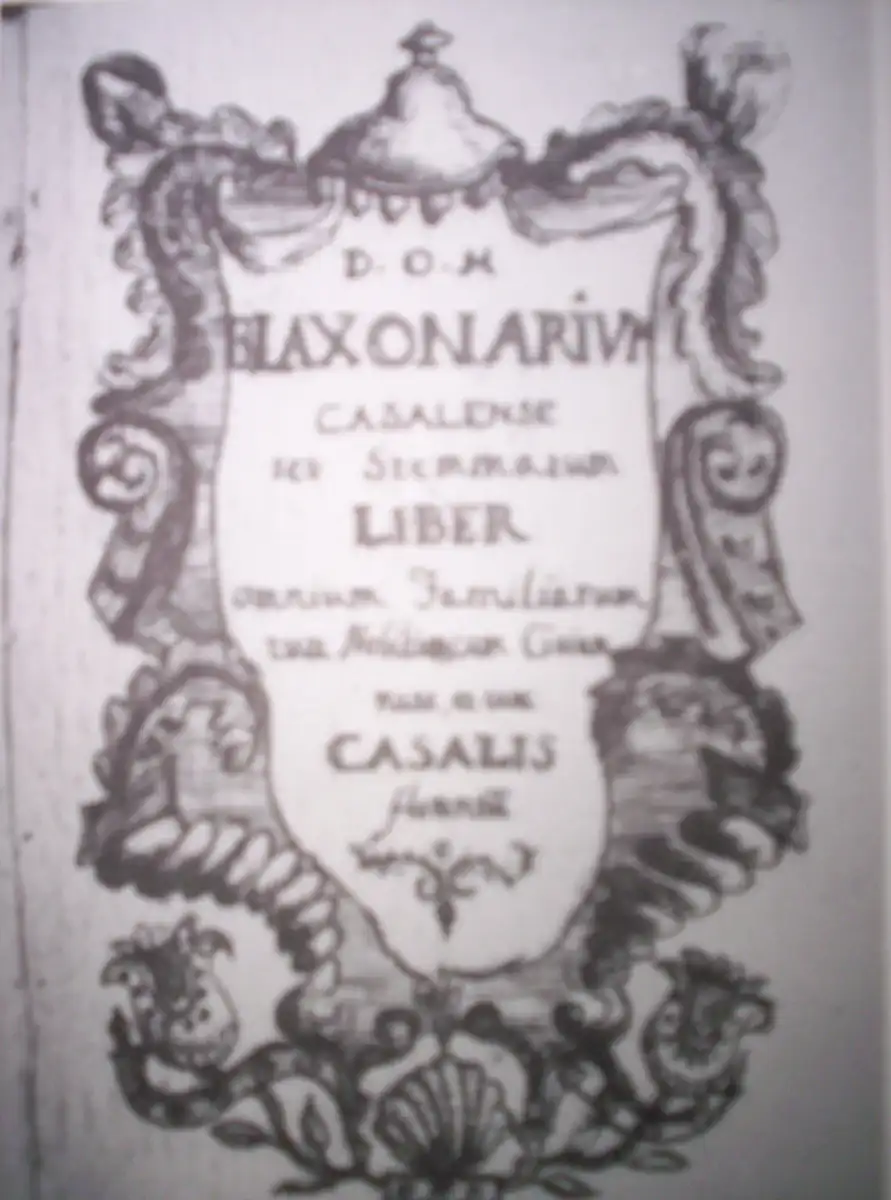 Sconosciuto Unknown author · Public domain
Blaxonarium Casalense
The Blaxonarium Casalense or Blasonario Casalese is an ancient collection of coats of arms of all noble or civil families once flourishing in Casale Monferrato and in the Marchesato del Monferrato and still present today. It is currently located at the library " Giovanni Canna " of Casale Monferrato and is filed 091-115.
Read the story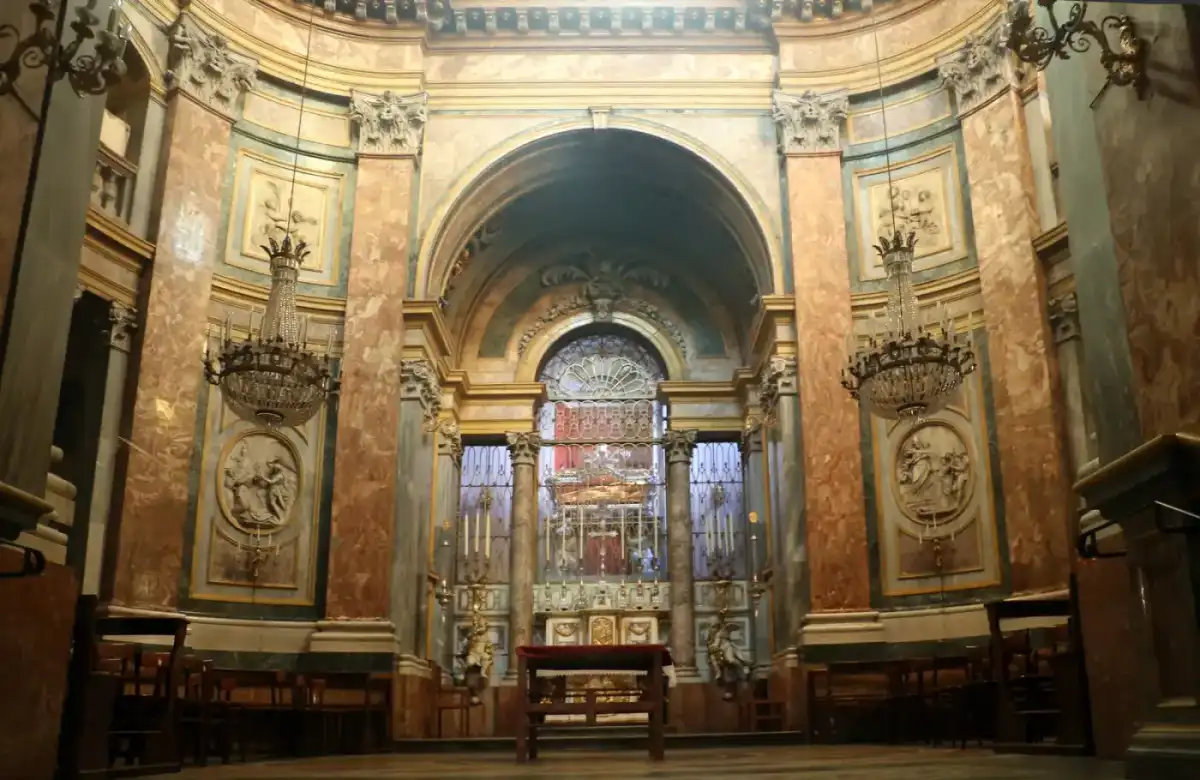 Sailko · CC BY-SA 4.0
Cathedral of Casale Monferrato
The cathedral of Sant'Evasio is the oldest monument in the city Casale Monferrato and one of the most important cathedrals in Lombard Romanesque style Piemonte .
Read the story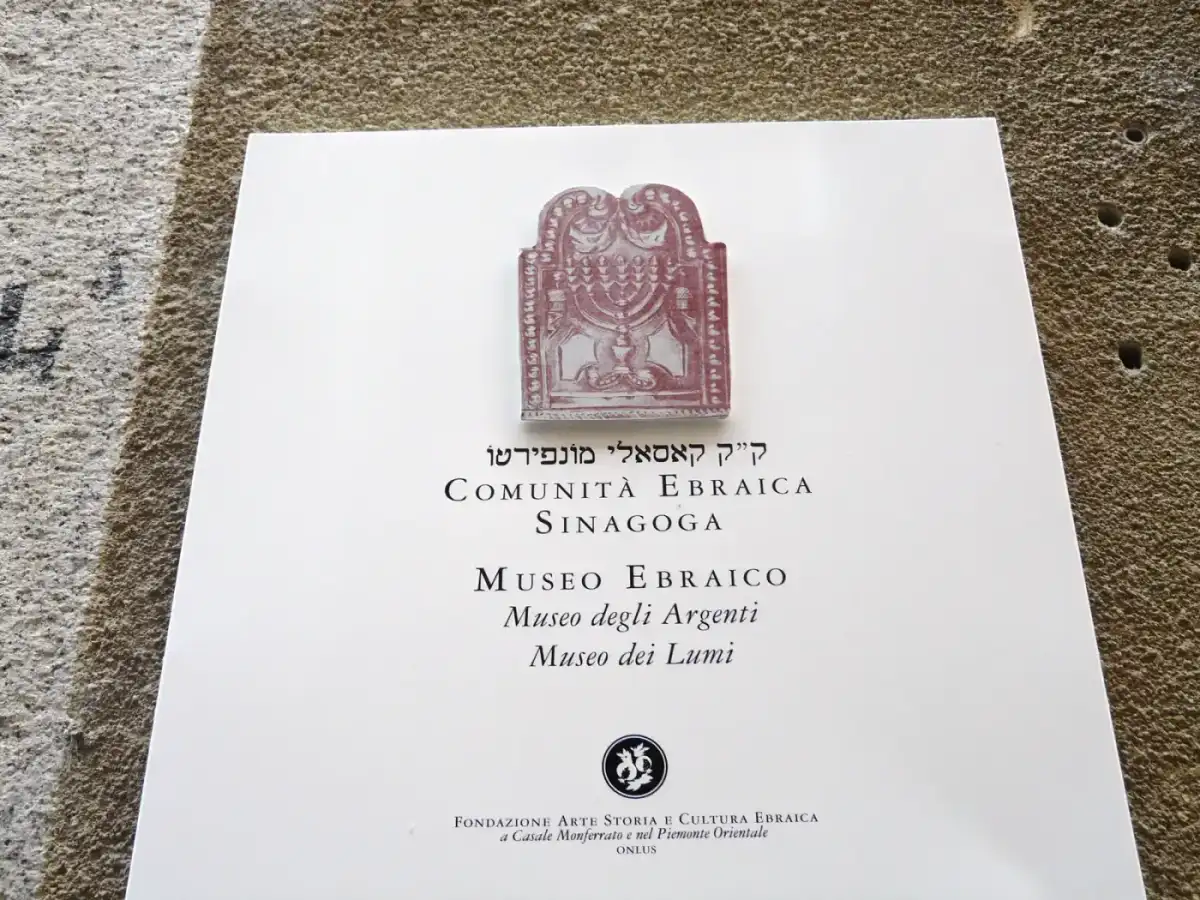 Davide Papalini · CC BY-SA 3.0
Synagogue of Casale Monferrato
The synagogue of Casale Monferrato, of Italian rite, built in 1595, is one of the best examples of Piedmontese baroque synagogue. It is located in Casale Monferrato in alley Solomon Olper.
Read the story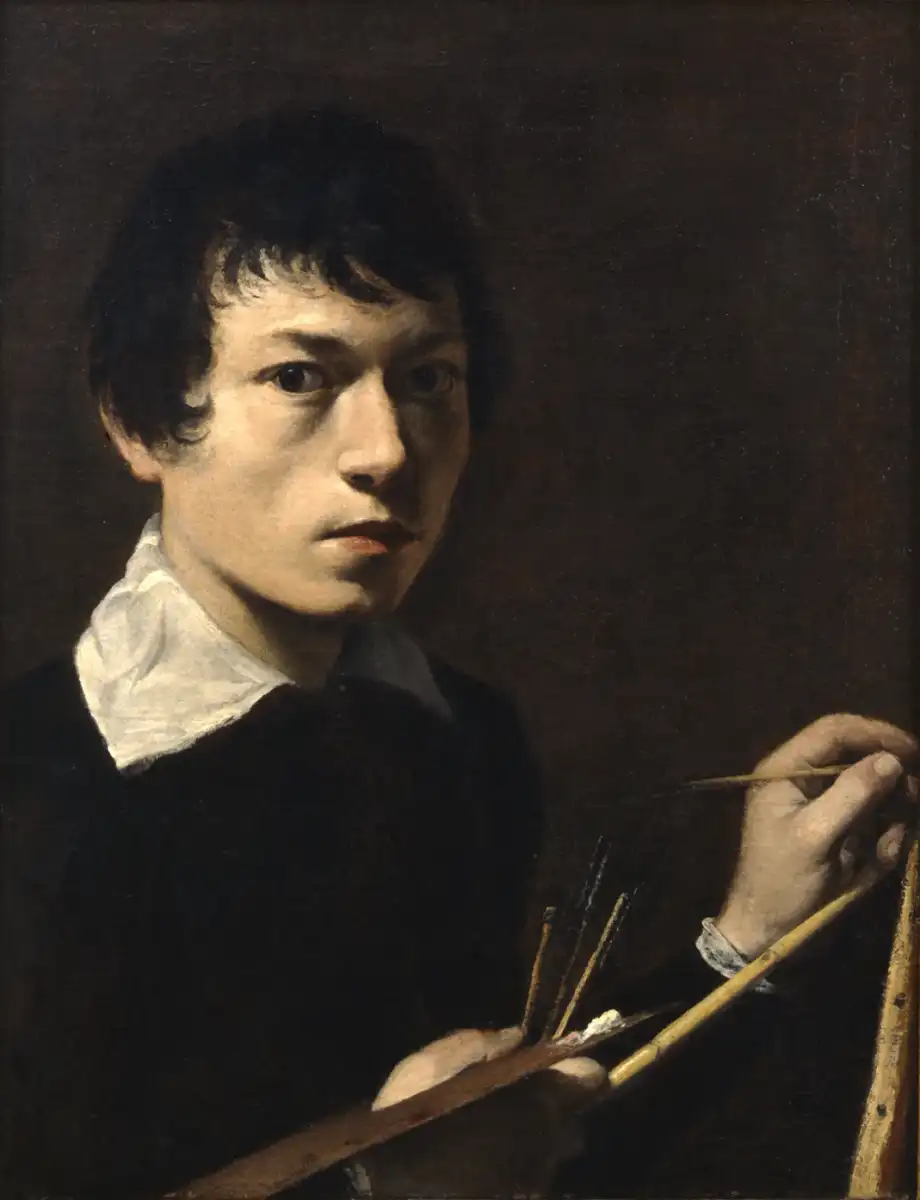 Niccolò Musso · Public domain
Civic Museum (Casale Monferrato)
The Civic Museum of Casale Monferrato is located in the ancient Augustinian convent of Santa Croce, frescoed at the beginning of the 17th century by Guglielmo Caccia called the Moncalvo (Montabone 1568-Moncalvo 1625). In the twenty-four rooms over five hundred works are ordered divided into the Pinacoteca, Gipsoteca Leonardo Bistolfi and Sala Vidua.
Read the storyThe wine landscape
This village in wine country
Follow the link between the country, the vineyards and the neighboring territories.
The area, step by step
Trails and routes in Casale Monferrato

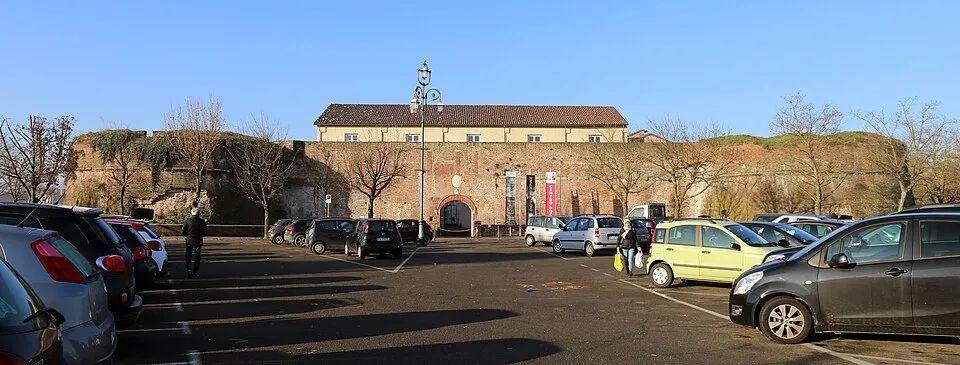 WalkingPlaces and landscapes along the route

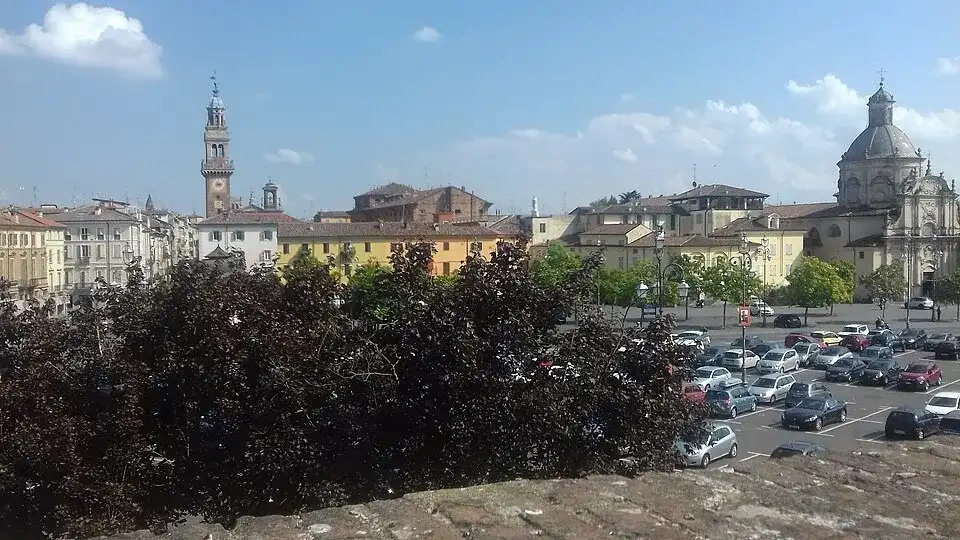 CyclingPlaces and landscapes along the routeCyclingPlaces and landscapes along the route
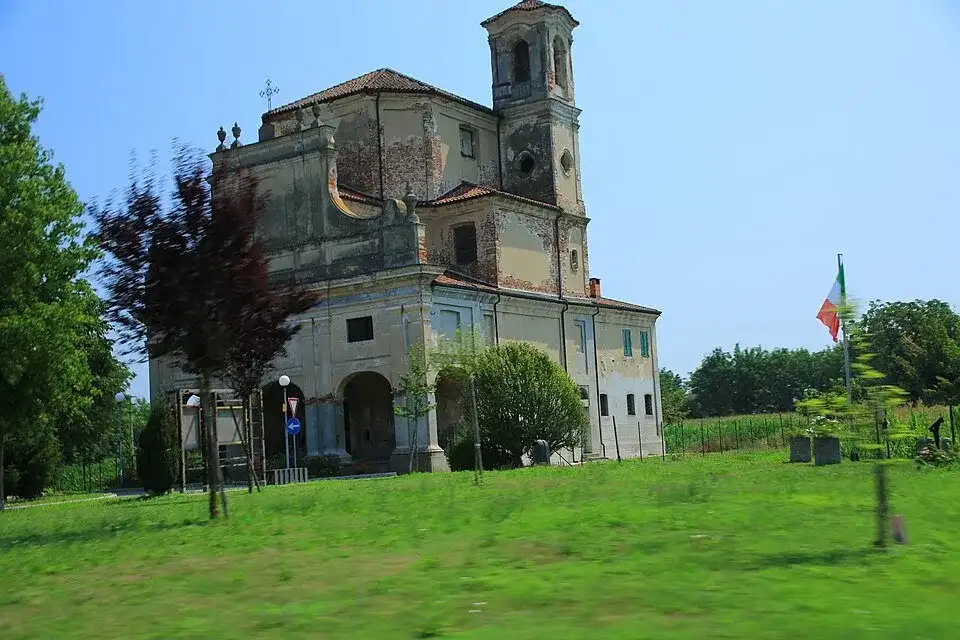 GravelAround the starting point
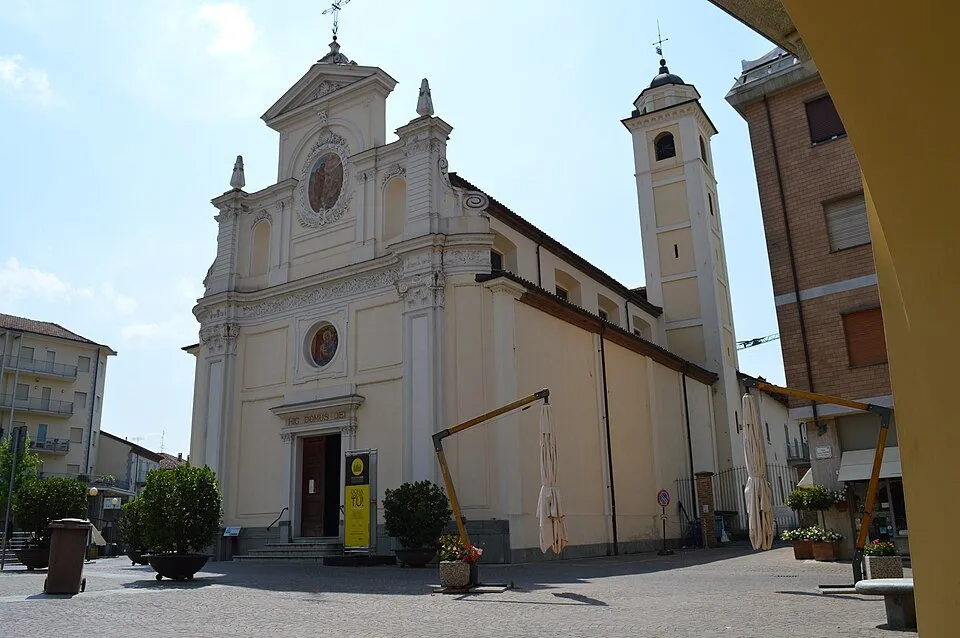 Mountain bikeAround the starting point
Asti, Alessandria and surroundings
Ciclovia delle Terre Unesco - Alba, Asti, Casale Monferrato
Mountain bikeAround the starting pointAsti, Alessandria and surroundings
Tour DOC della Barbera Monferrato Superiore

Asti, Alessandria and surroundings
Le Strade dei Minatori del Monferrato Casalese
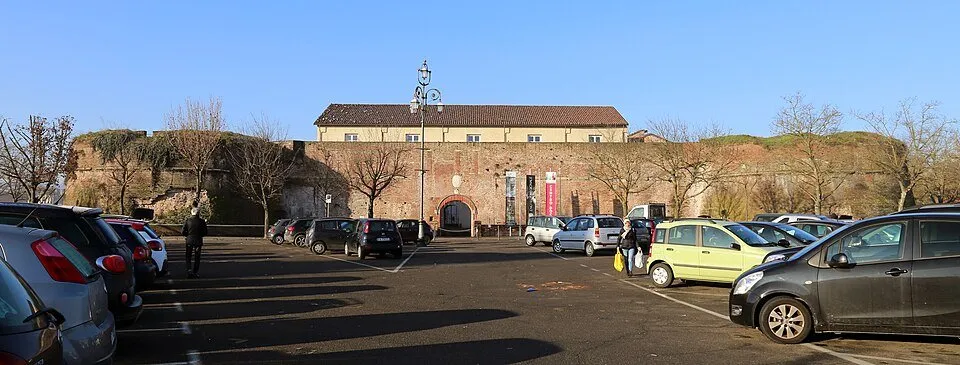 CyclingAround the starting point
Asti, Alessandria and surroundings
Ciclo Cavalcata Aleramica del Monferrato

Asti, Alessandria and surroundings
Greenway delle 2 Cittadelle
 CyclingAround the starting point
Asti, Alessandria and surroundings
Monferrato Casalese, tra colli e pianura
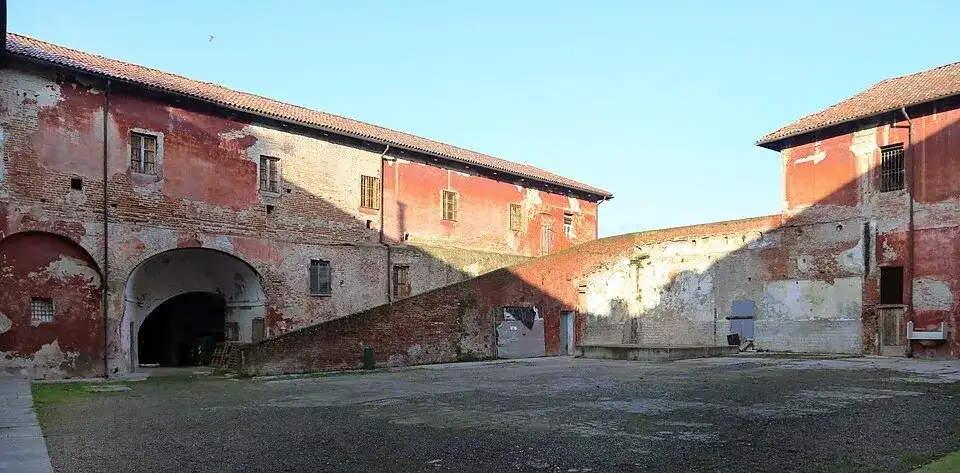 Mountain bikeAround the starting point
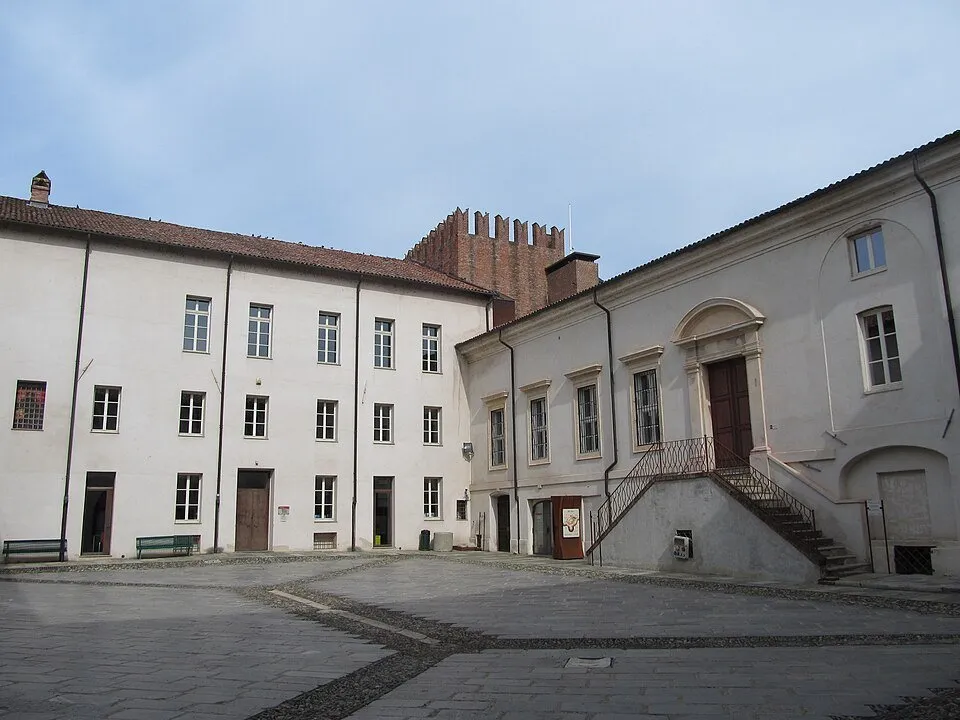 Mountain bikeAround the starting point
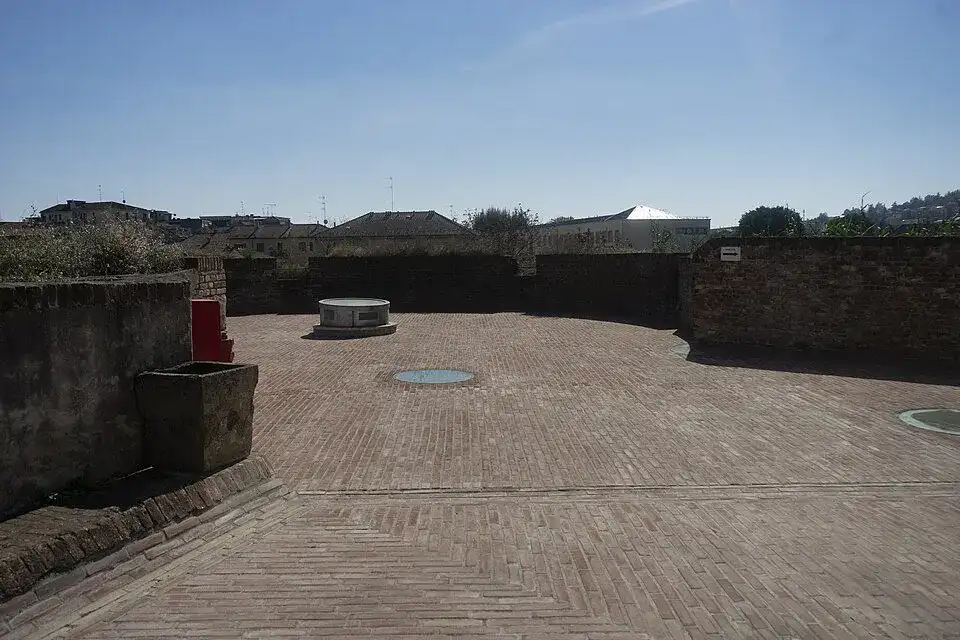 Mountain bikeAround the starting point
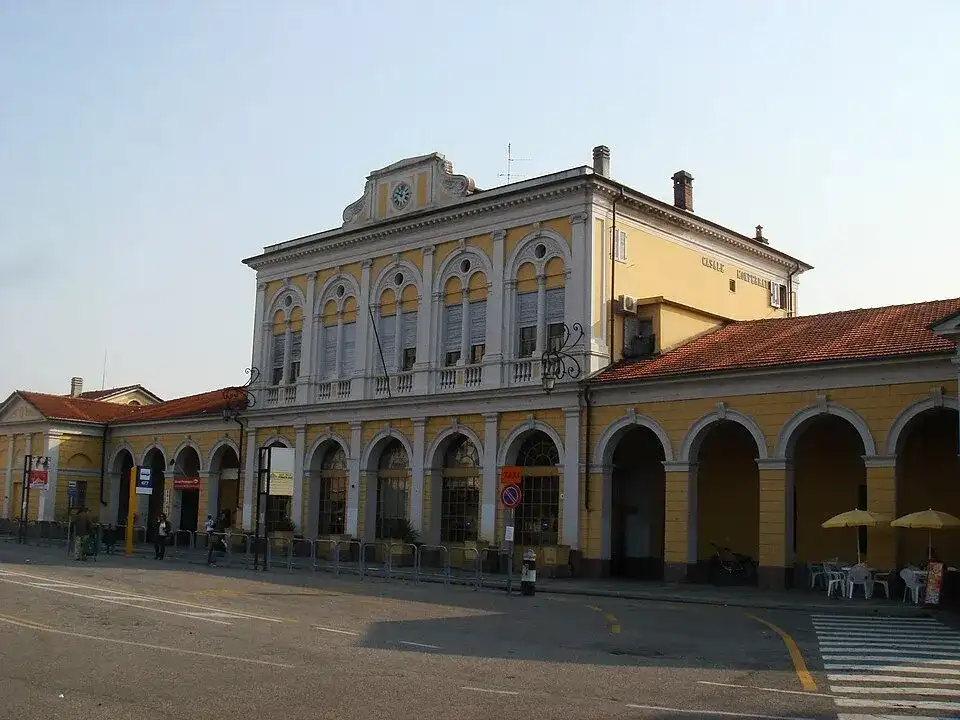 Mountain bikeAround the starting point
Asti, Alessandria and surroundings
Giro a Madonna dei Monti da Casale Monferrato
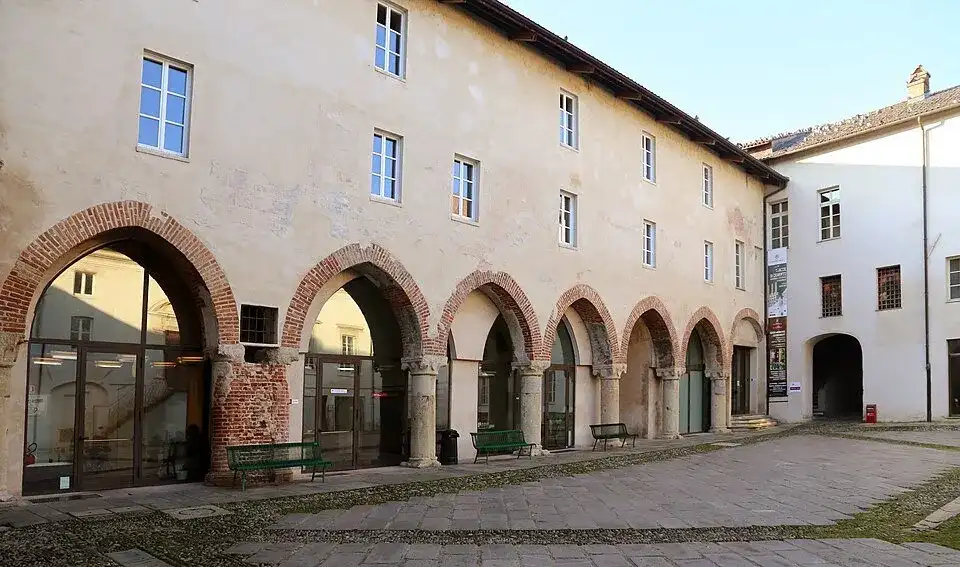 CyclingAround the starting point
Asti, Alessandria and surroundings
Dal Parco del Po alla Riserva Speciale del Sacro Monte di Crea
 CyclingAround the starting point
Asti, Alessandria and surroundings
La Francigena di Sigerico dei Fiumi

Asti, Alessandria and surroundings
Ciclovia Svizzera Mare, Bicitalia 15
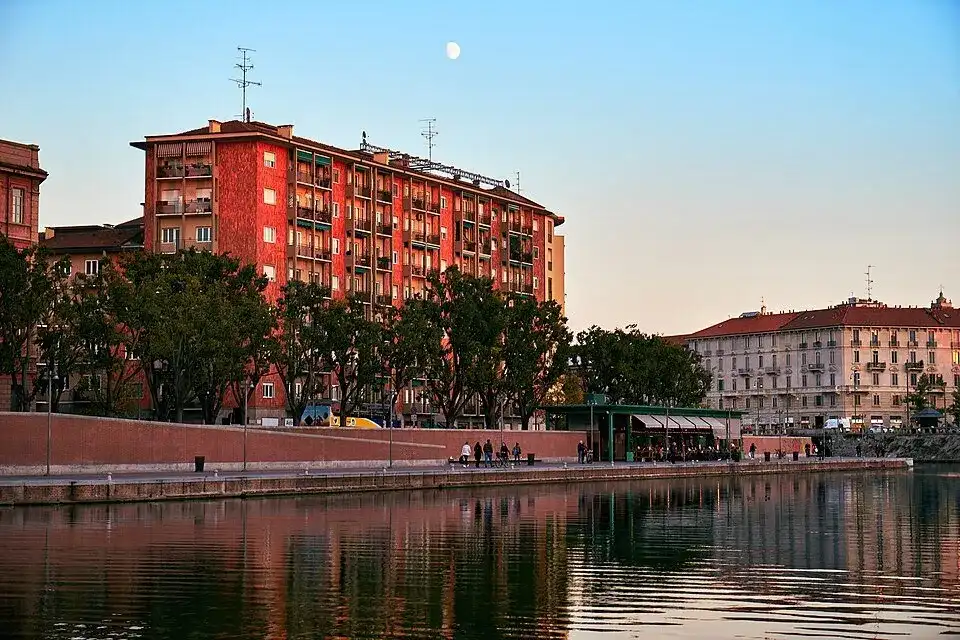 CyclingAround the starting point
Asti, Alessandria and surroundings
Le vie d’acqua, da Milano al Monferrato

Asti, Alessandria and surroundings
Ciclovia del Po – Ven.To. tratto Piemontese

Asti, Alessandria and surroundings
Le Strade della Libertà del Monferrato Casalese
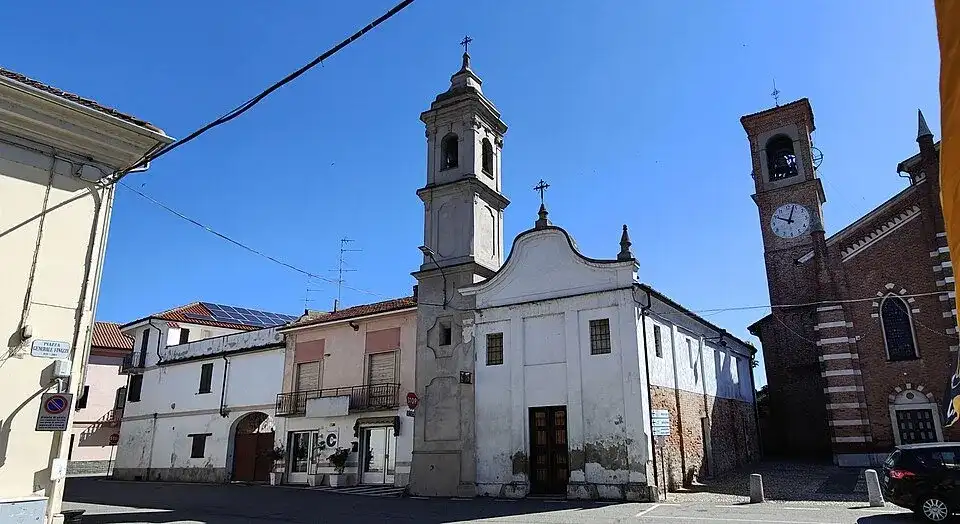 CyclingAround the starting point
Asti, Alessandria and surroundings
Le terre tra il Po e il Sesia


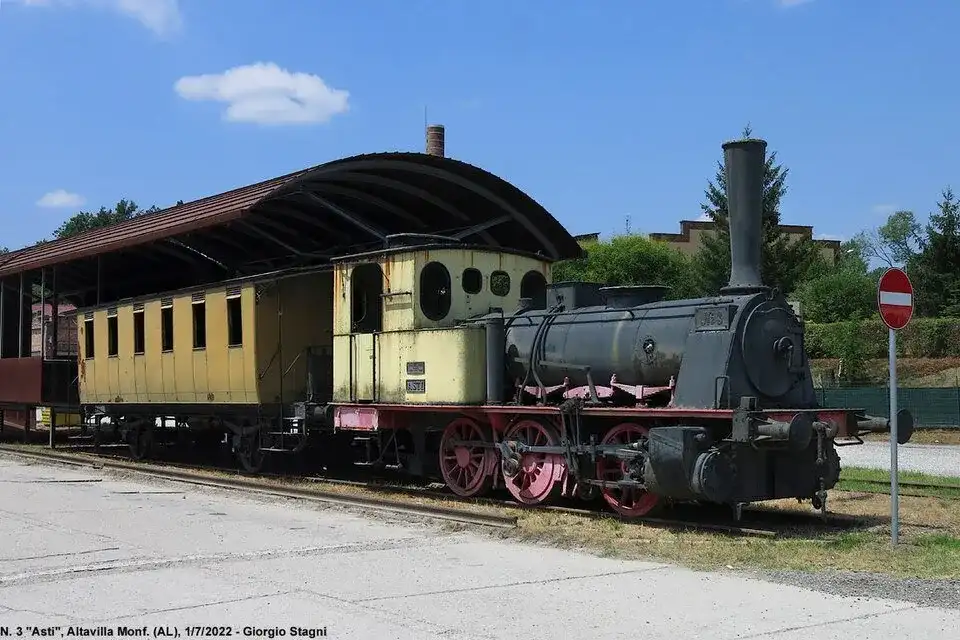 WalkingAround the starting point

Asti, Alessandria and surroundings
Sentiero santuario madonna del pozzo - pieve di san giovanni
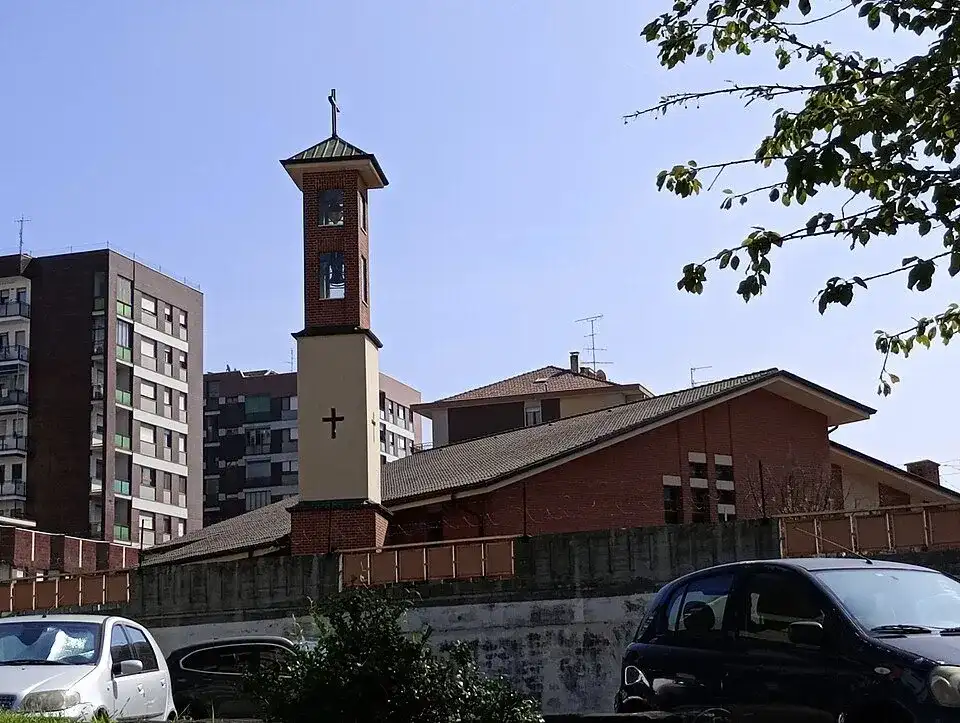 WalkingAround the starting point
