A closer look
Province of Alessandria: at a glance
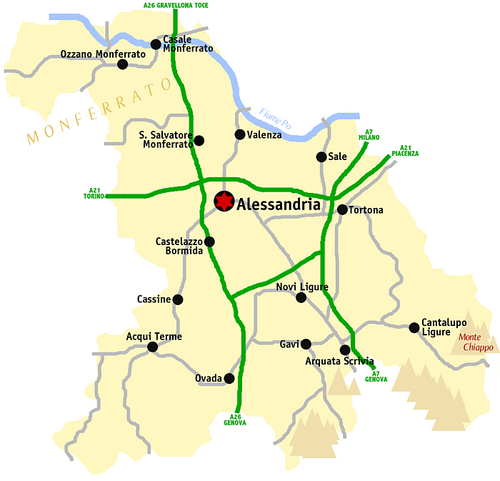
The province of Alessandria is an Italian province of Piemonte of 408 765 inhabitants. It has as its capital the city Alessandria. In addition to the capital, in the province there are six area centres, in which the main services are located, which correspond to the most important and populous cities, i.e. Novi Ligure, Tortona, Casale Monferrato, Acqui Terme, Valenza And Ovada.
It occupies the extreme south-eastern sector of Piemonte, borders to the north with the province of Vercelli, west with the metropolitan city of Turin and the province of Asti, to the east with Lombardy (province of Pavia), to the south with Liguria (metropolitan city of Genoa and province of Savona), to the south-east with Emilia-Romagna (province of Piacenza).
Physical geography
Territories · Orography · MountainsExplore this chapter
Territories
It is possible to share the constituency Alessandria in four areas, identified according to territorial and urban characteristics and on the basis of analysis of the ability to attract and the radius of influence of its main centres:
- the Alexandrian, which develops mainly on the plain of Marengo.
- the Monferrato, divided into Lower Monferrato (including the Casalese and Valenzano areas) and Upper Monferrato (Acquese, Ovadese and part of Ninety-six).
- the Ninety-six, also part of the Upper Monferrato with the hills of Gavi. It also includes the first offshoots of the Ligurian Apennines (Val Borbera and Val Lemme). This territory is historically linked to Liguria and was once part of province of Novi.
- the Tortonese, located on the border with Lombardy, is an area characterized by rolling hills with a purely agricultural vocation.[2]
The territory of the province is for 3/4 mountainous or hilly. To the north, Monferrato is characterized by an immense stretch of hills of Monferrato and valleys where the river Po and the Tanaro. In the center there is a fertile plain crossed by the Tanaro, from the Bormida and their tributaries. To the south-west still the hills of Val Bormida, Val d'Erro and Val d'Orba, and Val Lemme which join with the mountains of the Ligurian Apennines. To the south-east the hilly areas of Ninety-six and of the dovenese, with the valleys of Scrivia and its tributaries, firstly the Borbera valley and the Spinti valley constitute the extreme propaggini of the Ligurian Apennines, on which the province borders that of Genoa. Not far from the border with Lombardy flows the Curone that divides the Tortonese plain from Oltrepò Pavese; moreover it is briefly bounded by Staffora. The highest point is Mount Ebro, which reaches 1,701 m, the least elevated the municipality of Molino dei Torti located at 76 m of height.
The southernmost part of the territory, in particular aqueous, ovadese and ninety, is sometimes exposed to more or less intense winds from nearby Ligurian Sea. This wind, which in summer brings fresh and in winter mitigates the temperatures causing a rapid dissolution of any snow present, is called by the inhabitants of the place "the sea".
Orography
Mountains
Mountains over 1 000 meters, most of which are located in the Borbera valley.
| Description | Height (m) |
|---|---|
| Monte Ebro | 1701 m |
| Monte Chiappo | 1699 m |
| Monte Legnà | 1670 m |
| Towards Rondino | 1630 m |
| Peak of Erta | 1020 m |
| Monte Carmo | 1640 m |
| Mount of the Three Crosses | 1565 m |
| Monte Antola | 1597 m |
| Monte Buio | 1401 m |
| Mount Above the Coast | 1278 m |
| Monte Castello | 1089 m |
| Bric of the Rooms | 1016 m |
| Monte Cavalmurone | 1672 m |
| Monte Colletto | 1261 m |
| Monte Porreto | 1533 m |
| Monte Saia | 1167 m |
| Monte Pana | 1561 m |
| Monte Trappola | 1530 m |
| Monte Giarolo | 1473 m |
| Monte Gropà | 1433 m |
| Monte Rotondo | 1567 m |
| Monte Garavé | 1594 m |
| Monte Carmo | 1466 m |
| Monte Leco | 1072 m |
| Mount of Figne | 1172 m |
| Monte Taccone | 1113 m |
| Monte Tobbio | 1092 m |
| Monte Poggio | 1081 m |
Passes and valics
Valico di San Fermo 1.129 m
Bocchetta pass 772 m
Passo della Castagnola 578 m
Eremites 559 m
Rivers and streams
In this list are collected all the rivers and streams flowing in the province of Alessandria.
Lakes
In the province there are five lakes of considerable tourist importance, but above all useful for water resources of the city of Genoa since they are all artificial and were built for the same purpose.
| Name of lake | Geographical zone | Website in the municipality of |
|---|---|---|
| Lake Busalletta | Community Montana Alta Val Lemme and Alto Ovadese | Busalla (GE) Fraconalto Ronco Scrivia (GE) |
| Lakes of the Gorzente | Community Montana Alta Val Lemme and Alto Ovadese | Bosio Campomorone (GE) Ceranesi (GE) |
| Lake Ortiglieto | Community Montana Suol d'Aleramo | Molare Rossiglione (GE) |
| Lavagnina lakes | Community Montana Alta Val Lemme and Alto Ovadese | Casaleggio Boiro Bosio Mornese |
History
Symbols · HonorsExplore this chapter
Retrovaments testify that in ancient times, the territory occupied today by the province of Alessandria, was already inhabited in Neolithic times. In the area of Casalbagliano, near Alessandria, in the Chiappona farmhouse, bronze elements (middle Bronze Age, 1450-1350 BC) were recovered in the oldest discovery in northern Italy of the Urnfield Culture[3][4]. Inside the urn were preserved the cremated remains and the elements of the metal objects, namely a dagger, a pin and a bronze ankle cover element with a typical double spiral shape which highlight a close relationship with the Danube area.
Proto-celtica-Halstattian influence area, inhabited by the native Celt/ligurian populations of the Marici in Alexandria and Ligurian Statielli in the area of Acqui and of Tortona first and from transalpine Celtic populations that invaded northern Italy then.
The gallo-ligure presence of the area is also witnessed by hydronimi[5] Tanaro and Bormida and some names like Pietra Marazzi and maybe Marengo. In the 3rd century BC. passed under the control of Rome. He was part of the Ligurian Regio IX. Important centres were Libarna and the Forum Fulvii centers, Tortona and Aquae Statiellensium.
Divided for centuries between Imperial Feudi Genoese, the Republic of Genoa, Marchesato/Ducato del Monferrato and the Duchy of Milan.
In 1708 the Duchy of Monferrato (with Casale Monferrato And Acqui Terme) passed to the Savoy family; in 1707 Alessandria and in 1734 the Tortona, after four centuries of belonging to the Duchy of Milan, they passed to the Savoy family; in 1815 the whole thing passed Ninety-six already part of the Imperial Feudi and the Republic of Genoa together with Ovada (all already part of the Ligurian Republic) to the Savoy.
Today's province was established by royal decree no. 3702 of 23 October 1859, the so-called Law Rattazzi, from the union of the provinces (1818) Alessandria, Tortona, Casale Monferrato, already belonging to the division of Alessandria, Asti, Acqui Terme And Novi Ligure, the latter taken from the division of Genoa.
In 1878 he took Isola Sant'Antonio from the province Pavese, in 1880 acquired from the province of Genoa the municipality of Pareto[6].
During fascism in December 1926 the municipalities of the sending of Gavi (Gavi, Voltaggio, Parodi Ligure, Carrosio And Fraconalto) tried in vain to pass under the province of Genoa, but due to the opposition of the prefect of Alessandria It didn't go to port.[7].
In 1935 he lost the territory of Asti and part of the territory of Acqui, which formed the new province of Asti[8].
On 1 May 1945 the inhabitants of Fraconalto and brought him to the border with the commune of Bocchetta. Voltaggio, where the voltages, then i Carrosio and finally Gavi they brought him to the border with the commune of Serravalle Scrivia, however the people of Serravalle disagreed and since then the question of belonging to the Piemonte of those lands has never been reopened.[9]
Today the province of Alessandria includes 187 municipalities. By extension is the third province of Piemonte, after Cuneo and Turin. The municipality of Voltaggio is an honorary commune of the metropolitan city of Genoa for cultural, linguistic and historical links with the Ligurian capital.
Symbols
- Coat of arms
The coat of arms was granted by King Vittorio Emanuele III of 24 March 1912.[10]
In the shield are represented the emblems of the chiefs of the surrounding area included in the province of Alessandria at the time of the decree of concession, and is still present Asti. The whole thing is surrounded by a wreath of bay leaves to the natural, tied with red and silver, at the ends ambe ending in a pine, bound to a cross stick on the top of the shield, all golden. From 1933 to 1943, the coat of arms were decorated with the head of the Littorio.
- Banner
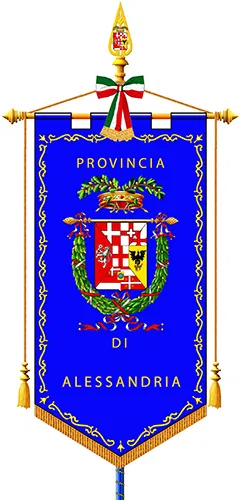
The gonfalone, granted with Regio Decreto di re Vittorio Emanuele III of 26 December 1936, is a blue drape.
- Flag
Of blue, loaded with the coat of arms, crowned, without greenhouse of frondes. There is a variant, blue with the full coat of arms of ornaments and the name of the province in white characters like those of the logo.[11]
Honors

— 17 May 1996[12][13]


— 1910 or 1911[15]
Society
Languages and dialects · ReligionExplore this chapter
Languages and dialects
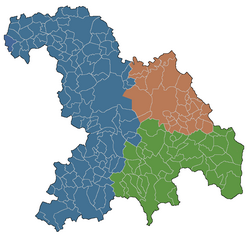
Piedmontese strain
Ligurian strain
Toucan
Due to the centuries-old historical division of the province, dialects that are spoken there may be considered as belonging to languages:
- Piedmontese, spoken in Alexandria, in Casalese, inAcquese and part of the Ovadese. The alessandrino has some peculiarities of pronunciation (for which the Alexandrians have always been recognizable among the Piedmontese). Many words of French derivation, arpitana and occitan which are an integral part of the Piedmontese of Cuneo and Turin, are less in use in the province of Alessandria because of the Lombard influence that attenuated its recurrence. In any case the particularities of Alexandrian do not hinder mutual comprehensibility with the balloons and the rest of the Piedmontese. The Alexandrian also contributed to the historical formation of Koin Piedmontese.
- Emilian with a strong[without source] Lumbar influence (also considered as a Lombard-Emilian crossroads[without source]), widespread in Tortonese as, according to standard classifications, the Emilian dialect continuum would extend in part of the Alexandrian[16] until the river Scrivia[17][18][19][20][21][22][23].
- Ligurian, with strong Piedmont influence, spoken in Ninety-six and part of the Ovadese.
Religion
The province of Alessandria is divided between ecclesiastical regions Piemonte and Liguria.
Under the ecclesiastical region Piemonte you will find diocese of Alessandria and the diocese of Casale Monferrato that are part of the ecclesiastical province of Vercelli. The diocese of Asti and the diocese of Acqui are part of the ecclesiastical province of Turin.
Under the ecclesiastical region Liguria is located diocese of Tortona that is part of the ecclesiastical province of Genoa. In addition, the municipality of Mongiardino Ligure in Val Borbera, Rigoroso di Arquata Scrivia and the municipalities of Bosio, Gavi, Fraconalto, Parodi Ligure And Voltaggio of the upper Lemme valley belong directly to the archdiocese of Genoa.
Culture
KitchenExplore this chapter
Kitchen
The typical dishes of the province of Alessandria are those mainly attributable to Piedmontese cuisine, but with increasing influences from neighbouring regions as from the capital we proceed towards the main historical directions of exit towards Liguria, Lombardy and Emilia-Romagna.
The Ninety-six, the Ovadese and partly theAcquese They are very influenced by Ligurian cuisine: in fact proceeding towards the southern and hilly part of the province, increase significantly the Mediterranean influences in the gastronomic panorama. Examples of this type are the focaccias including the famous focaccia novese, close to preparation and tasting at the Genoese focaccia, flour, pansotti, corzetti, ravioli with touch and sweets like health cookies Ovada, very similar to the biscuits of Lagaccio in Genoa.
The areas of Casalese and Valenzano have culinary similarities with the Lomellina and in general with the western plain of Lombardy, where there is great diffusion of rice and condiments "in carpion".
Spiccate analogies instead combine the gastronomic tradition of Tortonese to that lombarda of Oltrepò pavese and the Piacenza cuisine, especially in meats, cheeses and other peraparations such as ceci soup, tagliatelle with theAjá (walnut sauce), la panada and the far (typical pancakes for the feast of Saint Joseph). By Tortona are originating Dama kisses, hazelnut and chocolate-based sweets.
Among the most famous dishes of the territory[24], in addition to those already mentioned, we recall:
- the risotto with barol
- the rabaton, first course similar to large gnocchi (similar to Piacenza malfatti), which are obtained by mixing ricotta, chard or spinach, butter, Grana Padano cheese, eggs and nutmeg;
- chicken Marengo, present in numerous variants, which combines chicken meat with eggs and sometimes river shrimp.
In line with the Piedmontese tradition are:
- The wet cedar
- the agnolotti
- mixed boiled
- The bonet
In the gastronomic field, the province of Alessandria distinguishes between the other ones Piemonte for greater external contamination.
Wines of excellence are Cortese di Gavi, Dolcetto and Barbera.
Anthropic geography
Municipalities · Most populated municipalities · Less populated municipalitiesExplore this chapter
Municipalities
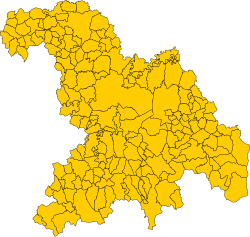
The following 187 municipalities belong to the province of Alessandria:
- Acqui Terme
- Albera Ligure
- Alessandria
- Alfiano Natta
- Alice Bel Colle
- Floods Piovera
- Altavilla Monferrato
- Alzano Scrivia
- Arquata Scrivia
- Avolasca
- Balzola
- Basaluzzo
- Bassignana
- Belforte Monferrato
- Bergamasco
- Berzano di Tortona
- Bistagno
- Borghetto di Borbera
- Borgo San Martino
- Borgoratto Alessandrino
- Bosco Marengo
- Bosio
- Bozzole
- Brignano-Frascata
- Cabella Ligure
- Camagna Monferrato
- Camino
- Cantalupo Ligure
- Capriata d'Orba
- Carbonara Scrivia
- Carentino
- Carezzano
- Carpeneto
- Carrega Ligure
- Carrosio
- Cartosio
- Casal Cermelli
- Casale Monferrato
- Casaleggio Boiro
- Casalnoceto
- Casasco
- Cassano Spinola
- Cassine
- Cassinelle
- Castellania Coppi
- Castellar Guidobono
- Castellazzo Bormida
- Castelletto Merli
- Castelletto Monferrato
- Castelletto d'Erro
- Castelletto d'Orba
- Castelnuovo Bormida
- Castelnuovo Scrivia
- Castelspina
- Cavatore
- Cella Monte
- Cereseto
- Cerreto Grue
- Certain
- Coniolo
- Conzano
- Costa Vescovato
- Cremolino
- Denice
- Dernice
- Fabbrica Curone
- Felizzano
- Fraconalto
- Francavilla Bisio
- Frascaro
- Frassinello Monferrato
- Frassineto Po
- Fresonara
- Frugarolo
- Fubine Monferrato
- Gabiano
- Gamalero
- Garbagna
- Gavi
- Giarole
- Gremiasco
- Grognardo
- Grondona
- Guazzora
- Isola Sant'Antonio
- Lerma
- Lu and Cuccaro Monferrato
- Malvicino
- Masio
- Melazzo
- Merana
- Mirabello Monferrato
- Molare
- Molino dei Torti
- Mombello Monferrato
- Momperone
- Moncestino
- Mongiardino Ligure
- Monleale
- Montacuto
- Montaldeo
- Montaldo Bormida
- Montecastello
- Montechiaro d'Acqui
- Montegioco
- Montemarzino
- Morano sul Po
- Morbello
- Mornese
- Morsasco
- Murisengo
- Novi Ligure
- Occimiano
- Odalengo Grande
- Odalengo Piccolo
- Olivola
- Orsara Bormida
- Ottiglio
- Ovada
- Oviglio
- Ozzano Monferrato
- Paderna
- Pareto
- Parodi Ligure
- Pasturana
- Pecetto di Valenza
- Pietra Marazzi
- Pomaro Monferrato
- Pontecurone
- Pontestura
- Ponti
- Ponzano Monferrato
- Ponzone
- Pozzol Groppo
- Pozzolo Formigaro
- Prasco
- Predosa
- Quargnento
- Quattordio
- Ricaldone
- Rivalta Bormida
- Rivarone
- Rocca Grimalda
- Roccaforte Ligure
- Rocchetta Ligure
- Rosignano Monferrato
- Sala Monferrato
- Sale
- San Cristoforo
- San Giorgio Monferrato
- San Salvatore Monferrato
- San Sebastiano Curone
- Sant'Agata Fossili
- Sardigliano
- Sarezzano
- Serralunga di Crea
- Serravalle Scrivia
- Sezzadio
- Silvano d'Orba
- Solero
- Solonghello
- Spigno Monferrato
- Spineto Scrivia
- Stazzano
- Strevi
- Tagliolo Monferrato
- Tassarolo
- Terruggia
- Terzo
- Ticineto
- Tortona
- Treville
- Trisobbio
- Valenza
- Valmacca
- Vignale Monferrato
- Vignole Borbera
- Viguzzolo
- Villadeati
- Villalvernia
- Villamiroglio
- Villanova Monferrato
- Villaromagnano
- Visone
- Volpedo
- Volpeglino
- Voltaggio
Most populated municipalities
The province of Alessandria is divided into 187 municipalities, the most populous of which are:
| Location | Coat of arms | Cities | Population (ab) |
Elevation (m a.s.l.) |
Area (km²) |
Population density (inhabitant/km²) |
|---|---|---|---|---|---|---|
| 1st | 
|
Alessandria | 90 952 | 95 | 203,97 | 446 |
| 2nd | 
|
Casale Monferrato | 32 226 | 116 | 86,32 | 373 |
| 3rd | 
|
Novi Ligure | 28 230 | 197 | 54,22 | 527 |
| 4th | 
|
Tortona | 26 464 | 122 | 99,29 | 265 |
| 5. | 
|
Acqui Terme | 18 957 | 156 | 33,42 | 569 |
| 6th | 
|
Valenza | 18 040 | 125 | 50,05 | 372 |
| 7th | 
|
Ovada | 10 875 | 186 | 35,33 | 306 |
| 8. | 
|
Arquata Scrivia | 6 298 | 248 | 30,36 | 215 |
| 9th | 
|
Serravalle Scrivia | 5 868 | 225 | 16,02 | 368 |
| 10th | 
|
Castelnuovo Scrivia | 5 151 | 85 | 45,42 | 121 |
Less populated municipalities
Castellania Coppi and Carrega Ligure with their 85 inhabitants are the municipalities with the lowest population.
| Location | Coat of arms | Cities | Population (ab) |
Elevation (m a.s.l.) |
Area (km²) |
Population density (inhabitant/km²) |
|---|---|---|---|---|---|---|
| 187º | 
|
Castellania Coppi | 85 | 400 | 7,66 | 11,1 |
| 187º | 
|
Carrega Ligure | 85 | 958 | 56,67 | 1,5 |
Unions of municipalities
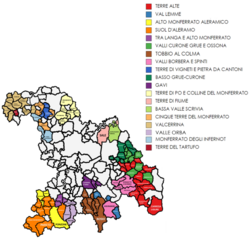
- Mountain union Terre Alte
- Mountain union Val Lemme
- Mountain union Alto Monferrato Aleramico
- Mountain Union Suol d'Aleramo
- Mountain union between Langa and Alto Monferrato
- Mountain union Valli Curone Grue and Ossona
- Mountain union from Tobbio to Colma
- Mountain union Valli Borbera and Spinti
- Mountain union Valle Orba
- Lands of Vineyards and Stone from Cantoni
- Lower Grue-Curone hilly community
- Hilly Community of Gavi
- The Union of the municipalities Terre di Po e Colline del Monferrato
- The Union of Municipalities Terre di Fiume
- Union of municipalities Bassa Valle Scrivia
- Union Cinque Terre of Monferrato
- The Union of Municipalities in Valcerrina
- Union of municipalities the Monferrato degli Infernot
- Union of Municipal Lands of the Truffle
Economy
Agriculture · Industry, commerce and crafts · TourismExplore this chapter
Agriculture
The vast central plain is mainly devoted to cereal crops: wheat, barley, corn, soybean, sunflower. It spreads the cultivation of sugar beet, intended for industrial production. In the flat areas of the farmhouse, the landscape is characterized by the presence of extensive rice fields. In the nineties, the few flat areas are largely used for cereal farming and the fields are characterized by the presence of rows of mulberry trees, introduced in the 17th-XIX century, for bachiculture. In the hilly areas of the nineteenth, farmhouses, waterfalls, turtledoves and ovadese the vine dominates undisputed and remarkable is the production of wine.
Val Curone is a typical fruit production area. Diffuses meadow crops in the bottom of the aqueous valley. Along the rivers (the Bormida in particular) extends the populate.
Industry, commerce and crafts
The main industrial poles are located around Alessandria (Spinetta Marengo, Quargnento, Solero Valenza, Quattordio), Tortona (Castelnuovo Scrivia And Pontecurone), Novi Ligure (Arquata Scrivia, Serravalle Scrivia, Cassano Spinola,Pozzolo Formigaro), Ovada (Tagliolo Monferrato, Belforte Monferrato, Silvano d'Orba,Capriata d'Orba/Predosa) ,Casale Monferrato (Villanova Monferrato, Occimiano). The main production sectors are metalworking and goldsmithing (a Valenza). Followed by the food sector (a Novi Ligure), chemical products and plastic materials (a Novi Ligure, Spinetta Marengo, Cassano Spinola, Serravalle Scrivia). There are numerous artisan businesses in the manufacturing, construction and transport sectors. Trade is significant both as traditional shops and large-scale distribution (81 businesses in 1998).
Tourism
Alessandria promotes a series of tourist attractions. These routes touch places that focus on the artistic heritage and food and wine skills of the various localities in the province. The Casale Monferrato, rich in monuments in its capital and castles on the hills, also offers a rich gastronomy, as well as the pleasure of tasting pure or refined wines. There is a rich presence in the area of buildings of faith of notable artistic value: from the Trinità da Lungi to Castellazzo Bormida at the complex of Santa Croce a Bosco Marengo, from the abbey of Santa Giustina a Sezzadio at Sacro Monte di Crea, near Serralunga di Crea, now a UNESCO world heritage site and with medieval remains such as the tower of Masio with the museum inside. The hills of Alto Monferrato contain picturesque villages some of pre-Roman origin. Centres as Acqui Terme, Novi Ligure And Ovada are at the center of food and wine trails that touch picturesque villages as well Gavi, Cremolino, Carpeneto, Tagliolo Monferrato, Gavazzana, Bosio And Rocca Grimalda with its southern plant and the ancient carnival of Lachera. Of considerable interest are the remains (anphitheatre, theater, two blocks) of the Roman city of Libarna, located in the territory of the municipality of Libarna Serravalle Scrivia. But the real engine of tourism in the area is the Serravalle Outlet, a huge shopping center built in the early 2000s in the plain of Serravalle Scrivia, in Ninety-six. The city of Acqui Terme is notable for its spas, wellness centers and its wealth of monuments and remains dating back to Roman times. The Novese areas are also a destination for hiking, in Val Borbera and in the Capanne di Marcarolo Natural Park.
-
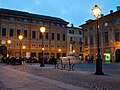 Scrolling of Piazza Dellepiane to Novi Ligure.
-
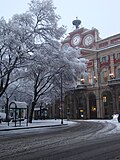 Winter slide Alessandria.
-
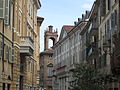 Scrolling Casale Monferrato.
-
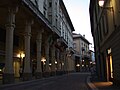 Scrolling Tortona.
-
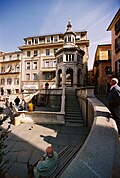 The "Bollent" of Acqui Terme.
-
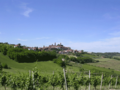 Collines of the Monferrato
-
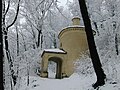 Sacred Mount of Crea UNESCO
-
Infrastructure and transport
Roads · Railways · AirportsExplore this chapter
Roads
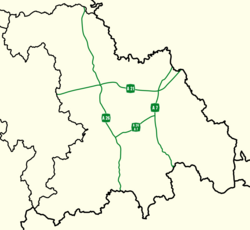
The province is run by 4 motorway routes (3 highways and 1 branch):
 A21 Turin - Brescia;
 A26 Genoa - Gravellona Toce (VB);
 A26/A7 Predosa-Bettole branch (AL);
 A7 Milano-Genova;
Railways
- Turin – Genoa;
- branch railway of the Giovi;
- Alessandria – Cavallermaggiore;
- Alessandria – Ovada;
- Alessandria – Pavia;
- Alessandria – Saint Joseph of Cairo;
- Alessandria – Piacenza;
- Asti – Genoa;
- Chestnuts – Asti – Mortar;
- Chivasso-Alessandria;
- Tortona – Novi Ligure.
Airports
In the province there are three small airports for tourist use, locati in Alessandria, Casale Monferrato and Novi Ligure.
Administration
Presidents of the Province · TwinningExplore this chapter
Presidents of the Province
Twinning
 Province of Pistoia, since 2003
Notes
Explore this chapter
- ^ Monthly demographic balance for the year 2026 (provisional data), up demo.istat.it, ISTAT.
- ^ Ambiti province of Alessandria
- ^ Archeo Piemonte (text), pp. 302-303.
- ^ Archeo Piemonte (tables), tab. CXVI.
- ^ Celtic toponimi of Italy
- ^ Law 11 January 1880, n. 5248, regarding "Law detaching the municipality of Pareto in the province of Genoa, from the mandate of Dego, and aggregates it to the sending of Spigno Monferrato (Alessandria)."
- ^ Peroration of the "Compagna" to S. E. Benito Mussolini for the annexation of the Sendments of Gavi and Ottone to the Province of Genoa on the website of Franco Bampi
- ^ Regio Decreto Law 1 April 1935, n. 297
- ^ Demographic and administrative issues in the Genoese overseas pp. 3-4, Pietro Barozzi on Liguria, Year XI (2009), number 12, Imperia, December 2009.
- ^ Alessandria (province), up Central State Archive. Retrieved 5 June 2023.
- ^ Provinces Piemonte, up rbvex.it. Retrieved 5 June 2023.
- ^ Presidency of the Republic, Province of Alessandria, Gold Medal to Military Valor, up quirinale.it, 17 May 1996. Retrieved 22 November 2021 (filed on 20 November 2018).
- ^ General Secretariat of the Presidency of the Republic - Information Systems Service, The honors of the Italian Republic, up quirinale.it. Retrieved 20 November 2018.
- ^ Provincial Administration Alessandria Gold Medal to the Merits of the School of Culture and Art, up Presidency of the Republic, 2 June 1969. Retrieved 22 November 2021 (filed on 20 November 2018).
- ^ Official Journal of the Kingdom of Italy n. 130 of 3 June 1911, up gazzetta ufficiale.it, 3 June 1911, p. 1. Retrieved 9 October 2025.«Elenco delle ricompense conferred ai benemeriti on the occasion of the earthquake calabro-siculo of 28 December 1908 with Regi Decreti 7 e 21 July, 9 August, 23 September 1910; 23 February, 16 March, 27 May 1911.»
- ^ Fabio Foresti, Language profile of Emilia-Romagna, Laterza Editors, Bari, 2010, page. 120
- ^ Giacomo Devoto, Gabriella Giacomelli, The dialects of the regions of Italy, up archive.org, Sansoni University. Retrieved 7 March 2014.
- ^ Fabio Foresti, Emilian dialects Romagna, up treccani.it. Retrieved 12 February 2014.
- ^ Bernardino Biondelli, Essay on the Gallo-italic dialects, up archive.org. Retrieved 11 May 2014.
- ^ Fat C., Sobrero A. A. and Telmon T., Introduction to Italian dialectology, Laterza Editors, Rome-Bari, 2003, p. 57.
- ^ Piemonte - Valle d'Aosta, Istituto Geografico De Agostini for Selection from the Reader's Digest, Novara, 1998, p. 37.
- ^ Lorenzo Ferrarotti Dissemination and preservation of linguistic traits in some oriental Piedmont dialects, up academia.edu, Italian journal of dialectology. Retrieved 25 November 2020.
- ^ E. Allasino, C. Ferrier, S. Scamuzzi and T. Telmon, Languages Piemonte (PDF), up joenturapiemonteisa.net, Institute of Social Economic Research of Piemonte. Retrieved 20 November 2019.
- ^ Recipes and cuisine of Alessandria, up common.alessandria.it, Municipality of Alessandria. Retrieved 8 March 2014.
Bibliography
Explore this chapter
- AA.VV., Archeo Piemonte[interrupted link] (PDF), in Quaderni della Soprintendenza Archeologicca del Piemonte (text), vol. 13, Turin, Archaeological Superintendence of Piemonte, 1995, pp. 301-317. Retrieved 10 August 2022.
- AA.VV., Archeo Piemonte (PDF), in Quaderni della Soprintendenza Archeologicca del Piemonte (tables), vol. 13, Turin, Archaeological Superintendence of Piemonte, 1995, pp. 301-317. Retrieved 10 August 2022 (archived fromoriginal url on 10 August 2022).
Where to stay · Alessandria
Find stays on Booking.comContinue your journey