Atlas of Monferrato
San Sebastiano Curone: sights, history and trails
Alessandria
- Elevation
- 342 m above sea level
- Area
- 3.89 km²
- Demonym
- Sansebastia
- Patron saint
- San Sebastiano
A closer look
Discovering San Sebastiano Curone
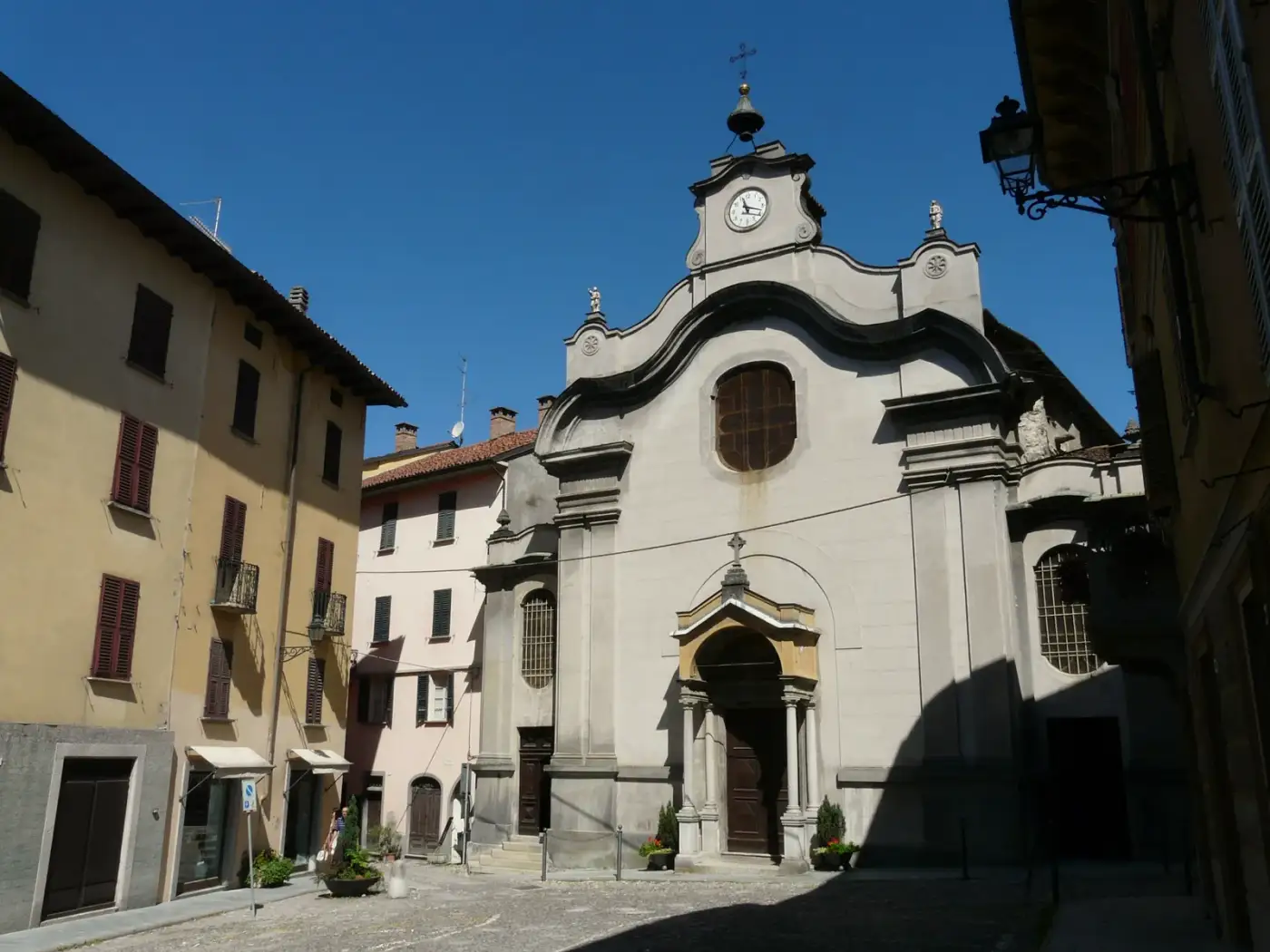
San Sebastiano Curone (San Bastian from Cròu in the dialect of the city) is an Italian municipality of 524 inhabitants[2] from the province of Alessandria, in Piemonte, located at the confluence of the Museglia and Curone streams. It was for centuries part of the Imperial fiefdoms and fundamental stage on the way of salt that connected the Ligurian Sea to the Padana Plain.
Felice Giani (1758-1823), a neoclassical painter who worked for Napoleon Bonaparte and Empress Catherine II of Russia and Piero Leddi (1930-2016), a prominent figure of post-war Milan painting.
History of San Sebastiano Curone
SymbolsExplore this chapter
In an ancient manuscript San Sebastiano Curone appears as "cella" dependent directly from the Abbey of San Colombano Bobbio.[5]
Land of the fief of Fabbrica Curone, was first dominated by Malaspina and then from the Fieschi of Genoa. In the sixteenth century, under the jurisdiction of the Doria, thanks to its position along the way of the salt, crossed by the mule trackers who transported goods from Genoa to Milan and Piacenza (salt, anchovies under salt) and vice versa (cereal), it became an important shopping center with warehouses, inns and osteries, manoscals and sensali. From the ecclesiastical point of view the village depended on the Parish Church of Montacuto.
Symbols
The coat of arms and gonfalone were granted with DPR on 28 November 1956.[6]
The gonfalone is a red drape.
What to see in San Sebastiano Curone
Hiking and hikingExplore this chapter
- The ancient village is characterized by narrow streets, characteristic squares and important buildings and dominated by the castle Giani, building in medieval forms, but renovated in the years '30 by Ulderico Giani.
- The Town Hall is located in a splendid Art Nouveau building by Lorenzo Bourges, called Palazzo Mazza Galanti.
- The parish church of San Sebastiano (1670) preserves a canvas attributed to the school of Genoese painter Domenico Fiasella, the Martyrdom of Saint Sebastian of the second half of the seventeenth century. attributed to the Genoese painter Giovanni Raffaele Badaracco and the marble altarpiece in gold polychrome wood entitled la Crucifixion, created in the late sixteenth century by the German master Stefano Vil.
- Also interesting are the two speakers, called "reds" and "whites", with facades in baroque style. Of particular value the wooden sculpture polychrome Madonna Addolorata by Anton Maria Maragliano in Chiesa della Trinità (oratorio dei Rossi). In the highest square, Piazza Solferino, the imposing house of Prince Doria and the little church of Graces.
- The portals and stone gates, the oldest of which date back to the 15th and 16th centuries, belong to the strand of Genoese rustic architecture and contribute to creating the evocative atmosphere of the village.
- Recently opened thePainter Giani Archive, located in Piazza Roma by the artist himself, and thePiero Leddi archive, located in the house of Prince Doria, enhance the work of the aforementioned artists with exhibitions and events.
- The SMS room Stella d'Italia, historic seat of the annual National Truffle Fair, theater dating back to the beginning of the twentieth century and recently restored.
- In front of the schools stands the monument in memory of the partisan Franco Anselmi.
Hiking and hiking
Many are the paths and paths equipped that allow you to fully enjoy the beauties of the territory by reliving the charm of the era of imperial fiefs and Vie del sale.
Society
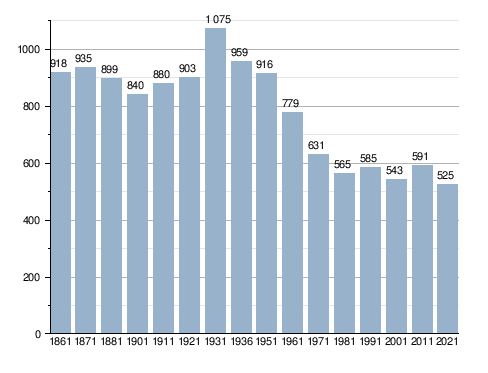
Demographic evolutionExplore this chapter
Demographic evolution
Inhabitants registered[7]
Culture
Education · EventsExplore this chapter
This country is part of the culturally homogeneous territory of Four Provinces (Alessandria, Genoa, Pavia, Piacenza), characterized by common habits and customs and by an important repertoire of music and dance very ancient. A prince instrument of this area is the Apennine piffer that accompanied by accordion, and once from the müsa (apennine clomuse), guides dances and animates parties.
Education
There is a school of childhood ("M. Bernardi"), a primary school ("F. Giani) and second grade, the latter dedicated to Franco Anselmi. All schools are part of the Institute including Viguzzolo.[8]
Events
The seat of the prestigious National Truffle Fair, which has been held since 1983, every year on the third and fourth Sunday in November.
The third weekend of September is held the National Fair "Artinfiera", an event dedicated to the valorization of Artistic Crafts, Traditional Crafts and Taste Craft.
Administration
Other administrative informationExplore this chapter
Below is a table relating to the administrations that have succeeded one another in this municipality.
| Period | First citizen | Match | Load | Notes | |
|---|---|---|---|---|---|
| June 28, 1980 | June 17, 1985 | Raul Ferrari | - | Mayor | [9] |
| June 17, 1985 | 7 June 1990 | Vincenzo Caprile | Italian Socialist Party | Mayor | [10] |
| 7 June 1990 | April 24, 1995 | Vincenzo Caprile | Italian Socialist Party | Mayor | [10] |
| April 24, 1995 | June 14, 1999 | Vincenzo Caprile | center | Mayor | [10] |
| June 14, 1999 | June 14, 2004 | Vincenzo Caprile | civic list | Mayor | [10] |
| June 14, 2004 | June 8, 2009 | Francesca Leddi | civic list | Mayor | [10] |
| June 8, 2009 | May 26, 2014 | Francesca Leddi | civic list | Mayor | [10] |
| May 26, 2014 | May 27, 2019 | Vincenzo Caprile | Civic list The bell tower | Mayor | [10] |
| May 27, 2019 | June 9, 2024 | Vincenzo Caprile | List of people Campanile | Mayor | [10] |
| June 9, 2024 | in office | Vincenzo Caprile | List of people Campanile | Mayor | [10] |
Other administrative information
The commune was part of the Community Montana Valli Curone Grue and Ossona, of which it was the capital.
Image gallery
Explore this chapter
-
 Palazzo Mazza Galanti
-
 Palazzo Pollini
-
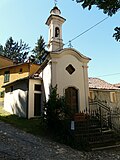 The Church of the Graces
-
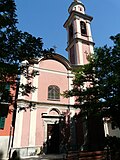 The Oratory of the Assumption
Notes
Explore this chapter
- ^ Municipality of San Sebastiano Curone - Statute.
- ^ to b Monthly demographic balance for the year 2026 (provisional data), up demo.istat.it, ISTAT.
- ^ Seismic classification (XLS), up risks.protezionecivile.gov.it.
- ^ Table of degrees/day of Italian Municipalities grouped by Region and Province (PDF), in Law 26 August 1993, n. 412, annex A, National Agency for New Technologies, Energy and Sustainable Economic Development, 1 March 2011, p. 151. URL consulted on 25 April 2012 (archived fromoriginal url on 1 January 2017).
- ^ San Sebastiano Curone, up VIVI TORTONA and surroundings - Information and reception of the Territory (I.A.T.). Retrieved 1 November 2013 (archived fromoriginal url on 2 November 2013).
- ^ San Sebastiano Curone, up Central State Archive.
- ^ Data taken from:
- Resident population of the municipalities. Censuses from 1861 to 1991 (PDF), up ebiblio.istat.it, ISTAT.
- Resident population - Time series, up exploredati.istat.it.
Please note: 2021 data refers to permanent census data as of December 31 of that year.
- ^ Comprehensive Institute of Viguzzolo, up understanding viguzzolo.edu. Retrieved 5 August 2024.
- ^ Almost all elect the juntas in the dovenaise, in Seven Days in Tortona, 5 July 1980, p. 7.
- ^ to b c d And f g h the http://amministratori.interno.it/
Where to stay · San Sebastiano Curone
Find stays on Booking.comStories, places and people
More about San Sebastiano Curone and the surrounding area
Follow a thread of history and see where it leads.
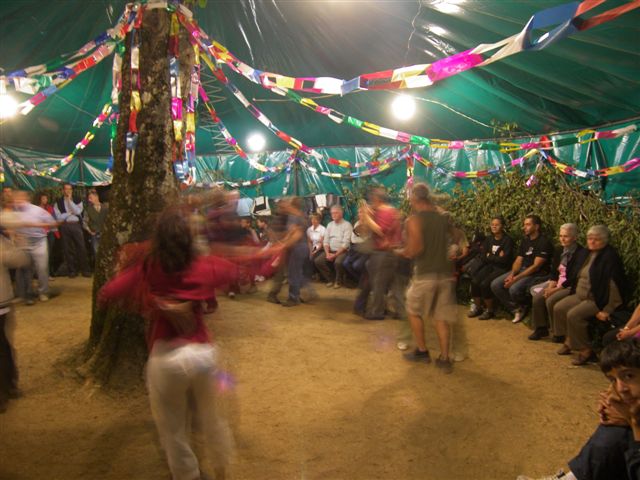 Dani4P di Wikipedia in italiano · CC BY-SA 3.0
Four Provinces
The Four Provinces are an Italian historical-geographical region. The territory is located astride the Ligurian Apennines, and is divided between four provinces belonging to four different regions. Despite the administrative fragmentation, the region has some common historical and cultural characteristics.
Read the story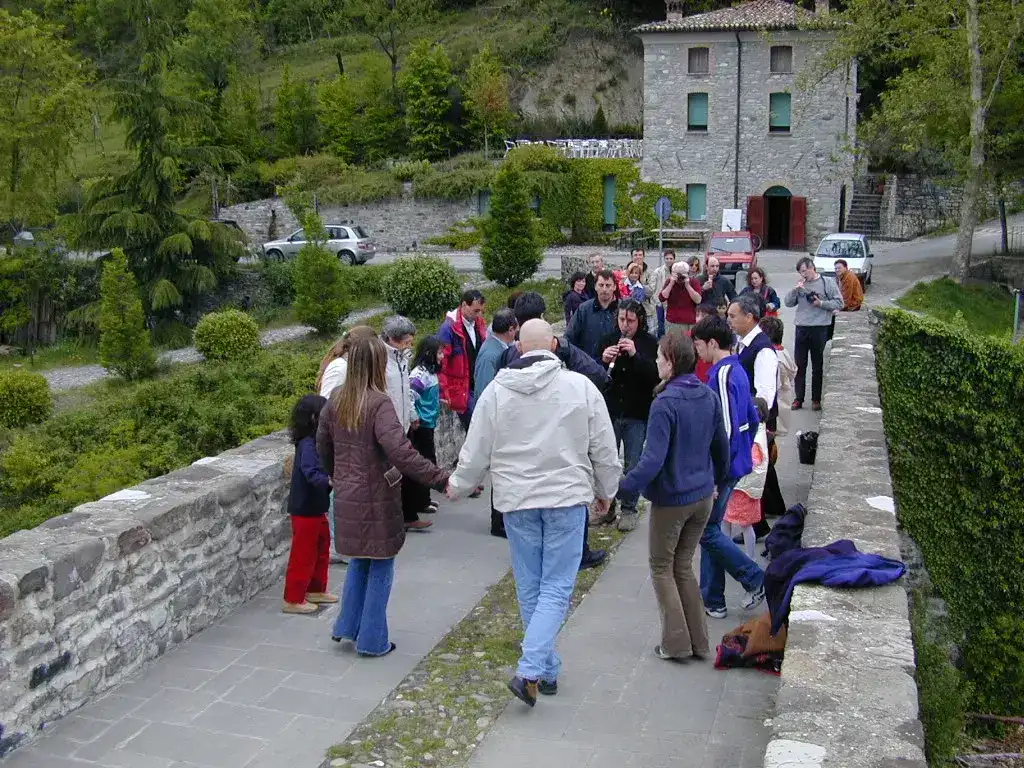 L'utente che ha caricato in origine il file è stato Dani4P di Wikipedia in italiano · CC BY-SA 3.0
Dances of the Four Provinces
The dances of the Four Provinces are a repertoire of dances spread over a homogeneous cultural area that includes the mountain areas of the provinces of Genoa , in Liguria (high Trebbia valley, high Scrivia valley , val d'Aveto and val Fontanabuona ), Alessandria , in Piemonte (Val Borbera e val Curone ), Pavia bbia, in Lombardia (Val Staffora ) and Piacenza , in Emilia-Romagna (
Read the storyThe area, step by step
Trails and routes in San Sebastiano Curone

Asti, Alessandria and surroundings