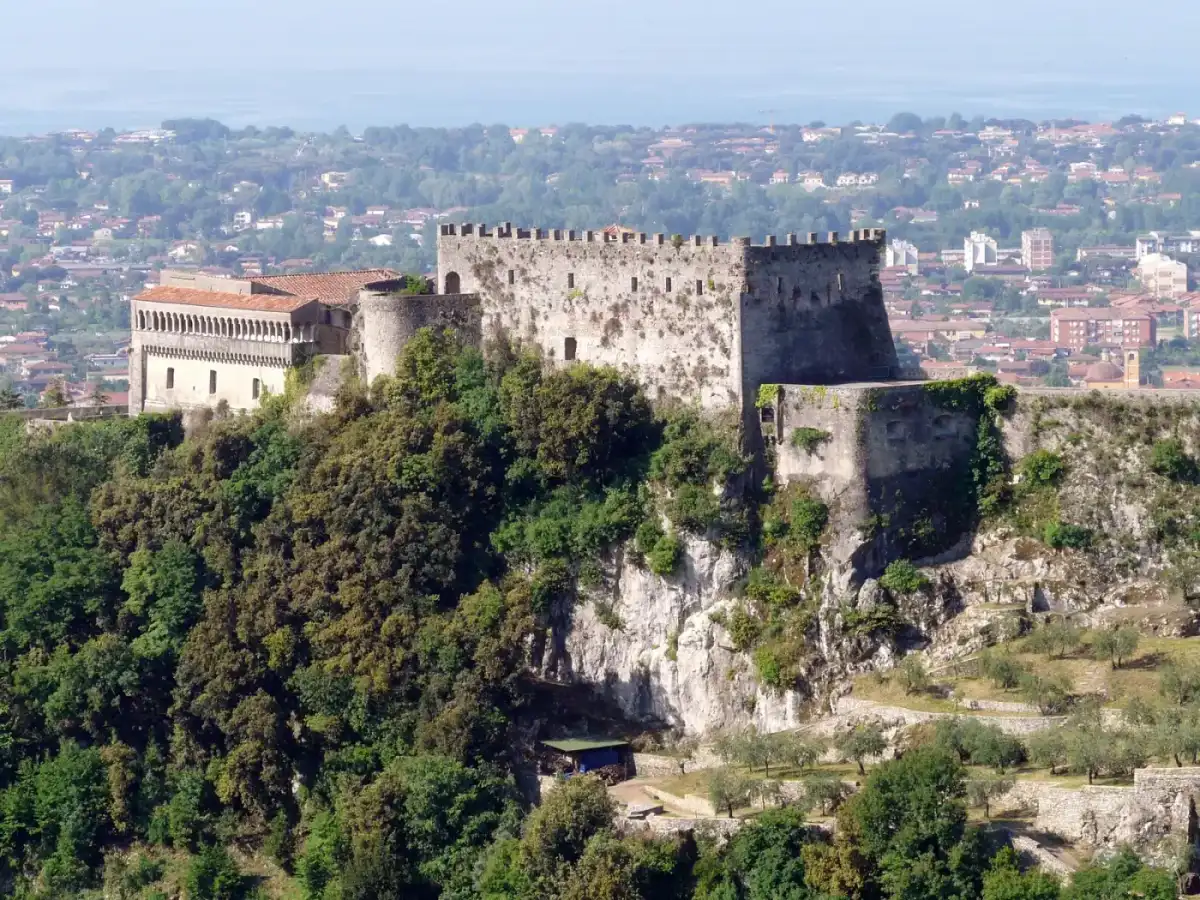
A closer look
Malaspina: at a glance
shouts the signs and shouts the contrada,
so that he knows who was not there yet;
and I swear to you, I go upstairs,
that your people on the moon do not rub
of the value of the bag and of the sword."
(Divine Comedy, Purg., VIII, vv. 124-129)
THE Malaspina are a noble Italian family of Lombard origin, descended from Obertenghi of the line of the Marquises of Massa and Counts of Luni, who ruled, beginning from the thirteenth-nineteenth century, the many fiefs from 1473 to 1553 were the rulers of Massa and Carrara, followed by their descendants for female line (Cybo-Malaspina) until the entrance of the Duchy of Massa and Carrara in 1790 as part of the domains of Austria-Este, through Maria Beatrice d'Este, daughter and heir of the last duchess Cybo-Malaspina, Maria Teresa. Maria Beatrice retained the sovereign titles of the duchy (both with the Napoleonic intermezzo), and therefore the legal distinction of it with respect to other Extended States, until his death in 1829.[2]. Another important fiefdom was the Marquisate of Fosdinovo, governed by the Malaspina family and existing until 1797.
History
Legendary · Historical origin and role of the familyExplore this chapter
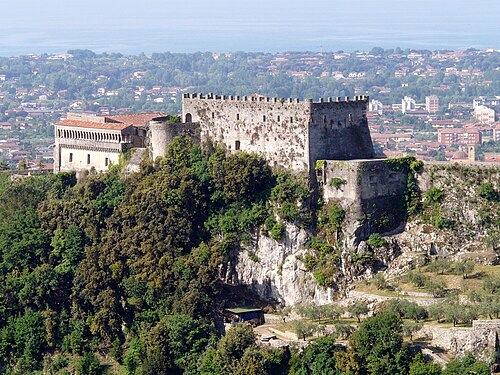
Legendary
On the origins of the surname there are several legends: some trace them even back to the times of Anco Marzio (as shown by frescoes painted in the rooms of the castle of Fosdinovo by Gaetano Bianchi in 1882), some think of a legendary episode of killing an enemy, the Frank Merovingian king Teodeberto I, in about 548, through a large spine, presumably descended from the Romanesque noble Accino Marzio gens Marcia, at the time of Justinian's reconquest and the Gothic-Byzantine war; the story, according to which the young Accino (or Alcino), son of Ilduino, Duke of Milan, avenged his father's death by stabbing Teodeberto in his sleep (who shouted "ah, mala spina!") is told on five sandstone panels on the entrance portal of the Malaspina palace in Godiasco and in the fresco in Fosdinovo.[3][4] Others link them to the probable disbelievable conduct by Alberto said the Malaspina (12th century) or some relative.[5]
Historical origin and role of the family
The Malaspina dynasty came from that Lombard obertenga, whose initiator was Oberto I, appointed count of Luni in 945, marquis of Genoa (by the king of Italy Berengar II, during the empire of Otto the Great) in 951 and, finally, count palatine in 953.[6]
He had two sons, Oberto II, who inherited from his father the title of Count of Luni, and Adalbert I, whose descendants will give life to the families of Pallavicino and the Cavalcabò.[6]
This was the offspring of Oberto II: Berta, wife of Arduino king of Italy; Ugo, count of Milan; Alberto Azzo I, Count of Luni, whose posterity will give life to the Este of Brunswick and Hanover; and finally Oberto Obizzo I, progenitor of the prosapia of Malaspina.[6]
In 1004 Oberto Obizzo I, he fought with the brother-in-law King Arduino against the Bishops-Contes of Luni: it was only the first conflict that the family had with the rulers of the Roman founding town. Son of Oberto Obizzo I was Alberto I.[6]
The son of Alberto I was Oberto Obizzo II (?-1090), father of Albert II (?-1140), the first to be called Malaspina (and for this reason considered the true head of the family).[6]
Alberto Malaspina expanded his family possessions from the Apennines near Lunigiana and entered antagonism with Genoa and the bishops of Luni.
In 1124, in the peace treaty of Lucca, it refers to divisions of goods that involved the descendants of Oberto who, over time, will give life to several and famous European noble families: the primogenital line of the Marquises of Massa and Corsica, Brunswick, Estensi, Pallavicino and Malaspina.[6]
Alberto's son, Marquis Obizzo I Malaspina (?-1185), fought first against Federico Barbarossa in support of the rebels, but then, when the emperor took over, supported him and supported him in the battle against Milan (1157). He rewarded him by investing him with the domains of Liguria, Lunigiana, Lombardy and Emilia.
In 1176, however, Obizzo, after escorting the Barbarossa to Pavia, trained in surprise with the Lombard League and attacked the ruler. Also for this double game, the Frederick was defeated in the battle of Legnano. In the peace of Constance, Obizzo was forgiven by Federico, who confirmed his possessions. The two last events (the battle of Legnano and the peace of Constance) are represented in the paintings preserved in the hall of the castle of Fosdinovo, realized by Gaetano Bianchi at the end of the nineteenth century.[7]
Obizzo I had two sons: Obizzo II Malaspina (also known as Obizzone) and Moroello I Malaspina.[6] The descendants of the first son will be called Malaspina of Spine Secco, those of the second one will be called Malaspina of Spine Fiorito (1221).[6]
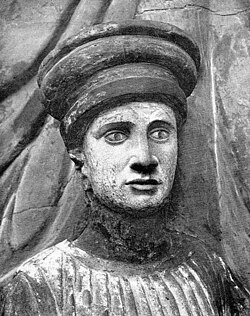
The son of Obizzone was Corrado I Malaspina (who Dante called "the ancient"), the first true exponent of the Malaspina of Spino Secco, who obtained all possessions to the right of the Magra plus the territory of Villafranca, which stood on the left of the river. From him they descended: Manfredi, Moroello di Mulazzo, Federico di Villafranca and Alberto.[6] From Manfredi was born Moroello "Vapor di Valdimagra", a friend of Dante Alighieri; from Moroello di Mulazzo, Franceschino Malaspina was born, who took part in the wars between Guelphs and Ghibellines and hosted several times the Sommo Poeta during his exile in Lunigiana, appointing him his attorney and other Malaspina (including some of the other branch) to the bishop of peace1306Federico di Villafranca was the parent of Obizzino and the famous Corrado Malaspina il Giovane, to whom Dante addressed himself in the VIII Canto del Purgatorio for gratitude towards his family.[6]
The descendant of Moroello I Malaspina was William, whose son was Obizzino, the true headmaster of the Malaspina of Spino Fiorito who received all territories on the left of the Magra.[6] Married with Catherine Cattaneo, she had three heirs: Bernabò, Isnardo and Alberto. Isnardo married Cubina d'Este, who gave birth to Gabriele I and Azzolino, who in turn created three sons; Spinetta Malaspina, called Il Grande, who acquired in 1340 the fief of Fosdinovo without leaving legitimate offspring; Isnardo; finally, Azzolino, whose successors will assume the title of Marquises of Fosdinovo (1355).[6]
The Malaspina now supported the Ghibellines now the Guelphs. As belonging to the Guelph faction Obizzino took part in the struggles of the Lombards against the Hohenstaufen. With Moroello dei Malaspina di Giovagallo he was the head of the Tuscan guelphs who defended Florence against Henry VII. The Tuscan Ghibelline faction in defense of the emperor was led by another exponent of the house, Spinetta Malaspina said the Great.[8]
It also had a large and compact lordship in the north of Genoa (area of Four provinces), in the valleys of the Trebbia and Staffora rivers. Both lordships, that of Lunigiana and that north of Genoa (called I'm sorry.), soon fell apart due to the adoption of Lombard law which provided for the division of property (and also fiefdoms) among all male children.
Some members of the Malaspina ruled a part of Torres' judgement in the 13th and 14th centuries, but, above all, from the 15th to the 18th century, the branch of Cybo-Malaspina governed the independent marquisate of Massa and principality of Carrara (then duchy of Massa and Carrara). The Sardinian possessions of the Malaspina were: the castle of Serravalle (Bosa) with the curators of Planargia and Costa de Addes; the castle of Osilo with the curatories of Montes, Figulinas and Coros.[9]
The family members had the title principles of San Colombano.[10]
Origins of the house
Essential genealogyExplore this chapter
The Malaspina, as well as the Estensi and Pallavicino, were a trade mark branch descended from the family of Obertenghi[11], whose founder was Oberto I (Otbert. or Odebertus), which was around the middle of the 10th century Count palatine (count of the Sacred Palace of Pavia and highest judicial authority in the kingdom), and from 951 marquis of Milan and count of Luni[11] and the brand he said Obertenga, in eastern Liguria, including the committees of Milan, Genoa, Tortona, Bobbio, Luni and surrounding areas[12].
This wide territory was reduced and fragmented, both for the hereditary divisions (not being in force the institute of the mostascato), and for sightings with other families (Fieschi, Spinola, Doria, Pallavicino, Landi and others), but also for the pressure of the common nascents (Milan, Genoa, Piacenza, Tortona, Pavia e Bobbio). The progressive division of the lands among a growing number of heirs led to a division of the domains into increasingly smaller fiefdoms, as for a long time, until the gradual adoption of the institution of primogeniture in the sixteenth century, the Malaspinas continued to divide the titles and feudal possessions among all the male children.
From Oberto I, through the successive descendants of Oberto II, Oberto Obizzo I, Alberto I, Oberto Obizzo II, came to Albert or Adalberto II (death in 1140) said Malaspina, founder of the family.
The son Observation I ("the great") (died in 1185) had his fiefdoms confirmed by Emperor Frederick I in 1164 and was named imperial vassal: they already held the two historical groups: part of Liguria (Tigullio, Cinque Terre and Levanto sul mare, lost due to acquisitions by Genoa and the Fieschi), with Lunigiana and Garfagnana and the area of the Trebbia valleys (up to Torriglia), Val d'Aveto (up to Santo Stefano d'Aveto) and Staffora (Oltrepò); and in what was then called Lombardy (Val Bormida and Oltregiogo).[13]
Of his various heirs in 1220 were the only Corrado and Obizzino, confirmed by the emperor in their fiefs, indeed somewhat reduced for the cessions made especially in Piacenza. In 1221 they divided their lords: Corrado had Lunigiana west of the Magra and Trebbia valley in Emilia, giving rise to the branch of the Spino Secco; Obizzino had Lunigiana east of the Magra and the Staffora valley in Lombardy, opening the dinastic line of Spino Fiorito.
Essential genealogy
- Oberto I, head of the Obertenghi
- Adalberto I, chief of Pallavicino, the Cavalcabò and the Marquis Massa-Parodi, Massa-Corsica, by Gavi
- Oberto II
- Alberto Azzo I
- Alberto Azzo II, I marquise d'Este
- Guelph I, chief of the Welfen and then of the House of Hanover
- Folco I, head of the Italian House of Este
- Alberto Azzo II, I marquise d'Este
- Oberto Obizzo I
- Alberto I
- Observation II
- Alberto said Malaspina, whose nickname would later define the family
- Observation
- Obizzone
- Corrado I, head of the branch of the Spino Secco
- Morello
- William ( - 1220)
- Opizzino, capostipite of the branch of the Spino Fiorito[6]
- William ( - 1220)
- Obizzone
- Observation
- Alberto said Malaspina, whose nickname would later define the family
- Observation II
- Alberto I
- Alberto Azzo I
Secco Spine Line
Malaspina di Mulazzo · Castevoli Malaspina · Malaspina di GiovagalloExplore this chapter
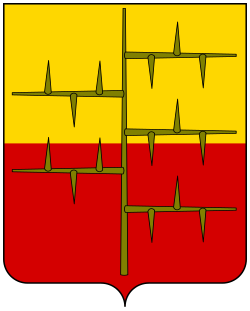
("Gold and red truncated, with a dry spin, natural, crossing.")
From the sons of Capostipite Corrado, remembered by Dante Alighieri as the Old, four further branches were derived (division carried out in 1266).
Malaspina di Mulazzo
Original from the Moro (died in 1284), who in addition to the castle of Mulazzo in Lunigiana, the main fortress of the Spino Secco line, owned fiefdoms in Val Trebbia around Ottone, and holdings in the family's domains in Sardinia.
The first-born branch was always the owner of the marquisate of Mulazzo until the abolition of feudalism, and was extinct (1810) with Marquis Alessandro Malaspina, famous politician and navigator.
The marquisate, ruler from 1266 to 1797 and imperial fief since 1164, extended with various acquisitions also on Pozzo, Montereggio, Montarese, Castagnetoli (from 1746), Calice, Veppo and Madrignano (the latter three last from 1710 until 1772 were administered by the minor line, when for financial difficulties they were sold to the Grand Duke of Tuscany).
In the 16th century, the branches of Madrignano (1523-1634) and Montereggio (1523-1646) were temporarily detached and the fief of Mulazzo from 1473 was ruled by alternate years until 1776 by the "Malaspina del Castello" and "Malaspina del Palazzo". The men's direct line was extinct with the famous explorer Alessandro Malaspina.[14]
His rulers were the marquises:
- Moroello from 1355 had the imperial investment of the fief
- Antonio (1365-1406)
- Azzone -1473
- Christopher -1511
- Azzone II
- Gian Paolo -1517
and Gian Gaspare -1531 (The Palace) - Margherita Malaspina of Lusuolo
- Moroello II -1573 - Caterina Malaspina di Gragnola
and Gian Cristoforo -1574 - Nicola Vivaldi
- Francesco Antonio -1574 - Mattea Malaspina di Podenzana
- Giampaolo II -1584
and Gian Gaspare II -1584
- Leonardo - 1605
and Anton Maria -1600 - Euridice Malaspina di Castevoli
- Gian Vincenzo - 1623
- Ottavio -1646
and Gian Cristoforo II -1643 - Lucrezia Rinaldi
- Moroello III -1657 - Caterina Malaspina di Mulazzo
- Azzo Giacinto -1674 - Pannina Fogliani d'Aragona
and Corrado -1676
- Carlo Maria -1705 - Luigia Malaspina di Podenzana
and Obizzo -1691 - Maria Felicia Cambi
- Azzo Giacinto II -1746 - Lucrezia Avogadro
and Gian Cristoforo III -1763 - Dejanira Malaspina di Podenzana
- Carlo Moroello -1774 - Caterina Meli Lupi di Soragna
and Caesar -1776
- Jacinto III -1797
(and Louis -1797, de jure). Among the collateral lines derived from this one by Mulazzo are:
- Malaspina of Cariseto and Godano, from Carise[15] A hamlet of Cerignale in Val Trebbia, which originated from Antonio (who died in 1477), the son of Antonio di Mulazzo, and became extinct within two generations, following a popular uprising in Godano where the son of Antonio II, Alexander died. After the insurrection the territory of Godano passed to the Republic of Genoa. The Cariset passed to the Fieschi in 1540 and then to the Doria.
- Malaspina di Santo Stefano, from Santo Stefano d'Aveto, in a tributary valley of Val Trebbia, originated from Gabbaths (died 1475), son of Antonio di Mulazzo; already in 1495 they sold the marquisate of Santo Stefano to the Fieschi, maintaining the fiefdoms of Godano and Bolano (both in Val di Vara, intermediate between Lunigiana and Val Trebbia), and became extinct in the 17th century, leaving their fiefdoms to the main line of Mulazzo.
- Malaspina of the Edifizi, from Edificio fraction of Ferriere in Val Nure, lords of Torrio (Val d'Aveto) and Noceto (Val Nure) 1423, originated from Peter, son of Ghisello I di Santo Stefano, and became extinct in 1624. He had residence in the castle of Gambaro near Edifizi and the communities of Ascona d'Aveto and Torrio.
- Malaspina di Casanova (from one Casanova probably in Liguria), they originated from Antonio, son (perhaps) of Barnabò di Mulazzo, and became extinct in the 18th century after selling the fiefdom to the Doria family in the 16th century.
- Malaspina di Croce (from Croce Fieschi in the Ligurian Apennines) who sold the fiefdom to the Fieschi in 1504.
- Factory Malaspina, from Factory fraction of Ottone (not to be confused with Fabbrica Curone of which a branch of the Malaspina of Varzi were marquisi), they originated from Moro, son of Bernabò or Galeazzo di Mulazzo, sold the fiefdom to the Fieschi in 1540, survived the end of feudalism and still exists today.
- Malaspina di Ottone, from Ottone in Val Trebbia, originated from John, son of Bernabò or Galeazzo di Mulazzo; they sold the fiefdom in 1540 to the Fieschi and became extinct at the beginning of the 19th century.
- Malaspina di Orezzoli, from Orezzoli, a hamlet of Ottone, originated from Galeazzo son of Giovanni di Ottone and branched out a lot; extinct in the 18th century in the main line, they still exist in various collateral lines. From one of them, resident in Bobbio, the lineage of Malaspina-Della Church, marquises of Volpedo and Carbonara.
- Frassi Malaspina, from Fraud fraction of Ottone, originated from John, son of Galeazzo di Orezzoli, and still exist in various lines. They sold the fiefdom in 1656 to the Doria family.
- Malaspina di Madrignano, independent line from 1355 with Azzone until 1631. The independent line was reconstituted from 1710 to 1772 with the consignors of Mulazzo (Palace line). Its sovereign marquises were:
- Azzone II, 1446
- Bonifazio (1531-1555)
- Stephen -1592
- Bonifazio II -1596 - Diana da Passano
- Stephen II -1600.
- Giulio Cesare -1631
- Rinaldo di Suvero
- Moroello di Mulazzo
- Hannibal, 1652
- Gian Cristoforo II (1710-1763), consignor of Mulazzo
- Caesar -1772, consignor of Mulazzo
Castevoli Malaspina
Autonomous line from the 15th century constituted with Azzone of Antonio di Mulazzo, also owned the fiefs of Stadomelli, Cavanella and the joint government of Villafranca. The main exponents were Thomas II (-1603) and his son Francis (-1649). The direct line was extinct in 1759 and with imperial consent the fief was unified with that of Villafranca (1796). From 1794, revolts began against the authoritarian government of Marquis Thomas III. From 1757 a part of the fief was acquired by the line of Mulazzo.
Your sovereign marquises:
- Azzone 1465
- Jesus Christ.
- Thomas -1547
- Giovan Battista, consignor of Villafranca (1547-1561)
- Thomas II -1603
- Francesco -1640
- Thomas II -1649
- Niccolò -1676
- Clarice -1678.
- (Alfonso 1561-1584; line of Stadoms)
- (Alexander -1604)
- (Marzio -1616)
- (Scipione -1656)
- Alfonso III (1678-1722), heir to Castiles
- Scipione II -1744.
- Opizzone Paolo -1759
- Thomas III -1797, heir of Villafranca.
Malaspina di Giovagallo
Original from the Manfred, son of Corrado the Old towards 1260. They owned the castle of Giovagallo (Tresana) with the surrounding area. They were extinguished in 1365, and their feuds passed to the line of Villafranca (see below), while much of the marquisate was absorbed by that of Tresana.
Malaspina di Villafranca
Original from the Federico, son of Corrado the ancient, and they had the castle of Malnido in Villafranca in Lunigiana with the nearby lands. The subsequent hereditary divisions, the wars and the loss of numerous territories in the nearby valleys of Vara, Aulella and Taverone, led the dynastic line to poverty and decadence. From the 16th century they placed themselves under the protection (accomandigia) of Modena and for their loyalty, with a decree of 3 May 1726 Duke Rinaldo d'Este of Modena granted them the name "Malaspina Estensi". The statelet extended over Garbugliaga, Beverino, Villa, Rocchetta di Vara, Virgoletta castle, and Malnido castle in Villafranca, joint headquarters with the consignors of the Castevoli line.
The sovereign marquises were
- Federico -1367
- Spinetta -1402
- Federico I -1406
- Gabriele -1437
- Giovanni Spinetta -1469
- Thomas - 1521
- Bartholomew -1549
- Frederick II - 1580
- Alfonso -1601 and Scipione -1656
- Thomas and Frederick III -1603
- Bartholomew II -1628
- Hannibal - 1652
- Niccolò - 1697
- John -1715
- Annibale II Malaspina Estense -1721
- John II Estense -1725
- Azzo Federico II Estense -1726
- 3rd Estense - 1766
- Louis
- Federico IV Estense -1786 and Ludovico Giovanni III -1796.
- Thomas III 1797 (line of Castiles).
They branched out a lot, surviving at the end of feudalism, and still exist in various lines. Some of them have had their own lordships and a separate identity. They remember:
- Cremolino Malaspina, from Cremolino in the Monferrato, originated from Thomas I (1361), son of Federico di Villafranca and Agnese del Bosco, of Aleramic lineage, from which his fiefdoms came (also including the lordship over the city of Ovada); they became extinct in the 16th century.
- Malaspina di Lusuolo, from Lusuolo fraction of Mulazzo in Lunigiana, originated from Azzone (died in 1364), son of Opizzino di Villafranca, also inherited the fiefdoms of the now extinct Malaspina di Giovagallo (see above). Moroello, son of Opizzino, was constable of Gian Galeazzo Visconti's cavalry[16]. They became extinct in the 17th century after selling their fiefdoms to the Grand Duke of Tuscany
- Podenzana Malaspina, from Podenzana in Lunigiana, descended from Leonardo, son of Gian Spinetta di Lusuolo in 1536. During the War of the Spanish Succession, Alessandro became imperial governor of Aulla, dispossessing the Genoese Centuriones, owners since 1543; having refused to swear loyalty to the king of Spain, Alexander saw the mighty fortress demolished in 1706, however he definitively took possession of it in 1710 as marquis of Aulla, purchasing the fiefdom from the emperor for 30,000 florins. In 1794 they inherited a part of Licciana; they became extinct at the end of the 18th century, simultaneously with the abolition of feudalism. Besides Podenzana and Aulla they also owned Montedivalli, Amola and a quarter of the Monti fiefdom. They were sovereign marquises:
- Leonardo (1535-1565)
- Alexander -1587
- Leonardo II - 1637.
- Francesco -1676
- Alexander II -1719 and Nicholas 1714-1769
- Francis II Maria -1754
- Alexander III -1789
- Alfonso -1797.
- Podenzana Malaspina, from Podenzana in Lunigiana, descended from Leonardo, son of Gian Spinetta di Lusuolo in 1536. During the War of the Spanish Succession, Alessandro became imperial governor of Aulla, dispossessing the Genoese Centuriones, owners since 1543; having refused to swear loyalty to the king of Spain, Alexander saw the mighty fortress demolished in 1706, however he definitively took possession of it in 1710 as marquis of Aulla, purchasing the fiefdom from the emperor for 30,000 florins. In 1794 they inherited a part of Licciana; they became extinct at the end of the 18th century, simultaneously with the abolition of feudalism. Besides Podenzana and Aulla they also owned Montedivalli, Amola and a quarter of the Monti fiefdom. They were sovereign marquises:
- Tresana Malaspina, from Tresana in Lunigiana, formerly a fiefdom of the Malaspina family of Giovagallo, originated from Horizonte, son of Giovanni Jacopo di Lusuolo, and became extinct with Guglielmo in 1652.
- Licciana Malaspina, from Licciana Nardi in Lunigiana, deriving from Gian Spinetta, son of Giovanni Spinetta of Villafranca and became an independent line from 1535; they had the fiefdom of Licciana and became extinct at the end of the 18th century, shortly before the abolition of feudalism. The marquisate also extended its sovereignty over Panicale, Monti, Piancastelli, Solaro, Bigliolo, Catanasco, Mulesano, Amola. Ferdinand, in an attempt to place himself under the protection of Spain, was killed during a popular revolt in 1611. From 1778 he was placed under the Modenese protectorate and in 1783 the family line inherited part of the fiefdom of Bastia. After Ignazio the fiefdom passed to the Podenzana line (1795).
His sovereign marquises were:- Jacopo (1535-1580), in 1549 received the imperial investment
- Cornelius
- Alfonso -1600
- Ferdinando -1619
- Obizzo -1641
- Jacopo II -1669 - Bianca Maria Rangoni
- Obizzo II -1704 - Paoloa Cecchinelli
- Jacopo III Antonio -1746 - Beatrice Cavalca
- Francesco Maria -1749
- Cornelius -1778 - Maria Teresa Cybo Malaspina di Massa
- Ignazio -1794 - Margherita de Rossillon
- Amedea Gaspara - 1796. - Count Maximilian of Montecuccoli
- Alfonso -1797 (line of Podenzana and Aulla).
- Malaspina della Bastia, from Bastia, a hamlet of Licciana Nardi, originated from Fioramonte II, son of Gian Spinetta di Licciana (-1528) as an independent line from 1535. During the 17th century, the fief was exempted by Nestore's criminious events, a younger brother of Marquis Charles, whose arbitrators ended only with his murder during a violent popular revolt, despite the arbitral intervention of the Grand Duke of Tuscany. In 1704, the statecolor was under the Tuscan protectorate, receiving an auditor and a podestà appointed by the Florentine government. They became extinct in 1783, leaving the fief to the line of Ponte Bosio. The Marquise Anne, consort of the Marquis John, a beautiful woman, was sent to Versailles in an attempt to replace her as Louis XV's favorite at Pompadour, but returned to her fiefdom only with a modest pension granted by the king. Here are its sovereign marquises:
- Fioramonte II di Licciana -(1535-1574)
- Camillo -1612
- Corrado -1613
- Carlo -1622
- Camillo II -1629
- Hippolito -1641 - Taddea Malaspina
- Camillo III -1643
- Francesco -1671
- Serafino -1736 - Teresa Borri
- Antonio -1740
- John -1783. - Annetta Malaspina di Mulazzo
- Claudio -1797 (linea di Pontebose).
- Terrarossa Malaspina, from Terracotta, a hamlet of Licciana Nardi, originated from Fabrizio, son of Fioramonte of Bastia, who sold his fiefdom to the Grand Duke of Tuscany in 1617; they became extinct within two generations.
- Malaspina di Ponte Bosio, from Pontebose, a hamlet of Licciana Nardi, originated from Ludovico I, the abiased grandson of Fioramonte della Bastia and became a sovereign line since 1631, receiving the imperial investment in 1639; they inherited the fief of Bastia in 1783 and in 1794 part of that of Licciana; they survived at the end of feudalism but were extinguished in the nineteenth century. His sovereign marquises were:
- Ludovico - (1639-1659) - Taddea Malaspina
- Giulio II -1664
- Claudio -1662
- Ferdinando -1722
- Ludovico II Giulio -1748 - Tereesa Maffei
- Giulio III -1762 - Chiara Cusani
- Ferdinand II
- Claudio II -1797
- Julius IV -1797.
- Malaspina di Monti, from Mountains fraction of Licciana Nardi, originated from Moro (1535-1575), son of Gian Spinetta of Licciana and became extinct in two generations with Orazio (1575-1585).
- Malaspina di Suvero, from Survival, a hamlet of Rocchetta di Vara (in the province of La Spezia but on the border with Lunigiana), originated in 1535 from Rinaldo, son of Gian Spinetta II of Licciana; they inherited Monti, then sold in 1664 to the Podenzana line and survived the end of feudalism. They still exist today. Torquato (-1594) did a lot for his small state, encouraging philanthropic initiatives and establishing a "wheat mountain" to prevent famines. After the hereditary war between Rinaldo II and Spinetta of the line of Olivola (1627) the imperial fiefs enjoyed relative tranquility until the Spanish invasion of 1733 which destroyed the mighty castle. The sovereign marquises were:
- Rinaldo (1535-1563) - Lavinia Malaspina di Villafranca
- Torquato -1594 - Euridice Malaspina
- Rinaldo II -1639 - Maria del Carretto
- Pier Torquato II -1663 - Caterina della Seta di Pisa
- Francesco Antonio -1714 - Elisabetta Malaspina d'Olivola
- Torquatoire III -1736
- Caesar -1769
- Rinaldo III -1770
- Francesco Antonio II -1771
- Torquato IV -1798.
Malaspina of Pregòla
Original from the Alberto (died 1298), son of Conrad the Old. They had the fiefdom of Pregòla (fraction of Brallo di Pregola) with a vast territory on the left side of the Trebbia Valley (the river divided their fiefdoms from those of the Mulazzo branch), upstream of Bobbio. In 1304 Corradino Malaspina, lord of the fortress of Carana (Corte Brugnatella) (not included in Barbarossa's donation, but donated as a fief by the abbot of Bobbio Rainerio in exchange for the right to collect the toll on the Val Trebbia road) in agreement with Viscount Pallavicino and the Abbot of Bobbio Guido Take it. Bobbio and turned it into a lordship building the present castle; in 1341 the Visconti of Milan took possession of Bobbio and Corte Brugnatella, taking away his fortress from Carnation and destroying the Black Castle (from the color of the stones) but leaving the watchtower on the Bricco (805 m), after 1347, when Corradino died, the fief was given back to his sons, but in 1361 they had to cede it again to the Viscontis and then in 1436 it passed to the Dal Verme family who became Counts of Bobbio and Voghera; furthermore, the area of the ancient parish of was taken away from him San Cristoforo in the Charlemagne Valley, remaining only Decide who was always in the parish of San Cristoforo and giving it to the Malaspina of Pregòla. With a first division in 1347 the fiefs of Prato (fraction of Cantalupo Ligure, in Val Borbera, adjacent to Val Trebbia) and Corte Brugnatella, which had a short life. In the subsequent division of 1453 the four were determined neighborhoods of the Marquisate of Prato, each one infeuded to a distinct branch of the family. These branches were therefore:
- Vezimo Malaspina, from Vezimo Fraz. of Zerba in Val Trebbia, extinguished at the end of the 16th century.
- Pei and Island Malaspina, from Pei, hamlet of Zerba, e Island, a now uninhabited locality in the municipality of Brallo di Pregola, became extinct in the 17th century (but perhaps their descendants still exist among the Malaspinas of the area, whose genealogy is unknown).
- Malaspina of Alpe and Artana, from Alpes-Alpes fraction of Gorreto and Art. fraction of Ottone, became extinct in the 17th century.
- Malaspina of Pregòla, Campi e Zerba, from Zerba e Fields fraction of Otto, gave rise to the line that, buying most of the shares of the main fief, considered exclusively the title of Marchesi di Pregòla (remembered and honored always during the festival and the medieval parade in costume Bobbio held at the feast of San Colombano in November). With the Marquis Oliviero, they obtained in 1541 the investment as an imperial fief and remained so despite the harsh disputes with the Savoy until the end of feudalism in Italy (1797). The last Marquis owner of the sovereign feud was Baldassarre who had strong pressure from the court of Turin to renounce his feudal rights. For hereditary reasons the fief had become a condo with other branches of the family and with the Marquis Pallavicini di Cabella who, with Gerolamo, had usurped in 1660 portions pro quota of the Malaspinian fief. In 1782 Gian Galeazzo Malaspina Marquise of Santa Margherita, Antonio Giuseppe Malaspina Marquess of Orezzoli, heirs of Corrado Malaspina of Pregòla (whose widow Maria Teresa Farnese from the Pozzo since 1777 had become a pensioner of the Savoy) and Giovan Carlo Spinola Pallavicino, claim to the court of Vienna their feudal prerogatives against the anionist politics of the Savoy.[17] The direct line survived at the end of feudalism, and still remains a branch of the emigrated family in Greece and currently in the United States of America.[18]
Flower Spine Line
I. Varzi Malaspina · II. Verrucola and Fivizzano Malaspina · Fosdinovo MalaspinaExplore this chapter
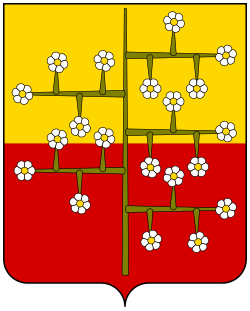
From three grandsons and a surviving son of the headmaster Obizzo Malaspina said Obizzino, due to the division implemented in 1275, four further lines originated.
I. Varzi Malaspina
They descended from Azzolino, grandson of Obizzino and son of Isnardo, who died before the division of 1275; Azzolino had in common with his brother Gabriele a third of the lords of the grandfather Obizzino, part in Lunigiana and part in Lombardy, and subsequently, according to his brother, he held for himself only fiefs lombardi, located in the Staffora valley around Varzi. The Marquisate of Varzi was divided between the three sons of Azzolino: the line of Isn't that right?, which owned Menconico, became extinct in the 15th century, while the other two survived:
- Factory Malaspina, from Fabbrica Curone in a valley adjacent to the Staffora valley, they descended from Observation son of Azzolino. They became extinct at the end of the 19th century after they became Sforza-Malaspina.
- Varzi Malaspina (firstborn line), became extinct in the 19th century after having branched out greatly and gradually lost control of the marquisate. Perhaps there are still descendants among the many Malaspinas of the Staffora valley, whose genealogy is unknown, coming from decayed branches. From them derived branches that acquired their own identity:
- Malaspina di Santa Margherita, from Santa Margherita, a hamlet of Santa Margherita di Staffora, originated from Christopher (died after 1420), became extinct in 1821.
- Malaspina di Casanova, from Casanova Staffora, a hamlet of Santa Margherita di Staffora, originated from Baldassarre son of Bernabò of Varzi, and became extinct in the 17th century. They were subdivided into a further line:
- Bagnaria Malaspina, from Bagnaria of which they had only the nominal title, originated from Bernabò son of Bernabò of Varzi, and became extinct in the 17th century.[19]
II. Verrucola and Fivizzano Malaspina
They descended from Gabriel, the nephew of Obizzino and the son of Isnardo,[20] who died before the division of 1275; Gabriel shared with his brother Azzolino a third of the lordships of his grandfather Obizzino, part in Lunigiana and part in Lombardy, and subsequently, according to his brother, he held for himself only fiefs in Lunigiana, consisting in the castle of the Verrucola near Fivizzano, and the surrounding areas in eastern Lunigiana. Of the three sons of Gabriele, Isnardo left a descendant that was extinct in the fifteenth century, leaving Fivizzano to the Republic of Florence of which they were allies, and thus determining the Florentine presence first and then Tuscany in Lunigiana (the future Lunigiana Granducale opposed to the Malaspinian one and then Modena); Spinetta Malaspina and took the fief of Fosdinovo, after which he had no children that could happen to him, he designated as heirs the sons of Azzolino: to these therefore he touched Fosdinovo and they were to give rise to the line of Malaspina di Fosdinovo, the most important of the house, imperial vicars in Italy, from which Antonio Alberico I Malaspina obtained, 1441.[21]
Fosdinovo Malaspina
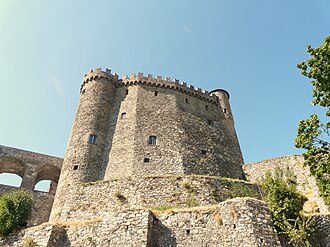
They came down from Galeotto (died 1367), son of Azzolino and grandson of Spinetta Malaspina the great. The marquisate as autonomous sovereignty was established in 1367 and extended on Viano, Castel dell'Aquila, Gragnola (1646), Cortila, Pulica, Giucano, Ponzanello, Tendola, Marciaso and Posterla, Caniparola. Gabriel son of Antonio Alberico I of Fosdinovo, he ruled the greedy fief of Fosdinovo, leaving to his brothers other possessions.[22]
In 1529 the Marquis of Fosdinovo was recognized the hereditary office of imperial vicar for the Italian fiefs and in 1666 the emperor granted him the right of mint. The last Marquis sovereign, Carlo Emanuele, proved to be favorable for the abolition of imperial feuds in Italy, adhering to the Napoleonic decree of 2 July 1797. His attempt to resume the marquisate in 1802 forced him to flee to Pisa, where he died without children in 1808. After the Cisalpina Republic, the marquisate was aggregated to the Duchy of Massa and Principality of Carrara in 1815 and then to the Duchy of Modena and Reggio, rectified by descendants in female via Cybo-Malaspina.
The Torrigiani-Malaspina family (from the marriage of Filippo Torrigiani and Cristina Malaspina) is still owner of the phosdinovese castle, having bought it back at the end of the 19th century.
The sovereign marquises were:
- Galeotto (1361-1367) - Argentina Grimaldi
- Gabriele I (1367-1390)
- Spinetta II (1393-1398) - Margherita Barbiano di Cunio
- Antonio Alberico I (1398-1445) - Giovanna Malaspina di Fivizzano
- Lazzaro -1451 - Caterina Malaspina di Gragnola
- Giacomo I (1445-1467)- Taddea Pico di Scaldasole
- Gabriele II (1467-1508) - White Malaspina of Castel dell'Aquila
- Lorenzo (1508-1533) - Theodosia Malaspina di Castel dell'Aquila
con Galeotto II (1508-1523) - Zaffira Pio di Savoia
- Giuseppe (1533-1565) - Luigia Vittoria Doria
- Andrea (1565-1610) - Victory of Negro
- James II (1610-1663) - Maria Grimaldi della Rocca
- Pasquale (1663-1669) - Maria Maddalena Centurione
- Hippolito (1669-1671) - Cristina Pallavicino di Frabosa
- Carlo Francesco Agostino (1671-1722) - Anna Santinelli Aldobrandini
- Gabriele III (1722-1758) - Isabella Orsucci
- Charles II Emmanuel (1758-1797). - Eugenia Pinelli.
Malaspina di Massa e Carrara. Cybo-Malaspina
In the second half of the fifteenth century, in the line of the Malaspina di Fosdinovo a new branch was enuclear that gave rise to that statue formation which would become the Duchy of Massa and Carrara. In particular, in 1467 he was trained, among the sons of the late Duke of Fosdinovo, Antonio Alberico I, to an agreement for the division of inheritance, necessary since at the time, as already mentioned, between the Malaspina did not live the principle of primogeniture. According to this agreement, the oldest of his sons, James I, obtained Massa's possession and the relative trade mark title that his father had obtained in 1442, while his younger brother Gabriel II obtained the avite of Fosdinovo. In 1473 Giacomo also acquired the Lordship of Carrara, Moneta and Avenza, thus giving life to the "Marchesato di Massa e Signoria di Carrara", that is to say to the first nucleus of the future States of Massa and Carrara.[23]
The new double title was handed down to his son Antonio Alberico II, who died in 1519 without male heirs, leaving on the throne the twenty-year-old daughter (and then a little widow), Ricciarda, even in a condition of dubious legal legitimacy.[24] In 1522 the new Marquis convolved second marriage with Count Lorenzo Cybo (who was also associated with the throne for some years); these were direct descendant of Pope Innocent VIII (John Battista Cybo), as born from the marriage between the legitimated son of these, Franceschetto Cybo, and Magdalene de' Medici, daughter of Lorenzo the Magnificent Lord of Florence.
Marriage was at the base of the new Cybo-Malaspina house[25] (started by Ricciarda's third son and heir, Alberico I, probably the natural son of his uncle Innocenzo Cybo), who would govern the states of Massa and Carrara, also acquiring the ducal dignity, until 1790. This was the year of the death of Maria Teresa Cybo-Malaspina, last of the lineage but also duchess consort of Modena, and as such mother of the last of the Este family, Maria Beatrice Ricciarda (who succeeded her on the throne of Massa and Carrara), and therefore ancestor of the Austria-Este family.
Other cadet branches of Fosdinovo Malaspina
- Malaspina di Scaldasole e Sannazzaro, from Scaldasole and Sannazzaro de' Burgondi, descended from Francesco (?-1484), son of Giacomo I (?-1481) of Massa and Carrara, who had been invested by the Duchess Bianca Maria Visconti of the fiefs of Scaldasole (1461), previously belonging to his wife Taddea Pico (daughter of Francesco III Pico della Mirandola), and of Sannazzaro (1466), bordering localities located in the Pavia area. Francesco managed to keep the two Lombard fiefdoms for himself and his children at the time of his ouster, by his brother Antonio Alberico II, from those of Massa and Carrara, in 1483. His descendants, however, kept their claims on the two largest Tuscan fiefdoms alive for a long time, especially since Antonio Alberico died leaving only daughters and therefore not entitled, according to the Salic law, to succeed. The fiefdom of Scaldasole was sold at the end of the 16th century, the second remained in the family until the abolition of feudalism.[26] They became extinct in 1835 with Luigi, a citizen of Pavia where he played a significant political and cultural role.
- Malaspina di Olivola, from Olivola fraction of Aulla, originated from Lazarus son of Giovanni Battista di Fosdinovo, and nephew of Gabriele who had taken over in the Marquisate of Olivola after the assassination of all heirs of the first line of Malaspina di Olivola (see below). They became extinct in the 19th century. The Marquisate also owned Pallerone (1572), Bibola, Bigliolo, Agnino, Quercia, Saracco and Vaccareccia. From 1569 he was subjected to Tuscan comandigy. The Marquis were as follows:
- Young Baptist 1485-1509 - Giovanna Rossi di S. Second reading
- Lazarus (1509-1544), in 1525 received the imperial investment
- Lazarus II -156 - Margherita Malaspina
- Spinetta II -1590 - Eleonora della Gherardesca
- Lazarus III -1630 - Theodora Malaspina di Licciana
- Spinetta III - 1635 - Mary Magdalena Dudley of Northumberland
- Spinetta IV -1655
- Giuseppe -1682
- Lazarus IV -1714 - Beatrice de Silva
- Giuseppe II Massimiliano - 1758 - Maria Teresa Malaspina di Fosdinovo
- Lazzaro V -1783 - Tommasa Falconi
- Carlo -1796.
- Malaspina di Verona, originated from Spinetta son of Antonio Alberico I of Fosdinovo, who gave up the fiefs but had great private property in Verona. They became nobles of Verona in 1406 and bought the title with imperial rescript on 13 April 1638, then confirmed with sovereign resolution on 7 January 1821. They became extinct in the 20th century.
- Malaspina di Gragnola, from Gragnola fraction of Fivizzano, descended from Leonardo, brother of Spinetta the Great; they became extinct in two generations with Leonardo II (-1419), and the title then passed to a branch of the marquises of Fosdinovo, which began with Lazzaro di Castel dell'Aquila, brother of Giacomo I of Massa and Carrara and Gabriele II of Fosdinovo, and with his son Leonardo.[27] After almost two centuries (1642), this line was reabsorbed by the main line of Fosdinovo (1644), after a quarrel with the Grand Duke of Tuscany who had been appointed heir to the fief by the last Marquis Alexander.[28] Overseas Marchesi:
- Lazarus I (1445-1451)
- Leonardo III - 1505 - Aurante Orsini
- James
- Galeotto -1544 - Isabella Maggi
- John - 1550
- Leo -1568
- Alfonso -1594. Cadet line (heir of the sovereign fief from 1594)
- Corrado -1576 - Girolama di Castelbarco Simonetta
- Giovan Battista -1606 - Caterina Guidotti
- Cosimo -1638 - Anna Malaspina di Treschietto
- Alexander -1642.
III. Malaspina di Olivola
Original from the Francis, son of Bernabò and nephew of Obizzino. In the division of 1275 he had lands both in Lunigiana (centered on the castle of Olivola, a hamlet of Aulla) and in Lombardy (including the castle of Pizzocorno, hamlet of Ponte Nizza). All descendants were murdered in 1413 in the castle of Olivola. Their fiefdoms were divided among the other branches of the family (Fosdinovo and Godiasco). Olivola was given to the Gragnola line and upon its extinction it passed to Alberico I of Fosdinovo and his son Gabriele II. Despite the fierce opposition of one of his sons, Galeotto, he in turn left it to his nephew Lazzaro, who gave rise to a new autonomous line of the Malaspina family which remained in office until the abolition of the imperial fiefdoms in 1797, only to become extinct in the middle of the following century.[29]
Overseas Marchesi:
- Bernabò (1249-1265)
- Franceschino -1339
- Domenico -1355
- Marco -1398
- Manfredi, Bernabò II, John -1413.
IV. Malaspina of Godiasco
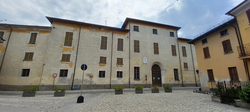
They descended from Alberto, son of Obizzino, who in the division of 1275 with his nephews had fiefdoms both in Lunigiana and in Lombardy, centered on the castles of Filattiera (for which they were initially also called Filattiera Malaspina, a title which later remained with only one line) and Oramala (fraction of Val di Nizza), which was subsequently replaced by the village of Godiasco as the main center of the family. In 1743 the Province of Bobbio was formed under the marquisate of Bobbio (from 1516) under the Savoys and under the mandate of Varzi, which enclosed the territories. Through Nicolò Said Marchesotto, son of Alberto, and his five sons, derived the five lines of the family, who all had fiefdoms both in Lunigiana and in the marquisate of Godiasco in Lombardy (Oltrepò Pavese):
- Malaspina di Castiglione e Casalasco, from Castiglione del Terziere fraction of Bagnone in Lunigiana, and from Casalasco fraction of Val di Nizza in the Oltrepò Pavese, originated from Franceschino the word Soldier, son of the Marchesotto; they became extinct in three generations, Castiglione passed to Florence and Casalasco to the Malaspinas of Oramala.
- Malaspina di Bagnone e Valverde, from Bagnone in Lunigiana and Valverde in the Oltrepò Pavese, originated from Antonio, son of the Marchesotto. Antonio's children divided the assets: Bagnone remained in Richard Richard, whose nephews sold it to Florence, and whose offspring is extinct in the male line in 1987. However, Valverde remained the line of descent derived from the prelate Aragonio Malaspina Bartolelli whose last exponent is still alive in the Anconetana Brand with the name Gian Franco; I Malaspina Bartolelli, legitimate heirs of the Marchesale Corona di Bagnone, no longer use the Malaspina surname in the analogue of the Republic since the war. Antonio, whose descendants probably still exist in the Oltrepò[without source].
- Treschietto and Piumesana Malaspina, from Treschietto fraction of Bagnone in Lunigiana and from Feather fraction of Godiasco in the Oltrepò Pavese, originated from John, son of the Marchesotto; in 1698 they sold Treschietto to the Grand Duke of Tuscany, and their lordship over Piumesana and the lordship over Godiasco was also reduced to modest shares. They became extinct in the 19th century.
- Filattiera and Cella Malaspina, from Filattiera in Lunigiana e Cella fraction of Varzi in the Oltrepò Pavese, originated from Obizzino, son of the Marchesotto; in 1513 Bernabò, a rebel against the Sforza, was beheaded in Voghera,[31] and the fief of Cella was confiscated; his son Manfredi sold Filattiera to the Grand Duke of Tuscany; the descent was extinct in the eighteenth century.
- Malgrate and Oramala Malaspina, from Malgrate Fraz. by Villafranca in Lunigiana and from Now! fraction of Val di Nizza in the Oltrepò Pavese, originated from Bernabò, son of the Marchesotto. It was one of the few branches of the family, together with that of Fosdinovo, not to decrease its power, but rather to increase it over time, acquiring almost all of the shares of the marquisate of Godiasco, the marquisate of Pozzol Groppo and the Marquisate of Fortunago, as well as participation in most other Malaspinian fiefs in the Oltrepò. They were then called and then they were called. Malaspina of Godiasco-Pozzol Groppo and Fortunago[32], names that will be taken by the two branches into which the dynasty will be divided, which will become extinct in the 19th century. The fiefdom of Malgrate, governed by the cadet line, upon the death of Cesare II (1615) passed to the Crown of Spain for the Duchy of Milan and was subsequently enfeoffed to the Ariberti Freganeschi family (1641). The Marquises of Oramala of the eldest line are:
- Bernabò -(1351-1368)
- Niccolò -1408
- Bartholomew -1456
- Hercules -1477
- Malgrate -1499
- Giambattista - 1514
- Caesar -1549
- Jovambattista II -1561
- Hercules II - 1581
- Pier Francesco -1622 - Giulia Spinola
- Giuseppe II -1561 - Lucrezia Guidobono Cavalchini
- Pier Francesco II -1692
- Hercules III Benedict -1723 - Maria Spinola
- Augustine -1750 - Vittoria Malaspina
- Hercules IV -1797.
- Malaspina di Sagliano, from Sagliano Crenna fraction of Varzi, originated from Ankle, son of Nicolò di Oramala and Malgrate, and became extinct in the 18th century.
Existing lines in the mid-18th century
Explore this chapter
- Spino Secco:
- Mulazzo, Montereggio and Castagnetoli (1746): Carlo Moroello 1746-74, protected Tuscan
- Calice, Veppo, Madrignano, Mulazzo (1710): Gian Cristoforo 1710-63; fief ceded to Tuscany in 1772
- Suvero, Monti: Rinaldo III 1736-70
- Orezzoli: Marco Antonio 1691-52 and two cadette lines
- Vaccazza, Volpedo, Momperone (non sovereign line extinct in 1757), to the Savoy
- Oramala, Fortunago, Godiasco (no sovereign line), to the Savoy
- Brass factory (non-surface line), Savoy
- Brass (non-surface line), to the Savoy
- Phrases (non-surface line), to the Savoy
- Villafranca, Virgoletta, Garbugliaga, Beverone: Federico III Malaspina Estense 1722-86; Modena fief
- Castevoli, Cavanella, Stadomelli: Opizzone Paolo 1744-59, then at the line of Villafranca
- Licciana, Monti, Panicale, Bigliolo: Cornelio 1741-78; extinct in 1794 and annexed by Villafranca
- Bastia, Varano, Monti: Giovanni 1740-83, then to the line of Ponte Bosio (1794)
- Ponte Bosio, Monti: Giulio 1748-68, dal 1794 a Licciana
- Podenzana, Aulla (1710): Francesco Maria 1712-54
- Pregòla, Campi, under Groppo: Corrado 1720-77 (non-surrender line)in condominio con Ercole III di Malgrate 1750-97 e linea di S. Margherita, Orezzoli; to the Savoy.
- Spino Fiorito:
- Fosdinovo, Gragnola, Castel dell'Aquila: Gabriele III 1722-58, vicar imperial in Italy
- Fabbrica Curone: Antonio Sforza Malaspina 1739-59 (non-surrender line), to the Savoy
- Casarasco (1687): non-surrender line, to the Savoy
- Filattiera: Cosimo -1755; non-superior line, at the Grand Duchy of Tuscany
- Treschietto, Corlaga: Giulio di Filattiera -1761; non-superior line at the Grand Duchy of Tuscany
- Sannazzaro de' Burgundi, Scaldasole: non-superior line, at the Savoy
- Santa Margherita, Artana, Menconic: Francesco Agostino 1749-57; Corrado di Pregola 1724-77 (unsurgent lines), to the Savoy
- Malgrate, Filetto, Godiasco, Oramala, Fortunago, Piumesana: Hercules IV 1750-97, partly non-superior feuds at the Savoy
- Olivola, Pallerone, Bibola: Giuseppe Massimiliano 1714-58
- Treschietto, Valle, Corlaga: Giulio di Filattiera 1710-61 (line non soprana), to Tuscany since 1698
- Sagliano, Godiasco, Piumesana: Francesco 1743-58 (linea non soprana), ai Savoia
- Grondona (non-surrender line), to the Savoy
- Valverde, S.Albano, Monfalcone, Godiasco, Piumesana: Carlo Antonio 1704-59 (non-surface line), to the Savoy
- Varzi (unsured line), to the Savoy; they own the castle, while the fief is granted to the Sforza, counts of Santa Fiora
- Verona (no sovereign line), under Venice.
Other lines
Other components not belonging to the known linesExplore this chapter
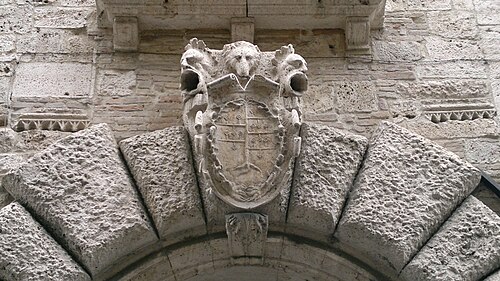
- Malaspina di Ascoli Piceno, from Ascoli Piceno in the Marche; the feud then passed to Malatesta, but the Sforza re-edged it to the Malaspina until 1502 when it passed to the papacy.
- Malaspina di Grondona, only the fief of Grondona, until the end of feudalism.
- Sorce-Malaspina, from the marquis of Olivola, Giuseppe Massimiliano Malaspina (1700 - 1 November 1758) and Maria Teresa Malaspina (1703 - Pisa, 3 November 1770) was born Alberico (? - 1789) married in Palermo to Maria Migliore. His daughter Maria Angelica Malaspina married Don Antonino Sorce, coming from a rich family from Mussomeli, thus giving rise to the Sorce-Malaspina branch. In 1770 his son Salvatore Sorce-Malaspina was born and, with his wife Antonina Padronaggio, he would have the following children:
- Antonino Sorce Malaspina (born 1793);
- Vincenzo Sorce Malaspina (born 1806), married to Donna Gaetana Sorce;
- Maria Angelica Sorce Malaspina (born 1801);
- Maria Carmela Sorce Malaspina (born in 1800). Currently the line continues with the descendants of Giuseppe Mistretta, born from Cavalier Antonino and Donna Stefanina Mistretta.
Other components not belonging to the known lines
- They recall Malaspina: (or Malespini), Florentine storiograph (* towards 1200, †; 1281) wrote a story of his city ("Istoria fiorentina") in Italian, followed after his death by his nephew, Jaccotto. After the battle of Montaperti (1260) he went to exile in Rome. He returned to Florence after the Battle of Benevento in 1266.
- Giacotto Malaspina, which continued its history until 1286.
- Saba Malaspina Secretary of Pope John XXI, wrote a story of Sicily ("Rerum sicularum", 1250-76) from the Guelph point of view.
Malaspina in literature
The patronage of Corrado the Old and his relatives and descendants was celebrated. The eponymous nephew Corrado has distinguished himself within the branch of Spino Secco also for a...Explore this chapter
The patronage of Corrado the Old and his relatives and descendants was celebrated. The homonymous nephew Corrado has distinguished himself within the branch of Spino Secco also for a deep interest in tradition and awareness of the history and tradition of the family. His figure was inspired by two major Italian writers of the fourteenth century: Dante Alighieri and Giovanni Boccaccio.
Dante in the eighth song of Purgatory staged his encounter in the valley of princes (part of the Antipurgatory where those who were "negligenti" to religious duties) with Corrado, which stands out on other companions of punishment for the courteous values of love and family, making Malaspina the perfect representatives of the knight values.
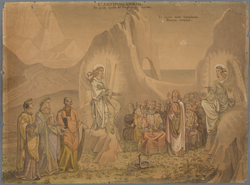
who sits there, shouting: "Up, Currado!
come to see that God by grace desired" [...]
"If the lamp that takes you high
makeup in your will so much wax
how much work is done to the high nail polish,"
she began, "if novella vera
Val di Magra or near
You know, tell me, that there was already a big one.
I was called Currado Malaspina;
I am not the ancient, but of him I descended;
I brought the love here to refine."[33]
"Oh," I said to him, "for your countries
I was never, but where he dwells
for all Europe that it is not clear?
The fame that your house honors,
shouts the signs and shouts the contrada,
so that he knows who was not there yet;
and I swear to you, I go upstairs,
that your people on the moon do not rub
of the value of the bag and of the sword."
(Divine Comedy, Purgatory, Song VIII)
From the verses quoted it is possible to understand the distinction that is made with the known avo (Corrado the Old), also cited in the Comedy, while the last verse is devoted to the exemplary nature that the family had for Dante's poetic conception and as a praise to one of the most important Italian families who hosted him during his exile. Dante was hosted by Corrado's cousin, Moroello Malaspina (of Manfredi), marquis of Giovagallo, who he called "vapor di val di Magra", and by his cousin Franceschino Malaspina (of Moroello), at the castle of Mulazzo-Lusuolo (of the Malaspina family of Spino Secco) and those of Giovagallo and Tresana, but he perhaps also met Spinetta Malaspina (Spino Fiorito) at the Veronese court of Cangrande I della Scala; The poet's stay at the castle of Fosdinovo is also remembered by tradition, although it is considered by many to be inaccurate.[34] Dante was the one who mediated the peace of Castelnuovo (laid in the Castle of Castelnuovo Magra and also remembered in Comedy) between Moroello with the heir Franceschino and the bishop of Luni, with whom the castle was returned to the Malaspinas, even if this actually only happened in 1340 also due to the usurpation of Castruccio Castracani to the detriment of Spinetta.[35] Unlike the other Malaspina, Ghibelline or White Guelphs such as Dante, Moroello was black Owlph, but the poet, who had known him in Florence, reappeared with him through the common friend Cino da Pistoia. Some think that Moroello hosted the Alighieri in Lusuolo in 1306 for the above-mentioned diplomatic reason and Fosdinovo later, where Dante would have worked at Divine Comedy according to a legend also disclosed by Gabriele D'Annunzio.[36]
In the Dantesque text, Corrado responds to the poet who praises Malaspina with a prophecy: before passing seven years Dante will be able by direct experience to confirm his courteous judgment on the Lunigian family. The prophecy "post eventum" alludes to the fact that Dante will find hospitality at Malaspina during exile in 1306 and allows to fix Dante's imaginary journey in 1300 with certainty, when he was about 35 years (in the middle of our life cammin):
seven times in the bed that 'l Montone
with all four piè cuopre and bake,
who cotes courteous oppinion
You're a pussy in the middle of your head
with more cloves than of other sermons,
if a court of judgement does not stand."»
(Dante Alighieri, Comedy, Pur. VIII, 133-139)
Always referring to the noble values and greatness of the family, Boccaccio, in the sixth novella of the second day of the Decameron, narrates Corrado as a liberal gentleman and attentive to the courtly family values by painting him in his familiar picture together with his wife and daughter Spina.
Notes
Explore this chapter
- ^ This version of the family motto is that shown in the engraving of the coat of arms reproduced (Vignetta n. 621) Jacopo Gelli, The former Italian books. Collector's Guide, Anastatic reprint of the second augmented edition (Milan, Hoepli, 1930), Milan, Cisalpino Goliardica, 1976, p. 275. The probable owner was the abbot Giuseppe Malaspina of Varzi. The meaning of the motto is: "I am a bad plug (=which does not punge) for good, I am a good plug (=very pungent) for bad guys".
- ^ Most of the news about the various branches of Malaspina are found in the three volumes of History of feudal Lunigiana, by Eugenio Branchi
- ^ The brand Obertenga and the Imperial Feudi, up appennino4p.it.
- ^ The Malaspina, up carraonline.com.
- ^ Guagnini, p. 27
- ^ to b c d And f g h the j k l m Castle of Fosdinovo - Family tree (PDF), up castledifosdinovo.it (archived fromoriginal url on 11 October 2016).
- ^ Guagnini, p. 49
- ^ Flowers, p. 6
- ^ Soddu, The Malaspina and Sardinia, p. 36
- ^ Packs, I, p. 161
- ^ to b Meli, pp. X, 2.
- ^ In practice more or less the current Lombardy, plus Novarese, Italian Switzerland and Emilia with Ferrara; Genovesato up to Lunigiana and Garfagnana and part of the Piemonte, ie Tortona, Novi Ligure, Ovada, the Val Bormida (the Oltregiogo), and then Ascoli Piceno was added
- ^ Guagnini, p. 52
- ^ Branchi, II, p. 121
- ^ Castello di Cariseto - Cerignale Piacenza Genova, up emiliaitaly.com.
- ^ (EN) Fabio Romanoni, Men and "caporali": genesis and composition of the brigades of the connestabili Galeazzo and Moroello Malaspina in 1399, in Le carte dei Malaspina e delle terre malaspiniani, 2022. Retrieved 4 April 2022.
- ^ Branchi, II, p. 205
- ^ Flowers, pp. 157-158
- ^ Shooters, p. 60
- ^ Pompeo Litta, Popular families of Italy. Malaspina, Milan, 1852.
- ^ Antonio Alberico Malaspina, up treccani.it.
- ^ Shooters, p. 82
- ^ Giacomo Malaspina, up treccani.it.
- ^ Malaspina tree, up treccani.it.
- ^ Packs, III, p. 45
- ^ Jerome Tiraboschi, Historical memories Modenesi with diplomatic code: illustrated with notes, Modena, Società Tipografica, 1794, p. 192.
- ^ Meli, p. 261.
- ^ Flowers, p. 104
- ^ Meli, pp. 256-257.
- ^ The ancient Palazzo Pedemonti Malaspina in Godiasco, up Stories of Territories, 14 April 2025. Retrieved 3 August 2025.
- ^ Italo Cammarata, Bernabò Malaspina, in Ettore Cau and Aldo A. Settia (eds.), The Staffora Valley in the Middle Ages and in the early modern age, Varzi, 2007, pp. 93 and 96.
- ^ Branchi, III, pp. 58-60
- ^ Despite the use of verbs to the past, Dante wants to point out that the pride of the house of kindness remains in Purgatory. Corrado also confesses that the reason why he was negligent was excessive love for his family to whom he dedicated himself
- ^ “The Malaspina had the castle of Fosdinovo 29 years after Dante’s death”, historical clarifications after an article on Gente, up ecodellalunigiana.it.
- ^ Franca Rangone, MALASPINA, French, in Biographic dictionary of Italians, vol. 67, Rome, Institute of the Italian Encyclopedia, 2006.
- ^ The castle of CapoWork: Dante's mysterious passage to Fosdinovo, up diaritoscani.it.
Bibliography
Explore this chapter
- Eugenio Branchi History of feudal Lunigiana, anastatic reprint, 3 vol., Forni, Bologna 1971.
- Umberto Burla, Lunigiana Malaspina, Luna editore, La Spezia 2001.
- Giuseppe Caciagli, History of Lunigiana, Arnera, Pontedera 1992.
- Giorgio Fiori, The Malaspina, Tip.Le.Co., Piacenza 1995.
- Guido Guagnini, The Malaspina, Il Biscione, Milan 1973.
- Pompeo Litta, Popular families of Italy. Malaspina, Milan, 1852.
- Patrizia Meli, Gabriele Malaspina Marquise di Fosdinovo: conduits, politics ediplomazia in Lunigiana del Rinascimento, presentation by Jean-Claude Maire Vigueur, Florence, Firenze University Press, 2008, ISBN 978-88-8453-859-8.
- Franco Quartieri, Dante and Malaspina, in "Analysis and paradoxes on 'Comedy' and its surroundings", p. 141, Longo editore, Ravenna 2006 ISBN 88-8063-501-8.
- Alessandro Soddu (edited by), The Malaspina and Sardinia. Documents and texts of the XII-XIV centuries, CUEC, Cagliari 2005.
- Alessandro Soddu, Family structure and territorial power in the lordship of Malaspina, in “Historical Journal of Lunigiana and the Lucense territory”, LV (2004), pp. 135–152, 2007.
- Alessandro Soddu, Historical powers in Sardinia between Two and Three hundred: the Malaspina, in "RiMe. Journal of the Institute of History of Mediterranean Europe", 4 (June 2010), pp. 95–105 [Proceedings of the “12th Annual Mediterranean Studies Congress: Sardinia: A Mediterranean Crossroads”, Cagliari 27-30 May 2009] online http://rime.to.cnr.it/
- Alessandro Soddu, "Magnificent barons certainly and almost royals". The Malaspinas between Lunigiana, Lucca and Sardinia, in “Acta Historica et Archaelogica Mediaevalia”, 30 (2009-2010), pp. 251–260, 2011.
- Laura Lotti, The castles of Malaspina in Lunigiana from the Middle Ages to the eighteenth century: ladies, knights, violence, Editions of the Assembly (n. 154), Florence, Tuscany Region, Regional Council, February 2018, ISBN 9788889365977, OCLC 1039888394.
- Bruno Giontoni, Franca Balletti, The Imperial Feudi of Val Trebbia - Society and territory between Genoa and Piacenza, De Ferrari Editore, Genoa 2019, ISBN 978-88-5503-057-1 (88-5503-057-4)
- For the Sardinian possessions of Malaspina: Alessandro Soddu, The Malaspina and Sardinia, Cagliari, CUEC, 2005; Giovanni Deriu, The medieval human settlement in the curator of Costa de Addes, Sassari, Magnum, 2000; Salvatore Chessa, The medieval human settlement in the curator of Montes, Sassari, Magnum, 2002.
Continue your journey