Atlas of Monferrato
Ovada: sights, history and trails
Alessandria
- Elevation
- 186 m above sea level
- Area
- 35.37 km²
- Demonym
- ovadesi
- Patron saint
- Saint Paul of the Cross and St John the Baptist
A closer look
Discovering Ovada
Ovada (Where? [Groans] in Piedmontese, Go! [CHUCKLES] or O [Chuckles] in Liguria[4]) is an Italian commune 10 935 inhabitants[1] from the province of Alessandria, in Piemonte. It is a commercial, wine-growing and agricultural center located in the Alto Monferrato, pin of an area of about 30 000 Ovadese and one of the province's centres-areas as the seat of the hospital, the upper school centre and other services for citizens. Renowned for its wine, Dolcetto, Ovada in 2024 was the European Capital of Wine, along with Acqui Terme, Casale Monferrato and the hills of the Sesia of Ghemme and Gattinara.
Landscape and area
Region · ClimateExplore this chapter
Place between the cities of Alessandria and Genoa, Ovada is the main municipality of Ovadese, Basso area Piemonte and the High Monferrato very well known for the wine production, which is located in the southernmost part of the province of Alessandria, bordering to the south with Liguria and precisely with Rossiglione, belonging to the metropolitan city of Genoa.
Region
The city is located in a privileged position: surrounded to the east and west by the green hills ofHigh Monferrato, famous for its wine production, is located at the point where the Po Valley ends and the extreme northern reaches of the Ligurian-Piedmontese Apennines begin, a few kilometers from the Ligurian Sea, which can be reached in less than half an hour via the A26, at the entrance to the Orba Valley and the Stura Valley which leads to the Turchino pass. The territory is therefore predominantly hilly, tending towards mountainous as you head south, with plains to the north where agriculture is practiced and where industries have been established along the main connecting axes. The city is located on the confluence of the Stura di Ovada in the Orba, which has always been a strategic position for trade, at an altitude of 186 meters above sea level. From a mining point of view, the presence of fossils dating back to the Oligocene is important, as well as conglomerates and sedimentary rocks, witnesses of the territorial changes of the place.
The fauna includes rates, wreaths, roe deer, wild boar, martor, squirrels, hares, pears, pheasants, wolves and foxes. Present the night birds such as owls and owls, sparrows, corkscrews and buzzards. The most common fish is the trout.
Climate
The climate is temperate with continental characteristics mitigated by the remarkable proximity of the Ligurian Sea (less than 25 km in line of air). The ovades winters do not have particularly abundant rainfall, as it happens in the rest of the world. PiemonteDuring the winter, there is a minimum secondary rainfall. However, being protected south by the winds of syrup and fir from the chain of Apennines, the ovadesian winters have more abundant snowfall than other Italian places placed at the same altitude, as in the territory of Basso Piemonte and in particular of the alessandrino bass, there are often important thermal inversions that the lukewarm winds of southern Europe fail to shrug. Also for this reason the winter minimum temperatures easily descend below 0 °C. The snow can therefore make its appearance between the last decade of November until late March. Spring is moderately rainy especially in April and often very ventilated particularly in May, when the first spring heats that warm up the Po Valley contrast to a Ligurian Sea still quite cold, this thermal contrast often generates winds even much tense in the afternoons of May very localized on Ovadese. Unlike the rest of the Piemonte, where strong connective storms often form due to the proximity of the Alps, summer in Ovada is the dryest season of the year, as the mitigating influence of the Ligurian Sea determines a more stable climate. In the months between June and August, in fact, short showers are formed only during passages of atlantic wet infiltrations. Still remaining in summer, rather ventilated, the summer climate Ovada it is hardly aphurous and temperatures only in the strong waves of African heat exceed the 30 °C. In autumn, with the return of Atlantic disturbances, the weather often becomes gray and rainy, the months of October and November are in fact by far the rainiest months of the year in Ovada and in the Ovada area, above all due to the strong autumnal Atlantic disturbances that dig deep low pressure lows on the Ligurian Sea, creating a Stau effect with the Apennines south of Ovada. Also in the late autumn and winter months, especially in the months between October and February, although much less than in other areas of the Piemonte and the Po Valley, fog occasionally occurs, which contributes to lowering the temperature. It should also be noted that Ovada is affected for a few days a year by humid air coming from the Ligurian Sea, called Marin, which in some cases can bring the smell of saltiness even to these territories and mild temperatures even in winter.
| Ovada | Months | Seasons | Year | ||||||||||||||
|---|---|---|---|---|---|---|---|---|---|---|---|---|---|---|---|---|---|
| Gen. | Feb | Mar | Apr | May | ♪ | Jul | Ago | Set | Oct. | No. | Dec. | Inv | Pride | East | Aut | ||
| T. max. average (°C) | 6,0 | 8,5 | 13,3 | 17,0 | 21,8 | 26,3 | 28,6 | 28,4 | 23,5 | 17,1 | 10,7 | 6,2 | 6,9 | 17,4 | 27,8 | 17,1 | 17,3 |
| T. min. average (°C) | −0,7 | 0,2 | 4,1 | 7,8 | 11,7 | 15,6 | 17,2 | 16,9 | 12,9 | 9,1 | 4,2 | −0,1 | −0,2 | 7,9 | 16,6 | 8,7 | 8,2 |
| T. max. absolute (°C) | 20,7 | 19,5 | 26,3 | 30,7 | 32,1 | 36,0 | 35,2 | 38,8 | 32,0 | 28,4 | 23,7 | 16,5 | 20,7 | 32,1 | 38,8 | 32,0 | 38,8 |
| T. min. absolute (°C) | −8,5 | −13,3 | −10,5 | −1,5 | 3,2 | 5,4 | 8,5 | 8,1 | 4,4 | −1,3 | −5,7 | −12,0 | −13,3 | −10,5 | 5,4 | −5,7 | −13,3 |
| Precipitations (mm) | 67,0 | 60,8 | 64,5 | 91,2 | 75,3 | 31,3 | 20,5 | 41,7 | 72,3 | 119,9 | 182,7 | 70,6 | 198,4 | 231,0 | 93,5 | 374,9 | 897,8 |
| Days of rain | 6 | 5 | 6 | 8 | 6 | 3 | 3 | 4 | 5 | 7 | 10 | 6 | 17 | 20 | 10 | 22 | 69 |
Origins of the name
The city draws the toponym from the Latin Vadum, which means "guado", to indicate the probable existence in Roman times of a transit place near the confluence...Explore this chapter
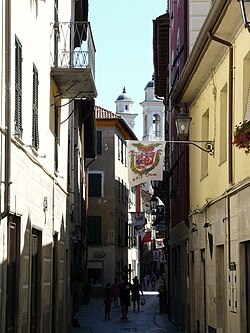
The city draws the toponym from Latin Vadum, which means "ford", indicating the probable existence in Roman times of a transit place near the shallow confluence of the two streams. Already in the letters of Decimus Brutus to Cicero a place called "Vada" was mentioned, in a strategic position for trade between Liguria and the Po Valley.
History of Ovada
From the beginning to the eighteenth century · From Napoleonic domination to today · SymbolsExplore this chapter
From the beginning to the eighteenth century
After the assault and destruction of Giusvalla Abbey by the Saracens and the continuous raids on the territory, after a few years such episodes convinced Anselmo, son of Marquis Aleramo, to erect the new abbey of San Quintino[5] of the Spigno Monferrato, as a form of contrast to raids and defense of pilgrims and trade routes.
Mentioned for the first time in 967 when Otto I gave Marquis Aleramo a villa in Ovada, which was subject to the Abbey of S. Fifty-five.
Ovada was then part of the aleramic brand, passing under the dominion of the Marquises of Gavi, of the Marquises of Bosco and finally of the Malaspina, who on various occasions (1272-1277) ceded it to Genoa. Occupied by the dukes of Milan and attributed to the Trotti family, it was enfeoffed to the Adorno, who held it until 1499, when the King of France Louis XII returned it to the Trottis. Meanwhile the city had grown and now possessed a large parish church, a castle and walls, even if agriculture was still very little practiced and the main source of food was the chestnuts from the woods surrounding the village. The main driving force of the local economy were instead craftsmanship, thanks to the stationing of the castle garrisons, and trade, even if the small and dangerous roads present were not very suitable for travel.
In 1528, following the rise of Andrea Doria and the passage of the Republic of Genoa under the protection of the Empire, Ovada, who in the meantime rebelled against his feudal lords, was conquered at this moment of weakness by the troops of Bartolomeo Spinola, since the Republic of Genoa from very long held control over the city, while in 1594 San Giacinto was proclaimed patron saint.
He was struck by a serious famine in 1625 and then by the plague of 1630, Ovada lost 4/5 of the population. After leaving the contagion in a few months, citizens decided to erect the church of the Blessed Virgin of the Conception, and in 1694 St. Paul of the Cross was born. Still under the Genoese rule, in 1746, during the war of Austrian succession, it was occupied by the Austro-Pymontesi troops, who held it for three years. After these events Ovada spent a few decades of political stability, and flourished the breeding of silkworm. The city became a European textile production centre. Meanwhile, agriculture began to spread in the deforested areas and the economy grew. In 1771 the construction of the new parish church began.
From Napoleonic domination to today
Following Napoleon's victory in nearby Marengo (the famous Battle of Marengo), the Ovadese was occupied by the French and became part of the Napoleonic empire. Ovada was included in the Department of Genoa, especially in the district of Novi Ligure. The city was also the owner of one of the "cantons" of this district.
Ovada, in this period, did not suffer much of particular raids and losses, but, indeed, it became more and more flourishing: great public works were realized, drafted a casket of all buildings on the city ground and came, for the first time in the history ovadese, advanced the idea of a road that connected directly to Genoa. Meanwhile, the ecclesiastical and monastic orders (Domenicani and Cappuccini) were suppressed: the Dominican convent was reused by the French Gendarmerie. In 1801 the new parish church dedicated to Assumption was consecrated.
At the fall of Napoleon (1814), the city passed to the Kingdom of Sardinia (1815). Entering the Kingdom of Italy, he again went through a period of economic growth: intensified the hilly crops, multiplied the craft activities and the first industries were born, began the production of Dolcetto and finally realized the road to communication with Genoa. The city expanded and became mainly industrial and artisanal. With the arrival of the Ovada railway reached the height of development, the centerpiece of a capillary road system that favoured trade.
Later, Ovada and the Ovadese passed under the Division of Alessandria, joining the Purchasing Province. Also in this new subdivision, Ovada he was the owner of one of the "mandaments" of the above-mentioned Province.
On October 23, 1859 the Decree Rattazzi reorganized the administrative structure and, consequently, Ovada confluò in the new Province Alessandria and therefore in Piemonte, always within the Kingdom of Sardinia.
World War I hit the population heavily. However, with the end of the conflict, industrial activities returned to consolidate and increase. In 1935 the church of the Blessed Virgin of the Conception (which had been built in the 17th century as a vote for the end of the plague) was destroyed by a fire (it will be rebuilt). The city was first hit in 1935 by the collapse of the dam of Ortiglieto (disastro di Molare), then during World War II.
After the war, Ovada once again returned to production, connected with A26 since the second half of the 1970s. Today, the city focuses on crafts, industry, viticulture and tourism, which has become increasingly consolidated in recent years.
In 2020, Ovada's joint candidacy was announced along with Acqui Terme And Casale Monferrato to European Capital of Wine 2024. In 2023 the candidacy, together with other Piedmontese cities, was accepted. The recognition of Ovada and other Piedmontese cities as a point of reference for the entire European Union on wine issues: during 2024, in fact, numerous events, meetings and events were organized in the city, also internationally.
Symbols
The coat of arms was granted by the decree of the President of the Republic of 28 September 1959, registered to the Court of Auditors on 5 December[6] and modified with the DPR of 17 September 1993 with the addition of ornaments from City.[7]
It is composed of a Sannitic shield with red cross on white field, at whose center there is an eight-point star of Dominican origin[6], stamped by the turreted crown of the City and surrounded by a laurel (left) and oak (right) branch, joined by a tricolor ribbon.
The city coat of arms was decorated with the eight-point silver star symbol of the Dominican order[8] in 1594 when, on the occasion of the canonization of Dominican Jacinto Odrovaz by Pope Clement VIII, a deputation of the ovadesous Community, led by the Dominicans of the convent of Ovada, went to Rome and obtained from the pontiff to have the saint as patron of the city.[9] In some representations, a five-ray star is mistakenly drawn.
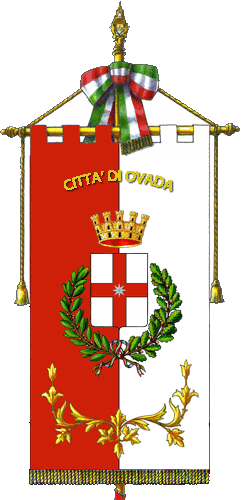
The gonfalone is a drape party of red and white.[10]
What to see in Ovada
Religious architecture · Civil architecture · Historical centreExplore this chapter
Religious architecture
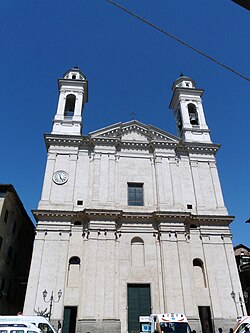
- Church of Our Lady Assunta, parish church of the Baroque city built at the end of the 18th century
- Church of the Immaculate Conception, managed by the Franciscans of the adjacent convent, has been rebuilt several times
- Church of Santa Maria delle Grazie, founded by Dominicans in the fifteenth century, is one of the oldest churches in Ovada
- Oratory of the SS. Annunziata (XIV century) contains paintings by Luca Cambiaso, Brea and Schiena, as well as a wooden group of Madonna del Carmine and one ofAnnouncement work of the Maragliano
- Sanctuary of Our Lady of the Guard, dating back to 1661
- The sixteenth-century oratory of San Giovanni Battista, with the wooden group of Decollation of Saint John the Baptist by A. M. Marathon
- Parish of Our Lady of the Snow, in the hamlet of La Costa
- Church of Saints Nazario and Celso, in the hamlet Grillano Guardia
- Church of San Venanzio, in the hamlet of San Venanzio
- Church of San Lorenzo, in the hamlet of San Lorenzo
- Sanctuary of San Paolo della Croce
- Church (now despised) which was the first parish of Ovada: the loggia of San Sebastiano.
Civil architecture
- Palazzo Spinola, in Piazza San Domenico, dates back to the eighteenth century.
- The birthplace of São Paulo della Croce, which overlooks the same square, was declared a national monument in 1918.
- The current Municipal Palace, built in the nineteenth century, just outside the historic center.
- The two most important city parks are located just outside the centre: Sandro Pertini Park and Villa Gabrieli park.
- The former civil hospital was designed by Antonelli.
- The elegant castle of Lercaro, in the homonymous hamlet, unfortunately today semi-destroyed.
- The castle of Grillano, in the homonymous hamlet, fruit of the amalgamation of different structures originating from the eighteenth century, has been massively renovated at the end of the nineteenth century; it houses a winery active since the 1930s and is inserted in the circuit of "Castelli Aperti" del Basso Piemonte.
Historical centre
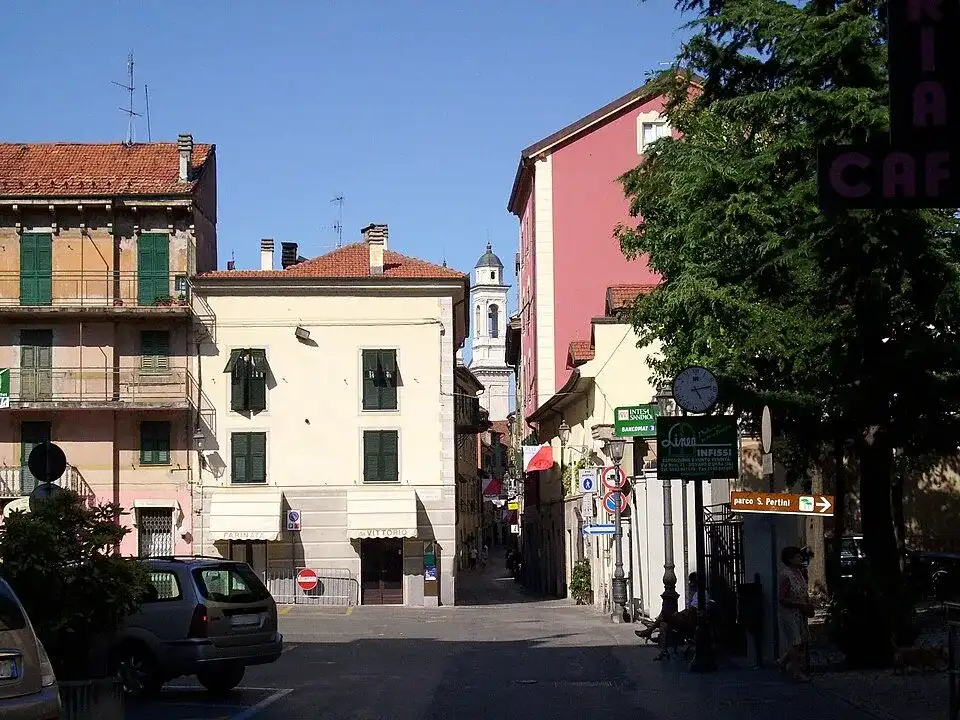
The oldest nucleus of the city has a typically Ligurian setting: perched around a defensive system, it has painted houses and narrow carruggi that converge in the main streets, which in turn connected the city gates to the church square and the municipal institutions. In the case of historical Ovada, three are the most important streets in the center: Via Roma, via Cairoli and via San Paolo. These join the parish through three squares, respectively Piazza Mazzini, piazza Assunta and piazza Garibaldi. In the center are home to artisanal, commercial and receptive activities and is here that take place the typical markets of the used and antiques.
Society
Demographic evolution · Foreign ethnic groups and minorities · Languages and dialectsExplore this chapter
Demographic evolution
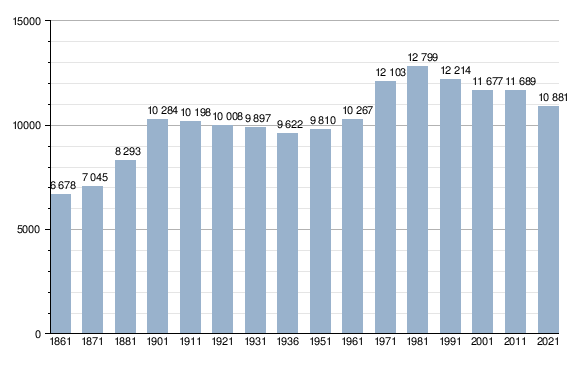
In the last fifty years, since 1971, the resident population decreased by 10 %.
Inhabitants registered[11]
Foreign ethnic groups and minorities
At 31 December 2025 Ovada had 1357 foreigners resident (just over 12% of the population), from 67 different countries. The most numerous national communities were the following[12]:
- Morocco, 168
- Romania, 162
- Ecuador, 130
- Peru, 100
- Albania, 93
- Nigeria, 80
- Tunisia, 59
Languages and dialects
In addition to Italian, Ovada is also spoken the local dialect, of transition between Liguria and Piedmont.
The ovadesous lexicon differs from the southern monferrino dialects and presents similarities with those of central Liguria: there is in it a symbiosis of ligurian and Piedmontese speaking, so to discern in it components such as to homolocate it to one dialect more than to another is something that can succeed only arbitrary. We cannot therefore take into account the Ligurian tradition, nor the subalpine one, because differences are substantial.[13] However, listening to recordings in ovadese dialect[14], those who speak Ligurian dialects can converse more easily with speakers of the city of Ovada than any speaker of purely Piedmontese dialects [15].
Culture
Education · Museums · MediaExplore this chapter
Education
In the city there are:
- two kindergartens
- two kindergartens
- two elementary schools
- two middle school schools
- three higher education institutions
With regard to high school, the first is a school centre formed by a scientific high school, a technical institute (with also the agrarian address) and a commercial institution; the second, peer, offers the addresses of linguistic high school and human sciences high school; while the third one is a vocational training center offering three-year professional qualification courses (with mechanical address) and four-year courses (graphic address) as well as training courses for employed adults and unemployed
Museums
Media
The periodical is published in Ovada The Ovadese.[18]
The daily newspaper is also published ovadaline, newspaper part of the de group The Little[19]
In Ovada, private broadcasters Radio Echo 2 were active since 1976 and closed shortly after 1990 and TeleOvada, which was formed in 1985 and merged in 1989 into the Telecity group that renamed it Italy 8.[20]
Cinemas and Theaters
In Ovada there is the Teatro Comunale Dino Crocco, dedicated to the homonymous television presenter and musician ovadese who died in 2010, based in a modern building with rationalist architecture underway Martiri Liberties, with an annual national programming.[21]
In Via Gian Domenico Buffa there is the Cinema Splendor, located in a refined old building in 19th century style.[22]
There is also the historic Torrielli Theatre, in a Art Nouveau building located in Via Cairoli, closed and in an unused state.[23][24]
Kitchen
The cuisine of the territory, combined with the most important product of these areas, the Dolcetto d'Ovada Superiore DOCG wine, more simply Ovada DOCG or Dolcetto d'Ovada DOC, offers dishes already present both in the Apennine territory, and in the hill-mountain. The dishes, of Piedmontese plant, such as mixed boiled, braised, roasted, agnolotti, mixed fried, accompany very well with the succitato Dolcetto d'Ovada.
The typical cuisine of Ovada also has a marked Ligurian imprint and its main products are:
- and the Andarini, a type of pasta similar to small trofie, which is accompanied by meat broth
- i Crucion, the so-called health cookies, similar to Lagaccio biscuits
- the splinsugni d'uò
- The polenta of Ovada, dessert with polenta flour
- and the Agnolotti at the Ovada, agnolotti served in a deep dish immersed in Dolcetto d'Ovada
To testify that Ovada is, also in the culinary field, crossroads of Piedmont and Ligurian culture, of remarkable diffusion are the "Saabaudi" agnolotti and the "Mediterranean" floured.
Events
- Peace Witness Prize
- Countries and Flavors, the famous food and wine event that showcases the culinary excellence of the territory. The event, organized by the Pro Loco di Ovada and Monferrato in collaboration with the municipality, is held in Piazza Martiri della Benedicta and offers the possibility to taste typical local dishes prepared by the pro loco dell'Ovadese, Alessandrino and Casalese. In the 2025 edition there were more than 20 stands from Ovada, Cassinelle, Belforte Monferrato, Castelletto d'Orba, Molare, Morbello, Ozzano Monferrato, Castelletto Monferrato, Montaldo Bormida, Ponzone, Silvano d'Orba, Predosa, Rocca Grimalda, Tagliolo Monferrato and Cremolino.[without source]
- Floroviva exhibition[25], an exhibition of nurserymen from many parts of Italy and of artisanal and typical products; it has been held in the spring edition since 2015, which was also joined by the autumn edition in 2017. Until the spring of 2017 it took place in the private park of Villa Schella, subsequently inside the "Sandro Pertini" municipal park in via Cairoli.
Libraries
Urbanism
The municipality of Ovada has a rather homogeneous urbanization and an urban plan that reflects its various historical events and economic-social development.Explore this chapter
The municipality of Ovada has a rather homogeneous urbanization and an urban plan that reflects its various historical events and economic-social development.
The old town was sheltered from the ancient castle of Ovada, which stood on a rocky spur of tufa origin in the exact point of confluence between the Orba and Stura streams (near the current Piazza Castello).
It consists of narrow alleys that converge in the three main streets, namely Via Roma, Via Cairoli and Via San Paolo which converge with the parish church through three squares: Piazza Mazzini, Piazza Assunta and Piazza Garibaldi.
In the years of economic boom, the city expanded further south, building buildings, constructions, new industrial areas and new educational institutions.
The main arteries of the city are:
- Corso Martiri della LibertÃ, dorsal that connects the southern part of Ovada with Piazza XX Settembre, crossing in a straight line the most central and neuralgic area of the city
- Via Antonio Gramsci and Lungo Orba Giuseppe Mazzini, along the old town and allow to lambire the delegation
- Via Cairoli and Via San Paolo, the two main arms of the historic center where we find the highest concentration of shops and commercial activities
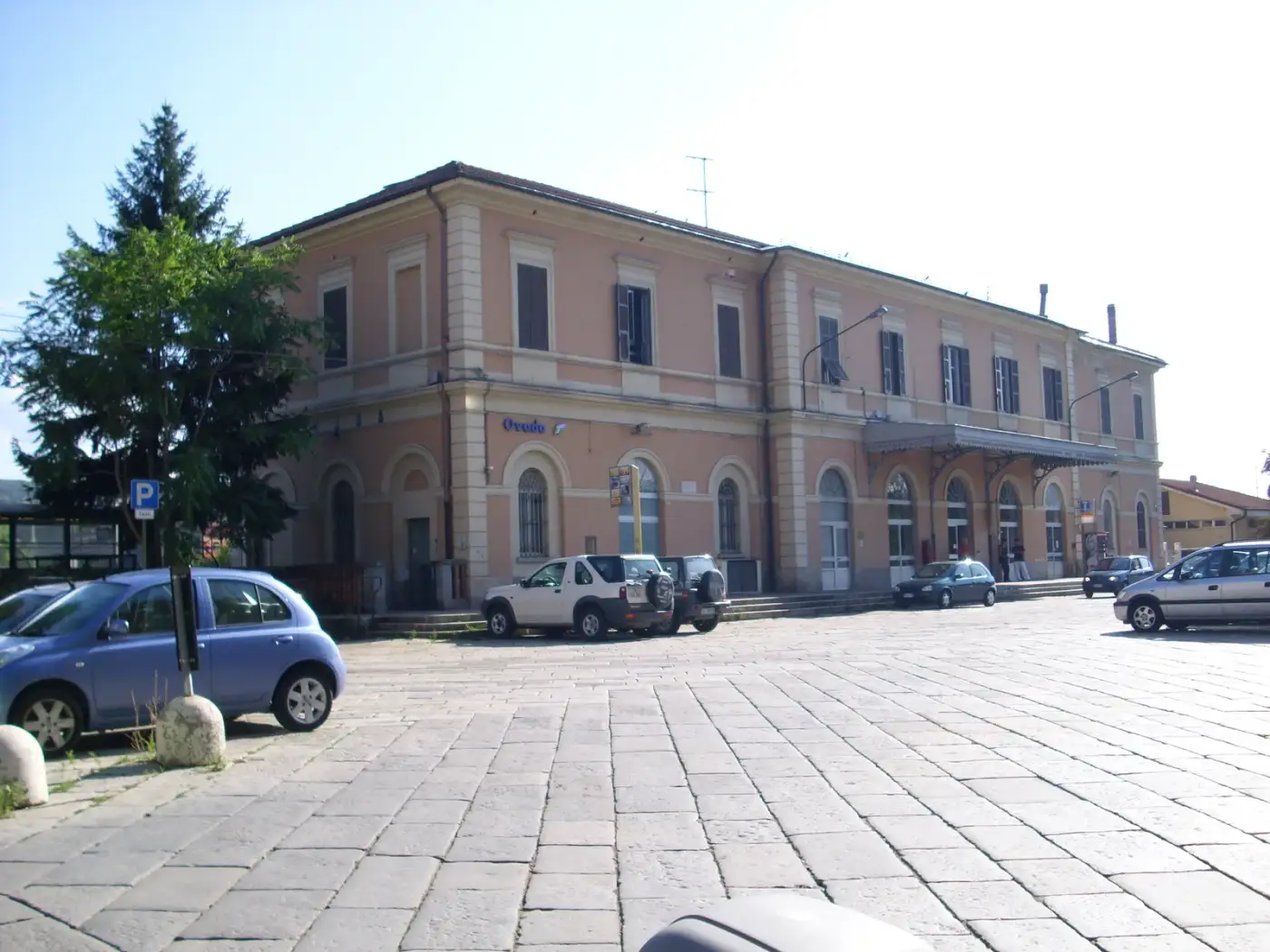
- Corso Italia, located on the Highway 456 of the Turchino, which connects Via Voltri with railway station
- Corso Saracco, which allows a quicker connection of the area of the historical center and Piazza XX Settembre with the railway station
- Via Voltri, which joins the city to its own highway on the A26 Genova-Alessandria-Gravellona Toce motorway
Hamlets
Ovada is also composed of numerous hamlets and towns, the most important and known are: Gnocchetto , Borgo, Costa, Grillano, Guardia, Coinova, San Lorenzo, Manzolo,...Explore this chapter
Ovada is also composed of many hamlets and towns, the most important and known are: Gnocchetto, Borgo, Costa, Grillano, Guardia, Coinova, San Lorenzo, Manzolo, Requaglia, Stazione Molare, Battagliosi, Faiello, San Bernardo, San Martino, La Corte.
Economy
Agriculture · Industry · TourismExplore this chapter
Agriculture
Ovada is situated in a conca surrounded by vineyards and is the production area of the homonymous Dolcetto, local DOCG wine.
The Dolcetto di Ovada, very famous, is produced with grapes from the municipalities of Ovada, Belforte Monferrato, Bosio, Capriata d'Orba, Carpeneto, Casaleggio Boiro, Cassinelle, Castelletto d'Orba, Cremolino, Lerma, Molare, Montaldeo, Montaldo Bormida, Mornese, Morsasco, Parodi Ligure, Prasco, Rocca Grimalda, San Cristoforo, Silvano d'Orba, Tagliolo Monferrato And Trisobbio.
Industry
The industry in Ovada has always had a certain importance: the driving sector of the Ovadese is the mechanics with about 60% of the employees, to which are joined numerous enterprises operating in various productive sectors.
In Ovada there are various industrial areas, in particular those of Carlovini Region, Borgo, Coinova, Strada Novi, Rebba and Via Molare. In the surroundings of the city, there are other purely industrial areas, rich in companies and sheds, such as the Caraffa area (among the municipalities of Silvano d'Orba And Tagliolo Monferrato), of the motorway toll booth (Belforte Monferrato), Sant'Agata-Stazione (Castelletto d'Orba) and Oltreorba (Capriata d'Orba - Predosa).
Tourism
Ovada and its surrounding territory, belonging to Monferrato, in recent years there has been a notable increase in the tourist presence, thanks to the wine production and the naturalistic and historical beauties that the area offers.
In 2024 Ovada, together with Acqui Terme And Casale Monferrato, has obtained the recognition of European Capital of Wine, consequently seeing the tourist presence increase, thanks to the organization of wine-themed events throughout the year.
Kitchen
The ovadese cuisine is a unique mix of Piedmont and Ligurian flavors: while not betraying the typical recipes of Monferrato, the traditional ovadese cuisine was strongly influenced by nearby Liguria, with dishes and unique products. To master it is without any other sweet wine, both in the classic version D.O.C. "Dolcetto di Ovada" than in the upper version D.O.C.G. called simply "OVADA"
In the Ovadese, the cultivation of vine and in particular of Vitigno Dolcetto is certainly secular. This vine has always characterized the vineyards of the area, to the point of being also defined Ovada Grapes, or, by naturalists, Uva Ovadensis. The name Dolcetto must not make think of a sweet wine, comes in fact from the dialect term 'dusset' which means dosso or hill.
In the food, very famous are the Farinata of Ovada, prepared with chickpea flour, water, salt and extra virgin olive oil, with Ligurian origins and diffused in the lower Piemonte, especially in Alexandria and Astisan, the bitters of Ovada, the Biscuits of Health, similar to the biscuits of Lagaccio, typical Genoese, and canestrelli.
Among the appetizers of Ovada, the traditional vegetables in caud baths, raw meat, anchovies in green sauce, tunaed calf, salads of fresh mushrooms and local cured meat. The agnolotti are followed by masters, thin leaf with the filling made of meat and, obviously, the borage, to be consumed with the sauce or “white” in a steaming cup of wine. Then, ravioli with vegetables, tajarin mushrooms or hare sauce, and polenta seasoned in various ways.
In season, prepared and cooked mushrooms in various ways dominate the second dishes. To them are added mixed boiled, game (lepre, pheasant), roasted, green cakes with wild herbs, filling buds, boiled capon with "batht", fried mixed to Piedmont.
Among the sweet cakes of hazelnuts and chestnuts, lies, bunet, biscuits of health, canestrelli and, ancient tradition never forgotten, chestnuts, once food, today golocity and occasion of celebration, to prepare boiled or roasted possibly with wood fire.
The Ovadese is also a truffle area, especially the white one.
Infrastructure and transport
Roads · Urban mobility · Railway linesExplore this chapter
Roads
Ovada is situated along the highway 456 of the Turk connecting Isola d'Asti with Genoa Voltri and the confluence of the SP155, that connects it with Novi Ligure, with SP185 connecting it with Alessandria.
The municipality can also be reached via the A26 motorway of the Traphors, with exit toll booth approximately 1 km from the city in the municipality of Belforte Monferrato.
Urban mobility
In the municipality there are several terminus of the means of the Bus Services Trotta (ex Autolinee S.A.A.M.O., which connect it with the municipalities in the area and their hamlets. For connections with Alessandria And Novi Ligure There are the Bus Company (formerly Arfea), whose main stops in Ovada are in Piazza XX Settembre and in Piazza della Stazione.
Railway lines
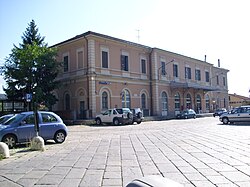
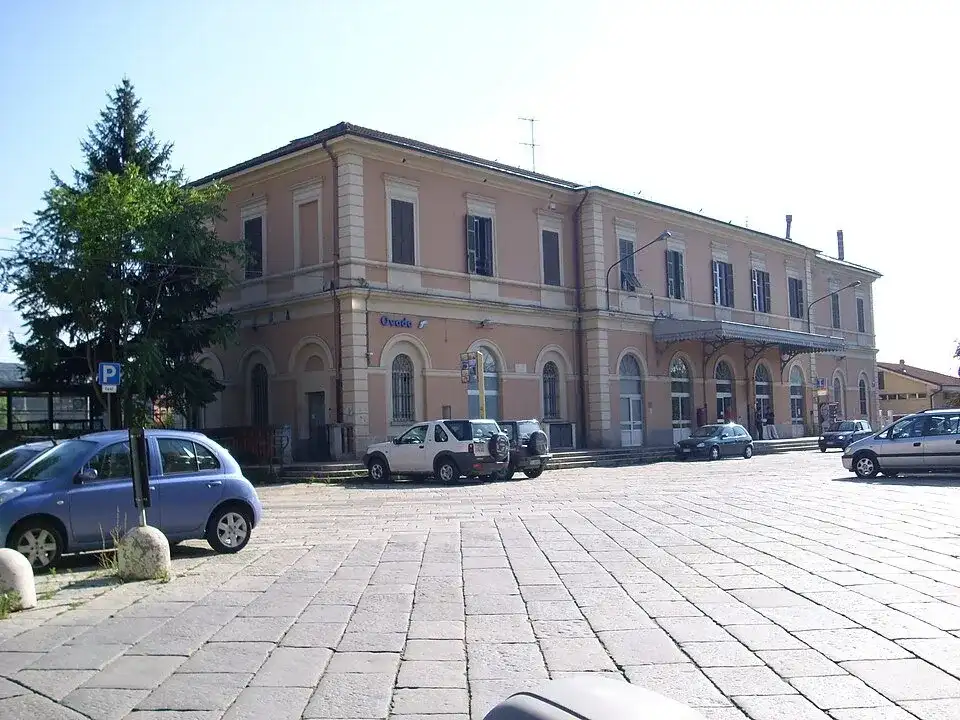
Ovada is equipped with two railway stations: the main one is located along the Asti-Genova Railway, while the second one, called Ovada Nord, is on the complementary line coming from Alessandria, currently closed to passenger traffic.
In the municipal territory, in locality Engaging, there is a third facility, the Molare railway station, located on the Asti-Genoa line serving the municipality of Molare, hence the railway name of the airport.
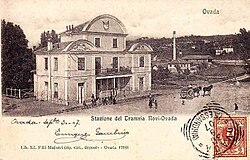
Until 1953 Ovada was also served by the tramway to Novi Ligure, exercised by the company "Ferrovia della Val d'Orba", of which is still present the passenger building located in Piazza Castello.
Administration
HonorsExplore this chapter
Below is a table relating to the administrations that have succeeded one another in this municipality.
| Period | First citizen | Match | Load | Notes | |
|---|---|---|---|---|---|
| March 14, 1986 | 6 July 1990 | Franco Caneva | Italian Communist Party | Mayor | [32] |
| 6 July 1990 | April 24, 1995 | Franco Caneva | Italian Communist Party, Democratic Party of the Left | Mayor | [32] |
| April 24, 1995 | June 14, 1999 | Vincenzo Robbiano | centre-left | Mayor | [32] |
| June 14, 1999 | June 14, 2004 | Vincenzo Robbiano | centre-left | Mayor | [32] |
| June 14, 2004 | June 8, 2009 | Andrea Luigi Oddone | civic list | Mayor | [32] |
| June 8, 2009 | May 27, 2014 | Andrea Luigi Oddone | Civic List Together for Ovada | Mayor | [32] |
| May 26, 2014 | May 28, 2019 | Paolo Giuseppe Lantero | Civic List Together for Ovada | Mayor | [32] |
| May 28, 2019 | June 10, 2024 | Paolo Giuseppe Lantero | Civic List Together for Ovada | Mayor | [32] |
| June 10, 2024 | in office | Gian Franco Comaschi | Civic List Together for Ovada | Mayor | [32] |
Honors
Ovada has been able to take advantage of the city title since 1594.
Sport
In Ovada there is the Geirino Polisportivo plant, one of the largest and most complete sports centers in the province of Alessandria . Inside there is a swimming pool...Explore this chapter
In Ovada there is the Geirino Polisportivo plant, one of the largest and most complete sports centres in the world. province of Alessandria. Inside there is an indoor and outdoor swimming pool in summer, football fields, tennis courts, beach volleyball courts, a volleyball and basketball court. In the city there are also other facilities, such as the Moccagatta football field and the Sferisterio Comunale, where the game of tambourine is practiced.
Ovada has always been linked to the world of cycling, being one of the cities touched every year by the classic cycling race of spring Milan-Sanremo, as well as place where the Campionissimo Fausto Coppi trained. In 2022, in fact, the "Fontana Fausto Coppi" was recovered and inaugurated, in Panicata, direction Gnocchetto, where Coppi died during training along the State of Passo del Turchino.
Ovada was also home to the arrival of Giro d'Italia Donne 2021, in the third stage Casale Monferrato - Ovada. In 2025, however, the city was the starting point of the Giro Next Gen, in the sixth stage Ovada - Acqui Terme.
For football, it is based in the municipality the football company Ovadese, which played regional amateur championships. In the championship 2024/2025 he mixed in Piedmontese Excellence, reaching the 5th place in the standings and venting the playoffs for Serie D.
In the hamlet of Grillano Guardia there is the field from Tamburello, managed by the Unione Sportiva Grillano.[33]
There is also an active boxing gym for 40 years[without source] from which they came out over time several professional boxers and a national champion[When? What boxers?].
Notes
Explore this chapter
- ^ to b Monthly demographic balance for the year 2026 (provisional data), up demo.istat.it, ISTAT.
- ^ Seismic classification (XLS), up risks.protezionecivile.gov.it.
- ^ Table of degrees/day of Italian Municipalities grouped by Region and Province (PDF), in Law 26 August 1993, n. 412, annex A, National Agency for New Technologies, Energy and Sustainable Economic Development, 1 March 2011, p. 151. URL consulted on 25 April 2012 (archived fromoriginal url on 1 January 2017).
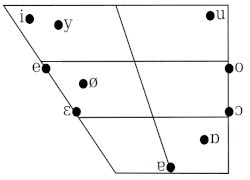
- ^ In the local dialect, [aː] underwent veiling, chiuendosi in timbri del tipo [ɑː] o [.ː].
- ^ Source from the book Enzo Bernardini, Edges in the green. Journey to the hinterland of the Ligurian Riviera delle Palme, San Mauro (TO), Tipografia Stige, 2003.
- ^ to b c Notes and divagations on the ancient civic coat of arms of Ovada, in The Province of Alessandria, October 1982. Retrieved 31 October 2021.
- ^ Ovada, decree 1993-09-17 DPR, concession of coat of arms and gonfalone, up Central State Archive.
- ^ Federico Borsari, Ovada's Stem, up storydiovada.it. Retrieved 5 October 2024.
- ^ San Giacinto, the forgotten patron, Ovada sends him back for only one day, in The Press, 13 August 2020.
- ^ Coats of arms and gonfalone of the Municipality of Ovada, up ACS, Collection of drawings from the coat of arms of municipalities and cities. Retrieved 5 October 2024.
- ^ Data taken from:
- Resident population of the municipalities. Censuses from 1861 to 1991 (PDF), up ebiblio.istat.it, ISTAT.
- Resident population - Time series, up exploredati.istat.it.
Please note: 2021 data refers to permanent census data as of December 31 of that year.
- ^ Source: Data from the register (archived fromoriginal url on 19 August 2014).
- ^ Colombo Gajone and Emilio Costa, Anthology Ovadese, 1963, p. 7, DOI:10.2307/336904. Retrieved 31 August 2018.
- ^ Bulgarianis.com, https://www.bulgnais.com/ventoesole/VS-Ovada.html Missing title for url
url(help). - ^ http://www.storiadiovada.it/art028.html
- ^ Museo Paleontologico "Giulio Maini" - Regional Museum of Natural Sciences, up mrsntorino.it. URL consulted on 6 April 2017.
- ^ Birthplace of St. Paul of the Cross, up Museionline.info.
- ^ Who are we?, in The Little.
- ^ Official site, up ovadaline.
- ^ Editor-in-Office@ovadaonline.net, Mattana, an innovator between TeleOvada and the club Claudio Villa - AlessandriaNews, up alessandrianews.ilpiccolo.net, 30 December 2017. Retrieved 12 August 2024.
- ^ Official site, up Municipal Theatre Ovada.
- ^ Ovada Cinema, up VisitOvada.
- ^ The Torrielli Theatre, up Ovadese.net.
- ^ Teatro Torrielli, up Italian Environment Fund.
- ^ Market show Floroviva, up www.fiorissima.it. Retrieved 9 April 2025.
- ^ Biblioteca Civica Coniugi Marie e Eraldo Ighina, up Municipality of Ovada.
- ^ Library, up Municipality of Ovada.
- ^ Civic Library, up VisitOvada.
- ^ Civic Library Ighina, up Ovadese.net.
- ^ Memories of the Urbense Academy, up Accademia Urbense.
- ^ Catalogue of libraries in Italy: Piemonte, vol. 1, ICCU, 1993.
- ^ to b c d And f g h the http://amministratori.interno.it/
- ^ Presentation Grillano 2022, up Tambass.org.
Bibliography
Explore this chapter
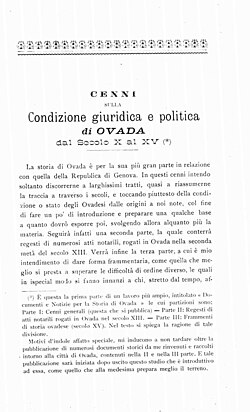
- Ambrose Maineri Fish, Conciliation on the legal and political condition of Ovada from the 10th to the 15th century, Pinerolo, Tipografia Sociale, 1909.
Where to stay · Ovada
Find stays on Booking.comThe wine landscape
This village in wine country
Follow the link between the country, the vineyards and the neighboring territories.
The area, step by step
Trails and routes in Ovada

Acquese area
Grande Cammino · Tappa 9: Ciglione–Ovada
 CyclingPlaces and landscapes along the route
 CyclingPlaces and landscapes along the route
Acquese area
The Streets of Coppi · Ovada–Ovada
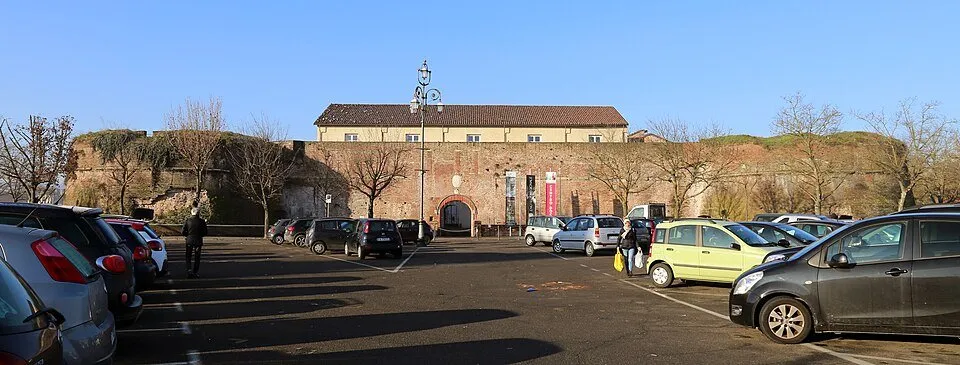 CyclingAround the starting point
Asti, Alessandria and surroundings
Ciclo Cavalcata Aleramica del Monferrato
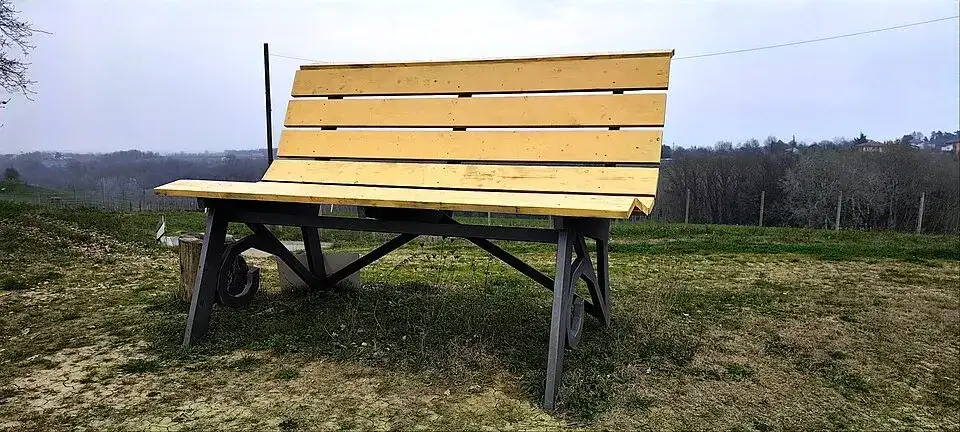 CyclingAround the starting point
Asti, Alessandria and surroundings
Le Strade della Farinata
Mountain bikeAround the starting pointAsti, Alessandria and surroundings
Boschi, vigneti e castelli nell’ovadese
CyclingAround the starting pointAsti, Alessandria and surroundings
Le colline del Dolcetto e la Valle Orba
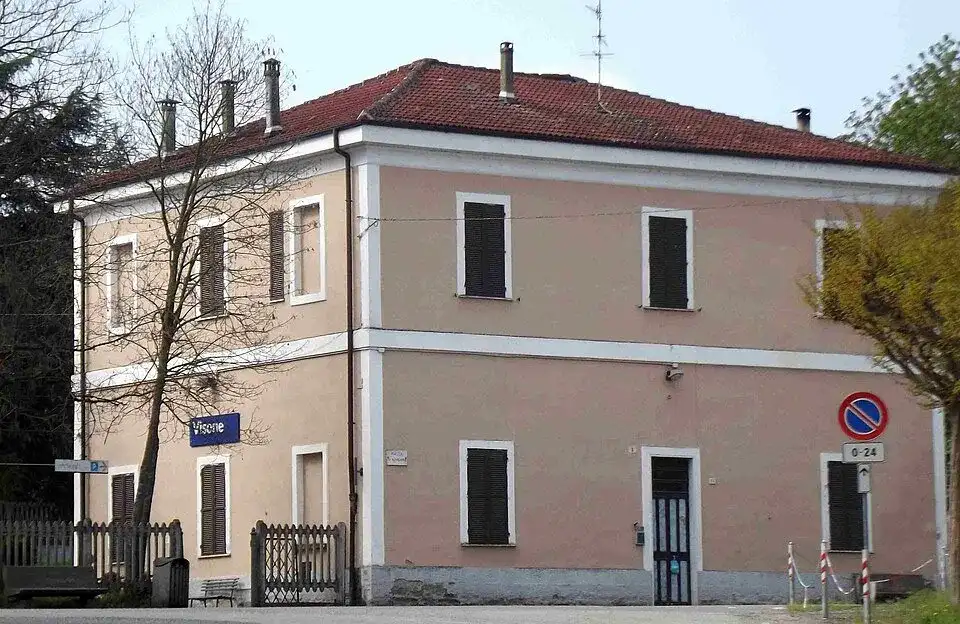 WalkingAround the starting point


Asti, Alessandria and surroundings
Sentiero localita' magnoni - monte pracaban
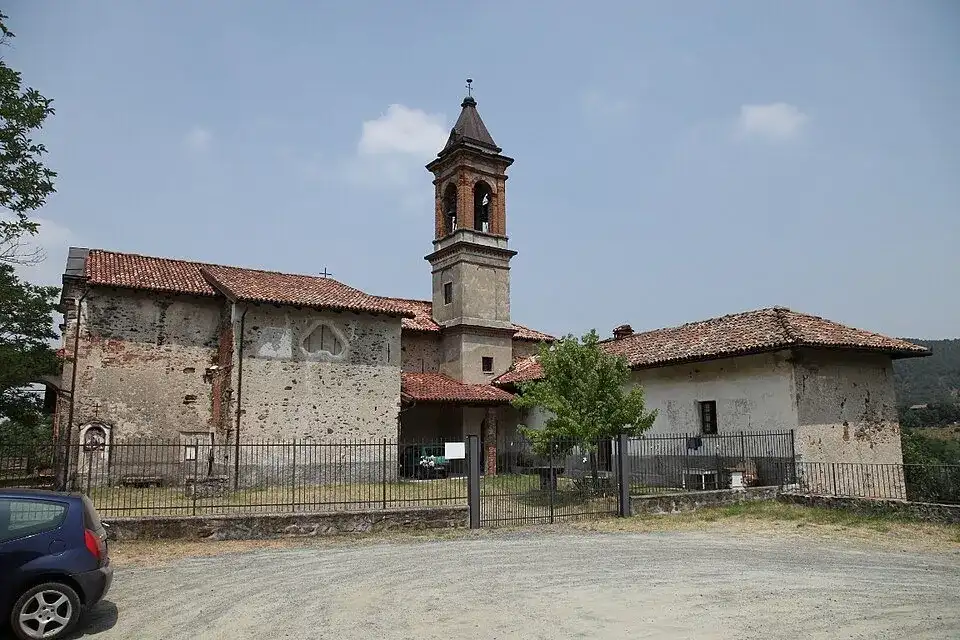 WalkingAround the starting point
Asti, Alessandria and surroundings