Atlas of Monferrato
Spigno Monferrato: sights, history and trails
Alessandria
- Elevation
- 217 m above sea level
- Area
- 54,86 km2
- Demonym
- Patron saint
- Saint Ambrose
A closer look
Discovering Spigno Monferrato
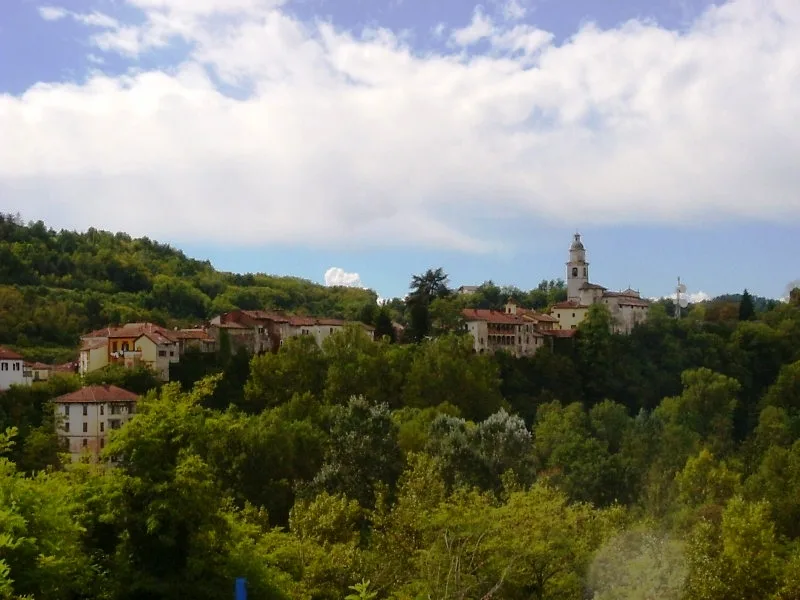
Spigno Monferrato (Spign. in Piedmont) is an Italian municipality of 887 inhabitants[2] from the province of Alessandria in the Piemonte.
Landscape and area
Region · ClimateExplore this chapter
Region
The municipal capital rises on a hill south from a meander of the Valla stream and that dominates from above the valley bottom of the Val Bormida. The communal territory borders Liguria and is the one that pushes more south of the whole province of Alessandria.[5]
Climate
History of Spigno Monferrato
SymbolsExplore this chapter
Alberto Del Carretto with act of 3 February 1300 bought from the Marchesi di Ponzone (Tommaso, Enrico and Manfredino) two thirds of the Spigno district: that is Merana, Serole, Rocchetta[6] And Malvicino. Alberto the widow Tubirgia Fieschi, guardian of his son Francesco, in 1314 sold the territories purchased by his husband to Giacomo Del Carretto, son of Novello's first marquis, Enrico. He completed the possession of Spigno's commission by purchasing in 1332 the other third of territory from the marquises of Ponzone (Raimondo, Oddino and Corradino).
Manfredo, the fifth son of Giacomo, consolidated the possession of Spigno, leaving his son Francesco as chief of the lords of Spigno, Merana, Malvicino and part of the castle of Dego but always under the dominion of the Republic of Genoa from which the lords of Spigno continued to take the investment until 1419, when the Genoese ceded to the Marquis Giovanni Giacomo del Monferrato, just succeeded to the father Theodor II, all the rights to the lands on this side of the Giovi with the agreement that no Genoese bandit could find asylum there.
The lords of Spigno became so vassals of marquises of Monferrato, but the emperor Sigismund of Luxembourg continued to consider himself lord of all those lands and, since Giangiacomo marquis of Monferrato had participated in the anti-Visconti Ghibelline League of Venice and Florence in 1426, Sigismondo appointed the Duke of Milan as his imperial vicar and also forced the lords of Spigno to take the investiture from him.
In 1467 Amedeo IX of Savoia took to the Marquis of Monferrato the lands of Spigno and Cremolino, which he returned through the interposition of Galeazzo Maria Sforza, Duke of Milan
In 1469 William VIII, Marquis of Monferrato granted the Abbey of San Quintino di Spigno the privilege of immunity for the men of his fiefs (Piana, Cagna, Giusvalla and Lodisio).
The Marquis Tommaso Del Carretto, the lordship of Spigno was donated to Luigi Asinari son of Mark and Catherine, sister of Thomas, with two successive investitures given by King Philip II of Spain and the Duke of Milan[7].
To Luigi succeeded his son Marco Antonio[8], who took the investiture from the Ducal Chamber of Milan in 1612 and another in 1615 from King Philip III of Spain, who erected the Spigno fiefdom into a marquisate.
Federico, successor to Marco Antonio, was a restless man who had spent his youth in military service wanted to treat his subjects and neighbors to the military, and his enterprises attracted the Savoy who destroyed the castle. Frederick designed the reconstruction in 1669 and imposed for this reason contributions to his subjects who opposed it. It includes vexation and violence. For his excesses, the Marquis was proscribed and deprived of the fiefs which remained in the ducal chamber of Milan that, after Frederick's death, invested his adopted son Lelio Invrea, a Genoese nobleman.
In 1687 Lelio Invrea Asinari Del Carretto, heir without offspring, passed the marquisate to his brother Ippolito reserve the fruit to life[9].
Emperor Charles VI of Habsburg called to the imperial fisco the Marquisate of Spigno and in 1724 sold it to King Vittorio Amedeo II of Savoy for the sum of 350 000 guilders.
In 1729 in the neighboring Acqui Terme Regies were established schools of grammar, rhetoric, philosophy and theology. The chair of surgery (Vincenzo Malacarne), notary and rash (Luigi Chiabrera and then Benvenuto Borelli) were opened.
In 1731 the feud passed to Countess Anna Canalis of Cumiana, widow Novarina of San Sebastiano, wife morganatica of the abdicate king, and in 1769 to Pietro Novarina, his son.
From 1789 to 1814 Spigno, like all the Piemonte, he remained under the French administration.
In 1918 there died the general Count Paolo Spingardi (very tied to the country), General Commander of the Carabinieri, Minister of War during the Libyan War and in the years before the First World War.
Symbols
The coat of arms was granted by royal decree of 5 November 1925.[10]
The plug plant is a talking weapon. In the head a reference to the Del Carretto family, whose coat of arms of gold, five bands of red was depicted on a wagon pulled by two crowned lions, as is visible on a plate in Piazza San Biagio in Finalborgo.
The gonfalone consists of a red drapery.

Competitions
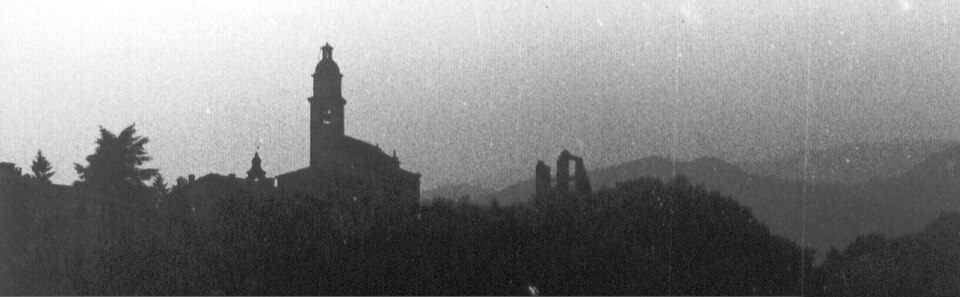
From the time of Barbarossa, Spigno enjoyed the privilege of governing himself in accordance with his own Statutes. Although under the lordship of Genoa and then Monferrato, it was always...Explore this chapter
- Sant'Emerenziana, 23 January
From the time of Barbarossa, Spigno enjoyed the privilege of governing himself according to his own Statutes. As far as under the lordship of Genoa and then the Monferrato, it was always considered an imperial dominion governed by the Ducal Chamber of Milan and in the municipal archives there is documentation of a trip made by representatives of the council to go the Imperial House sitting in Vienna. The territory was erected into a Marquisate in 1615 by Philip III of Spain and in 1724 it was sold to Vittorio Amedeo of Savoy by Emperor Charles VI.
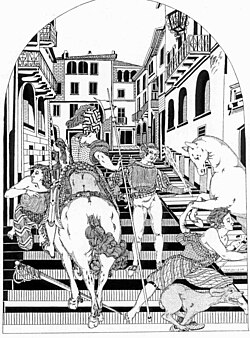
He remained unscathed by the great plague of 1630 and the population vowed to carry out every year, on January 20, a procession of thanksgiving. In 1669 Federico Asinari, who because of his intemperance had undergone the destruction of the castle by the hands of the nearby Savoy, claimed that the population was charged with Corvées necessary for reconstruction, but there were no threats, prisons, murders.
Then the Marquis hired and hid a gang of mercenaries in the village.Pharaohs according to the German etymology), that they should have infierire on the inhabitants on the day of the procession. The insidia was discovered, the suspended procession, and the people rose up on the day of St. Emerenziana who since then became a symbolic feast for Spigno.
The episode saw two Viazzi opposites: Sarneto Viazzi di Villa Rocchetta, Councillor of the Magnificent Community of Spigno, and Ortensio Viazzi (man-at-arms of the Viazzi family of Ponzone) in the Marquis's pay Asinari as commander of the masnadiers. Of Ortensio di Ponzone (and not of the Rocchetta as it says a popular tale) there is a beautiful portrait preserved by descendants. Of Sarneto (do not mention this name) the current descendant cav. Gianni Viazzi was awarded the honorary citizenship of Spigno with Delibera del Consiglio Comunale of 30 July 1981 for personal benemerences and in recognition of the past merits of the family that in direct ascenders, between 1580 and 1744, contributed to the civil and religious life of the Community of Spigno Monferrato, he actively and permanently participated in the Council decurional and conquered the municipal nobility in the seventeenth century.
Anthropic geography
HamletsExplore this chapter
Hamlets
- Shark, on the border with Liguria (province of Savona), is the southernmost inhabited center of the entire province; is divided into Upper Shark And lower. The population, which is decreasing, is mainly made up of elderly people. The church of the lower village preserves a statue of the Madonna, in white marble, by an anonymous artist from the Genoese school of the 18th century, erroneously attributed to Gian Lorenzo Bernini. The sculpture follows the canonical iconography of the Immaculate Conception: the Madonna, with her hands clasped on her chest, standing on a cloud supported by angels, tramples the serpent (which symbolizes Satan). The geographical coordinates of Squaneto Inferiore are 44°29'46" N latitude and 8°21'20" E longitude, those of Squaneto Superiore are 44°29'38" N and 8°20'58" E respectively.
- "Casato" is located on the former SS 30 - towards Savona - a few kilometers from the town of Spigno Monferrato. Among all the churches of Spigno, the Madonna del Casato is of particular historical and artistic importance, which preserves important late Gothic frescoes by the Master of Roccaverano
- "Vico" below the former ss 30 for Ponti, a short distance from the banks of the Bormida di Spigno. It is made up of 16 inhabited houses and some uninhabited; in the middle of them there is a small chapel: San Rocco where every year an inhabitant of this hamlet organizes a party where a small lottery takes place preceded by a mass held by the parish priest of Spigno Monferrato.
- The village or locality of "Turpino" is 4.38 kilometers far from the same town of Spigno Monferrato, of which it belongs, rises at 423 meters above sea level. Turpino is an authentic jewel set among the lunar landscapes of the calanchi, with a sixteenth century church from the stone columns, the old medieval chapel of Madonna della Neve and the Scaletta Palace with the large loggias sheltered from the winds where the caravans were resting on the way of the salt, the sea, the anchovies, a hilly crossroads of merchants, pilgrims and soldiers who preferred to the safest street.
- "Montaldo di Spigno" presents a beautiful series of sacred buildings in rustic baroque style and an enviable view of the woods and gullies between Monferrato and the Apennines.
- "Rivaro", 2 km outside the center of Spigno and on the state road to Acqui Terme.
- "Rocchetta di Spigno", with the ruins of a mighty fortification almost hidden among the tuff gullies, is located on the panoramic road that leads to Serole and the Langa Astigiana.
Society
Demographic evolutionExplore this chapter
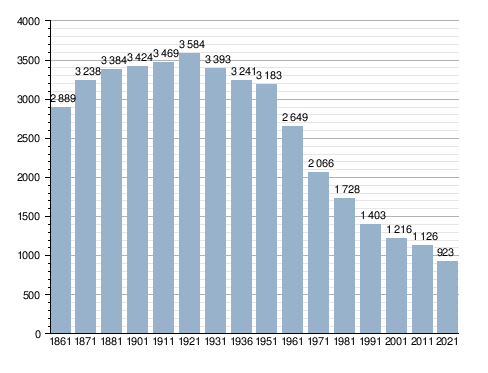
Demographic evolution
Inhabitants registered[11]
Administration
Other administrative informationExplore this chapter
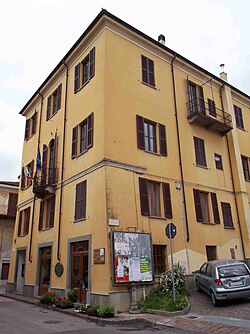
Below is a table relating to the administrations that have succeeded one another in this municipality.
| Period | First citizen | Match | Load | Notes | |
|---|---|---|---|---|---|
| 6 June 1985 | May 20, 1990 | Oscar Decerchi | Christian Democracy | Mayor | [12] |
| May 20, 1990 | April 24, 1995 | Giovanni Marenco | Christian Democracy | Mayor | [12] |
| April 24, 1995 | June 14, 1999 | Giovanni Marenco | center | Mayor | [12] |
| June 14, 1999 | June 14, 2004 | Albino Pietro Piovano | civic list | Mayor | [12] |
| June 14, 2004 | June 8, 2009 | Albino Pietro Piovano | civic list | Mayor | [12] |
| June 8, 2009 | May 26, 2014 | Mauro Garbarino | Civic List Together for Spigno | Mayor | [12] |
| May 26, 2014 | May 26, 2019 | Mauro Garbarino | Civic List Together for Spigno | Mayor | [12] |
| May 26, 2019 | June 9, 2024 | Antonio Visconti | Civic list Community and territory | Mayor | [12] |
| June 9, 2024 | in office | Walter Astengo | list civic Spigno and its fractions | Mayor | [12] |
Other administrative information
In 1928 the municipality of Spigno Monferrato incorporated the territory of the common suppression of Merana, which regained its autonomy in 1947[13]. From 1859 Spigno Monferrato was the capital of the district and was part of the district of Acqui until the suppression of the latter in 1926. It was then incorporated for a year into the district of Alessandria until the suppression of all the district and district bodies in 1927. Finally Spigno Monferrato was part of it until 2010 of the Suol d'Aleramo mountain community, which then merged into the mountain community Alta Val Lemme, Alto Ovadese, Alta Valle Orba, Valle Erro and Bormida di Spigno (renamed later mountain community Appennine Aleramico Obertengo).
Image gallery
Explore this chapter
-
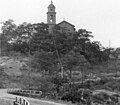 The Parish Church of Rocchetta Spigno
-
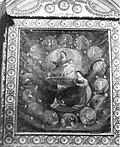 Madonna del Rosario. Painted 1667 at the highest altar of the Parish of Rocchetta
Notes
Explore this chapter
- ^ District of Spigno Monferrato : Municipal Administration and Mayor - Municipality of Spigno Monferrato e città, Alessandria, Piemonte, up www.comune-italia.it. URL consulted on 4 August 2026.
- ^ to b Monthly demographic balance for the year 2026 (provisional data), up demo.istat.it, ISTAT.
- ^ Seismic classification (XLS), up risks.protezionecivile.gov.it.
- ^ Table of degrees/day of Italian Municipalities grouped by Region and Province (PDF), in Law 26 August 1993, n. 412, annex A, National Agency for New Technologies, Energy and Sustainable Economic Development, 1 March 2011, p. 151. URL consulted on 25 April 2012 (archived fromoriginal url on 1 January 2017).
- ^ Regional Technical Charter raster 1:10.000 (vers.3.0) of the Region Piemonte - 2007
- ^ Source, up spignomonferrato.com (archived fromoriginal url on 13 February 2012).
- ^ Historical archive of Spigno. Acts of loyalty 1579 and 1590.
- ^ Municipal archive. Promise of loyalty 1608.
- ^ Municipal Historical Archives. Act 1665, instrument of fidelity 1691, Register of the convoked.
- ^ Spigno Monferrato, decree 1925-11-05 RD, concession of coat of arms, up Central State Archives, Municipal Issues. Retrieved 2 November 2021.
- ^ Data taken from:
- Resident population of the municipalities. Censuses from 1861 to 1991 (PDF), up ebiblio.istat.it, ISTAT.
- Resident population - Time series, up exploredati.istat.it.
Please note: 2021 data refers to permanent census data as of December 31 of that year.
- ^ to b c d And f g h the http://amministratori.interno.it/
- ^ Administrative history of Spigno Monferrato, up elesh.it.
Bibliography
Explore this chapter
- G. Bio- Antiquities and prerogatives of Acquisition, Turin 1818;
- G. Lavezzari History of Acqui 1878;
- - Savio, Monument aquensia 1967);
- C. Respondence On the day of Sant'Emerenziana there is a curious episode. Don Rodrigo goes to Spigno in the La Stampa - Edition of Alessandria 24/1/1980
Where to stay · Spigno Monferrato
Find stays on Booking.comStories, places and people
More about Spigno Monferrato and the surrounding area
Follow a thread of history and see where it leads.

The area, step by step
Trails and routes in Spigno Monferrato
 CyclingPlaces and landscapes along the route
Asti, Alessandria and surroundings
The Wine and Flavor Route · Aromatici · Rocchetta–Montechiaro
 CyclingPlaces and landscapes along the routeCyclingPlaces and landscapes along the route