Atlas of Monferrato
Volpedo: sights, history and trails
Alessandria
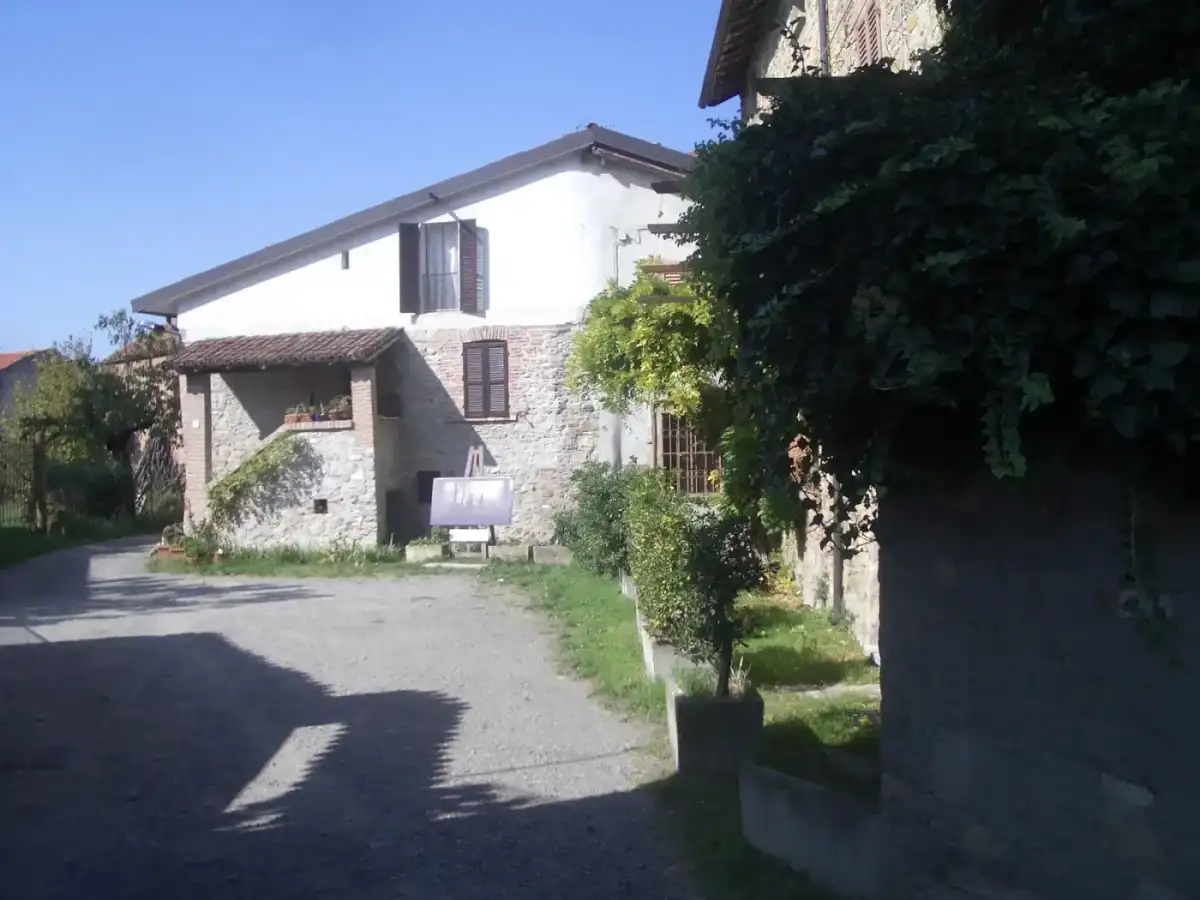
- Elevation
- 182 m above sea level
- Area
- 10.48 km²
- Demonym
- Volpedesi
- Patron saint
- Blessed Giovannino Costa
A closer look
Discovering Volpedo
Volpedo (Volpedo in the local dialect, pronunciation [vəlˈped]) is an Italian municipality of 1 152 inhabitants[2] from the province of Alessandria in the Piemonte, on the extreme hillsides at the outlet in the plain of the river Curone.
It is famous for having given birth to the painter Giuseppe Pellizza and for fruit growing, especially for the cultivation of fishing.
It is part of the Union of Municipalities Community Lower Hills Curone.
Volpedo was included in the club of the most beautiful villages in Italy, created by the Tourism Consultation of the Association of Italian Municipalities (ANCI), and from 2019 to 2024 he was assigned the green esp.[5]
Landscape and area
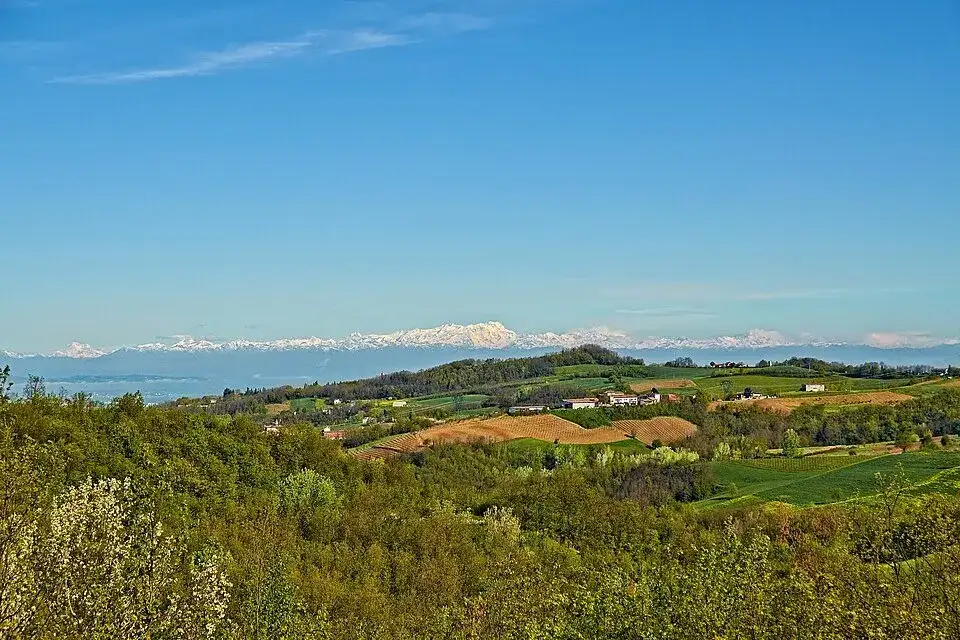
The village is located at the outlet in the Po Valley of the Curone brook, with the plain that opens north and the hills that surround the valley south, dominated by the view of...Explore this chapter
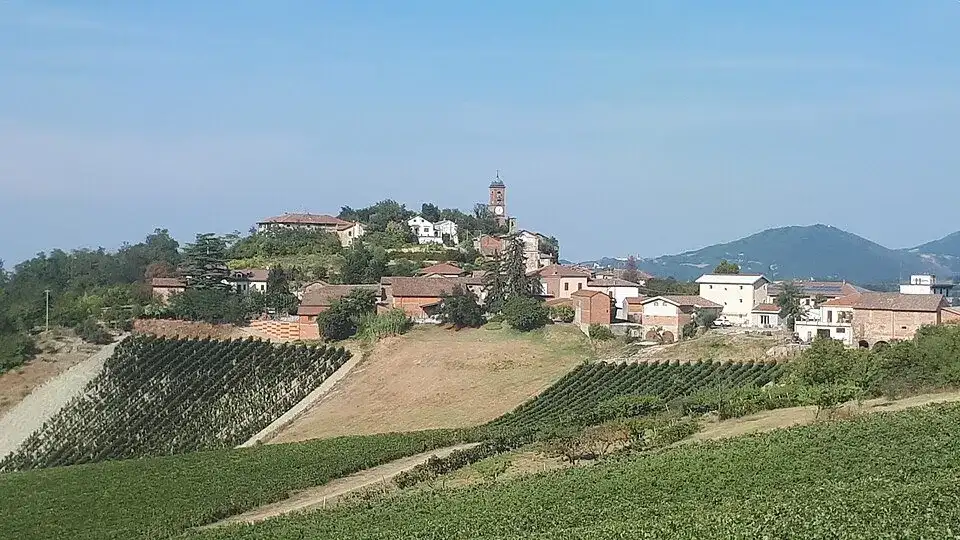
The village is located at the outlet in the Po Valley of the Curone stream, with the plain that opens to the north and the hills surrounding the valley south, dominated by the view of Mount Giarolo. The historical nucleus rises on a hill on the right bank of the stream, around which the walls of the river were built. castrum, which extends towards the watercourse, constituting a fording point towards the opposite bank, on which in fact the bridge was built.
While the center is located about 182 m above sea level., the hamlets and various scattered houses are located on the surrounding hills and can reach the 479 m s.l.m. of Poggio di Brienzone.[6]
Origin of the name
In documents of the 10th century the village is attested with several names: Vicus Piculus, Vicus Peculus , Vipegulus , Vulpeculus , therefore a vicus , that is a Roman village,...Explore this chapter
In documents of the 10th century the country is attested with several names: Vicus Piculus, Vicus Peculus, Vipegulus, Vulpeculus, therefore in any case a I'm sorry, that is, a Roman village,[7] from which the current name.
History of Volpedo
SymbolsExplore this chapter
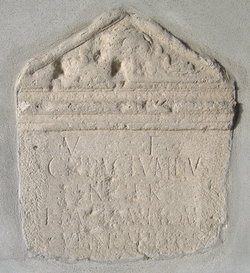
A sepulchral stele, today nestled in a side wall of the parish church, bears witness to the Roman presence already in the 1st century,[8] even if the settlement probably dates back to the ancient Ligurian populations.[9]
The first written memory of the country is 21 August 966,[10] where the parish church is named, and is then mentioned in other documents of the 10th century as I'm sorry. Also from the same period would be, as well as the parish church, the castrum, the fortified village of which part of the city walls (rebuilt in the 16th century) is still visible today.
On 5 November 979 Emperor Otto II gave Volpedo to the Bishop of Tortona,[7] By binding the country's fortunes to the city, Volpedo will be rescued during the siege of Federico Barbarossa in 1155.[7]
In 1347 Tortona passes under the Visconti of Milan, who in 1412 give Volpedo as a fief to the captain of the sale Perino Cameri. The latter, in 1425, gives it to the Fabbrica del Duomo di Milano which allows the village considerable administrative autonomy.[11]
In 1482, a 8-year-old boy from Volpedo, Giovannino Costa, was found barbariously killed at Casalnoceto. The murder arouses great stir and soon we talk about miracles attributed to the boy, creating his cult.[12] Local Jews are being blamed and a real pogrom is being seen against them.[13] The boy, who became blessed, is now the patron of the country.
At the beginning of the duchy of Maximilian Sforza, Ghibelline, the Volpedesis, led by Marquis Bernabò Malaspina, part guelfa, set a fire to the castle of nearby Monleale, destroying it completely. On 12 July 1513 Duke Sforza sent a commissioner to Volpedo to restore order and punishment, the next day with the help of 300 monleales, knocked down the walls of the castrum [14] which were rebuilt since 1589 when Milan was under Spanish domination.[15]
In 1738 Volpedo, along with all the dovenese, passed under the reign of Sardinia. The fief will pass from the Fabbrica del Duomo to the Marquis Filippo Guidobono Cavalchini of Momperone in the 1757. If feudalism had not been abolished in 1797, the fief would finally pass in 1849, Malaspina, since the only daughter of the Cavalchinis marries Luigi Maria Malaspina.[16]
In 1801, in Napoleonic age, the French authorities appointed Mayor of the Municipality Giovanni Antonio Sovera.[17]
With the birth of the kingdom of Italy and the introduction of the mandates (from 1859 to 1926), Volpedo becomes the capital of the homonymous commission, including Casalnoceto, Momperone, Monleale, Montegioco, Montemarzino and Pozzol Groppo, as part of the around Tortona.
In the 19th century the physiognomy of the country changes deeply, with the progressive demolition of the walls surrounding the ancient castrum: in 1835 the parish church was enlarged, in 1856 the current bridge on the Curone was built, replacing a wooden one,[18] and in 1859 the new Municipal Palace.[19] Only in 1885 will the current road between Monleale and Castellar Guidobono, on which the Tortona-Monleale tramway ran between 1889 and 1933.
Towards the end of the 19th and early 20th century it reaches a certain fame as a spa thanks to the Fonti della Maddalena, where in 1922 a hotel with restaurant will be built. The building, transformed into night clubs after World War II, will be destroyed by a fire in which two children lost in 1979, ending all activities.[20][21][22]
Between 1929 and 1947 the municipalities Berzano di Tortona, Monleale And Volpeglino they became part of Volpedo.[23]
In 1935 lawyer Carlo Baravalle, the country's podestà, decided to establish the wholesale fruit market that led to the realization of the covered market in 1936-1937.[24][25]
Also in 1937 the Lungocurone road was built, which is a new concrete firgine along the creek.[26]
Between 6 and 7 October 1977 a serious flood fell down on the bottom Piemonte[27] causes significant damage[28] to the activities and dwellings along the Curone.
Symbols
The coat of arms of the municipality of Volpedo was granted, together with the municipal gonfalone, by decree of the President of the Republic of 15 July 2011.[29]
The coat of arms resumes that of the conductor Perino da Tortona who asked and obtained from the Duke of Milan Filippo Maria Visconti in 1412 "the fief of Volpedo for the services lent that, with subsequent testamentary disposition, gave to the factory of the Duomo of Milan".
The gonfalone is a red drape.
What to see in Volpedo
Explore this chapter
(Giuseppe Pellizza, Letter to the Mayor, Volpedo, 15 May 1904[30])
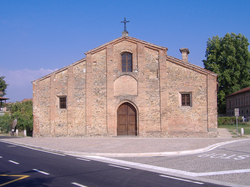
- The main monument of the village is the Romanesque church, already mentioned in documents from the 10th century, remodeled in the 15th century. Inside there are frescoes, some also valuable, attributed to the school of the doves brothers Manfredino and Franceschino Boxilio (XV century - early 16th century)[31], a school also active at the Milan Cathedral
- Notable is the part that has been saved of the powerful five hundred bastions that enclosed the castrum and which outline the ancient part of the village
- The nineteenth-century parish church of St. Peter the Apostle rises on the place where the house of John Costa was placed, a young shepherd who was barbaricly killed in 1468 and became, as Blessed Giovannino martyr, patron of the country[32] In the church there is a San Luigino, work by Giuseppe Pellizza from Volpedo (1894)
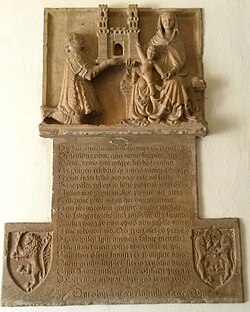
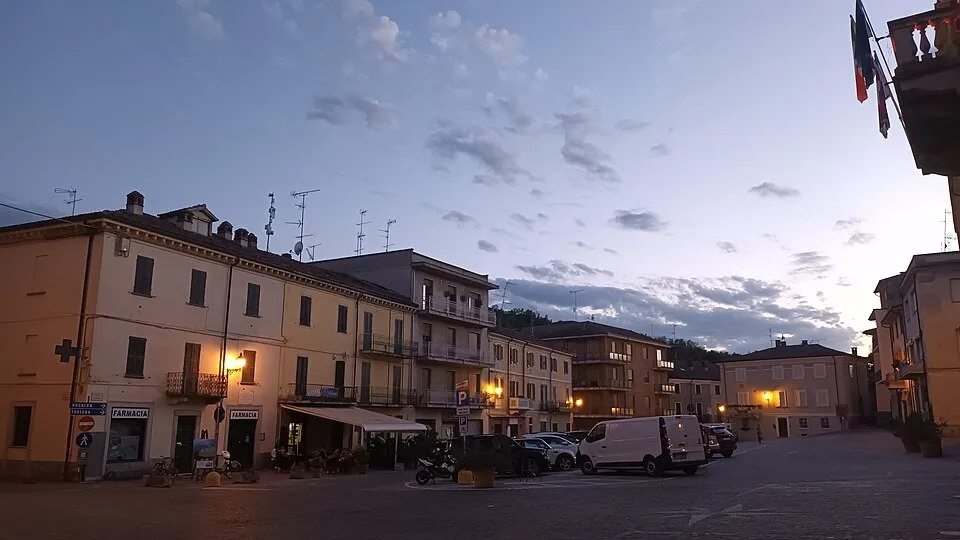
- In the main square of the town (Piazza della LibertÃ) is the nineteenth-century municipal palace, inside which there is a stone with marble bas-relief that recalls the donation of Volpedo by Perino Cameri to the Fabbrica del Duomo in Milan in the fifteenth century: it is the work of sculptor Jacopino da Tradate
- At the end of the village, towards the cemetery, there is the birthplace and the study by Giuseppe Pellizza da Volpedo. In it are preserved work tools, personal objects, books and also some works of the artist.
- In the area of Cascina Boffalora there is a oak known as a monumental plant, with a stem of about 320–315 cm and a height of 15 m.[33]
- The former castle converted into a manor residence Palazzo Guidobono Cavalchini Malaspina Penati.
Society
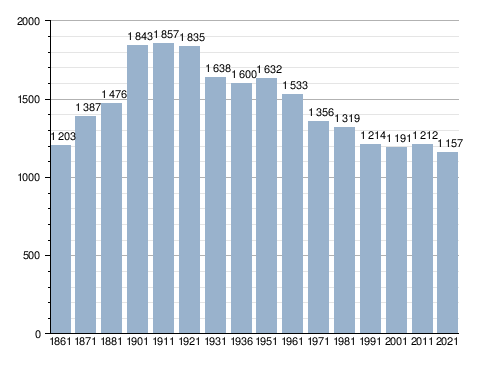
Demographic evolution · Foreign ethnic groups and minorities · Languages and dialectsExplore this chapter
Demographic evolution
Inhabitants registered[34]
Foreign ethnic groups and minorities
Languages and dialects
Although the country is located in Piedmont, the local dialect is of transition, of southern Lombardy type (L03) with strong Emilian influences, returning within the framework of the dialect of the city.
Culture
Education · The cultural legacy of PellizzaExplore this chapter
Education
The cultural legacy of Pellizza
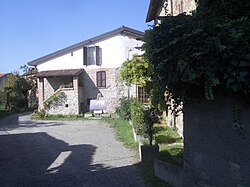
The painter Giuseppe Pellizza da Volpedo (1868-1907), one of the most important Italian painters of his time, known to the general public especially for being author of the famous canvas The Fourth State. Pellizza made the choice to live and work in the town where he was born and, as a sign of attachment to his land, to add "from Volpedo" to his signature.
In 1966, the daughters gave the Municipality a studio-atelier, rich in important testimonies on her life and artistic production and her place of work. In 1990 the Municipality, with the mayor Gervino, launched the Project Pellizza which led to the opening of the studio in 1994. The study had been restored and reported to the conditions in which the painter had left it, except for the outside entrance built in the years immediately following the donation.
In fact the painter, who had begun the construction of the studio in 1888, accessed it through a door from the adjacent home.
The project also proposed to enhance the artist's cultural legacy by recovering, on the architectural level, as far as possible, the physiognomy and the atmosphere of his canvases depicting views of the country at the end of the nineteenth century.
On 1 May 1995, for the Workers' Day the square in which it was painted The Fourth State, placed inside the ancient one castrum, in front of the Palazzo dei Malaspina, local lords against whom the peasant social struggles of the late nineteenth century were directed, has been restored and, significantly, from Piazza Castello, formerly Piazza Malaspina, has been renamed "Fourth State"[38].
From the study an itinerary that compares today's Volpedo - no more than so compromised by building expansion - with that of the paintings of the painter. The route touches the ancient church and the garden surrounding it (refigured in theSpring Idyll), the street that leads to Palazzo Malaspina, that of the parish church, the town hall square (depicted in Piazza di Volpedo) and other places. Ten reproductions of the artist's works, in large format, mark the stages of this ideal journey.
In September 2001, 100 years were celebrated by the creation of a new Fourth State: the painting returned for a few days in the study where it was painted, attracting thousands of visitors to the village.
The work of valorisation allowed in 2006 to insert Volpedo into the club de The most beautiful villages in Italy.
On September 6, 2009 the route was integrated with the inauguration of the Piazza degli Emigranti where a reproduction of the last work of Pellizza was installed, known as "Membra stanche".
Among the cultural initiatives undertaken must be remembered the opening, in Piazza Quarto Stato, of a Educational museum dedicated to the analysis of the artistic path of the painter; then again the many manifestations that see the local community engaged in the valorization of the territory, starting from the legacy of memories pelicans. An important contribution in this sense is given by the Association Pellizza da Volpedo.[39]
Economy
The economy is mainly agricultural. Volpedo has been a great wine producer for centuries and, since the beginning of the 20th century, following an epidemic of philhexera that struck the...Explore this chapter
The economy is mainly agricultural. Volpedo has been a great wine producer for centuries[40] and, from the beginning of the 20th century, following an epidemic of phylloxera that struck the vines, fishing was introduced, in exchange for the mulberry.[41] Following the realization of the wholesale market in 1935, by the podestà Carlo Baravalle, the name Pesca di Volpedo spread, which will become a trademark since 2008, protected by its consortium[42] and marketed by the cooperative of producers Volpedo Frutta based in Monleale.[24]
Administration
Other administrative informationExplore this chapter
Below is a table which lists the administrations that have happened in this municipality from the second post-war period to today.
| Period | First citizen | Match | Load | Notes | |
|---|---|---|---|---|---|
| March 31, 1946 | 4 August 1948 | Manlio Cassanini | Social-communist | Mayor | [43] |
| 4 August 1948 | 3 October 1948 | Peter Cella | Comm. pref. | [44][45] | |
| 3 October 1948 | November 16, 1952 | Manlio Cassanini | Social-communist | Mayor | [46] |
| November 16, 1952 | April 16, 1954 | Manlio Cassanini | Social-communist | Mayor | [47][48] |
| April 25, 1954 | November 18, 1956 | Giovanni Cappelletti | Social-communist | Mayor | [49] |
| November 18, 1956 | November 19, 1960 | Franco Bidone | Christian Democracy | Mayor | [50] |
| November 19, 1960 | December 15, 1964 | Franco Bidone | Christian Democracy | Mayor | [51] |
| December 15, 1964 | June 1970 | Franco Bidone | Christian Democracy | Mayor | [52] |
| June 1970 | June 1975 | Franco Bidone | Christian Democracy | Mayor | [53] |
| June 1975 | June 1980 | Renato Corradi | Mayor | [54] | |
| June 1980 | July 10, 1985 | Franco Bidone | Christian Democracy | Mayor | [55] |
| July 10, 1985 | May 25, 1990 | Franco Bidone | Christian Democracy | Mayor | [56] |
| May 25, 1990 | April 24, 1995 | Giuseppe Paolo Gervino | Christian Democracy | Mayor | [56] |
| April 24, 1995 | June 14, 1999 | Giuseppe Paolo Gervino | left | Mayor | [56] |
| June 14, 1999 | November 20, 2003 | Pier Angelo Rosa | civic list | Mayor | [56] |
| November 20, 2003 | June 14, 2004 | Paola Fioravanti | Comm. pref. | [57][58] | |
| June 14, 2004 | June 8, 2009 | Pier Angelo Rosa | civic list | Mayor | [56] |
| June 8, 2009 | May 27, 2014 | Giancarlo Filippo Pio Caldone | list: the village | Mayor | [56] |
| May 27, 2014 | May 26, 2019 | Giancarlo Filippo Pio Caldone | list: the village | Mayor | [56] |
| May 26, 2019 | December 31, 2019 | Giancarlo Filippo Pio Caldone | list: the village | Mayor | [48][56] |
| December 31, 2019 | September 21, 2020 | Elisabeth Gardens | list: the village | Deputy Regent | [56] |
| September 22, 2020 | May 25, 2026 | Elisabeth Gardens | list: the village | Mayor | [56] |
| May 25, 2026 | in office | Elisabeth Gardens | list: the village | Mayor | [56] |
Other administrative information
The commune was part of the Mountain community Valli Curone Grue and Ossona, when dissolved it first entered the union of Colli Tortonesi hill community municipalities and then, in 2010,[59] in the hilly community Bass Grue Curone[60].
Sport
SoccerExplore this chapter
Soccer
Volpedo, after having had militant football teams in the UISP or CSI Championships[61] for years, he had, for the first time, a team in the championship of Third category FIGC, the U.S. Volpedo, starting from the 1997-1998 season, and then moving to the Second category in the 2005-2006 season[62] and do not rewrite at the end of 2008-2009 season, returning to compete in the UISP Championship.[63]
For the 2025-2026 season, U.S. Volpedo was again enrolled in the composition of Terza Categoria alessandrino.[64]
Notes
Explore this chapter
- ^ Municipal offices observe a day of holiday on December 27, for San Giovanni
- ^ to b Monthly demographic balance for the year 2026 (provisional data), up demo.istat.it, ISTAT.
- ^ Seismic classification (XLS), up risks.protezionecivile.gov.it.
- ^ Table of degrees/day of Italian Municipalities grouped by Region and Province (PDF), in Law 26 August 1993, n. 412, annex A, National Agency for New Technologies, Energy and Sustainable Economic Development, 1 March 2011, p. 151. URL consulted on 25 April 2012 (archived fromoriginal url on 1 January 2017).
- ^ Le Spighe Verdi tris in the province of Alessandria: award-winning Volpedo, Gamalero and Gavi, up The Press, 3 August 2024. Retrieved 4 August 2024.
- ^ ArcGIS Enterprise - Topographic Base Multiscala Piemonte[interrupted link], up webgis.arpa.piemonte.it. Retrieved 7 April 2022.
- ^ to b c Goals, p. 447.
- ^ Memorial plaque placed on the side of the gravel by the municipal administration
- ^ Francesca Canevari, When Volpedo counted, in The Sheet, no. 2, Independent monthly magazine of Volpedo and Val Curone, May 1970.
- ^ Goals, p. 448.
- ^ Cammarata, p. 18.
- ^ Cammarata, pp. 57-66.
- ^ Italo Cammarata, Diary of the year 1482 A.D., Guardamagna, 2019, ISBN 978-88-98832-78-1.
- ^ Cammarata, pp. 76-78.
- ^ Cammarata, p. 111.
- ^ Cammarata, p. 189.
- ^ Official website of the Municipality of Volpedo, up common.volpedo.al.it.
- ^ Goffredo Casalis Geographical, historical, statistical, commercial dictionary of the states of S.M. the king of Sardinia", vol. 11, Turin, Editori Maspero, Marzorati e Comp., 1845, p. 101.
- ^ Cammarata, p. 190.
- ^ Armando Bergaglio, The holidaymakers arrive in the city of Belluno, up dovetails.it.
- ^ Emilio Croce, The sources of La Maddalena in Volpedo: legend and history, Homage to the 1927 subscribers of "Il Bianco-Verde", Il Bianco-Verde, 1926.
- ^ To Magdalene tragic fatality, in Seven Days in Tortona, 5 May 1979, p. 5.
- ^ Historical Archives of Municipalities – ANPR, up anagrafenazionali. interno.it. Retrieved 15 November 2021 (archived fromoriginal url 15 December 2021).
- ^ to b Fishing in Volpedo, up volpedofrutta.com (archived fromoriginal url on 15 March 2022).
- ^ Peaches of Volpedo, up flavorsdelpiemonte.net.
- ^ Renovation of the Volpedo-Monleale bridge and other road works in Val Curone, in Seven Days in Tortona, 5 April 1997.
- ^ ARPA Piemonte (PDF), up arpa.piemonte.it. Retrieved 18 April 2020 (archived fromoriginal url on 16 January 2022).
- ^ 7 OCTOBER 1977 - 7 OCTOBER 2017: 40 YEARS AFTER THE ASSASSINA PLACE, up segiorniatortona.it, Seven days at Tortona, 11 October 2017. Retrieved 18 April 2020 (archived fromoriginal url 22 November 2021).«Volpedo (municipal streets, aqueducts, hydraulic works) 50 million (198000 € of 2018)»
- ^ Volpedo (Alessandria) 15.07.2011 concession of coat of arms and gonfalone, up Presidency.governo.it. Retrieved 3 November 2021.
- ^ Municipal Archive of Volpedo
- ^ La Pieve di Volpedo and painters Manfredino and Franceschino Basilio - Giorgio Stara Tedde. - Tortona: Typography Adriano Rossi, 1915. - 59 p.
- ^ The murder was accused of a friar of the servants and, as a steward, a Jew from Tortona who confessed under torture and were sent to death in Milan. Cf. Italo Cammarata and Ugo Rozzo, Blessed John patron of Volpedo. A child "marty" of the end of the 15th century, Volpedo 1997 (Notebooks, 1)
- ^ Ministry of Agricultural Food and Forest Policy, List of monumental trees in Italy, up politicsagricole.it.
- ^ Data taken from:
- Resident population of the municipalities. Censuses from 1861 to 1991 (PDF), up ebiblio.istat.it, ISTAT.
- Resident population - Time series, up exploredati.istat.it.
Please note: 2021 data refers to permanent census data as of December 31 of that year.
- ^ to b demo.istat.it, https://demo.istat.it/str2020/index.html Missing title for url
url(help). - ^ ePublic Srl- www.epublic.it, The school of childhood becomes state, up Municipality of Volpedo. Retrieved 5 August 2024.
- ^ VIGUZZOLO - IST. COMPR., up only.Education.gov.it. Retrieved 4 June 2025.
- ^ Pierluigi Pernigotti, Volpedo per Pellizza - Racconti pezziani around the Fourth State, Volpedo, 1-14 May 1995
- ^ Pellizza da Volpedo – ODV Association, up furzza.it, 11 July 2023. Retrieved 19 July 2023.
- ^ Cammarata, p. 80.
- ^ Fruit and cereals - Piemonte Agricultural Quality, up www.piemonteagri. Retrieved 19 July 2023.
- ^ B.U. No. 24, up region.piemonte.it. Retrieved 16 February 2019.
- ^ Delegation of the City Council 31 March 1946: Election of the Mayor, in Municipal Archive of Volpedo, vol. 348.
- ^ Following the division between Volpedo, Monleale, Volpeglino and Berzano the prefect appoints a commissioner and new elections are undecided.
- ^ Minutes of the Prefectious Commissioner on 4 August 1948, in Municipal Archive of Volpedo, vol. 348.
- ^ Delibera City Council of 3 October 1948: Recognition of existence in the elected councilors of the requirements prescribed by law and settlement of the municipal council, in Municipal Archive of Volpedo, vol. 348.
- ^ Delibera Council of 16 November 1952: Election of the Mayor, in Municipal Archive of Volpedo, vol. 348.
- ^ to b The warrant ceases because of the mayor's death.
- ^ Delibera City Council n. 2 of 25 April 1954: Election of the Mayor, in Municipal Archive of Volpedo, vol. 349.
- ^ Delibera City Council n. 17 of 18 November 1956: Election of the Mayor, in Municipal Archive of Volpedo, vol. 349.
- ^ Delibera City Council n. 19 of 19 November 1960: Appointment of the Mayor, in Municipal Archive of Volpedo, vol. 349.
- ^ The Rag. Bidone rieletto Mayor of Volpedo, in The people, no. 30, Tortona, December 17, 1964, p. 10.
- ^ Already at work these mayors and joint committees, in The Dertonino People, 5 July 1970, p. 1.
- ^ The new advisers of the localities, in Seven Days in Tortona, 21 June 1975, p. 5.
- ^ Almost all elect the juntas in the dovenaise, in Seven Days in Tortona, 5 July 1980, p. 7.
- ^ to b c d And f g h the j k https://amministratori.interno.it/
- ^ Municipal Council of Volpedo, Distrust to the mayor. Art. 52 subparagraph 2D.LGS. 267/00. Approval., no. 32, 14 November 2003."...Favor to the motion of distrust n.9 contrary to the motion of distrust no.3 on n. 13 present and n.12 voters... Following the approval of the motion of distrust, the Mayor and the respective junta cease from office and the process of dissolution of the City Council is initiated.»
- ^ The Prefect of the Province of Alessandria, Decree of Dissolution, Prot. nr. 389/A.C./Area II, 20 November 2003.
- ^ S.B. Also Volpedo in the Hill, in The Little, 23 October 2009. Retrieved 29 August 2022.
- ^ Lower Union Grue-Curone: approved new Statute, up Bassgruecurone.it, 18 February 2010.
- ^ Referee and misfortune against a beautiful Volpedo, in Seven days in Tortona, Saturday 28 March 1987, p. 10.
- ^ The Volpedo in the second, in Seven days in Tortona, 25 June 2005, p. 19.
- ^ Super League Uisp - Volpedo trionfa, in Seven days in Tortona, Saturday 25 June 2016, p. 17.
- ^ David Maruffo, 2nd and 3rd category - Volpedo what enthusiasm!, in Seven days in Tortona, Friday 5 September 2025, p. 20.
Bibliography
Explore this chapter
- Italo Cammarata, A Milanese island in Val Curone, Varzi, Guardamagna, 2013, ISBN 978-88-95193-92-2.
- Monsignor Clelio Goggi, History of Municipalities and Parishes of the Diocese of Tortona, 4th ed., Tortona, Litocoop, 2000.
Where to stay · Volpedo
Find stays on Booking.comStories, places and people
More about Volpedo and the surrounding area
Follow a thread of history and see where it leads.
 Sconosciuto · Public domain
Maximum Codevilla
Massimo Codevilla (born 14 November 1962 in Tortona) is a former Italian basketball player from Volpedo .
Read the story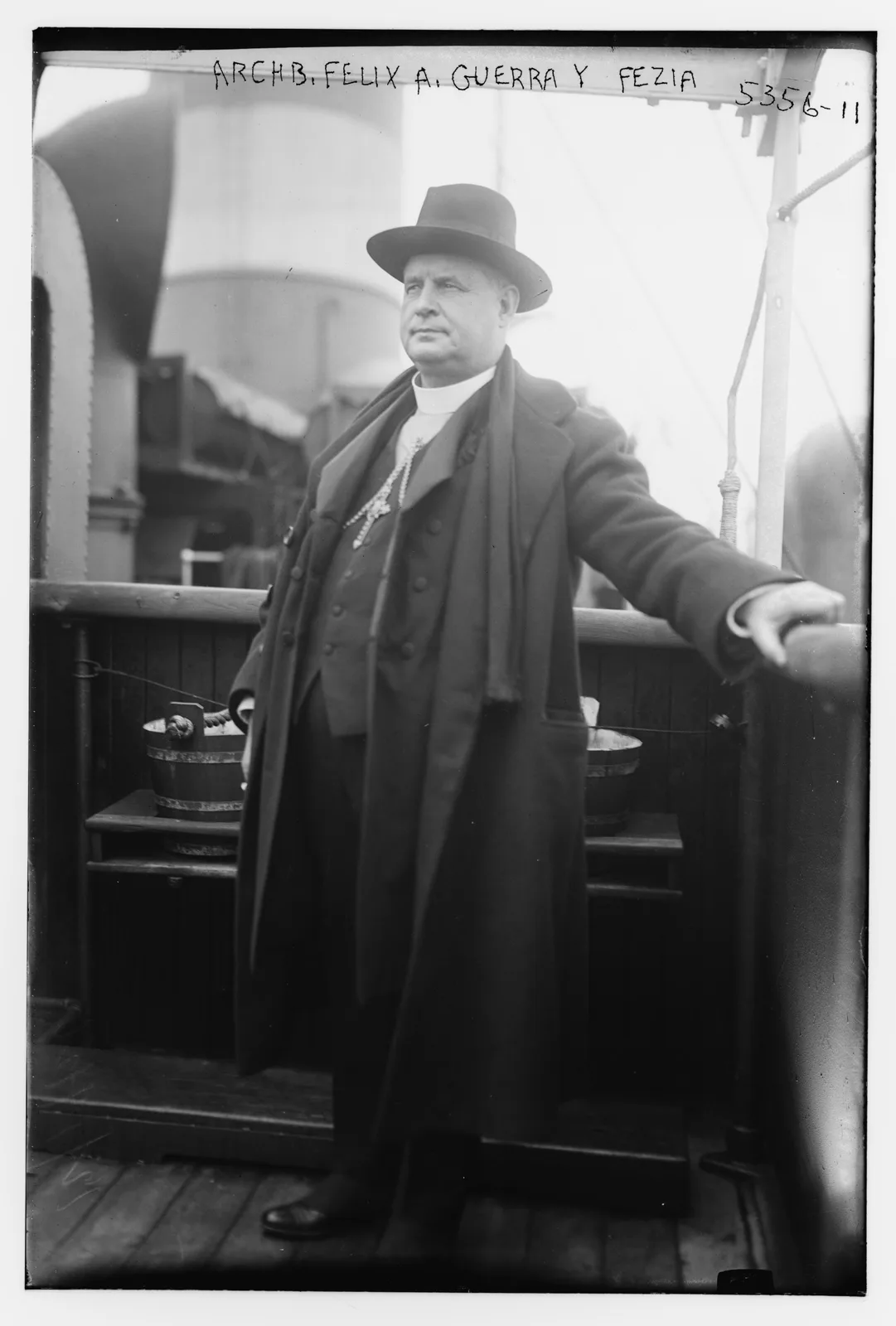 Bain News Service, publisher · Public domain
Happy Ambrose Fetish War
Happy Ambrose Fetish War ( Volpedo , 7 December 1866 – 10 January 1957 Gaeta was an Italian Catholic missionary and archbishop.
Read the storyThe area, step by step
Trails and routes in Volpedo
 CyclingAround the starting point
Asti, Alessandria and surroundings
La Mitica del centenario HC

Asti, Alessandria and surroundings
Sentiero fabbrica curone - selvapiana

 WalkingAround the starting point
Asti, Alessandria and surroundings
Sentiero volpedo - serra del monte

Asti, Alessandria and surroundings
Sentiero serra del monte - fabbrica curone

Asti, Alessandria and surroundings
Sentiero tortona - volpedo

Asti, Alessandria and surroundings
Sentiero selvapiana - capanne di cosola
 WalkingAround the starting point
Asti, Alessandria and surroundings
Sentiero la monta' di bogino (volpedo)
 WalkingAround the starting point
Asti, Alessandria and surroundings
Sentiero anello del monte brienzone
WalkingAround the starting pointAsti, Alessandria and surroundings
Sentiero “intorno al poggio di monleale”
WalkingAround the starting pointAsti, Alessandria and surroundings