A closer look
Birth control: at a glance
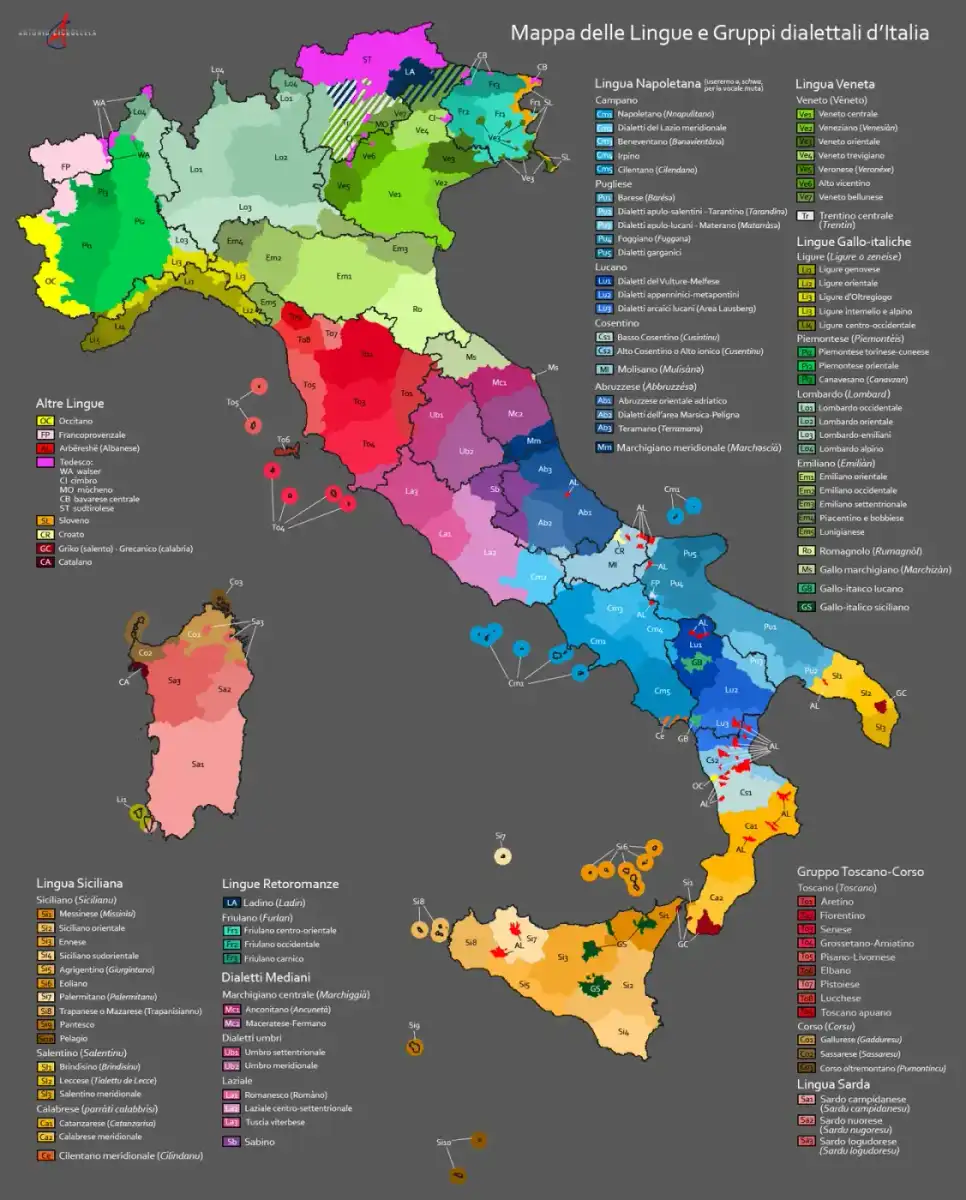
The dialect of the city[1] is an uncoded dialect of gallo-italic strain, traditionally attributed to the Emilian language[2][3][4][5] [6], despite a strong prominence of lumbar characteristics[senza fonte] (it is in fact also classified as a crossroads dialect)[7] and the inclusion of Piedmontese and Ligurian elements, due to the geographically mixed position of Tortonese[senza fonte], or the eastern portion of the province of Alessandria bordering the Oltrepò pavese (Lombardy), whose main center is the city of Tortona. From a physical point of view, Tortona is roughly identified by the dialects between the Scrivia stream and the Staffora stream.
The allocation to the Emilian is linked to the adjacent dialect of Oltrepadano, which in turn connects with the dialect of Piacenza: in the same case there are forms and characteristics common to the variants of the province of Piacenza[8]. In reality, all these three dialects in the Emilian context appear to be much more Lombard than the Emilian average, sometimes due to typological characteristics such as the use of the Milanese feminine plural (i donn) or the extensive use of syntagmatic verbs (trà su, fà su, borlà giò).
Definition of the
Explore this chapter
Piedmontese strain
Ligurian strain
Toucan
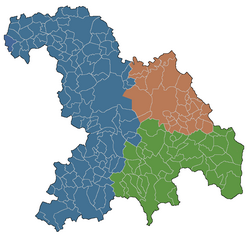
The continuum dialettale emiliano-romagnolo is also highlighted in Province of Alessandria[9]. In fact, since 1853 Bernardino Biondelli in Saggio sui dialetti gallo italici[10] it was ascribed to the Emilian group the varieties extended along the course of the Po river, between the Adriatic sea and Valenza (center of Alessandria north-west of Tortona) and included within «una linea trasversale che da Valenza sul Po raggiunge serpeggiando l'Appennino presso Bobbio» (Province of Piacenza). From Biondelli are called "valenzano" the spoken of the eastern portion of the province of Alessandria, which he lists among the "varieties" of the pleasure.
From more recent studies than those of Biondelli, Valenza is included in the lower-monferrin area of Piedmont, as well as Pecetto di Valenza. The municipalities of are already considered Tortona Bassignana, Rivarone And Piovera. They speak dialects attributable to urban Alessandria Montecastello, Pietra Marazzi, Frugarolo, Bosco Marengo and the fraction of Spinetta Marengo. The Piedmontese traits are rapidly disappearing already in the hamlets of Mandrogne and Castelceriolo under the municipality of Alessandria, which are therefore from Tortona. Pozzolo Formigaro speaks a Ligurian dialect of beyond yoke connected to that of Novi Ligure. In the upper Val Curone (from San Sebastiano Curone And Fabbrica Curone onwards) a Ligurian dialect is spoken[11], very similar to that of Val Borbera. A Ligurian dialect is also spoken in Garbagna, in the highest part of Val Grue[12].
The boundaries as described derive from weighted evaluations on the numerous isoglosses passing through the spoken of in the area, but it is necessary to consider that speeches of the same strain rarely present net divisions and passages gradually occur.[13]. For this reason, scholars identify transition varieties between Emilian and Lombard of uncertain classification in the eastern area of the Province of Alessandria.[14]
Affinity with the dialect beyondpadano
Considering all the influences present in the dialect of the surrounding area, the most linguistic affinity is evident with the nearby...Explore this chapter
Considering all the various influences present in the dialect of the surrounding area, the most linguistic affinity is evident with the nearby dialect overpadano.
The dialect of Oltrepò Pavese, that is the area of Lombardy immediately east of Tortonese and south of Po which has as its main center the city of Voghera, is also classified as part of the Emilian group and, like the dovenese, characterized by a strong Lombard influence, elements of contact with Piedmontese and, in the most southern municipalities, Ligurian influences. The territories of Oltrepò Pavese and Tortonese have had similar evolutions, due to the geographical proximity and various historical events of the area, in particular the relations with Milan, of which Ducato have been part almost 400 Years. Until the beginning of '900, the similarities between the dialects of the city and beyond were much more marked than today, so that several key elements of the dialect of Voghera last century have remained unchanged in the dialect of the city.
| Milan | Modern vogherese | vogherese of the twentieth century | Toucan |
| ♪ | ♪ | It's just | It's just |
| Hi. | I'm sorry. | I'm the one | I'm the one |
| vöna/vüna | vöna/vüna | öna | öna |
| voor | voor | o | o |
Another element of recent detachment from the dialect of Belluno is the loss of rotacism in the formation of definite articles.
| Milan | Modern vogherese | vogherese of the twentieth century | Toucan | |
| sing. mas'c | el | to the | ar | ar |
| sing. fem. | The | The | ? | ? |
| pl. fem | the | the | the | the |
These phonetic changes in the Oltrepadano are partly due to the influence of the Pavese dialect, which in recent decades has undergone an increasing lexical influence from the nearby and prestigious Milan dialect.
Characteristics
Among the most important features, comparing the dove with Western Lombard and Western Emilian varieties it is found that:Explore this chapter
Among the most important features, comparing the dove with Western Lombard and Western Emilian varieties it is found that:
- Nasal vowels lose the final N and form a diphthong:
- Milanese. murun But tort. muróu
- mil., pavese and pleasure man But tort. móu
- Mil. vin But tort. véi as in the pav. rustic and piac. vëin (with -n used only for graphic convention)
- Mil. cumün But tort. cumöi as in the pleasure cumoin (with -n used only for graphic convention)
- Mil. Bregnan But tort. Bërgnàu.
- Rotaacism is very common:
- ♪ de la But tor. dra as in the upper Val Staffora (the vogherese, spoken by Godiasco onwards towards the north, does not instead have rotacism[15]) and Bobbiese dra
- Mil. la But tort. rä as an alessandrino, varzese and bobb. ra
- Mil. el But tort. är as varzese and bobb. ar.
- There is the scevà (ə), usually transcribed as it is. Also present in Piacenza, bobbiese, pavese, Oltrepadano, in some varieties mantovane and Piedmont (also known as terza vocale piemontese):
- Mil. stela But tort. stëlä like piac. stëla.
- Mil. met But tor. mët as in piac. and overflow (sometimes there is no distinction with the unrounded semi-open rear vowel ʌ: mät).
- Atonics and nasals take on an almost neutral sound (.) as in overp., pav. Bobb. and piac. (this phono is referred to as Ä)
- Mil. Nadal But tor. Nädal.
- As in the lomelline dialect, there are no phonemes [ts] and [dz].
- The verbs of the II conjugation have the infinities with the I:
- Mil. avègh But tort. ävìgh like piac. avigh
- Mil. vurè But tort. vurì like piac. vurì
- As in the south-eastern Piedmontese and in the bobbiese, the pronoun of the 3rd individual male is U; it is nevertheless LA for female:
- Mil. el ved But tort. U vëdä
- Mil. la ved But tort. U vëdä.
- The II conjugation joins the IV:
- Mil. piasè But tort. piäsì.
- The verbs can have typical Piedmontese endings:
- Mil. nüm andem But tort. nüatär a 'ndumä as in the piem. noi i 'nduma
- Presence of particle between pronoun and verb (clitic subject):[16][17]
- Mil. mì gh'hoo But tort. mì a gh'hö like piac. me/mi a g'ho and piem. mi i l'ho.
The verbs
Word to be · Questioning form · Word to haveExplore this chapter
Word to be
- Indication present: mì a sóu/són, tì t'è, lü l'è, nüatär a sumä, vüatär a sì, lur i són/sóu.
- Imperfect Indication: mì a erä/serä, tì t'er, lü l'erä/er, nüatär a ermä/sermä, vüatär ervi, lur i erän.
- Indicative future: mì a särö, tì tä särè, lü u särà, nüatär a särumä, vüatär a sarì, lur i säróu/särón.
- Conjoint present: che mì a siä, che tì tä siä, che lü u siä, che nüatär a siäm/simä, che vüatär a sii/siuv, che lur i siän.
- Imperfect joint: che mì a fiss, che tì tä fiss, che lü u fissä, che nüatär a fissmä, che vüatär a fissi, che lur i fissän.
- Conditional: mì a särissi, tì tä säriss, lü u särissä, nüatär a särissmä, vüatär a särissi, lur i särissän.
- Gerundio present: sendä/sindä.
- Past participle: stat.
- Infinite present: vess/ess.
Questioning form
- A sóu/són?
- Is it?
- Is that it?
- Sumän?
- Siv?
- Són?
Word to have
- Indication present: mì a gh'hö, tì tä gh'è, lü u gh'ha, nüatär a gh'uma, vüatär a gh'ii, lur i gh'hóu/hón.
- Imperfect Indication: mì a gh'ävivä/ivä, tì tä gh'äviv/iv, lü u gh'ävivä/ivä/avä, nüatär a gh'ävivmä/äviumä/iväm, vüatär a gh'ävivi/ivi, lur i gh'ävivän/ivän/avän.
- Indicative future: mì a gh'ävrö, tì tä gh'ävrè, lü u gh'ävrà, nüatär a gh'ävrumä, vüatär a gh'ävrì, lur i gh'ävróu/ävrón.
- Conjoint present: che mì a gh'abiä, che tì tä gh'abi, che lü u gh'abiä, che nüatär a gh'abiäm, che vüatär a gh'abi, che lur i gh'abiän.
- Imperfect joint: che mì a gh'iss/äviss, che tì tä gh'iss/äviss, che lü u gh'issä/ävissä, che nüatär a gh'issäm/issmä/ävissmä, che vüatär a gh'issi/ävissi, che lur i gh'issän/ävissän.
- Conditional: mì a gh'ävriss, tì tä gh'ävrè, lü u gh'ävrissä, nüatär a gh'ävrissäm, vüatär a gh'ävrissi, lur i gh'ävrissän.
- Gerundio present: ävindä.
- Past participle: ävüü.
- Infinite present: ävìgh.
Word to go
- Indication present: mì a vagh, tì ta vè, lü u va, nüatär a vam/anduma, vüatar a 'ndè, lur i vóu/vón.
- Imperfect Indication: mì a 'ndava, tì t'andav, lü u 'ndava, nüatär a 'ndavma/andàvuma, vüatar a 'ndavi, lur i 'ndavan.
- Indicative future: mì a 'ndrö/andarö, tì t'andrè/andarè, lü u 'ndarà, nüatär a 'ndruma/andaruma, vüatar a 'ndarì, lur i 'ndrón.
- Conjoint present: che mì a vaga, che tì ta vagh, che lü u vaga, che nüatär a vagam, che vüatar a vaghi, che lur i vagan.
- Imperfect joint: che mì a 'ndass, che tì t'andass, che lü u 'ndassa, che nüatär a 'ndassam/andassma, che vüatar a 'ndassi, che lur i 'ndassan.
- Conditional: mì a 'ndriss, tì t'andriss, lü u 'ndriss/andrissa, nüatär a 'ndrissma, vüatar a 'ndarissi, lur i 'ndróu/andrón.
- Gerundio present: andanda.
- Past participle: andat.
- Infinite present: andà.
Word to do
- Indication present: mì a fas, tì ta fè, lü u fa, nüatär a fam/fuma, vüatar a fè, lur i fóu/fón.
- Imperfect Indication: mì a fava, tì ta fav, lü u fava, nüatär a favma/fàvuma, vüatar a favi, lur i favan.
- Indicative future: mì a farö, tì ta farè, lü u farà, nüatär a faruma, vüatar a farì, lur i faróu/farón.
- Conjoint present: che mì a fagh/fas, che tì ta fagh/fas, che lü u faga/fas, che nüatär fagam/fassam, che vüatar fè, che lur i fagan/fassan.
- Imperfect joint: che mì fass, che tì ta fass, che lü u fassa, che nüatär a fassam/fassma, che vüatar a fassi, che lur i fassan.
- Conditional: mì a fariss, tì ta fariss, lü u fariss/farissa, nüatär farissam/farissma, vüatar farissi, lur i farissan.
- Gerundio present: fanda.
- Past participle: fat.
- Infinite present: fà.
Questioning form
- Fagan/fassan?
- Fèt?
- Fal?
- Faman/fuman?
- Fèv?
- Fóu/fón?
Airtight forms
- tì ta fè <= tì ta fauv.
- Imperfect Indication: mì a fasiva, tì ta fasiv, lü u fasiva, nüatär a fasivma, vüatar a fasivi, lur i fasivan.
- Imperfect joint: mì a fasiss, tì ta fasiss, lü u fasissa, nüatär a fasissma/fasissam, vüatar a fasissi, lur i fasissan.
- Gerundio present: fasinda.
Conjugation
- Indication present: mì a cant, tì ta cant, lü u canta, nüatär a cantam/cantuma, vüatar a cantè, lur i cantan.
- Imperfect Indication: mì a cantava, tì ta cantav, lü u cantava, nüatär a cantavma/cantàvuma, vüatar a cantavi, lur i cantavan.
- Indicative future: mì a cantarö, tì ta cantarè, lü u cantarà, nüatär a cantaruma, vüatar a cantarì/cantarè, lur i cantaróu/cantarón.
- Conjoint present: che mì a canta, che tì ta cant, che lü u canta, che nüatär a cantam/cantma, che vüatar cantè, che lur i cantan.
- Imperfect joint: che mì a cantass, che tì ta cantass, che lü u cantassa, che nüatär a cantassam/cantassma, che vüatar a cantassi, che lur i cantassan.
- Conditional: mì cantariss, tì ta cantarè, lü u cantariss, nüatär a cantarissam/cantarissma, vüatar a cantarissi/cantarè, lur i cantarissan.
- Past Gerundio: cantanda.
- Past participle: cantà.
- Infinite present: cantà.
II (and III) conjugation
- Indication present: mì a pias, tì ta pias, lü u piasa, nüatär a piasam/piasuma, vüatar a piasì, lur i piasan.
- Imperfect Indication: mì a piasiva, tì ta piasiv, lü u piasiva, nüatär a piasivma/piasìvuma, vüatar a piasivi, lur i piasivan.
- Indicative future: mì a piasarö, tì ta piasarè, lü u piasarà, nüatär a piasaruma, vüatar a piasarì, lur i piasaróu/piasarón.
- Conjoint present: che mì a pias, che tì ta pias, che lü u piasa, che nüatär a piasam/piasuma, che vüatar piasì, che lur i piasan.
- Imperfect joint: che mì a piasiss, che tì ta piasiss, che lü u piasissa, che nüatär a piasissam/piasissma, che vüatar a piasissi, che lur i piasissan.
- Conditional: mì a piasariss, tì ta piasarè, lü u piasariss, nüatär piasarissam/piasarissma, vüatar a piasarissi, lur i piasarissan.
- Gerundio present: piasinda/piasenda.
- Past participle: piasü.
- Infinite present: piasì.
IV conjugation
- Indication present: mì a finiss/fniss, tì ta finiss/fniss, lü u finissa/fnissa, nüatär a finissam/finissma/fnissma, vüatar a finì/fnì, lur i finissan/fnissan.
- Imperfect Indication: mì a finiva/fniva, tì ta finiv/fniv, lü u finiva/fniva, nüatär a finivma/finìvuma/fnivma, vüatar a finivi/fnivi, lur i finivan/fnivan.
- Indicative future: mì a finirö/fnirö, tì ta finirè/fnirè, lü u finirà/fnirà, nüatär a finiruma/fniruma, vüatar a finirì/fnirè, lur i finiróu/finirón/fnirón.
- Cungiunti present: che mì a finisca/fnisca, che tì ta finiss/fniss, che lü u finisca/fnisca, che nüatär a finissam/finissma/fnissma, che vüatar a finissi/fni, che lur i finissan/fnissna.
- Imperfect joint: che mì a finiss/fnissa, che tì ta finissi/fnissi, che lü u finissa/fnissa, che nüatär a finissam/finissma/fnissam, che vüatar a finissi/fnissi, che lur i finissan/fnissan.
- Conditional: mì a finiriss/fnirissa, tì ta finiriss/fniriss, lü u finiriss/fnirissa, nüatär a finirissam/fnirissam, vüatar a finirissi/fnirissi, lur i finirissan/fnirissan.
- Gerundio present: fininda/finenda/fnenda.
- Past participle: finì/fnì.
- Infinite present: finì.
III conjugations
- Indication present: mì a cur, tì ta cur, lü a cura, nüatär a cùram/curma, vüatar a curì, lur i curan.
- Imperfect Indication: mì a curiva, tì ta curiv, lü u curiva, nüatär a curivma/curìvuma, vüatar a curivi, lur i curivan.
- Indicative future: mì a curərö, tì ta curərè, lü u curarà, nüatär a curaruma, vüatar a curərì, lur i curaróu/curarón.
- Conjoint present: che mì cura, che tì ta cur, che lü u cura, che nüatär cùram/curma, che vüatar curì, che lur i curan.
- Imperfect joint: che mì a curiss, che tì ta curiss, che lü u curissa, che nüatär a curissam/curissma, che vüatar curissi, che lur i curissan.
- Conditional: mì a curariss, tì ta curarè/curariss, lü u curariss/curarissa, nüatär a curarissam/curarissma, vüatar curarissi, lur i curaróu/curarón.
- Gerundio present: curinda.
- Past participle: curs.
- Infinite present: cur.
Examples of Tortonese dialect
La parabula del Fiö Trasun (dialetto di Isola Sant'Antonio) · The months of the year · NumbersExplore this chapter
La parabula del Fiö Trasun (dialetto di Isola Sant'Antonio)
Ä gh'erä una vòtä in un cit päis un om che u gh'evä dü fiö.
Un dì är püssé giun di dü frädé l'è ändai dä só padär e u gh'ha dicc: "Päpà, ä vöj ävé tüt cul ch'um tucä! Dem cul che l'è är mè!"
Är vegg, ch'u vurivä täntä bé (forse äncä trop) äi só fiö, l'ha facc cul che cust u 'gh ciämav'ä lü.
Pochi dì dopu, cul giuvnot, l'ha ciäpà sü tüt i sò sod e u 's n'è ändacc. Änt unä cità luntänä l'ha vivü älegrament inciucändäs insemä ä di só ämis e bäländä cun i scärmass.
Äcsì, in poch esmänn, l'è spes tüt i sod, e lü l'è rästà sensä nient.
Csè ch'u duvivä fà? 'Me ch'u särissä scampà? Ändè che gh'avrissä truvà un toch äd pän?
Ä la fèn l'è andacc dä 'n cuntädèn e u gh'ha ciämà: "Äviv däbsogn d'un servitur?"
"Sì", u gh'ha rispondü 'r cuntädèn, "ma cmè ta sè cust ann ä gh'umä 'vü la brènä, tropä aquä e pär gióntä lä timpestä. Ä podäró dàt ämmà 'n pó 'd pän e nient atär.
"Ä gh'è nò däbsogn che äm dee atär, bastä che mì ä mörä nò!"
"Tüt i dì t'ändrè 'nt är mè cämp e 'n cul prà ä päsculà i mè pursé e i mè böcc. Èt cuntènt?"
E 'r puvrass l'ha purtaa är päscul är bestiam du sò pädró, trì, cèn', des, vènt, tänti vòlt.
Mä quänd che lü u värghevä un pursé grass, che u mängiav'i giändä, u zevä trä lü: "Povrä mì! S'a füssä rästaa ä cà, quäntä méj ä särissä stacc! 'Mä ch'l'erä bel dä mè päpà! Invece ädess stoo mälissim!"
E pär nò murì u mangiavä erbä e rädis, e u piänzivä: "Almeno pudissä turnà däi mè!"
E piänz'incö, e piänzä dumän, u n'in pudivä piü; la fam e i dulur a 'l favän smägrì semper püssé.
Insì, dopu 'nä para 'd mes, anca se la cà 'd só padär u l'erä täntä luntà, l'ha pinsaa 'd turnà indrerä.
Dop ävé cäminaa diversi dì e diversi nöcc, l'è rivaa in pé disculs e strässaa 'nt är päis ändè ch'a stavän i só.
Qänd só päpà l'ha vüst gnì ävänti, ädasi ädasi, räsent la busslä dlä curt, cui ögg bass, l'ha criaa dlä cuntintessä, u gh'ha curs incunträ e u l'ha bäsaa 'ns la frunt, in faciä, äns la bucä.
"Nò, padär mè! Basäm nò! A son stai trop cätiv, i mè pcà ä son trop gross, ä son piü degn dä ess är vostär fiö!"
Mä 'r pädró l'ha ciäma ses serv e u 'gh disä: "Portee qui är vistii püssè bel che mì ä gh'abiä e mätìgäl ädoss; poi mätìgh un äné änt u did, e i scarp ai pé; vüatär, tiree sü 'd l'aquä, vischee 'r fögh e mässee 'r vidé püssè bel, pärchè a vöj che tüti a fajan festä.
Guardé: äst mè fiö l'erä pers e 'dess l'è stai truaa äd növ!"
E pö s'è giraa inver är fiö: "Andum", u gh'ha dicc, e l'è entraa sübit in cà cun u giunot, är quäl u tigniva cun tüt dü i män lä snisträ där padär.
E tüt u dì u s'è mängiaa, u s'è bivüü täntä vèn e ä 's son cäntaa bei cänsó.
The months of the year
- Genàr
- Febràr
- Mars
- Äprìl
- Magg
- Giöi
- Löj
- Ägust
- Setémbär
- Utùbär
- Nuvémbär
- Dicémbär
Numbers
- Jöi
- Düü
- Trii
- Quatär
- Cencu
- Ses
- Set
- Ot
- Növ
- Des
The days of the week
- Lünedì
- Märtedì
- Märculdì/märcurdì
- Giuedì
- Venardì
- Sabät
- Duminicä
Proverbs
- Genàr u fa i pont, febrar u i ronta.
- Ä Cärvà u 's märidä tüti i rutämà.
- Mars, märsot, tänt l'è u dì 'me rä nöt.
- Mars märsóu, trii cätiv e jöi bóu.
- Är prim äd mars, u 's va scals.
- Pasquä dai öv, u 's märidä i bei fiöi.
- U 'n gh'è ävrì ch'l'abiä nò spighì.
- Magg: festä, fiur e fam.
- Quänd che magg u fa l'urtlóu, täntä pajä e poch gróu.
- Löj pultróu, u portä süch e amlóu.
- Rä rusà d'ägust a impinsä 'r but.
- L'aquä d'ägust a rinfrëscä u tusch.
- Setembär sitimbréi, tra sü l'üvä e cavä 'r véi.
- Utubär cucubär, l'è 'r mes ch'i scavn'i rugär.
- Nuvembär nuvimbréi, l'è 'r mes ch'i cavn'är véi.
- Nädal cui tò, Cärvà cui mat.
- U var püssè un po' d'aquä a rä sò stägióu che rä cärossä 'd Näpulióu.
- Trè donn e 'na pügnatä i fón un märcà.
- Cartä cäntä, vilóu parlä.
- Gnentä l'è bóu pär i ögg.
- Märidàss l'è un'urä, ma guai se l'è dürä.
- Är märidà l'è 'nä nöt, ma l'è 'nä longä cändilä.
- Indè ch'u 'gh n'è, u Signur u 'gh n'in mändä.
- Diu u i fa e pö i cumpagnä: un mäcäróu e 'nä läsagnä.
Notes
Explore this chapter
- ^ Recognizing the arbitrariness of definitions, in the nomenclature of the voices the term "language" is used according to ISO 639-1, 639-2 or 639-3. In other cases, the term "dialet" is used.
- ^ (IT) Fabio Foresti, Emilian dialects Romagna, up treccani.it. Retrieved 3 January 2014.
- ^ Piemonte - Valle d'Aosta, Istituto Geografico De Agostini per Selezione dal Reader's Digest, Novara, 1998, p. 37
- ^ (IT) Lorenzo Ferrarotti, Dissemination and preservation of linguistic traits in some oriental Piedmont dialects, up academia.edu, Italian journal of dialectology. Retrieved 25 November 2020.
- ^ E. Allasino, C. Ferrier, S. Move, T. Telmon, Languages Piemonte (PDF), up joenturapiemonteisa.net, Institute of Social Economic Research of Piemonte. Retrieved 20 November 2019.
- ^ Introduction to Italian dialectology, Grassi C. - Sobrero A. A. - Telmon T., Laterza Editori, Roma-Bari, 2003, p. 57
- ^ Cartina Treccani dialetti lombardi (JPG), up images.treccani.it.
- ^ E. Allasino, C. Ferrier, S. Move, T. Telmon, Le Lingue del Piemonte, Istituto di ricerca Economico Sociali del Piemonte, Torino, 2007, p. 11
- ^ Fabio Foresti, Italian Language Profile of Emilia-Romagna, Publisher Laterza, Bari, 2010, p. 120
- ^ Bernardino Biondelli, Essay on the Gallo-italic dialects, up archive.org. Retrieved 11 May 2014.
- ^ Giulia Petracco Sicardi, For the definition of the Ligurian-Padana amphizona, in Linguistic Studies on the Ligurian-Padan amphizona, Turin 1992, pg. 13-25. See also Claudio Gnoli and Daniele Vitali, "Voci" at www.appennino4p.it
- ^ Romano Rovelli, dialect of Garbagna, Tortona 2007
- ^ Giacomo Devoto, Gabriella Giacomelli, The dialects of the regions of Italy, up archive.org, Sansoni University. Retrieved 10 February 2014.
- ^ David Ricca, Diagnosis, up treccani.it, Treccani. Retrieved 4 May 2014.
- ^ see Ethnographic Linguistic Atlas of Italy and Southern Switzerland, point 290
- ^ Massimo Vai, MATERIALS FOR A HISTORY OF MILANES PRODUCTS, in ACME, vol. 67, no. 2, 19 December 2014, pp. 101-144, DOI:10.13130/2282-0035/4573. Retrieved 13 October 2024.
- ^ Lorenzo Ferrarotti The clitic pronouns subject of Piedmont in an area perspective (PDF).

Bibliography
Explore this chapter
- Maurizio Cabella, Dizionario del dialetto tortonese, ed. Dell'Orso, Alessandria, 1999.
- Blondelli Bernardino, Saggio sui dialetti gallo italici
- Foresti Fabio, Profilo linguistico dell'Emilia-Romagna, Laterza Publishers, Bari, 2010
- Grassi Corrado, Sobrero Alberto A., Telmon Tullio, Introduzione alla dialettologia italiana, Laterza Publishers, Bari, 2003
- Devoto Giacomo, Giacomelli Gabriella I dialetti delle regioni d'Italia, Sansoni University, Florence, 1972
Continue your journey