Atlas of Monferrato
Pozzolo Formigaro: sights, history and trails
Alessandria
- Elevation
- 171 m above sea level
- Area
- 36.18 km²
- Demonym
- Well-being
- Patron saint
- San Sebastiano
A closer look
Discovering Pozzolo Formigaro
Pozzolo Formigaro (Posseu in Piedmont and Liguria) is an Italian municipality of 4 552 inhabitants[1] from the province of Alessandria in the Piemonte.
Agricultural and Industrial Centre Ninety-six, located at the gates of Novi Ligure, has always been an important commercial and road hub.
Origins of the name
If unanimous is the understanding of local storiographs on the derivation of the name "Pozzolo" that would indicate the place where the first inhabited nuclei were formed...Explore this chapter
If unanimous is the understanding of local storiographs on the derivation of the name "Pozzolo" that would indicate the place where the first inhabited nuclei were formed, constellated with wells to irrigate and drink men and animals, not as clear is the origin of the addition "Formigaro". The canon Bottazzi indicated that the name was originally "Fornuce" and that the subsequent denomination "Formica" or "Formigaro" formed to avoid omnimia. In 1899, almost a century after the Historical Note of Bottazzi, two scholars, Mario Ferretti and Achille Remotti, in their Historical cenno around the ancient Pozzolo Formigaro hamlet, propose the thesis that the nickname "Formigaro" derived from the excessive population of the places.
Professor Piergiorgio Caramagna, who many of his studies dedicated to the Bengal topponomastic, examines many previous theories without becoming a definitive solution. In 2001, Mons. Sergio Pagano, prefect of the Vatican Secret Archives and author of interesting research on the area of the dovetail, gave prints the Tortona Chronicle by Tomeno Berruti, edited around 1580. In the text we find: "...Pozolo Formigaro, place insigne et a bono castelo, is deto Pozolo then that almost every small house of its villages has a pozo, et are not masonized, but only, hollowed out in the land et giara, et are strong asai; et is then deto Formigaro from the great ants who are in that countryside, in which is very little Tomeno Berruti handed down an authentic rift of life led by the villagers and makes us clearly understand how Pozzolo was literally besieged by ants. From the descriptions of Tomeno Berruti it has also come to hypothesize that this is the "reapisting form" and the "formica delle zolle" which in addition to infesting the territories, with their work they impoverished also the crops and yield of the soil.
History of Pozzolo Formigaro
SymbolsExplore this chapter
Appointed in various acts of the X century as Puteolus Fornuce or Puteolus de Borlasca soon entered into the orbit of the commune of Tortona and was fortified by it around the year 1095.
Together with Tortona was conquered in 1155 by Barbarossa. Passed in the 12th century between the domains of the Marquises of Bosco, it passed again to Tortona. In 1255 the local community rebelled against the city and the issue was resolved with the signing of a peace treaty which recognized greater rights for the people of Pozzolo.
In 1437 he was purchased by the Duke of Milan. In 1527 it was granted in fief to Domenico Sauli, Genoese, son of Antonio. The Castle he remained the property of the family until its extinction, when the king of Sardinia changed his feudal rights.
Symbols
The coat of arms and gonfalone of the municipality of Pozzolo Formigaro were granted by decree of the President of the Republic of 26 March 1963.[4] In the coat of arms is depicted, in the blue field, the Town Castle, with the silver head, loaded with a well, in assonance with the toponym. The gonfalone is a blue drape.
What to see in Pozzolo Formigaro
The castle of Pozzolo Formigaro from the fifteenth century architecture, but with a part of sixteenth-century structure, symbol of the country, is municipal seat and figure among the "...Explore this chapter
Pozzolo Formigaro castle[5] from the fifteenth century architecture, but with a part of 17th century structure, symbol of the country, is municipal seat and figure among the "Open Castles" of the Basso Piemonte. The oldest part preserves the carraia port with a posture in which are still visible the grooves of the drawbridge. Inside, in the council hall, frescoes from the church of Ghiare and a Madonna wood of the fifteenth century.
Of architectural interest are also the ancient houses in bare ground modeled with a local red gleba mixture, survived to the modern building development.
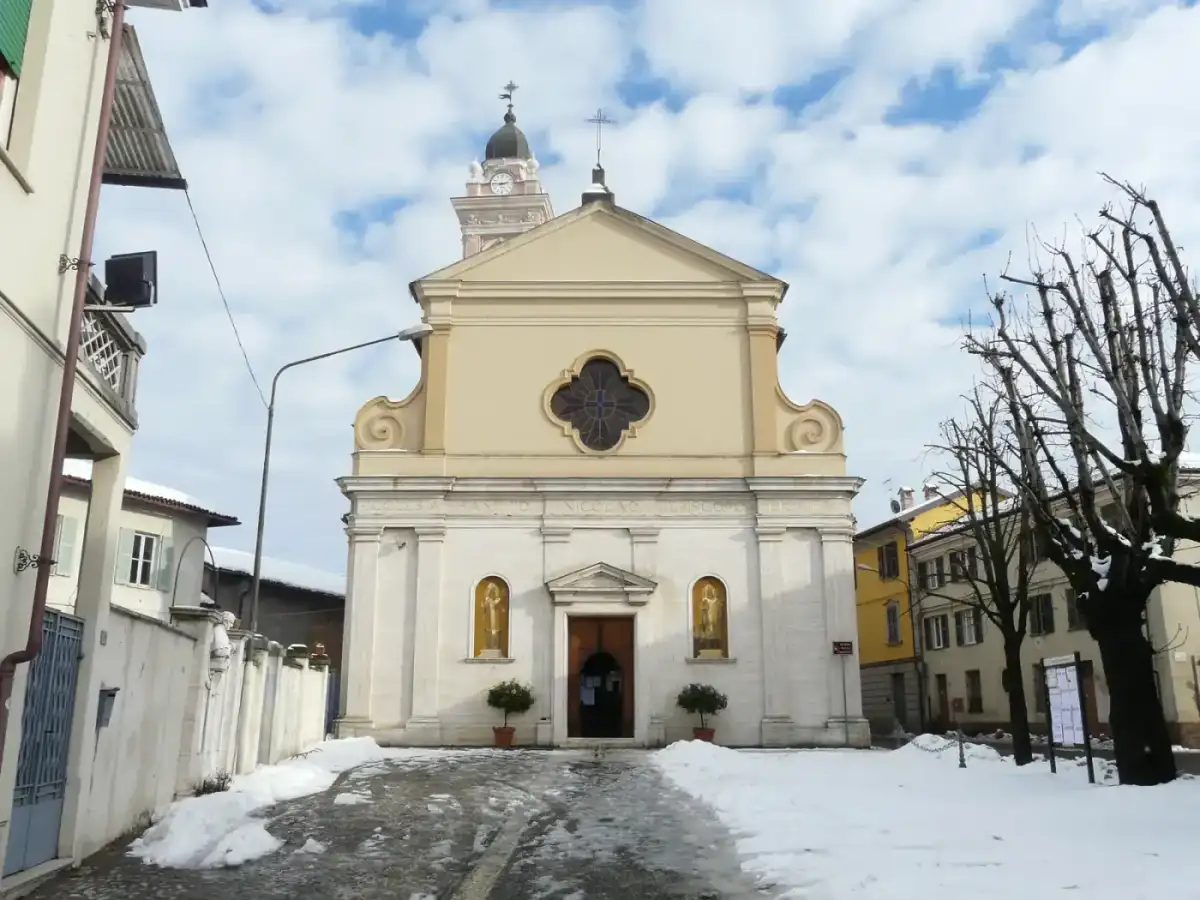
- St. Martin's parish church was formerly inside the castle walls. The primitive church of San Martino is for foundation next to the year one thousand and its birth can be connected to the first moments of life of the village. Already in a document dated 11 July 1196, Pope Celestino III mentions San Martino del Gazzo (from forest radium to indicate the territory of the frascheta) as an addiction toVignole Borbera. We know of that church that it was located outside the walls and that it must also have served as a shelter for pilgrims. It was rebuilt in neo-Byzantine style with three naves in 1911. Two wooden statues of the Madonna Addolorata (1860) e Madonna Immaculate (1780).
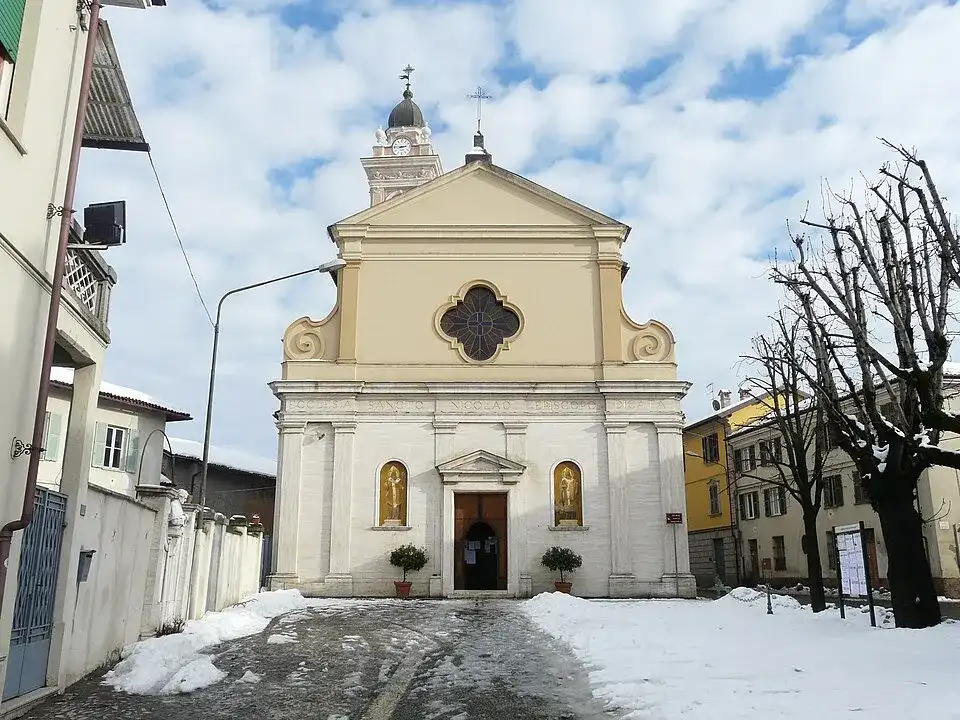
- Parish church of San Nicola di Bari, from the end of the 13th century, rebuilt in 1725 with a single nave, preserves a painting on canvas by painter Giovanni Battista Chiappe (Novi Ligure, 1732–1765) representative Santa Caterina and a canvas depicting San Nicolò di Mira by Paolo Borroni (1749–1810).
- Church of Nostra Signora delle Ghiare or San Sebastiano, rises around the year 1000 outside of the village, built on a pre-existing chapel dedicated to St. Michael Archangel born in Lombardy and dependent on the Abbey of Santa Giustina di Sezzadio. It was used as a small monastic center for the humiliated nuns of Santa Maria, still dependent on Sezzadio. The convent complex was enlarged at the end of the 1500s by the Augustinian fathers and in 1610 they frescoed San Sebastiano, St. Fermo and St. Bovo and Apostles. The church in rustic Romanesque forms with a tympanum with terracotta friezes has a single nave with a pronaos in front on small sandstone columns.
- Oratory of the Assumption (or the White Battits)
- Oratory of the Most Holy Trinity (or of the Red Baptists)
Society
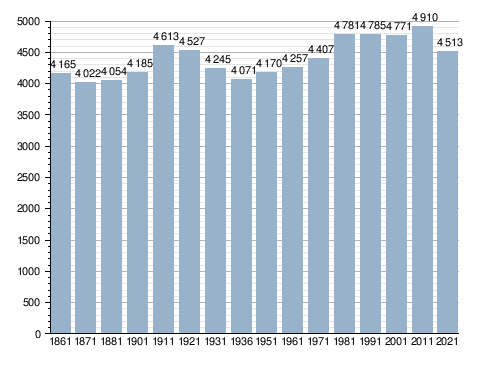
Demographic evolutionExplore this chapter
Demographic evolution
Inhabitants registered[6]
Culture
Celebrations and celebrationsExplore this chapter
Celebrations and celebrations
- Summer festival of the country: fireworks and sagra at the sports center; it takes place on the second Sunday in August
- Patronal feast of Saint Sebastian on 20 January
Administration
Below is a table relating to the administrations that have succeeded one another in this municipality.Explore this chapter
Below is a table relating to the administrations that have succeeded one another in this municipality.
| Period | First citizen | Match | Load | Notes | |
|---|---|---|---|---|---|
| 7 June 1985 | May 26, 1990 | Luigi Orlando | independent | Mayor | [7] |
| May 26, 1990 | April 24, 1995 | Luigi Orlando | civic list | Mayor | [7] |
| April 24, 1995 | June 14, 1999 | Luigi Orlando | centre-right | Mayor | [7] |
| June 14, 1999 | June 14, 2004 | Luigi Orlando | civic list | Mayor | [7] |
| June 14, 2004 | June 8, 2009 | Roberto Silvano | civic list | Mayor | [7] |
| June 8, 2009 | May 26, 2014 | Roberto Silvano | Civic list Renewal for Pozzolo | Mayor | [7] |
| May 26, 2014 | May 27, 2019 | Domenico Miloscio | Civic list Renewal for Pozzolo | Mayor | [7] |
| May 27, 2019 | June 9, 2024 | Domenico Miloscio | Civic list Renewal for Pozzolo | Mayor | [7] |
| June 9, 2024 | in office | Domenico Miloscio | Civic list Renewal for Pozzolo | Mayor | [7] |
Image gallery
Explore this chapter
-
 Palazzo Morando di Pozzolo Formigaro, Piemonte, Italy
-
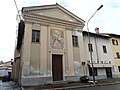 Oratorio dell'Assunta di Pozzolo Formigaro, Piemonte, Italy
-
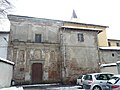 Oratorio della Santissima Trinità di Pozzolo Formigaro, Piemonte, Italy
-
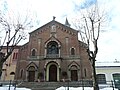 Church of San Martino di Pozzolo Formigaro, Piemonte, Italy
Notes
Explore this chapter
- ^ to b Monthly demographic balance for the year 2026 (provisional data), up demo.istat.it, ISTAT.
- ^ Seismic classification (XLS), up risks.protezionecivile.gov.it.
- ^ Table of degrees/day of Italian Municipalities grouped by Region and Province (PDF), in Law 26 August 1993, n. 412, annex A, National Agency for New Technologies, Energy and Sustainable Economic Development, 1 March 2011, p. 151. URL consulted on 25 April 2012 (archived fromoriginal url on 1 January 2017).
- ^ Pozzolo Formigaro, decree 1963-03-26 DPR, concession of coat of arms and gonfalone, up Central State Archive.
- ^ Castle of Pozzolo Formigaro, up castlesaperti.it. Retrieved 26 February 2021.
- ^ Data taken from:
- Resident population of the municipalities. Censuses from 1861 to 1991 (PDF), up ebiblio.istat.it, ISTAT.
- Resident population - Time series, up exploredati.istat.it.
Please note: 2021 data refers to permanent census data as of December 31 of that year.
- ^ to b c d And f g h the http://amministratori.interno.it/
Bibliography
Explore this chapter
- Duilio Giacobone, History of Pozzolo Formigaro, Trento, 1958.
- Severino Ghezzi, Two Medieval Convents in Pozzolo Formigaro, Novesi Graphic Arts, 1955.
- Severino Ghezzi, Pozzolo '800, Novi Ligure, 1958.
- Severino Ghezzi, The dialetto pozzolese, Rapallo, 1962.
- Dario Grassi, History of Pozzolo in the XIX Century, Pozzolo Formigaro, 2000.
- Dario Grassi, Pozzolo from the Liberal administration to Ventennio through the Red Biennium, Pozzolo Formigaro, 2005.
- Dario Grassi, Pozzolo : one hundred years of emigration worldwide, Pozzolo Formigaro, 2003.
- Dario Grassi, Characters and events of the Ventennio pozzolese 1922-1940, Pozzolo Formigaro, 2007.
- Mario Silvano, Glossary vernacular of the welllasca. Ed. Novinostra, 2000 (the linguistic space is included between Novi, Mandrogne, Rivalta Scrivia).
- Luca Rolandi, The Gospel of the facts: Catholic weekly the People of Tortona in its centenary history,[S. l.]Cooperativa Editoriale Oltrepò, Voghera (PV), 1996.
- Gian Michele Merloni- Luca Rolandi, Nicola Montemanni (1803-1850) and his time, Ovada, 2000.
- Pier Giovanni Agnes, The Gospel in history: editorials, comments and notes of Mons. P.G. Agnes Director of The People of Tortona from 1979 to 1998, edited by Luca Rolandi, Soveria Mannelli, 2000.
- Pier Giovanni Agnes, Pozzolo, in his thought and in his heart, Milan, 2008.
- Giacomo Martini, The memory season. Fifty years of Pozzolese Sports Union (1947-1997), Ugo Boccassi editor, Alessandria, 1998.
- Giacomo Martini, Spirit of charity. The Daughters of N.S. snow and welfare institutes in Pozzolo Formigaro, Associazione Pro Loco Pozzolese, 2004.
- Giacomo Martini, Puteolus Fornuce, the story of Pozzolo Formigaro and de li cascinotti of Bettole, 2009.
- Giacomo Martini, Mons. Pietro Gambarotta. A presence became history 1954-2008. Parish of San Nicolò, Pozzolo Formigaro, 2010.
- Giacomo Martini, Pozzolo Formigaro a place, many stories told by the pages of the weekly Il Popolo di Tortona, "Caterina De Marco" Municipal Library, Pozzolo Formigaro, 2014.
- Pier Giorgio Caramagna, Fragments of the history, Pozzolo Formigaro, 2006.
- Marcello Ghiglione, Pozzolo Formigaro Feudatari, Pozzolo Formigaro, 2015.
- Volumes of Pro Loco Pozzolese from 1970 to 1992.
Where to stay · Pozzolo Formigaro
Find stays on Booking.comStories, places and people
More about Pozzolo Formigaro and the surrounding area
Follow a thread of history and see where it leads.
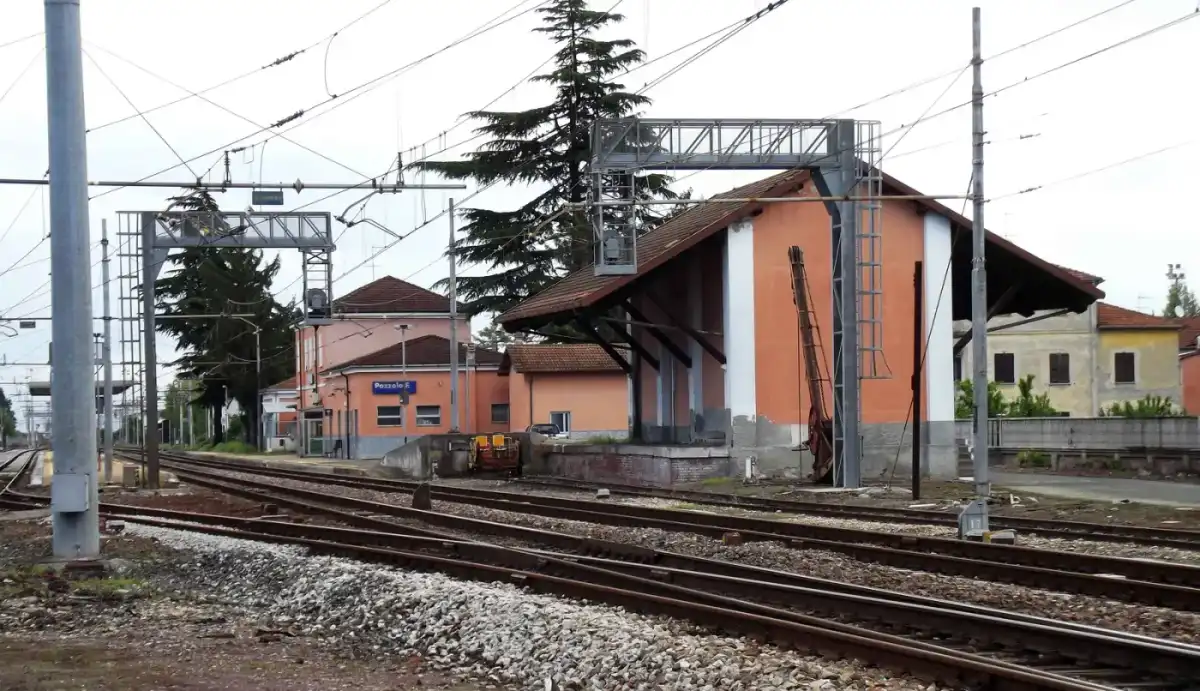 F Ceragioli · CC BY-SA 3.0
Pozzolo Formigaro Station
The Pozzolo Formigaro station is a train station located on the Tortona-Novi Ligure line. It serves the village of Pozzolo Formigaro .
Read the storyActive Coloring
The Active color factory is an industrial complex located in Pozzolo Formigaro along the highway 35 of Giovi, designed by architect Vittoriano Viganò in 1969.
Read the storyThe area, step by step
Trails and routes in Pozzolo Formigaro
 CyclingAround the starting point
Asti, Alessandria and surroundings