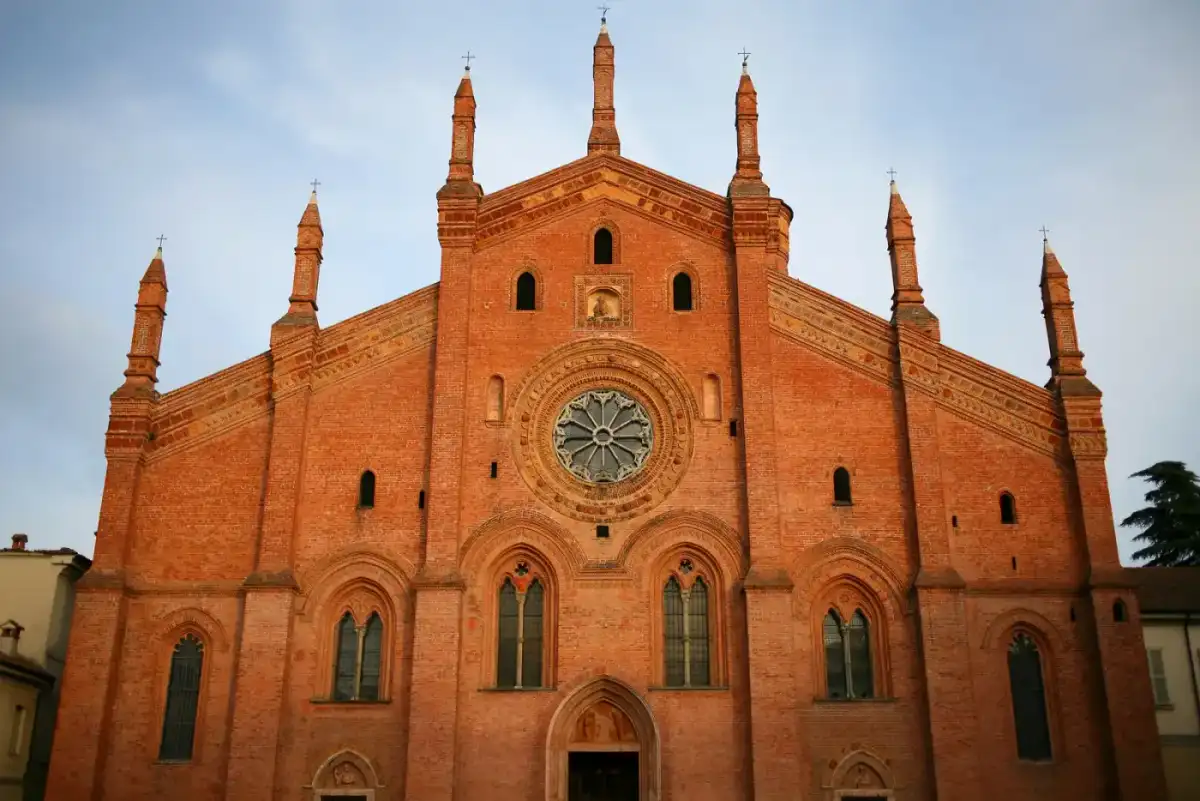
A closer look
Province of Pavia: at a glance
The province of Pavia is an Italian province of Lombardy of 548 297 inhabitants. It borders to the north with the metropolitan city of Milan, to the east with the province of Lodi and with the exclave of San Colombano al Lambro (Milan metro city), to the east and south-east with Emilia-Romagna (province of Piacenza), to the southwest, to the west and northwest with the Piemonte (provinces of Alessandria, Vercelli and Novara).
Physical geography
It is crossed by the Ticino and Po rivers, which meet 4 km south of the capital and that divide it in three areas: the Pavese , located in Pianura Padana, in the north-east part of the...Explore this chapter
It is crossed by the Ticino and Po rivers, which meet 4 km south of the capital and that divide it into three areas: the Pavese, located in Pianura Padana, in the north-east part of the province, north of Po and east of Ticino, which takes its name from the provincial capital, which is also the most populous municipality, Pavia (situated downstream of Ticino compared to Vigevano, on the left bank, near its confluence with the Po); the Lomellina, also in the Po Valley, to the north-west, west of the Ticino but still north of the Po, the most important municipality is Vigevano, located near the right bank of the Ticino; the Oltrepò Pavese, in the Apennine territory, south of the Po, takes its name from being on the other side of the Po compared to the rest of the province, the most important municipality is Voghera.
The territory of the Siccomario, to the confluence of the two rivers, according to the previous definition would be found in Lomellina, but for historical reasons it is considered part of the Pavese. Of these 3 areas the Lomellina is the largest one, with an extension of 1240 km2, followed by Oltrepò di 1097 km2, while the Pavese has an extension of approximately half that of Lomellina, with approximately 650 km2. Another important watercourse in the province is the Olona. It is a flow fed by ditches and resurgences that originates in the countryside around Bornasco, crosses the Pavia countryside and flows into the Po near San Zenone. This watercourse is not to be confused with the river of the same name which originates in the Varesine Prealps and flows into the Southern Lambro in Milan. Before the diversions made by the Romans, the two rivers constituted a single watercourse, hence the homonymy that has continued to this day.
For a short distance the province also affects the Lambro river. The greater is the route completed in the province by its affluent southern Lambro colator, derived from the Holona in Milan, which receives excess waters of the ships and flows to the border between the provinces of Pavia and Lodi. Staffora is the largest stream of Oltrepò Pavese and flows into the Po, after a path of 58 km. Other watercourses in the Oltrepò are the Coppa, Scuropasso, Tidone, Versa, Avagnone (which flows into the Trebbia), Curone and, for a short stretch, the Scrivia streams. In the southernmost part of the Oltrepò Pavese the border is marked in Val Trebbia for a small portion by the Trebbia river, the southernmost point is located in the municipality of Brallo di Pregola next to the Emilian hamlet of Ponte Organasco (Cerignale - province of Piacenza). Nella Lomellina flow the Sesia, bordering the provinces of Alessandria and Vercelli and, parallel to this and Ticino, the small rivers Agogna and Terdoppio, coming from Novarese.
The province is largely flat. The plain north of the Po has a sandy base, especially in Lomellina, where some sands (remains of ancient dunes) once much more numerous. In the Oltrepò the little plain present is mainly clayey; to the south of the limited flat area, the Oltrepò presents a large hilly area which is part of the Apennine chain which slowly rises into modest mountains (all below 1000 m). Only at the southern end, south of Varzi, do the mountains almost suddenly become more impervious and reach considerable altitudes with some of the highest peaks of the Ligurian Apennines: Monte Lesima (the highest elevation in the province with its 1724 m), Monte Chiappo (1700 m), the Cima Colletta (1494 m), Monte Bogleglio (1492 m) and Mount Penice (1460 m)
History
Ancient age. · Middle Ages · Modern ageExplore this chapter
Crossed by the two major Italian rivers per flow, Po and Ticino, which converge almost in its center, the province of Pavia appears, depending on the points of view, divided or united by these rivers. Superficially it would be divided, and such was historically when its destiny was decided by external forces, for which a river could be a convenient administrative or political-military border. On the contrary, when local forces were able to play a decisive role, prevailed the tendency to land union along rivers, main routes of communication in the plain, and reason for cohesion. Thus the Romans, who divided the territory even between three different regions, did not keep in any account the previous ethnic aggregations, which - as we say - appear organized along the rivers.
In the Middle Ages, it was the city of Pavia to aggregate the territory again, but in the eighteenth century, in the absolute dominion of the European stationaries, it was dismembered between different states, and Napoleon, owner of all these areas, maintained this radical division. It will be necessary to wait for the action of the Savoy government, in 1859, to see finally reunited the territory of Pakistan. In all this, however, it should be stressed the particular case of Lomellina, and in particular of Vigevano, which over the centuries and even shortly before the Unification had always sought and often obtained strong autonomy from the central power, as demonstrated by administrative entities such as Vigevanasco and, within the State of Milan in the 17th century, with its own Congregation independent from that of the Principality of Pavia.
Ancient age.
The scarce notes, obtained from the ancient authors and by the toponomastics, on the populations that inhabited the territory around the confluence of Ticino in the Po, allow us to have a vague design of the ethnographic painting until the II century BC.
The most important people was probably that of the Marici, cited by Pliny who makes it, along with Levi, the founders of Pavia (Ticinum). Both were of Celtic lineage: the Marici spread along the Po in the provinces of Pavia and Alessandria, the Levis along the Ticino. Precisely at the confluence of the two rivers these neighboring peoples founded Pavia, probably as their market and meeting place.
Further west, north of the Po, were the Libyans (Lebeci according to Polibio), who occupied the Western Lomellina and the adjacent Vercellese. It does not seem to have historical consistency the imaginary people of the Iriates, born from the arbitrary correction of the name of the Iluted, cited by Livy, to obtain a suggestive but superfluous connection with the name of the city of Iria, Voghera.
The Romans arrived in the province of Pavia in the 3rd century BC, at the time of wars against Galli and Carthaginians. In 222 BC. They defeated the Insubri in Clastidium, in Oltrepò Pavese, one of the main villages of the Marici their allies. In 218 BC. were defeated by Hannibal at Ticino. The next colonization had as a propulsor center the nearby Latin colony of Piacenza, whose centuration stretched over the whole plain of the Oltrepò.
The foundation, around 120 BC, of the colony of Tortona, determined the transition to the area of influence of this city in the western part of the Oltrepò Pavese (Voghera). The colonization of Pavia (187 BC) was also achieved with the centuriation of the plain north of the Po and east of the Ticino, while the part west of the Ticino retains no traces of centuriation (except around Vigevano, where the colonization of Novara reached[3]). It is therefore to be believed that in Lomellina, as perhaps in the hilly part of the Oltrepò, the indigenous element was maintained for longer. The area north of the Po, in the division of Italy into regions made by Augustus, was attributed to the Transpadana, while the Oltrepò was divided between Emilia and Liguria along the border between the areas of influence of Piacenza and Tortona. Starting from late Roman times, the territory of the province acquired a leading role in the national scenario: Pavia[4] It became the seat of an imperial mint since the 3rd century AD, state weapons factories were established and in Pavia (where a large military contingent was assigned) took refuge Orestes, who was inspired by the revolt of Odoacre in 476 AD, the capture of Orestes and the deposition of his son Romolo Augustolo decreed the end of the Roman Empire d'occidente. At the same time, another center knew, always for military reasons, great development: Lomello.
Middle Ages
During the reign of Ostrogoths, Theodoric made a large royal palace in Pavia, which became, together with Verona and Ravenna, the seat of director[4]. In 572 Pavia was conquered by the Lombards, who made it their capital. The Lombards organized their conquests into duchies, but the administrative geography of the Pavia area in this period is not known.
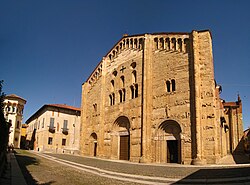
Pavia, until 1024 capital of the kingdom of Italy, was the seat of the royal palace[4], which was made up of a large complex of buildings which housed the court and the sovereign's residence. in which Europe could supply itself with luxury products from the Byzantine and Islamic world. Thanks to the waterways, in addition to the Venetians, merchants from Salerno, Gaetano, Amalfi and Northern Europe, such as the Angles and Saxons, also arrived in Pavia.
In 643, the Rotari king issued the edict and a Catholic religious rebirth took place, with various monastic foundations among which the Monastery of San Pietro in Ciel d'Oro was founded.
In the later Carolingian age the territory was divided into counties: in the province of Pavia, those of Pavia, Lomello (from which originated the Lomellina), north of the Po. The territory south of the river belonged in the western part to the county of Tortona, in the central and eastern part (ecclesiastically in the diocese of Piacenza) perhaps remained in the Piacenza territory, as in Roman times. The city was crossed by the "Roggia Carona", which allowed the birth of various artisan activities with its waters.
In 996 he was Count of Lomello Cuniberto; leave the county to the sons Aginulfo and Brass I, who in 1001 also concentrated in his hands the offices of Count of Pavia and Count Palatino (the highest judicial office in the Kingdom), based in the Sacred Palace (Royal Palace) of Pavia. In 1024, upon the death of Emperor Henry II, the people of Pavia destroyed this palace, and the palatine counts withdrew to Lomellina, their original domain, where they resisted the pressures of the nascent municipality of Pavia; they were finally subdued and forced to settle in the city. At the same time the Municipality of Pavia began to extend its influence over the Oltrepò, where the Bishop and various monasteries of the city already had lordship over numerous towns.
The city of Pavia was therefore unifying for the first time in its history the territory of those peoples who had founded it many centuries before. This factual state was officialized in 1164 by Federico I, who attributed the whole of Pavia to Lomellina and much of the Oltrepò. The southern part of the present province remained independent: for the possession of these lands Pavia had to struggle long with neighboring municipalities (as in the battle of Casei Gerola of 1213), especially with Piacenza, finally reaching a certain stability of borders. But the most dangerous enemy of Pavia was undoubtedly Milan, which long disputed her possession of Lomellina. However, Pavia, always Ghibelline, was able to benefit from the help of Emperor Frederick I (who was crowned in the basilica of San Michele, King of Italy and stayed in the city several times) and his nephew Federico II.
The Pavesis exercised a noble power on their territory, maintaining for centuries a condition of privilege over the inhabitants. rural rural areas. The Pavia nobles owned most of the land there, and this situation still existed in the 18th century. From an administrative point of view, the area subject to Pavia was divided into four very unequal zones, converging on the city, according to the cardinal points, i.e. the gates from which these zones were reached:
- to the north of the Soprana Campaign (from Laudense gate);
- to the east the Sottana Campaign (from Oria gate);
- to the west the Lomellina (from Marica port);
- to the south the Oltrepò with the Siccomario (from the gate of the Bridge).
In the first centuries of the Pavese dominion there was a sort of osmosis among noble families of town origin, who bought lands, castles and lordships in the territory subject to the city, and the local noble families of this territory, which settled in the city, confounding themselves with the first. In this way a homogeneous ruling class was formed, of families who did not lack to have a foot in the city and one in the suburb, hence a tower, beyond a castle. In this way, the political struggles within the city, which saw the main families deployed, had immediate repercussions in the Pakistani domain.
Among these families we must remember in particular:
- the palatine accounts, from which they descended the Langosco, the Albonese, the Sparvara and the Gambarana, heads of the Guelph side;
- the Sannazzaro, also part guelfa;
- the Beccaria, heads of the Ghibelline part;
- the Belcredi, of a part Ghibelline;
- the Giorgi, of part Ghibelline, but often in the role of peacemakers.
The fight focused on the houses of Langosco and Beccaria, which had their strengths respectively in Lomellina and in the Oltrepò. In the end, however, the Visconti of Milan took the city in 1359, after having subjected the entire territory. Galeazzo II, recalling the ancient Lombard kingdom, brought his court from Milan to Pavia, where he erected the Visconteo castle and founded the university. The viscontea court remained in Pavia under Gian Galeazzo (to whom the duchy is due) and Filippo Maria. When the Viscount domains were elevated to Ducato by imperial decree (1395), the territory of Pavia was named Count of Pavia, and it was the estate of the Duke of Milan or his heir.
Modern age
In 1499, the territory of Pavese, passed with Milan to Sforza, had the Emperor's qualification Principality, which placed it in second place after Milan among the Sforza provinces. In 1535 it passed with Milan to Spain, and in that same year a good part of Lomellina northern part of the Vigevanasco, the farm assigned to the city of Vigevano by Francesco II Sforza who for more than two centuries would guarantee the autonomy of the city and surrounding territory.
In 1564 the Spanish Government, recognized the iniquity of tax privileges of Pakistani citizens with respect to rural rural areas, promoted the establishment of congregations with the main purpose of distributing tax burden equally between communities. The congregations had more general functions of administrative coordination and representation of local authorities in the face of central power. They were not elected directly by the population, but formed by representatives of the main municipalities: they were four, one for each of the areas in which the Principality was divided; above there stood the General Congregation of the Principality, made up of 21 representatives (7 for the Oltrepò, 7 for the Lomellina, 4 for the Campagna Sottana and 3 for the Campagna Soprana), from which a council made up of five was elected mayors, the four at the head of the local congregations and the General mayor. In the 17th century the congregation of Lomellina separated from the general one of the Principality; the latter had 24 delegates (12 for the Oltrepò and 6 for each of the Pavia countryside), and the Congregation of Lomellina had the same number, resulting in it being at least formally an autonomous territory.
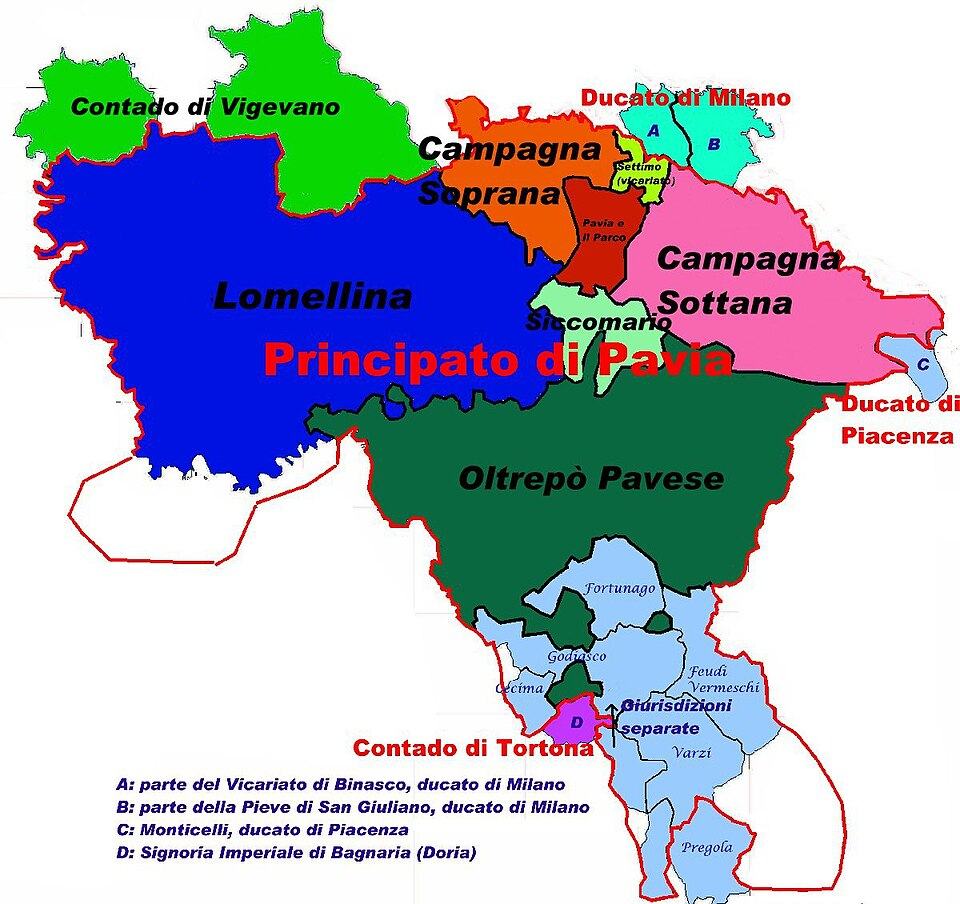
The Principality of Pavia He didn't exactly have the same extension as the current Province. It included the following areas:
- the city of Pavia;
- the Parco Vecchio, located north of the city, surrounded by walls and including the original part of the ancient Visconti park;
- the New Park, between the Parco Vecchio and the Certosa;
- the Vicariat of Seventh, wedge of the Milanese territory between the Soprana and Sottana countryside and the Parco Nuovo, administered by Pavia, including Bornasco and Zeccone;
- The Country of Soprana, north-west of the previous territories, up to Ticino;
- The Country of Sottana, south-east of the same, up to the Po;
- I'm theOver, which to the south reached a line including Rivanazzano, Torrazza Coste, Montalto Pavese, Rocca de' Giorgi and Canevino; it also included Siccomario and Mezzana Bigli north of the Po, and finally Sale, Piovera And Guazzora (in province of Alessandria);
- aggregated to the country, jurisdictions located south of the Oltrepò in County Bobbio: the Bobbiese with Bobbio and Corte Brugnatella in the upper Val Trebbia (now in the province of Piacenza), Cella di Bobbio (then divided between Varzi and Santa Margherita di Staffora), Santa Margherita di Bobbio, Menconico, Romagnese and other feuds, the fief of Fortunago with Borgoratto, Montesegale, Rocca Susella, the marquisati Malaspiniani di Varzi, Godiasco, Oramala and Pozzol Groppo, Pregola, Staghiglione, Pizzocorno, Val di Nizza, the Cecima fiefdom and the so-called Langhe Vermesche (Zavattarello, Valverde, Pietra Gavina, Trebecco, Ruino and Torre degli Alberi, Caminata) and others imperial fiefs;
- The Lomellina, i.e. the area between Po and Ticino west of the Siccomario, which also included Bastida Pancarana south of the Po, and also Valenza And Bassignana (in province of Alessandria).
He didn't understand:
- the province of Vigevanasco, formed by two groups of countries around Vigevano and Robbio;
- the territory of Landriano, Bascapè and Torrevecchia Pia, and that of Vidigulfo and Siziano, belonging to the Milanese (Vicariato di Binasco e Pieve di San Giuliano); they were united to the territory of Pavese in 1786;
- the lordship of Bagnaria, imperial fief (later united in the province of Bobbio);
- Monticelli Pavese, in the duchy of Piacenza.
In the eighteenth century was the dismemberment of the Pavese territory: in 1707 the Lomellina, and in 1744 the Overseas with the Siccomary were annexed to Piemonte The Vigevanasco was also ceded. The Lomellina, the Vigevanasco and Oltrepò Pavese became Piedmont provinces with headlights respectively Mortara, Vigevano, Voghera and Bobbio. The province of Lomellina had lost Valenza, Bassignana and five small lands along the Tanaro, merged with Alessandria. A small territory remained in Pavia, belonging to Austrian Lombardy, with the name of Principality first and Province since 1786. In the Napoleonic period (1797 - 1814) the union of the Pavia territory was not restored.
It is significant as, having been asked to the inhabitants of the Oltrepò with a referendum on which territory they wanted to be united, and having responded that they wanted to return with Pavia, their will was simply ignored by the French government. The division therefore continued: Pavia with the Campaigns was annexed to the Department of Holona, the Lomellina and the Siccomario to the Department of Agagne, which were part of the Italian Republic and the Kingdom of Italy; the Oltrepò, aggregated first to the Department of Marengo (Alessandria) and then to the Department of Genoa, it was part of the Republic and then the French Empire. The borders were rectified and made to coincide with natural lines (in particular the Po became the state border: thus the Oltrepò lost Mezzana Bigli but acquired Bastida Pancarana).
In the 1814With the return of ancient regimes, previous subdivisions were restored, but some changes were soon made to rationalize boundaries. The province of Pavia, belonging to the Lombardo-Veneto Kingdom, was enlarged with the territories around Abbiategrasso (ancient Milanese parish church in Corbetta and Rosate), and also with Monticelli Pavese ceded by the Duchy of Parma and Piacenza (already from 1786 the province of Pavia had been joined by the Vicariate of Binasco former Milanese, and part of the parish church of San Giuliano). The Lomellina and the Vigevanasco (except Vinzaglio) were united in one Province, belonging to division of Novara; the Oltrepò instead was divided into two provinces, headed by Voghera and Bobbio, and belonging respectively to divisions of the Alessandria and Genoa. The Overlord lost Sale, Piovera And Guazzora, joined to province of Alessandria, but purchased Bagnaria, detached from Tortona.
At the dawn of the unity of Italy, in 1859, the Piedmontese administration was reformed (Decreto Rattazzi of 23 October 1859): the provinces were reduced to surround, like the district of Pavia, of new broader provinces mostly coincide with the old ones. divisions; the Piedmontese territories of the present province therefore were destined to be united to the provinces of Novara, Alessandria and Genoa; but the annexation of Lombardy to the kingdom of Sardinia allowed to join the three former provinces of Lomellina, Voghera and Bobbio to the province of Pavia. The latter also returned to Milan the area of Abbiategrasso and Binasco, but it retained in Pavia that of Vidigulfo and Landriano.
However, variations were not over: in 1923 the city of Bobbio with much of its surroundings including the municipalities of Trebecco, Caminata, were joined to the province of Piacenza and to a lesser extent to that of Genoa[5]; some municipalities including Zavattarello, Ruino, Romagnese, returned to Pavia three years later. After that, only marginal changes were made.
In 1936 the former municipality of Cantonale was joined by the province of Pavia, already belonging to the province of Milan[6].
Symbols
The coat of arms of the province was granted by royal decree of 18 July 1930[7] and you can blaspheme:
The coat of arms bears inquarified the emblems of Pavia (white cross in red field), Voghera, Mortara (with a deer that adapts to a source, near an oak, at the edge of a large forest that represents the silva pula through which he passed the Queen Teodolinda when, married Agilulfo, from Lomello went to Monza), and that of Vigevano (in the red field a castle lying at one door, with on the right a high tower merlata).[8]
The gonfalone, recognized with DCG of 11 July 1933[7], is a cloth of blue.[8]
Nature
Manufactures · Lakes · Regional parksExplore this chapter
Manufactures
- Po
- Ticino
- Sep.
- Olona
- Agogna
- Staffor
- Trebbia
Lakes
- Lake Trebecco
Regional parks
- Ticino Valley Park
Overcommunal Interest Parks (PLIS)
- Parco della Vernavola
- Parco del Castello Dal Verme (Zavattarello)
- Parco del Castello di Verde (Valverde)
- Park Le Folaghe (Casei Gerola)
- Parco Palustre di Lungavilla
- Fortunago Park
- Val Pometto Park (Robbio)
- Monte Lesima Park
- Parco del Ticinello e del Lambro Meridionale (Siziano, Vidigulfo, Torrevecchia Pia)
State natural reserves
- Natural reserve Bosco Siro Negri (Pavia)
Community Special Protection Zones (ZPS Natura 2000 Network)
- ZPS Boschi del Ticino
- ZPS Risaie della Lomellina
Community Importance Sites (SIC Network Natura 2000)
- Forestry
- Natural reserve Monte Alpe
- Le Torraie Nature Reserve - Monte Lesima
- Sassi Neri - Pietra Corva
- some Garzaie
Regional natural reserves
- Natural reserve of Monte Alpe (Menconico) (visitable)
- Le Torraie Nature Reserve - Monte Lesima
Provincial natural reserves
- RN Palude Loja (Zeme) and Garzaia Abbazia Acqualunga (visitable only with accompanying authorized provincial guides, free of charge)
- Garzaie della Lomellina ( prohibited access): Garzaia del Bosco Basso, Garzaia della Cascina Isola, Garzaia di Villa Biscossi
- Garzaie del Pavese ( prohibited access): Garzaia della Carola, Garzaia di Porta Chiossa
- Garzaia della Roggia Torbida (Bressana Bottarone) (access not allowed)
Natural monuments provincial
- Natural monument Garzaia di Celpenchio (Cozzo and Rosasco) (visitable only with accompanying authorized provincial guides, free of charge)
- Natural monument Garzaia of Sant'Alessandro (Zeme) (visitable only with accompanying authorized provincial guides, free of charge)
- Other gauze ( prohibited access): Natural monument Garzaia della Cascina Notizia, Natural Monument Garzaia della Cascina Verminesca, Natural Monument Garzaia della Cascina Villarasca, Natural Monument Garzaia della Rinalda.
Areas of naturalistic interest
- Boschetto di Scaldasole
- Alpine botanical garden of Pietra Corva (Romagnese) (province management)
Economy
Explore this chapter
Infrastructure and transport
Railway lines · Motorways · AirportsExplore this chapter
Railway lines
- Alessandria-Piacenza railway station, Voghera railway stations, Casteggio, Santa Giuletta, Broni, Stradella and Arena Po.
- Milan-Genova railway station, Certosa di Pavia, Pavia, San Martino Siccomario-Cava Manara, Bressana Bottarone, Pizzale-Lungavilla and Voghera.
- Railway Pavia-Stradella, railway stations of Pavia, San Martino Siccomario-Cava Manara, Bressana Bottarone, Bressana Argine, Pinarolo Po, Barbianello, Broni, Stradella.
- Pavia-Cremona railway station, Pavia Porta Garibaldi, Motta San Damiano, Albuzzano, Belgioioso, Corteolona, Santa Cristina e Bissone, Miradolo Terme, Chignolo Po, Lambrinia.
- Railway Vercelli-Pavia, railway stations of Palestro, Robbio, Nicorvo, Mortara, Gambolò-Remondò, Tromello, Garlasco, Gropello Cairoli, Villanova d'Ardenghi, Cava-Carbonara, Pavia.
- Pavia-Alessandria railway stations of Pavia, Cava-Carbonara, Sairano, Sairano-Zinasco, Zinasco Nuovo, Pieve Albignola, Sannazzaro, Ferrera Lomellina, Lomello, Mede, Torreberetti.
- Milan-Mortara railway, train stations of Vigevano, Parona Lomellina, Mortara.
- Novara-Alessandria railway station, Torreberetti railway stations, Sartirana, Valle Lomellina, Olevano, Mortara, Albonese.
- Castagnole-Asti-Mortara railway station, Mortara railway stations and Candia Lomellina.
Motorways
- Highway A7 Milan-Genova with the Bereguardo-Pavia Nord, Gropello Cairoli-Pavia Sud and Casei Gerola.
- Highway A21 Torino-Piacenza-Brescia with the small houses of Voghera, Casteggio-Casatisma, Broni-Stradella.
Airports
- Tourist airport Voghera-Rivanazzano in the municipal territory of Rivanazzano Terme.
Public transport by road
The province of Pavia is mainly served by the bus of Autoguidovie starting from 1 April 2018, which divides it into several main areas for service purposes:
- Municipality and Urban Area of Pavia[9].
- Municipality of Voghera[10].
- Pavese area.
- Area Oltrepò.
- Area Lomellina[11].
The main hub of the service is Pavia station with its self-station.
The main extra-urban lines connect Pavia (Area Pavese) with the major centres of the province such as Voghera (Otapo Area) and Vigevano (Lomellina Area) reaching the metropolitan city of Milan and the region Piemonte, linking the most distant municipalities of the territory.
Culture and tourism
Longobard Age Monuments · Romanesque monuments · Gothic-style monumentsExplore this chapter
From a tourist point of view the province of Pavia is rich in castles, palaces, churches and shrines linked mainly to the medieval period, among many remember only:
Longobard Age Monuments
- Church of Sant'Eusebio
- Monastery of San Felice
- Church of San Giovanni Domnarum
Romanesque monuments
- Basilica of San Michele
- St. Peter's Basilica in Ciel d'Oro
- Basilica of Santa Maria Maggiore
- Church of San Teodoro
- Church of Santa Maria in Bethlehem
- Hermitage of Sant'Alberto di Butrio
- Broletto
- Towers
-
 Crypt of Sant'Eusebio
-
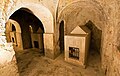 Crypt of San Felice
-
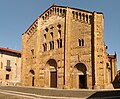 Basilica of San Michele Maggiore
-
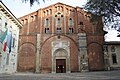 St. Peter's Basilica in Ciel d'Oro
-
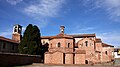 Basilica of Santa Maria Maggiore
-
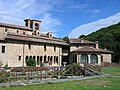 Hermitage of Sant'Alberto di Butrio
-
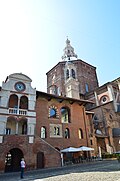 The Broletto
-
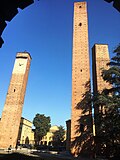 Some towers
-
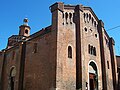 Church of San Teodoro
-
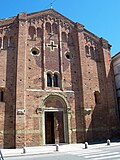 Church of Santa Maria in Bethlehem
-
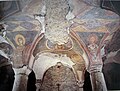 Crypt of the church of San Giovanni Domnarum
Gothic-style monuments
- Visconteo Castle
- Church of San Francesco
- Church of Santa Maria del Carmine
- House of the Austrians
- Castiglioni College
- Basilica of San Lorenzo
- Castello di Belgioioso
- Visconteo Castle
- Castello di Lardirago
- Church of San Pietro Martire
- Church of San Francesco
- Collegiate Church of San Giovanni Battista
-
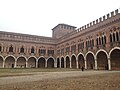 The Visconteo Castle
-
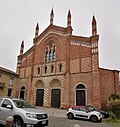 Church of San Francesco
-
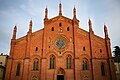 Church of Santa Maria del Carmine
-
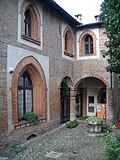 House of the Eustachi
-
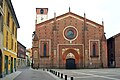 Basilica of San Lorenzo
-
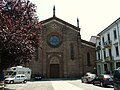 Church of San Pietro Martire
-
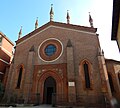 Church of San Francesco
-
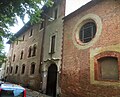 Castiglioni College
-
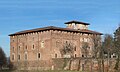 Lardirago Castle
Renaissance Monuments
- Certosa di Pavia
- Cathedral of Pavia
- Sforzesco Castle
- Piazza Ducale
- Stress
- Basilica of San Salvatore
- Church of Santa Maria di Canepanova
- Chapel of St. Saviour
- Palazzo Bottigella
- Palazzo Carminati Bottigella
- Sanseverino Palace
- Hospital San Matteo
-
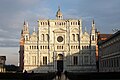 La Certosa di Pavia
-
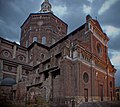 The Cathedral of Pavia
-
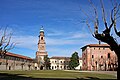 Sforzesco Castle
-
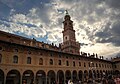 Piazza Ducale
-
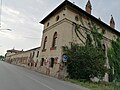 The Sforzesca
-
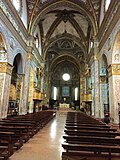 The Basilica of the Most Holy Saviour
-
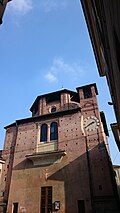 Church of Santa Maria di Canepanova
-
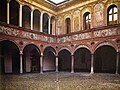 Palazzo Bottigella
-
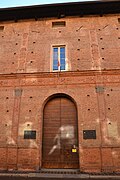 Palazzo Carminali Bottigella
-
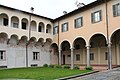 Sanseverino Palace
-
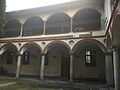 The San Matteo Hospital
-
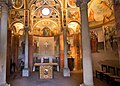 Chapel of St. Saviour
Monuments in the mannerist style
- College Borromeo
- College Ghislieri
Baroque monuments
- Cathedral of Sant'Ambrogio
- Cathedral of Voghera
- Church of Santa Maria del Popolo
- Church of Saints James and Philip
- Palazzo Mezzabarba
- Olevano Palace
- Palazzo Del Maino
- Palazzo Botta Adorno
-
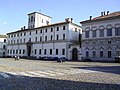 College Ghislieri
-
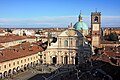 Cathedral of Vigevano
-
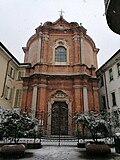 Church of Santa Maria del Popolo
-
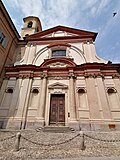 Church of Saints James and Philip
-
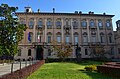 Palazzo Mezzabarba
-
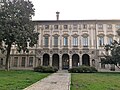 Palazzo Del Maino
-
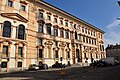 The Borromeo College
-
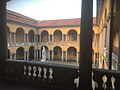 Central Palace of the University of Pavia
-
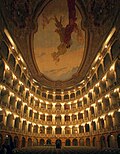 The Fraschini Theatre
-
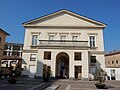 Municipal Theatre Vittorio Emanuele II
-
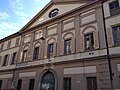 Social Theatre
-
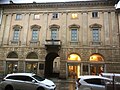 Palazzo Brambilla
Neoclassical monuments
- Central Palace of University
- Fraschini Theatre
- Teatro Comunale Vittorio Emanuele II
- Social Theatre
- Palazzo Brambilla
Regional languages
Due to the historical division of the province and its neighboring nature, a substantial distinction can be made in four regional languages:Explore this chapter
Due to the historical division of the province and its neighboring nature, a substantial distinction can be made in four regional languages:
- Western Lombardo in Pavese and in Lomellina Oriental
- Western Lombard of transition with Piemontese in Lomellina Western
- Emiliano (overfatheral variant) of transition with the Western Lombard in the Oltrepò pavese
- Ligurian in the municipalities of Brallo di Pregola and Santa Margherita di Staffora in the Ligurian Apennines
Administration
List of PresidentsExplore this chapter
List of Presidents
The president of the province in office is Giovanni Palli (centro-destra), mayor of Varzi.
Municipalities
Most populated municipalitiesExplore this chapter
The human presence on the Pavese territory is concentrated for about 31% in the capital and the other two main cities, Voghera and Vigevano. Almost 50% reside in only 10 municipalities while the other half is spread over the remaining 175. The number of municipalities with population not exceeding 5 000 inhabitants in the province of Pavia is, therefore, very high (equal to 88%).
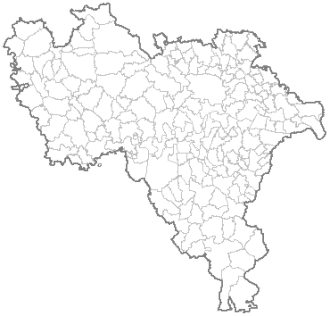
The following 184 municipalities belong to the province of Pavia, including 13 city title friezes:
- Alagna
- Albonese
- Albuzzano
- Arena Po
- Badia Pavese
- Baggage
- Barbianello
- Bascape
- Bastida Pancarana
- Battalion
- Belgium
- Beware
- Borgarello
- Borgo Priolo
- Borgo San Siro
- Borgoratto Mormorolo
- Bornasco
- Bosnasco
- Brallo di Prato
- Bremen
- Bressana Bottarone
- Broni
- Calvignano
- Campospinoso Albaredo
- Candia Lomellina
- Canneto Pavese
- Carbonara al Ticino
- Casanova Lonati
- Casatisma
- Casei Gerola
- Casorate First
- Cassolnovo
- Castana
- Casting
- Castelletto di Branduzzo
- Castello d'Agogna
- Castelnovetto
- Cava Manara
- Cecima
- CEREVA
- Lomellina Ceret
- Cergnago
- Certosa di Pavia
- Cervesina
- Chignolo Po
- Cigognola
- Cilavegna
- Codevilla
- Green hills
- Confidence
- Coplana
- Corana
- Cornale e Bastida
- Corteolona and Genzone
- Corvino San Quirico
- Costa de Nobili
- Coco
- Care Carpignano
- Dorno
- Ferrera Erbogno
- Filighera
- Fortunago
- Frascarolo
- Galliavola
- Gambarana
- Gambolò
- Garlasco
- Gerenza
- Giussago
- Godiasco Salice Terme
- Golferenzo
- Gravellona Lomellina
- Gropello Cairoli
- Winter and Monteleone
- Land
- Langosco
- Lardirago
- Linarolo
- Lomello
- Lungavilla
- Magherno
- Marcignago
- Marzano
- Mesh
- Menconian
- Half-year
- Mezzana Rabattone
- Mezzanine
- Miradolo Terme
- Montalto Pavese
- Montebello della Battaglia
- Montecalvo Versiggia
- Montescano
- Montesegale
- Monticelli Pavese
- Montù Beccaria
- Moro Losana
- Death
- Nico.
- Olevano di Lomellina
- Olive oil Gessi
- Otto
- Gym
- Pancarana
- Parona
- Pavia
- Stone of Giorgi
- Pieve Albignola
- Parish of Cairo
- Pieve Porto Morone
- Pinarolo Po
- Pizza
- Nice Bridge
- Portalbera
- Rea
- Redavalle
- Retorbid
- Rivanazzano Terme
- Rough.
- Robecco Pavese
- Rocca de la Giorgi
- Rocca Susella
- Rogalla
- Romagnese
- Roncaro
- Rosasco
- Rovescalator
- San Cipriano Po
- San Damiano al Colle
- San Genesio ed Uniti
- San Giorgio di Lomellina
- San Martino Siccomario
- San Zenone al Po
- Sannazzaro de' Burgondi
- Sant'Alessio with Vialone
- Sant'Angelo Lomellina
- Santa Cristina e Bissone
- Santa Giuletta
- Santa Margherita di Staffora
- Santa Maria della Versa
- Sartirana Lomellina
- Scaldasole
- Semiana
- Silvano Pietra
- Siziano
- Highlight
- Shift
- Strait
- Suardise
- Torrazza Coste
- Torre Beretti and Castellaro
- Torre d'Arese
- Tower of Isle
- Tower of Negri
- Torrevecchia Pia
- Torricella Verzate
- Travaco Siccomario
- Trivolzio
- Tromello
- I'll get it.
- Val di Nizza
- Valeggio
- Valle Lomellina
- Valle Salimbene
- Varsity
- Velezzo Lomellina
- Velvet Bellini
- Vertect
- Verrua Po
- Vidigulfo
- Vigevano
- Villa Biscossi
- Villanova d'Ardenghi
- Villanterio
- View
- Voghera
- Volpara
- Zavattarello
- Zeccone
- Zeme
- Zenevredo
- Zebra
- Zerbolò
- Zinasco
Most populated municipalities
Below is the list of the ten main municipalities in the province of Pavia ordered by number of inhabitants[12]:
| Pos. | Coat of arms | Municipality | Population (ab) |
Area (km²) |
Population density (inhabitant/km²) |
Elevation (m a.s.l.) |
|---|---|---|---|---|---|---|
| 1st |  |
Pavia | 71 795 | 62,86 | 1 142,14 | 77 |
| 2nd |  |
Vigevano | 63 551 | 81,37 | 781,01 | 116 |
| 3rd |  |
Voghera | 40 236 | 63,44 | 634,24 | 96 |
| 4a |  |
Death | 15 954 | 51,97 | 306,98 | 101 |
| 5a |  |
Strait | 11 717 | 18,84 | 621,92 | 101 |
| 6th |  |
Broni | 10 180 | 20,85 | 488,25 | 88 |
| 7a |  |
Gambolò | 9 810 | 51,7 | 189,75 | 104 |
| 8 |  |
Garlasco | 9 683 | 39,18 | 247,14 | 93 |
| 9th |  |
Casorate First | 9 199 | 9,74 | 944,46 | 103 |
| 10th |  |
Siziano | 6 926 | 11,79 | 587,45 | 93 |
The less populated municipalities of the province are:
| Pos. | Coat of arms | Municipality | Population (ab) |
Area (km²) |
Population density (inhabitant/km²) |
Elevation (m a.s.l.) |
|---|---|---|---|---|---|---|
| 181st |  |
Calvignano | 127 | 6,91 | 18,38 | 275 |
| 182nd |  |
Velezzo Lomellina | 103 | 8,57 | 12,02 | 98 |
| 183rd |  |
Villa Biscossi | 64 | 4,99 | 12,62 | 90 |
| 184th |  |
Rocca de la Giorgi | 45 | 6,97 | 6,45 | 219 |
Notes
Explore this chapter
- ^ Luca Simeone, Moratti: «In Pavia, Pil is under the media Ue Basta con la politica Milanocentrica», up the Province Pavese, 21 November 2022. Retrieved 9 September 2026.
- ^ Monthly demographic balance for the year 2026 (provisional data), up demo.istat.it, ISTAT.
- ^ Between 220 and 218 BC., up miapavia.it, 28 October 2003. Retrieved 9 September 2026 (archived fromoriginal url on 23 January 2022).
- ^ to b c Pavia city Regia, up monasteriimperialipavia.it.
- ^ Regio Decreto 8 July 1923, n. 1726
- ^ Law no 846 of 30 April 1936, published on Official Journal of the Kingdom of Italy no 117 of 20 May 1936
- ^ to b Pavia (province), up Central State Archive. Retrieved 5 July 2024.
- ^ to b ♪, up LombardyBeniCulturali. Retrieved 5 May 2024.
- ^ AUTOGUIDOVIE Pavia - Urban time, up pavia.autoguidovie.it.
- ^ AUTOGUIDOVIE Voghera - Urban time, up voghera.autoguidovie.it.
- ^ AUTOGUIDOVIE Pavia - Extraurban time, up pavia.autoguidovie.it.
- ^ Istat data at 31/10/2024, up demo.istat.it. Retrieved 4 January 2025.
Continue your journey