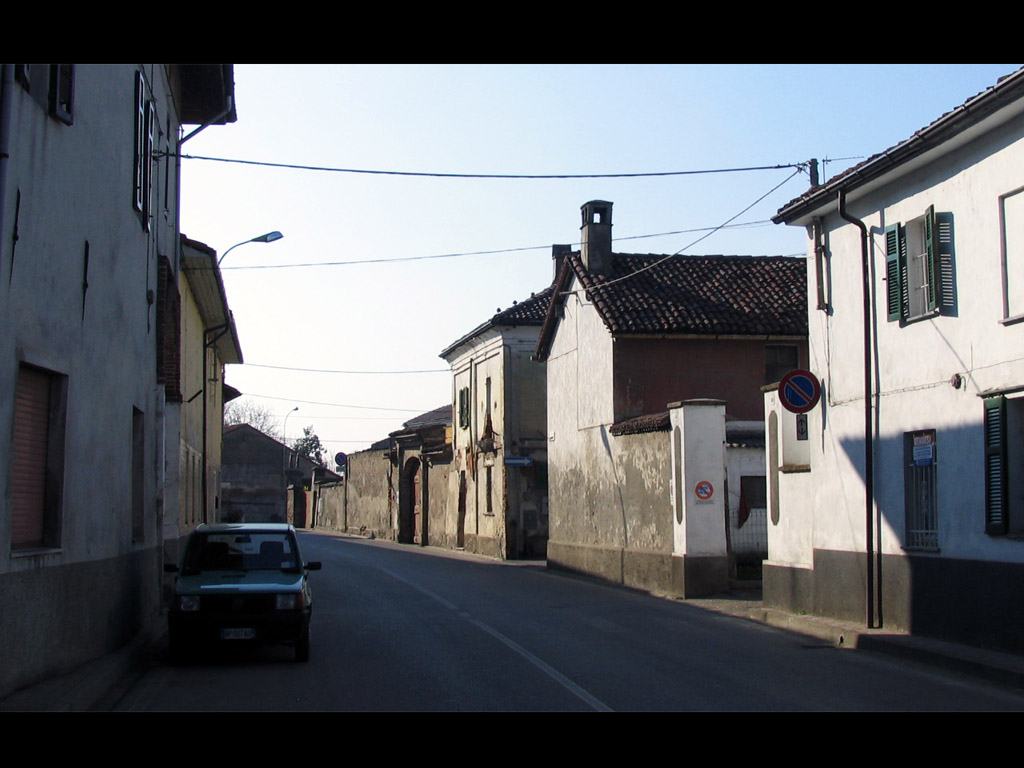
A closer look
Gambarana: at a glance
Gambarana (Gambar in lomellino dialect) is an Italian municipality of 174 inhabitants[1] from the province of Pavia in Lombardy. It is located in Lomellina southern, in the alluvial plain near the left bank of the Po.
History
SymbolsExplore this chapter
The history of Gambarana's territory has always been conditioned by the proximity of the Po; once it was flowing further south, leaving room for a large historically important center, Sparvara; and also the current fraction Cambiò was a remarkable place, as on the other hand the same Gambarana. In fact, among the branches in which the counts of Lomello palatini, lords of the Western Lomellina until the 12th century were divided, two of the main ones beared the names of Sparvara and Gambarana. In 1311 the palatine accounts were represented here by Federico, Giuliano and Riccardo di Sparvara, and Alberto, Ruffino, Giannone and Opicino di Gambarana. In 1164 all Lomellina was subject to the city of Pavia; its diploma by Federico I appoints both Sparvara and Gambarana. Under Pavia, he continued the lordship of the Palatine Counts of Sparvara and Gambarana on their respective feuds which, unless short interruptions, continued until the 18th century (the Sparvara became extinct in 1769, the Gambarana still exist). Already in the previous century, if not before, it had begun the decadence of Sparvara, devastated by the Po; its name did not indicate that some cascina scattered, and also the Counts of Sparvara by now established their headquarters in Cambiò, which was the seat of the municipality still told of Sparvara and Cambiò.
The town of San Martino La Mandria was a municipality until the 18th century; it also belonged to the fief of Gambarana; in 1806 it was aggregated to Suardi and later to Gambarana, as then happened to Cambiò.
Symbols
The municipal coat of arms is free of official concession and can be blasoned.
The lion is the symbol of Gambarana's accounts, one of the branches in which Palatini counts were divided that dominated the Western Lomellina until the 12th century. The branches of laurel and oak interwoven at the head of the shield could be what remains of a chief of the littorium, obligatory ornament of the municipal coats under the fascist regime.[4]
Monuments and sights
The castleExplore this chapter
The castle
In the centre of the town there is the Castle, a fort house. The building is made of square brick, with a parallel block type, without an internal courtyard, has very simple structure, without particular decorative motifs. In the north wall dominates a circular-base semi-torre used for services. The walls, ripped at the base, still have traces of crenellation. The castle has two entrances, one east and the other place on the opposite side, west. It is a private property, used as a home: it is one of the best preserved monuments in Gambarana.
Society
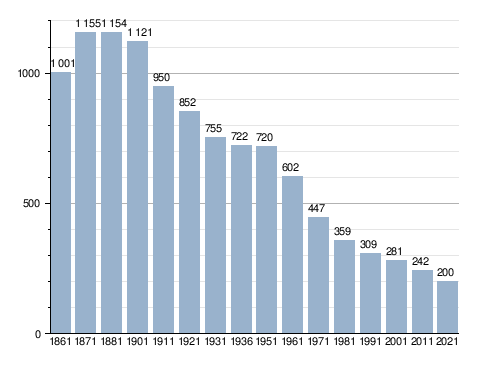
Demographic evolutionExplore this chapter
Demographic evolution
Inhabitants registered[5]
Administration
Explore this chapter
Notes
Explore this chapter
- ^ to b Monthly demographic balance for the year 2026 (provisional data), up demo.istat.it, ISTAT.
- ^ Seismic classification (XLS), up risks.protezionecivile.gov.it.
- ^ Table of degrees/day of Italian Municipalities grouped by Region and Province (PDF), in Law 26 August 1993, n. 412, annex A, National Agency for New Technologies, Energy and Sustainable Economic Development, 1 March 2011, p. 151. URL consulted on 25 April 2012 (archived fromoriginal url on 1 January 2017).
- ^ Gambarana, up araldicacivica.it.
- ^ Data taken from:
- Resident population of the municipalities. Censuses from 1861 to 1991 (PDF), up ebiblio.istat.it, ISTAT.
- Resident population - Time series, up exploredati.istat.it.
Please note: 2021 data refers to permanent census data as of December 31 of that year.
Continue your journey