Atlas of Monferrato
Coniolo: sights, history and trails
Alessandria
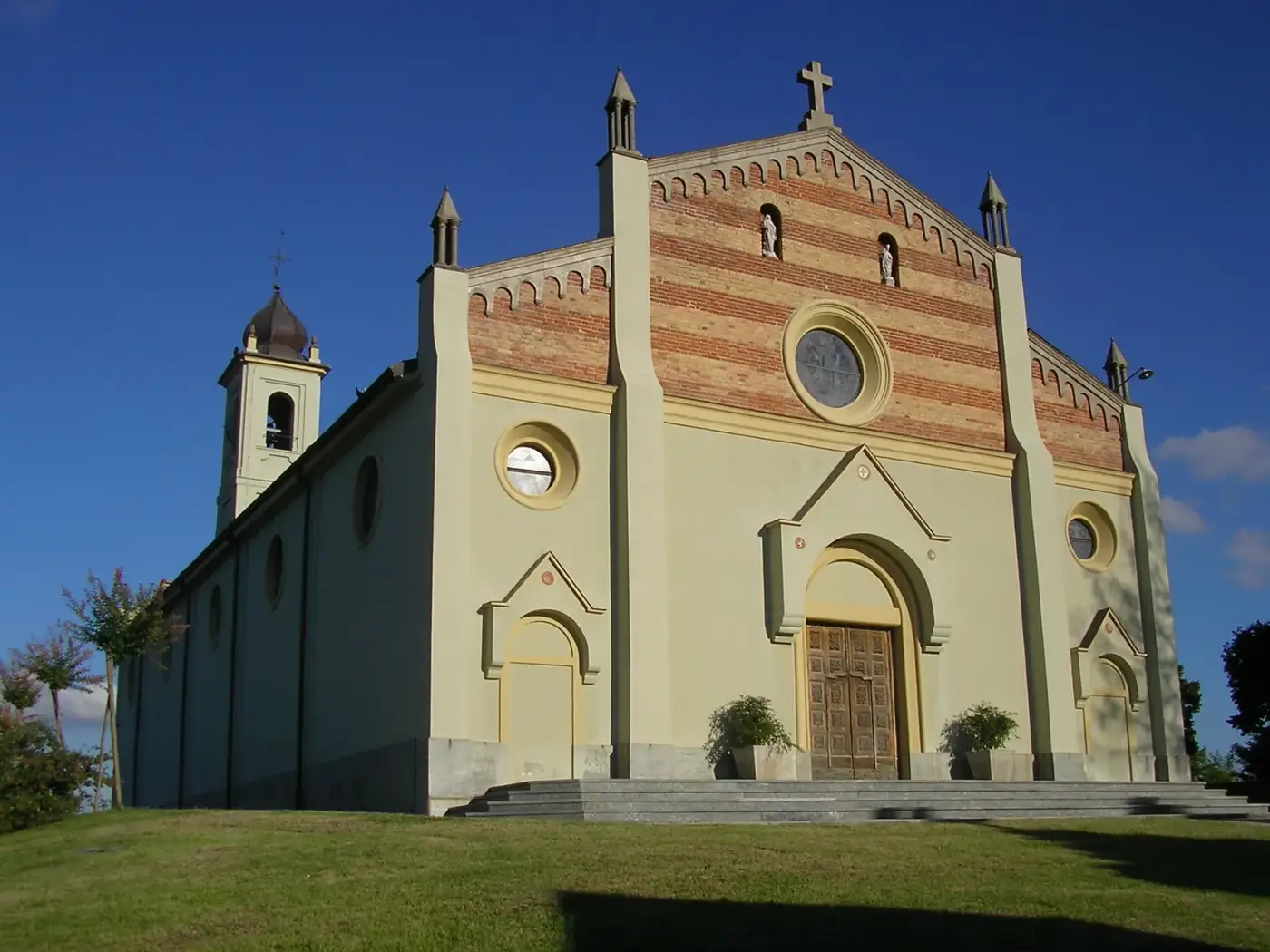
- Elevation
- 252 m above sea level
- Area
- 10.3 km²
- Demonym
- coniolesis
- Patron saint
- Saint Mary Assumption
A closer look
Discovering Coniolo
Coniolo (Conieu in Piedmont) is an Italian municipality of 417 inhabitants[1] from the province of Alessandria, in Piemonte, located at a distance of approximately 7 kilometers west of Casale Monferrato.
History of Coniolo
SymbolsExplore this chapter
Symbols
Coat of arms of blue, truncated in silver band, at the head of the silver mastius, walled and closed of black, at the mountain of six peaks on the tip. Exterior ornaments from the Municipality.[4]
Society
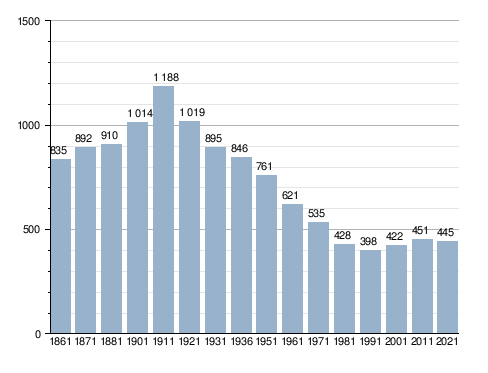
Demographic evolutionExplore this chapter
Demographic evolution
Culture
Ethnographic Museum of Mines · LiteratureExplore this chapter
Ethnographic Museum of Mines
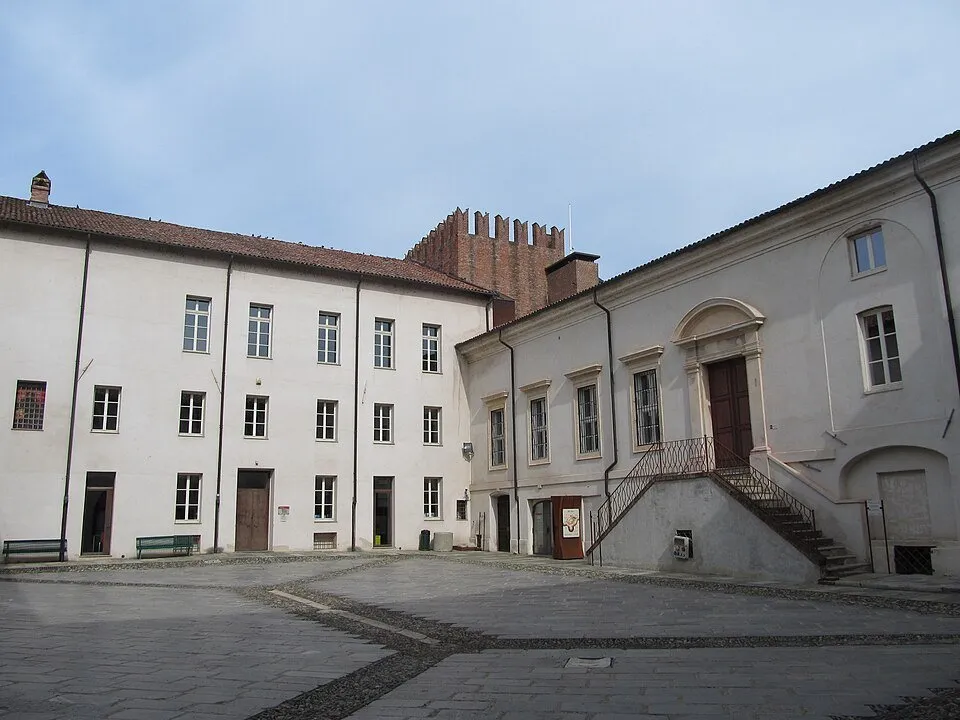
The Ethnographic Museum of the Mines "Coniolo Il Paese che visse due volte", located in Coniolo Municipal Palace,[6] recounts the epic of cement marin mines, begun in the second half of the XIX century and continued for about one hundred years, leaving on the territory strong signs and still legible that tell a story that belongs to the current and future generations.
The history of the country was marked by a treasured cultivation of the deep-sea, under the ancient town of Coniolo Basso. The first lesions to the buildings appeared in 1905 and the phenomenon continued until 1922: eighty-four houses, the church and the castle, were lost forever.[7] The inhabitants did not demoralize, dismantled the old houses and rebuilt them on the site of the present town of Coniolo Bricco. This is why the museum is called "Coniolo, the country that lived twice".[8]
The museum reproduces within it a section of cement marin mine faithfully reconstructed also in the noises and work carried out by men, women and children who, from nine to thirteen years, could already become miners. The plastics of the ancient town of Coniolo are musealized, the detail of the mines, the tools used and the means of transport in tunnel, on land, for air and on the river Po.[9] The collection is divided into thematic sections, where authentic objects and vintage photographs are placed:[8]
- the extractive activity open from the Roman era until 1884;
- The first tools used, derived from other locally popular crafts;
- the start of mining crops in depth, following the restoration of river transport on the Po river (1884) and the settlement of cement plants at the railway station Morano sul Po (1887);
- the development of the mining area “Palazzina Molino Zerbi”, with about 40 Km of tunnels dug in the hill;
- the evolution of extractive activity;
- the activities related to industrial mining induced;
- female and child labour: according to the law of the time children from 9 to 13 years could work in the mine, provided they were healthy.
Literature
The hill of Coniolo is expressly mentioned in the reflections contained in the book The craft of living by Cesare Pavese on 3 August 1946.
Administration
Below is a table relating to the administrations that have succeeded one another in this municipality.Explore this chapter
Below is a table relating to the administrations that have succeeded one another in this municipality.
| Period | First citizen | Match | Load | Notes | |
|---|---|---|---|---|---|
| June 13, 1985 | May 27, 1990 | Riccardo Triglia | Christian Democracy | Mayor | [10] |
| May 27, 1990 | April 24, 1995 | Riccardo Triglia | Christian Democracy | Mayor | [10] |
| April 24, 1995 | June 14, 1999 | Riccardo Triglia | Center | Mayor | [10] |
| June 14, 1999 | June 14, 2004 | Riccardo Triglia | Lista civica | Mayor | [10] |
| June 14, 2004 | June 8, 2009 | Giovanni Spinoglio | Lista civica | Mayor | [10] |
| June 8, 2009 | May 26, 2014 | Giovanni Spinoglio | For Coniolo | Mayor | [10] |
| May 26, 2014 | May 27, 2019 | Enzo Amich | Together for Coniolo | Mayor | [10] |
| May 27, 2019 | June 9, 2024 | Arles Garelli | Lista civica | Mayor | [10] |
| June 9, 2024 | in office | Arles Garelli | Lista civica | Mayor | [10] |
Notes
Explore this chapter
- ^ to b Monthly demographic balance for the year 2026 (provisional data), up demo.istat.it, ISTAT.
- ^ Seismic classification (XLS), up risks.protezionecivile.gov.it.
- ^ Table of degrees/day of Italian Municipalities grouped by Region and Province (PDF), in Law 26 August 1993, n. 412, annex A, National Agency for New Technologies, Energy and Sustainable Economic Development, 1 March 2011, p. 151. URL consulted on 25 April 2012 (archived fromoriginal url on 1 January 2017).
- ^ Directorate for Institutional Communication of the Regional Assembly (edited by), Piedmontese civic coat of arms, vol. I, A-L, Regional Council of Piemonte, 2016, p. 181, ISBN 978-88-96074-98-5.
- ^ Data taken from:
- Resident population of the municipalities. Censuses from 1861 to 1991 (PDF), up ebiblio.istat.it, ISTAT.
- Resident population - Time series, up exploredati.istat.it.
Please note: 2021 data refers to permanent census data as of December 31 of that year.
- ^ Museum of Mines, up Municipality of Coniolo. Retrieved 24 April 2022.
- ^ Municipality of Coniolo, Coniolo's mining history, Casale Monferrato, Tipografia La Nuova Operaia, 2004.
- ^ to b Municipality of Coniolo, Marna di Coniolo mines. the Ethnographic Museum of Mines “The country that lived twice”, Casale Monferrato, Tipografia La Nuova Operaia, 2015.
- ^ MoMu - Ethnographic Museum "Coniolo the country that lived twice", up common.casale-monferrato.al.it. Retrieved 24 April 2022.
- ^ to b c d And f g h the https://amministratori.interno.it/
Where to stay · Coniolo
Find stays on Booking.comThe area, step by step
Trails and routes in Coniolo


Asti, Alessandria and surroundings
Le Strade dei Minatori del Monferrato Casalese
 Mountain bikeAround the starting point

Asti, Alessandria and surroundings
Tour dei Castelli Bruciati

Asti, Alessandria and surroundings
Granfondo del Monferrato Casalese
