Atlas of Monferrato
Rocchetta Ligure: sights, history and trails
Alessandria
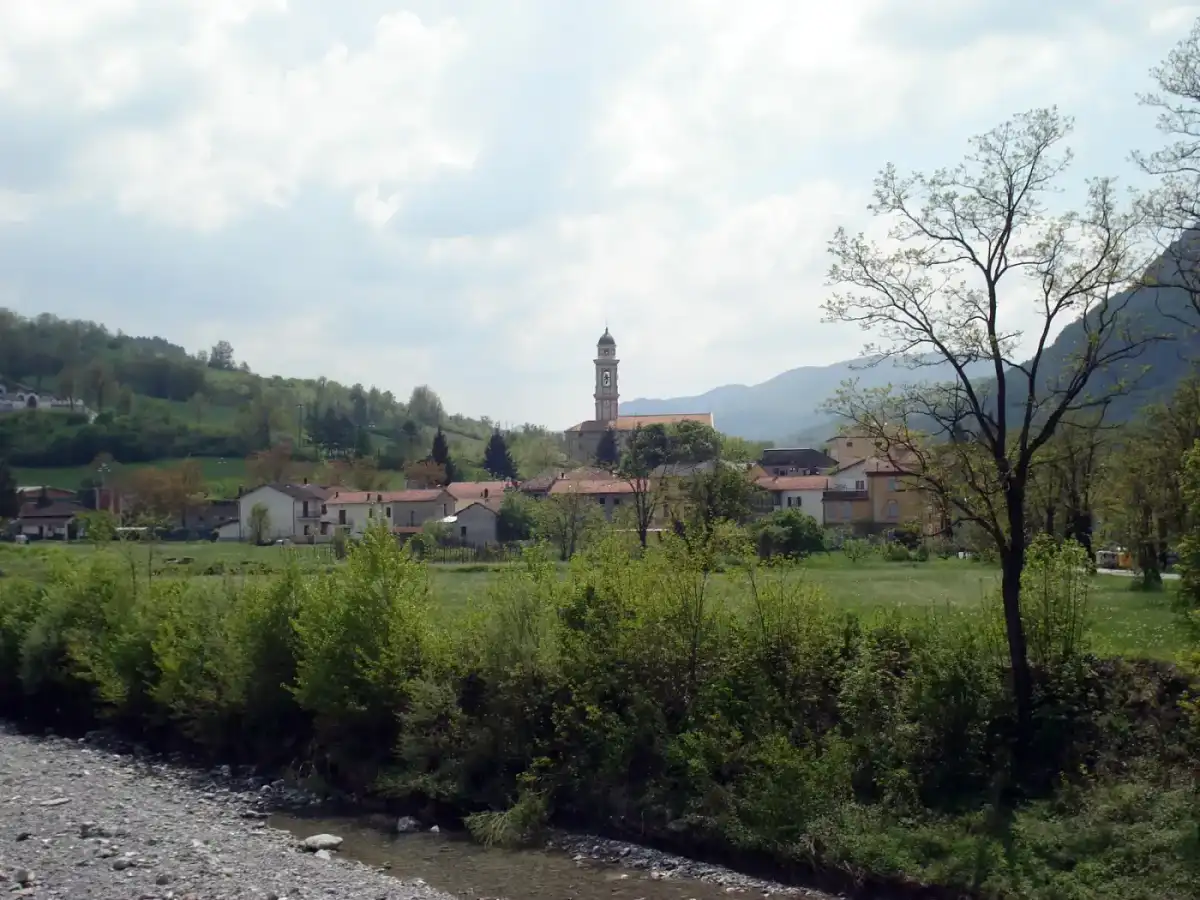
- Elevation
- 390 m above sea level
- Area
- 10.15 km²
- Demonym
- Patron saint
- Saint Anne
A closer look
Discovering Rocchetta Ligure
Rocchetta Ligure (Rochëtta (Ligurin) in Piedmontese, In Rocheta in Liguria) is an Italian municipality of 222 inhabitants[2] from the province of Alessandria, in Piemonte, located at the confluence of the Sisola stream into the Borbera, in Val Borbera.
For many centuries he was part of Imperial fiefdoms Ligurian as a domain of the Genoese family of Spinola, during the short Ligurian Republic was the capital of the Western Liguri Mountains. [5]
History of Rocchetta Ligure
The lordship of Rocchetta and Roccaforte belongs at least from the 13th century to the Spinola (from Germany around 948 under Emperor Ottone) of the branch of...Explore this chapter
The lordship of Rocchetta and Roccaforte belongs at least from the 13th century to the Spinola (from Germany around 948 under the Emperor Ottone) of the branch of Luccoli and is given imperial confirmation in 1369 and again in 1478 with jurisdiction over the castles placed on the right bank of the stream Sisola and the slope of the ditch Avi that divides it from the fief of Cantalupo. With Stefano II Spinola (1579-26), owner of the imperial feuds, is introduced the primogeniture and in 1607 receives the imperial privilege of imposing gabelle on transit goods in its lands and proceeds to reconstruction of the ancient castle; 1609 promulgates a new Statute, attributing absolute powers, and establishing from 1612 a school teacher in the village. The fief comes to understand the lands in the valleys of Borbera, Sisola, Scrivia and Vobbia. He must support a long controversy against the claims of Uncle Mario on some areas of the family fief of Montessoro (1607). Shortly before he died, Stephen succeeds and becomes recognized the right of primogeniture of his possessions. With Napoleon IV (1607-83), succeeded to the father Stefano, the lordship is improved also in the living conditions of the population: he is often present in the marquisate with visits and inspections and the fief is enriched by a hospital for travellers, given the strategic position of the road that connects the port of Genoa with Piacenza, Tortona and Pavia. The 8.10.1644 the lordship is elevated to Marquisate with Rocchetta, Vigo and Centrassi, associating it to the county of Ronco and to the consignories of Busalla, Montessoro and Borgo de' Fornari. Having increased the income following the imperial concession to establish the tolls on the goods passing along the Via del Sale or Via dei Feudi imperial (with beginning from Genoa, Passo d'Orero, Casella, Croce, Val Vobbia, Mongiardino) that from the port of Genoa climbs up to Lombardy, Napoleon erects the new commercial center of Borgonuovo della Rocchetta on the opposite bank of the Sisola that with flowing in the Borberaster1673, where the Order of Malta Statutes are published, a new feudal palace at Rocchetta (1666-1678), a preemptive palace seat of the excretors of the goods and to accommodate important characters of passage (such as the imperial plenipotentiary minister arrived in 1722 to process the people in competition in the desertion of some soldiers from the imperial army) and finally a tick (1669-1721). The brother of the Marquis, religious, erects the great church of Sant’Antonio Abate. Stefano III (1633-1687), Carlo Napoleone (1671-1736) erecting a modern hospital in Borgo de’ Fornari, Giovan Battista (1707-1772). Stefano III, tries to definitively conclude the centuries-old disputes between Roccaforte and Cantalupo and the rights of the consignoria of Montessoro, while successor Charles Napoleon is forced to face the dissidation with Emperor Charles VI who intends to deprive the feudal lords of the over yoke of the collection of rights on the “regalia del sale”. Carlo Napoleone is designated heir by his sister Geronima, widow of Urbano Fieschi (1736). Meanwhile the old palace of the Rocca is abandoned and ceded to Domenico Balbi, while it expands with various acquisitions of property and land the possessions of Borgo de Fornari. The son Giovan Battista happens to him until the death of 27.09.1772, leaving his son Charles Napoleon as a universal heir. Gio. He beats without neglecting his fiefs, carries out his activity at the service of Genoa, as sent to the court of Naples and then captain of Sestri Ponente. Charles Napoleon II (1741-1805) is heir of the mother Anna Maria Adorno and as a result of the heritage of grandfather Giovan Battista Adorno died in 1689 (Adorna heritage). In the 1753 the lucky Charles receives in 1753 also the substantial legacy of Gentiles with the co-committed faith of Paolo Gentile, finally a few years later Charles obtains the renunciation of his father's inheritance by his sister Giovanna. However, because of the disastrous financial situation to which he bears his ingent patrimony, Charles, by decree of the Genoese Senate of 30.08.1780, is declared “disable” and interrupted for the administration of its assets by insolvency; it will be rehabilitated only in September 1797. For this financial dissent, the marquis, devoid of heirs, in 1784 leaves the administration of his goods to the “curators” Anton Giulio Raggi, Raffaele De Ferrari, Francesco Maria Spinola who administer the marquisate until the 1797. For some quotas also the Doria and 1714 The Gentiles are the co-owners of Busalla, Montessoro and Borgo dei Fornari. In the 1805 Carlo's sister, Giovanna, is still the only heir to the family heritage of property in Fegino, Cornigliano, Ronco, Rocchetta and Roccaforte, Borgo de Fornari. Married with Giuseppe Pinelli, devoid of heirs, leaves the property to cousins Giovan Antonio (1760-55) and Giacomo Filippo Raggi (1777-54).
What to see in Rocchetta Ligure
Parish church · Palazzo Spinola · The Way of the SaleExplore this chapter
Parish church
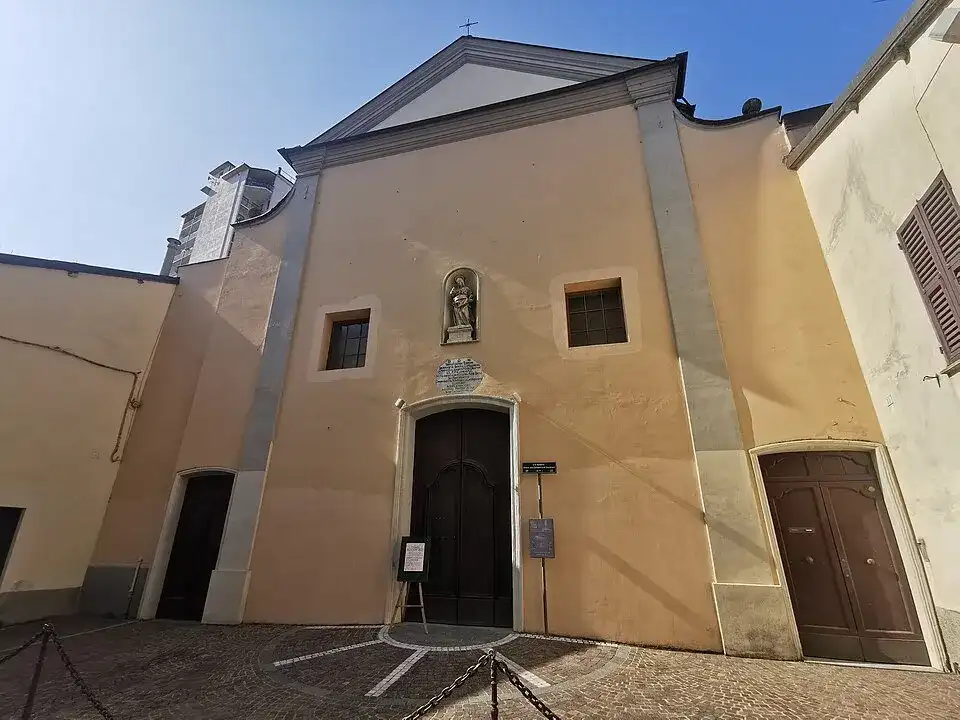
The parish church of Sant'Antonio Abate was built between 1663 and 1664 on the basis of a former chapel presumably built in the 13th century.
Palazzo Spinola
Palazzo Spinola was wanted in 1650 by Napoleon IV Spinola lord of the fief Roccaforte Ligure to have a summer residence.
After 1797 he remained uninhabited and abandoned. Today it is the seat of the Municipality, from 1999 to 2005 was the European headquarters of Living Theatre in New York, opened with contributions from the European Union, and currently houses the Museum of Resistance and Social Life in Val Borbera "Giambattista Lazagna".
The Way of the Sale
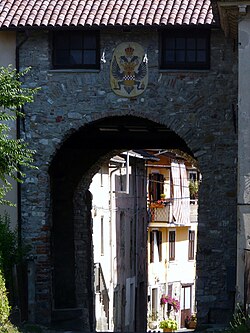
Leaving south from the town along the ancient street of the salt you will find a nucleus of fifteenth-century houses preexisting to the “Borgo Nuovo” of Rocchetta Ligure, called “I Marughi” from the surname of the ancient inhabitants and owners, with the rustic door of Valle Sisola, stop for the payment of the duty.
The Resistance Museum "Giambattista Lazagna"
The Museum of Resistance and Social Life in Val Borbera is located in Palazzo Spinola, as mentioned above and was founded in 1990 by the Municipality and Region Piemonte.
It collects photographic images, weapons, bullets, objects such as field radios, bores, bags, backpacks and other tools of the partisans in the area. In addition, through an iconographic teaching path in chronological order where the phases of the Liberation War from 1943 to 1945 are illustrated with texts and photos.
In 2003 he was dedicated to Giambattista Lazagna.
The former hospital of Palazzo Tassorello
The hospital was born by the will of the savonese Tito Tosonotti, a Valborberina family who together with the old friend raped her. Luciano Pertica di Rocchetta, managed to recover the surgical equipment in Genoa and opened on August 13, 1944 a hospital at Palazzo Tassorello that worked until the end of the war healing both partisans and Nazi-fascists[6].
Society
Demographic evolutionExplore this chapter
Demographic evolution
Inhabitants registered[7]
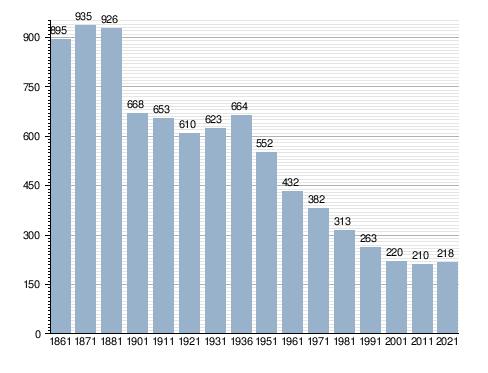
- In the country according to the ISTAT census of 31 December 2007 12 foreigners, including 7 Indians, 4 Romanians and one Albanian.
Culture
Events · BooksExplore this chapter
Events
- Fagiolana festival. Gastronomy and Crafts. Green beans with salami, with tripe, with tuna and onion. (First edition 1971). The second Sunday of September.
Books
Rocchetta Ligure is the birthplace of Valerio and Ferruccio (Uccio) Spinola, brothers imaginary cyclists, protagonists of the book Standing on the pedals by Luigi Garlando.
Administration
Below is a table relating to the administrations that have succeeded one another in this municipality.Explore this chapter
Below is a table relating to the administrations that have succeeded one another in this municipality.
| Period | First citizen | Match | Load | Notes | |
|---|---|---|---|---|---|
| June 26, 1985 | May 25, 1990 | Albino Paolo Corana | Italian Socialist Party | Mayor | [8] |
| May 25, 1990 | April 24, 1995 | Albino Paolo Corana | Italian Socialist Party | Mayor | [8] |
| April 24, 1995 | June 14, 1999 | Albino Paolo Corana | centre-left | Mayor | [8] |
| June 14, 1999 | June 14, 2004 | Albino Paolo Corana | civic list | Mayor | [8] |
| June 14, 2004 | June 8, 2009 | Giorgio Storace | civic list | Mayor | [8] |
| June 8, 2009 | May 26, 2014 | Giorgio Storace | civic list Together for Rocchetta and Val Sisola | Mayor | [8] |
| May 26, 2014 | May 27, 2019 | Giorgio Storace | civic list Together for Rocchetta and Val Sisola | Mayor | [8] |
| May 27, 2019 | June 9, 2024 | Fabio Cogo | Civic list Noi for you | Mayor | [8] |
| June 9, 2024 | in office | Fabio Cogo | Civic list Noi for you | Mayor | [8] |
Image gallery
Explore this chapter
-
 Another image of Rocchetta Ligure
-
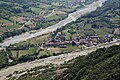 View of Rocchetta Ligure (390 m) from the Alpine Cross (830 m)
-
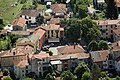 Piazza Regina Margherita a Rocchetta Ligure
Notes
Explore this chapter
- ^ Ligurian Rocchetta - Encyclopedia - Treccani, up www.treccani.it. Retrieved 10 August 2026.
- ^ to b Monthly demographic balance for the year 2026 (provisional data), up demo.istat.it, ISTAT.
- ^ Seismic classification (XLS), up risks.protezionecivile.gov.it.
- ^ Table of degrees/day of Italian Municipalities grouped by Region and Province (PDF), in Law 26 August 1993, n. 412, annex A, National Agency for New Technologies, Energy and Sustainable Economic Development, 1 March 2011, p. 151. URL consulted on 25 April 2012 (archived fromoriginal url on 1 January 2017).
- ^ Rocchetta Ligure in the history of the Spinola and the Sovereign Military Order of Malta, Library of the Accademia Olubrense, Lorenzo Tacchella, Genoa, 1996.
- ^ Tito Tosonotti, The Val Borbera hospital in Rocchetta Ligure. Partisan activities and events, Municipality of Rocchetta Ligure, 1967.
- ^ Data taken from:
- Resident population of the municipalities. Censuses from 1861 to 1991 (PDF), up ebiblio.istat.it, ISTAT.
- Resident population - Time series, up exploredati.istat.it.
Please note: 2021 data refers to permanent census data as of December 31 of that year.
- ^ to b c d And f g h the http://amministratori.interno.it/
Where to stay · Rocchetta Ligure
Find stays on Booking.comThe area, step by step
Trails and routes in Rocchetta Ligure
 CyclingAround the starting point
Asti, Alessandria and surroundings
Granfondo Dolci Terre di Novi

Asti, Alessandria and surroundings
Sentiero pagliaro inferiore - selletta m. cravasana

Asti, Alessandria and surroundings
Sentiero rocchetta ligure - costone la ripa
 WalkingAround the starting point
Asti, Alessandria and surroundings
Anello borbera - spinti tappa 10 (costa salata mongiardino - borassi)

Asti, Alessandria and surroundings
Anello borbera - spinti tappa 11 (borassi - arquata scrivia)

Asti, Alessandria and surroundings