Atlas of Monferrato
Paderna: sights, history and trails
Alessandria
- Elevation
- 300 m above sea level
- Area
- 4.42 km²
- Demonym
- Padernesi
- Patron saint
- Saint George
A closer look
Discovering Paderna
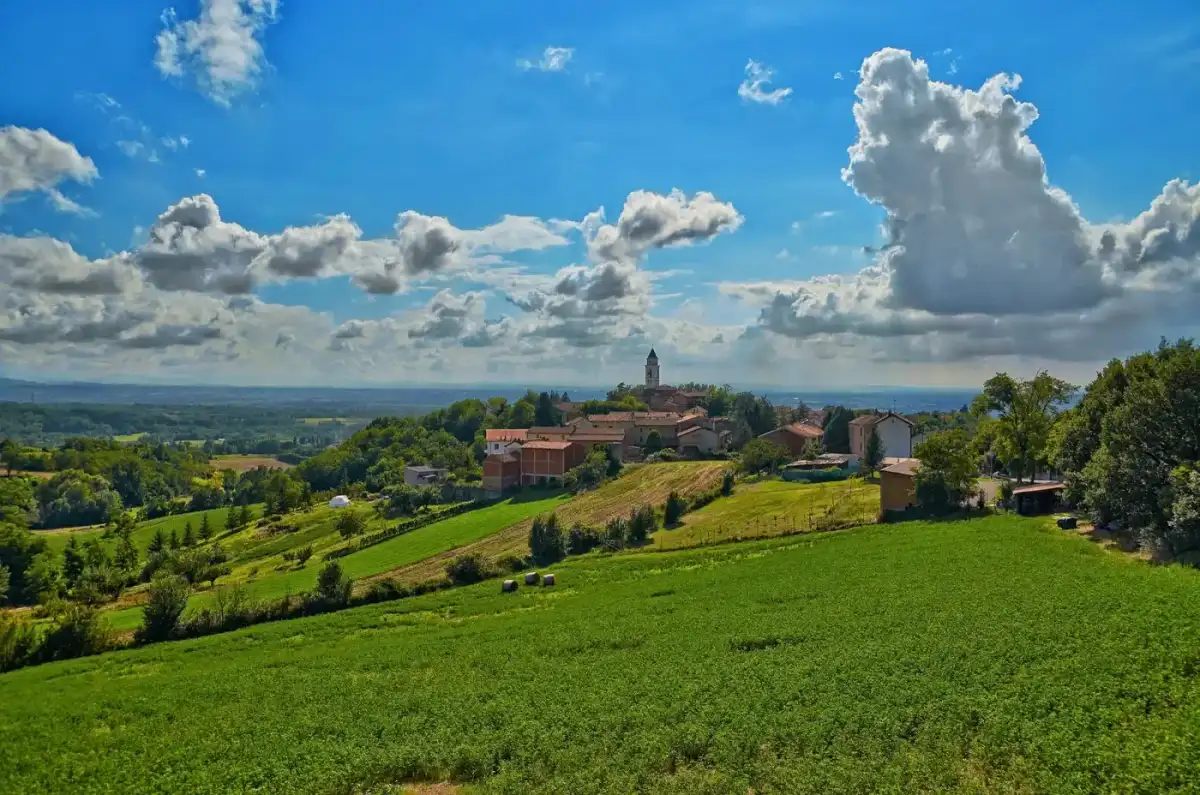
Paderna (Paderna in Piedmont) is an Italian municipality of 211 inhabitants[1] from the province of Alessandria in the Piemonte, located on the extreme hillsides of the Appennine, on the right of the Scrivia.
Description
Small hilly community, of medieval origin, whose economy is purely agricultural. The Padernesi, presenting an old age index among the highest in...Explore this chapter
Small hilly community, of medieval origin, whose economy is purely agricultural. The Padernesi, who present an old age index among the highest in the region, live totally in the municipal capital. The territory has an undulating geometric profile, with not very accentuated altimetric variations. The town, interested by strong building expansion, is in a panoramic position on a spur that branches off from a counterfeit interposed between the valleys of the watercourses.
History of Paderna
The toponym is attested, from the year 1200 , through the form of “Paderna”, derived, most likely, from the ellipses of the sintagma (Praedia) Paterna (the meaning of which is...Explore this chapter
The toponym is attested, from the year 1200, through the form of “Paderna”, derived, most likely, from the ellipses of the synatagma (Praedia) Paternal (whose meaning is "(funds) inherited from the father)" or from (Villa) Paternal. Founded in medieval times by the inhabitants of the nearby Tortona, probably on the site of a previous location, located between the current settlement and Spineto. The first historical information dates back to 1155, the year in which the Montemerlos, local lords, came to the aid of the Tortona people when they were besieged by Federico Barbarossa. It was subsequently ceded as a fief first to the Spinola family and then to the Carbone family. Between 1676 and 1688 the inhabitants managed to obtain the redemption of the fiefdom, in order to have greater independence. In 1630, like many other towns in the area, it was devastated by the terrible plague remembered by Manzoni. Its monumental emblem is the parish church of San Giorgio, whose mass divides the lower part of the settlement from the upper one. Its orientation would suggest that it was built in ancient times; the central nave is, believed by some, but without any credible evidence or argument, to be from the early Christian period, while the side naves date back to the 13th and 14th centuries.
The facade was built in the fifteenth century and inside it is possible to admire two paintings depicting Saint Sebastian and the Madonna and Child. Also worthy of a visit are the town hall, located on the site of an ancient castle, and the Romanesque bell tower, the only remnant of an ancient parish church that was built in the Vezzano valley.
What to see in Paderna
Explore this chapter
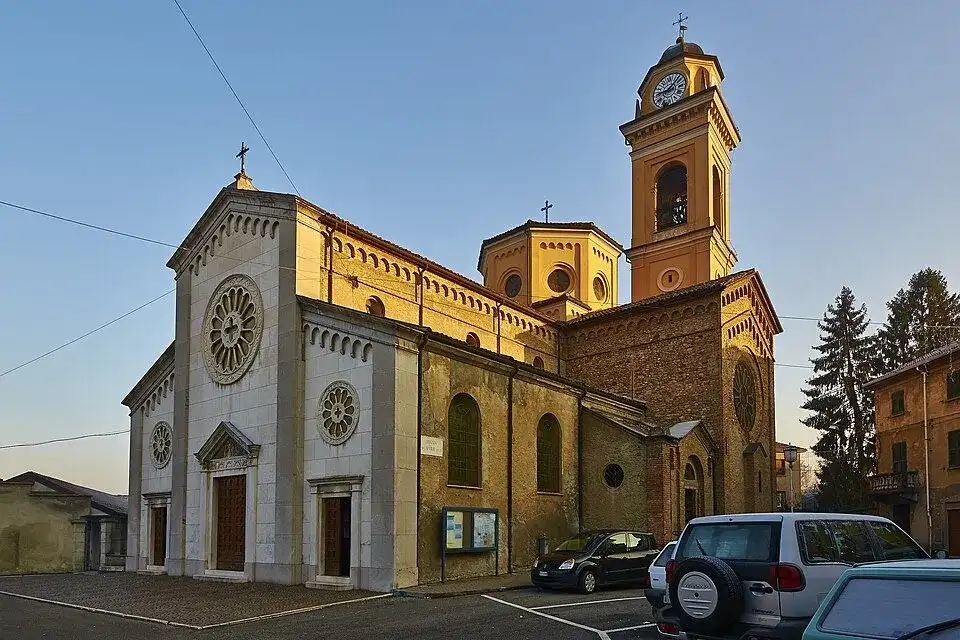
- Church of San Giorgio: the parish church, already mentioned in documents of the 11th century, was rebuilt later in the current form to three aisles. The bell tower dates back to the 19th century. Inside is the wooden statue of Saint George, work attributed to the Maragliano school.
Society
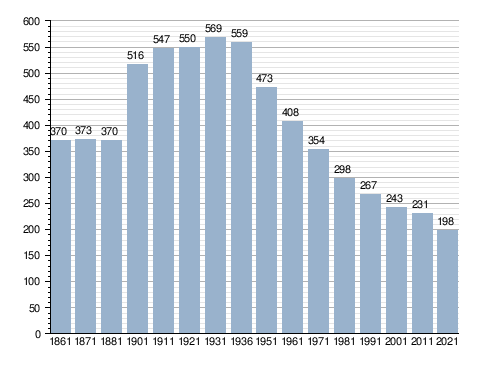
Demographic evolutionExplore this chapter
Demographic evolution
Inhabitants registered[4]
Administration
Below is a table relating to the administrations that have succeeded one another in this municipality.Explore this chapter
Below is a table relating to the administrations that have succeeded one another in this municipality.
| Period | First citizen | Match | Load | Notes | |
|---|---|---|---|---|---|
| September 25, 1987 | May 26, 1990 | Pietro Gualco | Italian Democratic Socialist Party | Mayor | [5] |
| May 26, 1990 | April 24, 1995 | Pietro Gualco | Italian Socialist Party | Mayor | [5] |
| April 24, 1995 | June 14, 1999 | Pietro Gualco | center | Mayor | [5] |
| June 14, 1999 | June 14, 2004 | Pier Giorgio Gatti | civic list | Mayor | [5] |
| June 14, 2004 | June 8, 2009 | Pier Giorgio Gatti | civic list | Mayor | [5] |
| June 8, 2009 | May 26, 2014 | Matteo Gualco | civic list Wheat spades with grape bunch | Mayor | [5] |
| May 26, 2014 | May 27, 2019 | Matteo Gualco | list civic Grappolo d'uva con spighe | Mayor | [5] |
| May 27, 2019 | June 9, 2024 | Matteo Gualco | list civic Grappolo d'uva con spighe | Mayor | [5] |
| June 9, 2024 | in office | Filippo Cordani | civic list Wheat spades with grape bunch | Mayor | [5] |
Notes
Explore this chapter
- ^ to b Monthly demographic balance for the year 2026 (provisional data), up demo.istat.it, ISTAT.
- ^ Seismic classification (XLS), up risks.protezionecivile.gov.it.
- ^ Table of degrees/day of Italian Municipalities grouped by Region and Province (PDF), in Law 26 August 1993, n. 412, annex A, National Agency for New Technologies, Energy and Sustainable Economic Development, 1 March 2011, p. 151. URL consulted on 25 April 2012 (archived fromoriginal url on 1 January 2017).
- ^ Data taken from:
- Resident population of the municipalities. Censuses from 1861 to 1991 (PDF), up ebiblio.istat.it, ISTAT.
- Resident population - Time series, up exploredati.istat.it.
Please note: 2021 data refers to permanent census data as of December 31 of that year.
- ^ to b c d And f g h the http://amministratori.interno.it/
Where to stay · Paderna
Find stays on Booking.comThe area, step by step
Trails and routes in Paderna
 CyclingAround the starting point
Asti, Alessandria and surroundings
Da Girardengo a Coppi – Tappa rosa

Asti, Alessandria and surroundings