Atlas of Monferrato
Sala Monferrato: sights, history and trails
Alessandria
- Elevation
- 264 m above sea level
- Area
- 7.58 km2
- Demonym
- sales
- Patron saint
- Saint James
A closer look
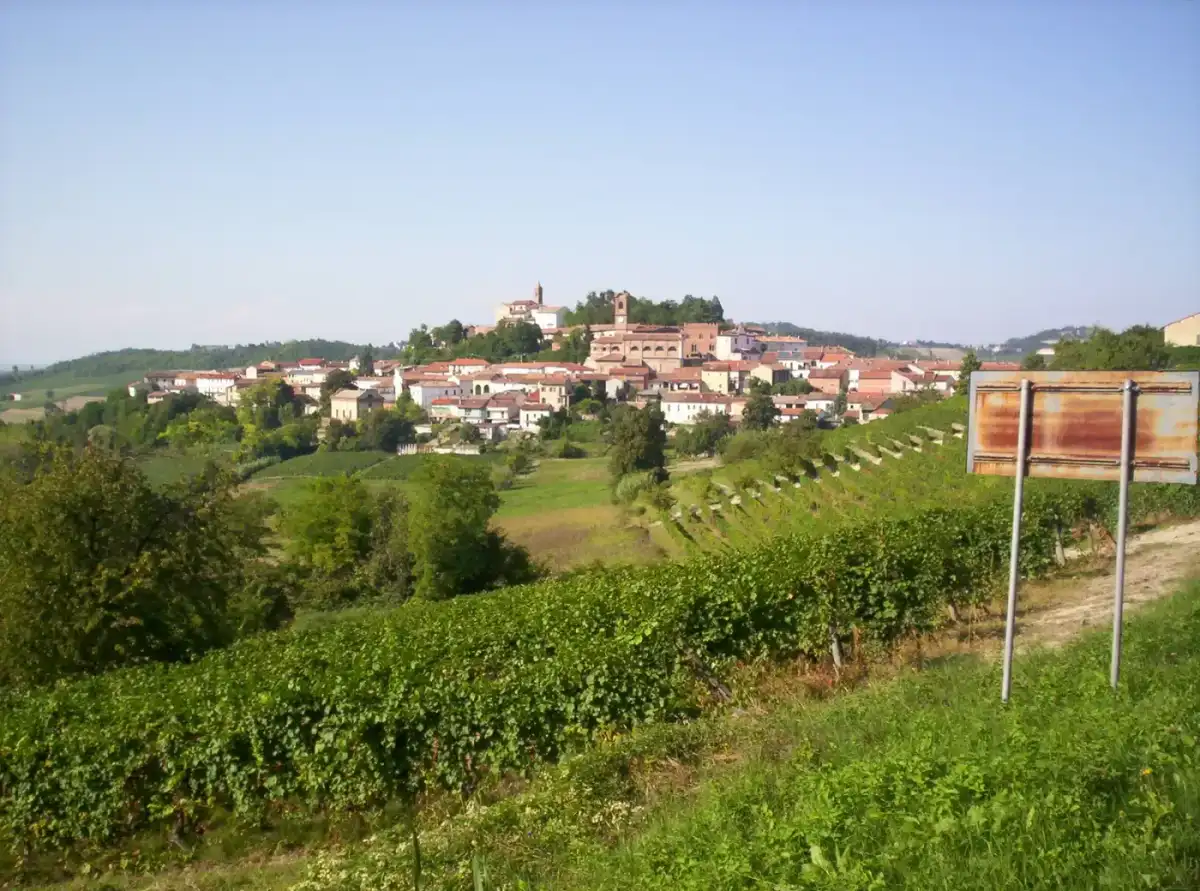
Discovering Sala Monferrato
Sala Monferrato (The Room in Piedmont) is an Italian municipality of 331 inhabitants[1] from the province of Alessandria, in Piemonte.
Since 2024 part of the Network of Sustainable Municipalities, it is the only Italian municipality together with Ottiglio (AL) to have received the European Prize 2025 for commitment to and respect for community values of peace, freedom and sustainability.[4]
Landscape and area
Set on a high hill, the village is located in the heart of the Monferrato wine landscape classified in 2014 as a UNESCO World Heritage Site for its...Explore this chapter
The village is located in the heart of the wine landscape of the Monferrato classified in 2014 as a UNESCO World Heritage Site for its unique historical and landscape with Langhe and Roero (territory).
The hilly area of Basso Monferrato in which the village is located, between Casale Monferrato And Alessandria, is the continuation of the Apennine chain and is formed by marine sediments that were deposited during the Miocene, when the area was still partially covered by the sea.
The use of the "Pietra da Cantoni" has been widespread throughout the territory since the year one thousand, formed by limestone and marnose sea layers dating to Burdigaliano-Langhiano (from 20 to 14 million years ago), for the construction of private and public buildings and, thanks to geological configuration, the realization of traditional Infernot, small underground spaces dug into the rock, used to store and preserve wines and foods.
History of Sala Monferrato
The village, located in a panoramic position on the apex of a hill, has developed over the centuries around the oldest part of the Lombard period of the castle, according to...Explore this chapter
The village, located in a panoramic position on the apex of a hill, has developed over the centuries around the oldest part of the Lombard period of the castle, according to the structure of the reception, that is the medieval grouping of houses defended by turbulent walls where the inhabitants of the countryside were gathered in case of danger.
At the center of the conflicting territorial ambitions of the bishops of Asti and Vercelli, Sala passed to Marchesato del Monferrato by Federico Barbarossa in 1164. In the second half of the fourteenth century, the village was granted to Guglielmo Bava’s trade mark chancellor, called “Bogerio della Sala”, and in the following centuries it was erected by a consortium of noble families. In the first decades of the 17th century, the president of the Ducal Maestrate of Monferrato attested that the fine wines produced in Sala were very appreciated at the Mantuan court of Gonzaga and the ancient past, the country retained its vocation to viticulture and winemaking.
In the 17th century, during the succession war of Monferrato, the territory was occupied alternately by French and Spanish. Between the end of the seventeenth century and the first decades of the eighteenth century, Savoy hegemony was consolidated on the region, and Sala, as well as the other nearby centers, became part of the Savoy kingdom, which from then on followed the events.
What to see in Sala Monferrato
Church of San Francesco · Infernot · GlacierExplore this chapter
Church of San Francesco
Located at the highest point of the village, above the castle, it is a fifteenth-century oratory built as the seat of the Confraternity of Disciplinates, in a first time dedicated to Sant'Antonio da Padova and later to San Francesco. The facade has a triangular timpane and a high bell tower that flanks the apse. Inside it preserves a wooden statue of the Madonna Addolorata and a restored canvas of Orsola Caccia depicting the Madonna with Child with Saints Antonio and Francis.
Infernot
Hand dig from the Franciscan friars and completed in 1844, it is located under the church of San Francesco and is now part of that circuit of infernòt located between the provinces of Asti and Alessandria classified as a UNESCO World Heritage Site.
Glacier
Inaugurated in October 2019 after a long restoration, the glacier It was built in the two-year period 1861-1862 as a storage for ice to preserve food and has a structure with a high vaulted ceiling and a robust brick coating.
Church of San Giacomo
Located in the center of the village under the circle of buildings that corresponds to the ancient reception, it is the parish church of Sala Monferrato. Its construction began in 1582 on project by Domenico Scovazino and then be expanded in various shootings during the '700, while the bell tower was built in the early 19th century.
Inside there are three paintings by Guglielmo Caccia told the Moncalvo: Our Lady of the Rosary, Assumption with Saints Francis and Catherine Alessandria and the climb to Calvary; the latter with the coat of arms of Bellone d’Altavilla and Della Sala.
In the presbytery two canvases of the Albertine depicting saints Sebastiano, Antonio Abate, Rocco and Orsola, Lucia, Caterina, Apollonia and Agata are preserved. 1691, very high mail.
The frescos of the Ivaldi brothers called “ are located above the choir stalls.The Mutes” and also the time is frescoed.
In the ciborium above the main altar there is a stable containing a fragment of the Cross of Jesus.
Church of San Grato
The church of San Grato was built in the second half of the 17th century, not far from the village probably as a former vote after a plague. In exposed bricks, with octagonal tiburium and curvilinear pediment, it was restored in the middle of the eighteenth century by Giovanni Battista Scapitta.
House Memories
Inaugurated on October 28, 2017 in the presence of other family members and friends Paolo Conte, Gino Paoli, Ricky Gianco and Ivan Cattaneo, is the only museum space in the world dedicated to the “inventor of cantauthors” Nanni Ricordi.
It is located above the post office in the main street of the village, via Roma, and collects posters, covers of 33 turns and autographed LPs, letters of Maria Callas and Miranda Martino, books of early twentieth century work and many other testimonies of musicians and songwriters "invented" and launched by the legendary musical producer Carlo Emanuele called 'Nanni'.
Big Bench
A few steps from the rural church of San Grato, with a spectacular view on the hills of Monferrato and the village of Sala, the Big Bench salese figure among the 194 panoramic giant benches of the circuit Big Bench Community Project[5] designed by the artist Chris Bangle in 2010 to arouse, through the scaled dimensions of the sessions, the amazement and wonder of children regarding the beauty of the landscape.
Economy
The economy of the municipality is mainly based on viticulture and wine making, in particular on the production of Barbera , Grignolino , Freisa , Cortese e Malvasia as from...Explore this chapter
The economy of the municipality is mainly based on viticulture and wine making, in particular on the production of Barbera, Grignolino, Freisa, Cortese and Malvasia as from characteristics of the territory, so as to count six producers on site and as many cellars open to wine tasting.
Wine and local products such as the artisan production of Muletta Monferrina, the typical fine salami of the territory, are bringing to the increasing interest in the village on the front of food-and-wine tourism, which is flanked by the increasingly marked agricultural activity to the dictates of sustainable agriculture, thanks to the progressive limitation of chemical herbicides and plant protection.
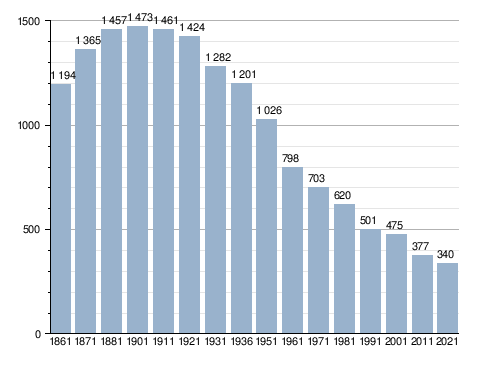
Demographic evolution
Despite the important demographic decline that over the last 100 years has progressively hit all Italian villages including Sala, today (2022) the municipality counts 330...Explore this chapter
Despite the important demographic decline that over the last 100 years has progressively hit all Italian villages including Sala, today (2022) the municipality counts 330 inhabitants and shows small signs of recovery thanks to eight new births from 2019.
Inhabitants registered[6]
Administration
Below is a table relating to the administrations that have succeeded one another in this municipality.Explore this chapter
Below is a table relating to the administrations that have succeeded one another in this municipality.
| Period | First citizen | Match | Load | Notes | |
|---|---|---|---|---|---|
| December 4, 1985 | 6 June 1990 | Dea Rota Melotti | civic list | Mayor | [7] |
| 6 June 1990 | April 24, 1995 | Luigi Bonelli | Christian Democracy | Mayor | [7] |
| April 24, 1995 | June 14, 1999 | Rosa Melotti | center | Mayor | [7] |
| June 14, 1999 | June 14, 2004 | Rosa Melotti | civic list | Mayor | [7] |
| June 14, 2004 | June 8, 2009 | Claudio Saletta | civic list | Mayor | [7] |
| June 8, 2009 | May 26, 2014 | Claudio Saletta | civic list: church with wheat ears | Mayor | [7] |
| May 26, 2014 | May 26, 2019 | Claudio Saletta | civic list: church grape bunch and spiga | Mayor | [7] |
| May 26, 2019 | June 9, 2024 | Mario Melotti | Civic list: Insieme per Sala | Mayor | [7] |
| June 9, 2024 | in office | Mario Melotti | Civic list: Insieme per Sala | Mayor | [7] |
Image gallery
Explore this chapter
-
 Historical archive, already municipal oven
-
 Castello di Sala Monferrato
-
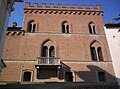 Castle facade
-
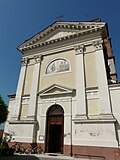 Church of San Giacomo
-
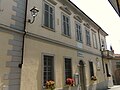 Town Hall of Sala Monferrato
Notes
Explore this chapter
- ^ to b Monthly demographic balance for the year 2026 (provisional data), up demo.istat.it, ISTAT.
- ^ Seismic classification (XLS), up risks.protezionecivile.gov.it.
- ^ Table of degrees/day of Italian Municipalities grouped by Region and Province (PDF), in Law 26 August 1993, n. 412, annex A, National Agency for New Technologies, Energy and Sustainable Economic Development, 1 March 2011, p. 151. URL consulted on 25 April 2012 (archived fromoriginal url on 1 January 2017).
- ^ Europe 2025 Prize for Ottiglio and Sala Monferrato, up www.ilmonferrato.it. Retrieved 16 September 2025.
- ^ Big Bench Community Project | Le Grandi Panchine della Langhe, up bigbenchcommunityproject.org.
- ^ Data taken from:
- Resident population of the municipalities. Censuses from 1861 to 1991 (PDF), up ebiblio.istat.it, ISTAT.
- Resident population - Time series, up exploredati.istat.it.
Please note: 2021 data refers to permanent census data as of December 31 of that year.
- ^ to b c d And f g h the http://amministratori.interno.it/
Where to stay · Sala Monferrato
Find stays on Booking.comThe area, step by step
Trails and routes in Sala Monferrato

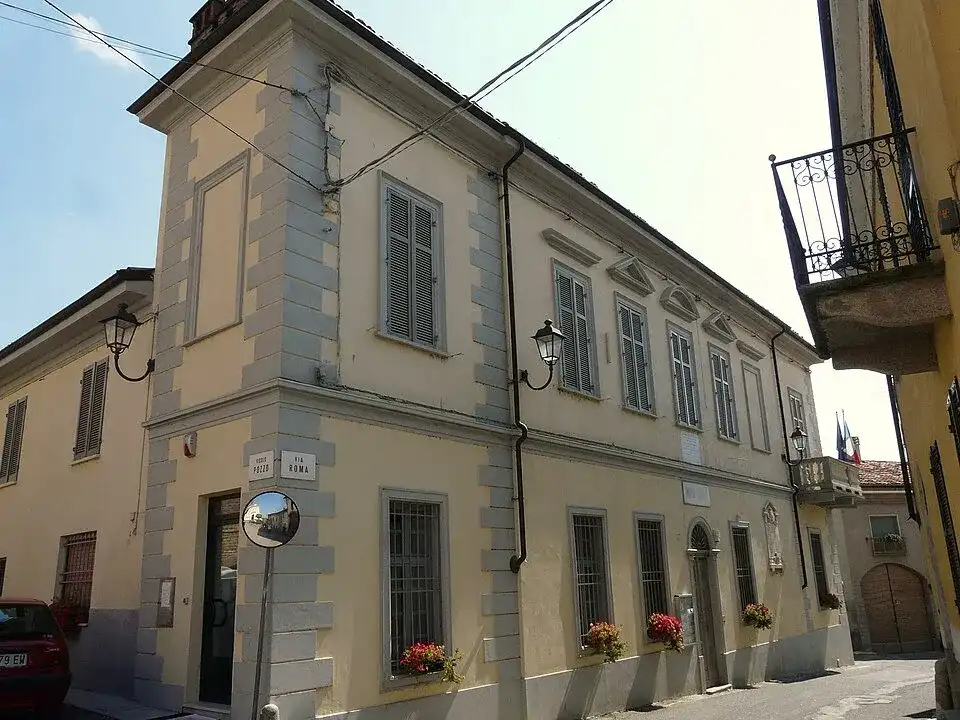 CyclingPlaces and landscapes along the route
 CyclingAround the starting point
Asti, Alessandria and surroundings
Tour D.O.C. del vino Grignolino
 Mountain bikeAround the starting point
Asti, Alessandria and surroundings
Giro a Madonna dei Monti da Casale Monferrato
WalkingAround the starting point