Atlas of Monferrato
Arquata Scrivia: sights, history and trails
Alessandria
- Elevation
- 248 m above sea level
- Area
- 29.24 km²
- Demonym
- arquatesi
- Patron saint
- San Rocco
A closer look
Discovering Arquata Scrivia
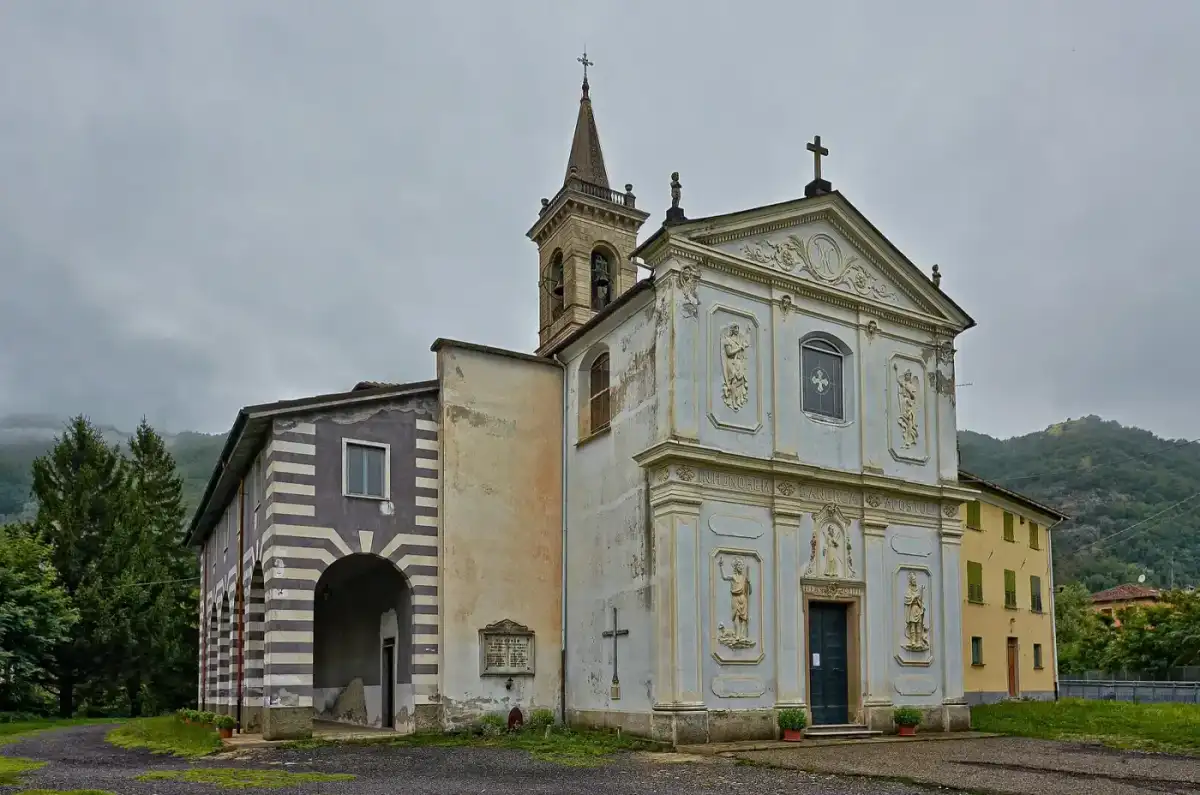
Arquata Scrivia (Arquà in Piedmontese, Arquâ in Liguria[6], Auquâ in local dialect) is an Italian municipality of 6 337 inhabitants[3] from the province of Alessandria in the Piemonte. Located on the border with Liguria, about 40 kilometers from Genoa, is one of the main municipalities of Ninety-six, geographical area which takes its name from the city of Novi Ligure.
Landscape and area
It is located on the left of the Scrivia, at the confluence of Borbera and Spinti in the Scrivia .Explore this chapter
It is located on the left of the Scrivia, at the confluence of Borbera and Spinti in the Scrivia.
The name of the city comes from Latin arcuate (in turn derived from arcus) i.e. "made in an arch"[7], referring to the aqueduct that supplied the nearby Roman city of Libarna and its arches. The hypothesis of the nineteenth-century scholar Bottazzi who identifies its origins in Latin is less reliable arcus aquae, or "water arch"[8]. Andrea Poggi's theory that Arquata derives from the dialect is unfounded A or a or "Al capo" or "Al promontory": the name appears in document sources centuries before the formation of dialects. It rises to the left of the creek Scrivia, along the Highway 35 of the Giovi, perched on the first slopes of the reliefs that, like Mount Lusci (645 m) and Mount Zuccaro, flank to the west the valley separating it from that of the stream Lemme. The territory of the municipality also extends to the right of the Scrivia, until almost at the entrance of Val Borbera.
The municipality has two distinct aspects, with its ancient nucleus, of medieval times, rich in historical evidence, survived on the margins of new residential and industrial districts.
History of Arquata Scrivia
The birth and development of the city · English at Arquata (1917-20) · SymbolsExplore this chapter
The birth and development of the city
The village develops in the territory of the city of Libarna, conquered by the Romans at the beginning of the 2nd century BC. is located along the Via Postumia. Thanks to its strategic position, Libarna became the center of a very wide territory, acquiring great military and commercial importance. Between the 5th and 7th centuries, in the period of its decadence the population abandoned the country to save themselves from the raids of barbarians.
In the IX, the country, now reduced to a small military outpost, belonged to the Abbey of Sant'Ambrogio in Milan.
A diploma by Carlo il Grosso lists a series of donations from the Emperor to the Ambrosian monastery on March 20, 880.
From the XI century it is cited in sources as castrum, that is, as a fortified place, it became the property of the Este branch of the Obertenghi, who, in turn, granted it in 1003 to Peter I, bishop of Tortona.
In the following years it was disputed between the Republic of Genoa and the Municipalities of Tortona, Alessandria and Alba. After the wars of 1199 and 1217 and 1224, the contenders, concluded peace in 1228, thanks to the mediation of the municipality of Milan decided the dismantlement of the castle of Arquata, but this was not enough to restore the quiet that took place only in 1231 thanks to a college of three arbitrators, presided over by the bishop of Alba, finally assigning Arquata to Tortona.
Rebuilt by the people of Genoa from 1244, with the re-edification of the castle and the new village at the foot of this, in 1278, it was granted, in fief, to Captain Guglielmo VII of Monferrato.
In 1310 the country was sold, due to financial necessity to Opicino Spinola of Genoa. 1313 is the year when Arquata was elevated to the rank of Imperial Feudo Ligurian by Emperor Henry VII and granted to the Genoese family of the Spinolas of Luccoli. Arquata then becomes an autonomous political entity with its government, its court and its laws (the city statute will be drafted in 1486).
In 1641, Philip Spinola became Marquis of Arquata, Marquis of the Holy Roman Empire, while his son was awarded the title of Count of Varinella and Vocemola, by the Emperor of the Holy Roman Empire, Ferdinand III, as well as the faculty of beating money, legitimizing bastards and graduating poets. In 1644 the tick of Arquata was inaugurated, which began its activity with the beat of the fourth shield of Genoese lira.
During the Napoleonic invasion on May 5, 1796, after a group of Arquate peasants, held an ambush to the French soldiers, came, by order of Napoleon, plundered and burned. The following year the French abolished the imperial fiefs Ligurian: the long lordship of the Spinola and the autonomy of the city has been completed. The new municipal administration decides the annexation to the Ligurian Republic, which in turn is incorporated into the First French Empire. In 1815, the Congress of Vienna decreed the annexation of the former Republic of Genoa to the Kingdom of Sardinia and with her also Arquata that passes to the Ligurian province by Novi. With the Rattazzi decree he becomes part of the province of Alessandria and therefore of Piemonte.
In 1863 he changed his name from Arquata to Arquata Scrivia.[9]
At the institutional referendum in 1946, the Republic obtained 62.5% of votes, while the monarchy was only 37.5%[10].
On 7 June 2007 he obtained from the municipality of Gavi the hamlet of Sottovalle.
English at Arquata (1917-20)
In 1917, during the First World War, England decided to send troops to fight with Italian soldiers and chose Arquata Scrivia as a base. Today's Palazzo Spinola, home to the municipality, hosted the British Command; the old church of Sant'Antonio became a spaccio for tobaccos, jam and boxes; the Operaia Society of Mutuo Soccorso became the "House of British Soldier"; the furnace of Vaie (now demolished) became the military bakery. Nearly in front of the chapel of Madonetta alle Vaie, on the initiative of the English chaplain, Roman orifice, Don Umberto Bertini, was built the "Casa del Soldato Italiano". In memory of the passage of British soldiers remains the small British Warmeter Cey[11], built in 1921 next to the town cemetery. The British soldiers stationed in the base camp who died of Spanish flu between 1917 and 1920 are buried in it.
In 1923, in anticipation of the royal visit of 13 May that same year, the cemetery was renovated by the English architect Sir Robert Lorimar. On the established date, British War Cemetery was actually visited by King George V himself. The King, accompanied by Queen Mary and the great Nobel Prize writer Rudyard Kipling (who had been appointed Commissioner of the war tombs of the United Kingdom), he was escorted by a squadron of the Army and the Regiment band in parade uniform. To welcome him was the mayor of then, several authorities and the pleased, but almost incredulous, local population.
Symbols
The coat of arms and gonfalone of the Municipality were granted by royal decree on 19 January 1939.[12]
- Coat of arms
- Banner
What to see in Arquata Scrivia
Civil architecture · Religious architecture · Parish Church of San Giacomo MaggioreExplore this chapter
Civil architecture
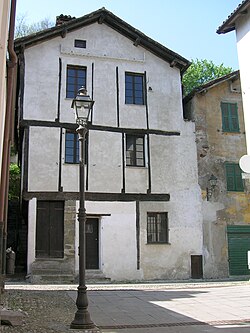
In the square entitled to Santo Bertelli, a nineteenth-century painter of Genoese school, born in the village, besides the Palazzo Spinola, today town hall, of some interest are the Casa Grafogliati, Curiosa la Casa Dallegri.
- Palazzo Spinola, today seat of the Town Hall.
- The house of the Don't worry. or home gothic is a particular building dating back to the 14th century, with a characteristic wooden frame and brick decorations.
- House Grafogliati, dating back to the fifteenth century, with Gothic arches and cornices and a pretty baroque well, became the emblem of the village.
- Casa Dallegri, called "by Carlo V".
- Castle on a hill, in Via Carrara, near the ancient village of the town, stands the fourteenth century tower, about 22 meters tall built in sandstone of Montaldero, what remains of the ancient feudal manor, of which are still visible the ruins of the powerful walls. Tower symbol of the city.
Religious architecture
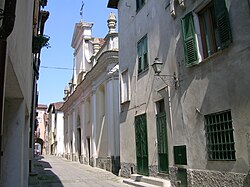
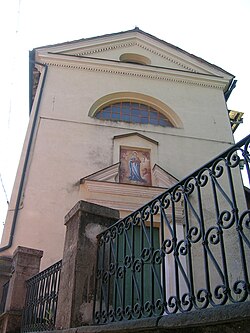
The parish church of San Giacomo and Sant'Antonio was restored to the middle of the 16th century and flanked by a massive square bell tower. The interior is characteristic with five naves divided by octagonal columns. A wooden statue is preserved: theAssunta by Bartolomeo Carrea.
Parish Church of San Giacomo Maggiore
Located in the medieval village, it was originally built in the 12th century as a parish of diocese of Tortona, but it was completely restored in the Renaissance, recalls the Genoese churches of ''600, there are also seventeenth century baroque additions (1825). The crypt was built by Filippo Spinola in 1630.
Inside are works by Ligurian artists such as Giovanni Battista Carlone, Lazzaro Tavarone and Piola.
N.S. Oratory. of the Assumption (or of Sant'Anna)
In front of the Church of San Giacomo Maggiore is the oratory of N.S. of the Assumption (or of Sant'Anna), building with only one aisle with barrel vault. The oratory dates back to '500 and is the property of the local Brotherhood of San Carlo Borromeo, characterized by a baroque altar and a bell tower shaped as a lantern.
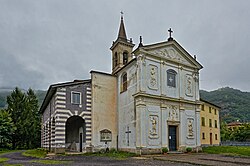
Church of Santa Maria e Sant'Antonio abate di Montalto
Located between Rigoroso and the hill where once there was Montalto Castle.
Parish Church of Sant'Andrea di Rigoroso
The Church of St. Andrew the Apostle of Rigoroso, mentioned in a papal bull of 1196 by Pope Celestine III as dependence onVignole Borbera. Later it was re-edified once in a while 1500 and then, again, in the700. The 16 August 1965 The restorations were inaugurated by the archbishop of Genoa Cardinal Giuseppe Siri.
Parish church of Sant'Eusebio di Varinella
the church of Sant'Eusebio di Varinella, built before the twelfth century, is mentioned in a papal bubble of 1196 by Pope Celestine III as dependence onVignole Borbera, ruled first by the Benedictines and then by the Olivetans. In 1594 it was completely rebuilt and passed under the diocese of Tortona. In 1886 it was enlarged and decorated in 1924.
Parish church of S. Bartolomeo di Vocemola
The new parish church of San Bartolomeo di Vocemola was built in 1686 and elevated to the parish, replacing the old Romanesque church of St. Bartholomew, the first church of the town today in the cemetery, which dates back around 1000, then remodeled in the '300.
Parish church of S. Nicola di Bari di Sottovalle
The church of San Nicolò di Bari di Sottovalle is named for the first time in 1410 to the dependencies of the parish of Sant'Andrea di Rigoroso, part of the archdiocese of Genoa, together with the church of San Salvatore di Pratolungo Gavi, the date of construction of the first church of Sottovalle is not known as no documents have been found, which were destroyed on several occasions. In 1590 the church of Sottovalle was detached from Rigoroso, becoming autonomous and becoming a parish. The church was destroyed in 1625 by the Savoys during their invasion. It was rebuilt starting in 1757. On 7 June 2007 the hamlet of Sottovalle passed from the municipality of Gavi to Arquata Scrivia.
Sanctuary of Montaldero
Located a couple of km from the historic center, it is dedicated to Our Lady of Mercy.
Nature
Society
Demographic evolution · Foreign ethnic groups and minoritiesExplore this chapter
Demographic evolution
Inhabitants registered[17]
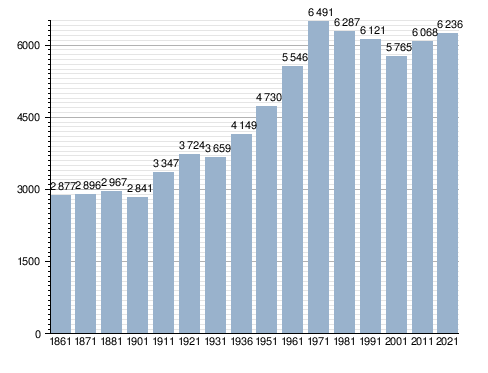
- Inhabitants:
- 1600: 1000 inhabitants.
- 1613: 800 inhabitants.
- 1628: 700 inhabitants.
- 1661: 773 inhabitants.
- 1669: 770 inhabitants.
- 1703: 763 inhabitants.
- 1808: 1508 inhabitants.
- 2017: 6384 inhabitants.
- Note: The data excludes the new fraction of Sottovalle.
Foreign ethnic groups and minorities
The foreigners living in the municipality are 567, that is 9,1% of the population. Below are the largest groups[18]:
- Romania, 155
- Ecuador, 123
- Albania, 77
- Morocco, 34
- Senegal, 32
- Ukraine, 21
Culture
EventsExplore this chapter
Events
- Fair of Saints James and Philip - May 1 - fair of cattle and various goods. This fair has a 5 centuries long tradition and was an important event for the economic life of the country.
- Fair of St. Bartholomew - 24 August - also known as onions fair.
- Fiera di San Carlo - 4 November.
- Patronage - August 16, Saint Rocco of Montpellier- Feast curated by Comune, Pro Loco and Croce Verde.
- Feast of Our Lady of Health at the camp in Rigoroso. It was once held in the chapel-sanctuary built in 1815, today simple tumulus for sixty psalms of the noble Poggi family.
Infrastructure and transport
Roads · RailwaysExplore this chapter
Roads
Arquata Scrivia is situated along the former Highway 35 of the Giovi. The town is directly accessible by highway, with motorway exit of Vignole - Arquata on the A7 motorway.
Railways
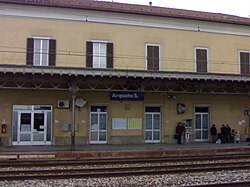
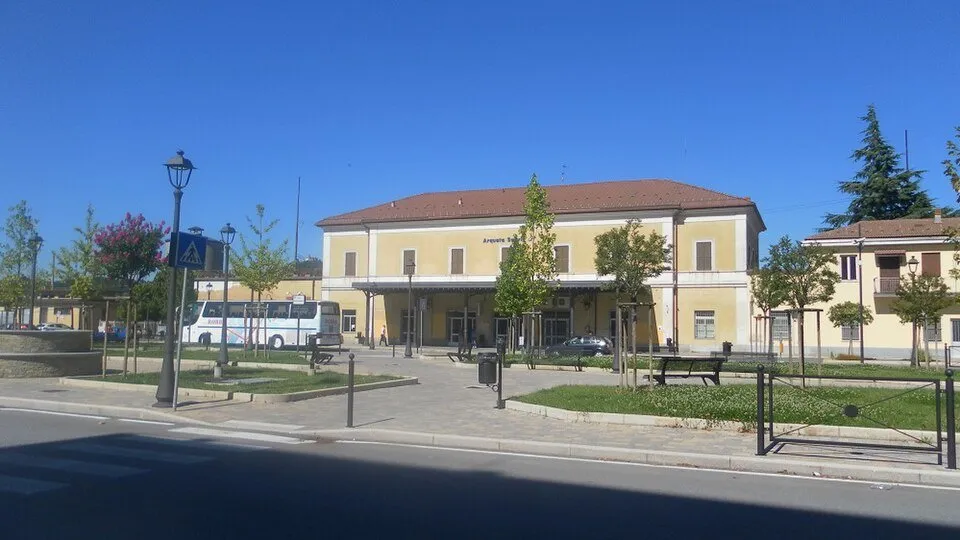
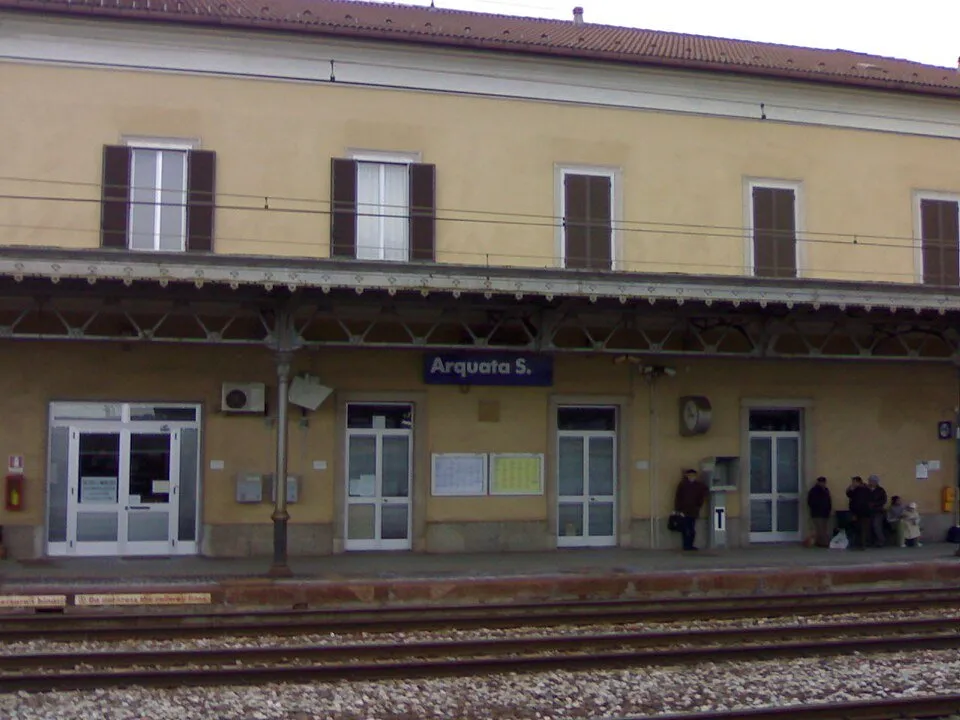
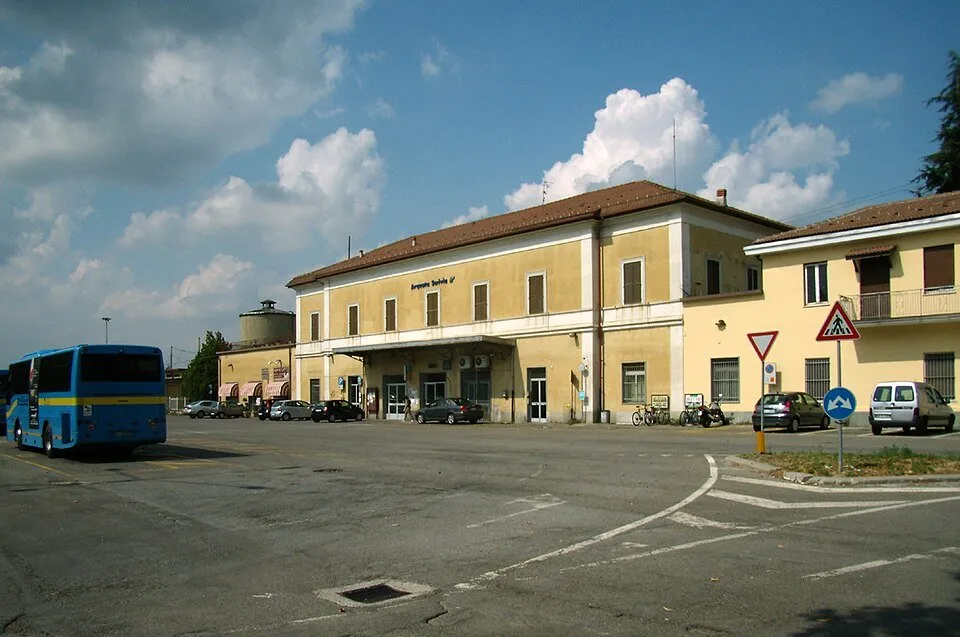
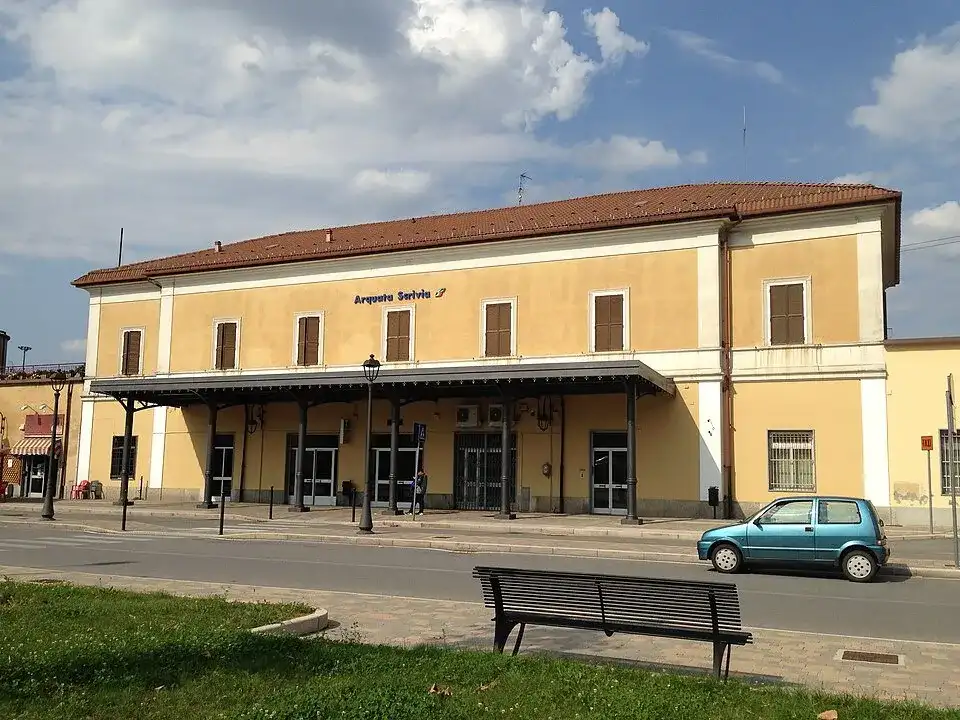
Arquata Scrivia has a railway station of medium importance, placed at the crossroads of the lines Turin - Genoa and "Succursale" of the Giovi.
Administration
Below is a table relating to the administrations that have succeeded one another in this municipality.Explore this chapter
Below is a table relating to the administrations that have succeeded one another in this municipality.
| Period | First citizen | Match | Load | Notes | |
|---|---|---|---|---|---|
| September 19, 1988 | May 30, 1993 | Giuseppe Malaspina | Italian Communist Party | Mayor | [19] |
| June 25, 1993 | April 28, 1997 | Giuseppe Malaspina | Democratic Left Party | Mayor | [19] |
| April 28, 1997 | May 14, 2001 | Maria Grazia Morando | centre-left | Mayor | [19] |
| May 30, 2001 | May 30, 2006 | Maria Grazia Morando | civic list | Mayor | [19] |
| May 30, 2006 | May 16, 2011 | Paolo Spineto | List of Civics Amici di Arquata | Mayor | [19] |
| May 16, 2011 | 6 June 2016 | Paolo Spineto | list of cities Amici d'Arquata | Mayor | [19] |
| 6 June 2016 | October 4, 2021 | Alberto Basso | List of Civics Viiamo Arquata | Mayor | [19] |
| October 4, 2021 | in office | Alberto Basso | List of Civics Viiamo Arquata | Mayor | [19] |
Sport
ChroniclesExplore this chapter
The football team of the Arquatese played in the Promotion Championship, the highest category reached in its history.
Chronicles
| Category | Participations | Debut | Last season |
|---|---|---|---|
| Promotion | 10 | 2014-2015 | 2025-2026 |
| Primary Category | 21 | 1992-1993 | 2013-2014 |
Image gallery
Explore this chapter
-
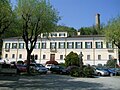 Palazzo Spinola, seat of the municipality and British command (1917-1920)
-
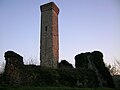 The Tower
Notes
Explore this chapter
- ^ Municipality of Arquata Scrivia - Statute.
- ^ Municipality of Arquata Scrivia : Municipal Administration and Mayor - Municipality of Arquata Scrivia e città, Alessandria, Piemonte, up www.comune-italia.it. URL consulted on 5 August 2026.
- ^ to b Monthly demographic balance for the year 2026 (provisional data), up demo.istat.it, ISTAT.
- ^ Seismic classification (XLS), up risks.protezionecivile.gov.it.
- ^ Table of degrees/day of Italian Municipalities grouped by Region and Province (PDF), in Law 26 August 1993, n. 412, annex A, National Agency for New Technologies, Energy and Sustainable Economic Development, 1 March 2011, p. 151. URL consulted on 25 April 2012 (archived fromoriginal url on 1 January 2017).
- ^ The dialectal toponym is quoted in the book-diction of the Professor Gaetano Frisoni, Names of cities, villages and villages of Liguria of the Dictionary Genovese-Italian and Italian-Genovese, Genoa, Nuova Editrice Genovese, 1910-2002.
- ^ G. B. Pilgrims, Italian Toponoma, Milan 1990, p. 209; D. Olivieri, Piedmontese toponomastic dictionary, Brescia 1965 and M. A. Betoldi, The names of the Novese I, in «Novinostra», c1, 1976, pp. 21-23.
- ^ G. A. Bottazzi, Historical-critical observations on the ruins of Libarna, Tortona, 1815.
- ^ Royal decree 11 January 1863, n. 1126, regarding "Decree authorizing various municipalities in the provinces of Milan, Alessandria, Brescia, Cremona, Turin, Ascoli, Macerata, Cuneo, Piacenza, Porto-Maurizio, Ravenna and Sassari to take on a new name."
- ^ Eligendo Archivio - Ministry of Interior DAIT, up Eligendo. Retrieved 28 July 2025.
- ^ Afredo Casagrandi e Edoardo Morgavi, Union Jack and Tricolore in Valle Scrivia Union Jack and tricolore in Valle Scrivia (1917-1920), Arquata Scrivia, Historical Society of Novese, 1999.
- ^ Arquata Scrivia, decree 1939-01-19 RD, concession of coat of arms and gonfalone, up Heraldic office - Municipal files, Central State Archives.
- ^ Textiles and Statutes, up Municipality of Arquata Scrivia. Retrieved 10 July 2026.
- ^ to b Arquata Scrivia, up araldicacivica.it.
- ^ Lorenzo Vay, SIC IT1180030 Calanchi di Rigoroso, Sottovalle e Carrosio, up Management body of protected areas Appennino Piemontese, 30 October 2020. Retrieved 19 March 2026.
- ^ Deliberation of the Regional Council 6 May 2025, n. 28-1080 Article 3, paragraph 1 of the DPR 357/97 Regulation implementing Directive 92/43/EEC on the conservation of natural and semi-natural habitats, as well as wild fauna and flora. Agreement of the Region Piemonte on the draft ministerial decree for the Designation of Special Conservation Areas (PDF), in Official Journal, 19S3, Region Piemonte, 8 May 2025. Retrieved 19 March 2026.
- ^ Data taken from:
- Resident population of the municipalities. Censuses from 1861 to 1991 (PDF), up ebiblio.istat.it, ISTAT.
- Resident population - Time series, up exploredati.istat.it.
Please note: 2021 data refers to permanent census data as of December 31 of that year.
- ^ Demographic balance and foreign resident population at 31 December 2010 for sex and citizenship, up demo.istat.it, ISTAT. Retrieved 24 December 2012 (filed on 25 January 2012).
- ^ to b c d And f g h Register of local and regional administrators, up administrators. interno.it.
Bibliography
Explore this chapter
- Lorenzo Tacchella, Arquata Scrivia in the history of Ligurian Imperial Feudi, Graphics P2, Verona, 1984.
- AA.VV., The Piemonte, country by country, Bonechi, Florence, 1993.
- Ennio Di Biase, Sergio Pedemonte and Tullio Semino, Let's just say it. People. History, Novi Ligure, 2017.
- Eugenio Poggi, Reinventing an echlogite bone in Vocemola, in Let's just say it. People. History, Novi Ligure, 2017.
Where to stay · Arquata Scrivia
Find stays on Booking.comThe area, step by step
Trails and routes in Arquata Scrivia
 CyclingAround the starting point
Asti, Alessandria and surroundings
Il forte ed i castelli
 Mountain bikeAround the starting point
Asti, Alessandria and surroundings
Dal Monferrato al Bike Park di Caldirola
 WalkingAround the starting point
Asti, Alessandria and surroundings
Sentiero e1 (tratto colla del prete - passo della bocchetta)

Asti, Alessandria and surroundings
Anello borbera - spinti tappa 05 (capanne di cosola - monte giarolo)
 WalkingAround the starting point
Asti, Alessandria and surroundings
Sentiero e1 (tratto arquata s. - colla del prete)
 WalkingAround the starting point
Asti, Alessandria and surroundings
Sentiero vignole borbera - bocca del lupo
 WalkingAround the starting point
Asti, Alessandria and surroundings
Anello borbera - spinti tappa 07 (capanne di carrega - monte antola)
 WalkingAround the starting point
Asti, Alessandria and surroundings
Sentiero varinella - bivio costa jamue
 WalkingAround the starting point
Asti, Alessandria and surroundings
Sentiero vignole borbera - roccaforte ligure
 WalkingAround the starting point
Asti, Alessandria and surroundings
Anello borbera - spinti tappa 08 (san fermo - monte antola)

Asti, Alessandria and surroundings
Anello borbera - spinti tappa 01 (stazzano - ca' del bello)

Asti, Alessandria and surroundings
Anello borbera - spinti tappa 02 (ca' del bello - molo borbera)


Asti, Alessandria and surroundings
Sentiero pratolungo - innesto sentiero e1


 WalkingAround the starting point
Asti, Alessandria and surroundings
Anello borbera - spinti tappa 09 (costa salata mongiardino - san fermo)
WalkingAround the starting pointAsti, Alessandria and surroundings
Anello borbera - spinti tappa 10 (costa salata mongiardino - borassi)

Asti, Alessandria and surroundings
Anello borbera - spinti tappa 11 (borassi - arquata scrivia)
 WalkingAround the starting point
Asti, Alessandria and surroundings