Atlas of Monferrato
Pontecurone: sights, history and trails
Alessandria
- Elevation
- 104 m above sea level
- Area
- 29.7 km²
- Demonym
- bridgecuronesi
A closer look
Discovering Pontecurone
Pontecurone (Puncrou in the dialect of the city and beyondpadano) is an Italian municipality of 3 578 inhabitants[1] from the province of Alessandria in the Piemonte.
Landscape and area
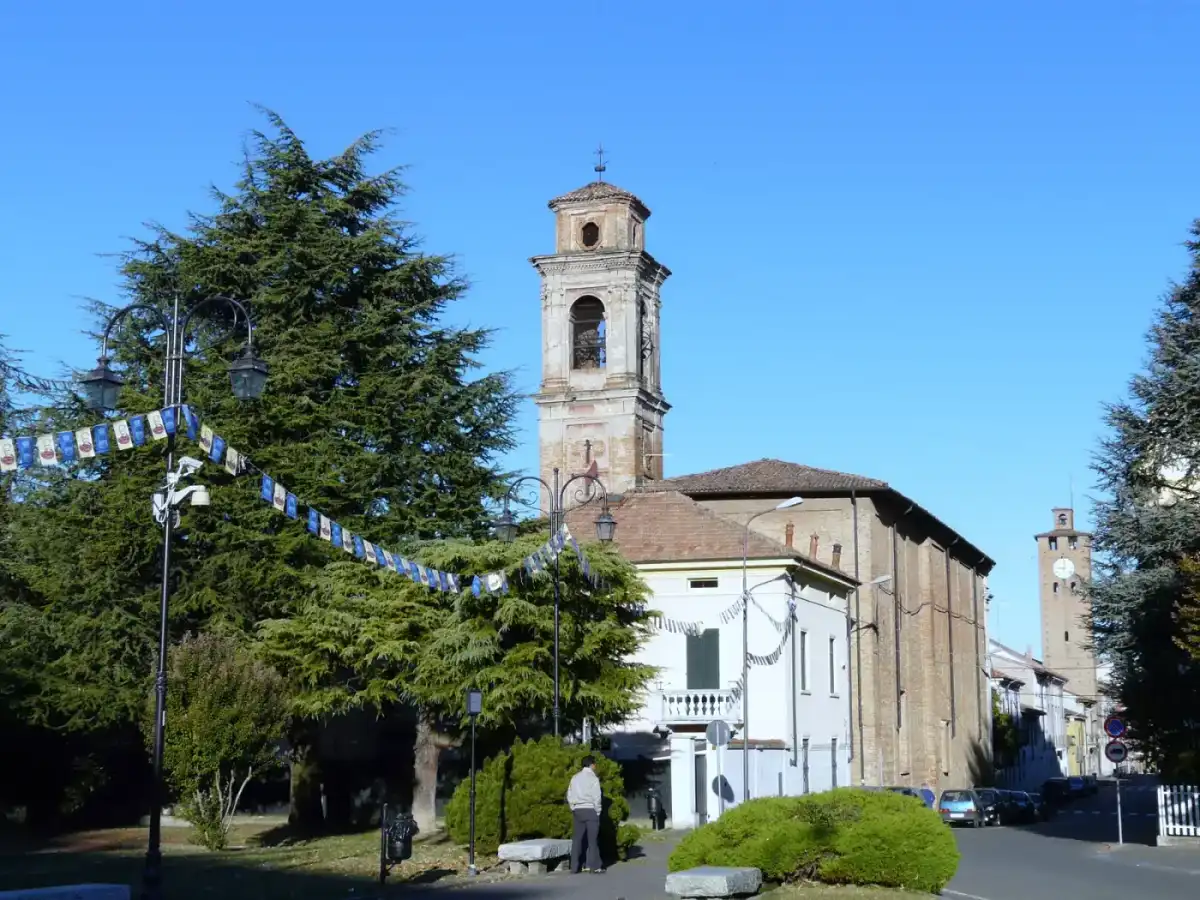
Pontecurone is located in the plain of Belluno, on the left bank of the Curone stream, bordering to the east with the Lombardy region. It is located 9 km from Tortona and 30 km from...Explore this chapter
Pontecurone is located in the plain of Belluno, on the left bank of the Curone stream, bordering to the east with the Lombardy region. It is located 9 km away Tortona and 30 km from Alessandria.
The village is surrounded by a flat territory intensely cultivated.
Of the 187 municipalities in the province of Alessandria, Pontecurone is the 16th per population, the 29th per surface, the 34th for housing density.
Origins of the name
The name comes from the Latin Pons Coronis or Pontis Coronis, with obvious reference to the bridge over the river Curone .Explore this chapter
The name comes from the Latin pons Coronis or Pontis Coronis[4], with clear reference to the bridge over the Curone stream.
History of Pontecurone
SymbolsExplore this chapter
The first inhabited nucleus of Pontecurone can be given for certain already in the augustea era — with the reflowering of the Via Postumia (which connected Piacenza to Genoa passing through Voghera, Tortona and Libarna) near the important guado on the Curone — thanks to the discovery of many coins of that time in the territory.
It appears in the Lombard era between the possessions of the Abbey of San Colombano di Bobbio.[5]
A few years before the Mille (in 962) Otto I donated to the Pavese monastery of San Pietro in Ciel d'Oro some possessions including the locality Ponte Coironum: this is the first written testimony of the existence of Pontecurone.
In the Gallery of Geographical Cards to the Vatican Museums (late XVI century), Pontecurone is indicated as Pons Coronis.
In 1635 the army of Odoardo I Farnese, Duke of Parma and Piacenza, ally of the French, disembarked the Spanish under the command of Don Gaspare Azevedo, who lost in the fight.
In more recent times, the railway bridge on the Curone has been bombed several times by the Allies during World War II. In fact, the stretch of railway passing to Pontecurone is of great strategic importance since in it pass the tracks both of the line Alessandria-Piacenza and of Milan-Genova.
Symbols
What to see in Pontecurone
Civil architecture · Military architecture · Religious architectureExplore this chapter
Civil architecture
- Birthplace of Don Luigi Orione
- Villa Signorini, current headquarters of the Municipality
- Gothic Window (Brossa)
Military architecture
- Civic Tower of Pontecurone
Religious architecture
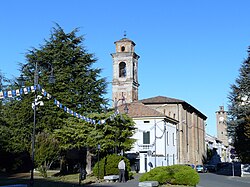
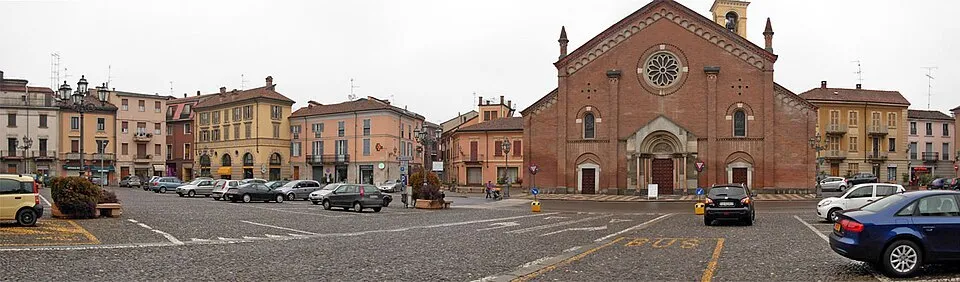
- Church of Santa Maria Assunta, cited in the 12th century, but already preexisting
- Church of San Giovanni Battista
- Oratory of San Francesco
- Gurdwara Baba Lakhi Shah Vanjara[9]
Economy
Until the beginning of the 20th century, the country's economy was based exclusively on agriculture and livestock farming; as well as breeding classic animals such as cows,...Explore this chapter
In the early 20th century, the country's economy was based exclusively on agriculture and livestock farming; in addition to breeding classic animals such as cows, chickens and pigs, especially widespread was silkworm breeding (♪), which fed on the leaves of mulberry trees (Wall) widely present in the countryside to delimit the boundaries of the fields.
The foundation of SOAMS in 1855 (already present), one of the first in the area, however, suggests that the country was active and aimed at progress. In fact, a few years later, in 1858, the arrival of the railway to Pontecurone (thanks to the interest of the Minister Urbano Rattazzi) marks the first steps of a turn that, in the following decades, will make Pontecurone one of the most industrialized countries of the area.
The most developed sector is the production of bricks, already in the second half of the nineteenth century with small furnaces. From the beginning of the 20th century there are further furnaces, larger in size, belonging to the Perseghini families, Azzi (which built the Fornacione, today the seat of the Printed), Signorini. In the 1940s the activity was still very intense, so much so that the brickyard in the center of the town was enlarged and the company was established. P.A.S. (acronym of the surnames Pagano, Azzi, Signorini). The kilns continued to prosper during the years of the economic boom: in the sixties a new kiln, the Valcurone, was opened in the countryside towards Casei Gerola. Unfortunately, a serious crisis subsequently followed, mainly due to the arrival on the market of new products, at more competitive prices, which led to the closure of all the furnaces in the 1980s.
Another important reality was the Cotonificio dei Fratelli Bertollo (becomes later) Cotonificio Bustese, as it is known today): inaugurated in 1902 it provided work to hundreds of people, mostly women, until its definitive closure in 1996.
Today the most important industrial reality in Pontecurone is constituted by the companies of the group Piber, leader in the production of plastic containers.
Events
Explore this chapter
- Spring Day: mid-April
- AVIS Festival: mid-June
- Onion Sagra: grill, fried and onion soup. First edition in 1991. The 1st weekend of September, curated by Pro-Loco
- Let's get together: the first Sunday of October
Society
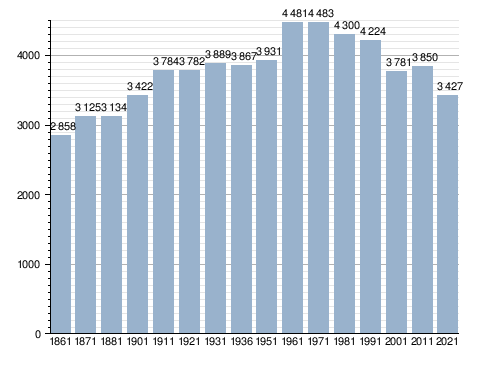
Demographic evolutionExplore this chapter
Demographic evolution
Inhabitants registered[10]
Infrastructure and transport
Roads · RailwaysExplore this chapter
Roads
Pontecurone is crossed west-east by the SS 10 Padana Inferiore that joins Turin to Monselice. The SP 93 Pontecurone-Castelnuovo Scrivia, the SP 96 Pontecurone-Rivanazzano, the SP 97 Pontecurone-Volpedo and the SP 98 Pontecurone-Viguzzolo.
Railways
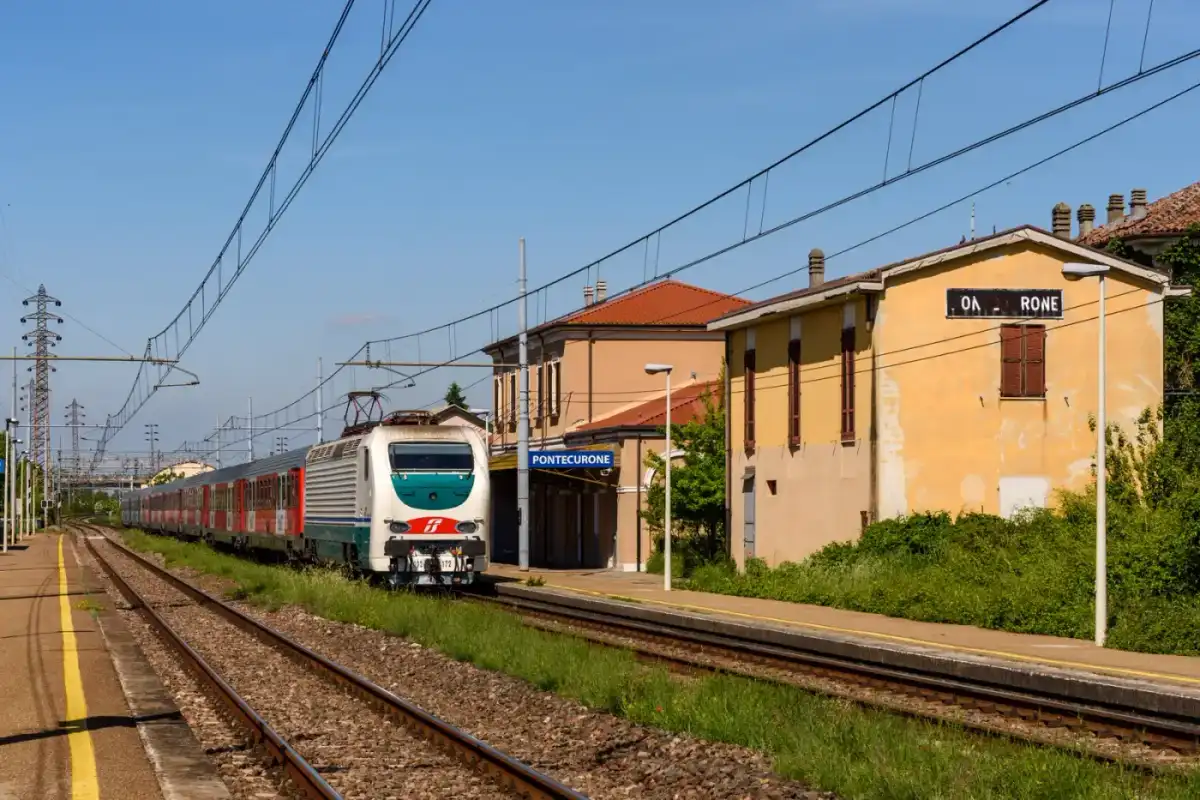
Pontecurone is equipped with a railway station placed along the line Alessandria-Piacenza and Milan-Genova.
In 2022, Rete Ferroviaria Italiana has announced an important restructuring of the Pontecurone station within the railway quadrupling project of the line Tortona-Voghera for the Terzo crossing between Genoa and Milan.[11]
Administration
Below is a table relating to the administrations that have succeeded one another in this municipality.Explore this chapter
Below is a table relating to the administrations that have succeeded one another in this municipality.
| Period | First citizen | Match | Load | Notes | |
|---|---|---|---|---|---|
| 1 July 1985 | May 27, 1990 | Giovanni Carlo Pradi | Italian Communist Party | Mayor | [12] |
| May 27, 1990 | October 3, 1992 | Ezio Boccasso | Democratic Party of the Left, Italian Communist Party | Mayor | [12] |
| October 3, 1992 | 7 June 1993 | Paolo Ponta | Comm. Overtime | [12] | |
| 7 June 1993 | April 28, 1997 | Pier Angelo Bergaglio | - | Mayor | [12] |
| April 28, 1997 | May 14, 2001 | Giovanni Carlo Pradi | centre-left | Mayor | [12] |
| May 27, 2001 | May 30, 2006 | Claudio Scaglia | civic list | Mayor | [12] |
| May 30, 2006 | May 16, 2011 | Claudio Umberto Scaglia | civic list | Mayor | [12] |
| May 16, 2011 | 6 June 2016 | Ernesto Nobile | Civic list Torre civica | Mayor | [12] |
| 6 June 2016 | October 4, 2021 | Rino Feltri | Civic list Pontecurone for us | Mayor | [12] |
| October 4, 2021 | in office | Giovanni Valentino D'Amico | Civic list Pontecurone for us | Mayor | [12] |
Sport
The historic football club of the country is U.S. Pontecurone, founded in 1925. He reached his football peak in the 1996/1997 season, playing the championship...Explore this chapter
The historic football club of the country is U.S. Pontecurone, founded in 1925. He reached his football peak in the 1996/1997 season and played the championship of Excellence from which he immediately returned. At the end of the 2010/2011 championship, he was backed by the Second Category but was repeated to complete the organics and then close the Company at the end of the next season.[13]
The only remaining team is the Aurora Pontecurone, which plays in Terza Category.
The footballer Giuseppe Arezzi, active in the 1930s-1940s during which he dressed prestigious jerseys like those of Inter and Alessandria, is native to Pontecurone.
There are also a Fishing Association and a cycling group in Pontecurone.
Notes
Explore this chapter
- ^ to b Monthly demographic balance for the year 2026 (provisional data), up demo.istat.it, ISTAT.
- ^ Seismic classification (XLS), up risks.protezionecivile.gov.it.
- ^ Table of degrees/day of Italian Municipalities grouped by Region and Province (PDF), in Law 26 August 1993, n. 412, annex A, National Agency for New Technologies, Energy and Sustainable Economic Development, 1 March 2011, p. 151. URL consulted on 25 April 2012 (archived fromoriginal url on 1 January 2017).
- ^ History-Economy - Municipality of Pontecurone (AL), up common.pontecurone.al.it. Retrieved 2 November 2013 (archived fromoriginal url on 4 November 2013).
- ^ Eleonora Destefanis, The Monastery of Bobbio in High Middle Ages, Distribution cards, fig. 44, p. 67.
- ^ Pontecurone, RD 1938-02-07, concession of coat of arms and gonfalone, up Central State Archives, Heraldic Office, Municipal Issues, envelope 142, file 11270.
- ^ The coat of arms, up Municipality of Pontecurone. Retrieved 10 August 2022 (archived fromoriginal url on 10 August 2022).
- ^ Municipality of Pontecurone – (AL), up araldicacivica.it. Retrieved 11 April 2021.
- ^ Sikh Union Italy, up unionsikh.it. Retrieved 24 December 2024.
- ^ Data taken from:
- Resident population of the municipalities. Censuses from 1861 to 1991 (PDF), up ebiblio.istat.it, ISTAT.
- Resident population - Time series, up exploredati.istat.it.
Please note: 2021 data refers to permanent census data as of December 31 of that year.
- ^ DpTortonaVoghera.it - Pontecurone stop, up dptortonavoghera.it.
- ^ to b c d And f g h the j https://amministratori.interno.it/
- ^ David Maruffo, First and Second Category - Not registered Sarezzano and Pontecurone, 28 July 2012, p. 16.
Where to stay · Pontecurone
Find stays on Booking.comStories, places and people
More about Pontecurone and the surrounding area
Follow a thread of history and see where it leads.
The area, step by step
Trails and routes in Pontecurone
 WalkingAround the starting point
Asti, Alessandria and surroundings
Castelnuovo Scrivia - Pontecurone

Asti, Alessandria and surroundings