Atlas of Monferrato
Murisengo: sights, history and trails
Alessandria
- Elevation
- 338 m above sea level
- Area
- 15.31 km²
- Demonym
- Murders
- Patron saint
- St. Anthony Abbot
A closer look
Discovering Murisengo
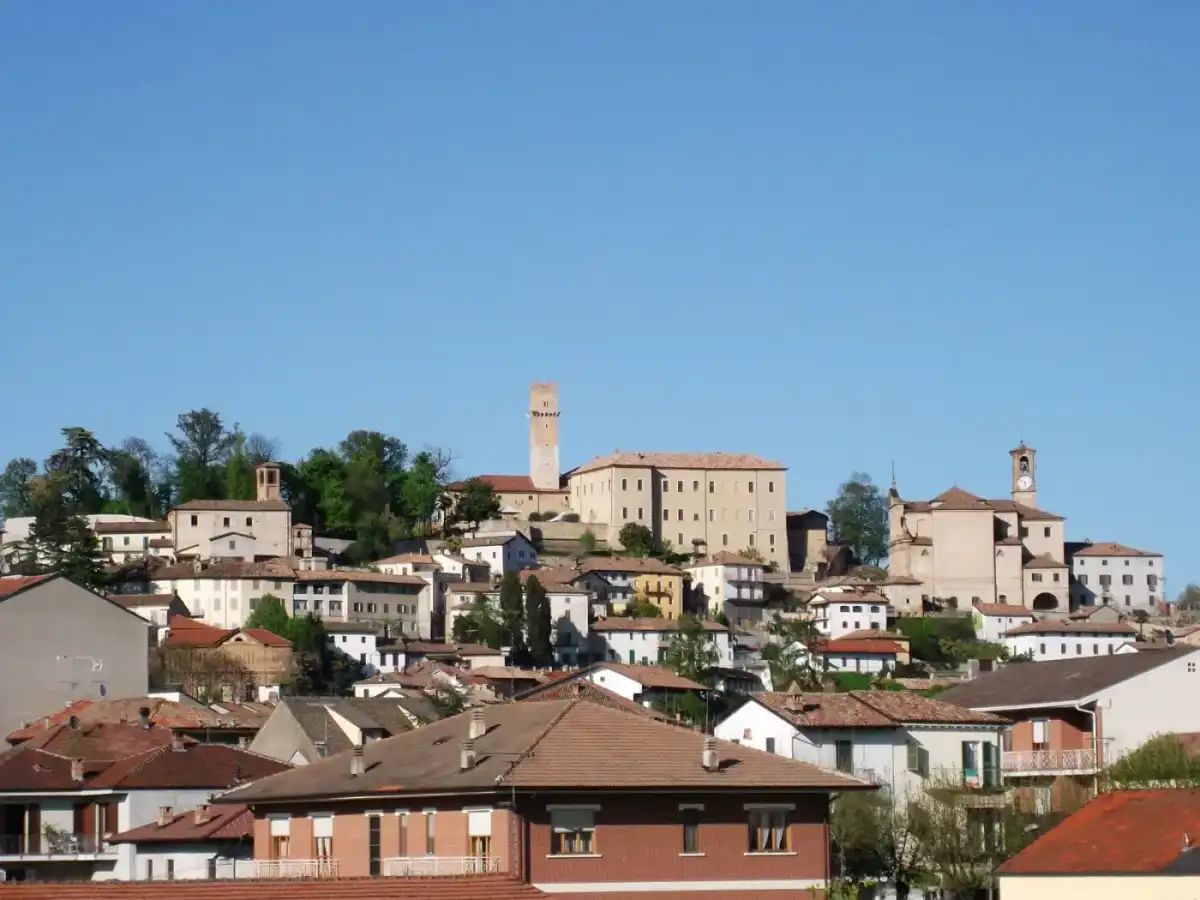
Murisengo Monferrato (Ambrusèngh in Piedmont) is an Italian municipality of 1 213 inhabitants[1] located in the extreme north-west side of the province of Alessandria, in Piemonte, on the eastern border of the Cerrina Valley.
The city is known for having given birth to Luigi Lavazza, founder of the homonymous brand and the coffee industry widespread internationally.
On 10 October 2025 the name of the municipality is varied from Murisengo to Murisengo Monferrato.[4]
History of Murisengo
Symbols · Stem of CorteranzoExplore this chapter
Symbols
The coat of arms and gonfalone of the municipality of Murisengo Monferrato were granted by decree of the President of the Republic of 18 March 1985.[5][6]
The gonfalone is a shredded drape of blue and yellow.
Stem of Corteranzo
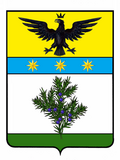
Corteranzo, an independent commune until 1928, had a civic coat of arms silver, to the natural juniper plant, green terrace; with the golden head, to the eagle of black, crowned of the same, supported by the blue band, loaded with three gold stars. The juniper plant is a reference to the Giunipero family of Corteranzo.[7]
What to see in Murisengo
Murisengo Castle · Fountain "La Pirènta" · Tower of St. PeterExplore this chapter
Murisengo Castle
To celebrate the history and imponence of this ancient castle remained the large tower, restored (perhaps rebuilt) in 1510, cited in a plate on the tower and now lost, and again in the 19th century: the tower is probably the oldest part of the building, whose first indirect certifications date back to the XI and XII century, but that was entirely rebuilt from the 17th century.
With the fall of the Marchesi del Monferrato, the castle suffered many damages and subsequent reconstructions that led him to lose his primitive "form". The castle belonged first to the Radicati di Brozolo, then to the family Scotland from 1420 until 1883, when it passed to the husband of Donna Tarsilla Scots, Francesco Guasco Gallarati Marchese di Bisio and Francavilla, today identifiable in the village Francavilla Bisio.
After a long restoration, a private contractor, the castle from mid-2012 is available for guided tours during events, events, exhibitions and ceremonies[8].
In 1813 Silvio Pellico wrote the tragedy Francesca from Rimini.
Fountain "La Pirènta"
The source of sulphurous water, called "La Pirènta", is located east of the country, at the roots of Montelungo, and originates from a tufa-calcareous soil. Sulphurous water is oily to the touch and transmits a smell of hydrosulphurized gas; once it was successfully used in gastrointestinal disorders and skin diseases of a misty and herpethic nature.
Between the end of the 18th and early 19th century, here a spa was built, which became a popular tourist centre, then resized in the period between the two world wars.[9]. The area was subsequently converted to industrial use and today houses a powder magazine.
Still at the beginning of the 19th century water was transported into two stone tanks in which, in summer, hemp was macerated.[10]. Today the pools are no longer visible and the water flows from a single lion's mouth set in a neo-Gothic style fountain, dating back to 1859[11].
Tower of St. Peter
Located at the gates of the village, on top of a grassy hill, is the residue of an ancient Romanesque church.
Around it has been created a large green area with equipped path and explanatory signs on the history, legend and botanical truffle.[12]
Ancient chalk quarry abandoned
At the entrance of the village, on the road from Villadeati, there is an ancient chalk quarry which, once its long extraction activity ended, was transformed into a spontaneous naturalistic area and an amphitheater was installed for outdoor shows and theatrical performances.[12]
Image gallery
-
 Murisengo Castle
-
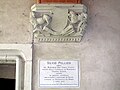 Castello di Murisengo, commemorative plaque of the stay of Silvio Pellico
-
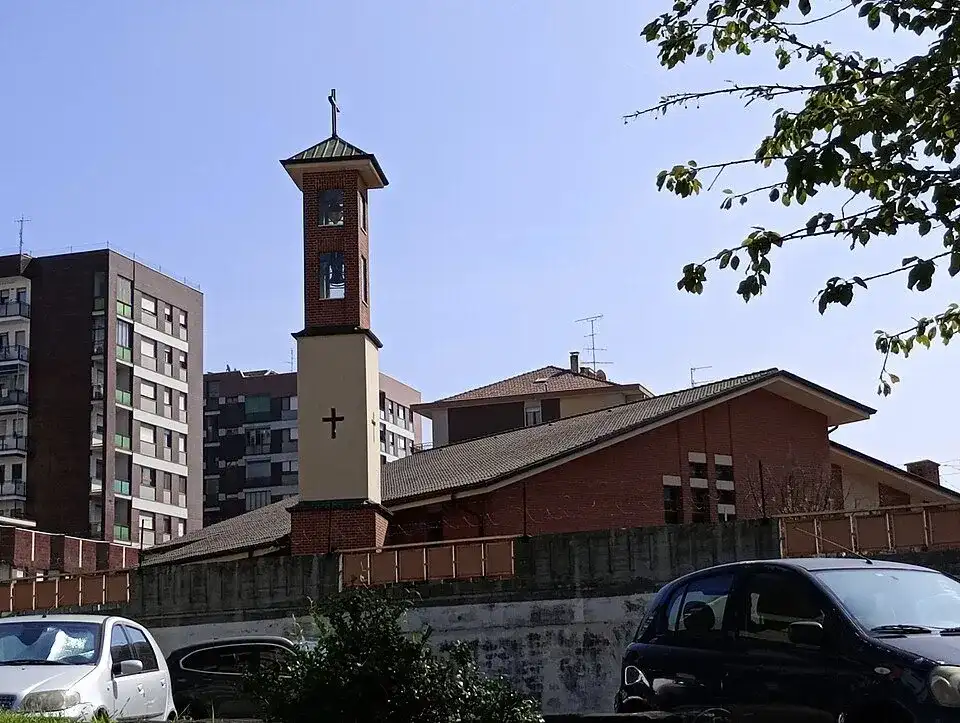
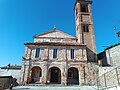 St. Michael Archangel Church
-
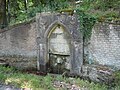 Fountain "La Pirènta"
-
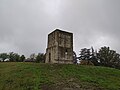 Tower of San Pietro and green area
-
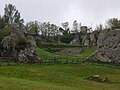 Park on disused chalk quarry area
-
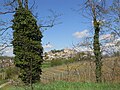 Murisengo from the hill in front
Society
Demographic evolutionExplore this chapter
Demographic evolution
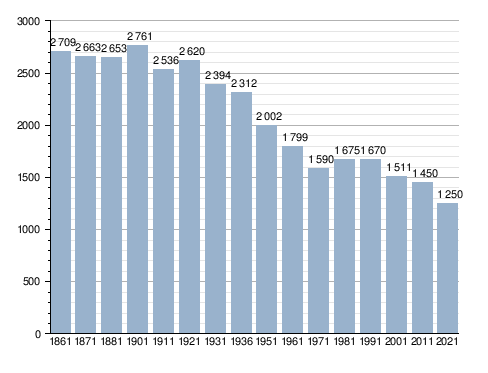
The municipality had a strong decrease of the population over the last century, equal to a loss of 43% of residents since 1921.
Inhabitants registered[13]
Culture
EventsExplore this chapter
Events
Here is the truffle fair, which has been held every year in November since 1967, with great public influence.
Anthropic geography
HamletsExplore this chapter
Hamlets
In the town there are four villages: San Candido, Corteranzo, Sorina and Casa Battia[14].
Corteranzo was an independent commune until 1928, the year of its annex to the municipality of Murisengo. This place was named after the noble Ranzo[15] and presents the important Church dedicated to San Luigi Gonzaga inside the cemetery, attributed to Bernardo Vittone.
Infrastructure and transport
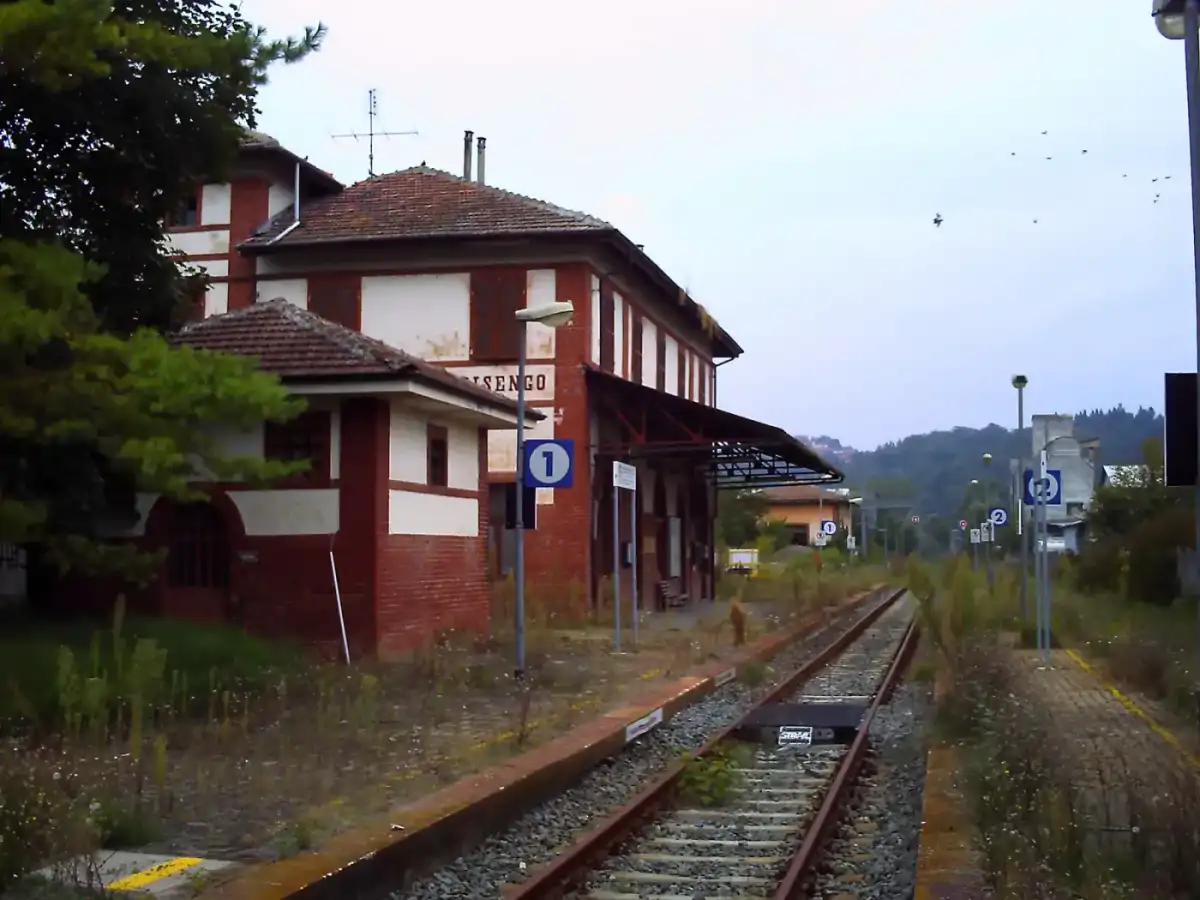
Montiglio-Murisengo station, which was activated in 1912, was located along the Chivasso-Asti railway ceasefire, whose operation was permanently suspended in 2011.Explore this chapter
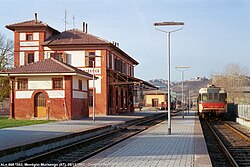
The Montiglio-Murisengo station, activated in 1912, was located along the discontinued Chivasso-Asti railway, whose operation was definitively suspended in 2011.
Administration
Below is a table relating to the administrations that have succeeded one another in this municipality.Explore this chapter
Below is a table relating to the administrations that have succeeded one another in this municipality.
| Period | First citizen | Match | Load | Notes | |
|---|---|---|---|---|---|
| June 18, 1985 | 1 June 1990 | Franco Ferrando | - | Mayor | [16] |
| 1 June 1990 | January 21, 1995 | Luigi Gerbino | civic list | Mayor | [16] |
| February 10, 1995 | April 24, 1995 | Renato Marchiò | civic list | Mayor | [16] |
| April 24, 1995 | June 14, 1999 | Domenico Anselmo | center | Mayor | [16] |
| June 14, 1999 | June 14, 2004 | Giovanna Cullino | civic list | Mayor | [16] |
| June 14, 2004 | June 8, 2009 | Franco Giorgi | civic list | Mayor | [16] |
| June 8, 2009 | May 26, 2014 | Giovanni Baroero | civic list | Mayor | [16] |
| May 26, 2014 | May 26, 2019 | Giovanni Baroero | civic list | Mayor | [16] |
| May 26, 2019 | June 9, 2024 | Giovanni Baroero | civic list | Mayor | [16] |
| June 9, 2024 | in office | Giovanni Baroero | civic list | Mayor | [16] |
Notes
Explore this chapter
- ^ to b Monthly demographic balance for the year 2026 (provisional data), up demo.istat.it, ISTAT.
- ^ Seismic classification (XLS), up risks.protezionecivile.gov.it.
- ^ Table of degrees/day of Italian Municipalities grouped by Region and Province (PDF), in Law 26 August 1993, n. 412, annex A, National Agency for New Technologies, Energy and Sustainable Economic Development, 1 March 2011, p. 151. URL consulted on 25 April 2012 (archived fromoriginal url on 1 January 2017).
- ^ Regional Council Resolution of 16 September 2025, n. 116-19554; B.U. No. 39-S1 of 25 September 2025. (PDF), up region.piemonte.it.
- ^ Coat of arms, up Municipality of Murisengo.
- ^ Murisengo, up Central State Archive.
- ^ Corteranzo: The noble family Giunipero, a panoramic relais and a beautiful church of Vittone, up ilmonferrato.it, 30 July 2007.
- ^ Murisengo-Home Castle, up castledimurisengo.it.
- ^ Municipality of Murisengo, up murasengo.com. Retrieved 11 June 2009 (archived fromoriginal url on 19 November 2008).
- ^ Bernardino Bertini, Mineral hydrology that is History of all mineral water sources known so far in the states of S.M. the King of Sardinia, C. Bocca, 1822, p. 169.
- ^ The Pyrenta of Murisengo, up facebook.com.
- ^ to b What to see and do in Murisengo: Castle and Truffle Fair, up routesmonferrato.com.
- ^ Data taken from:
- Resident population of the municipalities. Censuses from 1861 to 1991 (PDF), up ebiblio.istat.it, ISTAT.
- Resident population - Time series, up exploredati.istat.it.
Please note: 2021 data refers to permanent census data as of December 31 of that year.
- ^ Municipality of Murisengo, The characteristics of the territory and description of its peculiarities, up common.murisengo.al.it.
- ^ Municipality of Murisengo, Church of San Luigi Gonzaga Corteranzo, up common.murisengo.al.it.
- ^ to b c d And f g h the j Ministry of Interior - Department for Internal and Territorial Affairs, Member of the Local and Regional Administrations, up administrators. interno.gov.it. Retrieved 4 November 2023.
Where to stay · Murisengo
Find stays on Booking.comStories, places and people
More about Murisengo and the surrounding area
Follow a thread of history and see where it leads.
The area, step by step
Trails and routes in Murisengo


Asti, Alessandria and surroundings
The Wine and Flavor Route · Grignolino · Sant’Antonio–Zenevreto
Asti, Alessandria and surroundings
Da Murisengo a Valmanera, sui bric astigiani


 WalkingAround the starting point