Atlas of Monferrato
Camino: sights, history and trails
Alessandria
- Elevation
- 252 m above sea level
- Area
- 18.44 km²
- Demonym
- Patron saint
- San Lorenzo
A closer look
Discovering Camino
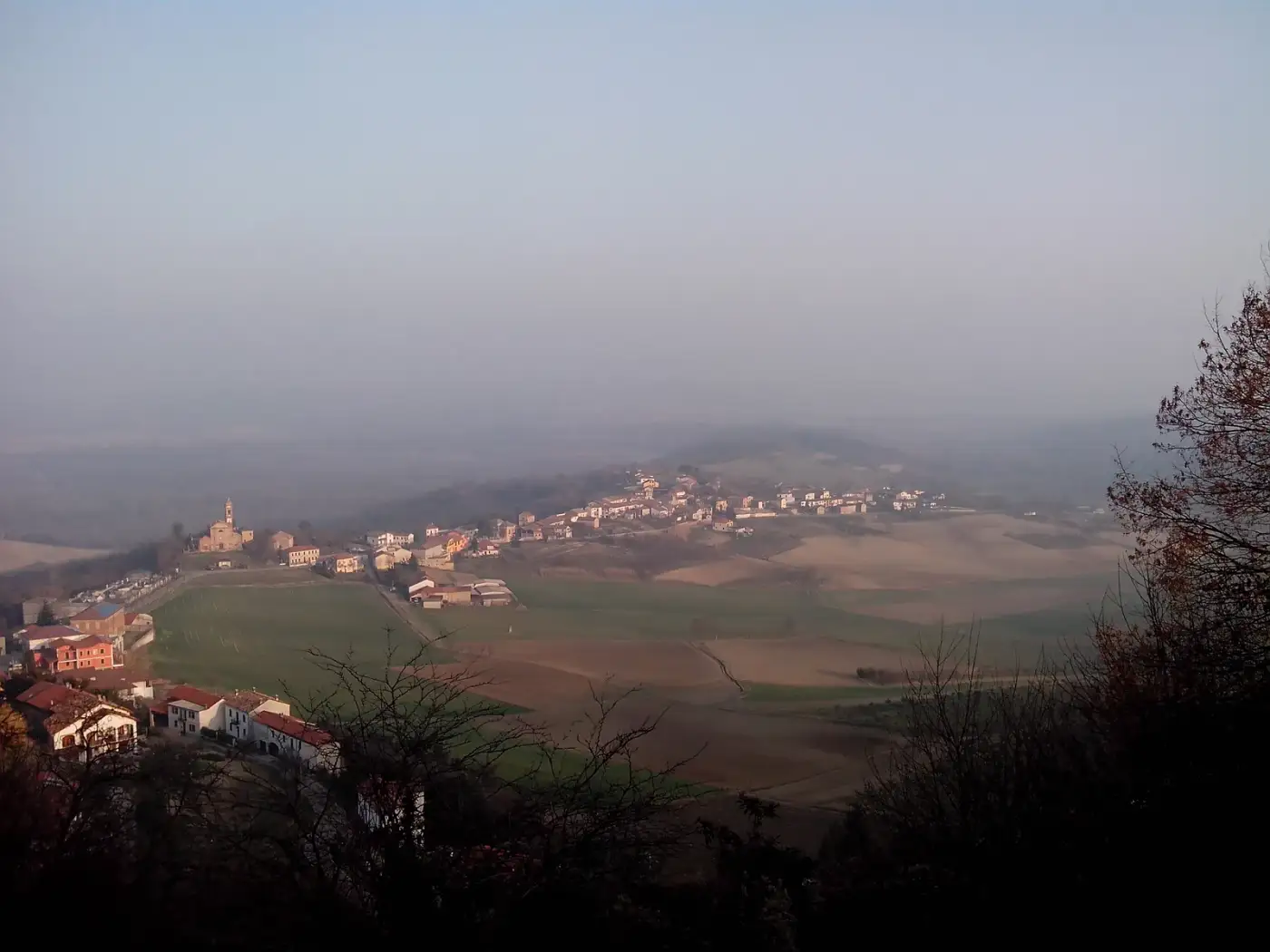
Camino Monferrato (Camin in Piedmont) is an Italian municipality of 740 inhabitants[2] from the province of Alessandria in the Piemonte.
He is known to be the land of John Baptist Boetti, who according to a tradition would be the prophet Mansur, a legendary missionary friar who in 1700, moving to the Middle East, became head of an Islamic army that tried to challenge the great Catherine II of Russia.
Serena Vitale told the story, without wanting to dissolve the riddle, The Devil's Cheater.
History of Camino
SymbolsExplore this chapter
It was an ancient fief of the bishops of Asti and later of the Marquis of Monferrato. In 1237 the Marquis Theodor Paleologos wanting to go to Constantinople to help the father Androniko engaged in a long war but not succeeding to have a loan from his father-in-law Opizzino Spinola, he obtained 10 thousand silver florins from the powerful Astigian bankers Thomas and Emanuele Scarampi granting in guarantee the fiefs of Camino and Pontestura. Subsequently Pontestura was redeemed while Camino was sold to the Scarampi family. Tommaso then became feudal lord of Camino, with the sole obligation of vassalage towards the Marquis of Monferrato, and upon his death, probably in 1343, the fiefdom passed to his second son Giorgio who occupied important positions as captain of militias and governor of military places. Giorgio Scarampi's successors, initially lords who later became counts, held important positions in the Duchy of Monferrato in the 16th century.
Symbols
The coat of arms and gonfalone of the municipality of Camino were granted by decree of the President of the Republic of 10 January 1984.[5]
Red and white are the colors of Monferrato (silver, the head of red); the four golden poles on a red background derive from the Scarampi family coat of arms (of gold, five poles of red).[6] The municipal gonfalone is a red drape.
What to see in Camino
The imposing castle was built in the 11th century (in its interior a stone resembles as the date of construction the 1010). In 1434 he was sieged by the governor of...Explore this chapter
- Camino Castle
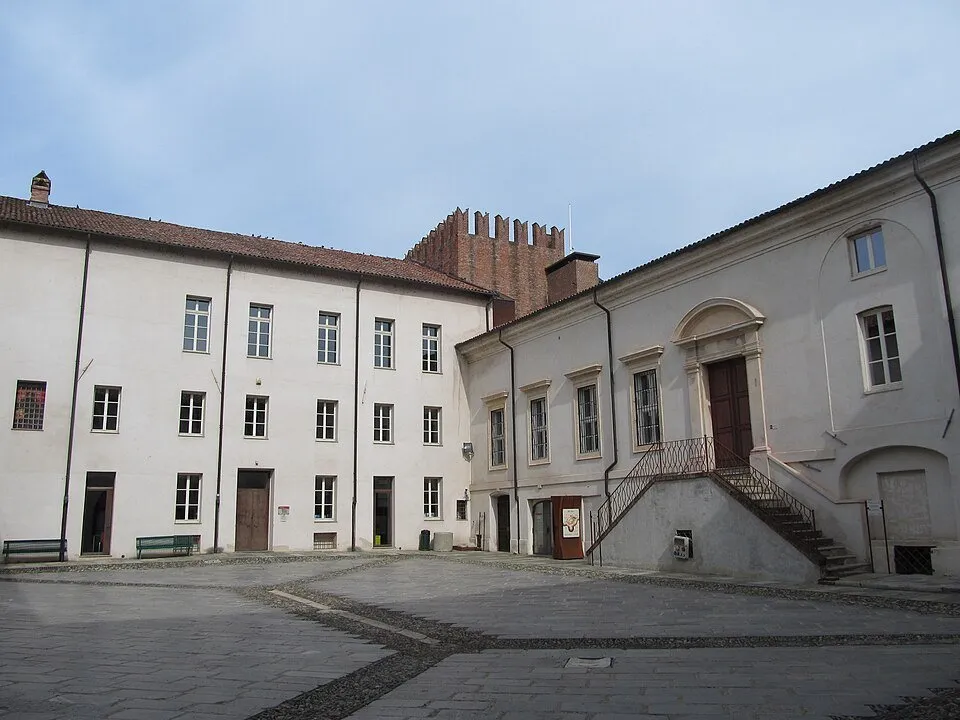
The imposing castle was built in the 11th century (in its interior a stone resembles as the date of construction the 1010).
In 1434 he was sieged by the governor of Casale Monferrato Costantino Aranite, who beheaded Scarampo Scarampi, guilty of frequent acts of prepotence to damage the neighboring fiefs.[7]
Amplified in the 15th century and severely damaged by the French in 1631, the castle was restored towards the end of the 18th century and it was a residence for several members of Casa Savoia. It is part of the group of "Open Castles" in Basso Piemonte and it was location of various films.[8]
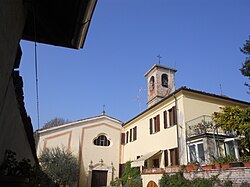
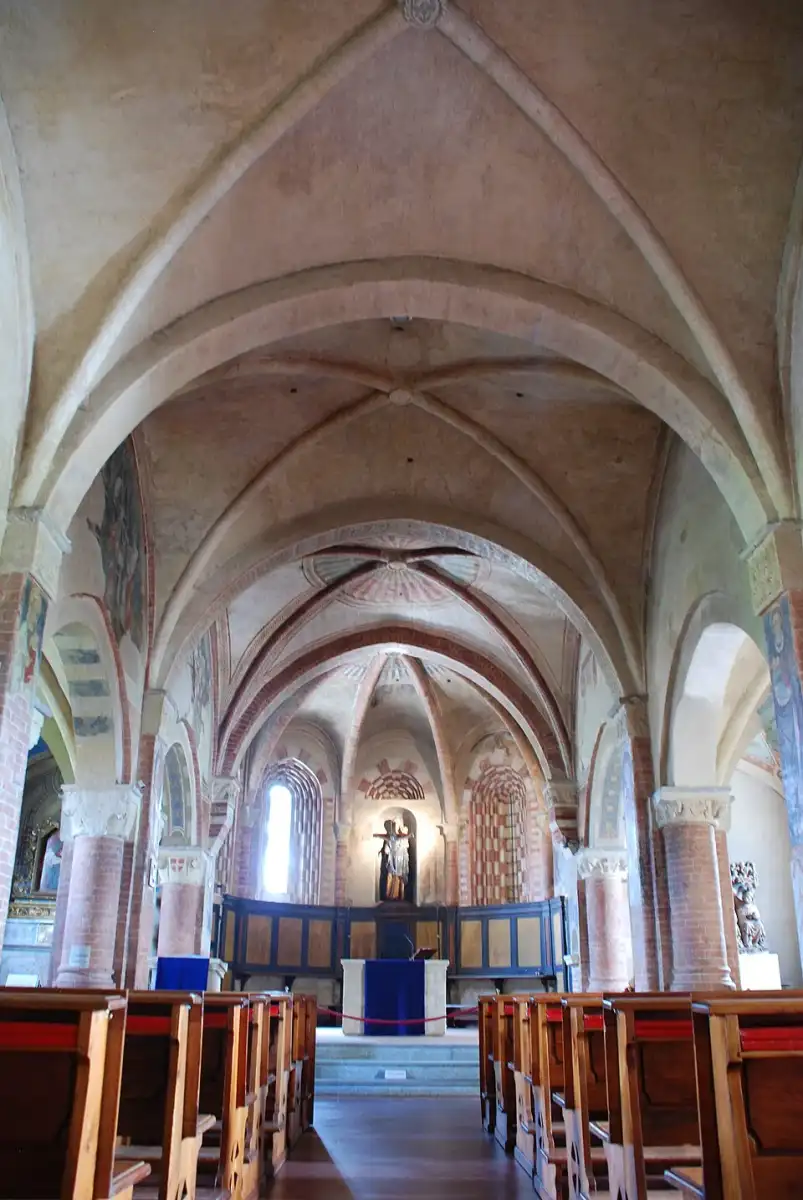
- Church of San Lorenzo, at the top of a scenic staircase
- Church of San Gottardo, near the castle, restored in 2018
- Church of San Pietro, in the hamlet of Castel San Pietro
-
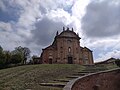 Church of San Lorenzo
-
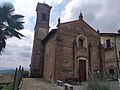 View of the church San Gottardo
-
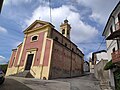 Church in the hamlet of Castel San Pietro
Society
Demographic evolutionExplore this chapter
Demographic evolution
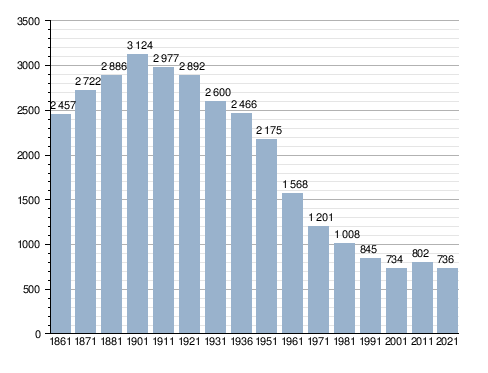
The country has undergone a strong depopulation, so that in one hundred years the resident population is is reduced to a quarter of that present in 1921.
Inhabitants registered[9]
The hamlet of Rocca delle Donne and its monastery
The name Rocca delle Donne is relatively recent, as the oldest known document speaks of Rocca Brusasca, whose possession is confirmed in 1026 by the diploma...Explore this chapter
The name Fortress of Women is relatively recent, as the oldest known document speaks of Rocca Brusasca, whose possession is confirmed in 1026 by the diploma of Emperor Conrad the Salic to the Abbey of Breme. The most recent lesson instead wants that Rocca And Brusasca are two separate locations[10]. Moreover, throughout the Middle Ages the monastery will always be defined as "della Rocca".
The current name of Rocca delle Donne, which replaced the previous one, would be linked to the presence of nuns, called as "Domine", from which the name Rocca Domnarum.
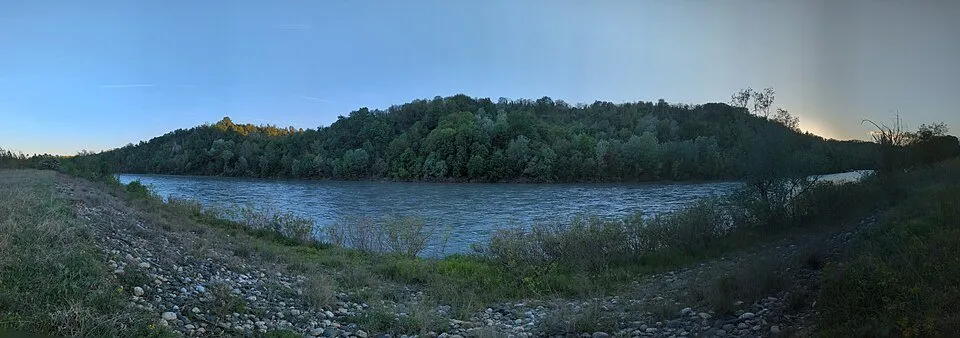
The importance of the small monastery, built on a promontory overlooking the river Po, is confirmed in September 1155 by an act between the bishop of Vercelli and the Marquis of Monferrato in claustro di Santa Maria della Roccha.
The first document that attests the existence of the monastery bears the date of 20 February 1167, when the property was of the Benedictines of La Chaise-Dieu, in Alvernia, and concerns a donation of goods by the Marquis Guglielmo di Monferrato.
This generosity is justified by the presence in the convent of his sister Adalasia and her nephew Agnese, who brought the monastic community to an uncommon wealth for the time.
Place of conferences and diplomatic negotiations, the monastery saw the continuous passage of troops along the Po and the devastations that bloodshed the lands of Monferrato during the passage of the Marquisate of Monferrato from Aleramics to the Paleologists.
In 1492, however, Pope Alexander VI signed the ban of the Monastery, with the accusation not historically evidenced by moral misconduct of the nuns, combining all property, rights and privileges to that house of the Clarisses. After several vicissitudes, the convent became a farm estate owned by the Curia of Casale, but could not escape the confiscation of ecclesiastical goods desired by Napoleon Bonaparte who wanted to donate the entire property to the doctor Giovanni Poitier, with the obligation to plant a cypress for each born or unborn son of the emperor[11].
In the last decades of the 19th century the property, transformed into a civil home, passes to the family Norzi, of Jewish origins, that reconverts it to a flourishing winery, with many bracelets of the surrounding area used here.
In 1944 the whole Norzi family was deported to Dachau, from which it will no longer return.
Today the structure of the former Monastero appears as a farm, with large inner court, large cellars and evident remains of defensive structures overlooking the Po river.[12]
Culture
EventsExplore this chapter
Events
Every year in May the municipality of Camino participates in the event "Riso e Rose", with the exhibition of artist mosaics made exclusively with rice beans. The exhibition, called "Risalto", takes place in the centuries-old park of the castle.
In Camino is set the novel by Alberto Guasco "La stilografica di piazza del Cavallo" (2012).
Administration
Below is a table relating to the administrations that have succeeded one another in this municipality.Explore this chapter
Below is a table relating to the administrations that have succeeded one another in this municipality.
| Period | First citizen | Match | Load | Notes | |
|---|---|---|---|---|---|
| June 4, 1985 | May 25, 1990 | Lino Denti | Christian Democracy | Mayor | [13] |
| May 25, 1990 | April 24, 1995 | Lino Denti | Christian Democracy | Mayor | [13] |
| April 24, 1995 | June 14, 1999 | Franco Ricci | center | Mayor | [13] |
| June 14, 1999 | June 14, 2004 | Sergio Guttero | civic list | Mayor | [13] |
| June 14, 2004 | June 8, 2009 | Sergio Guttero | civic list | Mayor | [13] |
| June 8, 2009 | May 26, 2014 | Giorgio Rondano | List of Civics United States to Camino | Mayor | [13] |
| May 26, 2014 | May 27, 2019 | Giorgio Rondano | List of Civics United States to Camino | Mayor | [13] |
| May 27, 2019 | June 10, 2024 | Giorgio Rondano | List of Civics United States to Camino | Mayor | [13] |
| June 10, 2024 | in office | Sergio Guttero | civic list Together for Camino | Mayor | [13] |
Image gallery
Explore this chapter
-
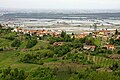 The hamlet of Rocca delle Donne
-
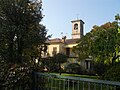 The former parish house of Rocca delle Donne
-
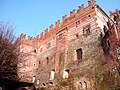 Façade of the castle of Camino
-
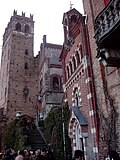 Tower of the castle of Camino
-
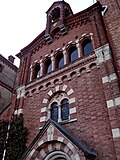 Detail of the interior of the castle of Camino
-
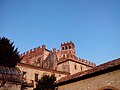 Another view of the castle of Camino
-
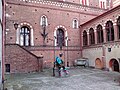 A jester in the castle courtyard
-
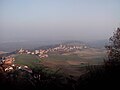 Air view on Camino from the castle
Notes
Explore this chapter
- ^ Comune di Camino : Municipal Administration and Mayor - Municipality of Camino e città, Alessandria, Piemonte, up www.comune-italia.it. URL consulted on 5 August 2026.
- ^ to b Monthly demographic balance for the year 2026 (provisional data), up demo.istat.it, ISTAT.
- ^ Seismic classification (XLS), up risks.protezionecivile.gov.it.
- ^ Table of degrees/day of Italian Municipalities grouped by Region and Province (PDF), in Law 26 August 1993, n. 412, annex A, National Agency for New Technologies, Energy and Sustainable Economic Development, 1 March 2011, p. 151. URL consulted on 25 April 2012 (archived fromoriginal url on 1 January 2017).
- ^ Camino, decree 1984-01-10 DPR, concession of coat of arms and gonfalone, up Central State Archive.
- ^ Aldo and Matilde of Ricaldone, Municipal hall of the ancient province of Casale Monferrato, Turin, Daniela Piazza Editore, 1992, p. 42, ISBN 978-88-7889-029-9.
- ^ History, up Municipality of Camino.
- ^ David Language, Dizionario del Turismo Cinematografico (60): Il Castello di Camino, horror location, up newspaperlavoce.it, 12 August 2016.
- ^ Data taken from:
- Resident population of the municipalities. Censuses from 1861 to 1991 (PDF), up ebiblio.istat.it, ISTAT.
- Resident population - Time series, up exploredati.istat.it.
Please note: 2021 data refers to permanent census data as of December 31 of that year.
- ^ Carlo Aletto, MonferratoArte, online version of the volume "Churches extraurban of the Diocese of Casale Monferrato. Historical-bibliograph repertoire of worship buildings", up artestoria.net.
- ^ ^^Marchesi Monferrato: Layout, up marsimonferrato.com.
- ^ Copy filed, up ilpicchiocamino.it. Retrieved 12 June 2021 (archived fromoriginal url on 10 February 2020).
- ^ to b c d And f g h the http://amministratori.interno.it/
Where to stay · Camino
Find stays on Booking.comThe area, step by step
Trails and routes in Camino

 Mountain bikeAround the starting point
 CyclingAround the starting point
Asti, Alessandria and surroundings
La strada panoramica del Monferrato Casalese

 WalkingPlaces and landscapes along the route