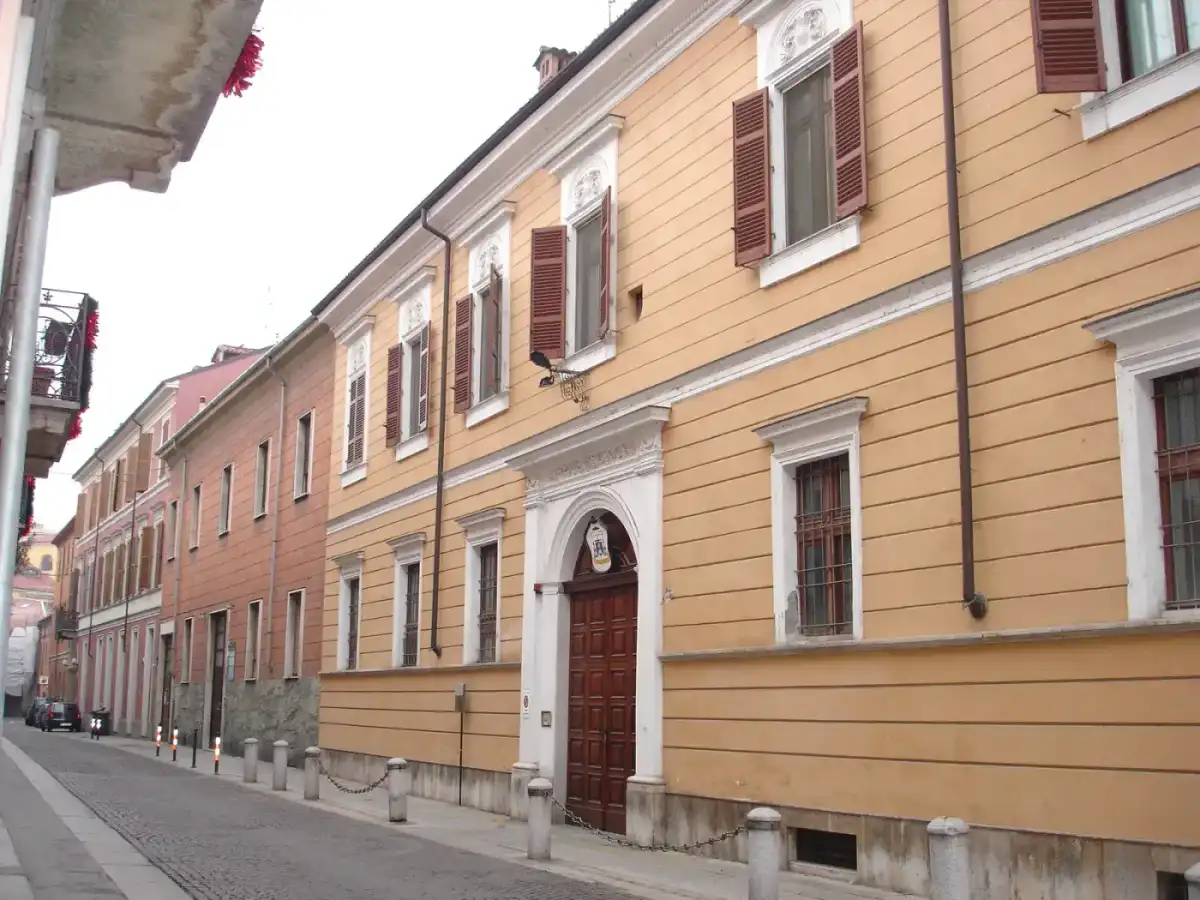
A closer look
Diocese of Alessandria: at a glance
The diocese of Alessandria (in Latin Dioecesis Alexandrina Statiellorum) is a seat of the Catholic Church in Italy suffragan of the archdiocese of Vercelli and belonging to the ecclesiastical region Piemonte. In 2023 it had 140,000 baptized people out of 152,900 inhabitants. The seat is vacant.
Region
Areas, pastoral units and parishesExplore this chapter
The territory of the diocese is entirely distributed on province of Alessandria and includes the municipalities of Alessandria, Floods Piovera, Bassignana, Borgoratto Alessandrino, Bosco Marengo, Capriata d'Orba, Carentino, Casal Cermelli, Castellazzo Bormida, Castelspina, Felizzano, Frascaro, Frugarolo, Gamalero, Isola Sant'Antonio, Montecastello, Oviglio, Pasturana, Pecetto di Valenza, Pietra Marazzi, Predosa, Quargnento, Rivarone, Solero, Tassarolo And Valenza.
The diocese borders to the north with the Diocese of Casale Monferrato, to the west with the diocese of Asti, to the south-west the diocese of Acqui, to the south, briefly, with the archdiocese of Genoa and to the east with the diocese of Tortona.
Bishop's seat is the city of Alessandria, where the cathedral of Saints Peter and Mark is located.
Areas, pastoral units and parishes
The diocese consists of 74 parishes distributed on a territory of 753 km2 and is divided into 4 pastoral areas[2] shortening the previous 7[3][4], and with the episcopal decree given in Alessandria on 11 November 2022[5], 9 pastoral units have also been identified:
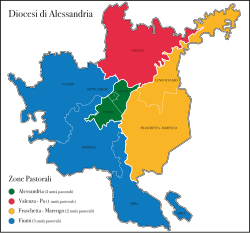
- Pastoral area "Alessandria"
- pastoral unity Seven Churches that include 7 parishes;
- pastoral unity Spalti that includes 6 parishes;
- pastoral unity Christ that includes 3 parishes;
- Pastoral area "Valenza - Po"
- pastoral unity Valenza which includes 15 parishes;
- Pastoral area "Marengo – Fraschetta"
- pastoral unit Fraschetta-Marengo which includes 11 parishes;
- Lungotanaro pastoral unit that includes 6 parishes;
- Pastoral area "Fiumi"
- Orba pastoral unit that includes 8 parishes;
- pastoral unit Bormida that includes 12 parishes;
- Tanaro pastoral unit that includes 6 parishes.
History
The diocese was built in 1175 by the will of Pope Alexander III, to which the city had been dedicated, with the bubble Sacrosanctæ Romanæ Ecclesiæ, with which the pontiff...Explore this chapter
The diocese was erected in 1175 by the will of Pope Alexander III, to whom the city had been dedicated, with the bull Sacrosanctæ Romanæ Ecclesiæ[8], with which the pontiff honors with episcopal dignity "the church and the city that was constituted in honor of St. Peter and for utility and glory of all Lombardy".
Subsequently, with the short De novitato of 30 January 1176[9] Alexander III apologizes to have elected motuit yourself the bishop[10] and declares that this must not affect in the future the right of appointment which belongs to the chapter of the cathedral. The new diocese is suffragan of the archdiocese of Milan.
The extension of the original diocese was almost similar to today's, except for the eastern border with the diocese of Tortona that he had no precise delimitation.[11]
In the short Congruam officii[12] to Bishop Ottone (18 July 1178 or 1180), Alexander III confirmed the constitution of the chapter of the canons of St. Peter's Cathedral, implemented by Ottone, and recognized all his possessions to the young Alexandrian Church.
The life of the diocese, in its first decades, was greatly overwhelmed by discords of jurisdiction with the diocese of Acqui, from whose territory the Alexandrian seat was born. Pope Alexander appointed Archbishop Algisio to join the two offices under the bishop of Acqui, but for the opposition both of Ottone and the bishop of Acqui the provision had no effect. The Alexandrian diocese remained vacant for a long time.
In May 1205, Pope Innocent III resumed the matter, deciding to implement Alexander III's provisions. The union was renewed aeque principaleter of the two seats with bubble Cum beatus Petrus[13] and the Bishop of Aqueous Ugo Tornielli also became bishop of Alessandria, with the obligation to reside six months in one city and six months in the other. But the dissids between the two dioceses were such that eventually, in November 1213, Ugo Tornielli decided to resign.
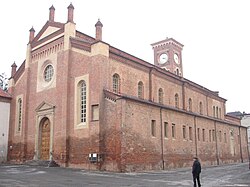
From now on Alessandria, although still formally combined with Acqui, he had no more bishops of his own; initially it was governed by the chapter of the cathedral and then, from 1235, by the archdeacon capitulate. The bishop of Acqui, whose seat was united that of Alessandria, he never cared for the Alexandrian Church, and, except for one case, none of the aqueous bishops ever brought titration of bishop of Alessandria.[14]
This is what I'm saying. status quo lasted until Pope Innocent VII, with the bubble Apostolic Sessions 15 April 1405[15], reorganized the diocese and appointed the Augustinian Bertolino Beccari as bishop.[16]
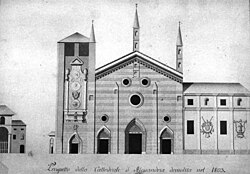
On the occasion of the reorganization of the Piedmontese dioceses wanted by Napoleon Bonaparte, the Alexandrian seat expanded with the territory of the suppressed diocese of Bobbio, Tortona and Casale.[17] However Napoleon decided to transform the city of Alessandria in one of the strongholds of the empire; for military needs were therefore demolished the cathedral and adjacent structures.[18] This imposed the transfer to Casale of the episcopal seat, by decree of Cardinal Caprara, plenipotentiary of Pope Pius VII in the French Empire, of 17 July 1805.[19] This imposed de facto the suppression of the diocese of Alessandria and its redenomination in "diocese of Casale".
The Alexandrian seat was restored on 17 July 1817 with the bubble Beati Petri of Pius VII and at the same time became suffragan of the new archdiocese of Vercelli.
On 3 May 1936, with the Apostolic Letter Cum in oppido, Pope Pius XI proclaimed Saint Pius V secondary patron of the diocese[20].
The titles of the Bishop
Until the 1960s, the bishop of Alessandria among others, he brought the noble title of Count, and the honorary title of abbots of Saints Peter and Dalmazzo . More...Explore this chapter
Until the 1960s, the bishop of Alessandria among others, he brought the noble title of count, and the honorary title of abbots of Saints Peter and Dalmazzo. More precisely, the latter is: "Saturday of the distinguished Collegiate of Saints Peter and Dalmazzo".
According to Giuseppe Chenna[21] the title of count is to be traced back to the fifteenth century, to Bishop Bertolino Beccari, who, as the first bishop after the long period of the archdiacons, assumed this title then transmitted to his successors. It is not known, however, neither the reason nor the way in which he has acquired this right. Ludovico Antonio Muratori proves that other bishops, specifically those of Novara, Vercelli, Asti and Tortona They had it by the emperors' concession. The Muratori specifies that the Italian bishops, around the 10th century, worked in order to obtain also the temporal power of the cities which governed spiritually[22]. There is no evidence that Bishop Bertolino followed this path, the fact remains that from him the title of count was transmitted uninterruptedly to all his successors.
As far as the title of abbot is concerned, it can be said that it was the result of a historical becoming which has its roots in a period before the foundation of the city. Saint Peter, called di Bergoglio (or Bgruppo), from the name of the village across the river Tanaro in which he was, it was a Benedictine monastery that existed well before the formation of the city and whose first trace is in a bubble of Pope Alexander III of 1162. It was later given in Commendaa and in 1520 Giulio de Medici, future Pope Clement VII and cousin of the contemporary Pope Leo X, suppressed the Benedictine monastery by replacing it with a secular abbey collegiate.
The collegiate church remained in its Bergoglio church until 1728, when it had to move after the demolition of the entire district ordered by King Vittorio Amedeo II for the construction of the new Military citadel. Taking advantage of this and of the fact that Abbot Curioni had been dead for eight months, therefore the dignity was vacant, Pope Benedict XIII with a bull dated 22 April 1728 extinguished the abbey commendation and united it with his income to the "episcopal table" and this is why from that moment the bishop of Alessandria bears the title of abbot of the collegiate church.
Cronotassi of bishops
The vacancy periods not exceeding 2 years or not historically established are omitted.Explore this chapter
The vacancy periods not exceeding 2 years or not historically established are omitted.
- Arduino (1175 - ?)
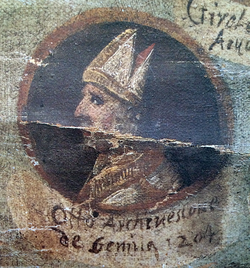
- Otto Ghilini † (about 1178 - 1185 appointed bishop of Bobbio)
- Vacancy (1185-1205)
- Ugo Tornielli † (before August 1205 - 12 November 1213 dismissed)[23]
- Joint office in Acqui (1213-1405)
- Series of Alexandrian Archdeacons (1235–1405):
- Bonifacio † (1235 - 1280)
- Ascherio † (1280 - 1300)
- Bertolino or Bartolomeo dal Pozzo † (1300 - 1321)
- Odone Guasco † (1321 - 1347)
- Antonio Guasco † (1347 - 1351)
- Francesco dal Pozzo † (1351 - 1375)
- Franceschino from the well † (1375 - 1400)
- Arpino Colli † (1400 - 1405)
- Bertolino Beccari, O.E.S.A. † (15 April 1405 - 18 July 1417 deceased)
- Michele Mantegazza, O.Carm. † (7 October 1418 - 1425 suspended[24])
- Vacancy[25] (1432 – 1441)
- Marco Marinone, O.S.A. † (16 February 1441 - 1 June 1457 appointed bishop of Orvieto)
- Marco Cattaneo de' Capitaneis, O.P. † (31 May 1457 - 1 March 1478 deceased)
- Giovanni Antonio Sangiorgio † (14 April 1478 - 6 September 1499 appointed bishop of Parma)
- Alessandro Guasco † (28 March 1500 - 9 August 1517 deceased)
- Pallavicino Visconti † (23 July 1518 - 1534 resigned)
- Lelio Ottaviano Guasco (11 May 1534 - 27 April 1564 deceased)
- Girolamo Gallarati † (9 June 1564 - 28 October 1568 deceased)
- Augustine Baglione (9 March 1569 - 20 June 1571 deceased[26])
- Guarnero Trotti Bentivoglio (27 August 1571 - 15 January 1584 deceased)
- Ottavio Paravicini † (5 March 1584 - 1596 dismissed)
- Giorgio Odescalchi † (10 May 1596 - 26 May 1610 appointed bishop of Vigevano)
- Erasmo Paravicini † (14 March 1611 - 30 September 1640 deceased)
- Francesco Visconti † (3 December 1640 - 13 April 1643 appointed bishop of Cremona)
- Deoded Scaglia, O.P. † (18 April 1644 - 9 March 1659 deceased)
- Carlo Ciceri † (22 September 1659 - 13 May 1680 appointed bishop of Como)
- Alberto Mugiasca, O.P. † (7 October 1680 - 11 September 1694 deceased)
- Carlo Ottaviano Guasco (10 January 1695 - 17 November 1704 appointed bishop of Cremona)
- Filippo Maria Resta, C.R.L. † (15 December 1704 - 31 March 1706 deceased)
- Francesco Giuseppe Arborio di Gattinara, B. † (7 Jun 1706 Appointed - 25 Jun 1727 Appointed Archbishop of Turin)
- Carlo Vincenzo Maria Ferrero Thaon, O.P. † (30 July 1727 - 23 December 1729 appointed bishop of Vercelli)
- Giovanni Mercurino Antonio Arborio di Gattinara, B. † (23 December 1729 - 28 September 1743 deceased)
- Giuseppe Alfonso Miroglio † (16 March 1744 - 14 April 1754 deceased)
- Giuseppe Tomaso de Rossi (18 July 1757 - 20 May 1786 deceased)
- Carlo Giuseppe Pistone † (15 September 1788 - 30 September 1795 deceased)
- Vincenzo Maria Mossi † (27 June 1796 - before 29 May 1803 dismissed)
- Jean-Chrysostome de Villaret † (1 February 1805 - 23 December 1805 appointed bishop of Casale Monferrato)
- Depressed seat (1805-1818)
- Alessandro d'Angennes † (16 March 1818 - 24 February 1832 appointed archbishop of Vercelli)
- Dionigi Andrea Pasio † (15 April 1833 - 26 November 1854 deceased)
- Vacancy (1854-1867)
- Giacomo Antonio Colli † (27 March 1867 - 1 November 1872 deceased)
- Pietro Giocondo Salvaj † (23 December 1872 - 1 March 1897 deceased)
- Giuseppe Capecci, O.E.S.A. † (19 April 1897 - 16 July 1918 deceased)[27]
- Giosuè Signori † (23 December 1918 - 21 November 1921 appointed Archbishop of Genoa)
- Nicolao Milone † (21 November 1921 - 11 March 1945 deceased)
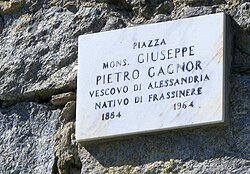
- Giuseppe Pietro Gagnor, O.P. † (30 October 1945 - 4 November 1964 deceased)
- Giuseppe Almici † (17 January 1965 - 17 July 1980 withdrawn)
- Ferdinando Maggioni † (17 July 1980 - 22 April 1989 withdrawn)
- Fernando Charrier † (April 22, 1989 - April 4, 2007 withdrawn)
- Giuseppe Versaldi (4 April 2007 - 21 September 2011 appointed president of the Prefecture of Economic Affairs of the Holy See)
- Guido Gallese (20 October 2012 - 11 September 2026 resigned)
- Luigi Testore[1], from 11 September 2026 (apostolic administrator)
Saints and Blesseds of the Diocese
Explore this chapter
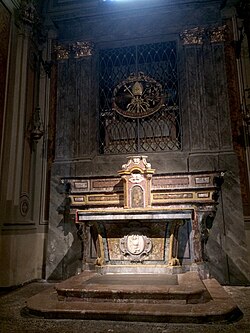
- San Baudolino, bishop and hermit. Patron of the city Alessandria
- San Bruno da Solero, bishop
- Sant'Ugo Canefri
- San Gregorio Maria Grassi, O.F.M., bishop, and companions, martyrs
- Saint Paul of the Cross, Religious
- San Pio V, pope
- Blessed Gerardo Cagnoli, religious
- Blessed Francesco Faà di Bruno, priest
- Blessed Mother Teresa Grillo Michel, Founder of the Little Sisters of Divine Providence
- Blessed Thomas from Alessandria, served
- Blessed William Zucchi, priest
- Servant of God Carolina Beltrami, secular sister of the Servi di Maria, founder of the Immaculate Sisters
- Servant of God Mother Leonarda Boidi, superior passionist
- Servant of God Mother Chiara Ricci, Founder of the Franciscan Sisters Angeline
Statistics
The diocese in 2023 of a population of 152.900 people had 140.000 baptized, corresponding to 91.6% of the total.Explore this chapter
The diocese in 2023 of a population of 152.900 people had 140.000 baptized, corresponding to 91.6% of the total.
| Year | Population | Priests | Diacons | Religious | Parishes | ||||||
|---|---|---|---|---|---|---|---|---|---|---|---|
| baptised | total | % | No. | secular centuries century secular secular secular centuries secular secular century secular centuries | regular | baptize. for the Presbyter |
Men | Women | |||
| 1959 | 142.500 | 143.000 | 99,7 | 185 | 138 | 47 | 770 | 41 | 123 | 65 | |
| 1970 | 150.129 | 150.737 | 99,6 | 168 | 128 | 40 | 893 | 46 | 450 | 70 | |
| 1980 | 163.292 | 165.484 | 98,7 | 188 | 130 | 58 | 868 | 1 | 70 | 400 | 76 |
| 1990 | 145.775 | 146.192 | 99,7 | 148 | 111 | 37 | 984 | 1 | 44 | 280 | 75 |
| 1999 | 144.000 | 145.000 | 99,3 | 122 | 94 | 28 | 1.180 | 9 | 36 | 287 | 75 |
| 2000 | 141.109 | 143.501 | 98,3 | 120 | 93 | 27 | 1.175 | 11 | 36 | 261 | 75 |
| 2001 | 147.880 | 150.990 | 97,9 | 113 | 88 | 25 | 1.308 | 10 | 32 | 265 | 75 |
| 2002 | 151.486 | 154.768 | 97,9 | 108 | 86 | 22 | 1.402 | 11 | 27 | 222 | 75 |
| 2003 | 151.486 | 154.768 | 97,9 | 102 | 82 | 20 | 1.485 | 10 | 22 | 204 | 75 |
| 2004 | 151.410 | 154.812 | 97,8 | 111 | 87 | 24 | 1.364 | 10 | 30 | 197 | 75 |
| 2006 | 150.100 | 156.200 | 96,1 | 102 | 82 | 20 | 1.471 | 13 | 26 | 192 | 75 |
| 2012 | 151.000 | 162.900 | 92,7 | 92 | 74 | 18 | 1.641 | 9 | 22 | 182 | 75 |
| 2015 | 149.506 | 159.822 | 93,5 | 82 | 64 | 18 | 1.823 | 9 | 21 | 145 | 75 |
| 2018 | 144.918 | 159.750 | 90,7 | 68 | 54 | 14 | 2.131 | 9 | 18 | 137 | 74 |
| 2020 | 142.035 | 156.978 | 90,5 | 57 | 46 | 11 | 2.491 | 7 | 12 | 123 | 74 |
| 2022 | 140.500 | 153.500 | 91,5 | 57 | 48 | 9 | 2.464 | 7 | 10 | 119 | 74 |
| 2023 | 140.000 | 152.900 | 91,6 | 57 | 48 | 9 | 2.456 | 7 | 10 | 119 | 74 |
Notes
Explore this chapter
- ^ to b Bishop of Acqui.
- ^ Stefano Thessaly.
- ^ Alessandria, Bormida, Fraschetta, Marengo, Orba, Valenza Po, Tanaro
- ^ The pastoral zones of "Alessandria Centro", "Alessandria Cristo" and "Alessandria Periferia" had already been gathered in the pastoral area "Alessandria"
- ^ Andrea Antonuccio.
- ^ Giulio Ieni, II.
- ^ Palace Invited.
- ^ Roberto Livraghi.
- ^ Giuseppe Cappelletti, pp. 534-535.
- ^ The document does not mention the bishop's name, which could be both Arduino and his successor Ottone.
- ^ Giuseppe Antonio Chenna, pp. 5-6 He writes the Chenna "[...] It cannot be believed that it has been constituted as of present is found; but if it is lawful, until there is any convincing warning, which risk this bujo, adventure what conjecture, which is not without foundation; it is proposed that the diocese Alessandrina may have been formed of the places, and the villas, which follow; and if they were assigned more, it must be believed, that this does not have the Church.Alessandria until then achieved, and some of them never, and they are. ROVERETO, or the city itselfAlessandria built in the same castle of Rovereto, or near it, Bergoglio, Bergamasco, Carentino, Felizzano, Hole, Fubine Monferrato, Castellazzo Bormida, San Giuliano (Subsequently, in the 18th century, San Giuliano Nuovo and San Giuliano Vecchio will be divided into two distinct towns), Lu, Marengo, Oviglio, Casal Cermelli, Quargnento, Solero. To these places, however, some others can be added, which are believed to not yet exist in 1175, but were founded and formed later in the territories of the villas mentioned above, namely: Borgoratto Alessandrino, Casal Cermelli, Casalbagliano, Cascinagrossa, Cantalupo, Castelceriolo, Predosa, Castelspina, Lobbies. [...]»
- ^ Giuseppe Cappelletti, pp. 535-536.
- ^ Giuseppe Cappelletti, pp. 540-543.
- ^ According to Cappelletti, for his fidelity to the emperor, the city of Alexandria was deprived from 1213 to 1240 of episcopal dignity; restored the diocese in 1240, it was governed by the bishops of Acqui until 1405. According to Savio in 1240 Pope Gregory IX would have dissolved the union between Acqui and Alessandria, but without appointing Alexandrian bishops until 1405.
- ^ Giuseppe Cappelletti, pp. 551-553.
- ^ Rafael Lazcano, pp. 435-436.
- ^ Text of the Apostolic Letter Gravissimis causis, published in Latin edition and French translation in: Bulletin des lois de l'Empire français, fourth series, third volume, pp. 58-69. Following is the executive letter from Cardinal Caprara (pp. 69-92), which defines and lists the villages and towns belonging to each of the Piedmontese dioceses.
- ^ Giulio Ieni, The demolition of the ancient cathedral, up diocesealessandria.it, Diocese of Alessandria, 1988. Retrieved 1 March 2015 (archived fromoriginal url on 9 February 2015).
- ^ Card. Caprara, Transfer Decree, in Collection of laws, decrees, proclamations, posters, etc., XX, Turin, [?], pp. 319-320.
- ^ Acta Apostolicæ Sedis, pp. 398-399.
- ^ Giuseppe Antonio Chenna, p. 244.
- ^ Ludovico Antonio Muratori, dissertation LXXI.
- ^ Bishop of Acqui, with whose diocese the Alexandrian seat was united.
- ^ Giuseppe Antonio Chenna, p. 247.
- ^ During the suspension of Michele Mantegazza, from 1425 to 1432, he was diocesan administrator Antonio Lanzavecchia, already abbot ofSezzadio of the Sezzadio. Upon the death of Bishop Mantegazza in 1432, the episcopal see was vacant and Pope Eugene IV appointed a new administrator, Giorgio Lanzavecchia of the Order of Friars Minor, on 13 January 1432. On 14 January 1437 there was a new appointment, that of Galvagno Firuffino, abbot of the Abbey of San Pietro in Bergoglio. See Giuseppe Antonio Chenna, p. 247.
- ^ Girolamo Ghilini, p. 161.
- ^ Rafael Lazcano, pp. 437-440.
Bibliography
History, analytical · Codes, bubbles, works · Network resourcesExplore this chapter
History, analytical
- Girolamo Ghilini, Annals of Alessandria. Overo the things happened in it city in its, and circumvisce territory of the year of its origin until 1659, Milan, Gioseffo Marelli, 1666.
- Giuseppe Antonio Chenna, of the bishopric and churches of the city and diocese Alessandria, Alessandria, Ignazio Vimercati, 1785. Retrieved 31 December 2022.
- Giuseppe Cappelletti, The Churches of Italy from their origin to our days, Venice, Giuseppe Antonelli, 1838. Retrieved 31 December 2022.
- (THE) Pius Bonifacius Gams, Episcoporum Ecclesiæ Catholicæ, Quotquot Innotuerunt a Beato Petro Apostolo, Regensburg, 1873. Retrieved 2 January 2023.
- Faithful Savio, The ancient bishops of Italy. The Piemonte, Turin, Fratelli Bocca Editori, 1898. Retrieved 2 January 2023.
- Giulio Ieni, The ancient cathedral, up diocesealessandria.it, Diocese of Alessandria, 1988. Retrieved 1 March 2015 (archived fromoriginal url on 2 April 2015).
- Roberto Livraghi (edited by), The beginnings of the Alessandrina Church (PDF), Alessandria, Diocese of Alessandria, 2011. Retrieved 2 January 2023 (archived fromoriginal url on 10 February 2015).
- (ES) Rafael Lazcano, Agustinian episcopologist, vol. 1, Guadarrama, Editorial Agustiniana, 2014, ISBN 9788492645404.
Codes, bubbles, works
- (THE) Codex Statuterum Magnifice Communitatis Atque Dioecæsis Alexandrinæ, Alessandria, Francesco Moscheni & brothers, 1547. Retrieved 2 January 2023.
- (THE) Ludovico Antonio Muratori, Italicæ Medii Ævi, vol. 6, Mediolani, ex Typographia Societatis Palatinae in Regia Curia, 1742. Retrieved 2 January 2023.
- (THE) Konrad Eubel, Hierarchia Catholica Medii Ævi et Recentioris, vol. 1, Münster, Librariæ Regensbergianæ, 1913. Retrieved 2 January 2023.
- (THE) Konrad Eubel, Hierarchia Catholica Medii Ævi et Recentioris, vol. 2, 2nd ed., Münster, Librariæ Regensbergianæ, 1914. Retrieved 2 January 2023.
- (THE) Konrad Eubel and Guilelmus van Gulik, Hierarchia Catholica Medii Ævi, edited by Ludwig Schmitz-Kallenberg, vol. 3, 2nd ed., Münster, Librariæ Regensbergianæ, 1923. Retrieved 2 January 2023.
- (THE) Patrice Gauchat, Hierarchia Catholica Medii Ævi, vol. 4, Münster, Librariæ Regensbergianæ, 1935. Retrieved 2 January 2023.
- (THE) Remigio Ritzler and Pirminum Sefrin, Hierarchia Catholica Medii Ævi, vol. 5, Padua, Il Messaggero di Sant'Antonio, 1952. Retrieved 2 January 2023.
- (THE) Remigio Ritzler and Pirminum Sefrin, Hierarchia Catholica Medii Ævi, vol. 6, Padua, Il Messaggero di Sant'Antonio, 1958. Retrieved 2 January 2023.
- (THE) Bubble "Beati Petri", in Roman Bullarii Continuatio, Volume VII part 2, Prato, Tipografia Aldina, 1852, pp. 1490-1503. Retrieved 2 January 2023.
- (THE) Cum in oppido. Apostolic Letter (PDF), in Acta Apostolicæ Sedis, year XXVIII, series II, volume III, Rome, Typis Polyglottis Vaticanis, 1936. Retrieved 2 January 2023.
Network resources
- (EN) Alessandria of the Paglia, in Catholic Encyclopedia, New York, Encyclopedia Press, 1913.
 Diocese of Alessandria TV Channel, Diocese of Alessandria. Retrieved 6 March 2015.
- Stefano Tessaglia, Minutes of the first assembly of the diocesan presbytery (PDF), up diocesealessandria.it, Diocese of Alessandria, 24 October 2013. Retrieved 6 March 2015 (archived fromoriginal url on 2 April 2015).
- Andrea Antonuccio, Here is the new decree on pastoral units: our Bishop explains to us what this is about., up lavocealessandrina.it, The V communication s.c., 25 November 2022. Retrieved 13 February 2022.
- The history of Inviziati Palace, up http://www.diocesialessandria.it/, Diocese of Alessandria. Retrieved 2 January 2023 (archived fromoriginal url on 9 April 2016).
Continue your journey