Atlas of Monferrato
Cella Monte: sights, history and trails
Alessandria
- Elevation
- 268 m above sea level
- Area
- 5.55 km2
- Demonym
- Cells
- Patron saint
- San Quirico and holy Giulitta
A closer look
Discovering Cella Monte
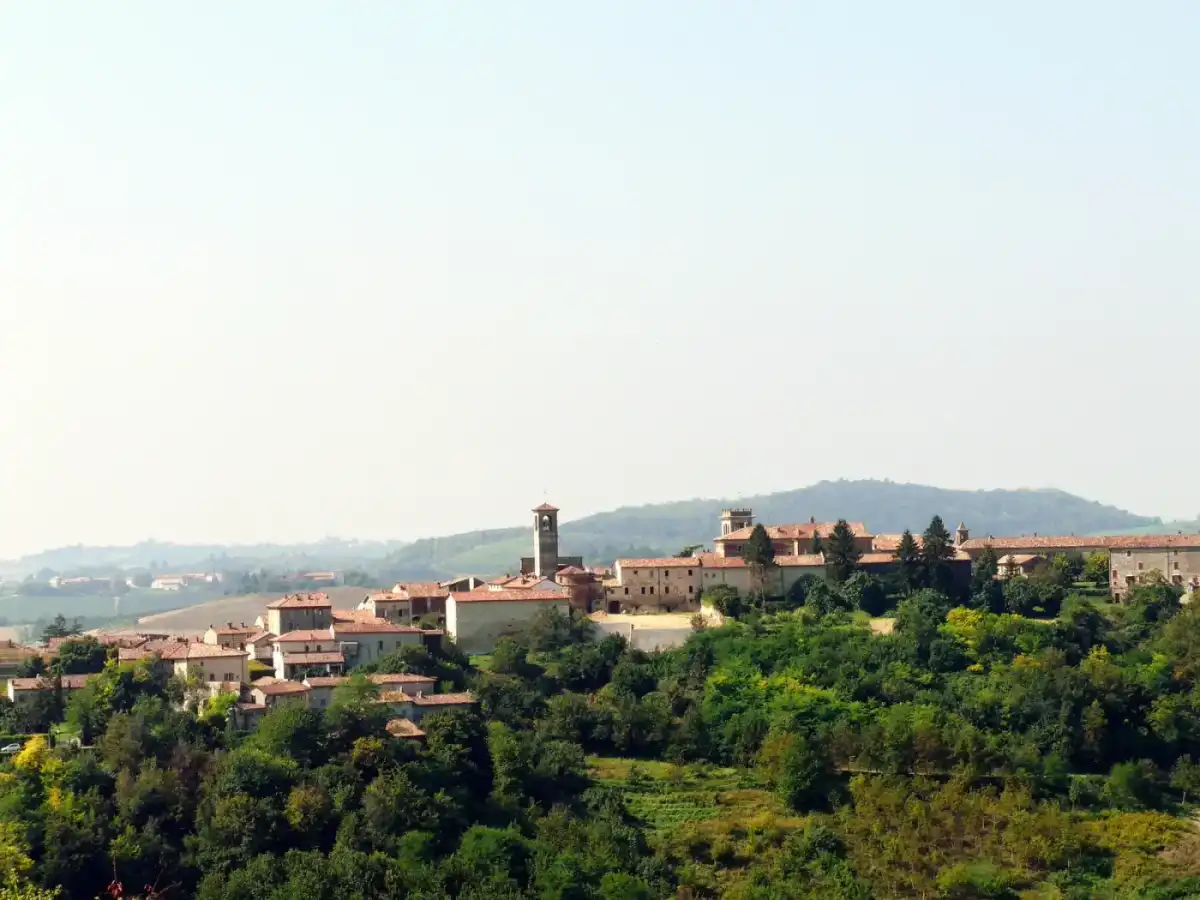
Cella Monte (Sela in Piedmont) is an Italian municipality of 450 inhabitants[1] from the province of Alessandria, in Piemonte. It is part of the association of The most beautiful villages in Italy.
Landscape and area
RegionExplore this chapter
Region
The village is located between Casale Monferrato And Alessandria, in a secluded position from the provincial road that connects the two centres, in the heart of Vitivinicol landscapes Monferrato that, together with those of Langhe And Roero, have been a UNESCO heritage site since 2014.[4]
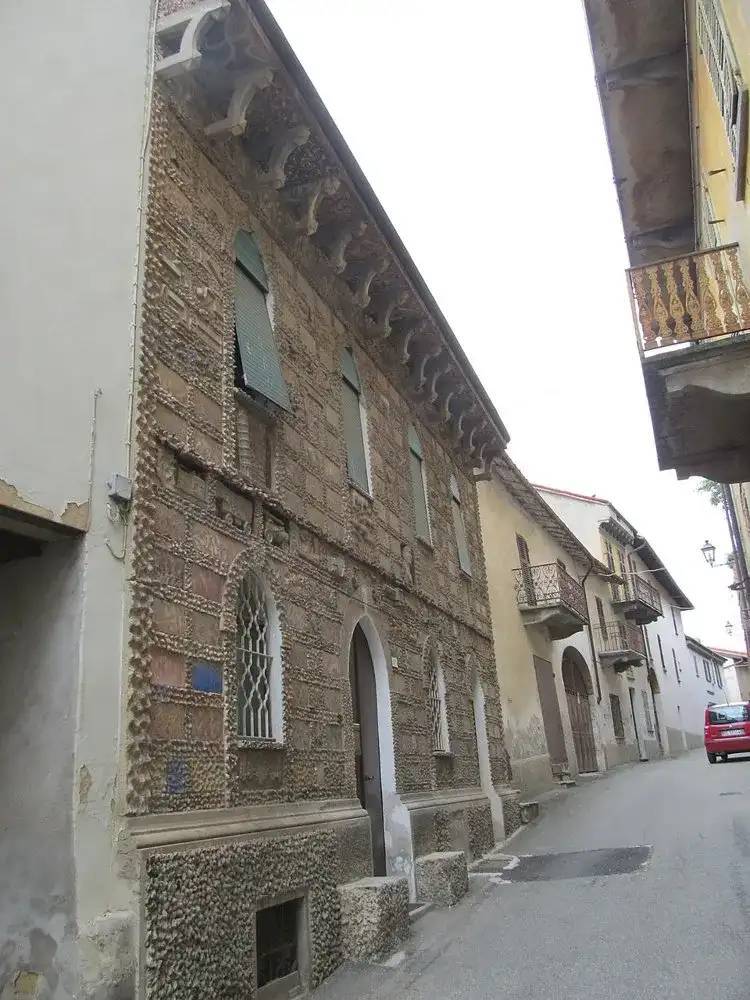
All the Monferrato (and the territory of Cella Monte in particular) is characterized by the abundant presence of the so-called Stone from Cantoni, a Miocene building stone, formed from calcareous and marly marine layers that have been dated to the Burdigalian-Langhian (20 to 14 million years ago) on the basis of the microfossils they contain. Of the stones formed during the Miocene, this Monferrina is recognized as one of the most valuable for erecting buildings, a record shared in Italy with the much better known Lecce stone. The different types and quality of the Monferrato cantons are intimately linked to the depths of the sea and the typical distribution of sediments from the coast towards the deeper sea: where the sea was relatively shallower, including the Cella Monte area, the sediments were richer in calcium carbonate and the cantons, which therefore take on a yellowish colour, are consequently more resistant and valuable.[5]
Origins of the name
The first certifications of the name of the village date back to the 12th century, both in the plural form and in that singular cell. The toponym probably comes from the cells...Explore this chapter
The first certifications of the name of the village date back to the 12th century, both in plural form cell that in the singular Cell cell. The toponym probably derives from the wine cellars, the infernòt, dug in ancient times into the sandstone in the area where the first houses were built. Another hypothesis attributes the name to the small monasteries (Cell cells) that arose in these places.[6][7]
History of Cella Monte
SymbolsExplore this chapter
Symbols
What to see in Cella Monte
Explore this chapter
- Parish Church of Saints Quirico and Juliet, consecrated in 1633
- Palazzo Volta: parish house from the second half of the seventeenth century, is today the seat ofCantoni Stone Ecomuseum. The palace constitutes a monument of notable historical-artistic interest in the context of local culture also in light of the architectural elements that emerged in the recent restoration phase in which the loggia made with canton stone columns on the first and second floors came to light. The complex faced north onto a large hanging garden, supported by a retaining wall that still exists today which developed from east to west with a stepped layout.[6][8]
- Castello degli Ardizzoni, transformed into a family home Ardizzoni in the 17th century
- Palazzo Radicati, residence of Pietro Secondo Radicati (1671-1729), bishop of Casale Monferrato.[9]
- Church of San Quirico, considered protector of children
- Oratorio Sant'Antonio, with surrounding green area
- The "infernòt" are small underground rooms typical of Monferrato, dug into the Pietra da Cantoni without light or ventilation, generally reachable through a cellar.[10] The constant temperature and humidity characteristics give these premises excellent preservation properties of bottled wine. They are different. infernòt visitable, both in Cella Monte[11] both in the surroundings, mapped by the local Ecomuseum that also deals with the organization of guided tours.[4]
Administration
Below is a table relating to the administrations that have succeeded one another in this municipality.Explore this chapter
Below is a table relating to the administrations that have succeeded one another in this municipality.
| Period | First citizen | Match | Load | Notes | |
|---|---|---|---|---|---|
| June 13, 1985 | 1 June 1990 | Fiora Maria Cavagnero | civic list | Mayor | [12] |
| 1 June 1990 | September 19, 1990 | Giuseppe Coppo | civic list | Mayor | [12] |
| September 25, 1990 | 7 August 1991 | Cosimo Macri | Comm. pref. | [12] | |
| 7 August 1991 | November 18, 1996 | Fiora Maria Cavagnero | Christian Democracy | Mayor | [12] |
| November 18, 1996 | May 14, 2001 | Giuseppe Arditi | centre-left | Mayor | [12] |
| May 15, 2001 | May 30, 2006 | Giuseppe Arditi | civic list | Mayor | [12] |
| May 30, 2006 | May 16, 2011 | Silvio Cosseta | civic list | Mayor | [12] |
| May 16, 2011 | 6 May 2016 | Cold Car | civic list: common intent | Mayor | [12] |
| 6 May 2016 | October 3, 2021 | Maurizio Deevasis | list: united for Cella Monte | Mayor | [12] |
| October 3, 2021 | in office | Maurizio Deevasis | civic list | Mayor | [12] |
Society
Demographic evolutionExplore this chapter
Demographic evolution
In the last hundred years, from 1921, the resident population has halved.
Inhabitants registered[13]
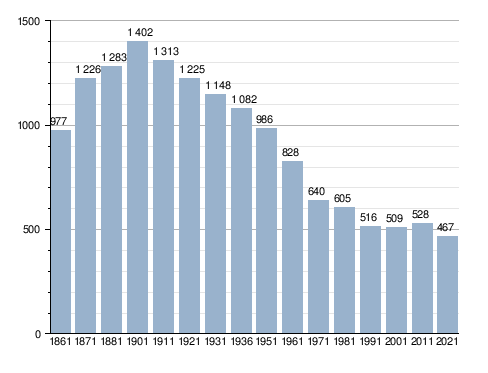
Image gallery
Explore this chapter
-
 Oratory of St. Anthony
-
 Church of Saints Quirico and Juliet
-
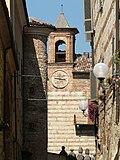 Historic center of Cella Monte
-
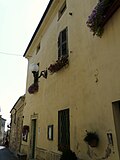 Town Hall of Cella Monte
-
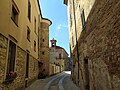 Central road
Notes
Explore this chapter
- ^ to b Monthly demographic balance for the year 2026 (provisional data), up demo.istat.it, ISTAT.
- ^ Seismic classification (XLS), up risks.protezionecivile.gov.it.
- ^ Table of degrees/day of Italian Municipalities grouped by Region and Province (PDF), in Law 26 August 1993, n. 412, annex A, National Agency for New Technologies, Energy and Sustainable Economic Development, 1 March 2011, p. 151. URL consulted on 25 April 2012 (archived fromoriginal url on 1 January 2017).
- ^ to b Roberto Bamberga, Piemonte hidden: 55 places to discover and visit, Turin, Edizioni del Capricorno, 2017, pp. 146-149, ISBN 978-88-7707-351-8, OCLC 1012406718. Retrieved 22 July 2020.
- ^ Stone from Cantons of Monferrato Casalese | Ecomuseo Pietra da Cantoni, up Ecomuseo. Retrieved 22 July 2020.
- ^ to b Claudio Bacilieri, The most beautiful villages in Italy. The charm of hidden Italy. Guide 2019-2020, SER Società Editrice Romana, 2019, pp. 58-60.
- ^ to b Piedmontese civic coat of arms, vol. I, Regional Council of Piemonte, 2016, p. 150, ISBN 978-88-96074-98-5.
- ^ The foundation | Ecomuseo della Pietra da Cantoni, up Ecomuseo. Retrieved 22 July 2020.
- ^ Cocconato and Celle RADICATI, Ignazio Second in "Biographical Dictionary", up treccani.it. Retrieved 22 July 2020.
- ^ The Monferrato of Infernot | Infernot, unique architectures, up Ecomuseo. Retrieved 22 July 2020.
- ^ Cella Monte Archivi, up Ecomuseo. Retrieved 22 July 2020.
- ^ to b c d And f g h the j http://amministratori.interno.it/
- ^ Data taken from:
- Resident population of the municipalities. Censuses from 1861 to 1991 (PDF), up ebiblio.istat.it, ISTAT.
- Resident population - Time series, up exploredati.istat.it.
Please note: 2021 data refers to permanent census data as of December 31 of that year.
Bibliography
Explore this chapter
Where to stay · Cella Monte
Find stays on Booking.comThe wine landscape
This village in wine country
Follow the link between the country, the vineyards and the neighboring territories.
The area, step by step
Trails and routes in Cella Monte


Asti, Alessandria and surroundings
The Wine and Flavor Route · Grignolino · San Giorgio–Prera
 Mountain bikeAround the starting point
Asti, Alessandria and surroundings
Giro a Madonna dei Monti da Casale Monferrato

Asti, Alessandria and surroundings
4 Passi tra i nostri Vini in Mtb
 Mountain bikeAround the starting point
Asti, Alessandria and surroundings
Il Monferrato degli Infernot


