Atlas of Monferrato
Melazzo: sights, history and trails
Alessandria
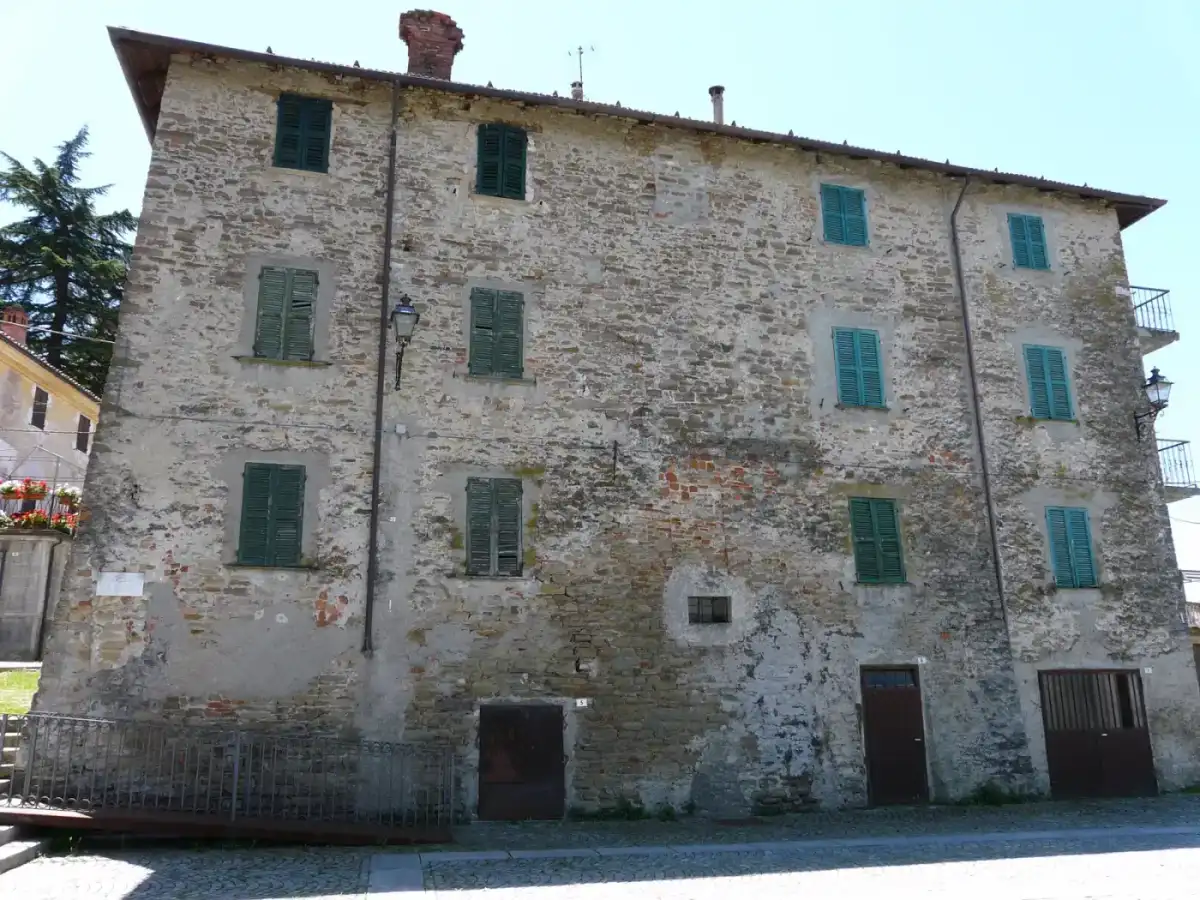
- Elevation
- 254 m above sea level
- Area
- 19.74 km²
- Demonym
- molasses
- Patron saint
- San Bartolomeo
A closer look
Discovering Melazzo
Melazzo (Mlass in Piedmontese, Mräss in Monferrino dialect) is an Italian municipality of 1 244 inhabitants[1] from the province of Alessandria in the Piemonte.
The municipality is located in the valley of Erro, near the confluence with the Bormida river.
History of Melazzo
SymbolsExplore this chapter
In the Castle of Melazzo, in 1004, Saint Guido of the Counts of Acquesana was born, venerated as a saint by the Catholic Church and patron of the city of Acqui Terme and the diocese of which he was bishop from 1034 to 1070. He gave his lordly rights to the church of Acqui, which he obtained confirmation of possession in 1039 and again in 1052 by Emperor Henry III. At the beginning of the 13th century, Melazzo was under control of the municipality of Acqui. Later he joined the Marquisate of Monferrato. Between 1330 and 1333, King Edward II Plantagenet of England found asylum in the castle of Melazzo to escape capture and the assassination attempt plotted by his wife Isabella of France. Regarding the name, it could derive from Latin Melacius, which would mean: “Podere di Melacius”, the owner.
Symbols
The coat of arms of the municipality of Melazzo was granted by royal decree of 9 April 1914.[4]
The gonfalone is a white drape.
What to see in Melazzo
Castle of Melazzo · Parish Church of San Bartolomeo · The QuartinoExplore this chapter
Castle of Melazzo
The origins of the Castle Gandolfi are preceding the year 1000: the current building still retains parts of the Lower Middle Ages restructured or integrated by neo-Gothic restorations (XIX-XX century), for example as regards the walls' crenellations.
Inside, a plaque recalls the historical fact that Edward II Plantageneto, King of England, after being deposed by his son, would not have been killed in Berkeley Castle in 1327, but found refuge in Italy spending part of his last years in Melazzo.
Parish Church of San Bartolomeo
The parish church of S. Bartholomew (XVIII century) and, lately, of San Guido, contains decorations in Piedmont Baroque style; the homonymous pieve of San Bartolomeo, no longer existing, was located in the valley bottom between the Caliogna rio and the Erro stream. The adjoining oratory, entitled to the Dominican martyr Saint Peter martyr, dates back at least to the 16th century and preserves interesting baroque furnishings.
The Quartino
Near the village stands the villa of Quartino (XVII-XVIII century) built by the Scati family, which belonged Costanza Scati, the lady of the company of Queen Maria Adelaide of Savoia.
Castle of Montegressi
On the opposite side of the Erro, at the top of the hill of Montegressi, stands an octagonal fortification, with four corner towers "wire", also known as Tinazza, for the shape that recalls that of a flip-flop. It was built in the 14th century and guarded the outlet of the valleys of Bormida and Erro.
Church of San Secondo
The church of San Secondo, currently isolated between the fields at the homonymous village, is a Romanesque building dating back to the 12th century, originally with tau and triabsidate plant (only two survive) according to a relatively frequent architectural model in the diocese of Acqui.
Roman aqueduct
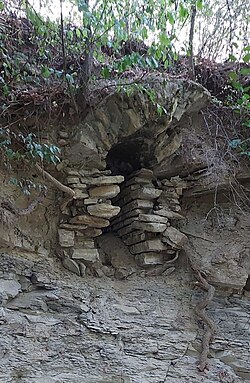
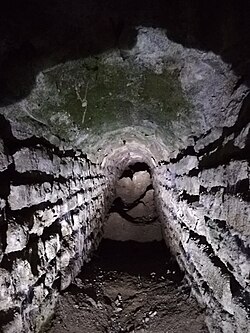
In the territory of Melazzo, near the mouth of the Caliogna rio, on the left bank, you can see a section of what remains of the Roman aqueduct [5]. The work, which dates back to the 1st century AD, was approximately 13 km, originated from the territory of Cartosio and ended in Acqui Terme, crossing the Bormida river over imposing arches which are still visible (one of the symbols of Acqui Terme [6]). The duct had a section of cm 120 height and cm 40 wide, the time was barreled, he was plastered internally and leaning on a vein of marl. All the aqueduct maintained an average gradient of 1,60 m 1000 m. Until the 1980s900 It was thought that the water collection point was in Tempuccio di Cartosio; during the work of consolidation of the clays near the bridge in Colombara, the speleological group of the CAI of Acqui Terme discovered that it was located more upstream presumably in Lake Scuro. [7]
Society
Demographic evolutionExplore this chapter
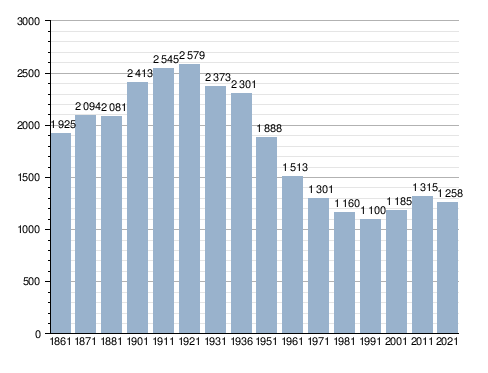
Demographic evolution
Inhabitants registered[8]
Culture
CelebrationsExplore this chapter
Celebrations
- Patronage with raviolata on August 24th
- Festival of Stoccafisso (month of April). During this festival there is a very unusual race, which consists in the launch of a stoccafisso along the road that surrounds the medieval castle: wins the couple of participants who make the route with the smaller number of lanci.
Administration
Below is a table relating to the administrations that have succeeded one another in this municipality.Explore this chapter
Below is a table relating to the administrations that have succeeded one another in this municipality.
| Period | First citizen | Match | Load | Notes | |
|---|---|---|---|---|---|
| 5 June 1985 | May 28, 1990 | Andrea Caratti | Christian Democracy | Mayor | [9] |
| May 28, 1990 | April 24, 1995 | Emilio Rapetti | - | Mayor | [9] |
| April 24, 1995 | June 14, 1999 | Emilio Rapetti | center | Mayor | [9] |
| June 14, 1999 | June 14, 2004 | Marino Ghiglia | civic list | Mayor | [9] |
| June 14, 2004 | June 8, 2009 | Diego Vincenzo Caratti | civic list | Mayor | [9] |
| June 8, 2009 | May 26, 2014 | Diego Vincenzo Caratti | civic list Together to improve | Mayor | [9] |
| May 26, 2014 | May 26, 2019 | Piero Luigi Pagliano | civic list Serietà experience | Mayor | [9] |
| May 26, 2019 | June 9, 2024 | Piero Luigi Pagliano | civic list Together with you for Melazzo | Mayor | [9] |
| June 9, 2024 | in office | Piero Luigi Pagliano | civic list Together with you for Melazzo | Mayor | [9] |
Image gallery
Explore this chapter
-
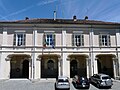 City hall
-
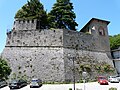 Castle and walls
-
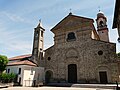 Church of San Bartolomeo
-
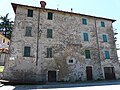 House of the historical center
Notes
Explore this chapter
- ^ to b Monthly demographic balance for the year 2026 (provisional data), up demo.istat.it, ISTAT.
- ^ Seismic classification (XLS), up risks.protezionecivile.gov.it.
- ^ Table of degrees/day of Italian Municipalities grouped by Region and Province (PDF), in Law 26 August 1993, n. 412, annex A, National Agency for New Technologies, Energy and Sustainable Economic Development, 1 March 2011, p. 151. URL consulted on 25 April 2012 (archived fromoriginal url on 1 January 2017).
- ^ Melazzo, decree 1914-04-09 RD, concession of coat of arms, up Central State Archive.
- ^ Vittorio Scati, Water Antiquities, Historical and Topic Studies and News of some ancient and recent excavations, Turin, Stamperia Reale of the G.B. company. Paravia and C., 1887.
- ^ Alberto Bacchetta and G.B. Garbarino, The Roman aqueduct, De Ferrari, 2006.
- ^ Archaeological Superintendence of Piemonte, extracted from Bulletin of Archaeology of the Ministry for Cultural and Environmental Heritage, 13-14-15 - January-June 1992, Scavi and discoveries, Istituto Poligrafico e Zecca dello Stato, 1992.
- ^ Data taken from:
- Resident population of the municipalities. Censuses from 1861 to 1991 (PDF), up ebiblio.istat.it, ISTAT.
- Resident population - Time series, up exploredati.istat.it.
Please note: 2021 data refers to permanent census data as of December 31 of that year.
- ^ to b c d And f g h the Register of local and regional administrators, up administrators. interno.it.
Where to stay · Melazzo
Find stays on Booking.comThe area, step by step
Trails and routes in Melazzo

Asti, Alessandria and surroundings
The Wine and Flavor Route · Aromatici · Montechiaro–Roboaro

Asti, Alessandria and surroundings
Acqui Terme e la Valle dell’Erro

Asti, Alessandria and surroundings