- Elevation
- 305 m above sea level
- Area
- 17.42 km²
- Demonym
- Moncalvesi
- Patron saint
- Sant' Antonio di Padova
A closer look
Discovering Moncalvo
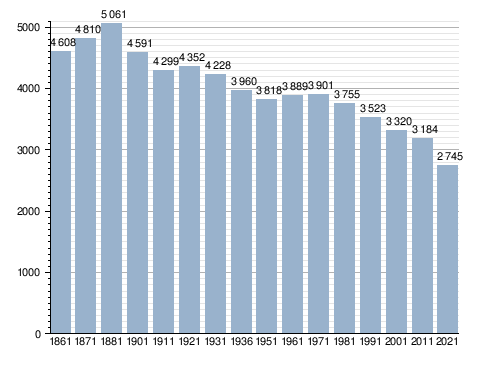
Moncalvo (Moncalcv in Piedmont) is an Italian municipality of 2 743 inhabitants[1] from the province of Asti in the Piemonte.
Landscape and area
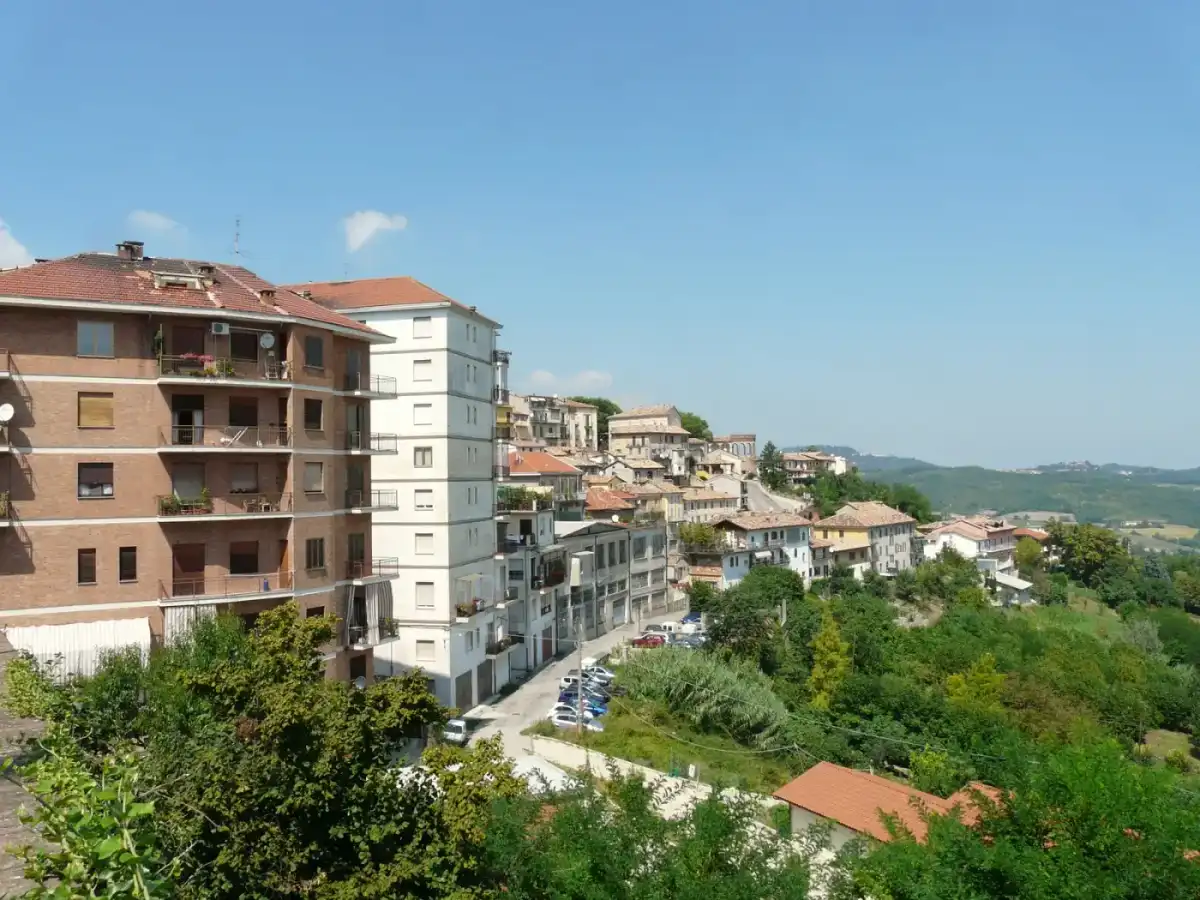
The town of Moncalvo is one of the main municipalities in Monferrato, as well as its first historical capital, and is located north-east of Asti, on the border with the Province of...Explore this chapter
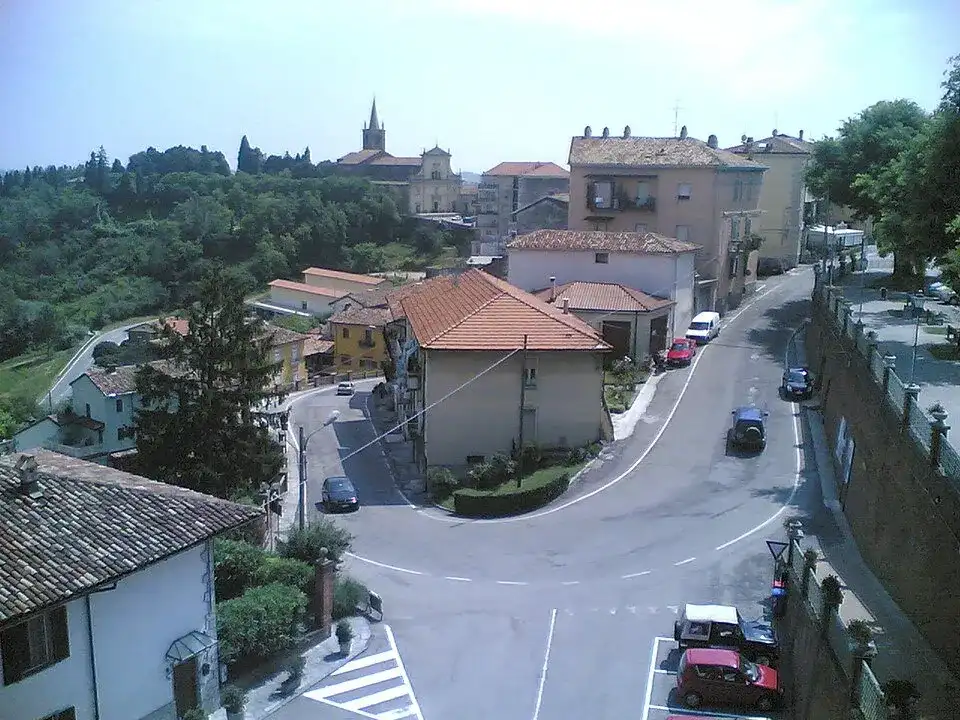
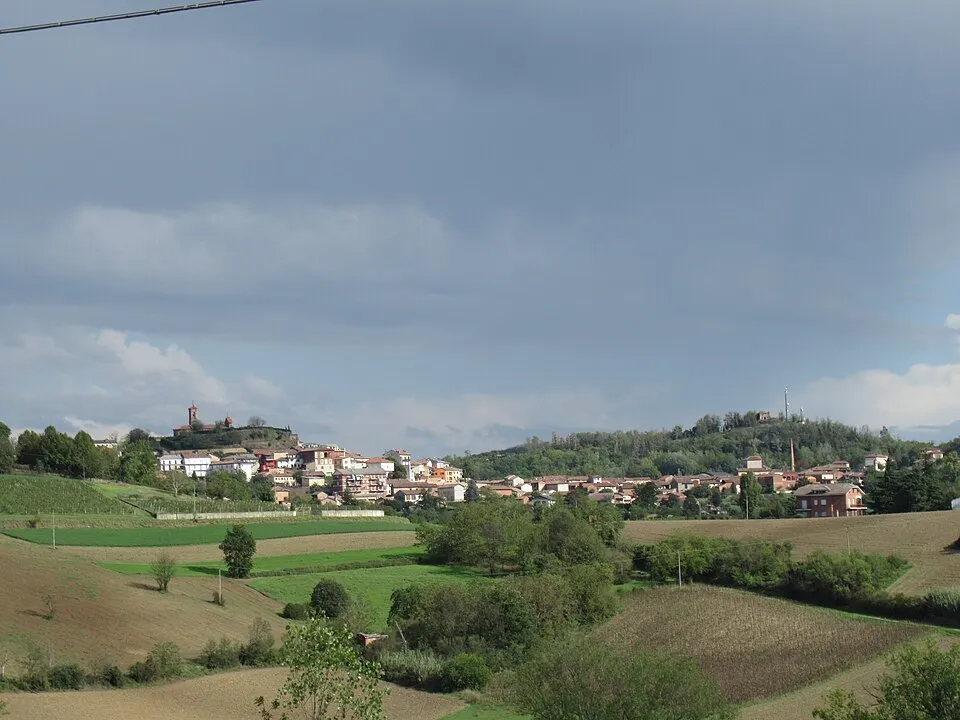
The city of Moncalvo is one of the main municipalities of Monferrato, as well as its first historical capital[4], and is located north-east of Asti, on the border with Province of Alessandria, on a hill with an average altitude of 305 m above sea level.
History of Moncalvo
Jewish Community · SymbolsExplore this chapter
Of Roman origin, Moncalvo was over the centuries property of the Church of Asti, of the Graffagno family, of the Marquis of Monferrato, who made it his capital, and then passed to the Marquis of Saluzzo (1306) and then again to the Paleologi of Monferrato (1309). It underwent various foreign occupations and finally became the domain of the Gonzagas of the Duchy of Mantua, who ceded it as a fief to various lords: in 1604 to Galeazzo di Canossa, in 1619 to Rolando Natta, in 1671 to Filiberto marquis of Ceva.
In 1691 he suffered the plundering by imperial troops under Eugenio di Savoia. He finally moved to the Savoy house in 1704. With his Patents of 9 August 1774 Vittorio Amedeo III of Savoia declared it City, confirming the title already attributed by the Duke of Mantua Ferdinando Carlo Gonzaga on 23 March 1705. The same ruler, then, granted the city in the docking to his son Maurizio Giuseppe, Duke of Monferrato, investing him with the title of Prince of Moncalvo, with letters patents of 3 June 1785.[5]
In 1908 he returned to possession of the hamlets of Castellino, San Vincenzo, Patro and Santa Maria that in 1705 had been annexed to the Municipality of Castellino Penango.
During World War II, during the period of German occupation and Italian Social Republic, between 1943 and 1945, Moncalvo was dramatically marked by anti-Jewish persecutions that led to the arrest and deportation of 8 people, led to death at Auschwitz.[6]
Jewish Community
From the500 a thriving Jewish community: in 1731, there were 176 Jewish people in Moncalvo on just over 1500 non-Jewish.
The Jewish ghetto of Moncalvo had the peculiarity not to be far from the main Catholic buildings, as in most ghettos, but it was in a quite central area.
One of the documents concerning the Jewish community is "La Gran Battaja dj'Abrei d'Moncalv", (the Great Battle of the Ebees of Moncalvo), danced at the end of '800 by a local, Christian, in Jewish-Pymontese language.
The Jewish community was extinct in the second post-war period, following a constant numerical decline over the previous centuries.[7]
Symbols
The current coat of arms of the City of Moncalvo was granted together with the gonfalone by decree of the President of the Republic of 15 November 2006.
The gonfalone is a truncated drape of red and white.[8]
Silver and red are the colors of Monferrato.
What to see in Moncalvo
Civil architecture · Religious architectureExplore this chapter
Civil architecture
- Palazzo Testafochi (XVIII century on late medieval plant)
- Palace of the Town Hall (formerly Monache Orsoline Monastery of the 17th century on pre-existing plant)
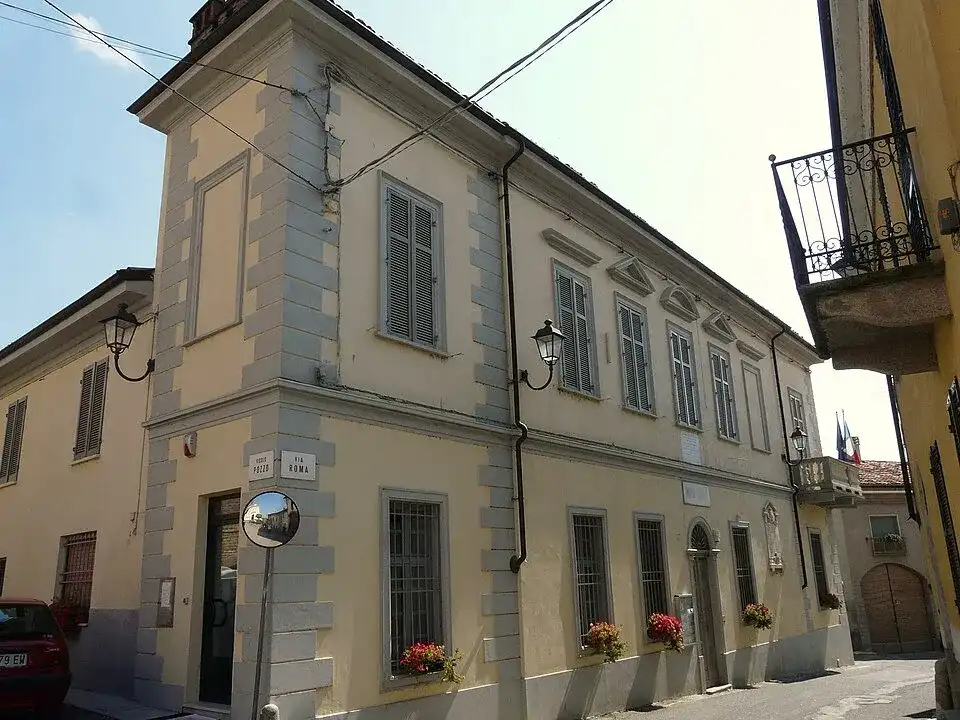
- Palazzo dal Pozzo (ministerial residence of the 17th century)
- Manacorda Palaces (coffered ceiling of the 15th century)
- Casa Lanfrancone (rest of Gothic facade, 13th century), located in the area called "La Fracia"
- House of the Marchesi di Monferrato (cooked descriptions, XV century)
- Municipal Theatre (1878), built on the headquarters of the ancient Seth century Guard
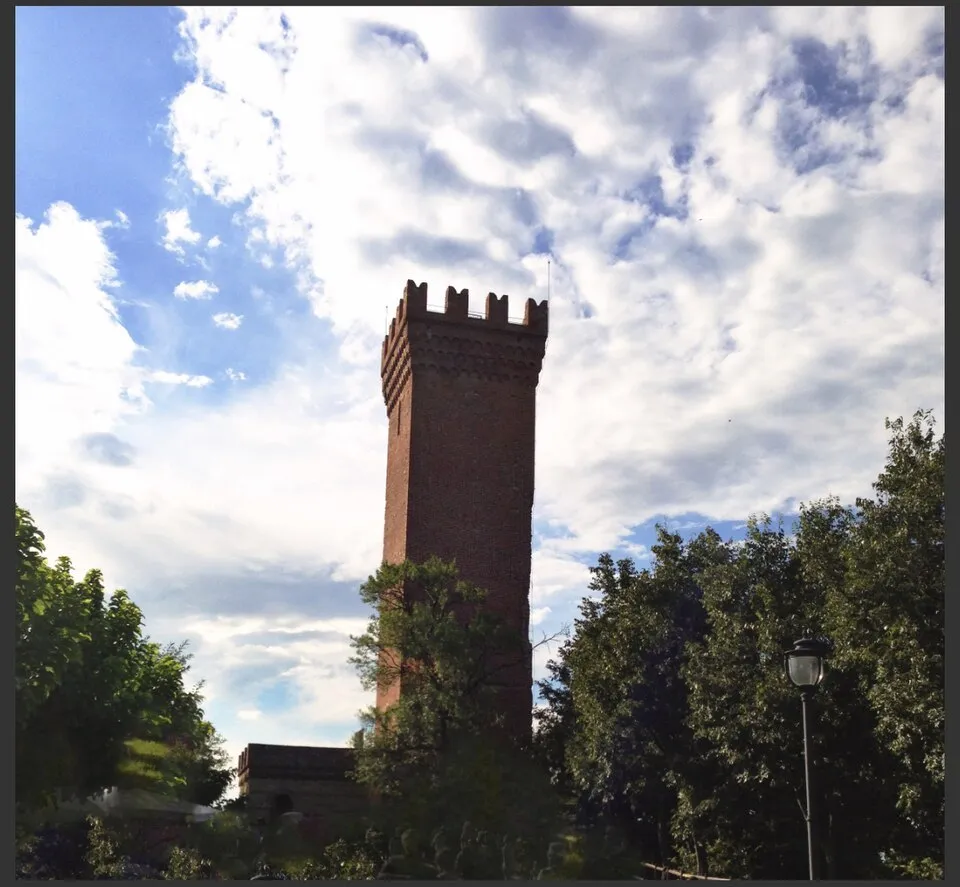
- Resti del Castello (Medieval construction, residence of the Marchesi del Monferrato): landed at the end of the nineteenth century, only the mighty towers, recently restored
- Villa Foa (bourgeois residence located in a panoramic position)
-
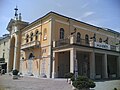 Municipal Theatre of Moncalvo
-
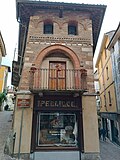 Casa Lanfranco
-
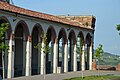 The castle and the panoramic tower
Religious architecture
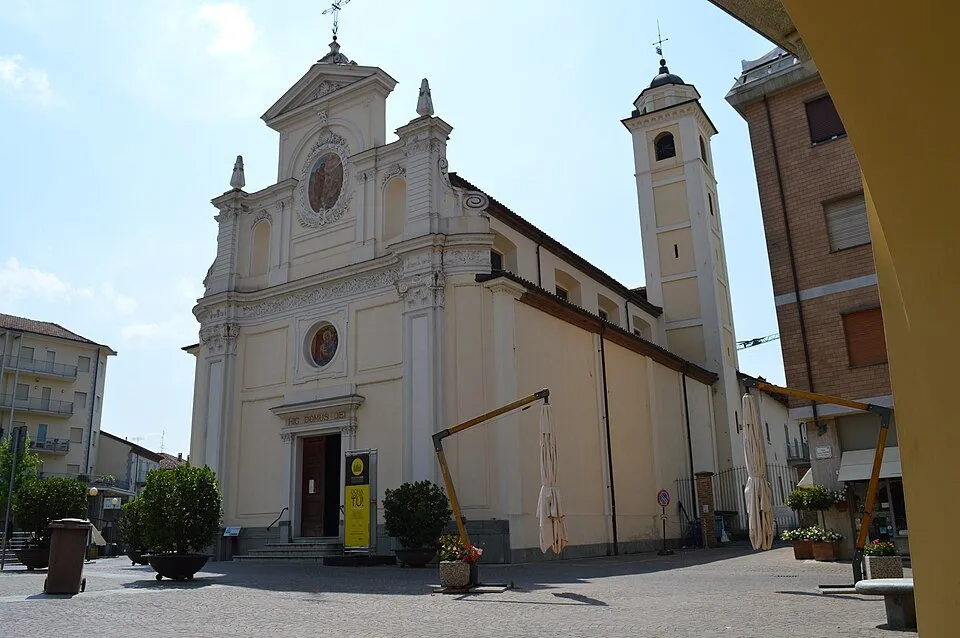
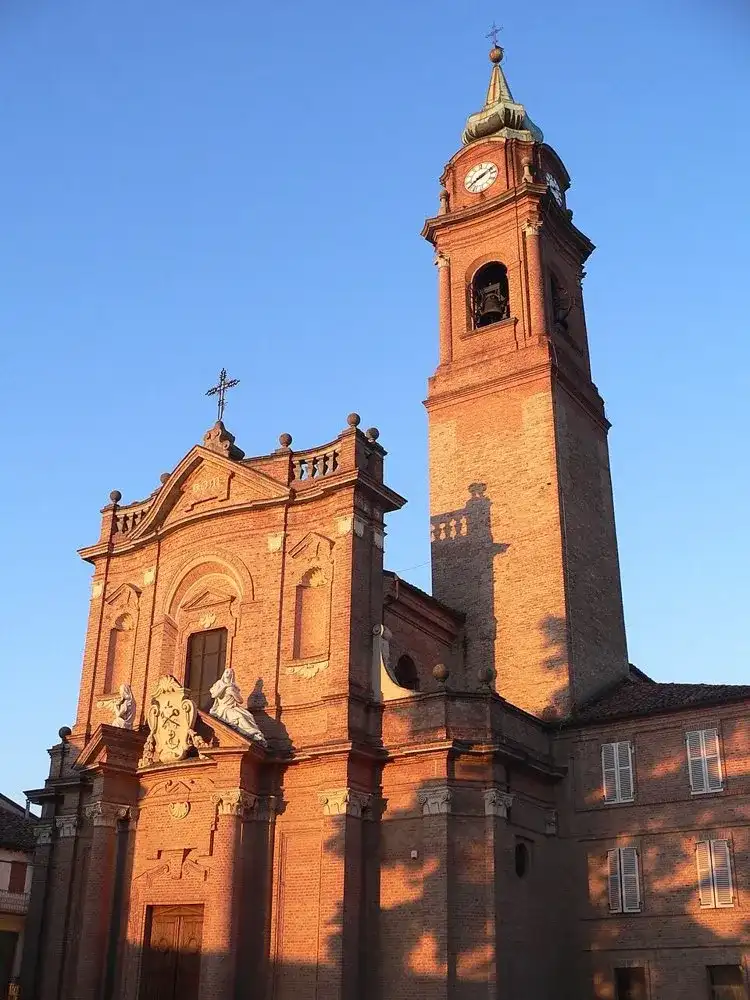
- Parish church of San Francesco (apse XIII century, facade 1932)
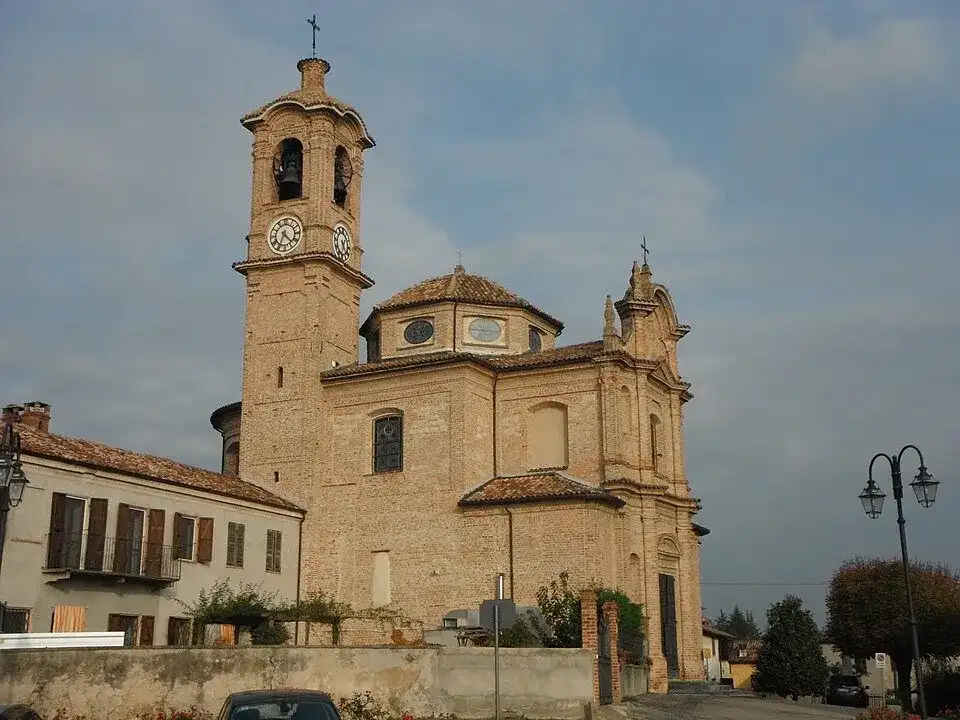
- Church of Sant'Antonio (XVII century)
- Diocesan Sanctuary of Santa Teresa di Calcutta (formerly the Church of Our Lady of Graces)
- Church of San Marco
- Church of San Giovanni
- Church of San Pietro in constraints called "La pieve" (Roman): on the external wall Roman tomb of the third century in lime, while the original is located at the civic library
- Church of Santa Maria, Santa Maria delle Peschiere (1624)
- Oratory of San Rocco (XVII century)
- Church of the village Castellino, Santa Caterina d'Alessandria
- Church of the village Patro, Santa Croce
In religious buildings there are numerous works of art belonging to the Malian manierism (Guglielmo Caccia called "il Moncalvo" and school)
Society
Demographic evolution · Foreign ethnic groups and minorities · Traditions and folkloreExplore this chapter
Demographic evolution
Inhabitants registered[9]
Foreign ethnic groups and minorities
According to ISTAT data at 31 December 2009, the resident foreign population was 288 people. The nationalities most represented by their percentage of the total population living were:
- Romania 96 (2,92%)
- Albania 93 (2,83%)
Traditions and folklore
In the hamlet of Patro remains the ancient popular tradition of building polychrome terracotta whistles called Subiet ëd Patro ("Patro's whistles") in the Piedmontese language: these objects were once used as good luck for the harvest or during important occasions.
Palio di Asti
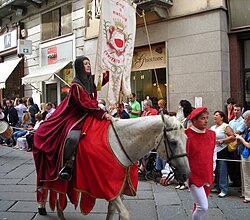
Moncalvo city participates in Palio di Asti. This is a festival that has its roots in the Middle Ages to celebrate the patron saint of Asti San Second and culminates with a race with horses mounted by fur (i.e. without saddle), which takes place every first Sunday of September in the central Alfieri square Asti. Moncalvo has been participating since 1929 and since 1967, the year of the "new" revival of the Asti event, it has won the Palio in five editions.
- 1988 and 1989 with the jockey Maurizio Farnetani, known as Bucephate, and the horse Aida (tailed)
- 1994 and 1995 with the jockey Mario Cottone known as Truce and the horse Rapsodia
- 2018 with the jockey Federico Arri said Warrior and the horse Calliope from Clodia
Culture
Museums · EventsExplore this chapter
Museums
Events
- Medieval Festival (October)
- Truffle Fair (last two Sundays in October)
- Patronal feast of San Antonino (third Sunday of May)
- Fair of the fat bue (according to Wednesday non festive of December)
- Sagra of the kitchens monferrine (third Sunday of June)
- Blue Nights - Festival twinned with the Montreux Jazz Festival OFF Section, in Piazza Carlo Alberto (July, currently suspended)
- Prose theatrical review (November-March)
- Theatre Review in dialect (October-November)
- Concerts of classical and organ music
- Antique Market (first Sunday of each month)
The Jewish community of Moncalvo
Moncalvo was the seat of a flourishing Jewish community until 1939. Only a few traces are visible today of the ghetto, which was located between the routes General Montanari and IV...Explore this chapter
Moncalvo was the seat of a flourishing Jewish community until 1939. Only a few traces are visible today of the ghetto, which was located between the General Montanari streets and IV March, and of the building in Piazza Castello that housed the synagogue. The old cemetery remains, on the way to Alessandria, with ancient tombs from the eighteenth century.[12]
Infrastructure and transport
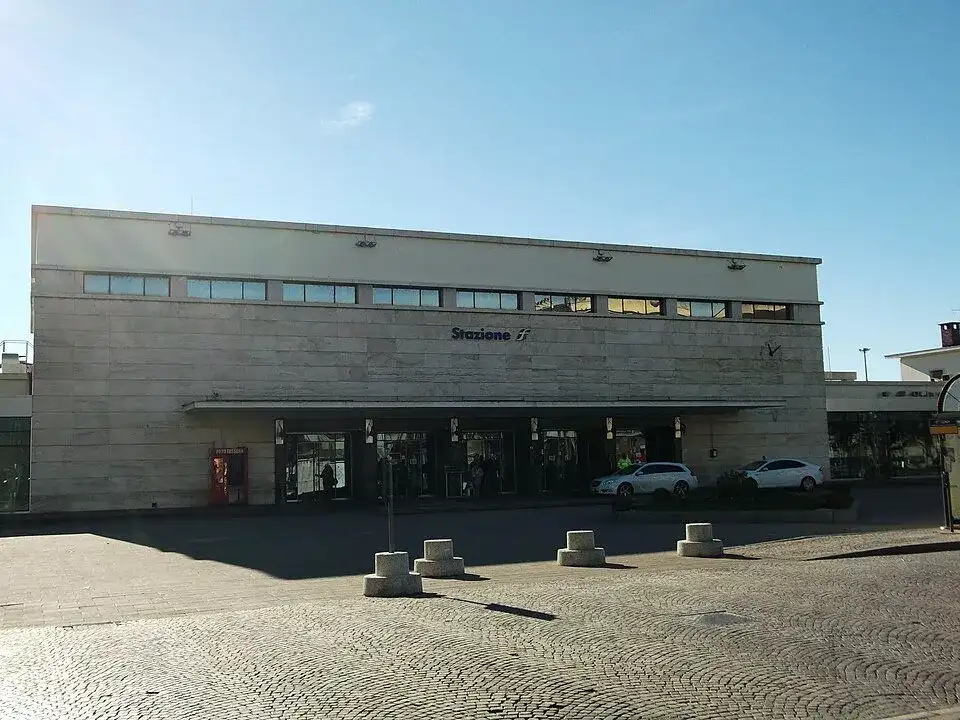
Moncalvo station is located along the Castagnole-Asti-Mortara railway, whose traffic has been suspended since 2011.Explore this chapter
Moncalvo station is located along the Castagnole-Asti-Mortara railway, whose traffic has been suspended since 2011.
Administration
TwinningExplore this chapter
Below is a table relating to the administrations that have succeeded one another in this municipality.
| Period | First citizen | Match | Load | Notes | |
|---|---|---|---|---|---|
| June 17, 1985 | June 8, 1990 | Giovanni Verrua | - | Mayor | [13] |
| June 8, 1990 | April 24, 1995 | Giovanni Verrua | civic list | Mayor | [13] |
| April 24, 1995 | June 14, 1999 | Aldo Fara | People's Party | Mayor | [13] |
| June 14, 1999 | June 14, 2004 | Aldo Fara | civic list | Mayor | [13] |
| June 14, 2004 | June 8, 2009 | Roberto Mombellardo | civic list | Mayor | [13] |
| June 8, 2009 | May 26, 2014 | Aldo Fara | civic list | Mayor | [13] |
| May 26, 2014 | May 25, 2019 | Aldo Fara | Civic list Moncalvo Project | Mayor | [13] |
| May 26, 2019 | in office | Christian Orecchi | list Civic Moncalvo living | Mayor | [13] |
Twinning
 Pacts[14]
Sport
SoccerExplore this chapter
Soccer
The city's main football team, U.S.D. Moncalvo Calcio, formerly called Moncalvese and Moncalvo Pianeta Bets, arrived to play the promotion championship.
The Moncalvo Calcio anthem was written and sung by the Rotti Squares, a band from the country whose video is available on YouTube.
Notes
Explore this chapter
- ^ to b Monthly demographic balance for the year 2026 (provisional data), up demo.istat.it, ISTAT.
- ^ Seismic classification (XLS), up risks.protezionecivile.gov.it.
- ^ Table of degrees/day of Italian Municipalities grouped by Region and Province (PDF), in Law 26 August 1993, n. 412, annex A, National Agency for New Technologies, Energy and Sustainable Economic Development, 1 March 2011, p. 151. URL consulted on 25 April 2012 (archived fromoriginal url on 1 January 2017).
- ^ Luigi Cibrario, History of the monarchy of Savoy, Volume 2, up books.google.it, 30 June 1841. Retrieved 30 June 2020.
- ^ Alberto Casella, Cadets of the Real House, feudal lords of the Pope and the Emperor, princes - bishops. The title of Prince in Piemonte (first part) (PDF), in Review of the Araldic College, year CXIX, June 2022, pp. 186-187.
- ^ Alberto Colombo, Amerigo Colombo, Estella Foa, Adua Numes, Giuseppe Polacco, Emma Sacerdote, Ines Segre, Clelia Vitale. Cf. CDEC Digital Library.
- ^ Moncalvo's Ghetto and his poem, up jstor.org. Retrieved 29/10/2025.
- ^ to b Moncalvo (Asti) 15.11.2006 concession of coat of arms and gonfalone, up Italian Government, Office of Honors and Araldic, 2006. Retrieved 31 January 2021.
- ^ Data taken from:
- Resident population of the municipalities. Censuses from 1861 to 1991 (PDF), up ebiblio.istat.it, ISTAT.
- Resident population - Time series, up exploredati.istat.it.
Please note: 2021 data refers to permanent census data as of December 31 of that year.
- ^ Moncalvo will inaugurate the museum project in the days of Expo, up ilmonferrato.it, 12 April 2015. Retrieved 1 August 2015.
- ^ Maurizio Sala, After years and investments here is the Civic Museum of Moncalvo, up lanuovaprovincia.it, 31 May 2015. Retrieved 1 August 2015 (archived fromoriginal url on 4 March 2016).
- ^ Annie Sacerdoti, Guide to Jewish Italy, Marietti, Genoa 1986.
- ^ to b c d And f g h Ministry of Interior - Department for Internal and Territorial Affairs, Member of the Local and Regional Administrations, up administrators. interno.gov.it. Retrieved 4 November 2023.
- ^ Gemellaggio between Moncalvo and Patti, up ilmonferrato.it. Retrieved 29/10/2025.
Where to stay · Moncalvo
Find stays on Booking.comStories, places and people
More about Moncalvo and the surrounding area
Follow a thread of history and see where it leads.
Jewish community of Moncalvo
Moncalvo was the seat of an important Jewish community until 1939, which has now disappeared.
Read the story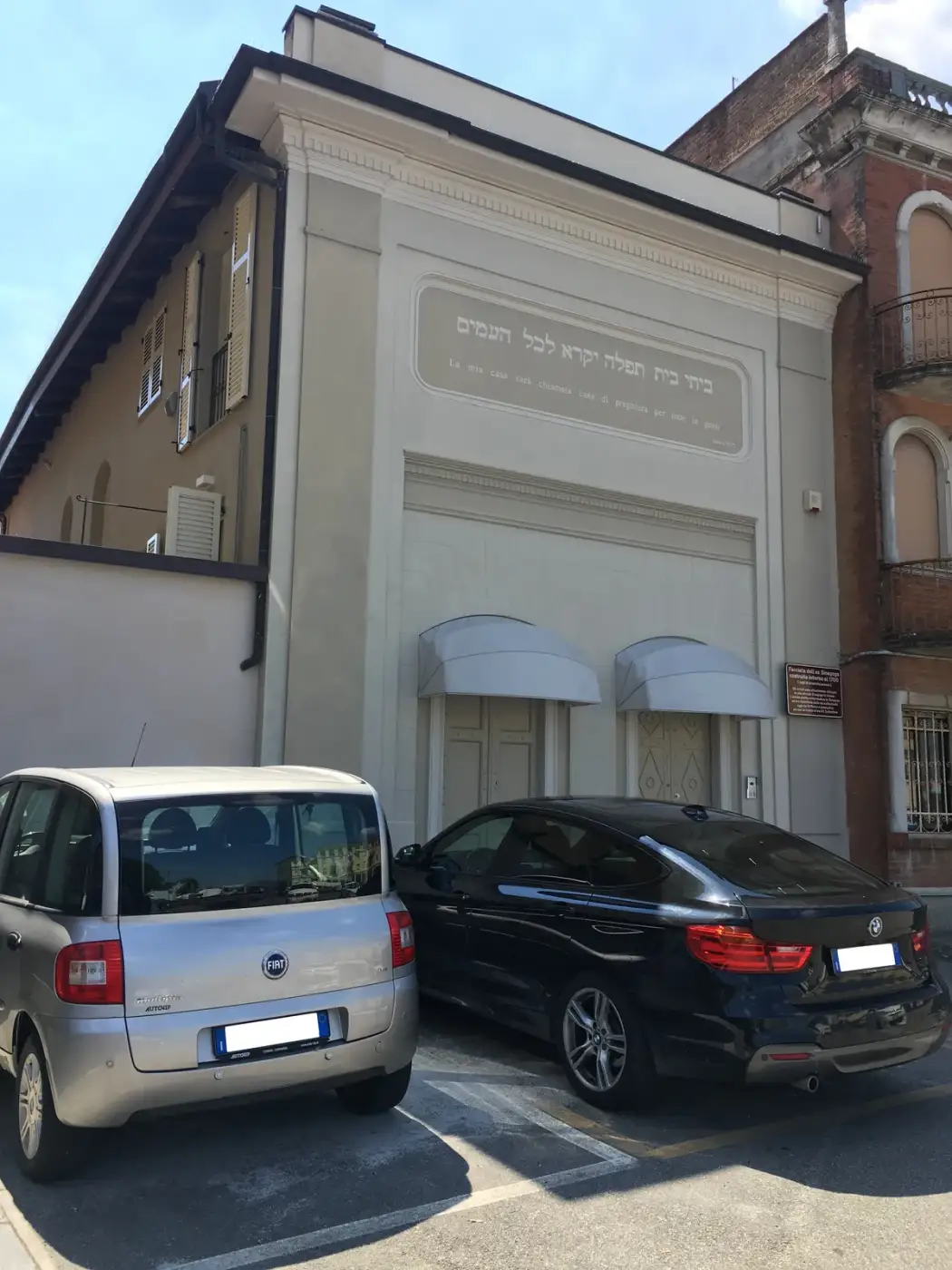 Tityrv · CC BY-SA 4.0
Synagogue of Moncalvo
When in 1732 The Moncalvo ghetto was created, the synagogue was also built. Like all ghetto synagogues, the cult building was inside the closed area, without any sign of external recognition and with internal access from the ghetto itself. With the emancipation of 1848 , the synagogue could give itself 1860 a monumental façade on the outside side of the ghetto overlooking Piazza Carlo Alberto. The façade, very simple, consists of two symmetrical portals, surmounted by a great inscription in Hebrew and Italian: "My house will be called the house of prayer for all people" (Isaiah 56,6).
Read the storyThe wine landscape
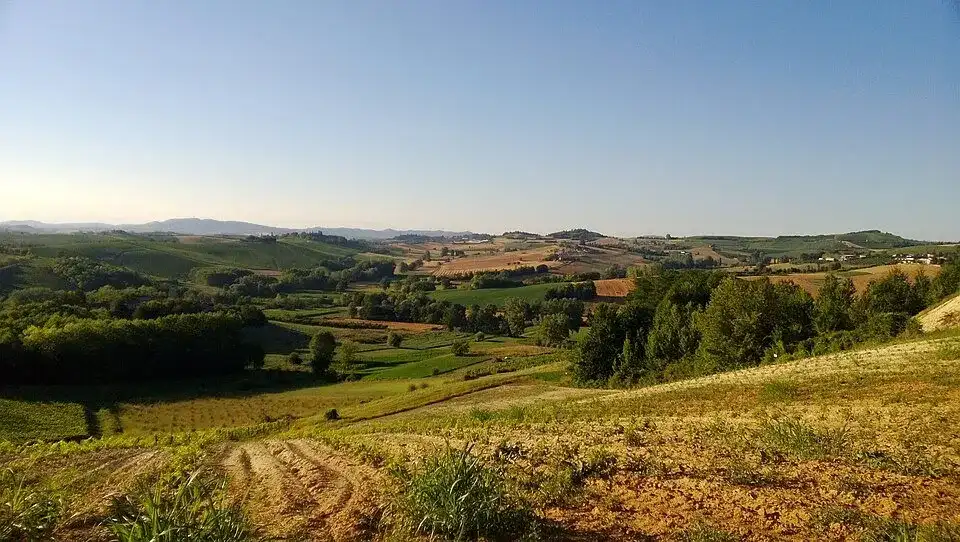
This village in wine country
Follow the link between the country, the vineyards and the neighboring territories.
The area, step by step
Trails and routes in Moncalvo


 Mountain bikeAround the starting point
Asti, Alessandria and surroundings
Ciclovia delle Terre Unesco - Alba, Asti, Casale Monferrato
 CyclingAround the starting point
Asti, Alessandria and surroundings
Tour D.O.C. del vino Grignolino
 Mountain bikeAround the starting point


 WalkingAround the starting point


 WalkingAround the starting point

 WalkingAround the starting point
 Mountain bikeAround the starting point
 Mountain bikeAround the starting point
 Mountain bikeAround the starting point
 Mountain bikeAround the starting point

 Mountain bikeAround the starting point

