- Elevation
- 264 m above sea level
- Area
- 9.56 km2
- Demonym
- Pencils
- Patron saint
- San Grato di Aosta
A closer look
Discovering Penango
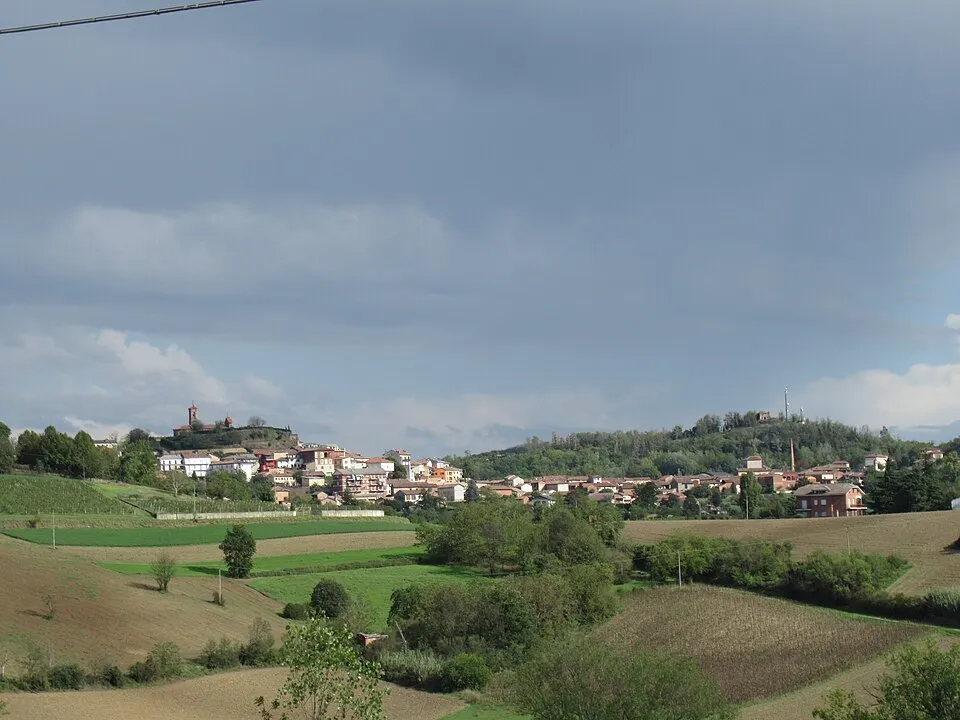
Penango (Pnan in Piedmont) is an Italian municipality of 419 inhabitants[1] from the province of Asti in the Piemonte.
History of Penango
SymbolsExplore this chapter
The origin of the name Penango, as well as all those ending in –ngo, is of obvious Lombard origin. In favor of the Lombard origin there are some findings of small necropolis, the most important of which in Santo Stefano Lunario (Santa Maria), described in 1899.
According to some authors, however, similar names would be of Cimbric derivation, since these populations, defeated by Mario at the Camp Raudii near Vercelli in 101 BC, would then disperse to the right of the Po, on the highest hills of Monferrato.
The first time that the name Penango appears in a document is 961, date of donation by Aleramo to the monastery of Grazzano of various goods, including two rustic "on site et fundo Penengi".
A few years later, in 998, it will be cited as “Peningum”.
Property, like Moncalvo, of the Bishop of Asti, then passed to the Paleologists, who in 1479 gave it in fief to Giacomo Boetto together with Cioccaro (with Santa Maria) and Patro. The Gonzaga, who took over to the Paleologists, granted him to the Boveri family in 1559.
What dependence of the most populous Moncalvo, during the 17th century also Penango suffered the damage of wars for succession in Monferrato: in 1691 he had to endure the passage of allied troops of Prince Eugene of Savoy, engaged in war against the king of France.
In 1704 Duke Ferdinando Carlo di Gonzaga, short of money to finance the military campaigns, sold in fief the three cantons of Penango, Cioccaro and Patro to the Marquis Giovanni Gualberto of Campistron: thus the administratively autonomous community was born, separated from the nearby Moncalvo, who on 8 November 1704 during the assembly of the "heads of houses" designated his representatives in the Council.
On 25 August 1708 the Community of the three cantons swore allegiance to King Vittorio Amedeo II of Savoy, to whom the Emperor of Austria had granted Monferrato after the deposition of the Duke of Gonzaga.
With the Treaty of Utrecht (1713), Monferrato is definitively confirmed to the Savoy.
In 1717 the Campistron sold its feud to the farmhouse Francesco Giovanni Tommaso Mossi, despite that the right of prelation of Moncalvo.
This infeudation was confirmed in 1769 by Tommaso Ottavio Mossi, who succeeded, last Marquis of Penango, Cioccaro and Patro, his brother, Monsignor Vincenzo Maria, archbishop of Sida.
From 1802 to 1814 he was part, with all the Piemonte, of the 27th Military Division, Department of Marengo, canton of Moncalvo. With the Restoration was still part of the province of Casale, sending Moncalvo.
Since 1859, the province of Alessandria was abolished, and it was detached in 1935 with the establishment of the new province of Asti.
In 1908, on the premises of the Moncalvese Municipal Council, the fractions of Santa Maria and Patro were segregated by Penango and aggregated to the Municipality of Moncalvo.[4]
From 1923 to 1945 it was Podestà Giovanni Zanello, replaced by liberation from socialist[5] Pietro Firato, already mayor from 1909 to 1922.[6]
From 1880 to 1966, Penango was based in an important Salesian College[7], since 1924 with missionary aspirantate functions.
The second part of the nineteenth century saw a remarkable depopulation, due to the abandonment of the fields and emigration towards Turin.
Symbols
The coat of arms of the Municipality of Penango was granted by decree of the President of the Republic of 18 July 2006.[8][9]
The gonfalone is a red and white drape.
What to see in Penango
Explore this chapter
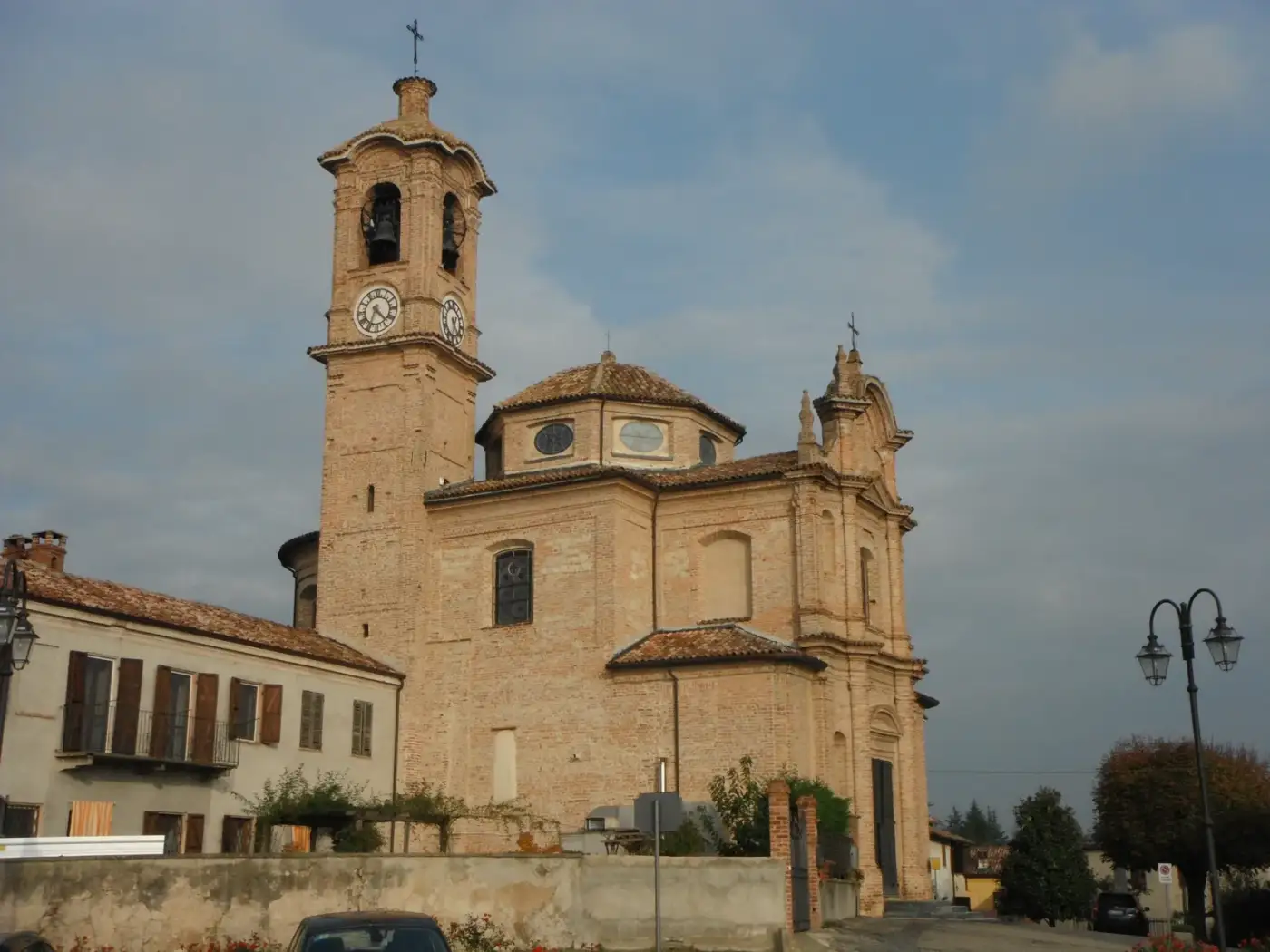
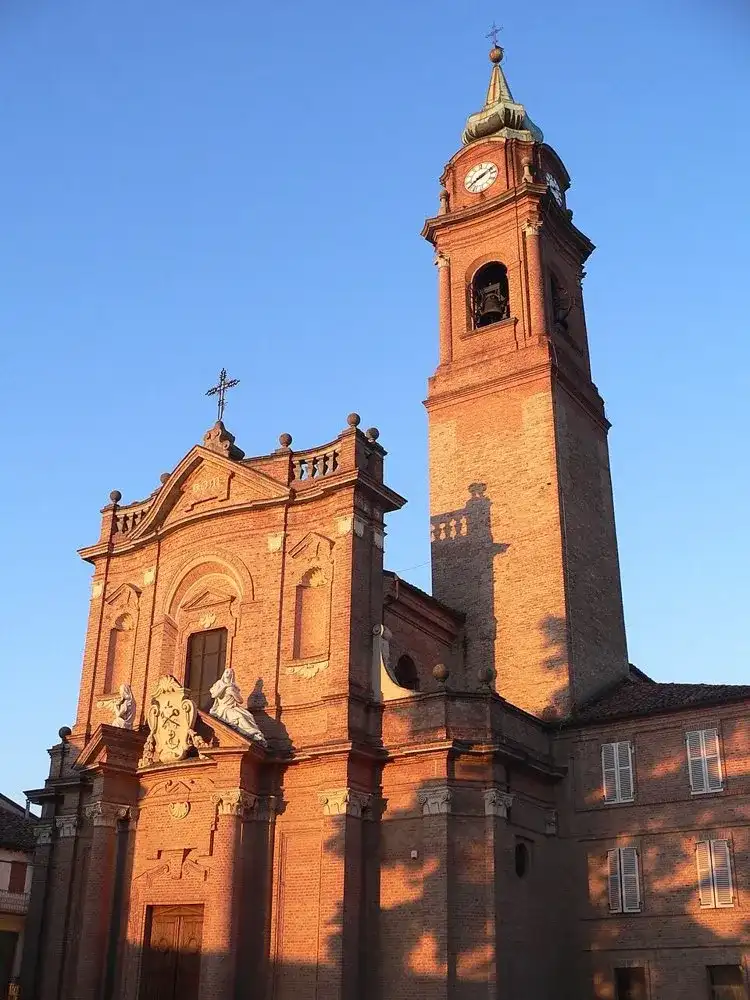
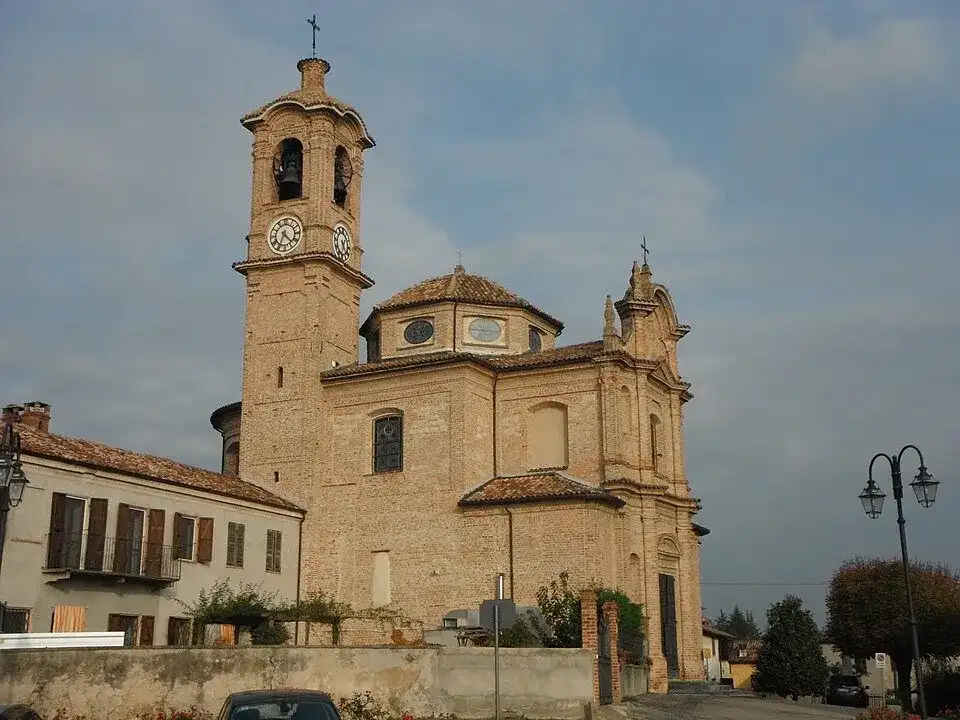
- Church of San Grato, parish church of the village, built in the eighteenth century.
Economy
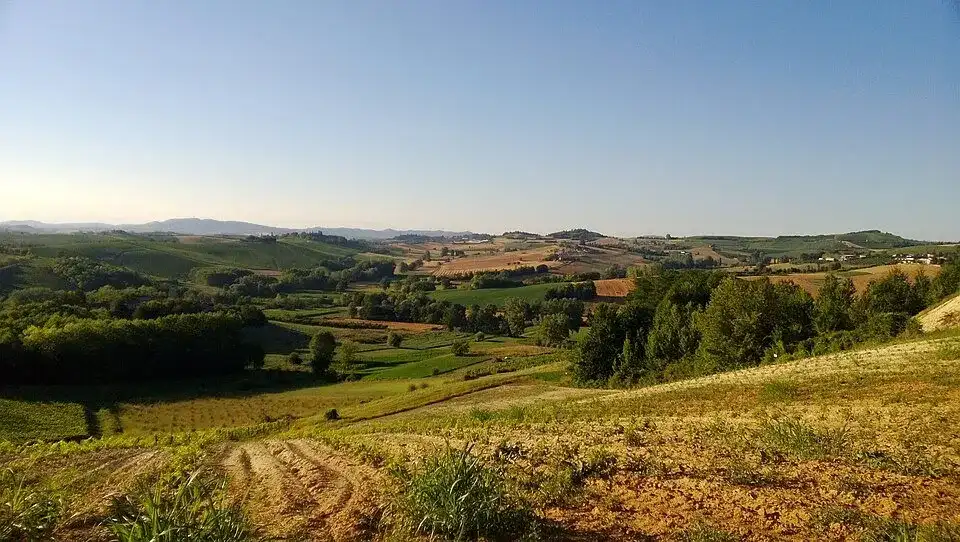
The economy of Penango is mainly based on agriculture, mostly with family-run companies, and mostly wine-making.Explore this chapter
The economy of Penango[10] It is mainly based on agriculture, mostly with family-run companies, and mostly wine-making.
As early as 1765, 60% of agricultural land was occupied by vineyards. 18.6% consisted of fields (grain crops), 15.4% in meadows and only 1% in gerbides.
The wine productions of the territory of Pharaoh are mainly the barbera d'Asti (more than half of the production), the barbera del Monferrato and the grignolino.
| Product | Registered companies | Encrypted surface (mq) | Potential production (liter) |
|---|---|---|---|
| Barbera d'Asti | 29 | 504.761 | 317.999 |
| Barbera del Monferrato | 14 | 238.050 | 166.635 |
| Grignolino d'Asti | 25 | 223.968 | 116.463 |
| Red Monferrato | 4 | 34.547 | 26.601 |
| Freisa d'Asti | 5 | 32.370 | 18.127 |
| Piemonte chardonnay | 3 | 22.081 | 17.002 |
| Piemonte courteous | 2 | 9.535 | 7.676 |
| Monferrato white | 2 | 7.886 | 6.072 |
Recently began to play a certain role tourism: the municipal territory sees the presence of two hotels and some farms[11].
Society
Demographic evolutionExplore this chapter
Demographic evolution
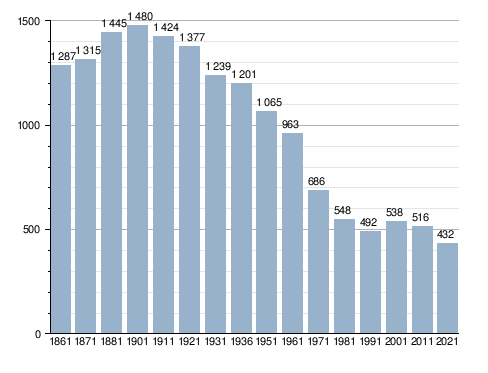
In one hundred years the resident population has reduced to about one third of that present in the year 1901.
Inhabitants registered[12]
Administration
Below is a table relating to the administrations that have succeeded one another in this municipality.Explore this chapter
Below is a table relating to the administrations that have succeeded one another in this municipality.
| Period | First citizen | Match | Load | Notes | |
|---|---|---|---|---|---|
| 6 June 1985 | May 22, 1990 | Gaetano Amante | Christian Democracy | Mayor | [13] |
| May 22, 1990 | April 24, 1995 | Gaetano Amante | Christian Democracy | Mayor | [13] |
| April 24, 1995 | June 14, 1999 | Gaetano Amante | civic list | Mayor | [13] |
| June 14, 1999 | June 14, 2004 | Gaetano Amante | civic list | Mayor | [13] |
| June 14, 2004 | June 8, 2009 | Sergio Razzano | civic list | Mayor | [13] |
| June 8, 2009 | May 26, 2014 | Sergio Razzano | civic list | Mayor | [13] |
| June 11, 2014 | May 25, 2019 | Sergio Razzano | United Civic List for the Country | Mayor | [13] |
| May 26, 2019 | in office | Patelli Cristina Enrica | Civic list "INSIEME FOR CRESCERE" | Mayor | |
Infrastructure and transport
The Penango stop is located along the Castagnole-Asti-Mortara railway, whose traffic has been suspended since 2012.Explore this chapter
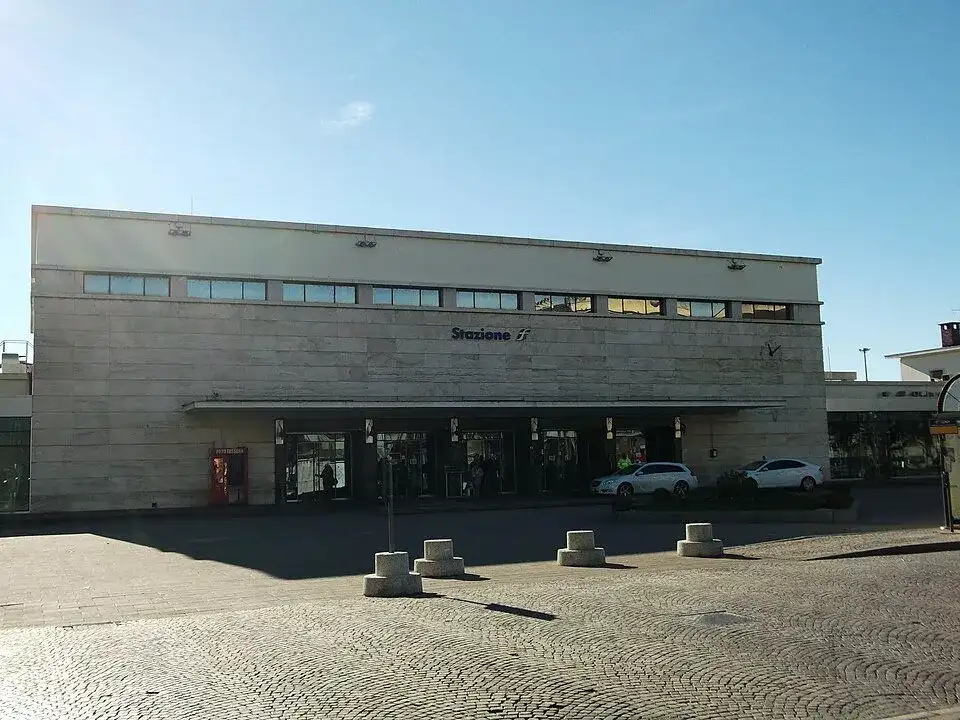
The Penango stop is located along the Castagnole-Asti-Mortara railway, whose traffic has been suspended since 2012.
Notes
Explore this chapter
- ^ to b Monthly demographic balance for the year 2026 (provisional data), up demo.istat.it, ISTAT.
- ^ Seismic classification (XLS), up risks.protezionecivile.gov.it.
- ^ Table of degrees/day of Italian Municipalities grouped by Region and Province (PDF), in Law 26 August 1993, n. 412, annex A, National Agency for New Technologies, Energy and Sustainable Economic Development, 1 March 2011, p. 151. URL consulted on 25 April 2012 (archived fromoriginal url on 1 January 2017).
- ^ Institutional site of the Municipality of Penango - Asti (archived fromoriginal url on 8 September 2011).
- ^ http://www.comune.penango.at.it/files/guerra.pdf[interrupted link]
- ^ Copy filed, up common.penango.at.it. Retrieved 28 April 2009 (archived fromoriginal url on 31 March 2010).
- ^ Exallieves of Penango, up Penguin.org. Retrieved 13 October 2011 (archived fromoriginal url on 22 September 2011).
- ^ Penango (Asti) D.P.R. 18.07.2006 concession of coat of arms and gonfalone, up Presidency.governo.it. Retrieved 17 September 2021.
- ^ DPR. 18 July 2006 (PDF).
- ^ Official website of the Municipality of Penango - Asti (archived fromoriginal url on 8 September 2011).
- ^ Farmhouses and restaurants in Penango.
- ^ Data taken from:
- Resident population of the municipalities. Censuses from 1861 to 1991 (PDF), up ebiblio.istat.it, ISTAT.
- Resident population - Time series, up exploredati.istat.it.
Please note: 2021 data refers to permanent census data as of December 31 of that year.
- ^ to b c d And f g http://amministratori.interno.it/
Where to stay · Penango
Find stays on Booking.comThe area, step by step
Trails and routes in Penango
 Mountain bikeAround the starting point


 WalkingPlaces and landscapes along the route
 Mountain bikeAround the starting point
 Mountain bikeAround the starting point
 Mountain bikeAround the starting point
 Mountain bikeAround the starting point
 Mountain bikeAround the starting point

