A closer look
Synagogue of Casale Monferrato: at a glance
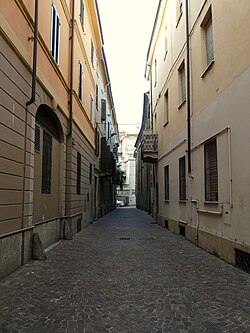
The synagogue of Casale Monferrato, of Italian rite, built in 1595[1][2], is one of the best examples of a Piedmontese baroque synagogue. It is located in Casale Monferrato in the alley Solomon Olper.
History
The synagogue was built in 1595 in the Jewish quarter of the city. The ghetto was founded in the first eighteenth century. The synagogue was separated...Explore this chapter
The synagogue was built in 1595 in the Jewish quarter of the city. The ghetto was founded in the first eighteenth century. The synagogue was separated from the road by a small court and, through reasons of self-defense and in compliance with the restrictive rules that then governed the relations between Jews and Christians,[3] there was no indication of his presence on the road itself. The synagogue originally consisted of a simple rectangular room oriented north-south. In 1720, a first enlargement of the Matroneo dates back.
When the ghetto was established in 1723, the synagogue came to be found within its borders, it did not therefore need its transfer. However, the prayer room had to be expanded to meet the needs of the increased Jewish population, which also welcomed Jews from neighbouring places, especially from San Salvatore Monferrato. In 1823 the marble floor was redone.
After the emancipation of 1848, the synagogue underwent a second radical renovation in 1866, with the further extension of the hall and the elevation of a floor to welcome the large matroneo that overlooks the room with windows closed by wooden grates.
Following the persecutions, and in general the demographic decline of the community during the twentieth century, the synagogue experienced a long period of decay until, in 1969, it was the subject of careful restoration by the Superintendence to the monuments of the Region Piemonte, which declared it a national monument.
The synagogue is occasionally open to worship at religious festivals; it mostly performs the function of museum and venue for public events related to themes of Judaism, such as conferences, concerts and cultural meetings.
The interior
In contrast to the outer space, the interior of the synagogue is richly decorated with golden paintings and stuccos, preserving the original baroque furnishings.Explore this chapter
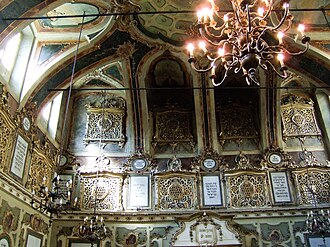
In contrast to the outer space, the interior of the synagogue is richly decorated with golden paintings and stuccos, preserving the original baroque furnishings.
The room is now presented as a large rectangular space (m 18 x 9 x 9) illuminated by 14 windows, seven for each larger side, frescoed with bright colors. The walls are covered with inscriptions in Hebrew, largely quoted by the Bible but also commemorative inscriptions in memory of the numerous interventions of remaking of the temple and the main events fausted in the life of the community: salvation from the sieges of 1629 and 1656 and especially emancipation of 1848 (the only inscription to be bilingual, Italian and Jewish)[4].
There.aron 1765 (enriched in 1787) and tevah are part of the ancient furnishings, while the wooden remaking was added to the nineteenth century.
The Jewish Museum
On the first floor, a museum has been set up in the premises of access to the marvellous area, which houses valuable findings such as the tables of law, gilded wood and...Explore this chapter
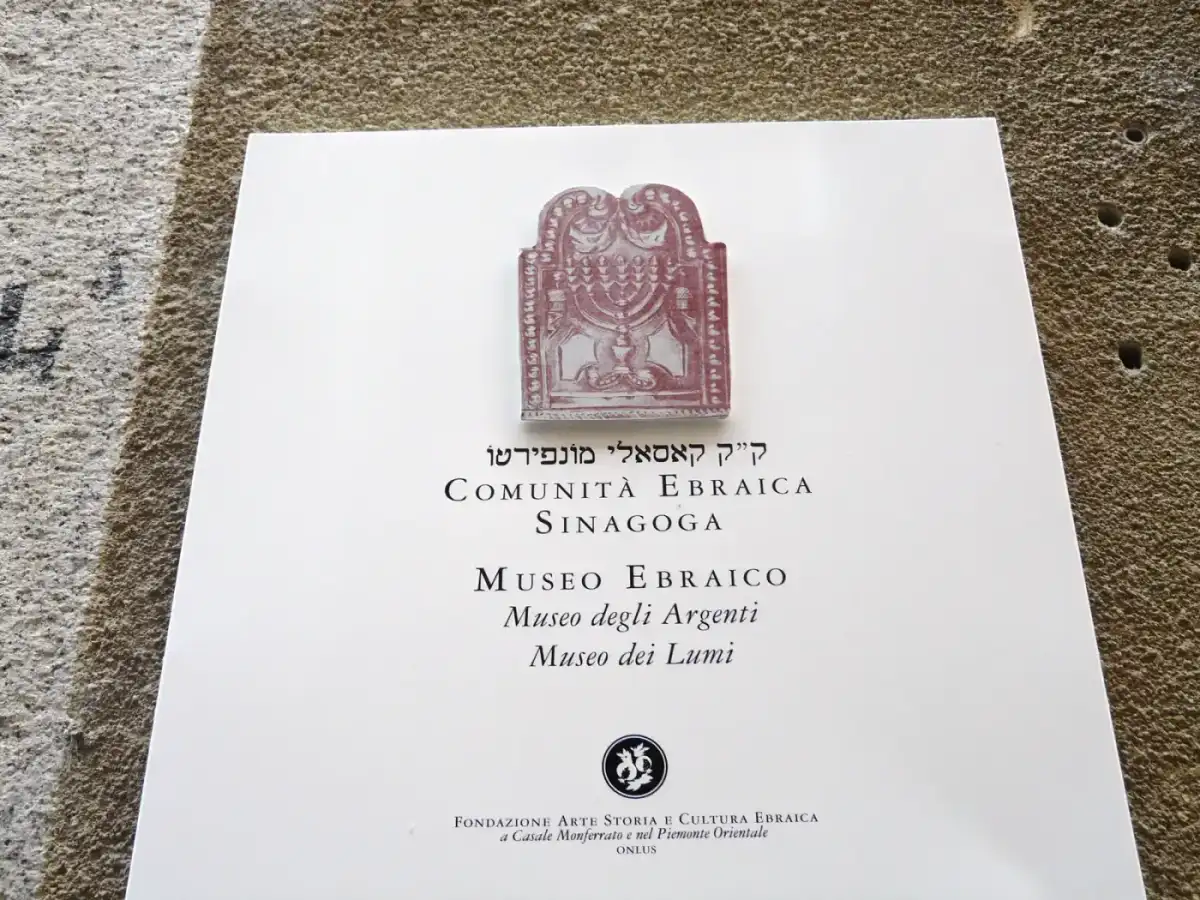
In the premises of access to the matroneo, a museum has been set up on the first floor that houses valuable finds such as Tables of the Law, in gilded wood and dating back to the 18th century, numerous I'm sorry. (terminals for rolls of the Law) e atarot (crowns for the scrolls of the Law) embossed, chiselled or in silver filigree. On the second floor the library has been rearranged, with ancient manuscripts and prayer books.
Notes
Explore this chapter
Bibliography
Explore this chapter
- Annie Sacerdoti, Guide to Jewish Art, Venice, Marsilio, 2003, ISBN 9788831780926.
Continue your journey