A closer look
Civic Museum (Casale Monferrato): at a glance
The Civic Museum of the Casale Monferrato is located in the ancient Augustinian convent of Santa Croce, frescoed at the beginning of the 17th century by Guglielmo Caccia said the Moncalvo (Montabone 1568-Moncalvo 1625). In the twenty-four rooms there are over five hundred works divided into the Pinacoteca, Leonardo Bistolfi Gipsoteca and Sala Vidua sectors.
Pinacoteca
The Art Gallery, located on the first floor, opens onto the 18th century gallery, a particularly happy period for the arts in the city, represented by Pietro Francesco Guala...Explore this chapter
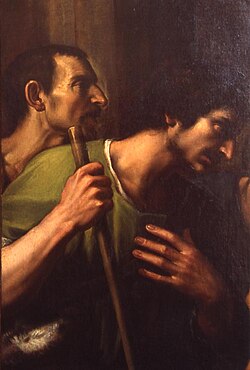
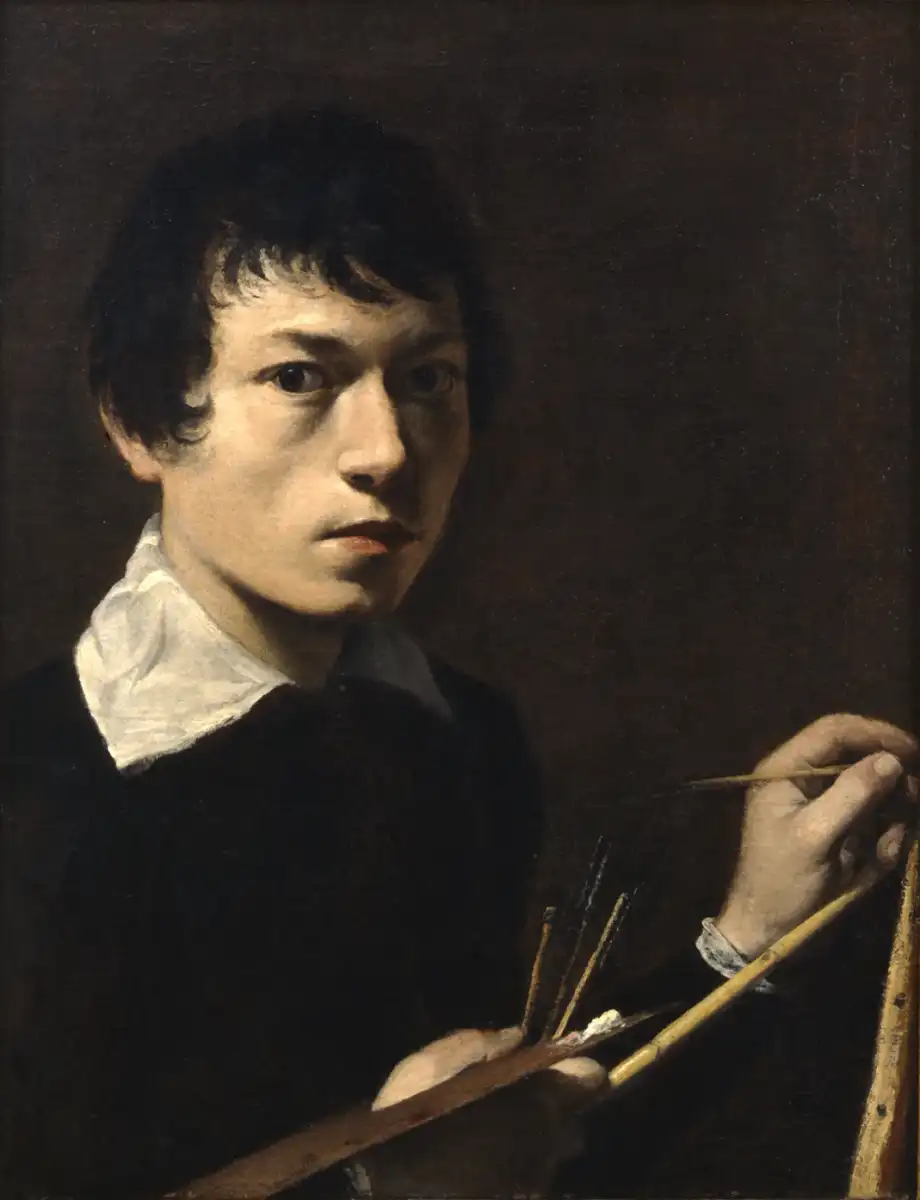
The Art Gallery, located on the first floor, opens onto the 18th century gallery, a particularly happy period for the arts in the city, represented by Pietro Francesco Guala (Casale M. 1698 - Milan 1757), important artist of the first half of the century: on the walls The Battle of the Albigesi And The Judgement of Solomon. In the following rooms the visitor encounters the large polyptych on a gold background from the Valencian area from the end of the fourteenth century, paintings by Flemish painters and busts of Roman emperors collected by the Casalese banker Giuseppe Raffaele Vitta, founder of the Credito Lionese. The chronological journey begins from the loggia: the marble and terracotta bas-reliefs, the panels painted with portraits and heraldic symbols attributed to Lombard workers, the banner of Martino Spanzotti (Casale M. 1450-1526?) are representative of the culture that flourished in Casale, the ancient capital of Marchesato del Monferrato, at the end of the fifteenth century. Following are the canvases from Guglielmo Caccia's workshop, including a San Rocco of 1608. A large nucleus of seventeenth-century paintings includes, in addition to works of Flemish, Lombard, Ligurian,Self-portrait by Niccolò Musso (Casale M.1585-1622)Adoration of the shepherds by Giuseppe Vermiglio (Milan?1587-post 1635), Santa Caterina by Francesco Cairo (Milan 1607-1665), and a Maffeo banner from Verona (Verona 1576-Venezia 1618) dated 1612. At the beginning of the eighteenth century it is to be traced back to the statue of the group The Virgin and Saint Joseph of Cassina's lombarda workshop. In the rooms of the nineteenth century there are works by Eleuterio Pagliano (Casale M.1826–Milano 1903), depicting San Luigi Gonzaga, Portrait of Giuseppe Garibaldi and busts performed by the Ligurian Santo Varni and the Lombard Odoardo Tabacchi. To complete the exhibition of painting in the late 19th century was added the acquisition in deposit of fifteen paintings by Angelo Morbelli (Alessandria 1853-Milano 1919) that, together with the sculptures of Leonardo Bistolfi, allow the visitor to enjoy the works of two great protagonists of Italian art.
Tangents to the main path open some rooms with themed collections: in Levi Graziadi rooms are preserved wooden statues including Saint James, the work of an anonymous Spanish sculptor from the beginning of the 13th century and from the French workshops of the 15th century come the Pleureuse And The Deposition from the Cross. A group of ceramics from the central Italian area are also part of the same collection. A jar from the mid-16th century should be assigned to Orazio Fontana from Urbino.
The room dedicated to Noemi Gabrielli, former Superintendent to the galleries of Piemonte, encloses works in deposit from the territory Monferrino: wooden sculptures, tablets attributed to Aimo Volpi (Casale M., news from 1491 to 1524), collaborator of Martino Spanzotti, canvases of Guala.
Gipso
On the ground floor of the Civic Museum is the Gipsoteca Leonardo Bistolfi . Constituted by five rooms, it offers over one hundred and seventy works between terracotta, drawings, plastiline,...Explore this chapter
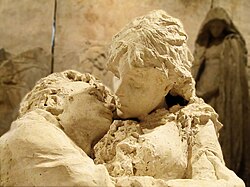
On the ground floor of the Civic Museum is the Gipsoteca Leonardo Bistolfi. Composed of five rooms, it offers over one hundred and seventy works among terracotta, drawings, plastilines, sketches and models in plaster, marble and bronze; sculptures that come mostly from the collection of the house banker Camillo Venesio and from donations and loans of heirs of the sculptor. The Gipsoteca also offers the opportunity to understand the various phases of artistic process, from the first intuition expressed in clay, to the next chalk sketch, to the definitive model that realized the final idea of the sculptor. The model is fundamental, since it constitutes the definitive realization of the work before the marble or bronze transposition.
The works exhibited in Gipsoteca document the long artistic path of Bistolfi, from the first true taste to the influences of Milanese Scapigliatura to the definition of the personal adherence to Simbolism and Liberty: examples The Boaro (1885), the Lovers (1883), The sphinx (1890), The pain comforted by memories (1892), The funeral of a virgin (1899), Beauty freed from matter (1899) created for the Segantini Museum in Saint Moritz. The small commemorative bas-reliefs are of great intensity, defined by subtle modeling and characterized by the fluidity and sinuosity of the line: Plate for Cassa di Risparmio di Cuneo (1905), Targa for Cesare Vivante (1907), and the reliefs for the Monument to Garibaldi by Sanremo (1907). The great monuments built in the early 20th century offer imposing and hieratic female figures such as Homeland, The desire of the distant shore (memorial monument to Zanardelli), Towards the light. Among the latest works, at the conclusion of an extraordinary artistic and human story, the Monument to Carducci of Bologna and the equestrian statue in Garibaldi of Savona that allow to glimpse a new artistic language from dry, dense, compact forms.
New Bistolfi Collection
In 2022 the new Leonardo Bistolfi Collection was inaugurated, consisting of about 250 sculptural works, 300 drawings, 50 painted tablets and 35 notebooks with sketches and notes...Explore this chapter
In 2022 the new Leonardo Bistolfi Collection was inaugurated, consisting of about 250 sculptural works, 300 drawings, 50 painted tablets and 35 notebooks with sketches and notes donated by the artist's heirs, which enrich the collection already present in Gipsoteca.
Vidua Collection
A hypogea room finally hosts the extraordinary ethnographic collection of Count Carlo Vidua, a home of birth, which since 1818, almost uninterruptedly, will travel for the five...Explore this chapter
A hypogea room finally hosts the extraordinary ethnographic collection of Count Carlo Vidua, a native of birth, which from 1818, almost uninterruptedly, will travel for the five continents, dying for an accident, in 1830, in Indonesia. Donated by Countess Clara Leardi in 1854, this collection constitutes the initial collector's nucleus of the Civic Museum and preserves objects, books, paintings and artefacts from the long pilgrimages of Vidua that are to be considered a unicum on the Piedmontese territory and are placed at national and international level for rarity and heterogeneity of materials.
Continue your journey