- Elevation
- 276 m above sea level
- Area
- 8,13 km2
- Demonym
- fontanilesi
- Patron saint
- Saint John the Baptist
A closer look
Discovering Fontanile
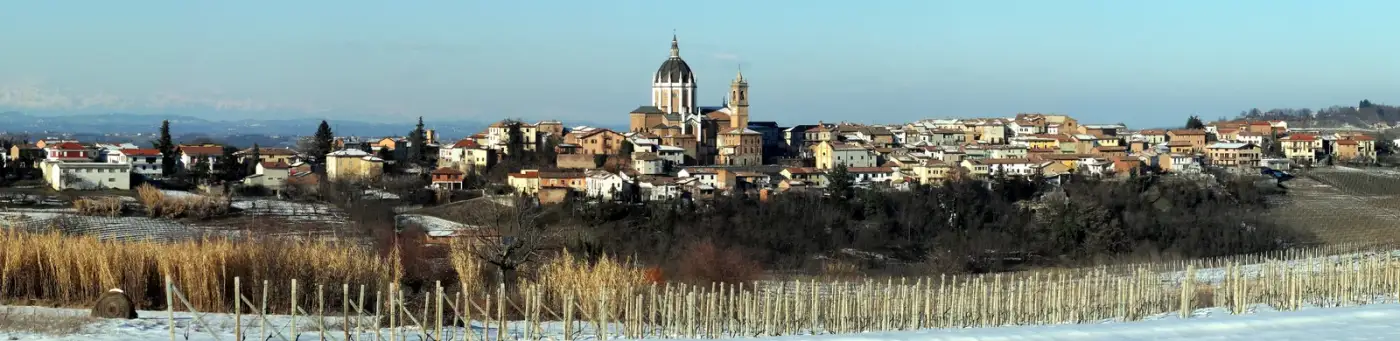
Fontanile (Fontanij in Piedmont) is an Italian municipality of 475 inhabitants[1] from the province of Asti in the Piemonte.
History of Fontanile
The construction of the Villa · The medieval bass and the sixteenth century · SymbolsExplore this chapter
Historians believe that the country could have been founded between the 4th and 5th centuries, when the inhabitants of the valleys were forced to withdraw high places to protect themselves from barbaric invasions.[4] The name of the country first appears in a document dating back to 1042, now preserved at the State Archives of Turin, where it was cited as Fontinalis. It is instead found between the 12th and 12th centuries Fontanelli and in a document Fontanis, but the name is starting to be used locally Fontanilis,[4] which initially appears in the statutes of Mombaruzzo of 1337 and later in other notary acts. In the passage from Latin to Italian to Fontanilis the present Fontanile has been replaced, meaning "land rich in spring waters".
The construction of the Villa
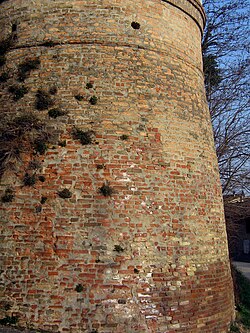
In the first half of the 10th century the village was plundered by Saracens and later, from 950, began the construction of a fortified village that included a moat and two orders of defensive walls. The outer order was rectangular and had four defensive towers, which bear the name of Fontanile's most important families. These walls were also equipped with two doors with as many drawbridges: Porta Soprana in Nord-Est and Porta San Giovanni Battista in South-West. Among the towers initially present, only that Ansaldi still exists today and is well preserved, while of those Mussano, Ferrario and Fulco has been traced over the centuries. Next to the Ferrario tower there was a mighty bastion with a square tower: in the fifteenth century it was formed by two floors used as accommodation for soldiers and a lavish terrace, while the prisons were located in the underground. The inner walls contained a neighborhood called "Villa" in the notary acts of time.
The fortified village was divided into three parts: two side parts called Airali and a central. The central part was actually a three-storey house that stood on the current St. John the Baptist square.
The medieval bass and the sixteenth century
From the middle of the 10th century Fontanile was part of Marquisate of Incisa that, from the end of the 11th century became part of the fief of the Marquis of Monferrato. Towards the beginning of 1300 Fontanile and five other countries (Mombaruzzo, Castelletto Molina, Quaranti, Maranzana and Casal Dagna) began to recognize the right of self-management from the Marquis. This autonomy was recognized in Statutes of 1337, documents governing the civil life of each community.[5] The Consortium was dissolved at the beginning of the fifteenth century, but its Statutes they continued to be used until 1532. On 23 March 1435 Fontanile passed to the Sabaudo State,[6] under King Amedeus VIII, but in 1437 he returned to be part of the Marchesato del Monferrato. In 1532 the Marquis Gian Giorgio of Monferrato approved new Statutes who replaced those of 1337.
On 18 February 1557, at the disposal of the Duchess of Mantua Margherita Paleologa, the Senate, judiciary of Marquis and later the Duchy of Monferrato was transferred from Acqui to Fontanile. In 1559 the same Duchess granted the possibility to keep the weekly market on Thursday.
In 1558, Count Michele Peretti became the ruler of the Marquisate d'Incisa. He attempted to impose old feudal rights and thus attracted the antipathy of the population that the Fontanilesi asked for help to Vincenzo I Gonzaga. The Duke of Mantua, in exchange for a payment of two thousand crosons, killed the Marquis Peretti and replaced him with the Marquises Bevilacqua in 1606.
Symbols
The coat of arms and gonfalone were granted by decree of the President of the Republic of 5 March 1973.[7]
The gonfalone is a drape party of white and blue.
Society
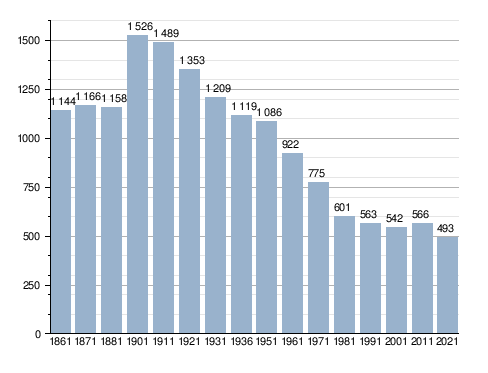
Demographic evolutionExplore this chapter
Demographic evolution
Inhabitants registered[9]
Administration
Below is a table relating to the administrations that have succeeded one another in this municipality.Explore this chapter
Below is a table relating to the administrations that have succeeded one another in this municipality.
| Period | First citizen | Match | Load | Notes | |
|---|---|---|---|---|---|
| 6 June 1985 | May 20, 1990 | Livio Berruti | Christian Democracy | Mayor | [10] |
| May 20, 1990 | April 24, 1995 | Livio Berruti | Christian Democracy | Mayor | [10] |
| April 24, 1995 | June 14, 1999 | Livio Berruti | People's Party | Mayor | [10] |
| June 14, 1999 | June 14, 2004 | Livio Berruti | Lista civica | Mayor | [10] |
| June 14, 2004 | June 8, 2009 | Alberto Pesce | Lista civica | Mayor | [10] |
| June 8, 2009 | May 26, 2014 | Alberto Pesce | Lista civica Progetto Fontanile | Mayor | [10] |
| May 26, 2014 | May 26, 2019 | Sandra Balbo | Lista civica Noi con voi | Mayor | [10] |
| May 26, 2019 | in office | Sandra Balbo | Lista civica Noi con voi per Fontanile | Mayor | [10] |
Notes
Explore this chapter
- ^ to b Monthly demographic balance for the year 2026 (provisional data), up demo.istat.it, ISTAT.
- ^ Seismic classification (XLS), up risks.protezionecivile.gov.it.
- ^ Table of degrees/day of Italian Municipalities grouped by Region and Province (PDF), in Law 26 August 1993, n. 412, annex A, National Agency for New Technologies, Energy and Sustainable Economic Development, 1 March 2011, p. 151. URL consulted on 25 April 2012 (archived fromoriginal url on 1 January 2017).
- ^ to b See Fontanile, historical events and traditions by Giuseppe Berta and Silvano Palotto, p. 9-10.
- ^ See The Statutes of the Municipality and Men of Mombaruzzo in the year 1337 edited by Vittorio Ferraris.
- ^ The document attests this is kept at the State Archives of Turin.
- ^ Fontanile, up Heraldic office - Municipal files, Central State Archives. Retrieved 18 May 2023 (filed on 18 May 2023).
- ^ Piedmontese civic coat of arms, vol. I, Regional Council of Piemonte, 2016, p. 219, ISBN 978-88-96074-98-5.
- ^ Data taken from:
- Resident population of the municipalities. Censuses from 1861 to 1991 (PDF), up ebiblio.istat.it, ISTAT.
- Resident population - Time series, up exploredati.istat.it.
Please note: 2021 data refers to permanent census data as of December 31 of that year.
- ^ to b c d And f g h http://amministratori.interno.it/
Bibliography
Explore this chapter
- Giuseppe Berta; Silvano Palotto. Fontanile, historical events - traditions.
- Giuseppe Berta. History of the Monumental Church of Fontanile. Ed. Golinelli, 1991.
- Giuseppe Berta. Tales and traditions of Fontanilesi.
- Giovanni Bremio. Chronicles Monferrine. Alessandria, 1991.
- Vittorio Ferraris. Statues of the Municipality and men of Mombaruzzo in the year 1337. Ed. Dell'Orso, 1991
- Gian Matteo Mecio. Historical notes about Castelletto Molina. 1925
- Domenico Testa. History of Monferrato. 2nd ed. 1982.
- Bruno Rabachino. The Campanile of Fontanile 1768-1772. 2005
Where to stay · Fontanile
Find stays on Booking.comThe area, step by step
Trails and routes in Fontanile

Asti, Alessandria and surroundings
The Wine and Flavor Route · Aromatici · Castelnuovo Bormida–San Rocco
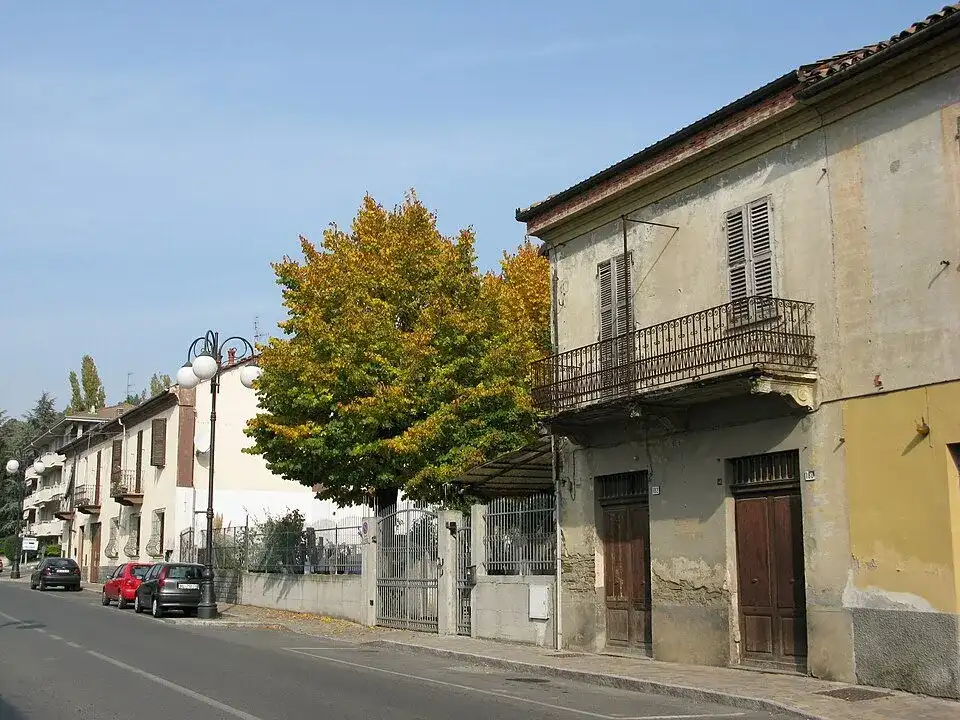 CyclingAround the starting point
Asti, Alessandria and surroundings
Acqui-Alice-Mombaruzzo-Casalotto-Fontanile-Quaranti-Acqui
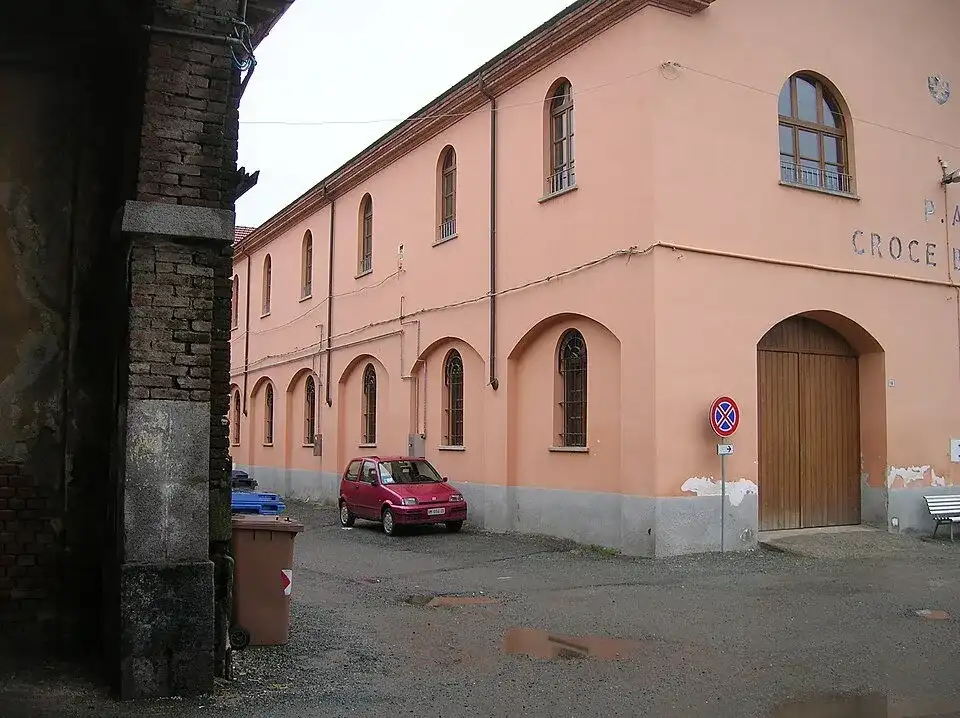 CyclingAround the starting point
Asti, Alessandria and surroundings
Acqui and the Brachetto lands
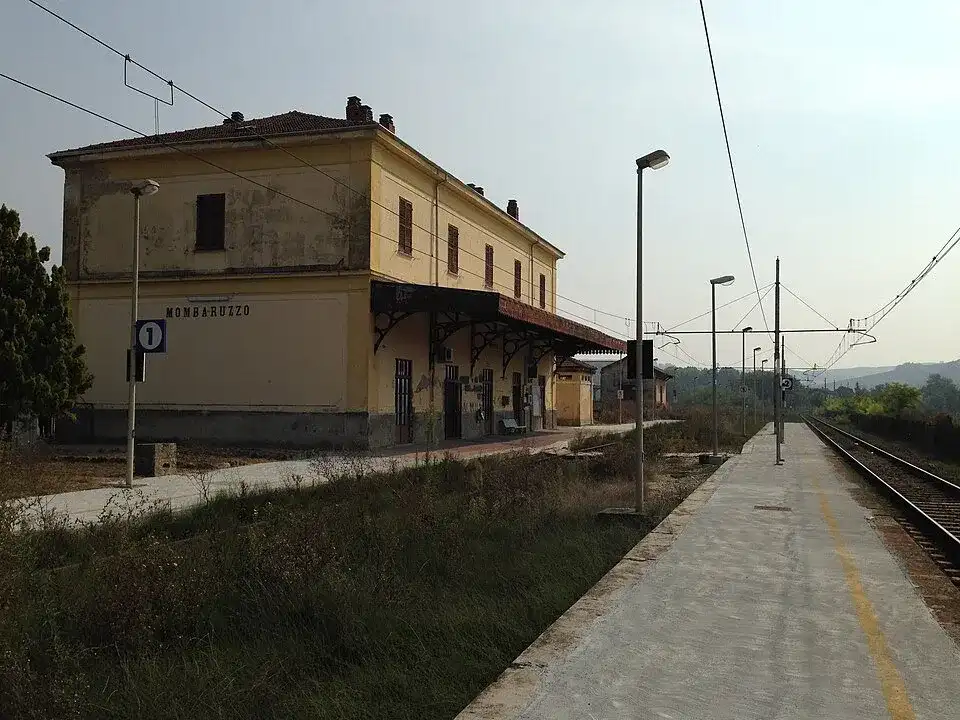 WalkingAround the starting point
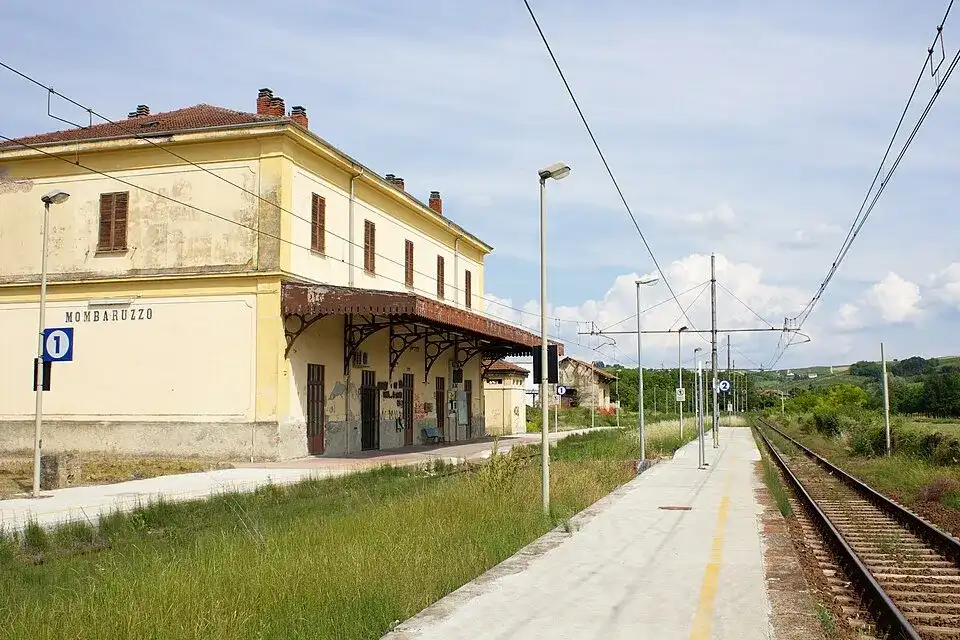 WalkingAround the starting point
 WalkingAround the starting point
