A closer look
Roberti of Castelvero: at a glance
The family Roberti was a noble Piedmontese house. Original from San Damiano d'Asti, moved to Acqui Terme in the second half of the 16th century[2]between six and eighteenth century he was the head of one of the two noble factions of the city[3]. He had the titles of count of Castel Boglione and consignor of Carpeneto[4][5] in the Piemonte; a branch, generated by the deputy Edmondo, had the marquisates of San Tommaso and San Saverio and the county of Monteleone in Sardinia.
He gave the Sabaudo State a Viceroy of Sardinia, Giuseppe Maria Roberti; among other prominent personalities are General Emilio and in more recent times the pioneer of aviation Giovanni Francesco Roberti.
History
Origins and transfer to Monferrato · Sections XVII-XVIII · XIX-XX centuriesExplore this chapter
Origins and transfer to Monferrato
The family is documented in San Damiano d'Asti, where various members held the position of Secretary of the Municipality[6], at least since 1381, the year in which Biagio Roberti was deputy of the community for the homage to the Marquis of Monferrato[7]. It is not known where the Robertis lived before 1275, the year San Damiano was founded: a descent from the family of the same name present in Alessandria from the foundation[8], whose weapons they carried quartered, while another tradition has it that the family originally came from Valsesia[9]. Certainly the Robertis were already in high status before the transfer to Acqui Terme, as a local chronicler also testifies half a century later:
(Luca Probo Blesi, Acquire ancient city of Monferrato, Tortona, Nicolò Viola, 1614, p. 107)
In the second half of the sixteenth century, the family orientated its interests onHigh quality Monferrato, remaining for a certain period still linked to the place of origin: Giacomo Roberti purchased parts of the fief of Carpeneto in the aqueous in 1574 and 1576 and was invested on 21 August 1578[10], maintaining at the same time his residence in San Damiano like his nephew Giovanni Battista, doctor of law, who was councilor of the municipality, magistrate of Incisa Scapaccino from 1570 and Podestà and Judge of Nizza Monferrato from 1577 and was the father of Vincenzo, mayor of San Damiano d'Asti at least from 1613 to 1619[11]. Bartolomeo Roberti, Giovanni Battista's older brother, was the author of the family's transfer to Acqui Terme, where he settled in 1564[12]. In 1567 it was ascribed to the patriciate of the municipality and around that date the construction of the building began family palace in Piazza Addolorata, which his descendants lived for three centuries. In 1596 he received the investment of Carpeneto[13] and in 1603 he ceded to the Duke of Mantua his rights on the fief, permuting them with all the feudal property of the Duke in the territory of Acqui, including the lands and the rights of mottura of the six mills linked to the Castle of the Paleologi[14][15].
Sections XVII-XVIII
Robert, son of Bartholomew, began his military career in 1602, when he was appointed captain of the militias Terzo by Count Guido Avellani his relative, President of the Senate of Monferrato[16]. In 1613 he was appointed aide-de-camp to the Governor of Nice and Acqui; in 1624 he was appointed captain of the Duke's Cavalry with licenses dated 14 November. He participated in the War of Succession of Monferrato, in which he was taken prisoner, and died of the plague in 1631[17].
His son John the Baptist (1606-1658) was an illustrious jurisprudence and diplomat, and he greatly contributed to consolidating the fortunes of the family. He studied law at the University of Mantua, where he was General Councillor of Monferrato and Reformation of studies and where he joined in 1627[18]. Having survived the Manzoni plague, the only one of his generation, in 1632 he married Angela Maria Secco Bottino, daughter of Captain Giovanni Pietro Antonio, who brought him the feudal farms Bianca and Cerreto, of more than 400 days, and numerous other landed properties as her dowry.[19][20]. In 1634 he came to prominence by soliciting from the Senate Casale Monferrato an investigation against the Municipal Council of Acqui Terme, on behalf of the population of the municipality[21]. At the height of his consideration, in 1650 he was sent by the Duke of Mantua to Vienna to arrange the marriage between his sister Eleonora Gonzaga-Nevers, and Emperor Ferdinand III. He was the Duke's Resident Minister in Genoa from 1651 to 1653, the year in which he was sent to the Diet of Regensburg to mediate conflicts between his lord and the Duke of Savoy regarding the investiture of part of the Monferrato. With Letters Patent dated 26 July 1657 he was appointed Senator of Casale Monferrato in reward "of his high servants lent to the state"[22]. He died the following year, in 1658.
Francesco Maria (1639-1694), his son, was captain and then general commander of the militias of Acqui, in 1664 he acquired the rustic fief of Barbato and in 1680 he was invested in the feud of Castel Boglione, purchased in the same year[23]. At the end of the century, thanks to the political weight that his family had long exercised in the city, he placed himself at the head of one of the two noble factions, competing with that of the Scati. To escape a conviction for murder he moved to the territories of the Savoy, in whose service he was Captain Commander of the cavalry company "Gendarmi del Monferrato" from 1690 to 1691. Count Giovanni Battista (1663-1733), his son, participated at a very young age in the conspiracy hatched by Abbot Ortensio Faà of Bruno against the Moscheni marquises in 1686[24][25]; he was sentenced to death in contumacia and subsequently pardoned. With a trajectory similar to that of his father, fleeing justice he served the Empire and was appointed captain in the armies of Prince Eugene. His brother Guido Fabrizio (1681-1741) was Gentiluomo of Camera del Duca di Mantova.
With the escape from Monferrato of the two counts Roberti, the rival Scati had acquired control of the Municipal Council of Acqui Terme. When the city passed under the Savoys in 1708, the Scatis proved hostile to Vittorio Amedeo II who, in order to maintain control, placed numerous members of the Roberti faction in key positions in the Municipality. The feud between the two families, which gradually lost strength during the eighteenth century, officially ended in 1807 with the marriage between Silvia Maria Orsola Roberti and the Marquis Luigi Scati.
In the second half of the eighteenth century, Count Francesco Spirito (1755-1819), Lieutenant Colonel of Infantry[26] and Councillor of Acqui in 1773, 1781 and 1784, and Giuseppe Antonio (1727-1791), also he lieutenant infantry colonel, councillor in 1773 and then Mayor of Acqui from 1779 to 1781.
XIX-XX centuries
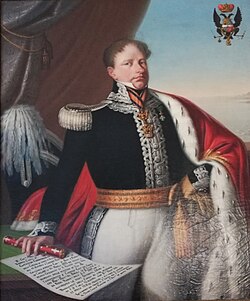
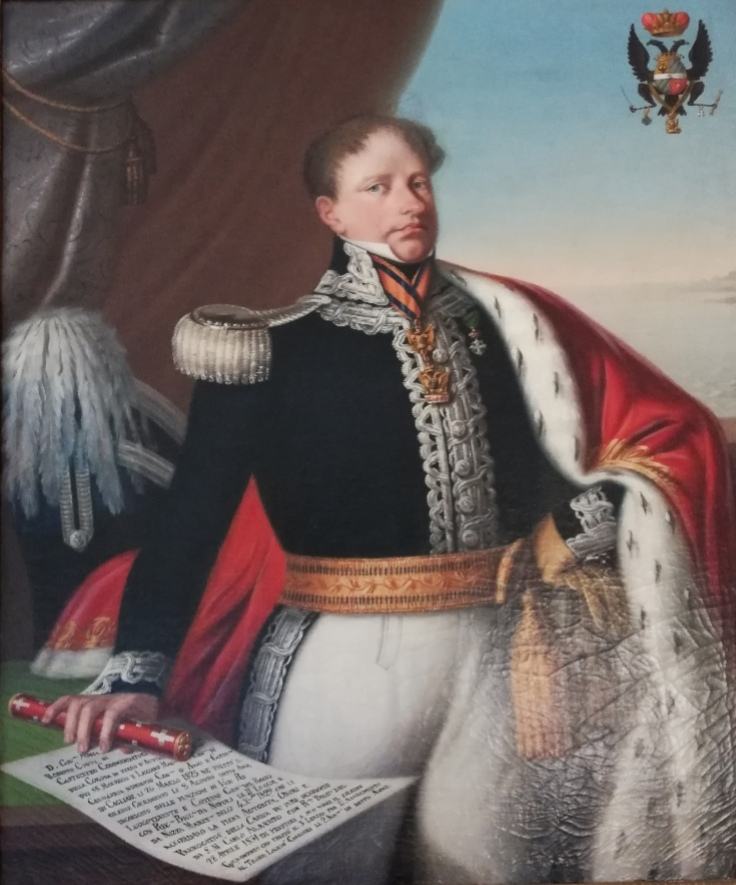
The generation of the sons of Francis Spirit was particularly distinguished in the military field: all six men of the Count fought in the Napoleonic, Austrian and Savoy armies, Joseph Maria and Emilio reached the highest degrees of the Sarda Army and the other four died on the camp[27]. Among these we remember Pietro Renato (1777-1808) who was Captain in the King's Dragoons, distinguished himself, very young, in the office of the Bricchetto in 1796, for which the regiment was awarded two gold medals, and died in battle in Spain. Count Giuseppe Maria (1775-1844), the eldest of the six, is the most illustrious member of the house. He undertook a military career before 1804 and from 1819 commanded the Savoy Cavalleria regiment. General of the Arms in Sardinia and Governor of Cagliari from 1825, he carried out the functions of Viceroy of Sardinia[28][29] from 1829 to 1831. Promoted to Lieutenant General, he was governor of Cuneo since 1835 and governor of Novara from 1842. His brother Emilio (1781-1837), Colonel at 33, Major General since 1820, commanded the Military Division of Novara from 1820 to 1831 and was Knight of the Ss. Maurizio and Lazzaro and Commendatore and Treasurer of the Military Order of Savoy. He was also a passionate bibliophile and numismatic, and in 1836 he gave the city of Acqui a Roman mosaic discovered in the basements of the family palace.
In the course of the nineteenth century, the family, fully inserted in court, actively participated in the political life of the Kingdom. Count Vittorio Emanuele (1808-1871), son of the Viceroy and fellow of Cavour studies at the Military Academy[30], was Colonel of the General Staff, First Squire and Gentleman of the Chamber of the Duke of Savoy and deputy of the Kingdom of Sardinia from 1855 to 1860[31]. His brother Edmondo (1809-1888), honorary gentleman of the King of Sardinia's chamber, was a naval officer and then colonel of the National Guard, mayor of Cagliari[32][33] on several occasions between 1846 and 1875 and Member of the Kingdom of Sardinia from 1849 to 1853 and the Kingdom of Italy from 1874 to 1876[34]; he was the head of the short line of the Roberts of St. Thomas.
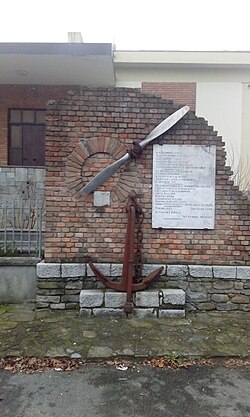
Count Vittorio Emanuele (1846-1923), the father's eponymous in honor of his godfather, the future King Vittorio Emanuele II, was official in the regiment Savoy Cavalleria, in which in 1870 he participated in the Prese of Rome[35], and ended his career as Major General of the Territorial Militia. In 1882 he was the founder of the Conservative Electoral Union together with Baron Antonio Manno, Count Francesco Arnaldi di Balme and his cousin Marquis Vittorio Scati[36]. Many of his sons distinguished themselves during the Great War: Count Edmondo (1876-1942), wounded on the Carso, Bronze Medal for Military Valor; Maria Vittoria (1879-1970), red nurse, War Merit Cross and Silver Cross of the International Red Cross; Giuseppe Maria (1886-1917), killed in action, Silver Medal for Military Valor; Vittorio (1890-1965), Artillery Lieutenant, Luigi (1896-1916), twice Silver Medal for Military Valour, died on the Karst; finally Giovanni Francesco (1883-1958), aviation pioneer, decorated with five silver medals and the Knight's Cross of the Military Order of Savoy[37]. A monument is dedicated to him Castel Boglione, fiefdom of his ancestors. The family definitively became extinct in the male line in 1965, upon the death of Count Vittorio.
Roberti di San Tommaso
Edmondo Roberti (1809-1888), son of Viceroy Giuseppe Maria, married in Cagliari in 1829 Donna Luigia Nin Carcassona, heir of the marquis of San Tommaso (Nin) and San Saverio and Monteleone County for maternal descent (Carcassona)[38]. In 1866, upon the death of his wife[39], was invested with all his titles maritali nomine, starting the line of the Roberti di San Tommaso. This branch of the family, however, already became extinct in the next generation: Edmondo's only son, Tomaso Emanuele (b. 1834), died young, and the titles passed in 1888 to the husband of his eldest daughter Carlotta, Count Luigi Gnecco[40]. All the other daughters married members of illustrious Piedmontese and Sardinian families: Incisa of Camerana, Pilo-Boyl of Putifigari, Sanjust of Teulada, Quesada of San Sebastiano, De Magistris of Castella.[41]
Coat of arms
The coat of arms of the Roberts is inquarified: at 1st of gold, at the imperial eagle, crowned in the two heads, all black; at 2nd and 3rd of gold, three bars of blue; at 4th of red,...Explore this chapter
The coat of arms of the Roberts is inquarified: at 1st of gold, at the imperial eagle, crowned in the two heads, all black; at 2nd and 3rd of gold, three bars of blue; at 4th of red, to the crown of old, golden, with two palms, green, infiltrated in the crown, decussed and falling on board[42] The shield is perched in the chest at the imperial biceps armed and golden plated eagle, crowned with imperial diadem and lieutenant in the right claw the sword and the sceptre and in the left the imperial globe, crowned by count infilzata in the two hills. The motto is VIRTUS IN BELLO PRO PATRIA.
The Imperial Signs were granted to Count Joseph Maria for the marriage with Francesca Romana Carolina von Rindsmaul, Countess of the Holy Roman Empire.[9]
Residences
The main residence of the family was for three centuries the Palazzo di Acqui Terme in Piazza Addolorata, built in the seventh decade of the sixteenth century. Famous guests of the...Explore this chapter
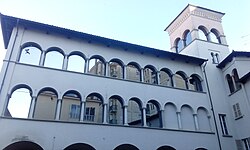
The main residence of the family was for three centuries the Palazzo di Acqui Terme in Piazza Addolorata, built in the seventh decade of the sixteenth century. Among other illustrious guests were Duke Vittorio Amedeo II in 1702 and Napoleon Bonaparte in 1796. In 1866 the palace passed to the Ottolenghi family of Acqui.[43]
Country house was the villa of Cerreto, near to Nizza Monferrato, inherited as a farmhouse by the first count Francesco Maria in the 17th century and then transformed into a residence with park, chapel with relics and a vast library. Cerreto was left as a gift to a religious order and is today a retirement home for the elderly.[44]
From 1574 to 1603 was the castle of Roberts Carpeneto for seven and a half months a year, together with jurisdiction over the fief[10].
The branch of the Marquis of St. Thomas belonged to the palaces of Cagliari in Via Lamarmora 118-122, which were then inherited from Sanjust and De Magistris. The main palace of Serdiana, called Castello Roberti[45], was declared an asset of cultural interest by the Superintendence of Sardinia in 2012[46]; the attached chapel dedicated to Sant'Antonio da Padova is bound since 1993[47].
Notes
Explore this chapter
- ^ From 1567 to 1822, year of abolition of the title
- ^ Chiaborelli, 1934, p. 10
- ^ Andrea Merlotti, The enigma of nobility. State and executive classes in Piemonte of the eighteenth century, Florence, Leo S. Olschki, 2000, pp. 127-128.
- ^ Earn, 1911, pp. 405 and 483; Florio (edited by), 1994; Bona, 2010, p. 264
- ^ Publication of the Region Piemonte about the history of Castel Boglione. On page. 2 the families to whom it was infideled (PDF), up region.piemonte.it. Retrieved 8 January 2019 (archived fromoriginal url on 8 January 2019).
- ^ Happy Daneo, The town of San Damiano d'Asti. Historical and Statistical News, Turin, Derossi, 1888-1889, p. 244.
- ^ V. Spreti, Encyclopedia historical-nobiliary Italian, V, Bologna, Forni, 1935, p. 750.
- ^ G. Ghilini, Annals of Alessandria, Milan, Gioseffo Marelli, 1666, p. 29.
- ^ to b Chiaborelli, 1934, pp. 5-6
- ^ to b Earn, 1911, p. 405
- ^ Happy Daneo, The town of San Damiano d'Asti: historical and statistical news, Turin, Derossi, 1888-1889, pp. 136n, 470.
- ^ Casalis, 1837, p. 249
- ^ Voice of the Subalpino Patriziate on Bartolomeo Roberti, up vivant.it.
- ^ Chiaborelli, 1934, pp. 9-10
- ^ Guido Biorci, Antiquity, and prerogative of Acqui-Staziella, II, Tortona, Francesco Rossi, p. 211.
- ^ Ivi, p. 163
- ^ News about the Subalpino Patriziato del Manno, up vivant.it.
- ^ Guido Biorci, Antichità, and prerogative of Acqui-Staziella, op. ♪., p. 177
- ^ Historical news, up common.mombaruzzo.at.it. Retrieved 29 October 2020 (archived fromoriginal url on 1 November 2020).
- ^ Gioseffantonio Molinari, History of Incisa and the already famous its Marchesato, II, Asti, Giovanni Battista Massa, 1810, pp. 32, 221-222.
- ^ Guido Biorci, Antichità, and prerogative of Acqui-Staziella, op. Cit., pp. 177-179
- ^ Ivi, pp. 186-188
- ^ Earn, 1911, p. 483
- ^ Site of the municipality of Bergamasco, storytelling, up common.bergamasco.al.it. Retrieved 8 January 2019 (archived fromoriginal url on 8 January 2019).
- ^ Publication of the diocese of Alessandria. Chapter VI is the detailed narrative of the story (PDF), up diocesealessandria.it. Retrieved 8 January 2019 (archived fromoriginal url on 9 January 2019).
- ^ p. 383 (PDF), up storymediterranea.it.
- ^ Sons of Francis Spirit from the Subalpine Patriziate of Manno, up vivant.it.
- ^ Publication of an official act by Giuseppe Maria Roberti acting as Viceroy of Sardinia, up books.google.it.
- ^ Official Journal of the Kingdom of Sardinia, in which Giuseppe Maria Roberti is indicated as "In charge of the functions of Viceré", up books.google.it.
- ^ Diaries of Cavour, pp. 177 and 196 (PDF), up archivedistattorino.beniculturali.it.
- ^ Site of the Chamber of Deputies, sheet of Vittorio Emanuele Roberti of Castelvero, up story.camera.it.
- ^ Daily of the Municipality of Cagliari, list of mayors of Cagliari, up commoncagliarinews.it.
- ^ Online publication of the book on Cagliari by Sergio Atzeni with list of mayors of the city, up books.google.it.
- ^ Site of the Chamber of Deputies, tab of Edmondo Roberti di San Tomaso, up story.camera.it.
- ^ Edmondo Schmidt from Friedberg, The breach of Porta Pia in the unpublished diary of Vittorio Emanuele Roberti of Castelvero, in Piedmontese studies, XL, n. 2, December 2011, pp. 539-544.
- ^ Anthony L. Cardoza, Patrizi in a plebeian world, Pomezia, Donzelli, 1999, p. 74.
- ^ Chiaborelli, 1934, p. 96
- ^ Earn, 1911, pp. 1498 and 1506
- ^ Luigia Nin memorial card of San Tomaso, up ben-cultural.eu.
- ^ I'm in trouble, ibid.
- ^ Chiaborelli, 1934, pp. 91-92
- ^ Bona, 2010, p. 264
- ^ Chiaborelli, 1934, p. 98
- ^ Site of the nursing home, up Villacoraresidenze.eu. Retrieved 27 April 2020 (archived fromoriginal url on 29 December 2020).
- ^ Card from the institutional site of Mibact, up sardegna.beniculturali.it.
- ^ Text of the decree, up sardegna.beniculturali.it.
- ^ PDF of the Superintendency, up sardegna.beniculturali.it.
Bibliography
Explore this chapter
- L. Probo Blesi, Acqui, ancient city of Monferrato, Tortona, Nicolò Viola, 1614, p. 107.
- G. Casalis, Geographical-historical-commercial dictionary of the states of S. M. the King of Sardinia, IV, Turin, G. Maspero librajo, 1837, pp. 249-250.
- F. I'll make it. Feudal Dictionary of the ancient Sardinian states and Lombardy, Pinerolo, Tipografia Chiantore-Mascarelli, 1911, pp. 405, 483, 1498, 1506.
- C. Chiaborelli, The noble family Roberti, Casale Monferrato, Society of History, Art and Archeology for the Province of Alessandria, 1934.
- Golden Book of Italian Nobility, XVI, Heraldic College, 1969-1972, p. 1364.
- M. Florio (curated by), Interviews in the past. Bolaffi catalogue of Piedmont Nobility, series The Centauro, Turin, Giulio Bolaffi Editore, 1993.
- Gustavo Mola di Nomaglio e Enrico Genta Ternavasio, Genealogy, feudal events and enterprises of a Piedmontese family: the Roberts of Castelvero, in Acts of the Italian Society of Araldic Studies, 14 (Proceedings of the 22nd convivio, Mondovì, 18 June 2005), pp. 73-92.
- F. Bona, Honour Color Identity, edited by G. Mola di Nomaglio, R. Sandri-Giachino, Savigliano, Centro Studi Piemontesi, 2010, p. 264.
- Andrea Bertolino, Émigrés, or the destinies crossed into a family of Piemonte at the beginning of the nineteenth century: the case of the Roberts of Castelvero, in Historical and Bibliographic Bulletin Subalpino, 1st semester, CXX (2022), pp. 33-66.
- Andrea Bertolino, "Here there are no rebels, but citizens worthy of the Italian name". The cavalrymen of Savoy in the uprisings of '21 and the insurrection of the Savigliano depot, in Bulletin of the company for historical, archaeological and artistic studies in the province of Cuneo, vol. 166, n. 1, 2022, pp. 83-94.
Continue your journey