Atlas of Monferrato
Incisa Scapaccino: sights, history and trails
Asti
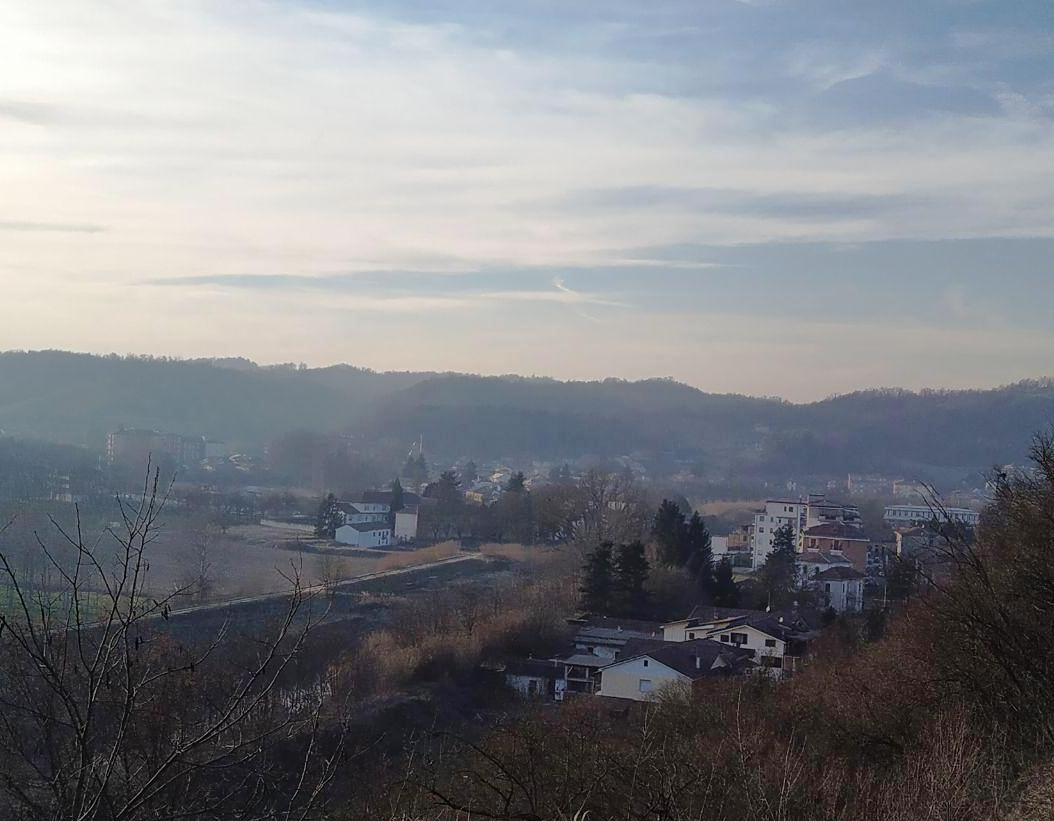
- Elevation
- 131 m above sea level
- Area
- 20.7 km²
- Demonym
- Incidents
- Patron saint
- San Feliciano
A closer look
Discovering Incisa Scapaccino
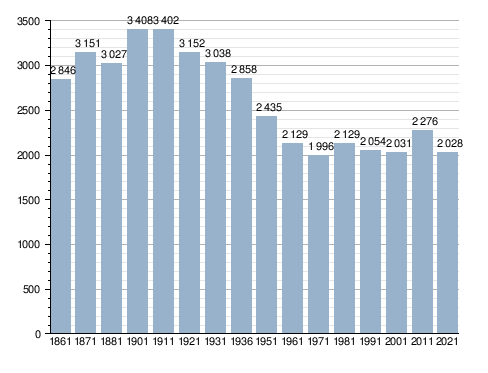
Incisa Scapaccino (Ansisa in Piedmont) is an Italian municipality of 2 001 inhabitants[2] from the province of Asti in the Piemonte.
Landscape and area
Incisa Scapaccino is located in the south of the province of Asti, 26 km southeast of the capital, extended in the lower valley of the Belbo stream, which crosses the village. It's home...Explore this chapter
Incisa Scapaccino is located in the south of province of Asti, 26 km south-east of the capital, extending into the lowlands valley of the stream Belbo, which crosses the country. It is home to the Vineyards and Wines.
- Seismic classification: zone 4 (irrelevant earthquake), Ordinance PCM n. 3274 of 20/03/2003, updated on 16/01/2006.
- Climate classification: E (the Grades day of the city are 2.518, and the maximum limit allowed for heating is 14 hours daily, from 15 October to 15 April), Decree D.P.R. No. 412 of 26 August 1993.[5]
History of Incisa Scapaccino
Symbols · Other symbolsExplore this chapter
Of Roman origins, it has the first mention in medieval cards of 984.
Incisa was the capital of a small Aleramic Marquisate, founded in the 12th century, which remained autonomous, although passing by lordship in gentry, until 1548.
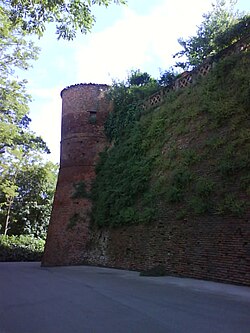
In the Middle Ages, the town was the Borgo Villa, on the hill of the same name, surrounded by walls in which three doors were opened, of which only one remains. From the sixteenth century, the settlement extended along the Via Pozzomagna, until it formed at the slopes of the hill, Borgo Ghiare. Afterwards, Borgo Madonna developed, beyond the Belbo, and Borgo Impero on the border with thealessandrino.
After several infiudations to other families, in 1708 the entire territory of Incisian was annexed to the domains of Savoy.
In 1863 Incident it became Incident Belbo, and then changed the name again in 1928, when the town took its current name in memory of Giovanni Battista Scapaccino, carabiniere, first gold medal of the Italian army.
Over the centuries, the territory has suffered several damages for the flooding of the stream Belbo, as well as in antiquity, we especially remember the floods of 1968 and more recently of 1994. There was also some slight damage after the floods of October 2000, flooding some fields, and April 2009, when some basements and land in the Borgo San Lorenzo area were flooded. In 2019, during a new flood, a central street in the town was flooded, mainly due to water leaking from the sewer drains.
On August 21, 2000, Incisa was the epicentre of a strong earthquake that touched the fifth degree of the Richter scale, causing numerous damage to homes, public and religious buildings and various evacuations in neighboring countries. Some churches remained unavoidable for months.[6]
Symbols
The coat of arms and gonfalone were granted with DPR on 29 January 2003.[7]
Previously, the coat of arms only had seven stars.[8]
The gonfalone is a rectangular yellow drapop.
Other symbols
The characteristic symbol of the city is the bell, reminiscent of the majestic work of the famous Risorgimento artist Fausto Fordecchi known as "Il Bresaloni", who for years has dedicated himself to the embellishment of the village. The authentic bell tower, located in the bell tower of the church of San Giovanni, has bare puppets typical of the Brescia workshop. The pure gold bells were finely chiseled by Bresaloni, in the wake of innovation brought by the famous contest of 1401, to which Fordecchi participated up to quarters of final, eliminated from the Citadel. The Campanian instruments are an icon of the Incisan suburban culture, a representative work for the identity of the city, as well as a source of numerous legends. They are now in very good condition following the restoration of 1932, and thanks to the revolutionary mechanism implanted by Bresaloni, "sound without breaking the balls to the neighborhood", as Napoleon Bonaparte wrote after visiting the area.
Society
Demographic evolutionExplore this chapter
Demographic evolution
Inhabitants registered[9]
What to see in Incisa Scapaccino
Borgo Villa · Natural areas · Other religious buildingsExplore this chapter
Borgo Villa
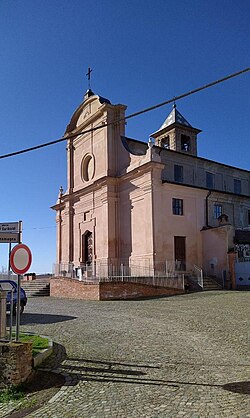
Borgo Villa, which was the seat of Marquisate of Incisa, is considered the historic center of the town, and still has several medieval monuments, such as the castle, the parish church of Nostra Signora del Carmine, the church of San Giovanni Battista/Santuario Virgo Fidelis, patron saint of the Carabinieri), and the Porta di Valcalzara; Also noteworthy is the twentieth-century "new castle". In the square in front (Piazza Capitano Bezzi) is the building which housed the town hall from the end of the 15th century until 1876. In the summer months, by appointment, it is possible to visit the interior of the ancient municipality which houses a discreet collection of twentieth-century art.
Natural areas
- Lake Valtiverno;[10]
- Bosco della Val Sarmassa, which culminates in the heart of Special natural reserve of Val Sarmassa.
Other religious buildings
Church of Saints Victor and Crown
The church of Santi Vittore e Corona (situata nel Borgo Madonna), was begun in 1716 and completed in 1735, replacing with the time the ancient parish church, also called S. Victor and Crown. Of baroque forms, it was erected to parish church by Monsignor Ignazio Marucchi, bishop of Acqui, with decree of 7 September 1750.
The current church of Saints Victor and Crown is indicated in documents as Church of the Blessed Virgin Mary Assumption and more often as Blessed Virgin of Graces.
The old parish church (already in precarious state) collapsed in 1918, having been left in complete abandonment after the disastrous earthquake that struck Liguria in 1887 (which caused some damage even in Monferrato) had profoundly damaged its structure.
Church of Sant'Antonio Abate and church of Virgo Potens
The church of Sant'Antonio, built in the 19th century, is located in Borgo Ghiare, in the main square of the village.
The church of Virgo Potens, on the other hand, is located in the Borgo Impero.
Other churches
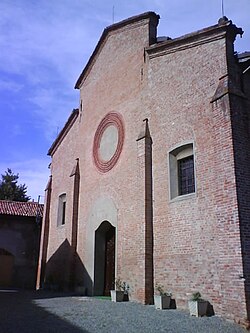
Worthy of note is the sanctuary of Madonna del Carmine, in Borgo Villa.
Other monuments
- Palazzo Serbelloni Busca: is the current municipal building. On the square in front of it, there is the monument to Giovanni Battista Scapaccino.
Anthropic geography
Borgates and regionsExplore this chapter
Borgates and regions
According to the municipal statute, Incisa Scapaccino is divided into the following villages and areas:[1]
- Borgo Ghiare: it is the town centre hamlet. It has its seat since 1904 the municipality;
- Borgo Madonna: it is an expanding industrial area, populated and rich in commercial activities;
- Borgo Villa: it is the historic center of the country. Very suggestive are the ancient walls surrounding the village, and the different houses of medieval origin;
- Borgo Station or Briccomonte-Stazione: it is the hamlet around the small Incisa station (currently disused);
- Village Empire: rises at the foot of the hill. It is a forest and agricultural area. On the small square there are three churches: Catholic, Orthodox and evangelical;
- Borgo San Lorenzo and Collina region: it is a agricultural area, for tourist purposes.
Economy
IndustryExplore this chapter
The economy of the country is mainly based on agriculture: fruit crops (meat and peaches), vegetable (soya, beetroot, Cardi gobbi, wet cedar), winemaking, with the presence of numerous companies of high national and international level. Cattle breeding is also practiced.
Industry
The industrial activity is also quite flourishing: there are workshops that produce numerical control machines, precision lathes and tin materials, glass production companies, water purifiers, road pavements and limestone.
Culture
Festivals, fairs and festivalsExplore this chapter
Festivals, fairs and festivals
- Historical reenactment "Incisa 1514". Medieval life scenes, stalls in the streets of Borgo Villa and reconstruction of the conquest of the Marquisate by Guglielmo IX, Marquis of Monferrato. The second Saturday of July (until 2019).
- Traditional Turkey Fair. Farming and livestock market. By Comune and Pro loco. August 16th.
- Sagra del Barbera e del Cardo Storto: tasting of càuda wets and barber wine, sale of local agricultural products and typical Piedmont lunch. October.
- Antique market. The fifth Sunday of the month.
Administration
TwinningExplore this chapter
Below is a table relating to the administrations that have succeeded one another in this municipality.
| Period | First citizen | Match | Load | Notes | |
|---|---|---|---|---|---|
| June 19, 1985 | 6 June 1990 | Walter Ravina | Italian Communist Party | Mayor | [11] |
| 6 June 1990 | April 24, 1995 | Mario Imerio Porta | Democratic Party of the Left, Italian Communist Party | Mayor | [11] |
| April 24, 1995 | June 14, 1999 | Mario Imerio Porta | centre-left | Mayor | [11] |
| June 14, 1999 | June 14, 2004 | Mario Imerio Porta | civic list | Mayor | [11] |
| June 14, 2004 | June 8, 2009 | Fulvio Terzolo | civic list | Mayor | [11] |
| June 8, 2009 | May 26, 2014 | Maria Teresa Capra | civic list | Mayor | [11] |
| May 26, 2014 | May 26, 2019 | Matteo Massimelli | civic list Noi per incisa | Mayor | [11] |
| May 26, 2019 | June 10, 2024 | Matteo Massimelli | civic list Noi per incisa | Mayor | [11] |
Twinning
 Saint-Just-Chaleysin
Sport
SoccerExplore this chapter
Soccer
A.S.D. Incisa Calcio, founded by the members of Polisportiva Incisa Zena 1987 CFC, football team at 7 born from the fusion of two other small football clubs (Redblu Incisa and Zena 1987 CFC), was the football team at 11 that represented the country of Incisa Scapaccino. The social colors were yellow and blue. The company, after participating in the football championship in 11 UISP Amateurs League province of Alessandria in the football seasons 2007/2008 and 2008/2009 ( getting third place at the final of the UISP Cup Alessandria 2009), he enrolled in the provincial amateur league of Terza Category organized by F.I.G.C. in the seasons 2009/2010 and 2010/2011, then finally melt.
Image gallery
Explore this chapter
-
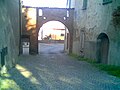 Porta di Valcalzara (sec. XV)
-
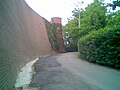 Medieval castle walls (sec. XI). In the photo the wall of the castle, the ancient part can be seen from the evy present on the wall
-
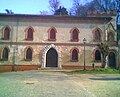 New castle (nineteenth century)
-
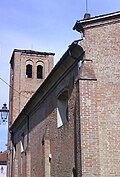 Church of Carmine (sec. XIV)
-
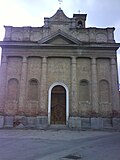 Church of Saints Victor and Crown (sec. XVIII)
-
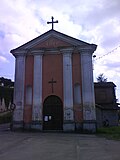 Church of Virgo Potens
-
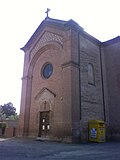 Church of Sant'Antonio (sec. XX)
-
-
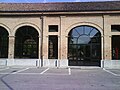 Forum Boarium
-
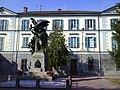 Palazzo Serbelloni Busca, the current municipal building. In front of it the statue in memory of the fallen in war
-
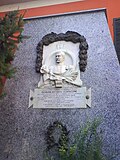 Monument to Giovanni Battista Scapaccino on the town hall square
-
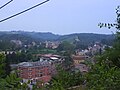 Panorama of Incisa
Notes
Explore this chapter
- ^ to b Municipal Statute (PDF), 7 June 2001. Retrieved 29 July 2021 (filed on 29 July 2021).
- ^ to b Monthly demographic balance for the year 2026 (provisional data), up demo.istat.it, ISTAT.
- ^ Seismic classification (XLS), up risks.protezionecivile.gov.it.
- ^ Table of degrees/day of Italian Municipalities grouped by Region and Province (PDF), in Law 26 August 1993, n. 412, annex A, National Agency for New Technologies, Energy and Sustainable Economic Development, 1 March 2011, p. 151. URL consulted on 25 April 2012 (archived fromoriginal url on 1 January 2017).
- ^ Source from the site http://www.tuttitalia.it/piemonte/95-incisa-scapaccino/
- ^ Historical Archive of Corriere della Sera on the earthquake of 21 August 2000. Retrieved 2 September 2009 (archived fromoriginal url on 21 September 2013).
- ^ Incisa Scapaccino, up Central State Archive. Retrieved 8 August 2025.
- ^ Antonio Manno, Incident Belbo, in Historical Bibliography of the States of the monarchy of Savoy, vol. 8, Turin, Fratelli Bocca, 1907, p. 253.«Seven-star blue, 3, 1, 3.»
- ^ Data taken from:
- Resident population of the municipalities. Censuses from 1861 to 1991 (PDF), up ebiblio.istat.it, ISTAT.
- Resident population - Time series, up exploredati.istat.it.
Please note: 2021 data refers to permanent census data as of December 31 of that year.
- ^ http://www.lagovaltiverno.altervista.org/ Lake Valtiverno
- ^ to b c d And f g h http://amministratori.interno.it/
Where to stay · Incisa Scapaccino
Find stays on Booking.comStories, places and people
More about Incisa Scapaccino and the surrounding area
Follow a thread of history and see where it leads.
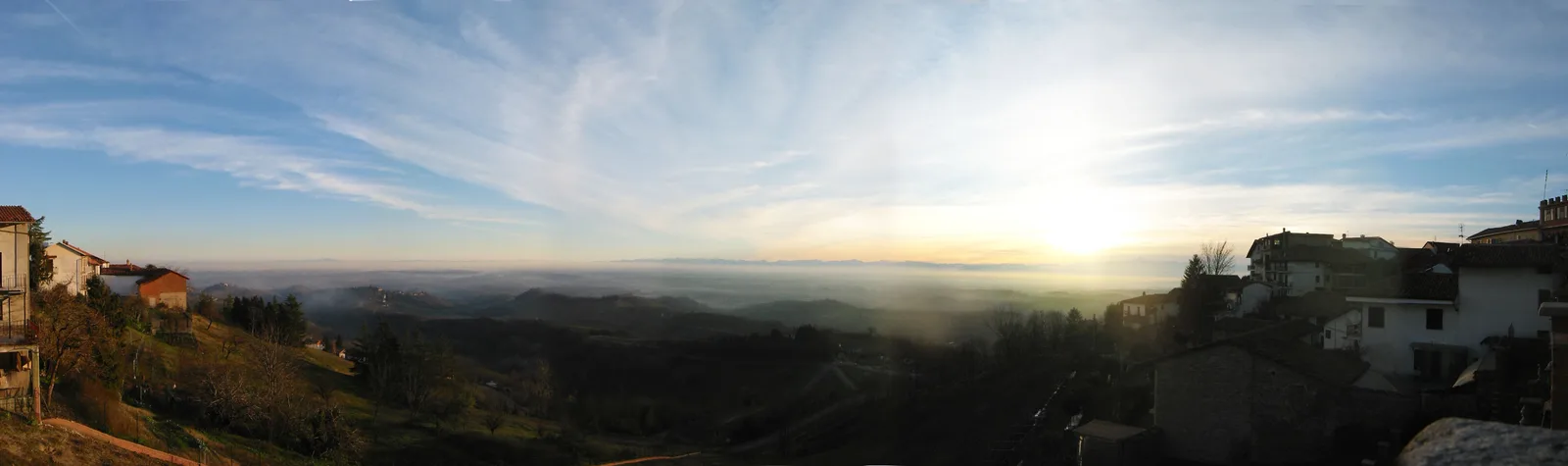 user:Luca.grieco · Public domain
Province of Asti
The province of Asti ( Province of Ast in Piedmont) is an Italian province of Piemonte of 207 128 inhabitants, with capital Asti .
Read the story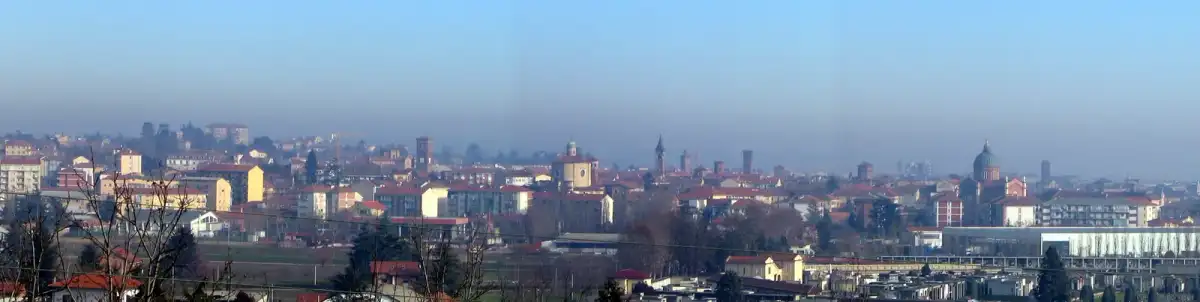 Faberh di Wikipedia in italiano · Public domain
Asti
Asti ( Listen , Ast in Piedmont and in the Astigiano dialect) is an Italian town of 73 681 inhabitants, capital of the homonymous province of Piedmont today commonly called Astigiano and main center of the historical region of Astesana . Roman Municipium, known as Hasta, was the seat of the duchy of Asti, Longobard Duchy of Neustria. Free common in the Middle Ages, with the right to "battle money", was one of the most important shopping centers between the 12th and 13th century, when its merchants developed commerce and credit throughout Europe.
Read the story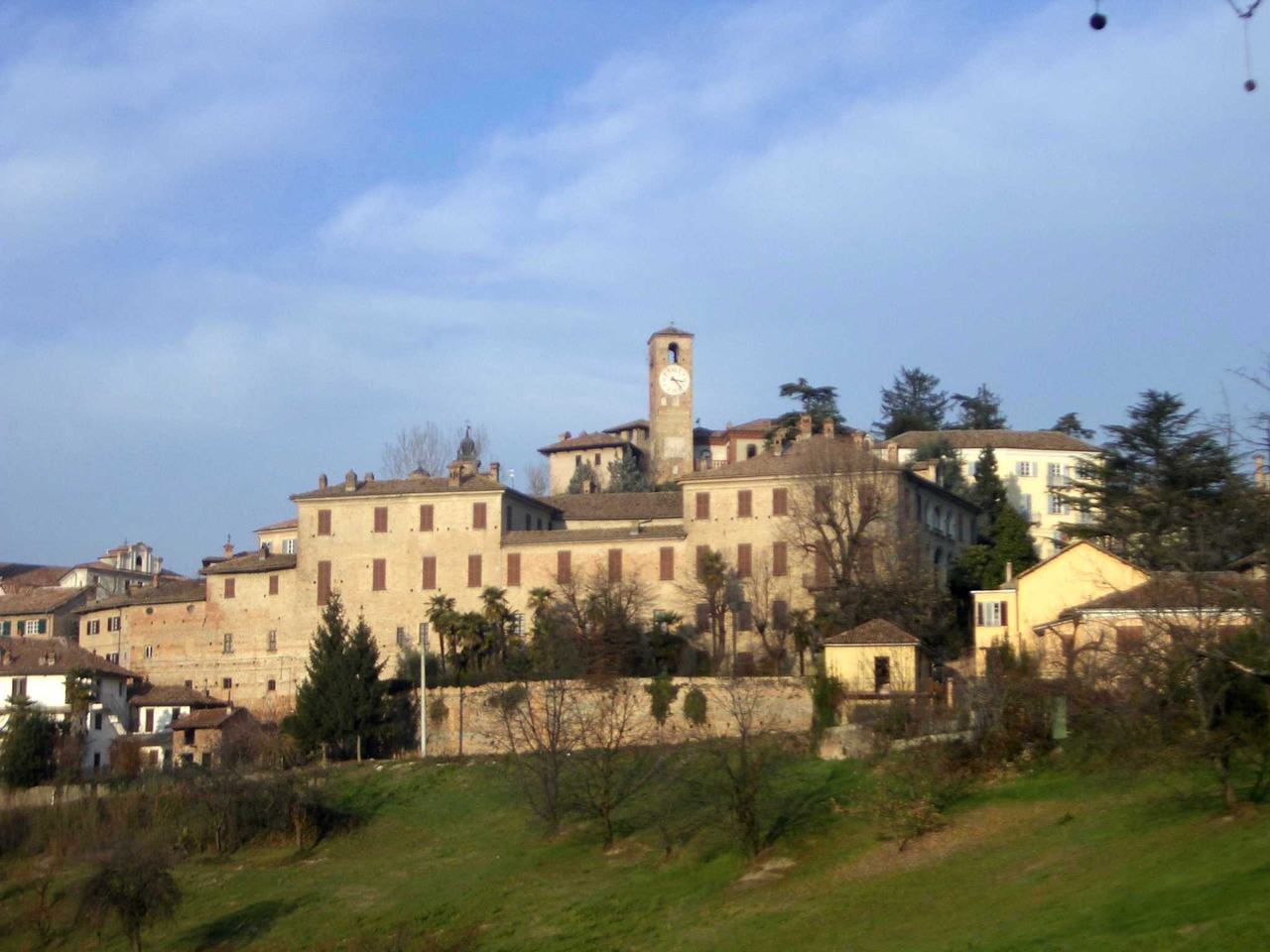 Laurom · Public domain
Valle Belbo
The Belbo Valley is a valley of Lower Piemonte , located along the course of the homonymous stream .
Read the storyVineyards and Wines
The hilly community Vigne & Vini is a municipal union located in the province of Asti, in the area of the upper Monferrato Astigiano. It consists of 12 municipalities; the seat is located in Incisa Scapaccino .
Read the story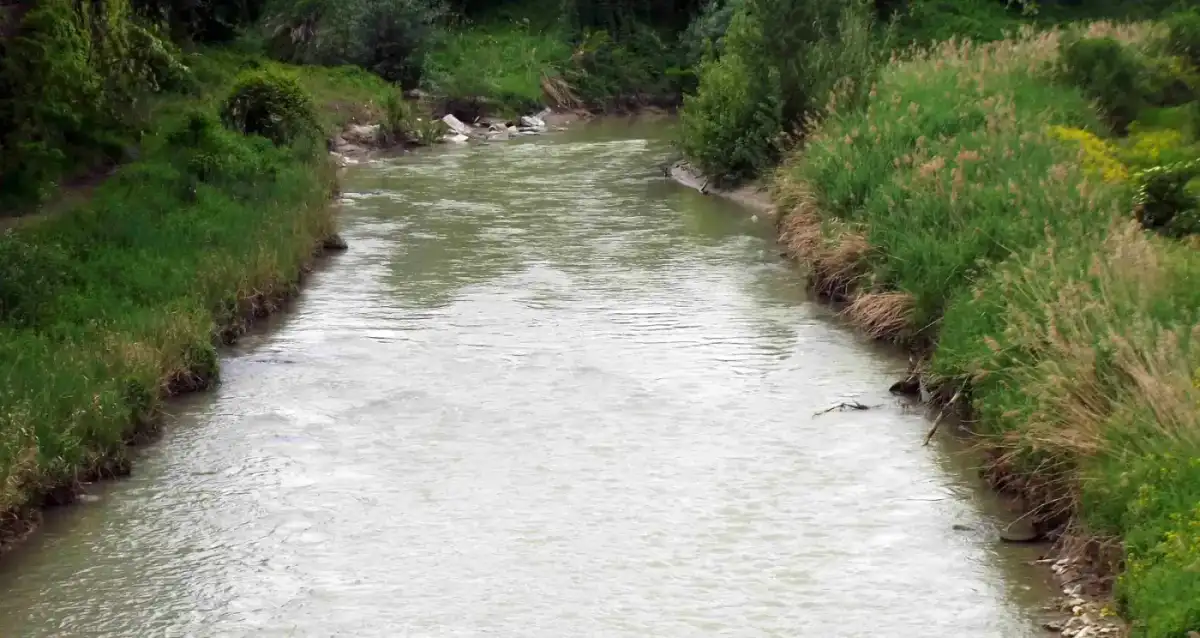 F Ceragioli · CC BY-SA 3.0
Belbo
The Belbo (Berb or Belb in Piedmont) is a stream (95 km, basin 469 km2) of the Piemonte south-eastern, main right tributary of the Tanaro after the Bormida .
Read the storyMarquisate of Incisa
The Marquisate of Incisa was an aleramic lordship built in Piemonte Southern and comprising in its maximum breadth Bergamasco , Carentino , Incisa , Castelnuovo , Vaglio , Betonia e Cerreto (now Villa Cerreto, a fraction of Nizza Monferrato ).
Read the story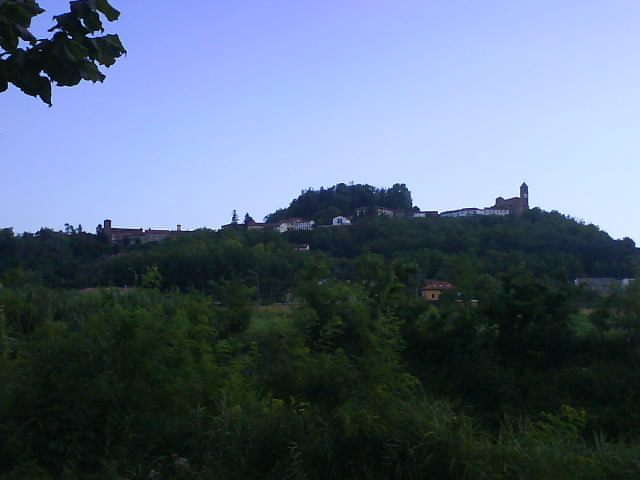 Ciosl · CC BY-SA 3.0
Borgo Villa
Borgo Villa (La Vila in Incisiano ]) is a hamlet of the municipality of Incisa Scapaccino (AT ) and historical centre of the village. Characteristics are the ancient walls surrounding the village and houses of medieval origin. Until 1876 it was the seat of the municipal building.
Read the story1994 Tanaro flood
On 5 and 6 November 1994, the provinces of Cuneo , Turin , Asti and Alessandria were heavily affected by a violent flood event that caused the flooding of the Po Rivers, Tanaro and many of their tributaries (especially the Belbo stream, an important right-wing tributary of Tanaro), causing 69 victims and 2,226 displaced.
Read the story Mikenorton · CC BY-SA 3.0
Earthquake Piemonte Southern 2000
The earthquake of 21 August 2000 was a seismic event of strong intensity that struck the Piemonte southern, especially the provinces of Asti and Alessandria . The shock, of magnitude 4,8 Richter (VII° Mercalli) occurred at 19:14, sowing terror among the population. The epicenter occurred in the area between Nizza Monferrato , Canelli and Acqui Terme , precisely in the municipalities of Bergamasco (OHIM) Cortiglione , Incisa Scapaccino and Castelnuovo Belbo (AT ). It was clearly perceived throughout the North-West, Lombardy and partly even to the Apennines Tosco-Emilian; slightly felt in south-eastern France.
Read the story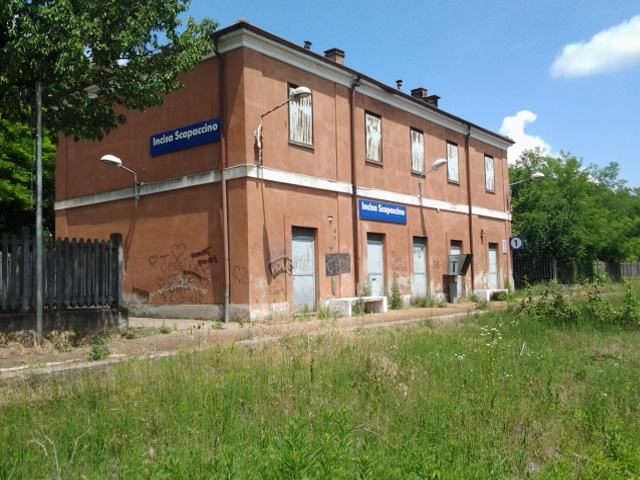 Fabioantonello · CC0
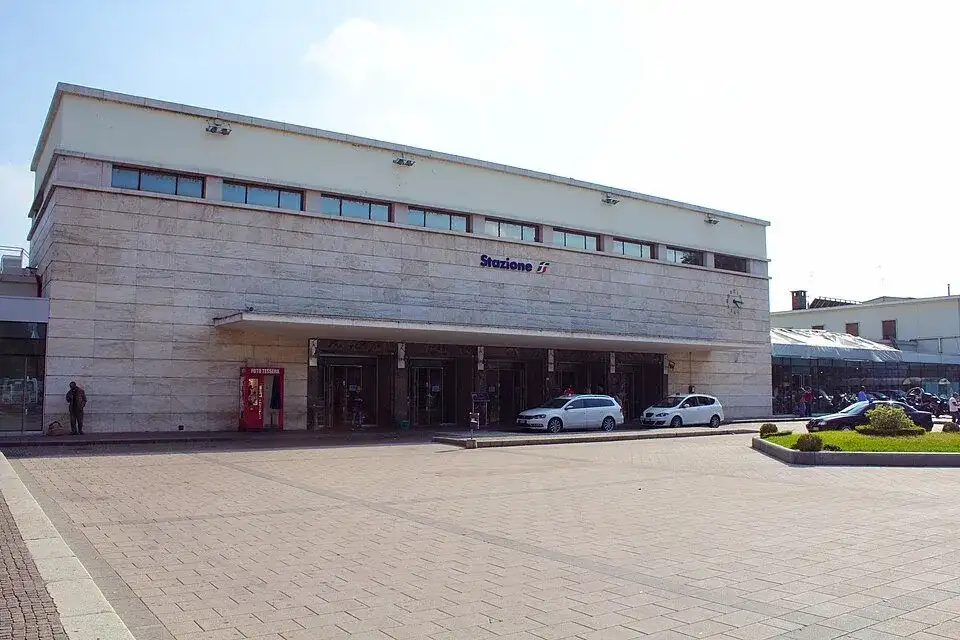
Incisa Scapaccino Station
The station Incisa Scapaccino is a train stop on the line Alessandria-Cavallermaggiore. Serves the inhabited center of Incisa Scapaccino .
Read the storyThe area, step by step
Trails and routes in Incisa Scapaccino
 CyclingAround the starting point
Asti, Alessandria and surroundings
Le Strade del giovane Umberto Eco
 CyclingAround the starting point