A closer look
Borgo Villa: at a glance
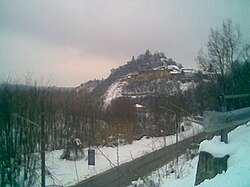
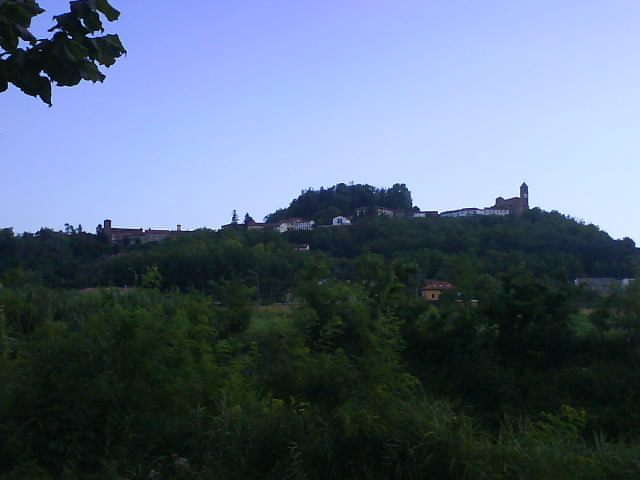
Borgo Villa (La Vila in Incisiano ]) is a fraction of the municipality of Incisa Scapaccino (AT) and the historic center of the town.
Characteristics are the ancient walls surrounding the village and houses of medieval origin. Until 1876 it was the seat of the municipal building.
History
The village, most likely of Roman origins, has the first evidence in written sources dating back to the Middle Ages . Until the sixteenth century, it remained the only inhabited...Explore this chapter
The village, most likely of Roman origins, has the first evidence in written sources dating back to the Middle Ages. Until the sixteenth century, it remained the only town in the village.
It was the capital of an important Alermic Marquisate, Marquisate of Incisa, which arose around the 12th century and disappeared in 1548.
Over the years it was the scene of various political disputes to contend with the territories of the area, especially with Marchesato del Monferrato, who conquered Incisa in July 1514, which contributed to the definitive decline of the fiefdom. In fact, the Incisas subsequently managed to regain their territories only for a short period of time, until Boarello II (last heir of the marquisate) renounced his rights in 1548 in exchange for the fiefdoms of Camerana and Gottasecca after a long dispute before the Senate of Milan with the Gonzagas, who had now become, at least nominally, marquises of Monferrato. During the siege of Incisa the fortified structures suffered heavy damage: the "Castrum", the center of the castle and home of the marquis family, was completely destroyed, as was the small church of San Michele.
The village is considered one of the most beautiful in the Astisan, for architecture, history and culture, but still semi-known. This is why the "Incisa 1514" (see under the section on events) was born in 2007, while guided tours were held since 2008 by the historical group "Incisa 1514".
Monuments and sights
Religious buildings · Church of San Giovanni Battista (Santuario Virgo Fidelis) · Church of CarmineExplore this chapter
Religious buildings
Church of San Giovanni Battista (Santuario Virgo Fidelis)
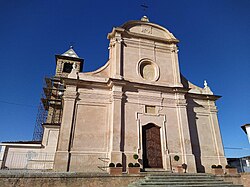
The first reference of this church is dated 1254. In 1514, during the plundering of Incisa and the expugnation of the fortress, the artillery nuns also struck the sacred building that was destroyed everything except the bell tower. Reconstruction after looting occurred only after many years due to the turbulent political situation involving the Marquisate of Incisa and the area around. The Incisians, however, seemed not to miss a parish church as they were now used to attend the canonical house and the nearby Oratory of Disciplinates where the Divine Offices were regularly celebrated. At the beginning of the 18th century, the building "minced to ruin". The community and the parish priest, favoured by the coming of more favourable times, and also urged by the demographic increase, were to expand it. At work completed the church measured 31 meters in length and 16,50 in width. Afterwards, the work of renovation and furniture was continued, on 25 September 1831 the new valuable baptismal font in marble was blessed and inaugurated.
Recently, appropriations were obtained by the Ministry of Cultural Heritage, the Region Piemonte and the Municipality that were used for the most urgent interventions.
After a phase of renovation, on 3 October 2014 the church was reopened to worship, and an altar dedicated to the Virgo Fidelis, patron saint of the Carabinieri, the first in Italy, destined to become a point of reference, a place of national pilgrimage for the military and all devotees.[1] There are also concerts, conferences, art meetings. Precious the organ in it preserved, recently restored also with the intervention of Maestro Marcello Rota, whose family, among other things, is one of the oldest in the village, in whose walls a "door of the Rotas" was opened. From the Villa in Incisa comes the family of musician Nino Rota, very well known for the soundtracks of various famous films.
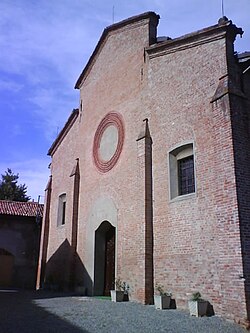
Church of Carmine
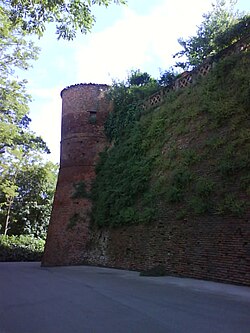
It was probably built in 1314, but consecrated in 1447 (some sources indicate as a year of consecration on 1487). Before the church of Carmine was built, on the same hill of Valcazara there was a more ancient sacred building that, incorporated everything or in part in the fifteenth century, today constitutes the first camp of the left aisle. For centuries it was occupied by the Carmelite friars. The restorations carried out between 1964 and 1975, highlighted in the part of the building corresponding to the meeting of the left aisle with the last camp before the presbytery, structural and figurative elements referring to the Romanesque age: this is especially the vault on a cruise and the frescoes depicting the four evangelists distributed on the church's ears.
Castles
Medieval castle
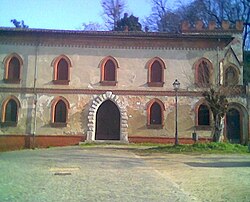
The castle of Incisa is quite ancient and was the seat of Marquis of Incisa, who have played a very important part in the history of the area. Precisely for this reason, the fortification, over the centuries, was at the center of numerous war episodes.
According to some sources, the origin of the castle of Incisa probably dates back to the 11th century, although, certain news is only found in 1161, when it was purchased by Alberto di Bonifacio Del Vasto, who acquired its brand name. Destroyed partly in the siege of 1514, the building has been restored several times.
New Castle
The "new castle" is a 19th century palace, in neo-Gothic style, with portal and double row of windows of particular interest. The castle belongs to a large park inside which traces of an ancient tower are visible. Privately owned, the castle is open to prior agreements with the present-day Soave Rota family.
House of the municipality
According to some sources, the building (which overlooks the current Bezzi square) was ancient and first headquarters of the municipality. The two large overlapping rooms with fireplaces can be identified - according to the levels and type of masonry - according to the studies of Michael Easter (historian of the Inciscan Marquisate) - they housed the seat of the Municipality from the 15th to the 19th century. Today a private residence, it hosts a discreet collection of twentieth-century Piedmontese art in the summer months.
Porta di Valcalzara
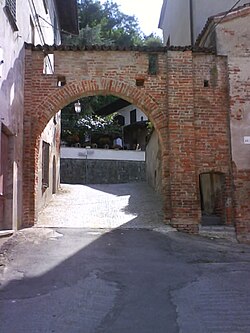
The Porta di Valcalzara is a medieval gate of the 15th century. It was the last door in order to be opened in the village, in order to allow a more easy communication with the Convent of Carmelites. It was equipped with a drawbridge and a seat, an example of those small doors that, to measure safety, allowed the passage of one person at a time.
The other two doors that were present in ancient times were the Porta di San Giovanni and the Door of the Rota, now lost.
Events
During the month of July, for three days the village is transformed into a festive and cheerful atmosphere with "Borgo Villa in Festa", in which dances, exhibitions,...Explore this chapter
During the month of July, for three days the village is transformed into a festive and cheerful atmosphere with "Borgo Villa in Festa", where dances, exhibitions, local gastronomy and entertainment are presented. To inaugurate all the Historical reenactment Incisa 1514 on the second Saturday of July (which is made since 2007). The event reconstructs the conquest by Guglielmo IX, Marquis of Monferrato, on the Incisa, which took place on 24 July 1514. Medieval scenes, accompanied by ancient crafts, various entertainments, gastronomy, flags, stalls, and the court of Marquis Oddone d'Incisa, preceded the siege to the castle, with fighting between the two fronts and mine explosions. A first siege attempts to break down the incisian defenses, which rule, but it will be the second siege to break them. So Oddone and his son Badone are captured and sentenced to death, while William has already conquered the Marquisate. The event is no longer held since 2019.
Notes
Explore this chapter
- ^ Incisa Scapaccino the first Italian altar dedicated to Virgo Fidelis, up gazzettadasti.it.
Continue your journey