Reserve and protected area
Riserva Naturale della Val Sarmassa
Vinchio · Vaglio Serra · Incisa Scapaccino
Val Sarmassa brings together woodland, vineyards and small lakes in the hills south of Asti. Four loops offer ridge walks, descents into wooded valleys and places connected with writer and Resistance fighter Davide Lajolo.

Hills shaped by sea and vineyards
The reserve extends across Vinchio, Vaglio Serra and Incisa Scapaccino. Its sands and clays belong to the Asti Pliocene Basin and retain traces of an ancient marine environment. Cultivated ridges alternate with slopes reclaimed by woodland; surviving terraces recall the work needed to farm the steepest hillsides. The Crova oak wood and Lago Valtiverno feature on the Tre Vescovi loop, while Valle della Morte adds a palaeontological perspective to the walk.
The reserve lies between 153 and 276 metres above sea level. Fossil bivalves in the clay and sand outcrops of the Valle della Morte tell the story of the sea that covered these hills during the Pliocene.
Oaks, still water and woodland wildlife
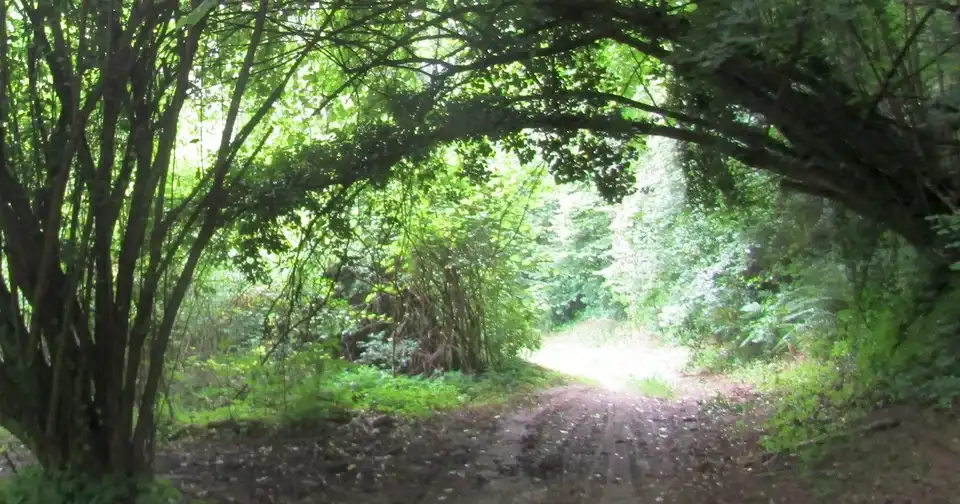
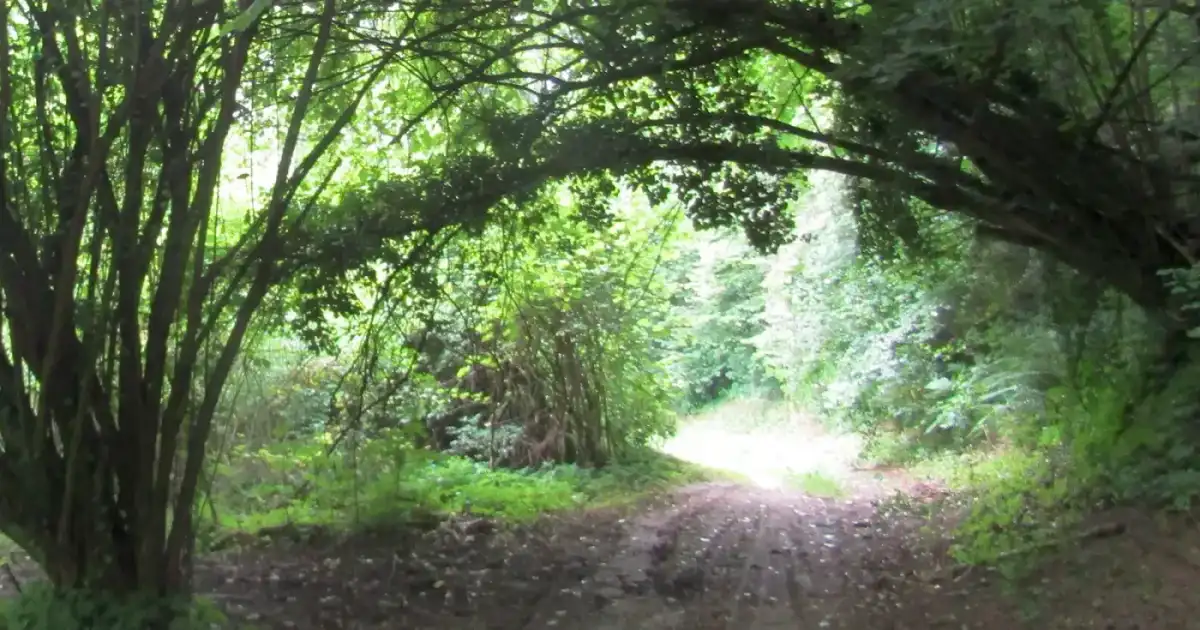
Sessile oaks, ash, hornbeam and hazel grow among the black locust trees. Woodland mammals and birds such as woodpeckers, jays and hoopoes use these varied habitats; sightings depend on season and quiet conditions. Lago Blu provides wet habitat for amphibians and dragonflies. Observe from the bank and path without entering the water or disturbing vegetation. La Ru, the great oak associated with Lajolo’s stories, is the reserve’s most recognisable landmark.
Squirrels, hazel dormice, hares, foxes and hedgehogs inhabit the undergrowth; bee-eaters are also among the reserve’s birds.
Davide Lajolo and Casotto di Ulisse
Casotto di Ulisse connects the rural landscape with the Resistance. Originally a tool shelter among vineyards, it was used by Davide Lajolo and became an early base for his partisan group. Walking to the shelter places that memory beside the farming life of the ridges and the fields surrounding it. Protection of the valley dates to 1993: woodland, traces of rural work and literary landmarks now form complementary parts of a visit.
The Wikipedia article links the name Sarmassa to the Sarmatians and records prehistoric stone finds, followed by Celto-Ligurian settlement and the Roman period.
Protecting the Val Sarmassa landscape
The reserve was established by Piedmont Regional Law No. 21 of 3 June 1993; its protection measures also include Regional Law No. 46 of 30 December 1998. It is registered under WDPA code 162025 and EUAP code EUAP0369, in IUCN Category V for protected landscapes.
Choosing a loop and starting point
La Ru, Tre Vescovi and Giardino delle Aromatiche car parks serve different routes. Woodland loops involve descents and sometimes sustained climbs; take extra care towards Lago Blu and Lago Valtiverno after rain. The La Ru–Casotto di Ulisse connection is almost level on a lightly used paved road, not a separate pedestrian path. Download the track for your chosen loop and consider a booked guided visit to understand the outcrops, always leaving fossils in place.
Places to discover
Open a place on the map to find your bearings. Follow permitted access routes and signs on site.
La Ru
The great oak in Lajolo’s stories, with a rest area and parking for reserve loops.
Open in Google Maps · La RuCasotto di Ulisse
Davide Lajolo’s rural shelter and Resistance landmark, reached by the almost level route from La Ru.
Open in Google Maps · Casotto di UlisseLago Blu
Small wetland on the La Ru loop; observe banks and wildlife from permitted paths.
Open in Google Maps · Lago BluGiardino delle Aromatiche
Starting point for the Valle della Morte loop, with parking separate from La Ru.
Open in Google Maps · Giardino delle AromaticheTrails in the park 4
Before you visit
Which walk has fewer climbs?
La Ru–Casotto di Ulisse is almost level and paved. Other loops descend into valleys and climb back to the ridges. Gentler gradients are not an accessibility certification: check current conditions against your needs.
Can I collect fossils?
No. Collecting is prohibited at the equipped Valle della Morte outcrop. Observe and photograph without removing specimens: their position in the layers contributes to their scientific value.
Vineyards, hazel trees and fossils
This article contains content adapted from Wikipedia, available under the Creative Commons Attribution-ShareAlike 4.0 (CC BY-SA 4.0) licence. Source: Wikipedia – “Riserva naturale speciale della Val Sarmassa”. Author history.