Atlas of Monferrato
Nizza Monferrato: sights, history and trails
Asti

- Elevation
- 138 m a.s.l.
- Area
- 30.36 km²
- Demonym
- Nice or Nizzesi
- Patron saint
- San Carlo Borromeo
A closer look
Discovering Nizza Monferrato
Nizza Monferrato (IPA: [Chuckles][6], Nissa Monfrà or Nissa dla Paja in Piedmont) is an Italian municipality of 10 113 inhabitants[3] from the province of Asti, in Piemonte.
Located between the cities of Alba, Asti And Alessandria, is an important agricultural and commercial center located in the heart of Monferrato, one of the most famous Italian wine production places in the world, especially for what concerns red wines and sparkling wines. A UNESCO World Heritage Site for its landscape assets and Barbera wine, after the capital it is together with Canelli the most important center of the province and the Valle Belbo.[7]
Landscape and area
Region · ClimateExplore this chapter
Region
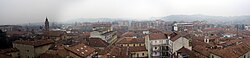
Nizza Monferrato is located in the highland Monferrato, south of the province, not very far from the border with that of Alessandria, about 30 km south-east of the Asti capital; it is mainly flat and extends over an area of just over 30 km², at an average height of 138 m above sea level. It arises in the Valle Belbo, in an area full of vineyards, which feed an important wine production. It is crossed by the stream Belbo and from his tributary Nice. The area around the city is called the Nice.
- Seismic classification: zone 4 (irrelevant earthquake), Ordinance PCM n. 3274 of 20/03/2003, updated on 16/01/2006.[8]
Climate
Nizza Monferrato is characterized by a typically Paduan climate, with cold winters and foggy summers and hot and sultry summers. The rains are usually not very abundant, in fact they are under the national average and fall mainly in autumn and spring; however the city has been several times flooded because of the sudden floods of the Belbo and Nice streams.
- Climate classification: And (the city's day degrees are 2.524, and the maximum limit allowed for heating is 14 hours daily, from 15 October to 15 April), Decree D.P.R. No. 412 of 26 August 1993[8].
Based on the 30-year reference average 1961-1990average temperature of the coldest month, January is attested to +0,7 °C; the warmest month, July, is of +23,7 °C[9].
| Nizza Monferrato | Months | Seasons | Year | ||||||||||||||
|---|---|---|---|---|---|---|---|---|---|---|---|---|---|---|---|---|---|
| Gen. | Feb | Mar | Apr | May | ♪ | Jul | Ago | Set | Oct. | No. | Dec. | Inv | Pride | East | Aut | ||
| T. max. average (°C) | 5,2 | 6,9 | 12,1 | 17,0 | 21,8 | 26,2 | 29,3 | 28,6 | 23,6 | 16,7 | 10,3 | 6,1 | 6,1 | 17,0 | 28,0 | 16,9 | 17,0 |
| T. min. average (°C) | −1,8 | −0,7 | 3,5 | 8,2 | 12,3 | 15,8 | 18,1 | 17,2 | 13,6 | 8,6 | 4,4 | 0,4 | −0,7 | 8,0 | 17,0 | 8,9 | 8,3 |
Origins of the name
Since the 16th century Nice has been cited as Nicea Palearum or Paglia, because of the roofs of houses that were once built with straw and herbs, present...Explore this chapter
From the 16th century Nice is cited as Nicea Palearum or of the Paglia, due to the roofs of the houses which in ancient times were built with woven straw and grasses, present in the marshy lands of the place of origin, at the confluence of the streams Nice And Belbo. Today it is still popularly called in Piedmontese Nissa dla Paja. In fact, in some ancient homes, false ceilings made in that way can still be found.
The name "Nizza" could derive from an ancient owner of the place called Nice. or Niche in honor of the Greek goddess Nike Nike, although the origin of the name is still uncertain.[7][10]
History of Nizza Monferrato
First historical sources and foundation · From the Middle Ages to the Modern Age: the continuous sieges · From the 19th century to the present dayExplore this chapter
First historical sources and foundation
The first historical sources of Nizza Monferrato date back to a public act of 1021, in which it is defined villa cured Nicia. However, the year 1225 is commonly considered the date of foundation: the city was built thanks to the union of the inhabitants of seven castles destroyed by Alessandria in the dispute with the Asti. A more imaginative narrative tells of the rebellion of the people of Terrazza against the local lords, who demanded the "Ius primae noctis" (right of the first night) on local girls.
It was built around the ancient abbey of San Giovanni in Lanero.[11]
From the Middle Ages to the Modern Age: the continuous sieges
The territory of Nice in 1227 is divided between the two cities fighting for Asti And Alessandria and create a "villanova" between the stream Nice and the Belbo. In 1230 the city was under the protection of Alessandria and remained a municipality until 1264, the year in which it became the dominion of the marquis William VII of Monferrato, against whom it rebelled together with Alessandria and Asti in 1290.
In its history the city was constantly besieged and occupied, starting from 1268, by the troops of Charles I of Anjou, to which it resisted for forty days. With altered fortunes, until the 15th century, he passed by hand several times: under the control of the Marquis Manfredo di Saluzzo first, of Charles II king of Naples then (in 1306) and finally of the Marquis Teodoro Paleologo. Later, in 1391, it was devastated by the militias of the Count of Armagnac.
In 1495 the king of France Charles VIII, in the convent of Saint Francis, and it is said that he offered a large sum of money necessary for the construction of the bell tower in exchange for a painting representing the Assumption.
In the 16th century the city acquires such fame to be cited by Pope Clement VII in a short written and defined oppidum. Precisely from that century Nice was cited as Nicea Palearum, a name that tradition refers to the custom of covering houses with dried herbaceous stems.
Nice and its territory, rich in precious products such as cereals, linen, hemp, saffron and not the last fine grapes, passed to the Gonzaga eager to take possession of its resources. The cultivation of mulberry, the breeding of silkworm and the spinning of cocoons completed an excellent economic panorama.
After a very flourishing period, from the early sixteenth century it was overwhelmed by countless and serious problems. In 1613 the city, governed by Cardinal Ferdinando Gonzaga, allied with the Spanish, is liberated with strenuous resistance from the troops of Carlo Emanuele I, Duke of Savoy and, as a vow of thanksgiving, a procession is established on the day of San Carlo Borromeo, today patron of the city. The historian Alberto Migliardi reports the famous episode of the miracle of the lamp:
(Alberto Migliardi, Historic Vicende of Nizza Monferrato, 1925)
The city is later disputed between the aforementioned Carlo Emanuele, this time ally with the Spanish and the Duke of Nevers Charles I, successor of the Gonzaga in lordship of Monferrato: after the siege of 1625, to that of 1628 by the Duke Sabaudo the capitula city and is later reconquered by the French in 1629. In 1630 he was kneeled by famines and pestilences, while the following year, signed Cherasco's peace, Nice was assigned to Charles I Duke of Mantua. Since 1637, it will live a period of continuous struggles for its conquest by Spagnoli and Francesi, who will submit it to numerous plunders and the destruction of its fortress, of which still remain visible some remains. In 1647 the city was razed to the ground and its walls destroyed by the Aragonese.
in the period of the War of Spanish Succession, Nice was under attack by the Saudi and French armies, in order to contend with the Monferrato. Nice managed to keep itself protected by the good fortifications built by the Duke of Mantua, and their Duke of Monferrato Ferdinando Carlo Gonzaga, where he asked the city to make his financial contribution to the War against the Piedmontese, a contribution that with difficulty the citizenship of Nice managed to donate. Thus in July 1704 Duke Ferdinando Carlo Gonzaga to reward the generous gesture of Nice, decided to give Nice the title of City[12].
The territory of Monferrato He was involved in the war between Austria and France, and the Nicesi could only be free from foreign occupations thanks to the definitive passage of the city into the hands of the Savoy in 1708 (with a short interruption only during Napoleonic occupation), which were recently recognized as ducal city (by decree of 1703). The economic situation precarious from the continuous conflicts began to improve only towards the end of the eighteenth century, with the refiorire of the silk industry; in its territory nine spinning mills were established that gave work and well-being to the community.
With license letters dated June 3, 1785 King Vittorio Amedeo III granted the city of Nice in a row to his son Maurizio Giuseppe, Duke of Monferrato, investing him with the title of Prince of Nice.[13]
The revolutionary wind arrived in 1789 from France did not come to the city, where at the cry of "Living the King, alive the Savoy" the counter-revolutionary drove away to randellate the insurgents of the neighboring countries.[14]
From the 19th century to the present day
After, with the Congress of Vienna, the Sabauda monarchy was restored, the city was able to resume its development, also thanks to the appointment as mayor of the knight Pio Corsi di Bosnasco. The knight structurally modified the city, illuminated public streets with oil lamps, restored the urban road network, made the first sewerage system and centered commerce. Thanks to his careful administration Pio Corsi managed to bring the city back to the well-being of a time.
The 19th century was rich in characters of great thickness; to name a few, Vittorio Buccelli and Bartolomeo Bona, who held important political positions at national level, Gian Felice Gino, pioneer of aviation and Francesco Cirio, the "king" of preserves who, as a brilliant industrialist in the food sector, made Nizza and its products known to the whole world thanks to the company that still bears his name and which is still a leader in the sector today.[14]
Nice was the capital of the Partisan Republic ofHigh Monferrato in 1944.
In the autumn of 1968 the city was completely submerged by a large flood of the stream Belbo and its taxpayer Nice, which miraculously did not happen for theTanaro flood of November 1994, when there was only some damage to adjacent streets and flooding of basements.
In 2014 Nice became part of the UNESCO World Heritage Site, being included in the wine landscape Piemonte: Langhe, Roero and Monferrato.
Symbols
According to tradition, the symbol of a lion that defends the cross reported in the municipal coat of arms was adopted after 1613, when the Nicesi vowed to the patron Saint Charles Borromeo to help them in defending their city attacked by the enemy armies of the Savoy.[16][17] The gonfalone is a purple red drapery.
Honors

Nizza Monferrato is among the cities decorated with military valor for the war of liberation, awarded the silver medal to the military valor for the sacrifices of its populations and for the activity in the partisan struggle during World War II[18][19]:

What to see in Nizza Monferrato
Religious architecture · Churches · Church of San Giovanni in LaneroExplore this chapter
Religious architecture
Churches
Church of San Giovanni in Lanero
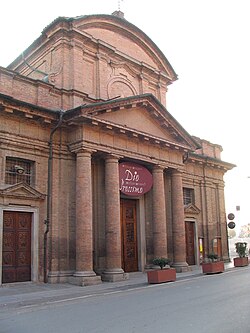
The current Church of St. John the Baptist in Lanero and considered the cathedral of Nizza Monferrato, it was built in 1772 on a project by architect Nicolis of Robilant and overlooking the small square named after Vittorio Emanuele II. The sacred building acquired its name from the ancient church of San Giovanni, then demolished between 1826 and 1827, which stood on the current square of the Town Hall, acquiring from it almost all its furnishings, altars and furnishings.
It is structured in three spacious aisles, well illuminated by frequent lateral openings, and almost without the arms of the transept. The four spans, supported by massive pillars covered in polychrome marble, lead to a spacious presbyterial area where light is ensured by the windows of a low octagonal drum dome. Notable is the semicircular apse, which enters among the surrounding buildings.
The facade recalls the image of a Greek-Roman temple,[20] with its Romanesque bell tower that today is the only remaining element of the old church[7].
Church of San Siro
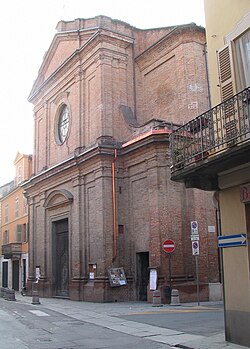
The church of San Siro was born in 1311 by a presumed local nobleman, a certain Antonio Pelletta, who placed it as a condition that the archpriest would always be a priest of Nice. In the past centuries, he saw countless and harsh traversies about the right of patronage and control, in which many noble families of the area were involved, the Town Hall and the Episcopal Curia, until they were summoned to trial before the Holy Rota and the highest ecclesiastical ranks.
Today the church, in Baroque style, is composed of two bells proper, while the three aisles are separated by cured balustrades in colorful marble. The ceilings were painted fresco, by a medium local brush, and are rich in complex stuccoes, frames and fine gilding.
Church of Sant'Ippolito
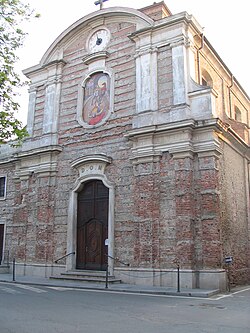
The church of Sant'Ippolito, which existed in 1297, was completely abandoned and semi-destroyed until the 18th century; it began to be visited by bishops at the end of the 16th century but the first parish relations date back to mid-17.[21] Re-edified between 1750 and 1760, its interior was partly modified by the meta of '900 from restorations and paintings. Original elements are the altar and canvas with Sant'Ippolito on the apse wall.[7] It has two naves, plus an addition, forming a portion of the right aisle, while the transept, as for other Nicesi churches, is practically non-existent, to the advantage of the sacristy. The outside façade, rather unclean, is divided into four sections by the embellishment elements.
Church of the Madonna della Neve
The church of the Madonna della Neve (or "delle Grazie") is also known as "Chiesa della Madonna del Bricco", from the position on the top of a hill, to the west of the city, where once stood the castle and the village of Lanero and was then church and parish of this castle. The present church was built in 1757/58 by the Abbot Commendatario of San Giovanni, Carlo Amedeo Pistone of Montalto, in the same place as the ancient.
Other religious buildings
- Oratory of the Most Holy Trinity:
Built in 1448 and enlarged in 1526, it presents a wooden portal with typical 18th century decorations. Above it, in a niche, the sculptural group with the Most Holy Trinity is raised. - Sanctuary of the Madonna di Loreto:
inside the sanctuary, founded in 1631 and enlarged in 1666, the presbytery shows, within a niche, the statue of Our Lady Lauretana. - Church of San Michele:
the church of San Michele, from which it takes its name the big township located on the hill to the east of Nice, once called "Colle Belmonte", is ancient as the old church of San Giovanni (demolita in the XIX century, from which it took its name today). It also existed before the foundation of Nice not far from Bricco del Mandolone on which the castle of Belmonte stood one of seven castles that dominated the area where the city was born. Belmonte was under the high domain of Marchesi di Monferrato that had received investiture from Frederick Emperor. In 1192 his feudal lords gave it to the powerful commune of Alessandria. As the centuries passed, the church was neglected due to wars and famines. Until the beginning of the 20th century the chapel remained inefficient, mass was celebrated there only once or twice a year. In 1909 it began to come to life again, with a restructuring process that ended after the end of the Second World War. - Church of Sant'Anna:
It seems to depend originally on the parish of San Siro, but that the parish of San Giovanni claimed possession, causing one of the many dissids between the two churches.
[7][20] - In the town there is a room of Jehovah's Witnesses Kingdom, built between 1997 and 1998, and an Islamic cultural centre.
Civil architecture
Municipal Palace and Civic Tower
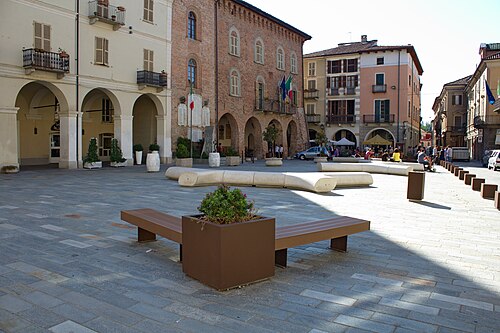
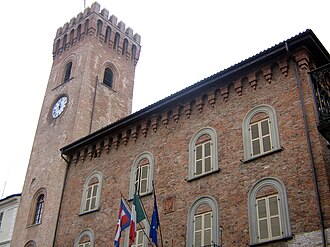
The Palazzo Comunale di Nizza Monferrato, located in Piazza Martiri of Alessandria in the historic centre, is an imposing building dating back to 1353 (but refurbished several times over the following centuries), which since its origins has been the meeting place for government leaders. The body of the building is two-storey, each having four windows, with superior ornamentation consisting of an arc bezel.
Below, a very wide internal portico, highlighted by the incisive presence of four arches, supported by four large pillars.
Between the two central windows of the first floor, united by an austere wrought iron balcony, stands the coat of arms of the city shaped in clay. The whole complex has a natural brick facade.
The most important attraction is, however, the ancient bell tower of the Town Hall, known by the Nicesi as "el Campanon" ("the Bell"), which over the centuries has carried out the different functions of defensive tower, bell tower and municipal seat.[7][20]
Palazzo De Benedetti
In front of the town hall there is another historic and prestigious building: Palazzo De Benedetti, dating back to the 18th century. It presents itself as a residence with a mezzanine floor and three other actual, whose main façade is divided into three horizontal bands. In the lower one stands a wooden door worked, while each of the four side portions to it (two per side), distinct with whipped hinges, with horizontal bands, houses a door and a window of the semi-storey top. At the level of the first cornice stretches a nice balcony with perforated marble parapet, and this opens the view to the second central band, containing two floors, with their respective smaller balconies. The upper section is scanned by 11 arched windows. Recently, the right part was added to the central body, rebuilt according to the original architectural lines. The palace has thus regained its harmonious form.[20] In the Palace was located synagogue of the local Jewish community, then dismantled in the years preceding the Second World War.[22]
Crova Palace
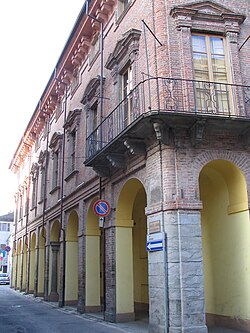
In via Pio Corsi you can reach Palazzo Crova. It was supposedly built on the remains of a pre-existing castle[7]. Enclosed between narrow streets, an example of an 18th century noble city residence, it includes a beautiful building, designed by the architect Nicolis di Robilant and a garden enclosed in high walls. Inside, some rooms (in what is now called the "main floor") feature decorations, stuccos and frescoes, with stone staircases equipped with decorated railings connecting the three floors. In another room on the ground floor the wooden coffered ceilings have been preserved. Outside, on the north side of the building, you can see curious friezes with vegetal and anthropomorphic representations, of much more archaic inspiration, separating the floors from each other and surrounding the windows. The east front constitutes the true facade, divided into a lower band of porticoes with ten pillars, and an upper one, in which alternating windows framed by pilasters in a style similar to the Corinthian, and surmounted by tympanums and lunettes. The descendants of the Barons Crova of Vaglio Serra, the original owners of the building, remained alive until the first decades of the last century.
Currently the Palace is home to the civic library, the Regional Enoteca, the Slow Food Conduct of Colline Nicesi, the Presidio del Cardo Gobbo di Nizza and the Association "Producers of Nice - Barbera d'Asti.[20]
Forum Boarium
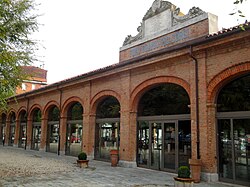
The Boario Forum is located inside the spacious Piazza Garibaldi, called "the top of Nice". It is here, in the southern section of this historic square, that stands the Forum, titled to Pio Corsi, built at the end of 1800. It appears as a gigantic structure completely in masonry, in which many arches are followed throughout the whole length, that give it a serious and scanned trend. The complex is covered by a whimsical vault, structured on winding beams and wooden monks, today reinforced by metal inserts. The Forum represents the symbol of trade and folkloric and food and wine events in it. In 2008 the renovation of the building is completed, which is closed to the access of cars and is equipped with offices, toilets, new flooring, heating, lights and large windows that close the structure, thus becoming an ideal place for events, conferences, congresses and exhibitions. It is the seat of the Tourist Information Office.[20]
Holy Spirit Hospital
In via Bona there is the back of a building that is home to the "Holy Spirit Hospital". The structure also housed the "State Media School", which was then moved to another institute.
It has very ancient origins. Over the centuries it has hosted Franciscan friars, Capuchins and Benedictine nuns, having to respond to the needs of work and the strictest claus. It is equipped with numerous large arched windows, in succession, in the presence of courtyards inside to cloister, with porticos and jardinetti, in the thick wide and luminous intercommunication, with walls of considerable thickness.
Inside it is the tiny Church of the Holy Spirit, with carved wooden portal, restored in 1877.
At the end of the same Via Bona, following excavations conducted in the small square Prince Umberto, were found remains of ancient burials of corpses of nuns, as in the place was located the private cemetery.[20]
Casa Gioanola Martinengo
Sita in the street San Nicolao Casa Gioanola Martinengo is a one-sided house owned by the Gioanola family designed by architect Gino Becker and considered an interesting work in contemporary architectural panorama[23].
Other
Via Maestra
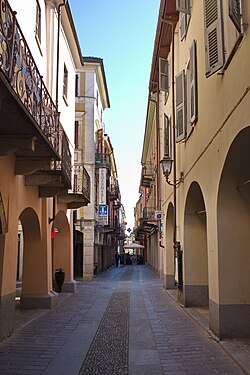
Via Carlo Alberto, better known as "Via Maestra", connects the main square, Piazza Garibaldi, with Piazza XX Settembre (also known by the inhabitants of the area as "Vegetable Square" because of the fruit and vegetable and food market that is held there), through its ancient porticoes (supporting axis of Nizza Monferrato), with rounded and lowered arches, beneath which there are still ancient metal reinforcing rods. Some houses, with valuable wrought iron balconies, date back to the eighteenth and nineteenth centuries.
Below, you will find the most characteristic shops of Nice. It is the main and commercial street of the historic center of the city.[20]
The shape of the city, in the oldest area, is singularly triangular[7].
Natural areas
In the town there is the "Parco degli alpini", a green area on the banks of the stream Belbo, equipped with benches to spend time on relax. The park is open to the public and was completed in 2006.
Society
Demographic evolution · Foreign ethnic groups and minorities · ReligionExplore this chapter
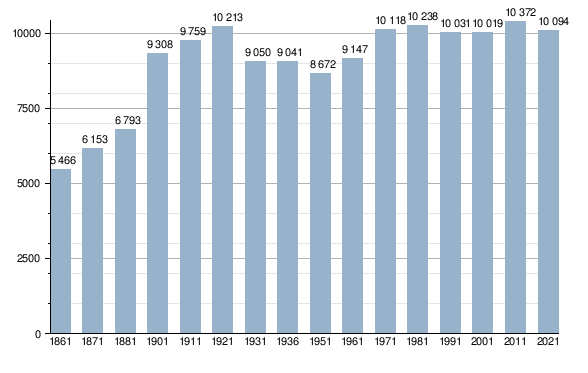
Demographic evolution
Inhabitants registered[24]
Foreign ethnic groups and minorities
Religion
The religion most practised in the centre is, as for Italy, the Catholic one; there are also minorities especially of Muslims, Orthodox and Jehovah's witnesses, those present with a flourishing religious community or Christian Congregation that counts over a hundred faithful.[27]
In the territory there are some Catholic religious institutes, such as the historical Institute Our Lady of Graces and the oratory Don Bosco, managed by Salesian priests.[28].
The Jewish community of Nizza Monferrato
Nizza Monferrato was the seat of a flourishing Jewish community, which has been documented since 1539. By the end of the ghetto, in 1848, the decline of the community began. The furniture of the disappearance remains as evidence of this presence today synagogue (preserved ad Alessandria) and a cemetery.[22]
Traditions and folklore
In autumn the fair of fat bue is celebrated. On the day of St. Charles, Mass in dialect is also celebrated in the parish of Saint John in Lanero.
Culture
Education · Libraries · SchoolsExplore this chapter
Education
Libraries
The civic library is located in the former seat of the Justice of Peace.
Schools
There are various educational, public and private facilities on the municipal territory, some gathered in unique complexes: four kindergartens, four primary schools (elementary), three secondary schools of first degree (medie) and seven secondary schools of second grade (superiors).[29]
Museums
Sugar House
It is the company documentation centre of Children of Pinin Pero S.p.A., a company dedicated to the sugar sector.
The "Sugar Project Daughters of Pinin Pero S.p.A.", 600 m2 structure arranged on two levels and completely immersed in the green hills of Monferrato, the objective is the correlation of a daily use food such as sugar with teaching, culture, information, customs and art, also attributing importance to packaging product.
The Sugar House is named after Franco Pero who died in February 2001. Franco Pero, an entrepreneur of great stubbornness and ability, along with his brother Renzo (the current president of the company), was instrumental in the years of development that saw the Sons of Pinin Pero & C. specialize in the marketing and processing of sugar.
Bersano Museum
The museum of peasants and prints on wine Bersano was founded by lawyer Arturo Bersano, founder of theThe same name winery, which gave rise to one of the most appreciated museums of the enoic-contadin civilization, followed by a rare collection of prints and labels of the last 4 centuries. He promotes this initiative with the intention to preserve the main tools of the agricultural world produced in the campaign Monferrina and let it go. There are various types of containers, such as glasses and glasses, thick to last over time, extraordinary pints, quarters of brenta blown in the dark glass of Poirino, solid mastelli to pull wine and tini where grapes fermented, large cellar barrels and free barlets for brokers and carts that had very different measures, because they were related to the generosity of farmers. The museum also has beautiful peats of the '600-'700 with descending central screw. There are also peats with two large vertical screws. Their majestic simplicity is a symbol of dedication to the vignaiolo work.
In the inner courtyard of the Museum there are reconstructions of ancient wineries, there is no surprises, including an authentic steam locomotive.
There are also hoops, studs, a pair of mortars, silkworms, rafts, glass mosquitoes, lanterns and hollow pumpkins to bring us water.
The collections date a more recent era than the farmers: they are from the 1960s and tell four centuries of rare prints and labels. There are in fact numerous labels of all types: hand painted, with caricatures, and printed in extremely sophisticated characters.[20] The labels are of "author", in fact the most important are the work of the alessandrino Franco Sassi and of the torinese adoption Carlo Terzolo.
Theatre
In the municipality there is the "Social Theatre", home to children's shows and not, by theatrical companies and sometimes famous characters. It is also used as a cinema and recently also projects 3D films.[30] There is also a small theatre in the oratory "Don Bosco".
Recording
The Mescal is located in Nice, an important independent record label founded in 1993 by Ligabue. The Mescal aims to produce and protect emerging musicians. Among the most illustrious collaborations stand out among others those with Andrea Mirò, Afterhours, Bluvertigo, Carmen Consoli, La Crus, Modena City Ramblers, Perturbazione, Subsonica and more recently with Arisa, Morgan, Mauro Ermanno Giovanardi, Violante Placido, Ron, Moreno, Simone Cristicchi and lastly Ermal Meta.
Kitchen
Nizza Monferrato is renowned for:
- Nizza DOCG (previously Barbera d'Asti superiore Nizza), red wine produced in 18 neighboring municipalities.
- Cardo Gobbo: winter vegetable, low in calories, is ideal with wet cedar; it takes its name from the curvature that is made to it by a particular subterranean processing. Nice's cardo gobbo is under the Slow Food Presidium.
- The belecàuda, in Nicese dialect indicates chickpea flour cooked in a wood oven. It is a specialty of Genoese origin which however has spread both along the coasts of the entire Ligurian Sea and inland: the spread in the Nicese area is due to the notable commercial flows that linked this area to the sea.
- Carne bovina Razza Piemontese: Nice can boast an affirmed tradition in the meat sector of the fine Piedmontese breed.
- White Truffle of Nizza Monferrato
Nizza Monferrato is present at festival of the Astigian festivals with the belecàuda and meliga pastes.
Events
- Race of the barrels, in June, on the first Sunday;
- Monferrato in Tavola, in June, the first weekend, in conjunction with the race of the barrels;
- Antique market, on the third Sunday of the month; organized by the municipal administration, is one of the largest antique markets in northern Italy. Experiences of ancient objects and furniture from different Italian regions;[31]
- Fair of San Carlo in early November;
- Fair of the Holy Christ, in April;
- Nice is Barbera, in May;[32]
- Wine cellars open to the public, on Sunday after harvest;
- Historical Re-enactment of the Assumption of 1613, second weekend in May (first edition for the 400th anniversary year held in 2013)[33];
- Fans Out, singing festival of singers and emerging groups, in June;
- Nizza Monferrato is one of the municipalities of the province participating in Palio di Asti, which takes place on the first Sunday of September in the provincial capital. The Rector is Pier Paolo Verri. The victories of the municipality were:
- the 1986 edition with the jockey Leonardo Viti (Canapino) on the horse Varigino (Elf); the Rector was Bruno Verri;[34]
- the 2016 edition with the jockey Giovanni Atzeni (Tittia) on the horse Moment of Love (Moscato Dry Santero); the Rector was Pier Paolo Verri.
- The market day of Nice is Friday morning. It is held in Piazza Garibaldi and in Via Maestra with the benches of clothes, objects or other kinds, and in Piazza XX Settembre with the docks of agri-food. A small fruit and vegetable market is also held on Wednesday, in Piazza XX Settembre.[35]
Anthropic geography
Urbanism · HamletsExplore this chapter
Urbanism
The municipality of Nice has a rather homogeneous urbanization, mainly concentrated in the town. In 2013 the works of a new bridge connecting the city from the state section for Asti, allowing the circulation of heavy vehicles outside the city. Various bridges have been renovated or even recreated from scratch, such as the bridge swoop, which takes its name from the structural shape created mainly for anti-flood purposes and the formation of underlying waste caused by floods. It can therefore be added that Nice is a city in continuous expansion, as demonstrated by the recent construction of neighborhoods, such as Campolungo and those in the Istituto San Giuseppe area. New peripheral areas are in fact becoming places of continuous urban growth.
Hamlets
The main fractions of Nizza Monferrato are[36]:
- Bodies
- Bossola
- Case Giolito
- San Giuseppe Institute
- Green Bridge
- Region Baglio
- Region Bricco-Cremosina
- Region Campolungo
- Saint Michael
- San Nicolao
- Villa Cerreto
- Volta
Economy
Agriculture · Industry · ServicesExplore this chapter
Agriculture
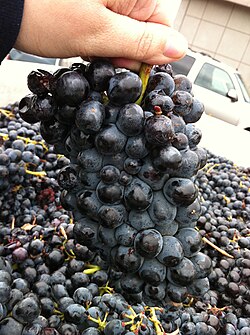
The agriculture of the center reaches peaks of absolute excellence such as wine production, large DOC and DOCG grapes like Barbera, Dolcetto, Moscato, Brachetto, Cortese, Freisa, Grignolino and others, vegetables with Cardo Gobbo, fruit with Mela di San Marzano, forages with cattle breeding of Piedmontese breed and cereals.
The most common vine in these hills is Barbera, where it finds pedoclimatic conditions particularly favorable for its ripening, obtaining from its grapes the Barbera d'Asti of which is part Nice, produced locally in eighteen municipalities.
Numerous private producers, i.e. small winemakers produce grapes and turn it into wine by selling the product directly. They carry out a predominantly family activity.[20]
Industry
Industrial development is mainly related to the transformation of agricultural product or related activities. It is therefore natural that there are numerous wine factories. Among the winemakers, in addition to large wineries, the social cellar plays an important role.[20][37]
In addition to the activities related to enology, there are also several metal companies, clothing and construction materials.[38] Very well known is the processing of pewter.[39]
Services
Tourism
In recent years tourism in the town has grown sharply, especially since it became a UNESCO heritage site along with the whole area of Monferrato and Langhe. Significant the turn of tourists coming from Scandinavian countries, who visit the places known for wine make stay in the area of Nice.
Infrastructure and transport
Roads · Railway lines · Urban mobilityExplore this chapter
Roads
Nizza Monferrato is reachable through the State Road 456 of Turchino, from direction Asti And Acqui Terme, from the Provincial Road of Valle Belbo from direction Alessandria and the Provincial Road of Canelli (from Canelli), which has its culmination in Nice, connecting with the first.
Railway lines
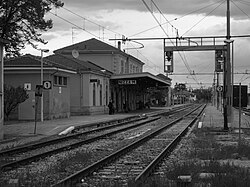
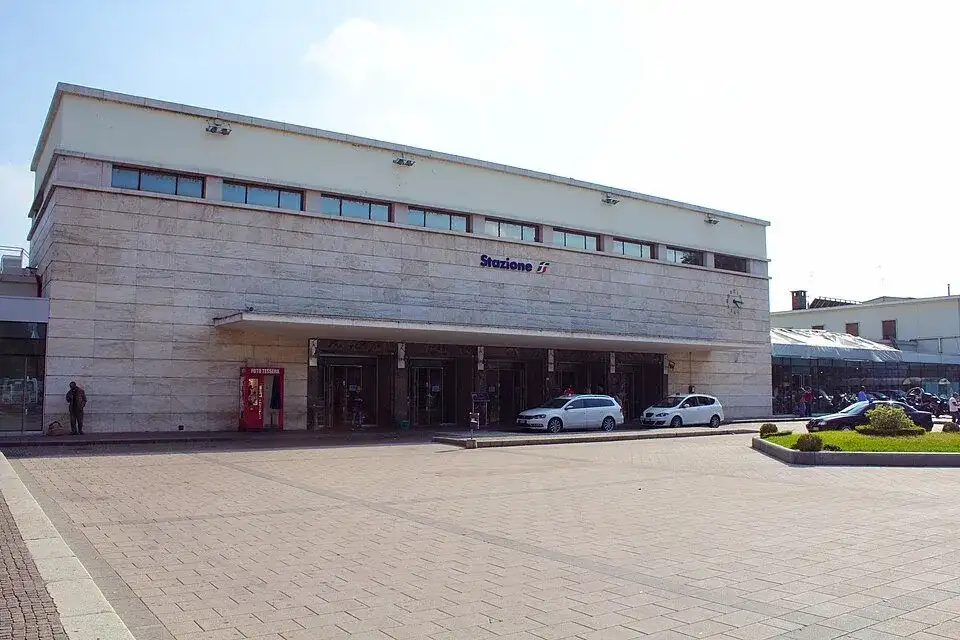
At the station of Nizza Monferrato Pass the Asti –Genova and Alessandria-Cavallermaggiore railway lines; The port of call is served by regional trains of the director Asti – Acqui Terme[40].
Urban mobility
There are also several bus stops in the town, ASP and Bus Company.
Administration
Twinning · Other administrative informationExplore this chapter
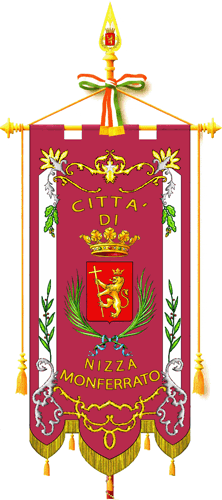
Below is a table relating to the administrations that have succeeded one another in this municipality.
| Period | First citizen | Match | Load | Notes | |
|---|---|---|---|---|---|
| June 12, 1985 | 8 April 1988 | Angelo Zaccone | Christian Democracy | Mayor | [41] |
| 8 April 1988 | 9 July 1990 | Franco Orione | Christian Democracy | Mayor | [41] |
| 9 July 1990 | April 14, 1993 | Giuseppe Odasso | Christian Democracy | Mayor | [41] |
| June 13, 1993 | April 24, 1995 | Flavio Pesce | Democratic Left Party | Mayor | [41] |
| April 24, 1995 | June 14, 1999 | Flavio Pesce | city list of center-left | Mayor | [41] |
| June 14, 1999 | June 14, 2004 | Flavio Pesce | city list of center-left | Mayor | [41] |
| June 14, 2004 | June 8, 2009 | Maurizio Carcione | civic list | Mayor | [41] |
| June 8, 2009 | December 10, 2010 | Pietro Giovanni Lovisolo | The People of Freedom | Mayor | [42] |
| December 10, 2010 | April 18, 2011 | Carolina Bellantoni | Comm. pref. | [41] | |
| April 18, 2011 | May 16, 2011 | Paolo Mastrocola | Comm. Regional regional policy | [41] | |
| May 16, 2011 | 5 June 2016 | Flavio Pesce | Civic List Together for Nice | Mayor | [41] |
| 5 June 2016 | October 3, 2021 | Simone Nosenzo | civic list Cambiamo Nice | Mayor | [41] |
| October 3, 2021 | in office | Simone Nosenzo | civic list Cambiamo Nice | Mayor | [41] |
Twinning
 Savignano sul Rubicone, from March 1995[43]
Other administrative information
The city of Nizza Monferrato is part of Community Collinare Vigne & Wines, one of the twelve hill communities present in the province.[44]
Sport
Soccer · Nice · Other football companiesExplore this chapter
Soccer
Nice
The Nicese Football Association is the football club that represents Nizza Monferrato, and is part of F.I.G.C. Founded in 1922, currently militates in second category. The social colors are the yellow-red striped and the stadium is the "Tonino Bersano"[45].
Other football companies
- GS Voluntas Nice (young team)[46].
Sports equipment
- "Amateur Sports Association Supersport Gym"[47]
- Centro Sportivo Comunale[47]
- Salesian Oratory "Don Bosco"
- Municipal swimming pool[48]
- "Winner Track", where Go-Carts race[49]
- Municipal Stadium "Tonino Bersano" - Associazione Calcio Nicese, GS Voluntas Nizza
- Palasport "Pino Morino" - Associazione S.C.M. (Sporting Club Monferrato)
Image gallery
Explore this chapter
-
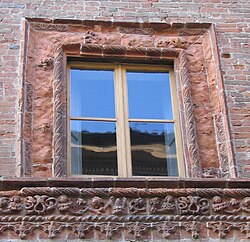 Palazzo Crova (detail)
-
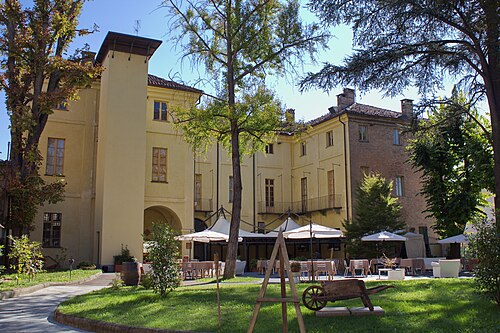 Interior of Palazzo Crova
-
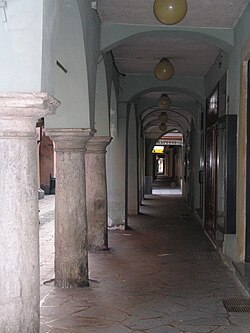 Via Maestra, the arcades
-
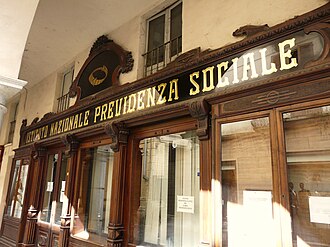 Historical teaching in Via Maestra
-
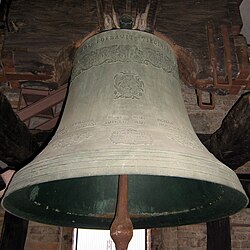 Municipal Tower Bell
-
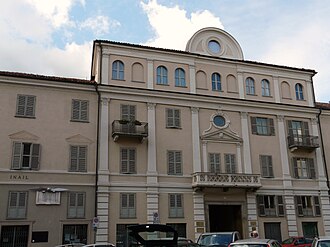 Palazzo De Benedetti
-
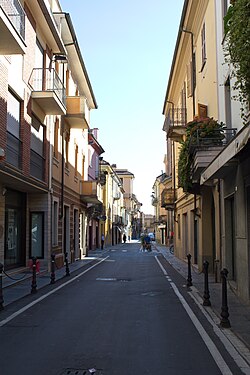 Via Pio Corsi
-
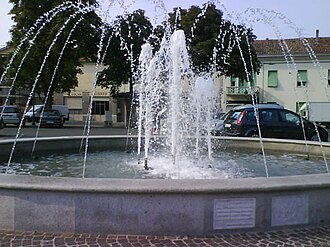 Fountain of Piazza XX Settembre
-
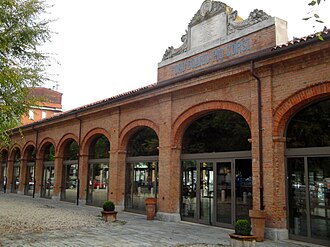 Forum Boarium
-
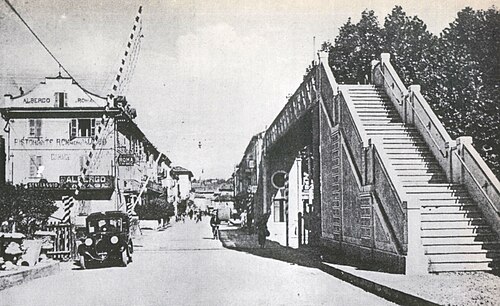 Picture of vintage years '30 the passage to Via Roma level, near the station


Notes
Explore this chapter
- ^ Altitude - Climate and Geographical data on Nizza Monferrato, up common-italiani.it.
- ^ Nice Monferrato - Encyclopedia - Treccani, up www.treccani.it. Retrieved 9 August 2026.
- ^ to b Monthly demographic balance for the year 2026 (provisional data), up demo.istat.it, ISTAT.
- ^ Seismic classification (XLS), up risks.protezionecivile.gov.it.
- ^ Table of degrees/day of Italian Municipalities grouped by Region and Province (PDF), in Law 26 August 1993, n. 412, annex A, National Agency for New Technologies, Energy and Sustainable Economic Development, 1 March 2011, p. 151. URL consulted on 25 April 2012 (archived fromoriginal url on 1 January 2017).
- ^ Bruno Migliorini et al., "Monferrato" sheet[interrupted link], in Dictionary of spelling and pronunciation, Rai Eri, 2010, ISBN 978-88-397-1478-7.
- ^ to b c d And f g h From the site Nizza Monferrato Archived on October 2, 2013 at the Wayback Machine.
- ^ to b Geography - seismic and climatic classification of Nizza Monferrato, up all'italia.it.
- ^ Monthly and annual climate table (TXT), in Climate archive DBT, ENEA (archived fromoriginal url about 2016).
- ^ Origins of Nizza Monferrato, up nizza.it (archived fromoriginal url on 3 October 2013).
- ^ Nizza Monferrato - Historical dinners, up itinerariesvallebelbo.it (archived fromoriginal url on 14 May 2006).
- ^ Universal Chronicle of Mantua, up digilib.bibliotecateresiana.it.
- ^ Alberto Casella, Cadets of the Real House, feudal lords of the Pope and the Emperor, princes - bishops. The title of Prince in Piemonte (first part) (PDF), in Review of the Araldic College, year CXIX, June 2022, pp. pp. 185-186.
- ^ to b the history of Nizza Monferrato and more, up langhe.it (archived fromoriginal url on 10 October 2007).
- ^ Mario Zucchi, Nizza Monferrato, in Historical Bibliography of the States of the monarchy of Savoy, vol. 10, Turin, Fratelli Bocca Editori, 1934, p. 476.
- ^ Coat of arms, up City of Nizza Monferrato. Retrieved 10 August 2025.
- ^ Nizza Monferrato, up araldicacivica.it.
- ^ motivation is viewable on the site Institute of Blue Ribbon
- ^ The cities decorated with the Military Valor for the contribution given to the liberation war - National Association Partisans of Italy, up anpi.it (archived fromoriginal url on 20 September 2006).
- ^ to b c d And f g h the j k From the official website, up common.nizza.asti.it.
- ^ Municipality of Nizza Monferrato Archived on 22 June 2015 at the Wayback Machine. (pdf)
- ^ to b Annie Sacerdoti, Guide to Jewish Italy, Marietti, Genoa, 1986
- ^ Casa Gioanola Martinengo, up censusarchitetturecontemporanee.cultura.gov.it. Retrieved 28 August 2025.
- ^ Data taken from:
- Resident population of the municipalities. Censuses from 1861 to 1991 (PDF), up ebiblio.istat.it, ISTAT.
- Resident population - Time series, up exploredati.istat.it.
Please note: 2021 data refers to permanent census data as of December 31 of that year.
- ^ Population resident on 1 January for sex and single citizenship, up demo.istat.it, ISTAT. Retrieved 19 May 2026.
- ^ Foreign citizens Nizza Monferrato 2025, up all'italia.it. Retrieved 19 May 2026.
- ^ Religion and spirituality in Nizza Monferrato, up networkimprese.it.
- ^ Our Lady of Graces, up schoolnizza.it.
- ^ Schools in Nizza Monferrato, up common-italiani.it.
- ^ Cinema Teatro Sociale, up findziende.net. Retrieved 4 June 2020.
- ^ Website of the Nice antique market, up marketsnotice.com.
- ^ Official website of "Nice is Barbera", up nizzaebarbera.wine.
- ^ La Rievocazione Storica dell'Assedio del 1613 - 400o Anniversario - Accademia di Cultura Nicese "L'Erca" Onlus - Nizza Monferrato (AT) ITALY, up ercanizza.com. Retrieved 27 September 2013 (archived fromoriginal url on 24 September 2015).
- ^ Official website of the Palio di Asti, up common.asti.it.
- ^ Official website of the Municipality of Nizza Monferrato, up common.nizza.asti.it.
- ^ Fractions of Nizza Monferrato, up all'italia.it.
- ^ Winery of Nice, up nizza.it.
- ^ History of Municipalities - Nizza Monferrato, up high-mountain.info. Retrieved 15 January 2022 (filed on 13 November 2009).
- ^ Cartographic atlas of craftsmanship, vol. 1, Rome, A.C.I., 1985, p. 8.
- ^ Nizza Monferrato Station, up touringclub.it.
- ^ to b c d And f g h the j k l http://amministratori.interno.it/
- ^ From the Pdl of Asti solidarity with former mayor Lovisolo di Nizza, up vallibbt.it.
- ^ List of common Piedmontese twinnings, up common-italiani.it.
- ^ See official website of the Community Collinare Vigne & Vini, up vignevini.at.it.
- ^ See the official website of the Nicese Football Association, up adcnicese.it (archived fromoriginal url on 19 January 2010).
- ^ G.S. ♪, up winelandnews.it (archived fromoriginal url on 19 May 2006).
- ^ to b Gyms of Nizza Monferrato, up mysteriesmrese.it.
- ^ Swimming pools Nizza Monferrato and sports facilities, up nizza-monferrato.paginegialle.it (archived fromoriginal url on 27 May 2010).
- ^ Official website of the Winner Track, up track-winner.com.
Where to stay · Nizza Monferrato
Find stays on Booking.comStories, places and people
More about Nizza Monferrato and the surrounding area
Follow a thread of history and see where it leads.
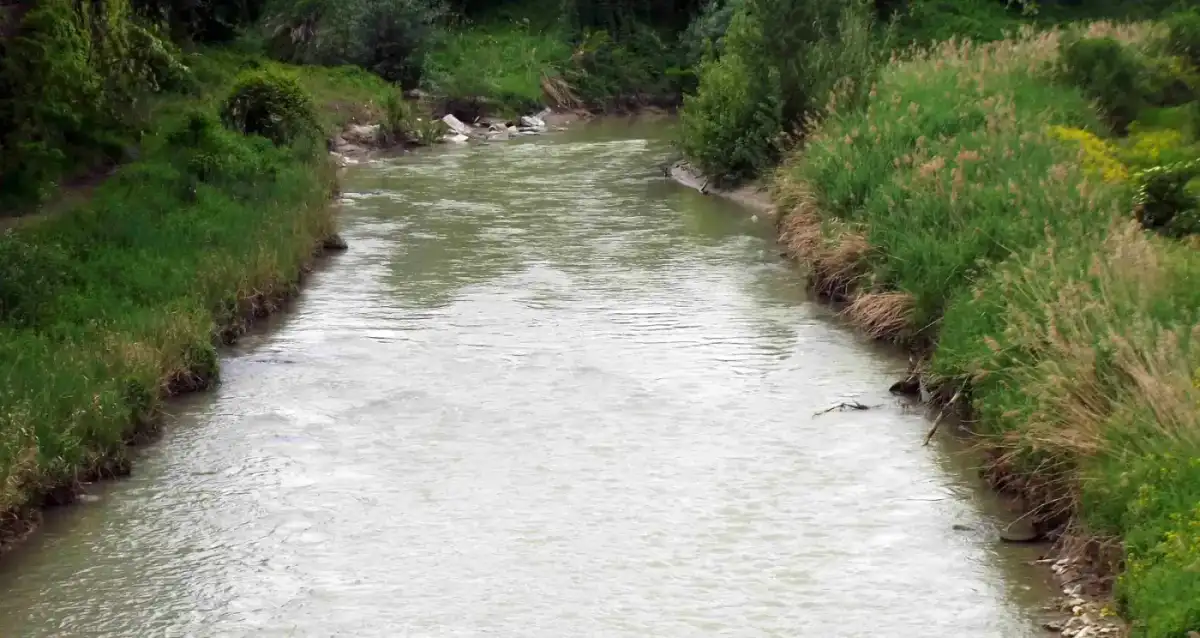 F Ceragioli · CC BY-SA 3.0
Belbo
The Belbo (Berb or Belb in Piedmont) is a stream (95 km, basin 469 km2) of the Piemonte south-eastern, main right tributary of the Tanaro after the Bormida .
Read the storyNice (rio)
The Rio Nizza is a small hilly water course that flows entirely in Monferrato astigiano in Piemonte .
Read the story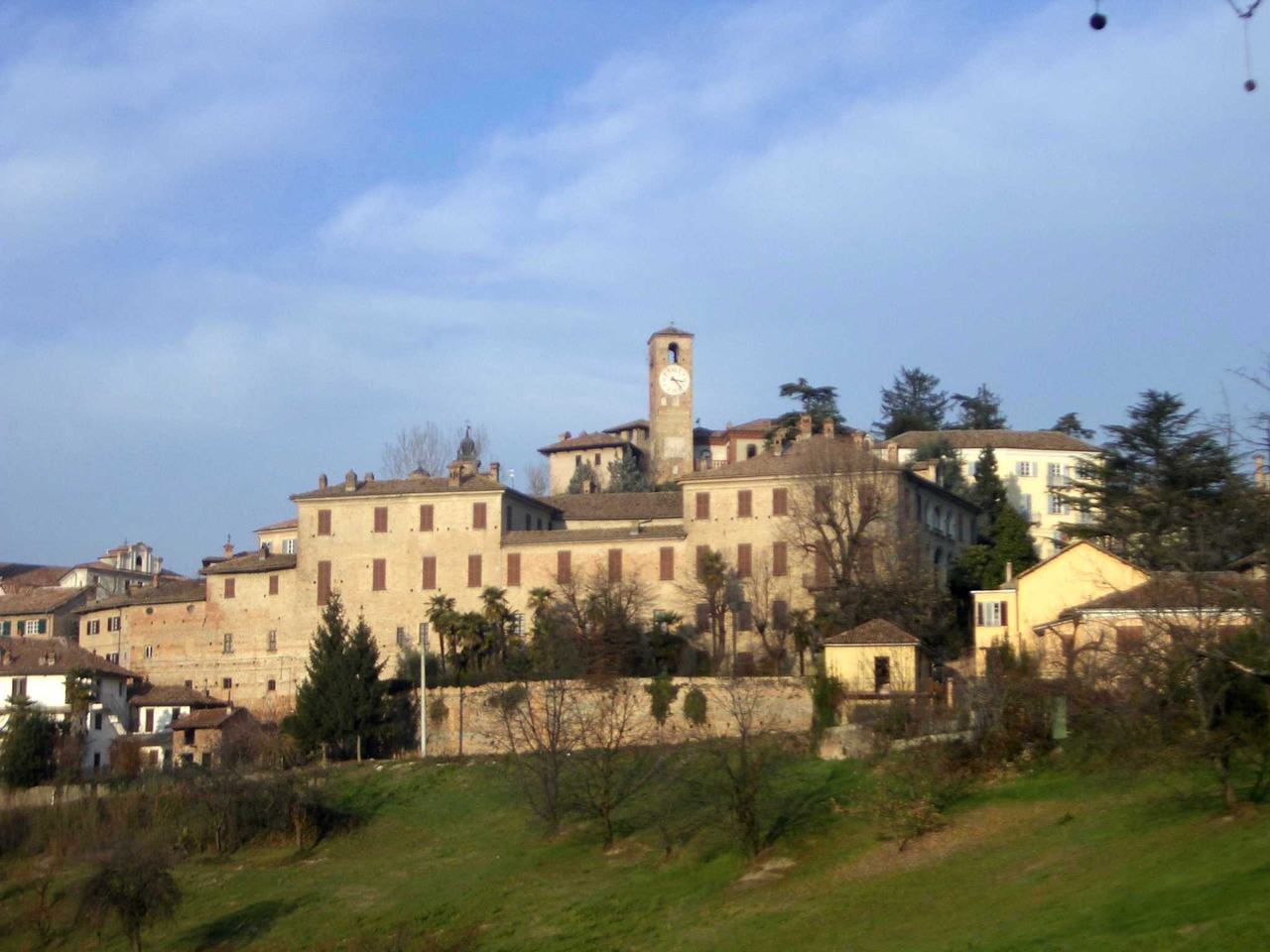 Laurom · Public domain
Valle Belbo
The Belbo Valley is a valley of Lower Piemonte , located along the course of the homonymous stream .
Read the storyNice
The Nicese is a region of Basso Piemonte , located in the south of the Province Asti . It borders north with the Astigiano (zone around the capital Asti ), to the east with the Acquese (Province of Alessandria ), west with the Province of Cuneo and south with the Province of Savona in Liguria . It takes the name from Nizza Monferrato , the center around which gravitates the area. It is located in the Belbo Valley, in the heart of Monferrato , in an area rich in vineyards that feed important wine production. The main waterways that cross the area are the Belbo stream and its Nice tributary.
Read the story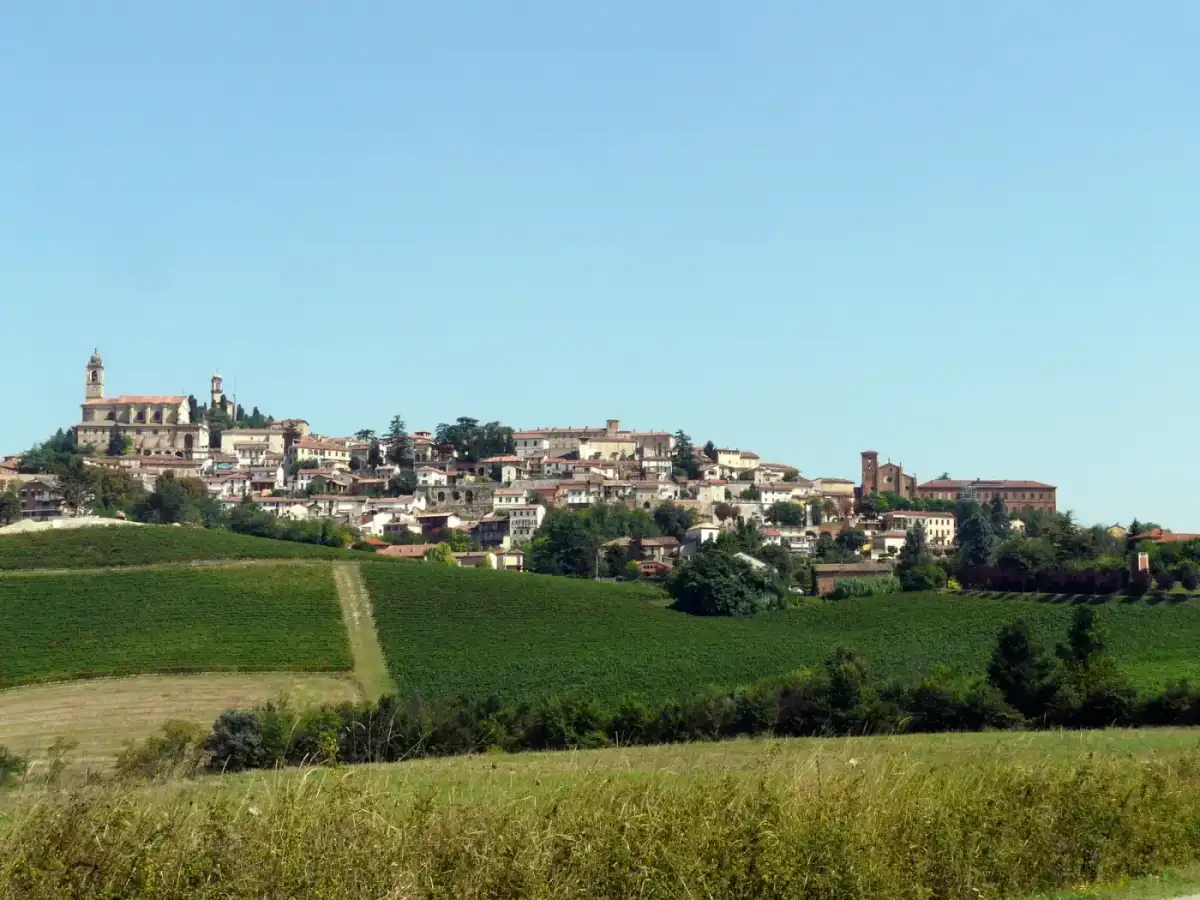 Davide Papalini · CC BY-SA 3.0
Monferrato
The Monferrato (Mr. Ferratus in Latin) is a historical-geographic region of Piedmont, Piemonte .
Read the story1994 Tanaro flood
On 5 and 6 November 1994, the provinces of Cuneo , Turin , Asti and Alessandria were heavily affected by a violent flood event that caused the flooding of the Po Rivers, Tanaro and many of their tributaries (especially the Belbo stream, an important right-wing tributary of Tanaro), causing 69 victims and 2,226 displaced.
Read the story Mikenorton · CC BY-SA 3.0
Earthquake Piemonte Southern 2000
The earthquake of 21 August 2000 was a seismic event of strong intensity that struck the Piemonte southern, especially the provinces of Asti and Alessandria . The shock, of magnitude 4,8 Richter (VII° Mercalli) occurred at 19:14, sowing terror among the population. The epicenter occurred in the area between Nizza Monferrato , Canelli and Acqui Terme , precisely in the municipalities of Bergamasco (OHIM) Cortiglione , Incisa Scapaccino and Castelnuovo Belbo (AT ). It was clearly perceived throughout the North-West, Lombardy and partly even to the Apennines Tosco-Emilian; slightly felt in south-eastern France.
Read the storyweather station of Nizza Monferrato
The weather station of Nizza Monferrato is the reference meteorological station for the locality of Nizza Monferrato .
Read the story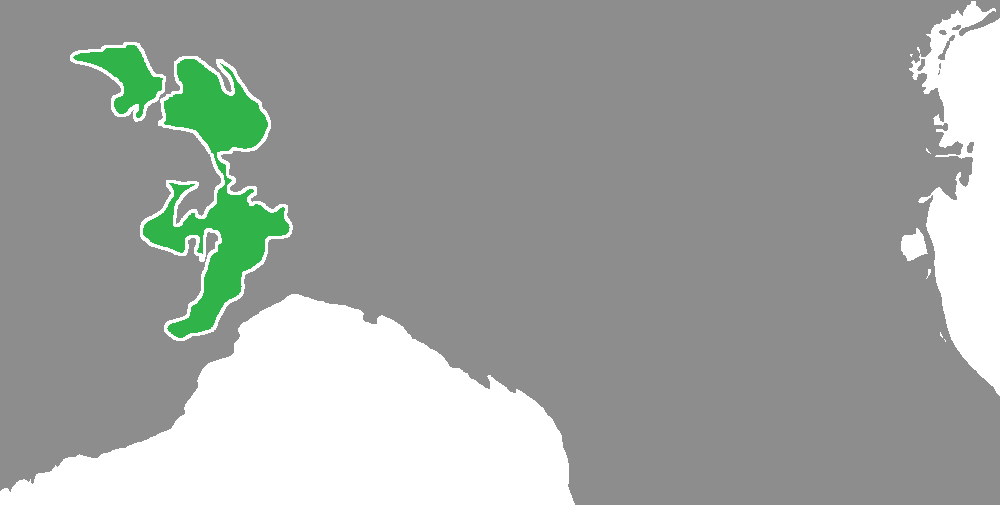 Valexar · CC BY-SA 4.0
Marchesato del Monferrato
The Marquisate of Monferrato was an ancient Italian pre-unitarian state, which originated in the 11th century when the Brand Aleramica, managed until then consortilmente between all descendants of Aleramo, was divided between the Marquises of Monferrato and the Marquises of Savona . He was ruled by the Aleramic dynasties of Monferrato, Paleologists and Gonzaga . It ended in 1574 when, incorporated into the Gonzagheschi domains, it was elevated to duchy.
Read the story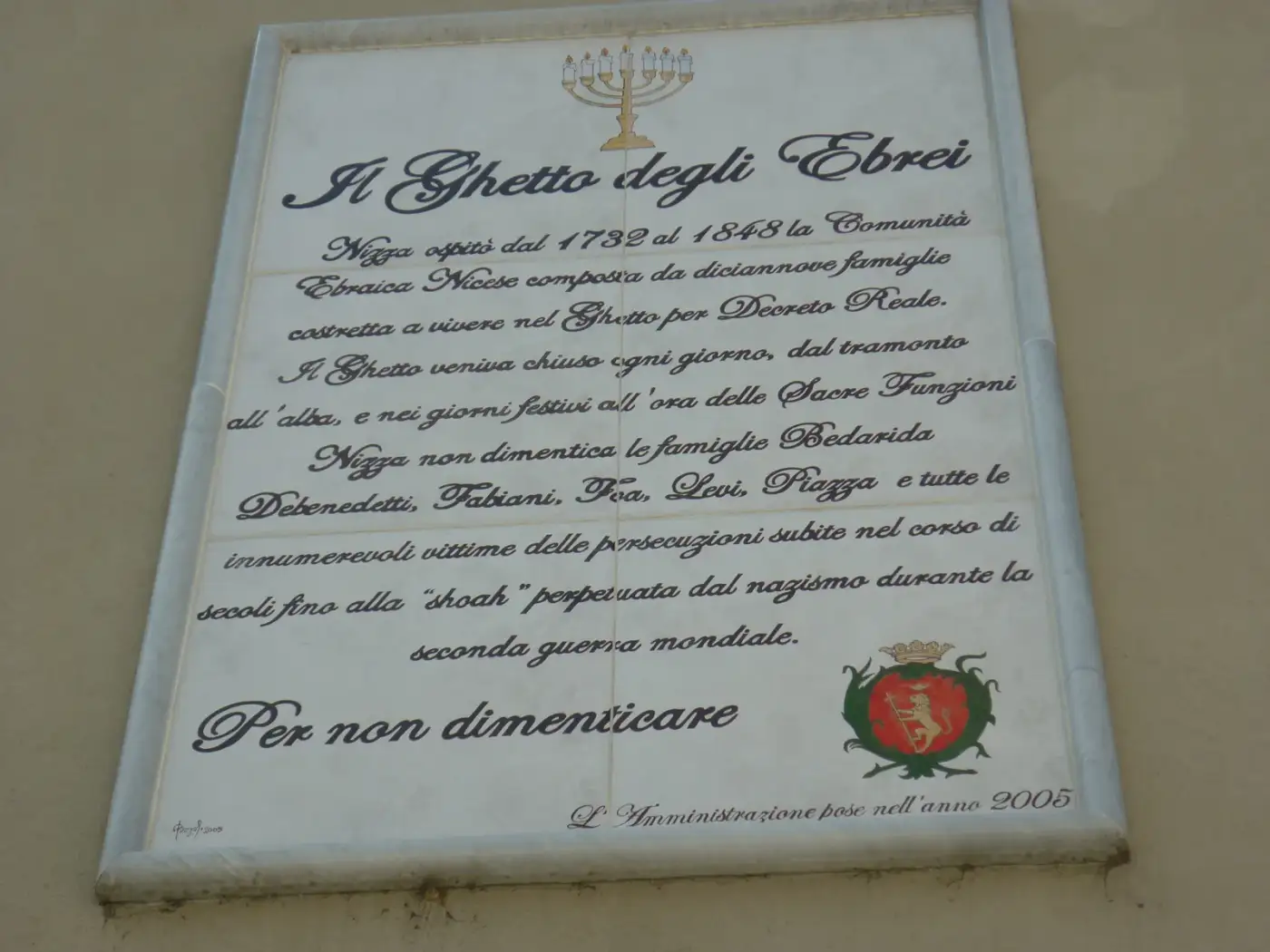 Ms.wiki.us di Wikipedia in italiano · CC BY-SA 3.0
Jewish Community of Nizza Monferrato
The Jewish community of Nizza Monferrato is attested between the 16th century and the first decades of the 20th century.
Read the storySynagogue of Nizza Monferrato
The synagogue of Nizza Monferrato, now dismantled, stood in Nice Monferrato in Piazza del Municipio, in the Palazzo De Benedetti. The De Benedetti Palace was built in the 19th century, while the synagogue, pre-existing, was in Ghetto, today via D'Azeglio.
Read the story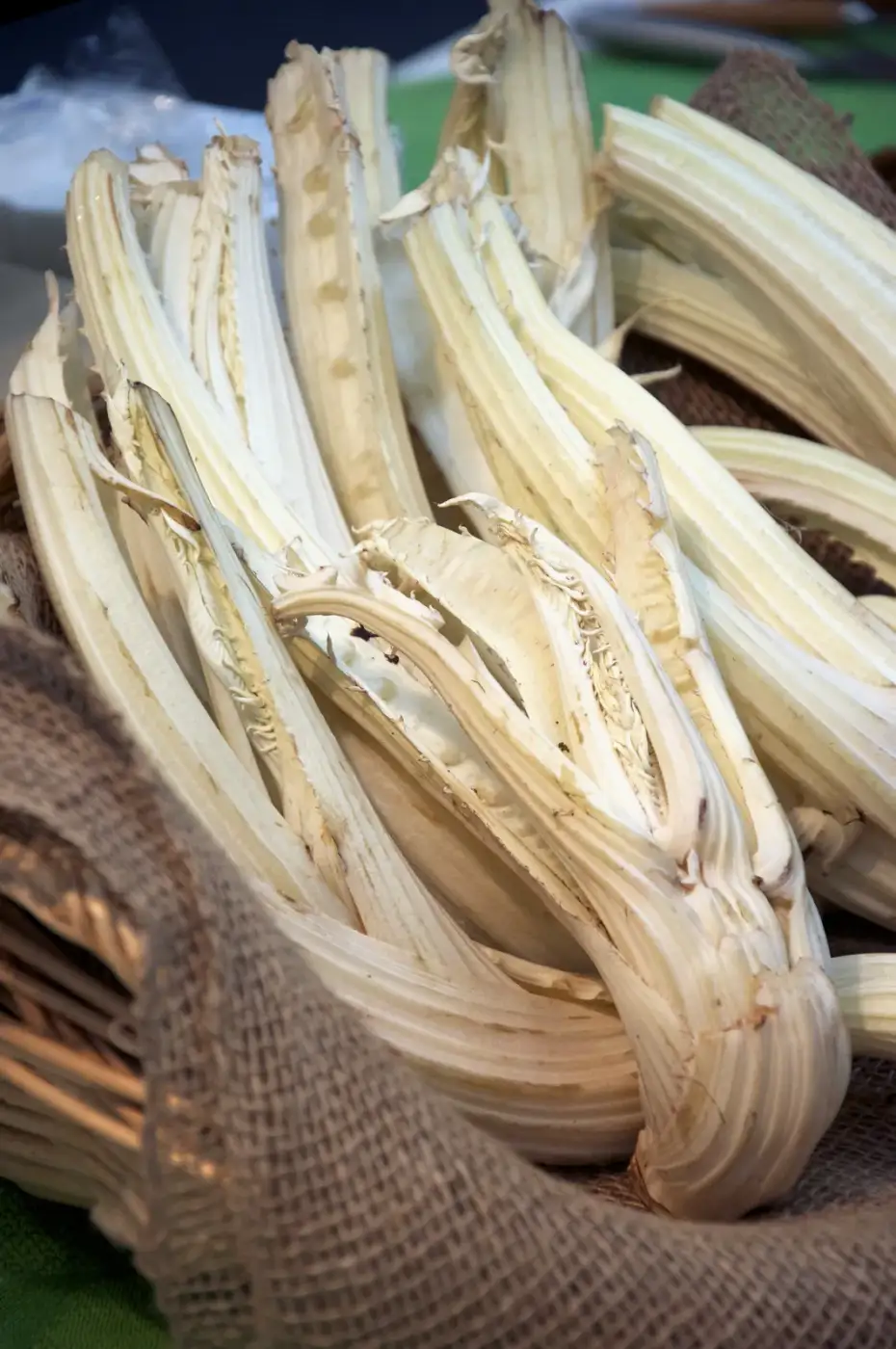 Paola Sucato · CC BY 2.0
Cardo gobbo di Nizza Monferrato
The Cardo gobbo of Nizza Monferrato is a plant that falls within the genus Cynara, belonging to the family of Asteracee, also called Compositae .
Read the story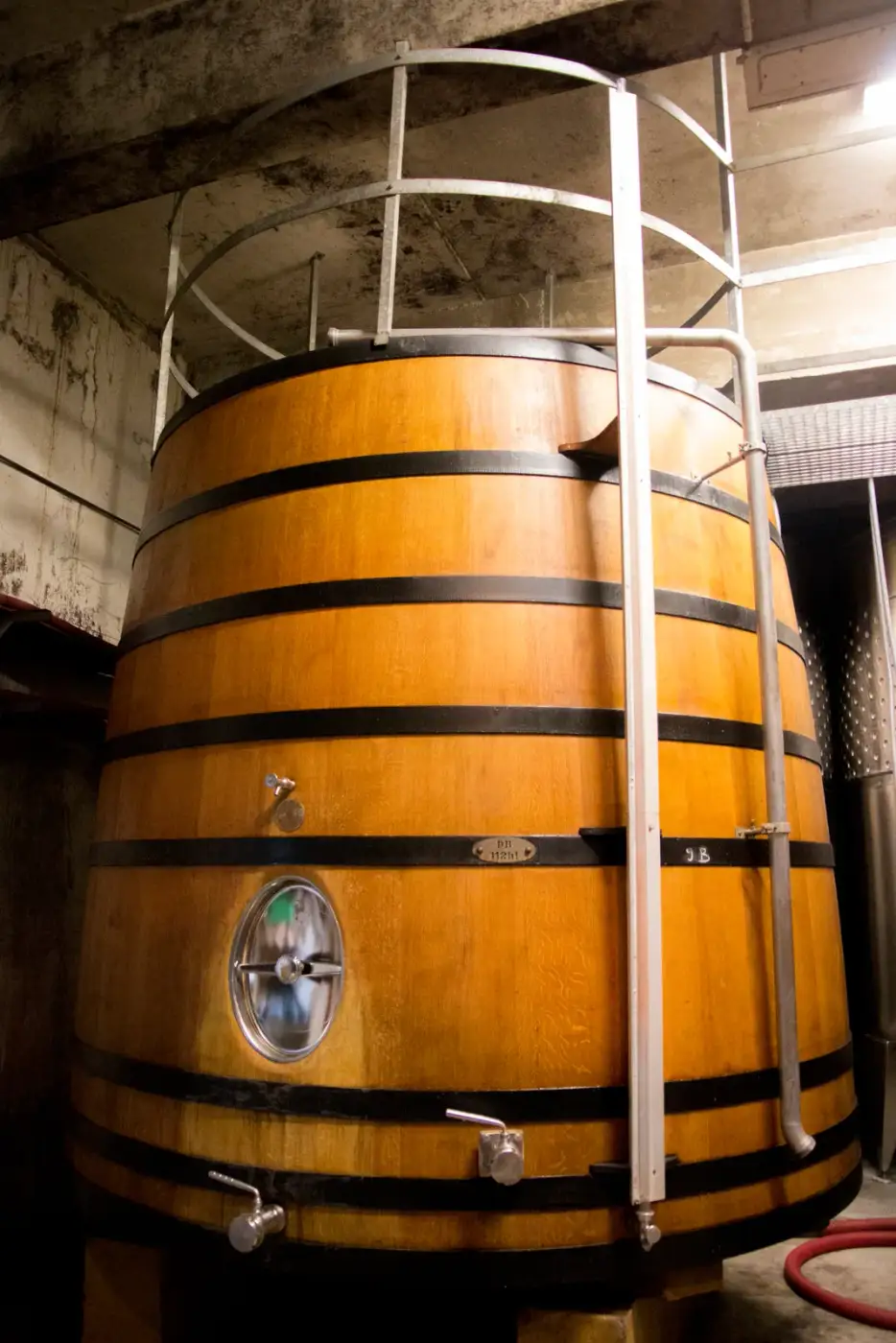 Olivier Lemoine ( https://Photo-Terroir.fr ) · CC BY-SA 4.0
Nice (wine)
Nice is a DOCG reserved for a wine whose production is allowed in the province of Asti .
Read the story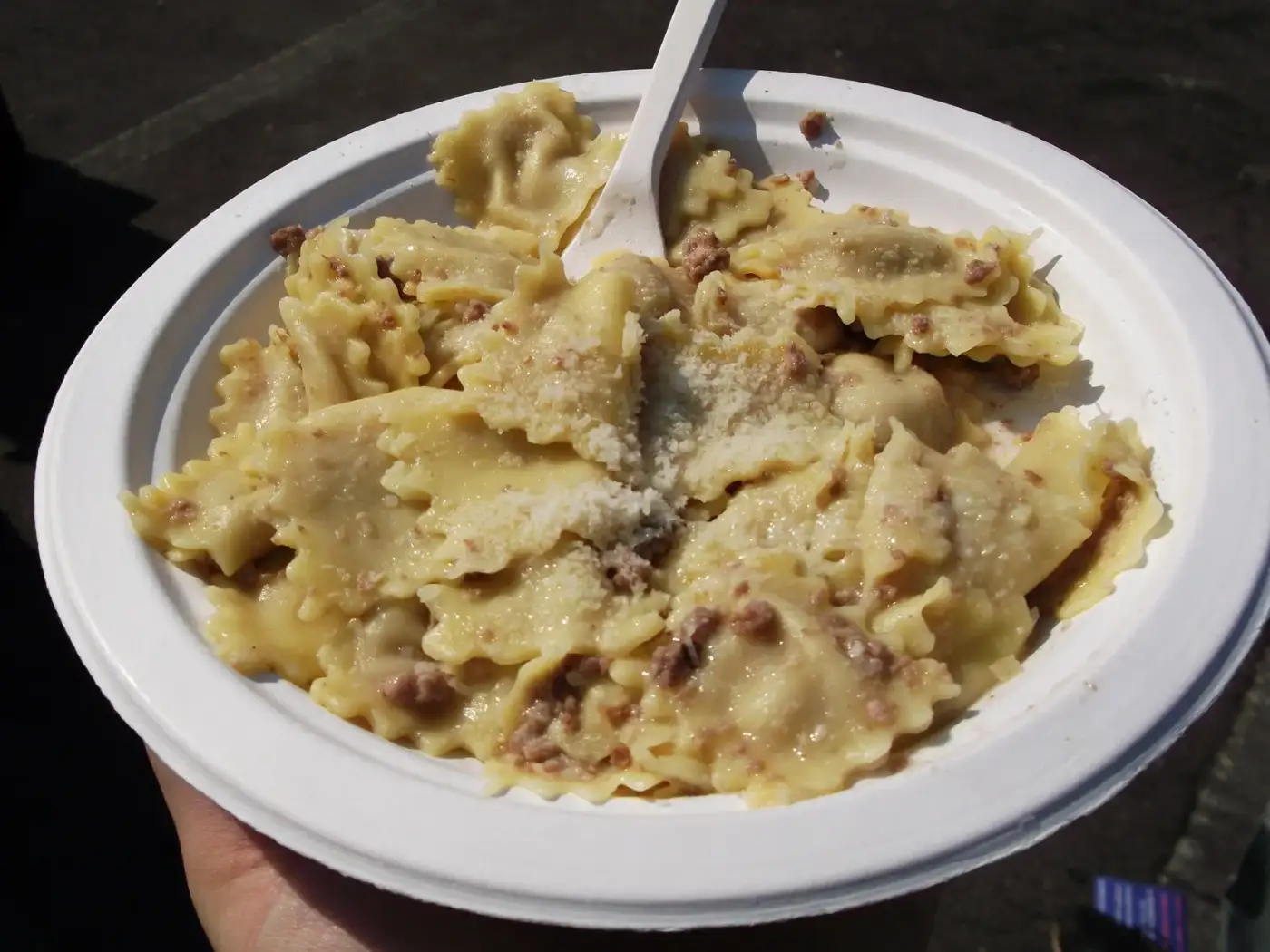 Andrea Marchisio · CC BY-SA 3.0
Festival of the Astigian festivals
The Festival delle Sagre (better known as Sagra delle Sagre) is an eno-gastronomic event held in Asti on the second Sunday of September but that begins, as usual, on the previous Saturday night, when the influence of people sometimes exceeds that of Sunday itself. It is located in the period of "September Astigiano", dominated by the Douja d'Or winery (which lasts ten days) and the Palio di Asti (which runs on the first Sunday of the month from 2 September 2018) . Over 40 pro-sites in the province of Asti offer their gastronomic specialities, accompanied by DOC wines from Astigiani, in a large outdoor restaurant set up in Piazza Campo del Palio di Asti, where, during Saturday night and all day on Sunday, thousands of people can sit in an ancient country village.
Read the storyBersano (business)
La Bersano is an Italian winery located in Nizza Monferrato , in Piemonte . It is also one of the oldest Piedmontese wine brands.
Read the storyChildren of Pinin Pero
Children of Pinin Pero & C. S.p.A. is the name of an astigian company based in Nizza Monferrato . The family-run company has been operating since 1890 in the sugar sector.
Read the story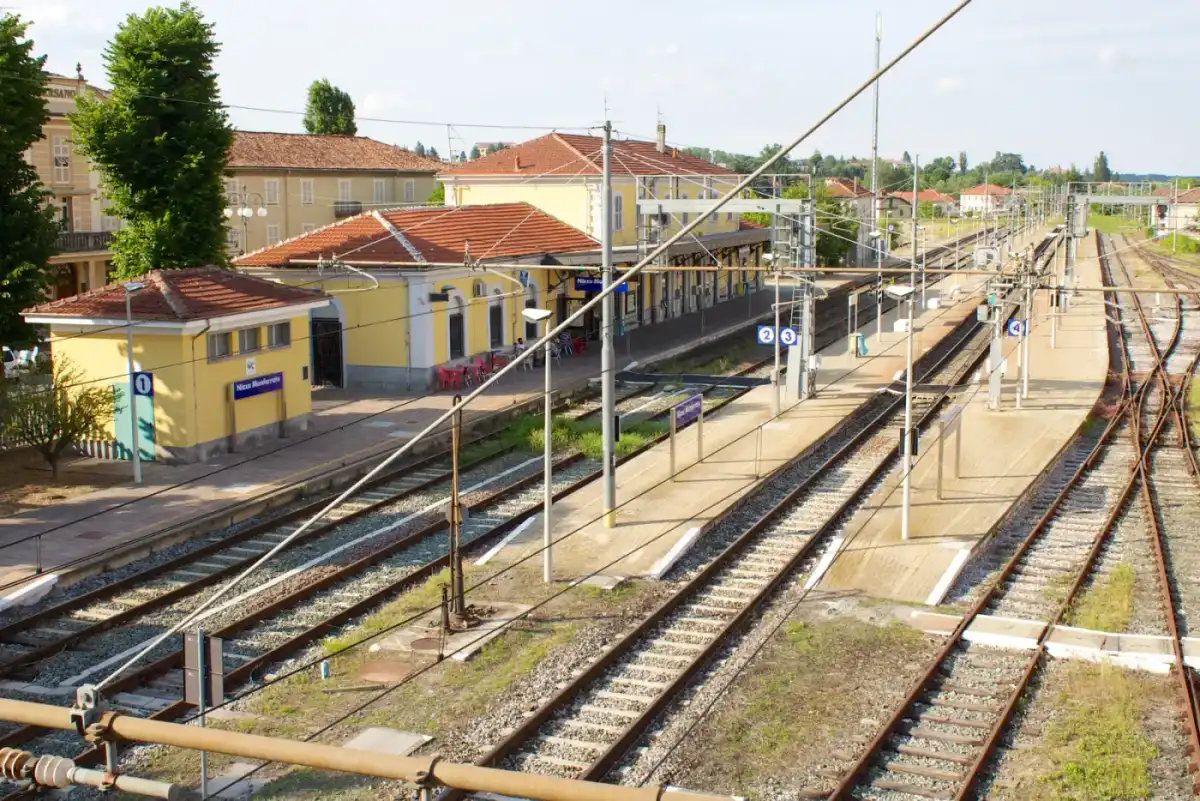 Incola · CC BY-SA 3.0
Nizza Monferrato Station
The train station of Nizza Monferrato is located at the crossroads of Alessandria-Cavallermaggiore and Asti-Genova lines, at the service of the homonymous municipality. It is the main port of call of the province of Southern Asti.
Read the storyThe wine landscape
This village in wine country
Follow the link between the country, the vineyards and the neighboring territories.
The area, step by step
Trails and routes in Nizza Monferrato


 CyclingAround the starting point
Asti, Alessandria and surroundings
Le Strade del giovane Umberto Eco
 CyclingAround the starting point


 CyclingAround the starting point


 CyclingAround the starting point
