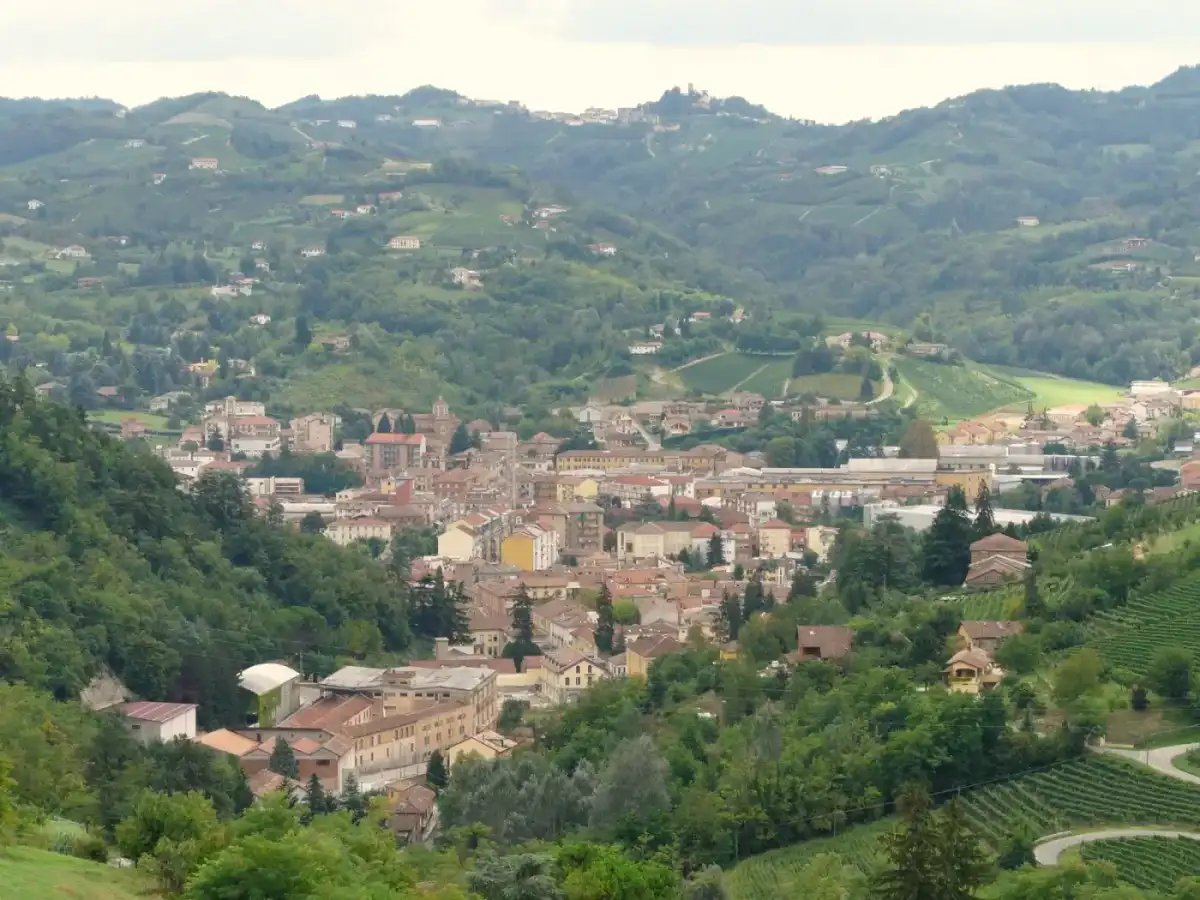
- Elevation
- 157 m above sea level
- Area
- 23.43 km²
- Demonym
- Canellesi
- Patron saint
- St. Thomas the Apostle
A closer look
Discovering Canelli
Canelli (IPA: [kaˈnεlːi], Canej in Piedmont) is an Italian municipality of 10 036 inhabitants[2] from the province of Asti in the Piemonte.
It is the second most important center of the province along with Nizza Monferrato after Asti, both as a productive and cultural reality and in terms of number of inhabitants.
The 22 June 2014 Canelli and the Asti Spumante are proclaimed a world heritage of UNESCO, an integral part of the territory of the Wine Landscape Piemonte: Langhe-Roero Monferrato.
Landscape and area
The municipality of Canelli is located in Piemonte , in the south of the province Asti and in the historical region of Astesana . It is located on the first opening of the Belbo valley, on a...Explore this chapter
The municipality of Canelli is located in Piemonte, in the south of province of Asti and in the historical region ofAstesana. It is located on the first opening of the Belbo valley, on a modest portion of plain and two large hilly areas (separated by the Belbo axis), each representing the last offshoots of the Asti hill on the right bank of the Tanaro and the other the first slopes of Langa real. Over 70% of the municipal territory is located on a hill, with softer slope northwards; steeper and steeper, with frequent spacing rocks in the southern area. The maximum altitude is 500 metres above sea level. about (millie fraction), the minimum is 150 meters s.l.m. about (planar along the river Belbo). The most important water course is the Belbo which is characterized by a torrent regime that in the past has generated frequent floods.[5]
Canelli also has beautiful hills, listed as well protected by UNESCO.
The climate is very mild unlike other neighboring countries, in spring but also in winter because protected by cold winds, from the village of Cassinasco.
- Seismic classification: zone 4 (irrelevant earthquake), Ordinance PCM n. 3274 of 20/03/2003, updated on 16/01/2006.
- Climate classification: E (the Grades day of the city are 2.540, and the maximum limit allowed for heating is 14 hours daily, from 15 October to 15 April), Decree D.P.R. No. 412 of 26 August 1993.[6]
History of Canelli
Symbols · HonorsExplore this chapter
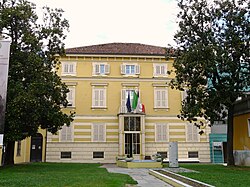
The territory of Canelli in prehistoric times was the seat of numerous settlements of the Ligurian States. In Roman times a first center of some importance was developed, surrounded by numerous rustic funds where the vine was already cultivated. In this regard there have emerged numerous finds from the Roman period including four engraved stems placed in lapidarium established at the church of San Rocco.
After a long period of decay after the collapse of the Roman Empire, Canelli re-established since the Middle Ages so much that in the year 961 it is defined by the name of civitas. Towards the middle of the 11th century, the descendants of the Counts of Acqui settled there and assumed lordship and office. Branching out into many parental lines, they give life to the Consortium of Canelli, which also includes numerous municipalities in the surrounding area. In 1235 the lords of the consortium submitted to the Republic of Asti and Canelli from then on would continuously follow the historical events ofAstesana. The powerful families of Asti Asinari and of the Scaramps will hold the fief, the latter raising it to the title of marquisate.
Between the 16th and 17th centuries, Canelli, outpost and baluardo against Monferrato It was the scene of countless war episodes, including the most famous being remembered is the Assumption of Canelli in 1613. Although in the past it was one of the most populous and important centers ofAstesana, its definitive fortunes began at the end of the 18th century, when the wine industry of Moscato d'Asti and Asti Spumante developed, still one of the city's main resources in the 21st century.
In the years of World War II, between 1940 and 1943, 64 Jewish refugees were interned in Canelli (including numerous children), from the Balkans.[7] After September 8, 1943, with the German occupation, the group (reduced in the meantime to about 50 people in consequences of numerous transfers) dispersed. In the end almost all internees managed to save themselves (some finding refuge in Switzerland, others remaining hidden in the area, others still heading south to meet the Allied Army).[8]
On the night of November 5, 1994 the city was hit by a strong flood caused by the very violent flood of the stream Belbo that devaded her for the most part, putting on knee the city economy and causing some victims.
Symbols
(Presidential Decree of 19 March 2014)
The gonfalone is a yellow drape with blue edge.
Honors

What to see in Canelli
Religious architecture · Parish Church of St. Thomas · Parish Church of San LeonardoExplore this chapter
Religious architecture
Parish Church of St. Thomas
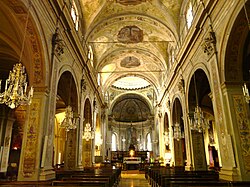
Already documented in public acts of the 12th century, the church was largely rebuilt during the second half of the 17th century, and expanded at the end of the 19th century with the addition of the tiburium, presbytery and apse. It preserves interesting furnishings and paintings from Baroque times.
Parish Church of San Leonardo
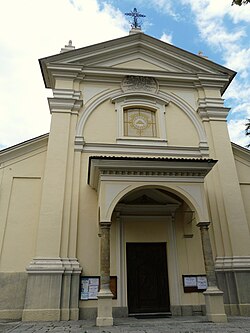
It dominates the village from the top of the hill of Villanuova. The ancient parish of San Leonardo in medieval times was located more upstream than the present, but the 17th century war events and a series of landslides that undermined its stability made it necessary to re-edit on the current site. It was started in 1682 by the headmaster Stefano Meloni; in 1691 the bell tower was completed, and in 1694 the new church was finally open to worship.
Church of San Rocco
The church of San Rocco, entirely covered in stone, dates back to its present forms at the 18th century and is located in a dominant position, near the castle. The building was built in the eighteenth century when, following the demolition of the city walls, the fraternity of the San Rocco districts gave way to the construction of this yard for the erection of a religious building on site, after the transfer of the church of San Leonardo in its current position. The works began in 1727 and ended in 1740 when the altar was consecrated.
The church is typically characterized by style with a niche in the area above the facade and a curved timpane that gives vertical momentum to the entire structure. On the left side was added in 1765 a small portico where there is also a small stone staircase that once united the ground floor of the church to its organ.
Church of the Annunciation
The rich Canean brotherhood of the Annunciation began in the 18th century a new oratory for its officies which was finished in 1731. The site was previously housed a fifteenth-century oratory of the same brotherhood that was partly demolished and partly incorporated into the structure. The church is also known as "Addolorate" for the presence of a statue of Mary grieved. Location of the Romanian Orthodox parish of S. Andrea Apostolo, has been modified with the addition of an iconostasis precisely for this use.
Church of San Giovanni Decollato
Built at the beginning of the eighteenth century and originally home to the Brotherhood of the Black Baptists, the structure of the church has been heavily refurbished in the years '50 of the 20th century what was decided the disgrace: the facade, once richly decorated, was among other private ones of the upper timpane and the bell tower that remains only the base.
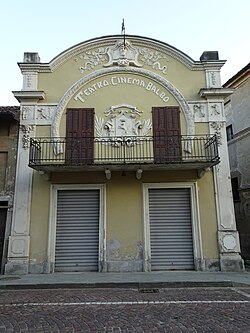
The building, first used as a parish kineteater and then as a meeting place for the elderly, was modified also inside where the ceiling was lowered than the original through the construction of a wooden insole. The structure, owned by the parish, was the seat of the local band.
Institute and Church of the Sacred Heart
The construction of this building began in 1903 thanks to a legacy of the Canean priest Francesco Sacchero, thanks to the interest of Monsignor Giuseppe Marello, with the intention of creating a work for benefic purpose for citizenship. The structure was requisite during the First World War when it was used for military purposes, then returning to be a center of distribution of charity for the local poor. The institute, always under construction, built in 1932 the chapel dedicated to the Sacred Heart (but more locally known as Santa Chiara by the name of the pre-existing convent within which the structure was erected). The property was officially completed in 1935.
With the end of World War II, the institute hosted a theological student and preparatory school that remained there until 1960.
Civil architecture
Castle
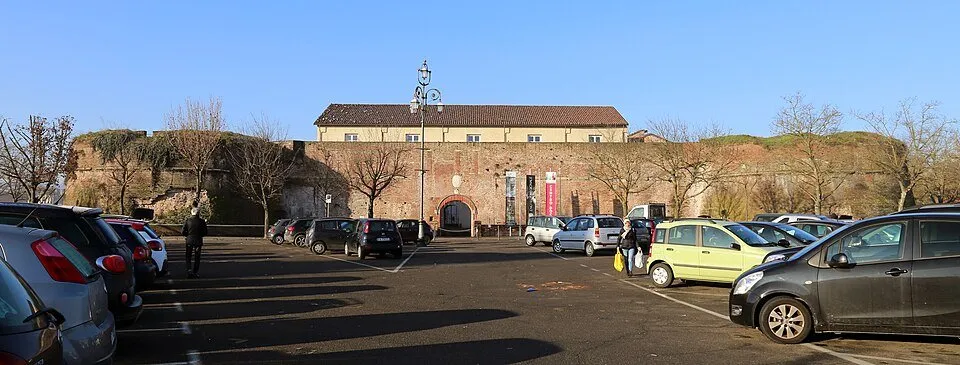
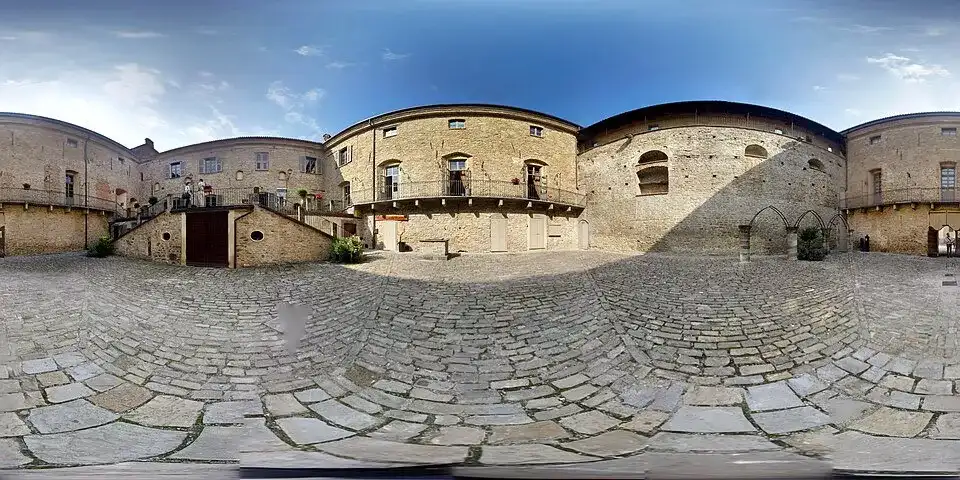
The Castle of Canelli or Castello Gancia was built in the 11th century to defend the roads that led from the city to the ports of Savona and Vado Ligure. The castle was then destroyed in 1617 during the war against the Monferrato. Rebuilt and renovated in 1930 by architect Arturo Midana as an elegant villa, it is owned by the family Vallarino Gancia.
Underground cellars
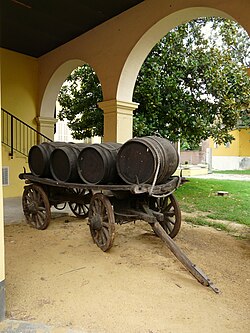
Canelli is also famous for the underground cellars of aging of sparkling wine. These are true underground cathedrals, which branch out under the city, masterpieces of engineering and enological architecture, where millions of bottles left to ferment at the constant temperature of 12-14 degrees take on the aromas and flavors typical of sparkling wine and Canellese. The city often compares with an inclement nature, for example that linked to the frequent floods of the Belbo stream; disastrous was the 1994 flood, when mud and water invaded the cellars, causing the loss of much of the fermented sparkling wine, with damages for millions of euros.
Fortunately, the ingenuity and will of the canellesi always allowed to go out high from these serious emergencies, perhaps also because of the diversification of the local industrial basin that for some decades has been devoted, as an alternative to wine, also to the eno-mechanics, ie to that set of products such as autoclaves, capsules, water tankers, fillers, capping systems and closing, gutters,
Torre dei Contini
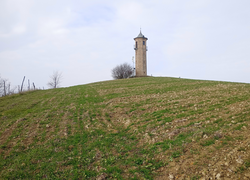
In the northern part of the municipal territory there is an ancient sighting tower, now known as a panoramic point on the surrounding hills and the Alpine and Apennine chain.[10]
Society
Demographic evolution · Foreign ethnic groups and minoritiesExplore this chapter
Demographic evolution
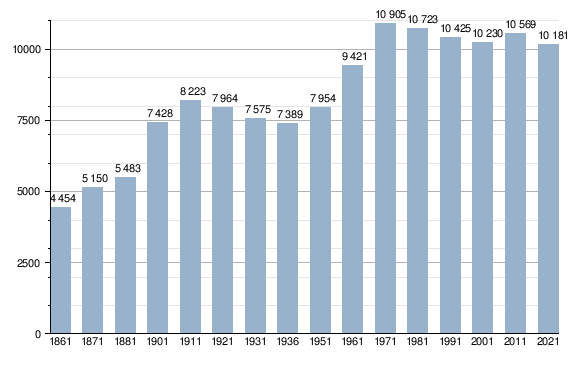
Inhabitants registered[11]
Foreign ethnic groups and minorities
According to ISTAT data at 31 December 2010 the resident foreign population was 1 742 people. The nationalities most represented by their percentage of the total population living were:
- Republic of North Macedonia 934 8.67%
- Romania 272 2.50%
- Morocco 138 1,27%
- Bulgaria 124 1.10%
Culture
EventsExplore this chapter
Events
- Siege of Canelli: the siege to which the city was subjected in 1613 by the troops of Carlo Gonzaga, Duke of Névers
- Fair of San Martino and Regional truffle fair.
- Underground cathedrals
- Canelli is one of the Municipalities participating in Palio di Asti, and achieved a victory in 1974, with the jockey Mauro Finotto known as Jora, on the horse Anin / Spumantino.
- Canelli participated in Games without frontiers on 18 August 1971.
Anthropic geography
HamletsExplore this chapter
Hamlets
The main fractions[12] by Canelli are:
- Aye
- Brave
- Canton
- Cheese
- Castellero
- Ceirole
- F.
- Fountain
- Marmo
- Merlins
- St. Anthony
- Serra Masio
- Star
Economy
Wine crops · TourismExplore this chapter
Wine crops
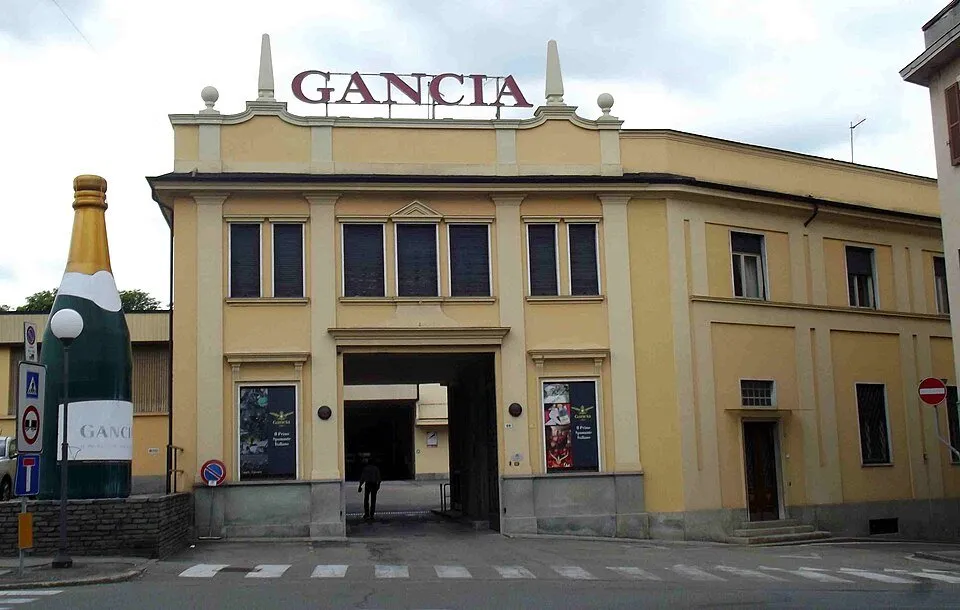
The economy of Canelli is based on the processing of sparkling wine and moscato and the important eno-mechanical sector recognized excellence worldwide. The city is known abroad for all the wine induced, and eenology, being one of the capitals of world wine. The municipality is home to many historical wineries, such as Gain, Bosca, Tosti-Giovanni Bosca, Bocchino, Contract, Coppo and many others. Tosti-Giovanni Bosca, Coppo, Gancia, Bocchino and Bosca are family-run.
The main vines cultivated on the municipal territory are:
- Moscow
- Barbera
- Dolcetto
- Cortese
- Chardonnay
The main wines produced are:
- Asti (Objective) Asti Sparkling)
- Muscat d'Asti
- Barbera d'Asti
- Dolcetto d'Asti
- Cortese dell'Alto Monferrato
- Freisa d'Asti
A so important presence of wineries has also favoured the birth, since the 1990s, of many companies for the production of wine making machines.
Tourism
Canelli received the Orange Flag, the certificate of tourist-environmental excellence of the Italian Touring Club[13].
Infrastructure and transport
A Canelli there is the railway station along the line Alessandria-Cavallermaggiore, in use only for tourist trains. There are also several urban stops and...Explore this chapter
In Canelli is present railway station along the line Alessandria-Cavallermaggiore, in use only for tourist trains. There are also several urban and extra-urban bus stops of the Bus Company.
Administration
TwinningExplore this chapter
Below is a table relating to the administrations that have succeeded one another in this municipality.
| Period | First citizen | Match | Load | Notes | |
|---|---|---|---|---|---|
| 5 July 1985 | June 10, 1990 | Renato Branda | Christian Democracy | Mayor | [14] |
| June 10, 1990 | June 16, 1994 | Roberto Marmo | Christian Democracy | Mayor | [14] |
| June 27, 1994 | April 24, 1995 | Oscar Bielli | Centre-right | Mayor | [15] |
| April 24, 1995 | June 14, 1999 | Oscar Bielli | Centre-right | Mayor | [14] |
| June 14, 1999 | June 14, 2004 | Oscar Bielli | Centre-right | Mayor | [14] |
| June 14, 2004 | June 8, 2009 | Piergiuseppe Dus | Centre-right | Mayor | [15] |
| June 8, 2009 | May 27, 2014 | Marco Gabusi | Centre-right | Mayor | [16] |
| May 27, 2014 | May 27, 2019 | Marco Gabusi | Centre-right | Mayor | [16] |
| May 27, 2019 | June 11, 2024 | Paolo Lanzavecchia | Centre-right | Mayor | [17] |
| June 11, 2024 | in office | Roberta Giovine | Lista civica | Mayor | [18] |
Twinning
 Maipú (Mendoza)
- Luján de Cuyo
 Ganzhou
 Men
- Piazza Armerina
 Mezőtúr
- Jász-Nagykun-Szolnok
Sport
Soccer · Cycling · AutomobileeExplore this chapter
Soccer
- Sport Association Canelli, which throughout its history has played in the Promotion championship
Cycling
A.S.D. PEDALE CANELLESE, School of cycling affiliated with the Italian Cycling Federation
Automobilee
- Rally Colli del Monferrato e del Moscato
Notes
Explore this chapter
- ^ Municipality of Canelli : Municipal Administration and Mayor - Municipality of Canelli e città, Asti, Piemonte, up www.comune-italia.it. URL consulted on 5 August 2026.
- ^ to b Monthly demographic balance for the year 2026 (provisional data), up demo.istat.it, ISTAT.
- ^ Seismic classification (XLS), up risks.protezionecivile.gov.it.
- ^ Table of degrees/day of Italian Municipalities grouped by Region and Province (PDF), in Law 26 August 1993, n. 412, annex A, National Agency for New Technologies, Energy and Sustainable Economic Development, 1 March 2011, p. 151. URL consulted on 25 April 2012 (archived fromoriginal url on 1 January 2017).
- ^ Civic Network of the Municipality of Asti:, up common.canelli.at.it.
- ^ Source from the site http://www.tuttitalia.it/piemonte/66-canelli/
- ^ The municipalities in the Astiginano area which hosted interned foreign Jews are: Agliano, Antignano, Asti, Canelli, Castelnuovo Don Bosco, Cocconato, Mombercelli, Montechiaro d'Asti, Montiglio, Nizza M.to, San Damiano d'Asti, Villanova d'Asti.
- ^ Foreign Jews interned in Piemonte. Of the former internees at Canelli, only Olga Hoffmann died in Auschwitz, arrested in Chieti on 31 October 1943 and deported from Milan on 30 January 1944.
- ^ Canelli (Asti) D.P.R. 19.03.2014 concession of coat of arms and gonfalone, up Presidency.governo.it. Retrieved 10 November 2021.
- ^ Anita Franzon, Underground cathedrals, in Langhe, Roero and Monferrato Pocket, EDT, 2025, ISBN 9791223701942. Retrieved 12 March 2026.
- ^ Data taken from:
- Resident population of the municipalities. Censuses from 1861 to 1991 (PDF), up ebiblio.istat.it, ISTAT.
- Resident population - Time series, up exploredati.istat.it.
Please note: 2021 data refers to permanent census data as of December 31 of that year.
- ^ webcache.googleusercontent.com, https://webcache.googleusercontent.com/search?q=cache:XH3DzzB7nisJ:www.regione.piemonte.it/cultura/guarini/schede/at/dwd/canelli.pdf+chiesa+di+san+tommaso+canelli&cd=10&hl=it&ct=clnk&gl=it&client=firefox-a Missing title for url
url(help). - ^ Canelli: what to see, where to sleep, where to eat | Touring Club, up Touring Club Italiano. Retrieved 2 May 2024.
- ^ to b c d http://amministratori.interno.it/
- ^ to b Canelli, the race for Palazzo Anfossi enters alive, up lanuovaprovincia.it.
- ^ to b Forza Italia officializes the candidacy of Gabusi and Biglia to the Regional Council, up lanuovaprovincia.it.
- ^ Canelli: lawyer Lanzavecchia is the new mayor, up lanuovaprovincia.it.
- ^ In Canelli the Centrosinistra points on Roberta Giovine, up lastampa.it.
Where to stay · Canelli
Find stays on Booking.comStories, places and people
More about Canelli and the surrounding area
Follow a thread of history and see where it leads.
1994 Tanaro flood
On 5 and 6 November 1994, the provinces of Cuneo , Turin , Asti and Alessandria were heavily affected by a violent flood event that caused the flooding of the Po Rivers, Tanaro and many of their tributaries (especially the Belbo stream, an important right-wing tributary of Tanaro), causing 69 victims and 2,226 displaced.
Read the storySport Association Canelli
The Associazione Sportiva Dilettantistica Calcio Canelli, better known as ASDC Canelli , is an Italian football club based in the city of Canelli (AT).
Read the story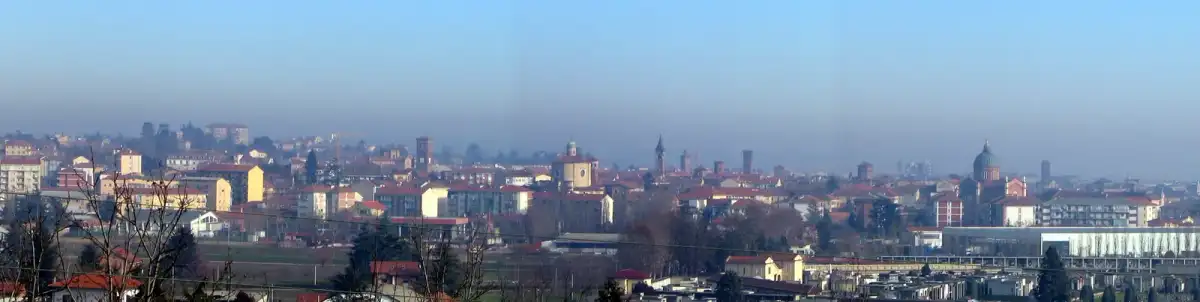 Faberh di Wikipedia in italiano · Public domain
Asti
Asti ( Listen , Ast in Piedmont and in the Astigiano dialect) is an Italian town of 73 681 inhabitants, capital of the homonymous province of Piedmont today commonly called Astigiano and main center of the historical region of Astesana . Roman Municipium, known as Hasta, was the seat of the duchy of Asti, Longobard Duchy of Neustria. Free common in the Middle Ages, with the right to "battle money", was one of the most important shopping centers between the 12th and 13th century, when its merchants developed commerce and credit throughout Europe.
Read the story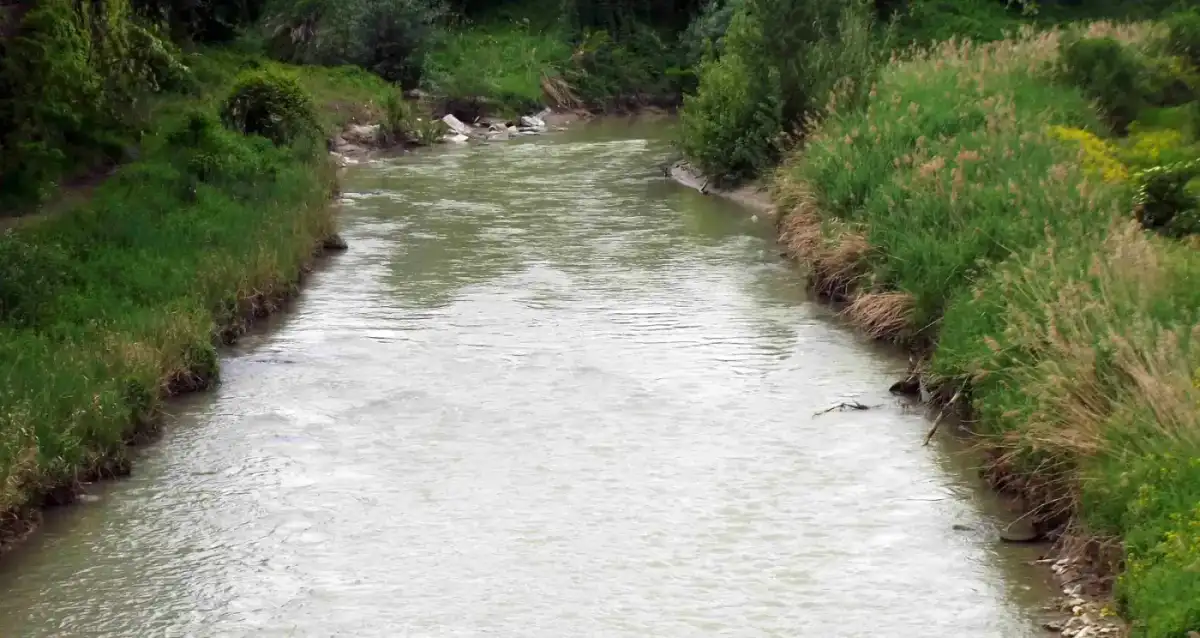 F Ceragioli · CC BY-SA 3.0
Belbo
The Belbo (Berb or Belb in Piedmont) is a stream (95 km, basin 469 km2) of the Piemonte south-eastern, main right tributary of the Tanaro after the Bormida .
Read the story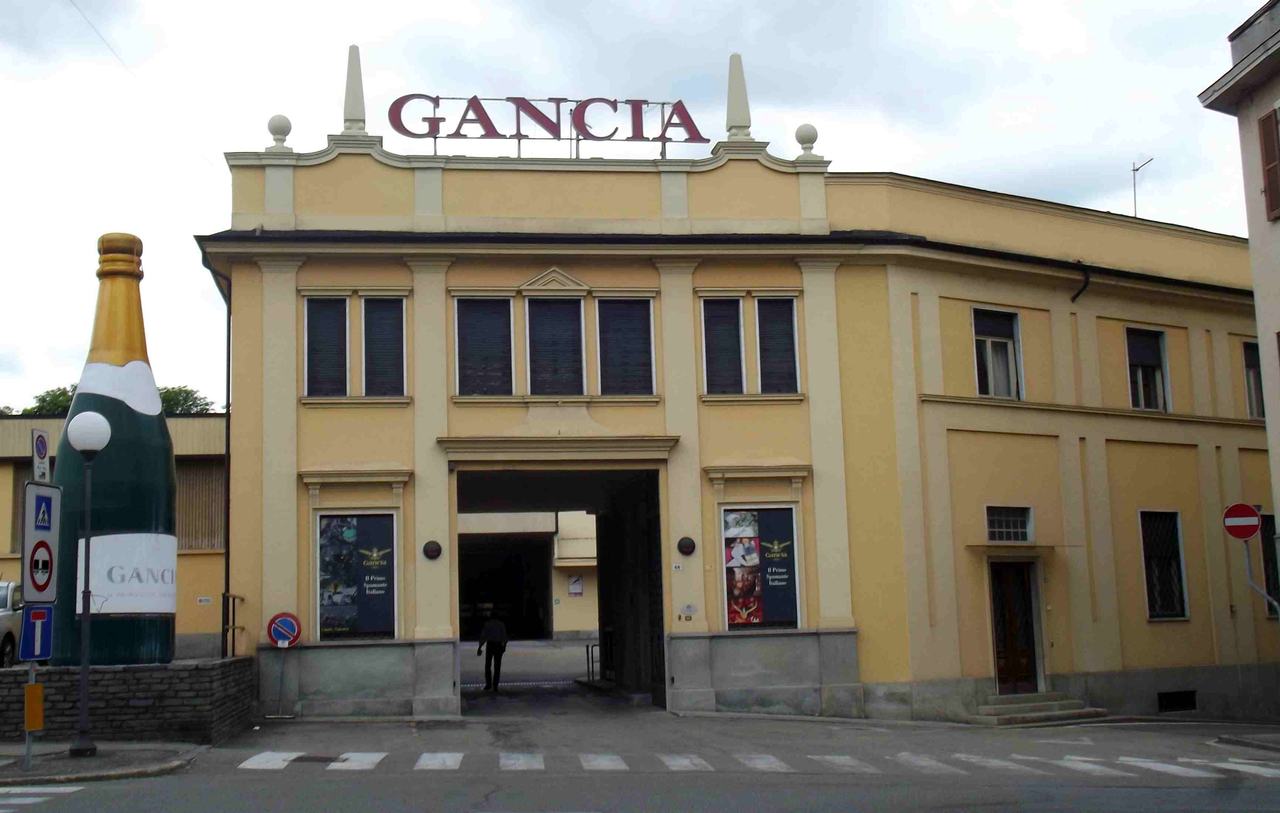 F Ceragioli · CC BY-SA 3.0
Gain
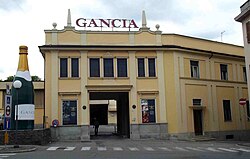
La Gancia is an Italian wine house, based in Canelli , in Piemonte , specialized in the production of sparkling wines.
Read the story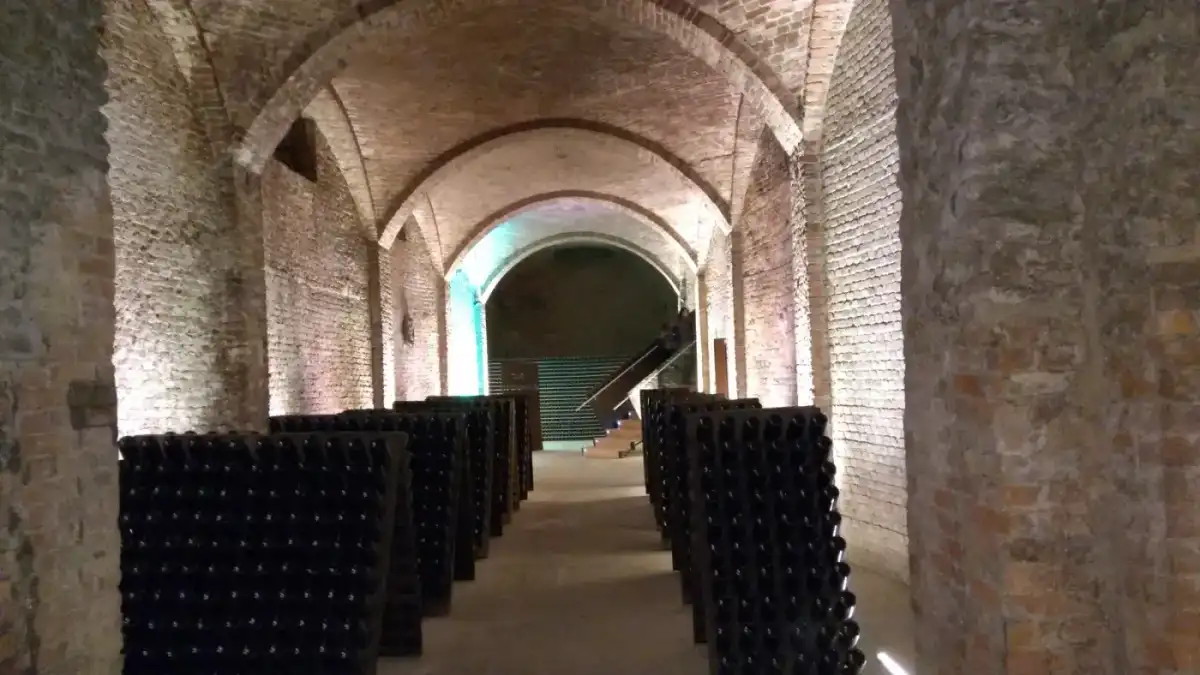 Frukko · CC BY-SA 4.0
Underground cathedrals
The underground cathedrals are historical cellars of Canelli (the province of Asti) dug in the limestone tuff over the past centuries that descend up to 32 meters into the ground crossing the entire Canellese hill and the whole city for more than 20-25 km. They are called cathedrals as they create surreal and evocative environments and are real masterpieces of engineering and enological architecture, with exposed brick vaults dating back to the early nineteenth century. In them thousands of bottles of fine wine, in particular those of the classic method Alta Langa Docg, are left to rest at the constant temperature of 12-14 degrees, ideal for processing and for aging.
Read the story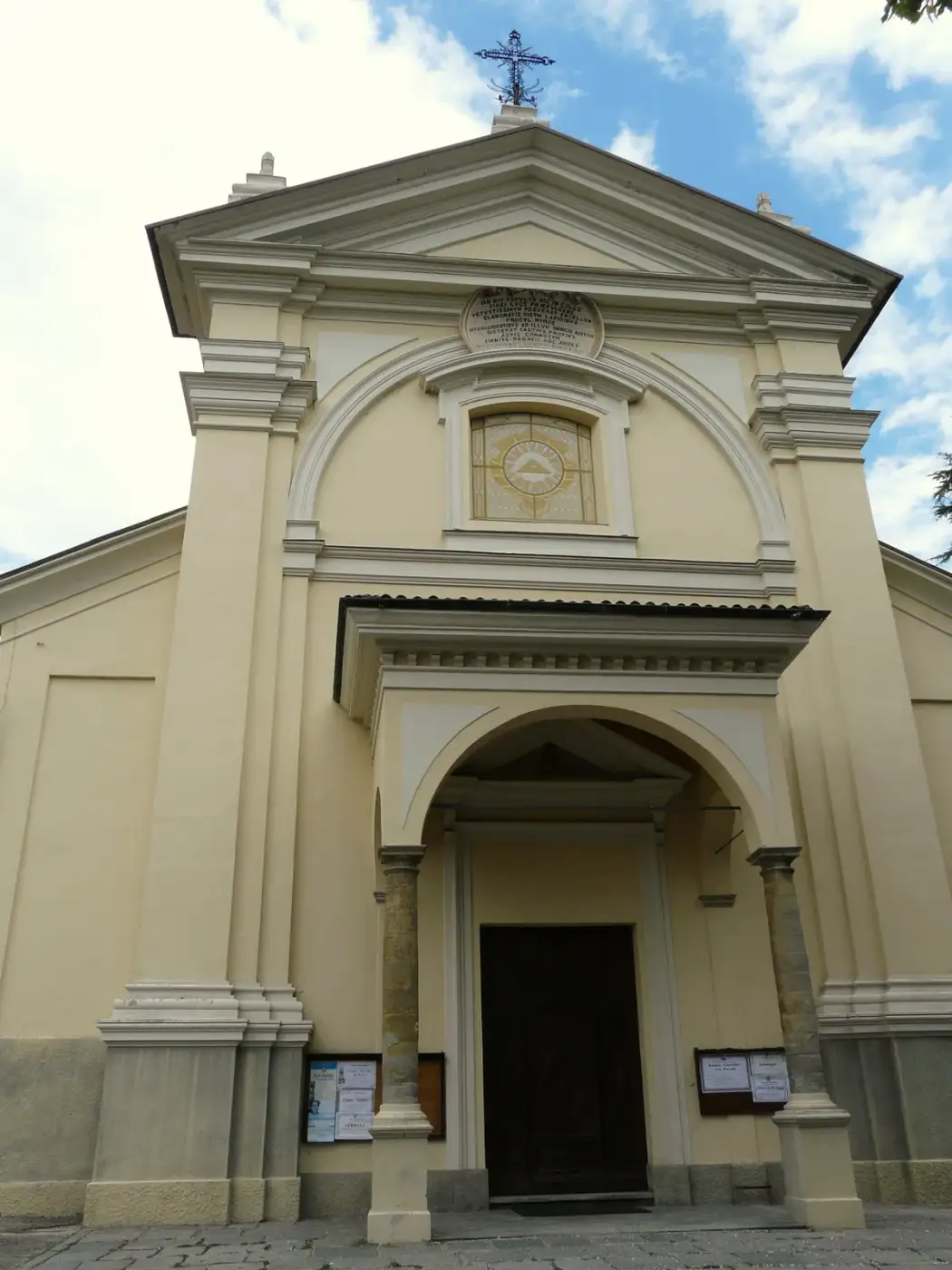 Davide Papalini · CC BY-SA 3.0
Church of San Leonardo (Canelli)
The parish church of San Leonardo is a church of Canelli in the province of Asti and dominates spectacularly the village from the top of the hill of 'Villanuova'.
Read the story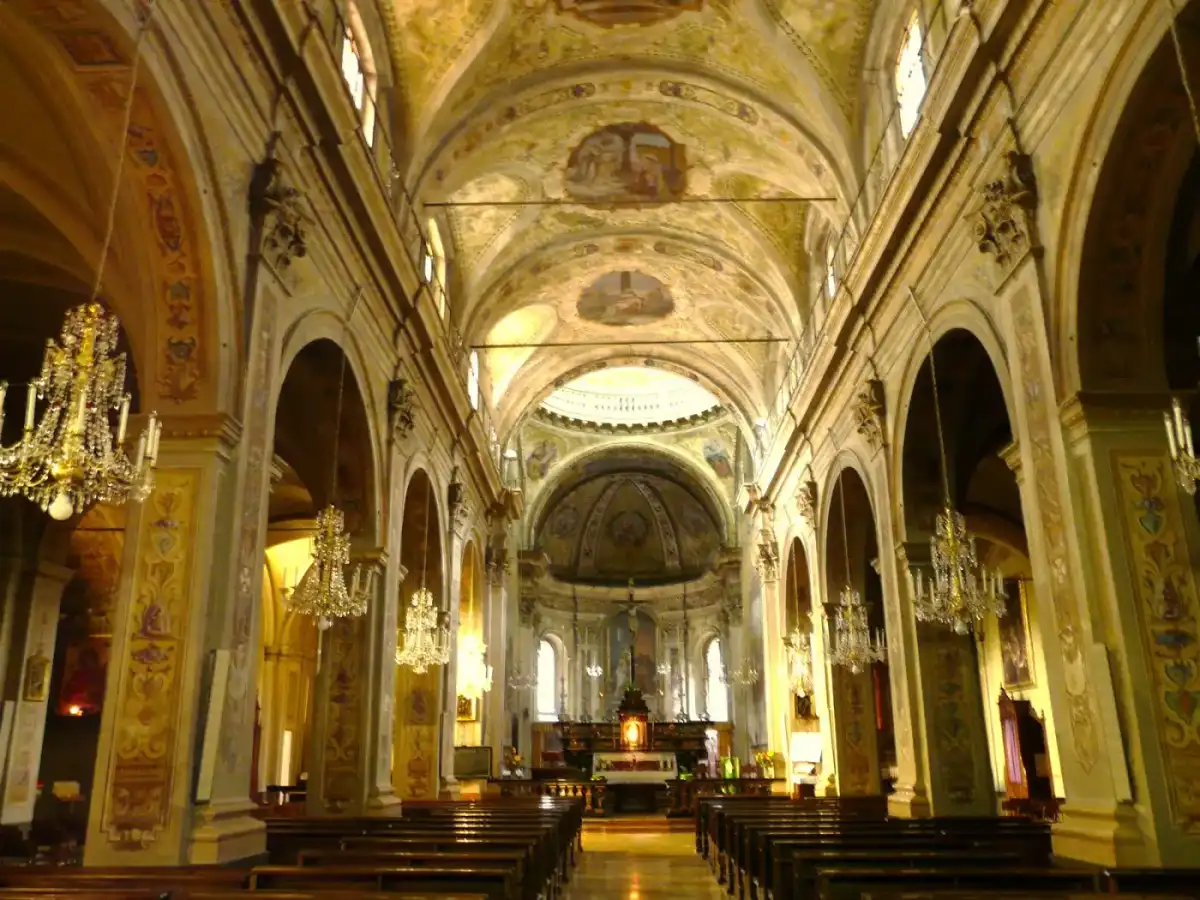 Davide Papalini · CC BY-SA 3.0
Church of San Tommaso (Canelli)
The parish church of San Tommaso is a church of Canelli in the province of Asti and is consecrated to St. Thomas.
Read the story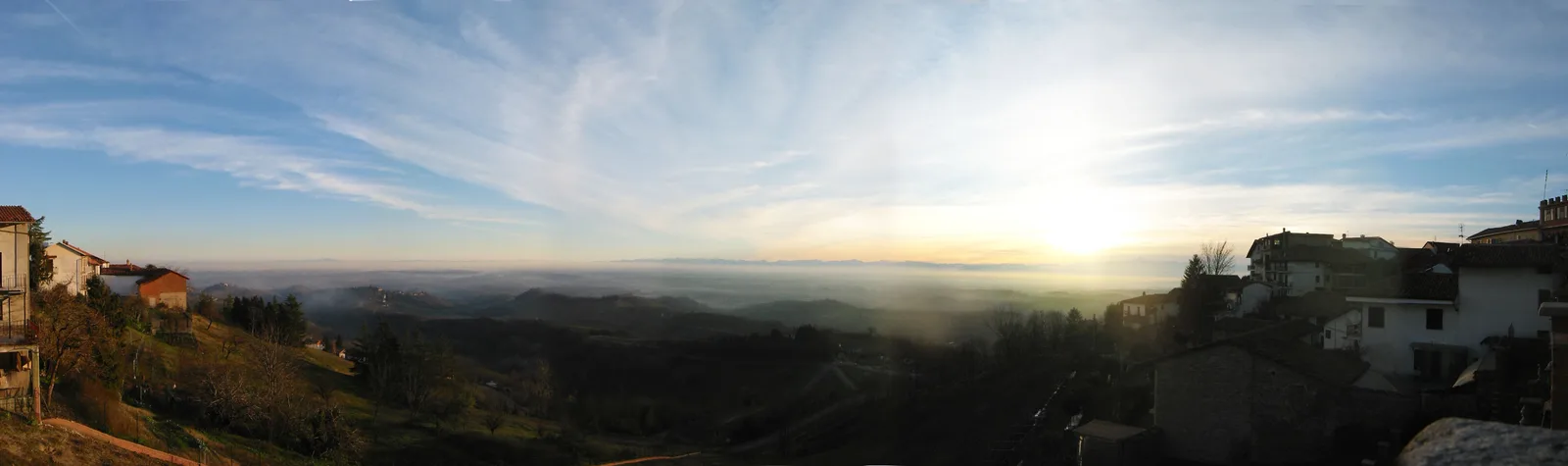 user:Luca.grieco · Public domain
Province of Asti
The province of Asti ( Province of Ast in Piedmont) is an Italian province of Piemonte of 207 128 inhabitants, with capital Asti .
Read the story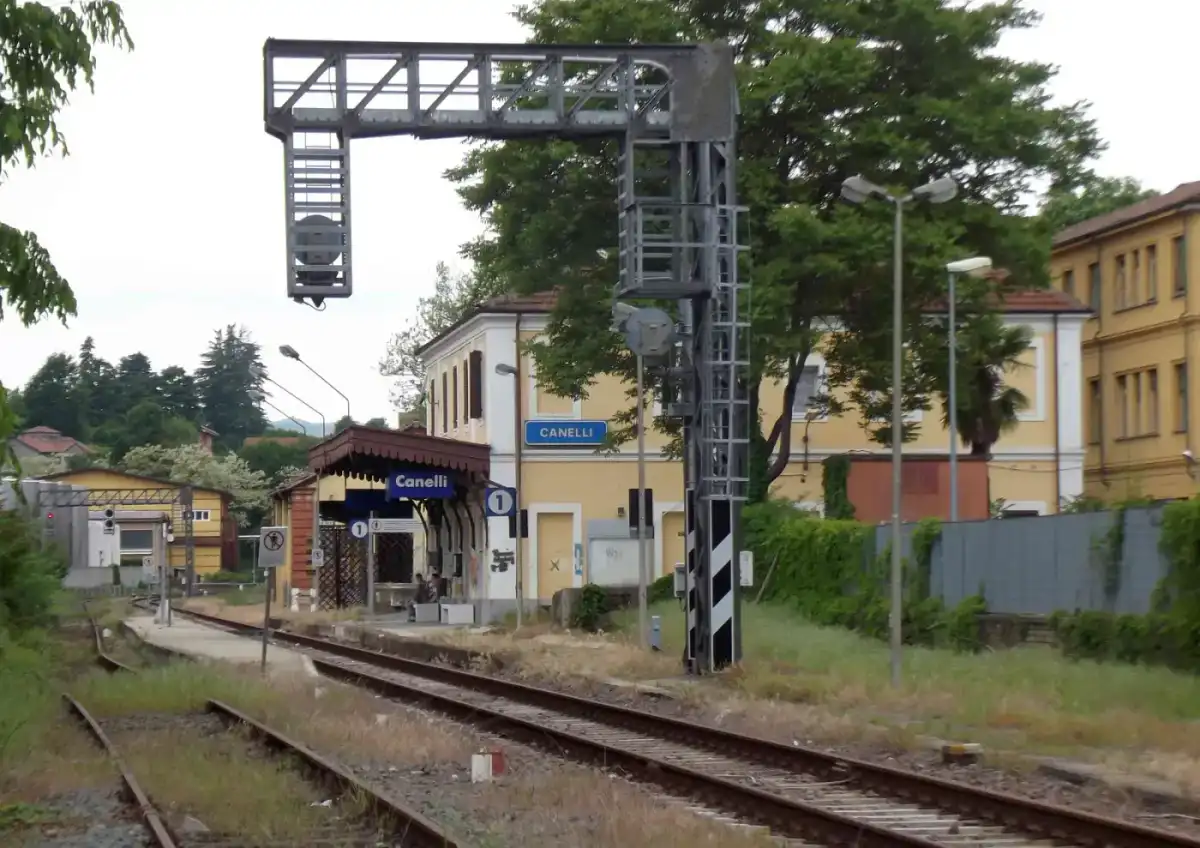 F Ceragioli · CC BY-SA 3.0
Canelli Station
The station Canelli is a railway station of the line Alessandria-Cavallermaggiore at the service of the homonymous municipality.
Read the story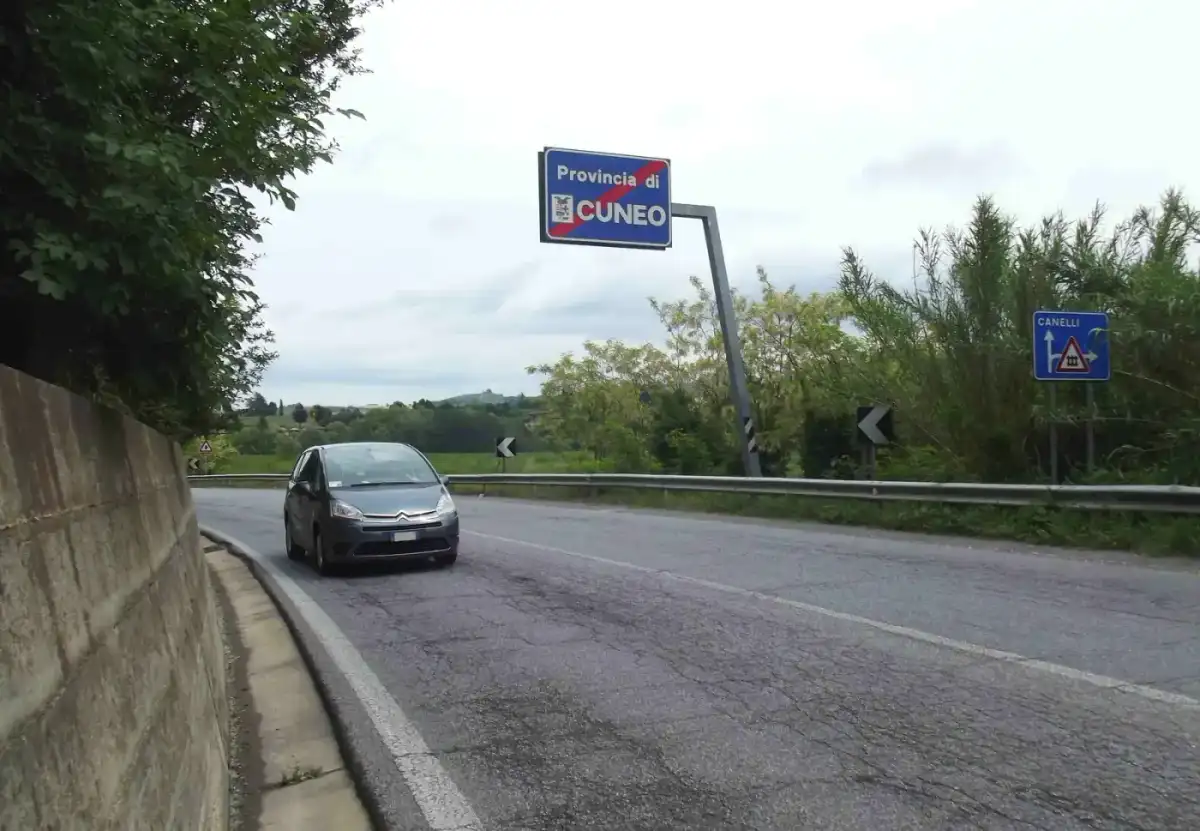 F Ceragioli · CC BY-SA 3.0
Highway 592 of Canelli
The former state road 592 of Canelli (SS 592), now provincial road 592 Canelli (SP 592) in the province of Asti and provincial road 592 of Valle Belbo (SS 592) in the province of Cuneo , was an Italian state road that developed in full in Piemonte ; currently it is classified as a provincial road throughout its extension.
Read the story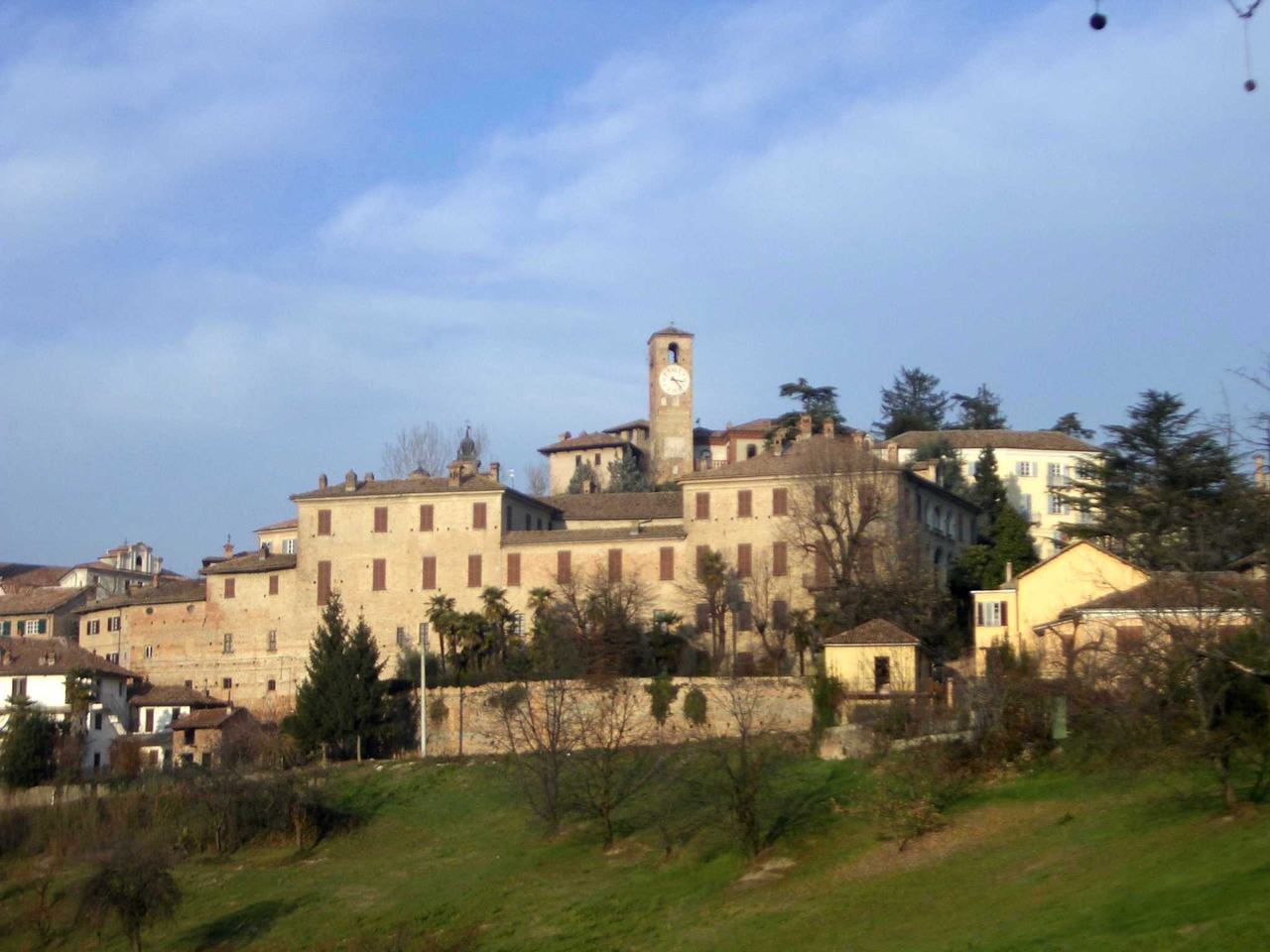 Laurom · Public domain
Valle Belbo
The Belbo Valley is a valley of Lower Piemonte , located along the course of the homonymous stream .
Read the storyThe wine landscape
This village in wine country
Follow the link between the country, the vineyards and the neighboring territories.
The area, step by step
Trails and routes in Canelli

Astigiano area
Grande Cammino · Tappa 7: Canelli–Ponti
 CyclingAround the starting point


 CyclingAround the starting point
Asti, Alessandria and surroundings
Ciclo Cavalcata Aleramica del Monferrato

 WalkingAround the starting point


 CyclingAround the starting point
 CyclingAround the starting point
 WalkingAround the starting point
Astigiano area