Atlas of Monferrato
Villanova d'Asti: sights, history and trails
Asti
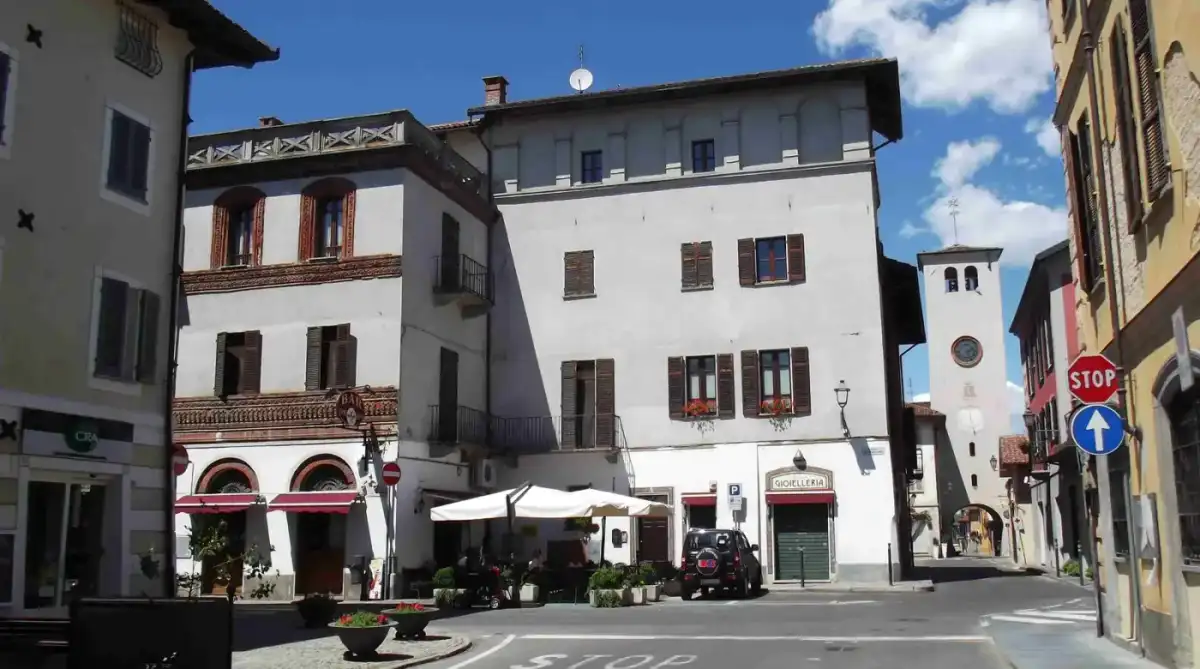
- Elevation
- 260 m above sea level
- Area
- 41.95 km²
- Demonym
- villanovians
- Patron saint
- Saint Isidor
A closer look
Discovering Villanova d'Asti
Villanova d'Asti (Vilaneuva d'Ast in Piedmont) is an Italian municipality of 5 553 inhabitants[1] from the province of Asti, located approximately in the center of the Piemonte.
History of Villanova d'Asti
SymbolsExplore this chapter
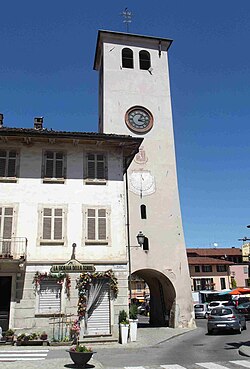
Its foundation dates back to the year 1248, as it results from precise documents of the astigian archive. The inhabitants of Dusino, Solbrito and Supponito, a town near Corveglia, then abandoned but whose memory is kept alive from the square dedicated to it. Since Roman times, however, the presence of agglomerations (Brassicarda) probably due to veterans who were assigned plots. Towards Poirino, around Lombard ruins called "old race" or Corveglia, in 1001 Emperor Otto III donated to the Benedictine nuns of the monastery of San Felice di Pavia, dependent on the Monastery of San Salvatore di Pavia[4][5], some land and in the 13th century the Augustinian canons settled in Corveglia who, at the beginning of the 14th century, enriched the rooms with sculpted columns and capitals. In 1340 the religious, having fallen into debt, had to abandon the building which has only now been restored to its former glory.
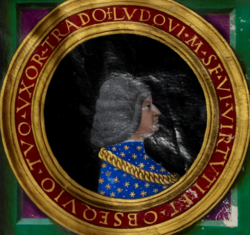
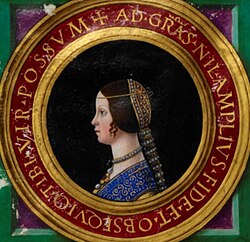
With the act of donation of 28 January 1494, the fief was donated by Ludovico il Moro to his wife Beatrice d'Este, with all its possessions, forts and feudal rights connected to them, i.e. the mere et mix imperious, every kind of jurisdiction, gifts, immunity, etc., the faculty of administering them according to their own arbitrary, deputating castellans, priests, officers, etc.[6][7]
The surrounding area Villanova, from Valfenera to San Paolo Solbrito, was the scene of bitter clashes between the French and the Spanish in the 17th century, but the mighty "star" walls always protected the town.
In 1690 he risked the plundering by the troops of General Nicolas de Catinat de La Fauconnerie when Casa Savoia broke the alliances entering the League of Augusta alongside the Imperials. After it was made a solemn vow to Our Lady, the French, infamous for cruelty and already present in the normally unspoilt town, left her, having suddenly to come elsewhere, without harming her in any way despite the refusal of Turin to pay the ransom requested.
Even today, in order to fulfill the vote, the mayor solemnly participates in the Mass of the Immaculate Conception in the church of San Martino and traditionally takes the word after reading the Gospel. A stone, present on the walls of the ancient convent in Via Roma, tells these extraordinary events: the entrepreneur Villanova, already occupied by money ready to unleash, left unintentionally by that same general who instead put to iron and fire the countryside, burned nearby Poirino and plundered Ceresole.
After the failure of the siege of Turin wanted by the Sun King in 1706 and after the Treaty of Utrecht of 1713 assicuated to Vittorio Amedeo of Savoy the crown of Sicily, Villanova finally enjoyed a long peace. Following the events that led the Savoy to take refuge in Sardinia protected by the English fleet, Piemonte until the river Sesia was annexed to France on 11 September 1802 (24 Fruttidoro, year X). Villanova, until 1814, was included in the "Département de Marengo", "Deuxième arrondissement" (Asti)". The young Piedmontese fought courageously for their homeland alongside other French citizens, especially in the unfortunate Russian campaign where the Poirinese Domenico Mazzucchi earned the war cross in Moscova.
Symbols
Municipal Coat of arms and gonfalone were granted by decree of the President of the Republic of 10 September 1982.[8]
- Coat of arms
- Banner
What to see in Villanova d'Asti
The main churches are San Pietro, Sant'Isidoro (patrono), San Martino . The latter was originally from the Pavesi nuns dedicated to San Felice; it houses a statue of...Explore this chapter
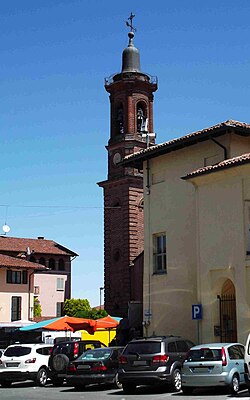
The main churches are San Pietro, Sant'Isidoro (patrono), San Martino. The latter was originally from the Pavesi nuns dedicated to San Felice; it houses a statue of Our Lady of Clementi, a splendid wooden altar ("of the black souls"), the major altar of Carlo Pellagata (1777), a Macrino d'Alba, two works of the Moncalvo besides a Christ baptized by St. John the Baptist in the presence of Saints Peter, Andrew and angels and, in the same chapel, a representation of Villanova protected by Saints Sebastian and Rocco placed on an altar whose marble shows St. Martin. Nearly opposite is a characteristic brick house, Baldissera house, classic example of eighteenth century Piedmontese.
Of particular interest for those who visit this city is the Sanctuary of the Blessed Virgin of Graces built where, in Napoleonic times, the Mother of God appeared. In its avenue, the last Sunday of July, is realizedInfiorate: carpets depicting religious images created with petals of flowers.
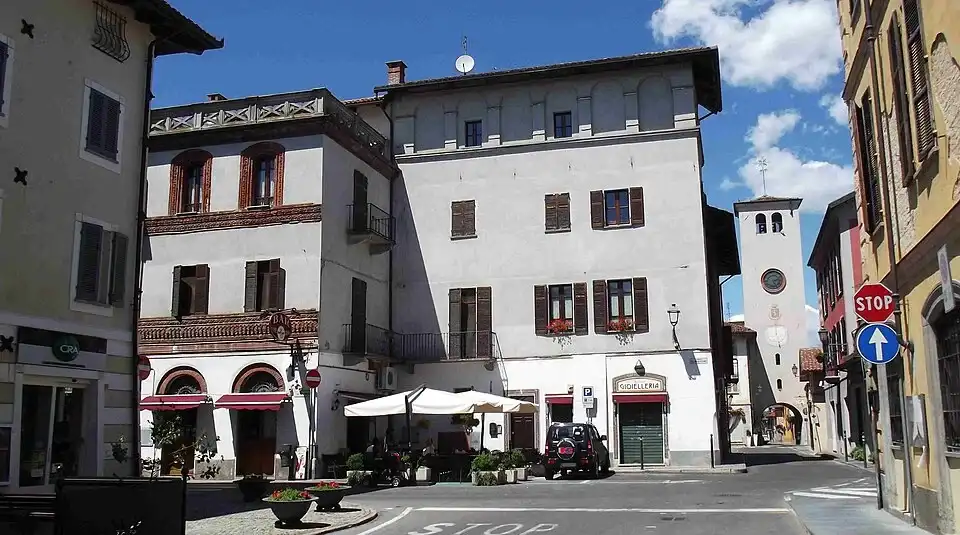
Lovely restored in its 18th century frescoes, the temple that belonged to the "Confraternity of Batù", hosts conferences, cultural debates, concerts. It is located at the fifteenth-century municipal tower 26 meters high in Piazza Supponito.
Imponente is the ancient convent of San Francesco d'Assisi (crollate but immediately rebuilt in the second half of the sixteenth century) located at the crossroads between the Contrada del Corpus Domini and the Real Road of Piacenza (later called via Maestra, today Rome). Inhabited by an exponent of the ancient Savoiarda family of Richetta (riches étaient) since 1806, as a government official while Villanova was included in the French Empire, it is currently owned by De Robertis.
The abbey of Corveglia, now owned by Brossa and used as an agriturismo, important testimony of medieval architecture, is located on the state road towards Carmagnola continuing along which, close to the border with Poirino, you can admire the tree-lined avenue that leads to the Banna estate, property of the Marquise Spinola, home of the Fondazione Spinola Banna aimed at encouraging the work of young artists, especially in the musical field.
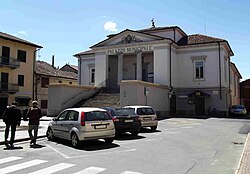
The town hall, neoclassical building designed in the form of a Palladian villa, is the work of architect Giuseppe Frizzi.
Society
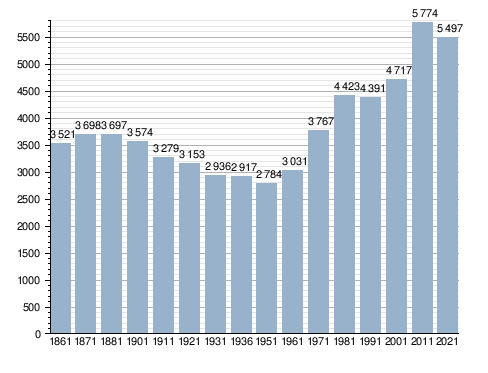
Demographic evolutionExplore this chapter
Demographic evolution
In the last fifty years, since 1971, the resident population increased by 53 %.
Inhabitants registered[9]
Culture
EventsExplore this chapter
Events
The holy protector of the country is Saint Isidore, which is celebrated on the first Sunday of September with the particular blessing of the oxen and the charm of the hat for the recitation of dialectal strambots after Mass.
Economy
Since its foundation, the fertile surrounding territory favoured agriculture. Almost absent the vine, instead they give excellent yield of cereals.Explore this chapter
Since its foundation, the fertile surrounding territory favoured agriculture. Almost absent the vine, instead they give excellent yield of cereals.
Villanova is still bred today "the blonde", that is the hen known also as "ourstraline" or "red of crivelles", once widespread on lands faithful to the Savoy; the white hen was instead raised by the subjects of the Marquis of Saluzzo.
The presence of the tollgate, on the Turin-directorAlessandria, the railway station a few kilometers and a wide plain around have allowed Villanova to become in recent decades the third industrial pole of the province, after the capital and Canelli.
Important are the RFT (SKF Group), Util Industries, Fornace Ballatore, BASF, Dierre Porte, of the De Robertis family, founded thanks to Minister Goria and BCUBE that deals with integrated transport and logistics, the Cornaglia Group Research Centre.
The town of Villano is also developing a good sports pole with the rebirth, a few years ago, of the company "Polisportiva Mezzaluna". The name derives from the homonymous bastion (mezzaluna dolce) of the walls in the form of a star that, until Napoleonic times, defended the city, beautifully and faithfully reproduced in all details on that page of the "Theatrum Sabaudiae" (XVII century) that in the City Hall adorns the study of the mayor.
Administration
TwinningExplore this chapter
Below is a table relating to the administrations that have succeeded one another in this municipality.
| Period | First citizen | Match | Load | Notes | |
|---|---|---|---|---|---|
| June 11, 1985 | 1 June 1990 | Ivo Bogetto | Christian Democracy | Mayor | [10] |
| 1 June 1990 | April 24, 1995 | Ivo Bogetto | civic list | Mayor | [10] |
| April 24, 1995 | June 14, 1999 | Carlo Arduino | center | Mayor | [10] |
| June 14, 1999 | October 25, 2001 | Antonio Negro | civic list | Mayor | [10] |
| October 25, 2001 | May 28, 2002 | Lorenzo Micheluzzi | Comm. Overtime | [10] | |
| May 28, 2002 | May 2, 2007 | Roberto Peretti | accompanies | Mayor | [10] |
| June 18, 2007 | 7 May 2012 | Roberto Peretti | civic list | Mayor | [10] |
| 7 May 2012 | June 11, 2017 | Christian Jordan | list civic Tradition and future | Mayor | [10] |
| June 11, 2017 | June 12, 2022 | Christian Jordan | list civic Tradition and future | Mayor | [10] |
| June 12, 2022 | in office | Roberto Peretti | Civic list Unica Villanova | Mayor | [11] |
Twinning
Villanova d'Asti is twinned with:
 Châteaurenard, since 1994
The twinning with the French town Châteaurenard de Provence, born as a natural continuation of cultural exchanges between the School Media "Astesano" and the Collège "Roquecoquilles", celebrated its 20th anniversary with a great feast held in Châteaurenard, which attended a delegation of a seventy-year-old housed by thirty-five French families.[12]
 Santa Clara de Saguier, since 2012
On 5 September, in fact, the twinning between the two towns was officially signed, as many villanos during the first half of the last century emigrated and departed to America in search of fortune and well-being beyond the ocean. All in South American country, there are some thirty of them; at the solemn ceremony held in the historic center of the small town, he also attended the current Argentine ambassador in Italy, Torcuato di Tella[13].
Infrastructure and transport
The municipality is served by the motorway toll of Villanova d'Asti, located on the A21 motorway, and from the railway station , served by the SFM 6 (Turin-Asti).Explore this chapter
The municipality is served by the motorway toll of Villanova d'Asti, located on the A21 highway, and from railway station, served by the SFM 6 line (Turin-Asti).
Notes
Explore this chapter
- ^ to b Monthly demographic balance for the year 2026 (provisional data), up demo.istat.it, ISTAT.
- ^ Seismic classification (XLS), up risks.protezionecivile.gov.it.
- ^ Table of degrees/day of Italian Municipalities grouped by Region and Province (PDF), in Law 26 August 1993, n. 412, annex A, National Agency for New Technologies, Energy and Sustainable Economic Development, 1 March 2011, p. 151. URL consulted on 25 April 2012 (archived fromoriginal url on 1 January 2017).
- ^ Villanova d’Asti (AT): Castello di Corveglia - on the portal Archeocarta - Archaeological Charter of the Piemonte, up archeocarta.org.
- ^ History of Villanova d'Asti - portal Centrocasalis.it, up archivecasalis.it.
- ^ Add MS 21413[interrupted link], up bl.uk.
- ^ Francesco Malaguzzi Valeri, La corte di Lodovico il Moro: la vita private e l'arte a Milano nel seconda half of the fifteenth century, vol. 1, Milan, Hoepli, 1913, p. 381.
- ^ Coat of arms and banner, up Municipality of Villanova d'Asti.
- ^ Data taken from:
- Resident population of the municipalities. Censuses from 1861 to 1991 (PDF), up ebiblio.istat.it, ISTAT.
- Resident population - Time series, up exploredati.istat.it.
Please note: 2021 data refers to permanent census data as of December 31 of that year.
- ^ to b c d And f g h the http://amministratori.interno.it/
- ^ elections. interno.gov.it, https://elezioni.interno.gov.it/comunali/scrutini/20220612/scrutiniGI010071180 Missing title for url
url(help). - ^ Municipality of Villanova (Asti), up vnat.it.
- ^ Villanova tightens twinning with Santa Clara of Argentina - GRPTelevisione.it
Bibliography
Explore this chapter
- Further reading
- Pietro Savio, City statutes of Villanova d'Asti, Vatican City, Vatican Apostolic Library, 1934.
Where to stay · Villanova d'Asti
Find stays on Booking.comStories, places and people
More about Villanova d'Asti and the surrounding area
Follow a thread of history and see where it leads.
 Neq00 · CC BY-SA 4.0
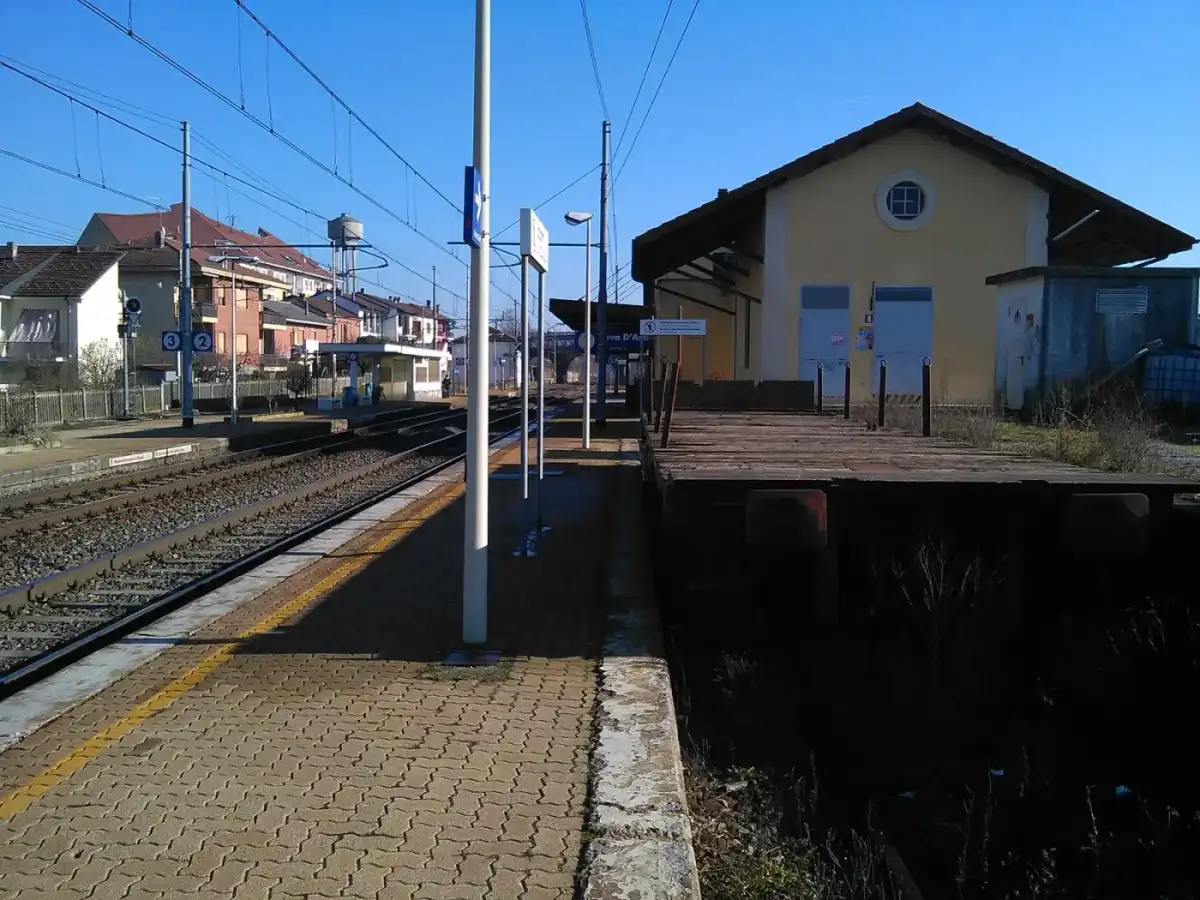
Villanova d'Asti Station
Villanova d'Asti station is a railway station located along the Turin-Genova railway, at the service of the municipality of Villanova d'Asti and the nearby hamlet of Riva near Chieri .
Read the story Kai Hendry from London, UK · CC BY 2.0
Italo-argentini
An Italian-Argentine is an Argentine citizen of Italian origin or descendant of Italian emigrants.
Read the storyThe area, step by step
Trails and routes in Villanova d'Asti
 WalkingPlaces and landscapes along the route
Asti, Alessandria and surroundings
San Michele - Villanova d'Asti
