Atlas of Monferrato
San Paolo Solbrito: sights, history and trails
Asti
- Elevation
- 265 m above sea level
- Area
- 11.87 km²
- Demonym
- Sanpaolesi
- Patron saint
- Madonna di Serra
A closer look
Discovering San Paolo Solbrito
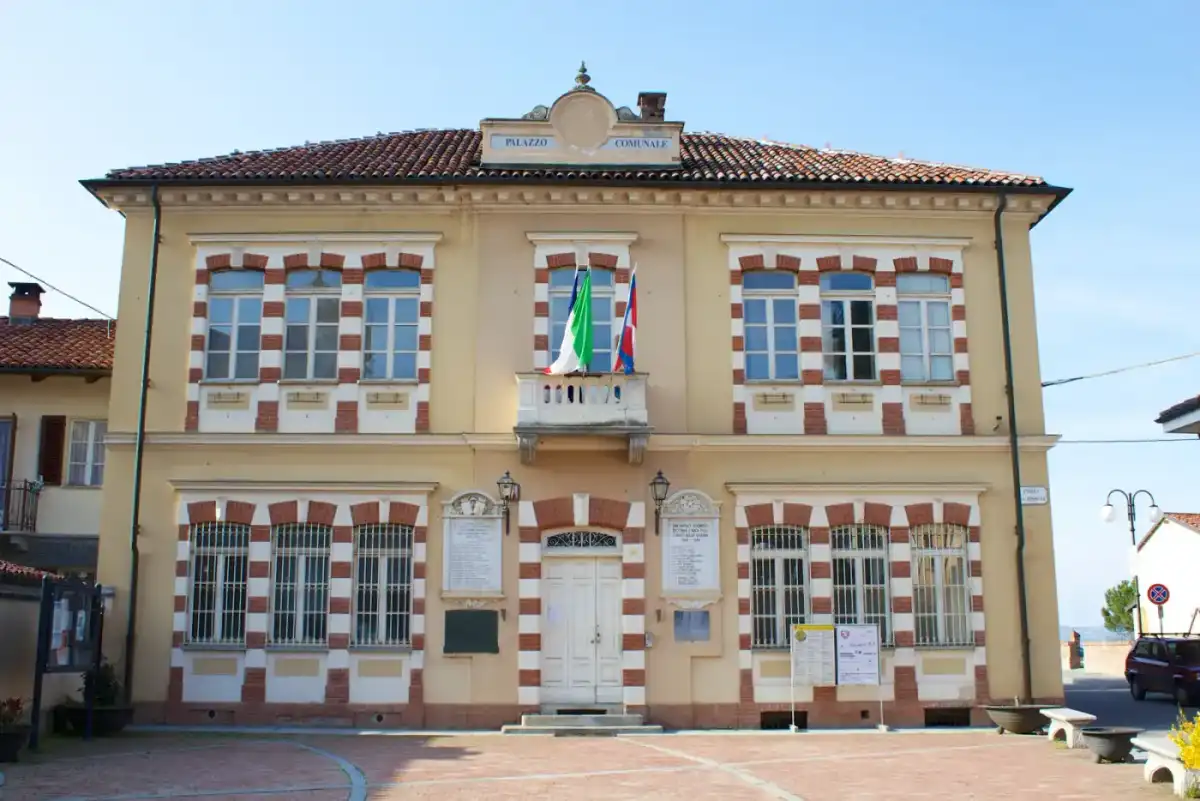
San Paolo Solbrito (San Pàul Subur in Piedmont) is an Italian municipality of 1 155 inhabitants[1] from the province of Asti in the Piemonte.
San Paolo Solbrito was born from the fusion of two municipalities, San Paolo della Valle (CC I070) e Solbrito (CC I795), which occurred by royal decree in 1928. The municipality, on the edge of the Poirino plateau, is quite varied, spread partly across the plain and partly on gentle slopes. Some parts of the castle remain of Solbrito, now restored, while there are no longer any traces of the castle of San Paolo. Of the noble houses, you can admire the well-preserved Palace of the Gay Counts of Montariolo, surrounded by an English park. The parish church of Saints Peter and Paul is a fine example of late Baroque architecture, richly frescoed inside where it houses valuable seventeenth-century paintings.
History of San Paolo Solbrito
Mastodon and Mastodon Sea · The first inhabitants, the Ligurians, the Romans · The advent of Christianity and the mythical "Ferrabusa"Explore this chapter
You can find useful historical indications in Astigian Corography Gian Secondo de Canis wrote between 1814 and 1816. The manuscript is kept at the Consortium Astense Library.
Mastodon and Mastodon Sea
The discovery of fossil shells in the valley of the Traverola stream bears witness to the presence of the sea in the territory, in a period that is located around 4 million years ago.
It is the "Pliocenic Padano sulphur", a tropical sea populated by various species of molluscs, crustaceans, fish and large cetaceans.
Following the tectonic thrust of the African plate against the European plaque, the lifting of the earth's crust and the consequent withdrawal of marine waters took place, giving rise to swampy soils rich in lush vegetation: ideal habitat for large mammals, reptiles and birds. whose fossilized remains, discovered right in our districts gave the name to this geological period, called "Villafranchiano" from Villafranca d'Asti.
In the municipality of San Paolo Solbrito two worthy finds of mention are worth mentioning.
The first was in 1849, during the construction of the Turin-Genova railway near Solbrito, probably in the trench on which stands the bridge of the road coming from St. Paul; the discovery is described in a memory presented at the Academy of Sciences of Turin by Professor Eugenio Sismonda, accompanied by beautiful drawings.
The remains are preserved in the Museum of Natural Sciences of Turin.
The second finding occurred fortuitously during the extraction of sand from a small quarry in Monsotto Region; the time is imprecisated, between the 70's and 80's last century, but the finds are interesting and in good state of conservation. It is a couple of molars of mastodon (Anancus arvernensis) and were placed in a display case in the Council Room.
The first inhabitants, the Ligurians, the Romans
The appearance of man in the Astigian and Monferrino territory occurred between 15 000 and 10 000 years ago.
But the first of which we have certain historical news were the Ligurians. A rough and bellicose people, organized in tribes, not having a writing, can find it difficult to establish its origin. There are those who think they were pre-indo-European, like the Basques, and who believes they were of Celtic origin.
The Piemonte southern was inhabited by the Vagienni (Alta Valle Tanaro and Langhe), by the Statielli (Alba e Acqui Terme) and the Eburiates (Basso) Monferrato and therefore also our territory).
Hannibal's allies against the Romans, who also inflicted heavy defeats, were bent by them and in the first century BC, hostilities ceased permanently.
The Romanization of the Piemonte he was defended under Julius Caesar and with Ottaviano it entered into the IX Region, Liguria, and of the XI Region, Transpadana. One of the most significant testimonies of this period is the construction of the Via Fulvia, between 125 and 123 BC, by the console Caio Fulvio Flacco.
It is unique Derthona (Tortona) ad Augusta Taurinorum (Turin), passing through Hasta (Asti); the ascent stretch from the Tanaro valley to the Po valley is the subject of various hypotheses; the most probable, also reported by Gian Secondo de Canis in his Astigian Corography, is the one that goes from the valley of the Traversola torrent, passing between the castles of Solbrito and San Paolo, and which emerges into the plain at the Strada del Ronco.
Of course, Solbrito was a small Roman settlement, as evidenced by some finds of laterizi in the Traversola Valley, while on St. Paul there is no historical evidence of its existence in Roman times.
The advent of Christianity and the mythical "Ferrabusa"
Christianity has spread in Asti since the 2nd century but only two centuries later it began to consolidate itself also in the countryside.
As for our territory, there is a local tradition still alive in the 19th century, according to which, in Roman times, it would have existed, in the valley of San Paolo, between Valossera and Moncero, a village called "Ferrabusa". This village was abandoned, for reasons imprecisate, until a group of persecuted Christians took refuge and built a small chapel dedicated to the apostle St. Paul, from which they had received faith.
The ancient denomination of San Paolo de Valle, and more recently, until 1928, of San Paolo della Valle would expect this very ancient tradition
The High Middle Ages
With the fall of the Roman Empire and the political instability that followed it, the villages of San Paolo and Solbrito, which stood in the valley of the Traversola stream moved, for defensive reasons, on the top of their respective hills, where they built fortified castles.
Another suggestive tradition tells us that in the 10th century, at the time of Saracen raids in Piemonte, a column of them, was attracted by the locals, with a stratagem, in a small valley with steep sides and covered by thickets. Suddenly these, armed with axes and forks, escaping from the bush, took advantage of the Saracens by slaughtering them. The corpses were suttered so much that often, in the past, dissociating the ground, they came to light human bones. Therefore that valley took the name of Valle delle Ossa, still today "Valossera".
Before the year Thousand, St. Paul and Solbrito were lands of border: St. Paul belonged to the County of Turin, while Solbrito to that of Asti. Subsequently the County of Asti expanded considerably north and west, and the two villages followed the events.
The first historical document that appoints the two villages of St. Paul and Solbrito is of the year 948; it is an act of permutation of land, with which the bishop of Asti Bruningo was in possession of goods located in such territories.
The lords on the territory
- The bishops of Asti and the Municipality of Asti, until 1312;
- The Viscounts of Milan, from 1340 to 1387;
- Valentina Visconti, daughter of Gian Galeazzo and wife of Luigi di Valois-Orléans, from 1387 to 1406;
- The Dukes of Orléans and Kings of France, from 1406 to 1526;
- Emperor Charles V, from 1526 to 1531, when he gave it to Beatrice of Portugal, Duchess of Savoy;
- Beatrice of Portugal, Duchess of Savoy, from 1531 to 1538;
- Emanuele Filiberto di Savoia, son of Beatrice, from 1538 to 1580;
- The Dukes of Savoy, then king of Sardinia, from 1580 to 1798;
- France (First Republic and First Empire) from 1798 to 1814;
- The Savoy, king of Sardinia, then King of Italy, from 1814 to 1946.
The nobles and feudal
The first feudal lords of São Paulo and Solbrito were the Riccio.
The Riccio were an ancient noble family of Asti. They descended from Guido il Vecchio, Duke of Spoleto (died 860) and his son Anscario, Marquis of Ivrea.
The branches of this family that we are interested in here are two:
I Riccio, lords and then accounts of St. Paul; they became extinct in 1841 and the title, by female way (Anna Alessandra Riccio di San Paolo), passed to the Baiveri della Rocchetta.
The Riccio, lords and then counts of Solbrito; they became extinct in 1764 and the title by female way (Teresa Riccio di Solbrito and daughter Elisabetta Beccaria) passed to the Colli di Felizzano, still flourishing.
I Colli, an ancient family of decurional Alessandria, were invested in Felizzano, with the title of marquises, in 1753.
The fief of Solbrito was shared by the Gentiles of Castelgentile, who owned the Castle Gentile, on the border of Solbrito with São Paulo; Antonio Filippo Gentile, governor of Villanova d'Asti, was invested in 1658 part of Solbrito; the Gentiles became extinct in 1698 and the title of Counts of Castelgentile passed, by female way (Cecilia Gentile di Castelgentile) in the Provana of Buss. Count Giovanni Carlo Ramelli (of the counts Ramelli di Celle, oriundi da Moncalieri, who in 1681-82 were consignori of Solbrito), sergeant major in Asti, acquired part of the village of Solbrito by Conti Ricci in 1652
Finally, the Gays, an ancient family of St. Paul, who had given illustrious jurisprudences and high officials of the State, were infiudate of Montariolo, under the title of Counts, in 1843; they were great benefactors for St. Paul; the sanctuary of Our Lady of Serra and the kindergarten Paolo Sonaglia benefited greatly from their generosity.
The castles of San Paolo and Solbrito
Ancient castles of ancient times San Paolo Solbrito only survives the Solbrito castle, faithfully rebuilt after the ruin happened to its sale and transformation into rural buildings at the beginning of 900.
Of the castle of San Paolo, demolished between the end of the 18th and early 19th century, there is only one image: the historical map of the late 17th century, on whose base a model was built in scale.
Del Castello Gentile, built in the 15th century and almost totally demolished in the first half of the 19th century, there are two isolated buildings, the so-called "Casa della Marchesa" and the farmhouse "La Vittoria"; however, always in the already mentioned historical map and in the Catasto of 1812 (Catasto Napoleonico) it is possible to get an idea of its appearance.
It also survives, although largely restored, the "Gran Palace" which from the 14th century strong house was transformed into a residential building from the 17th century.
There was another military building, the so-called "New Castle", perhaps of the fourteenth century, located north, in defense of the part of São Paulo developed on the plain, in the region currently called "Cittadella".
Important harping facts
During the long wars of the 16th century, which opposed the Empire and the Kingdom of France, Charles V and Francis I of Valois, our territories were the scene of frequent clashes.
Villanova d'Asti, fortified by Francesco I, was in the hands of the French, while the stronghold of Valfenera was occupied by the Spanish of Carlo V. Among the two fortresses there is a vast plain that is still called "War Plan", because of frequent clashes between the two armies.
In 1554, a strong column of Spaniards, under the command of Don Gomez Suarez de Figueroa, from Asti, intended to gain the plain through St. Paul. The French commanded by Carlo di Cossé, Count of Brissac, had heard about it, they kept an ambush in the thick boscis on the sides of the road under Solbrito. A view placed on the bell tower of St. Paul's church, that at the Castle, should have given the signal of the attack. The Spanish avant-garde had arrived under Solbrito when a French soldier accidentally left a gunshot. The Spaniards rushed behind the front and the engulfed failed miserably. For all reward, the villages of St. Paul and Solbrito were put to iron and fire.
Also the French, who, during the Spanish Succession War, that of the Siege of Turin in 1706, so much to understand us, had invaded the Piemonte, in one of their raids to demoralize Duke Vittorio Amedeo II, they set fire and destroyed the convent-hospital of San Giovanni, belonging to the Knights of Malta, which stood not far from the bridge on the Railway in Madonna di Serra. Some of the houses of St. Paul, including that of Petrino Gay, Secretary of the Community, were also burned down in this situation. In the fire almost all the historical archive of São Paulo was lost.
The parish churches and the sanctuary of Madonna di Serra
The parish church of St. Paul, until mid-'700, was located at the Castle of Counts Riccio. Having been the village expanded on the plain and having the Community of San Paolo erected since 1661 a church, dedicated to San Sebastiano, for the insistence of the population, the bishop of Asti, mons. Giuseppe Felissano, decided to transfer the parish office to the church of San Sebastiano, which assumed the title of St. Paul.
The parish church of Solbrito was once built where there is now a field.
In 1659 the construction of the new church was begun at Solbrito Castle, which was the parish until 1984. It is named after Saint Peter in Vincoli and St Sebastian.
In 1984, the two Parishes of St. Paul's Conversion (in St. Paul) and St. Peter's in Vincoli (at Solbrito) were unified in the new parish of Saints Peter and Paul and the parish office became that of the church of St. Paul.
Third important church of the territory of San Paolo Solbrito is the sanctuary of Madonna di Serra.
In the destruction of the convent of St. John, in 1704, a small votive pylon was razed to the ground by the French soldier with the image of Madonna di Vico (Vicoforte di Mondovì).
Years later, the commune, owner of the bricks of that pylon decided to sell them and sent a shot of oxen to transfer them. Uploaded the bricks, however, there was no way to make the beasts move. The fact was immediately felt as a doorway and that there the bricks had to remain to build not only a new pylon to the Madonna of Vico, but a chapel with its altar. The construction, thanks to the contribution of the population of St. Paul, Count Riccio in the head, was completed in 1753 and in 1754 it was consecrated and dedicated to the Blessed Virgin of Vico, Saint Luigi Gonzaga and Saint Francis of Paola.
The title "Madonna di Serra", given to the small sanctuary, is of popular origin but has now been consolidated. It is to indicate the place where it arose, i.e. a hill that closes (serra) a valley.
Dearest to the heart of Sanpaolosolbritesi, Our Lady of Serra, with Saints Peter, Paul and Sebastian, is patron of the Municipality.
Symbols
The coat of arms and gonfalone were granted by decree of the President of the Republic of 11 June 1997.
The gonfalone is a white drape with the edge of purple. The palms and the sword are symbols of the martyrdom of St Paul and the motto resumes the sentence contained in Second letter to Timothy: "Bonum certainmen, cursum consumed, fidem servivi" ("I fought the good battle, I ended the race, I kept faith"). The present coat of arms resumes the ancient 17th century, drawn on a map of time, but the shield was silver, there was also a book and the sword was tied to the palms with a silver and red ribbon.[4]
The gonfalone is a white drape with the purple edging.
What to see in San Paolo Solbrito
Explore this chapter
- Church of Saint Paul Apostle
Society
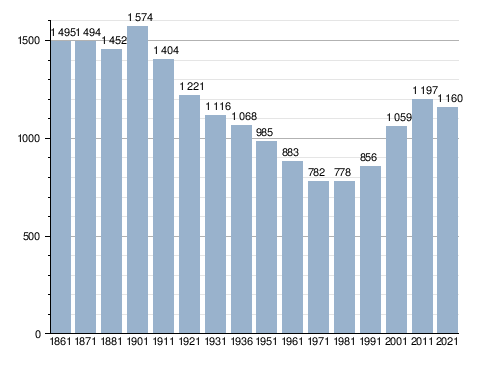
Demographic evolutionExplore this chapter
Demographic evolution
Inhabitants registered[5]
Infrastructure and transport
The village is served by the homonymous station on the Turin-Genova railway line.Explore this chapter
The town is served by the homonym station on the Turin-Genova railway line.
Administration
Below is a table relating to the administrations that have succeeded one another in this municipality.Explore this chapter
Below is a table relating to the administrations that have succeeded one another in this municipality.
| Period | First citizen | Match | Load | Notes | |
|---|---|---|---|---|---|
| June 11, 1985 | May 26, 1990 | Giorgio Versè | Christian Democracy | Mayor | [6] |
| May 26, 1990 | January 24, 1991 | Giorgio Versè | Christian Democracy | Mayor | [6] |
| January 24, 1991 | April 24, 1995 | Osvaldo Cordero | Christian Democracy | Mayor | [6] |
| April 24, 1995 | June 14, 1999 | Osvaldo Cordero | - | Mayor | [6] |
| June 14, 1999 | 6 February 2001 | Giuseppe Bertolino | civic list | Mayor | [6] |
| 6 February 2001 | May 14, 2001 | Lorenzo Micheluzzi | Comm. pref. | [6] | |
| May 14, 2001 | May 30, 2006 | Marco Versè | civic list | Mayor | [6] |
| May 30, 2006 | May 16, 2011 | Carlalberto Goria | civic list | Mayor | [6] |
| May 16, 2011 | 5 June 2016 | Carlalberto Goria | civic list Impegno and solidarity | Mayor | [6] |
| 5 June 2016 | October 3, 2021 | Luca Panetta | civic list Impegno and solidarity | Mayor | [6] |
| October 3, 2021 | in office | Luca Panetta | civic list Impegno and solidarity | Mayor | [6] |
Notes
Explore this chapter
- ^ to b Monthly demographic balance for the year 2026 (provisional data), up demo.istat.it, ISTAT.
- ^ Seismic classification (XLS), up risks.protezionecivile.gov.it.
- ^ Table of degrees/day of Italian Municipalities grouped by Region and Province (PDF), in Law 26 August 1993, n. 412, annex A, National Agency for New Technologies, Energy and Sustainable Economic Development, 1 March 2011, p. 151. URL consulted on 25 April 2012 (archived fromoriginal url on 1 January 2017).
- ^ Coat of arms of San Paolo Solbrito, up sanpaolosolbrito.wordpress.com, 4 February 2011.
- ^ Data taken from:
- Resident population of the municipalities. Censuses from 1861 to 1991 (PDF), up ebiblio.istat.it, ISTAT.
- Resident population - Time series, up exploredati.istat.it.
Please note: 2021 data refers to permanent census data as of December 31 of that year.
- ^ to b c d And f g h the j k https://amministratori.interno.it/
Where to stay · San Paolo Solbrito
Find stays on Booking.comThe area, step by step
Trails and routes in San Paolo Solbrito
 Mountain bikeAround the starting point
Asti, Alessandria and surroundings